Feeds:
Posts
Comments

Archive for the ‘Threats’ Category

CoverStory-KadirNelson-ADayattheBeach3-879x1200-1467305948SOUNDTRACK: LYDIA LOVELESS-Tiny Desk Concert #369 (July 1, 2014).

lovelssI want Lydia Loveless to be a punk singer–Her name is like a combination of Lydia Lunch and a last name that conjures up an asskicking punk.

But not the country singer that Loveless is (even if she is ass-kicking herself). Loveless is a new breed of alt-country which is pretty explicit with noticeably rocking guitar solos.  But her voice is so twangy it’s hard to not call it country (and in fact it’s a bit too much for me to take sometimes).

“Head” features this rather memorable chorus “Don’t stop getting undressed /Don’t stop giving me head.”  It seems especially surprising since Loveless looks like she’s about 12 (she was 23 at the time of this recording).  The buzzy solo is lengthy and more or less runs throughout the song.  Although at some point when Loveless takes her own solo the whole sound seems to fade out and get a little anemic.

Her band is fun with her bassist being very tall and having very long hair playing a very tall upright bass.  And then there’s another guy playing guitar and lap steel.

“Verlaine Shot Rimbaud” has a title that begs for an awesome song.  It’s not an epic masterpiece or anything.  In fact its closer to a pop song, The slide guitar and Loveless’ heavy accent on the chorus place it firmly in the country camp.

“Mile High” has a fun folk riff.  It sounds a lot like The Byrds and the chorus is super catchy.  If I could get her to sing less twangy I would love this song much like I love the punk country of X, or at least the Knitters.

[READ: December 29, 2010] “Who are All These Trump Supporters”

[This essay in the New Yorker also came under the heading “Trump Days.”]

So the title of the essay is a question I myself have been asking as I watch the hatred and vitriol bubble over during the convention.

If there was anyone I wanted to write this piece it would be George Saunders and he is actually the only reason I read it in the first place (I plan to read all of his contributions to the New Yorker eventually, but I’m glad to have read this one when it was timely–I hope it will be utterly irrelevant by the time I get to the rest of his works).  He self identifies as a liberal (although he was a conservative who loved Ayn Rand way back in the Reagan era).  He is a thoughtful and not prone to anger–a perfect foil for the crowd.  And he’s got a great way with words.

So great in fact that I’m just going to be quoting him a lot.  I could have pulled more excellent quotes from the essay, but really you should read the whole thing. (more…)

Read Full Post »

zahraSOUNDTRACK: WEAVES-Tiny Desk Concert #539 (June 10, 2016).

weaves There’s been quite a few mellow bands on Tiny Desk as of late so this rocking quartet from Toronto are a fun change of pace

And boy do they stand out.  Lead singer Jasmyn Burke is wearing a psychedelic dress and has a pretty wild afro.  She sings in a way that seems like maybe she could be doing something else, but always with a wry smirk.  And her voice is unusual–almost talking, but sometimes hitting slightly off-sounding notes (and at times seeming almost childish) but it all works really well within the songs.  And then there’s the music.  A bass, guitar and drum, and Morgan Waters, the guitarist, playing as if he’s doing several different songs at once.

“Coo Coo” features some picked guitar parts, some distorted chord parts, a part that mirrors her vocals (during the delightful chorus of “You’re so coo coo / I’m so coo coo  / I’m so crazy.”  And then there’s the part during the final chorus which features him playing something different after each time she says “I’m so coo coo” –trash metal guitar, simple guitar lines, then squeaky fractured notes.   It’s hard to know who to watch more.  And the bassist is no slouch either, as he keeps up pretty nicely with the wild playing.

As they start the next song, “Shithole,” the drummer starts the wrong one but they correct him and say that they are gong to play “Shithole” in this nice building.  It opens with a delicate guitar riff and a pulsing bass line.  The song is surprisingly mellow until the middle section when a noisy solo kicks in, but this song is primarily bass and vocals with a really abrupt ending

“One More” is a fast punky song which is again mostly bass and drums until the loud distorted guitars check in to accompany the vocals. I get a kick out of the odd way she sings “One more” (accompanied by a suitably squeaky guitar).

Mostly Jasmyn doesn’t seem to be singing all that hard until portions so this song when all four are going a little crazy.

They are fun band that I need to explore some more–I’ll bet they are a lot of fun live.

[READ: March 1, 2016] Zahra’s Paradise

This book is a fierce indictment of the Iranian Islamic revolution and the questionable election that took place in 2009 which brought Mahmoud Ahmadinejad to power.

It was written (by Amir) and drawn (by Khalil) pseudonymously so that they could avoid prosecution (or worse) in their home country of Iran.  In fact, while the story was amazing and really powerful, it was the afterword that I found so important.

But the story first.  And the part that will make no one want to read this book–a bag full of puppies is killed.  Yup, getting that out of the way right from the start.  And in fact, there doesn’t really seem to be a lot of justification for it.  It gets referenced a few times in the story, but nothing else is quite as graphic as the prologue (so you can skip that if you don’t want to see an image that you won’t be able to get out of your head). (more…)

Read Full Post »

lilychen SOUNDTRACK: BARRY DOUGLAS-Tiny Desk Concert #537 (June 3, 2016).

barryBarry Douglas is a “classical” pianist from Ireland.  I’ve put classical in quotes because although what he plays is classical in sound, the music actually comes from Celtic tradition rather than the classical canon.

“The Coolin” (An Chúileann) translates to “The Fair-Haired Girl” and dates to around 1641.  His arrangement has a very baroque feel (he is actually a classical pianist, too), which gives the traditional song a more regal air.

He follows that lovely delicate song with “Planxty Dylan.”  Planxty is an Irish dance.  He says that harpists would travel around Ireland and people would look after them.  The harpist would then thank the homeowner by writing a song named after the home where they stayed.  This romp of a dance (at only about 1 minute long) was dedicated to the house of Dylan.

From playing a planxty to the band Planxty.  Douglas has arranged the Planxty song “Raggle Taggle Gypsy” for solo piano.  It has been around since the 18th century.  Planxty made it more famous as a vocal song (which I know) but Douglas’ piano version has a lot of fun with the melody as well.  The melody is also known as “Black Jack Davy.”

“My Lagan Love” is about the River Lagan in Donegal (there are actually four Lagan Rivers in Ireland).  The melody and poem were written by unknown persons.  Douglas arranged this without words in an attempt to make it more timeless.  I know the original and this is a really lovely in this instrumental version.

I can say that I was pleasantly surprised to hear this was the kind of solo music that Douglas was going to play.

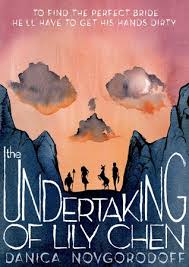
[READ: April 2, 2016] The Undertaking of Lily Chen

The whole premise behind this story is disturbing and apparently true.

Novgorodoff includes a section of an article from 2007 which says that parts of rural China have seen the rise of “ghost marriages.” In this situation, when an unmarried an dies, his parents procure the body of a woman, hold a wedding and then bury them together.  This has led to a black market in corpse brides.  EW!

This story explores that revolting concept. (more…)

Read Full Post »

slowstormSOUNDTRACK: ANDY SHAUF-Tiny Desk Concert #533 (May 20, 2016).

shaufI was unfamiliar with Andy Shauf although once he started playing, I thought his songs sounded familiar.  One of the more interesting thing about him is his singing enunciation (which reminds me a bit of SOAK for a recent comparison–although she is from Northern Ireland and he is from Saskatchewan).

It’s interesting to me that Shauf plays only rhythm guitar–all of the melody lines and solos come from his keyboardist.  It’s also interesting how motionless Shauf is.  He stands quite still and doesn’t even really move as he sings (his voice is mellow but not exactly quiet).

“The Magician” has as some great riffs from the keyboard and some interesting chord changes as the song draws to and end.  And of course, Shauf’s calming, delightful voice (complete with do do do dos) make the song quite lovely.

“To You” sounds similar to the first–same basic tempo and tone, with nice little fills that elevate the song from a simple chord structure.

His final song, “You’re Out Wasting” is “an older song” from his last album.  There’s another great melody running through this song and it’s a bit more uptempo.

I’m not sure if it’s his hair or his posture but he looks uncomfortably hunched-over while playing.  But that doesn’t stop his voice from sounding great and his songwriting from being really enjoyable.

[READ: February 2, 2016] Slow Storm

I really like the way Novgorodoff works with watercolors to create cool backgrounds. However, I don’t really like the way she uses her pen–I don’t care for the look of her characters.  And I don’t love the hand lettering all that much either.

This story is one that I wouldn’t read if it weren’t a First Second book.  And while I’m glad I read it and I found the convergence s of characters to be really interesting, it was a rough road getting thee.

The story begins with no words, just a series of images that juxtapose a tornado/storm and the Kentucky Derby.  The storm is hitting a barn where horses are kept, so these horses are also running, but hey are frightened of course (I especially didn’t like the style of the frightened horses).

Then we see a man get hurled by the tornado into a barn. (more…)

Read Full Post »

silence THEE SILVER MT. ZION MEMORIAL ORCHESTRA & TRA-LA-LA BAND-13 Blues for Thirteen Moons [CST051] (2008).

330px-13_Blues_for_Thirteen_MoonsThis album opens with 12 tracks of a kind of feedbacking noise.  The total time for this is about a minute before track 13 begins.  And this album feels very different from the more acoustic Horses.  Whereas Horses felt acoustic and organic, this album is noisy and raucous and very electric.  After the 12 brief tracks there are four lengthy ones that comprise the album.

“1,000,000 Died to Make This Sound” starts with scratched notes and pizzicato strings.  The choir quietly begins singing the title “one million died to make this sound.”  Their voices grow louder and then at about 3 minutes in there’s a great bowed riff that introduces the more rocking section–a guitar “solo” and drums as that bass riff continues.  About mid way through the song it takes on a real rocking feel–the guitars rock out and the steady beat keeps up.  The song feels sloppy and intense–like they couldn’t wait to get this out.  I would describe the song as fun (except that it’s pretty bleak).  Efrim’s voice sounds a bit like Johnny Rotten or some other British punk) on this song and the punk style suits it well.  I really love the way the violin-swells make the riffs even bigger until about 9 minutes when the song shifts dramatically again and it feels like a Crazy Horse jam–big, sloppy, noisy guitars.  The song reaches a sort of natural stopping point as the music all fades away and the voices resume–I love the choir of voices at the end of the song (although perhaps Efrim’s voice could be a tad quieter?  Efrim’s voice seems to be a polarizing thing for fans of this band.  I’m even polarized about it on different songs–sometimes I think it’s too much, but other times I think it works well.

“13 Blues for Thirteen Moons” is 16 minutes long.  It begins with thumping drums and bass before Efrim’s voice comes chanting in.  The song is noisy and chaotic–lots of drums and cymbals and then the backing vocals start a call and response with the lead vocals.  The song continues in the same vein–with a refrain of “I Just Want Some Action” but then around 5 minutes a big distorted guitar plays a kind of concluding riff before a quieter guitar begins a new section with some quiet picking.  And its in this section that the album title is sung.  This quiet guitar section goes on for quite a while with Efrim shouting various parts–and then second voice joins him.  It’s unusual that the band will play the same riff through so much of a song, but it’s a good riff.  The whole band picks up the riff as it grows louder and more rocking.  The final two minutes are filled with feedback and quiet guitars with Efrim shouting syllable after syllable until it feedbacks to an end.  It’s a pretty intense song.

“Black Waters Blowed/Engine Broke Blues” opens in a much quieter way with slow revered guitars.  The vocals are also slow and accompanied by a lone cello.  But after a minute and a half chaos erupts in the song–feedback squalls and wild guitars accompanied by chaotic drumming make the song sound like it is tripping over itself , but it soon resolves to a quiet part like the intro–this time with two singers.  The song builds again, with the chaotic drums fighting for dominance over the string section.  But they both cede again to the quieter vocals once more.  The band then acts in concert building the song and allowing the vocals to continue.  And after a musical interlude, the vocals begin again over a quiet organ.  And this next section builds as strings accompany the louder vocals and the drum gets a pounding martial beat.  The final section, which appears to be the “Engine Broke Blues” is a repeated refrain of “Building Trainwrecks in the Setting Sun.”

The final song “BlindBlindBlind” also opens quietly, with a simple guitar motif.  As the vocals continue, a ringing guitar and a feedbacking guitar join the song (each in a different ear).  And then a violin adds to the melody.  About 4 minutes in, the melody shifts to an organ heavy section with the lead vocal followed by backing vocals.  A pizzicato section begins next.  What’s interesting is that the vocal melody hasn’t really changed this whole time (in this song Efrim again sounds a bit like a British punk rocker).  At around 7 minutes, the song turns towards the end, with strings and drums.  This end bit is my favorite part on the record, not only for the melody, but for the excellent backing chanting.  The backing vocal melody is very cool in itself–I love when they add the high notes–repeating the refrain “Some hearts are true” over and over.  A guitar solo interrupts the proceedings for a bit and then they resume singing all the way to the end.  It’s a very cathartic conclusion.

For this album, the lineup stayed the same although Eric Craven replaced Scott Levine Gilmore on drums.

Back in 2009, I wrote a post about this album.  It’s pretty brief and mostly talks about the singing.

[READ: March 1, 2016] The Silence of Our Friends

This was the final First Second book that I had in a huge stack that I took out from the library.  I had been putting this book off because I was nervous about reading it.  Nothing pretty is going to happen in a Civil Rights book and I had to prepare myself for it.  Obviously, the era is staggeringly important–even more so today with the kind of political rhetoric being shouted around.  That’s not why i didn’t want to read it.  I was afraid about how ugly this book might get.

But in fact, this book doesn’t go in that direction at all.  It is a factual story and while it looks at racism, it also shines a light of hope on race relations. It’s another excellent graphic novel from First Second [#10yearsof01].

What I did not know is that this story is based on actual events–the author’s father was a journalist in Texas during a serious Civil Rights confrontation.  And his father was able to help offset a travesty of justice.  He risked his career and even his own safety to do the right thing.

Set in Houston in 1968, we see some kids playing army in the yard.  This is also during Vietnam, so that’s probably not a very uncommon sight.  When the kids go inside, their mom is watching the Saigon execution on TV.  She is horrified and begins crying. The talk that night is of the atrocities of war. (more…)

Read Full Post »

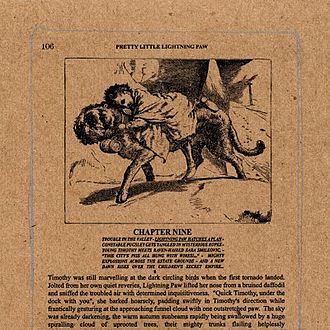
ninthSOUNDTRACK: Thee Silver Mountain Reveries-The “Pretty Little Lightning Paw” E.P. [CST030] (2004).

lightpawAfter three albums, it was time to make an EP under yet another variant of the band’s name.  This is a fun release (which is interesting to say about a band who is typically quite serious).  What made this “fun” is that many of the band members switched instruments for this recording. Violinist Sophie Trudeau plays bass guitar.  Guitarist Ian Ilavsky, usually one of the band’s guitarists, plays drums.

Also when they finished recording, was complete, the EP was played on a boombox and re-recorded from that.  I can’t tell that it was recorded in this way, so who knows if that made any difference.

There are four songs, “More Action! Less Tears!” is the first.  It begins with Aimee shouting “Hello!  Hello!” and then messing up and laughing.  So she begins again, “The name of this song is More Action.  The name of this song is Less Tears.”  It sounds unlike anything that SMtZ have done so far.  The guitar that opens it is distorted and plays a fairly conventional riff while the violins play a suitable melody over the top.  The strings build and the songs oars.

“Microphones in the Trees” opens with a guitar melody that’s quickly joined by the same melody on upright bass.  Efrim begins singing (his voice is distorted and echoed and sounds almost more like an instrument than a voice, although you can hear the lyrics: “microphones in the trees, cameras in the sky.”  The choir starts singing along with him until about three minutes when a wash of noise over takes the song. This lasts for a few minutes and then fades, allowing the words to continue.  About half way into the song a rather shambolic chorus sings “we are the flood.”  The last two minutes or so are simply feedbacky noises wafting around.

“Pretty Little Lightning Paw”is the ten-minute title track.  It opens with bass notes and chimed notes.  The strings follow Efrim’s vocal lines (which sound ragged and quiet).  And then after a minute or so new strings come in, slightly unsettling sounding.  About three minutes in the 4 voice choir begins singing an alternate melody above Efrim’s repeated mantra.  The song continues in this vein for pretty much the rest of the song, only modifying at the end where the sounds and feedback resemble birdsong.

“There’s a River in the Valley Made of Melting Snow” is 5 minutes long and is basically a solo song from Efrim.  He plays guitar, sings and plays “toybox.”  The melody is fairly simple and his voice sounds pretty good–not too shrill.  It may be the most conventional song that SMtZ has recorded.

While this EP doesn’t deviate drastically from the band’s normal sound, it is fun to see them mix things up a bit.   For this recording, the band was

  • Thierry Amar – violin, bass guitar, vocals, pianohandle
  • Ian Ilavsky – drums
  • Efrim Menuck – guitar, piano, organ, vocals, feedback, toybox
  • Jessica Moss – violin, vocals
  • Sophie Trudeau – bass guitar
  • [Beckie Foon is absent]

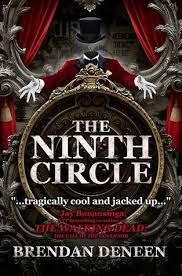
[READ: May 5, 2016] The Ninth Circle

Brendan and I went to college together.  In fact, I knew Brendan from his submissions to both the newspaper and the literary magazine.  He was a major talent back then (I still remember details from the story he submitted twenty some years ago) and continues to be one now.  He works in comics and has written for Flash Gordon, his own book Scatterbrain and something that I can’t wait to find a copy of: Charlie Sheen: Vatican Assassin Warlock.  Check out his output on Goodreads.

This is his first published novel, I believe. And I was hooked from the first chapter.

The story is about 16-year-old Dan.  His family is a disaster–his brother is obsessively mean to him, his father is an alcoholic, his mother is probably sleeping with someone else, and neither parent gives him the time of day.  For his 16th birthday they take him to the circus, even though he never said he wanted to go to the circus.  His brother promises to get revenge for having to go to this lame spectacle.

Dan’s not even sure that he’s going to like it, but he winds up being mesmerized from the moment he walks in.  The trickster tricks him, the freaks entice him (he finds the bearded lady especially enchanting) and the whole show is truly amazing.  Later that night, while lying in bed thinking about his crappy life, Dan decides to take action. (more…)

Read Full Post »

breachSOUNDTRACK: THE SILVER MT. ZION ORCHESTRA & TRA-LA-LA BAND (WITH CHOIR)-“This Is Our Punk-Rock,” Thee Rusted Satellites Gather + Sing, [CST027] (2003).

MtzionthisisourThis album is a pretty massive change for A Silver Mt Zion.  It both brings this band closer to their alter ego GYBE but also pushes them further away at the same time.  How?  Well, musically, this album sounds a lot more like GYBE–epic songs all over ten minutes with lots of strings and soaring moments.  But the big difference now is that every song has vocals (hence the new title of the band).  The line up has stayed the same although they have many guests for the choir.  The choir is referred to on the album as Thee Rusted Satellite Choir.

“Sow Some Lonesome Corner So Many Flowers Bloom” opens the disc with someone counting of “1234… 12345678.”   And then a simple guitar and bass melody starts up.  The song sounds fairly conventional, in fact.  And then the choir kicks in.  Many many voices singing, “Ahhhh.”  And then a solo voice continues the “Ahhhs” in another pitch while the choir continues.   I love this whole introduction–the various keys the voices are in, how the bass voices start singing “fa fa fa la la so” and on and on in varying formats.  The choir (a bunch of friends and bandmates) sounds great–not perfect but perfect for this song.  This lasts for about 7 minutes before the choir fades and the rest of the song begins with a swelling of droning music.  Strings come in and the song stays quiet for a couple of minutes before the guitar riff from the beginning returns this time with string accompaniment instead of voices.   Around 12 minutes the strings change to something else–more grandiose music which sounds amazing.  About a minute later the drums begin and the song takes on a whole new style.  This more rocking sound continues until the end of the song.  It’s awesome.

“Babylon Was Built on Fire/StarsNoStars” opens with staccato echoed guitars (it also feels a bit like Pink Floyd).  There’s ambient washes of guitars that float around, but the whole things sounds very trippy (not a sound I associate with this band).  About six minutes in, Efrim begins singing.  This is the first time he’s sung quite so loudly and clearly.  His voice is anguished and a bit harsh, but it works pretty well with the violins and the cool bassline that walks throughout the song.  With about 4 minutes left, the music changes direction.  The guitar starts playing a single note, growing louder and louder as the strings surround the guitar and voice: “Citizens in their homes and missiles in their holes.”  Efrim (I assume) sings a round with himself as more and more lines of text fill the song.  Although his voice doesn’t sound radically different in each one, he does adjust volume and tone enough to make it sound pretty interesting.

“American Motor over Smoldered Field” is the shortest song on the disc at 12 minutes.  It begins with a simple acoustic guitar melody (quite pretty) and Efrim singing over it (I appreciate the different vocal styles in this song).  It’s really quite a compelling song as that guitar continues and the strings come in behind it.  Around four minutes in, the drums crash and the song takes off.  The strings change and the song becomes very intense–faster and louder.  This lasts about three minutes before a staccato guitar picks up and choral voices are heard way in the background.  The voices (all Efrim, I believe) build and build as the guitar maintains.  Around nine minutes the strings and guitars change and the song flows as a new vocal line joins in “this fence around your garden won’t keep the ice from falling.”

The final song, the 14 minute “Goodbye Desolate Railyard” also opens with acoustic guitar and Efrim’s vocals. The song (an elegy for a dying city) remain simple–acoustic guitar, simple violin and bass notes.   The song is repetitive, lulling the listener into as sense of contentment.  Although at around 5 minutes, the violins swell and become a little unpleasant–kind of harsh and a little staticky.  This continues for some 5 minutes until it is replaced by the rather close up sound of a freight train going slowly down a track.  After two minutes of this, the acoustic guitar returns with Efrim singing (in a very Neil Young kind of voice) “every body gets a little lost sometimes.”  The full choir joins in to sing these final words for a several rounds before fading out.

[READ: May 10, 2016] Breach Point

Steve and I are pals of Facebook.  If I may wax jealous for a minute, Steve has done everything that I’d ever wanted to do when I was younger–he’s been in a band (cuppa joe–they released several really good albums); he’s a graphic designer, something I always imagined being when I grew up; and now he has written a novel.  So, yes, basically I hate Steve.  Except that, of course, I don’t hate Steve.

I hate him even less because this book is not only really good, but it has brought back a part of my childhood that I had forgotten about.

When I (and anyone else who grew up in the New Jersey area in the 70s) was a kid, there were always commercials for Brigantine Castle in Brigantine NJ.  The commercials scared the hell out of me and I was always terrified to go to this place.  I knew it was down the shore but never exactly where.  And there were times when we drove to the shore and I was convinced we were going to the castle instead (totally false, Brigantine was way further north than any beach we would have gone to).  And then Brigantine Castle burned down.  Interestingly, after watching these commercials again coupled with The Haunted Mansion (another commercial played quite often), I learned that the Haunted Mansion was in Long Branch.  I never went to that Haunted House either, although I have since been to the convention center that now stands where the Haunted Mansion once stood before it burned down.

Yes, Both Brigantine castle and the Haunted Mansion burned down.  People know what happened in the Haunted Mansion fire, but the Brigantine Castle fire is shrouded in mystery.

This is all a long way to say that Steve has written a book that is based around this mystery.

Clara is a 16-year-old girl who travels to Breach Point for the summer.  She has gotten a job at an engineering firm and she is going to live with her Aunt Maureen.  When the book first opens, we see her on the bus, happy to get away from her mother and excited but nervous about gong to this place that she vaguely remembers. (more…)

Read Full Post »

spacedump SOUNDTRACK: YO-YO MA, EDGAR MEYER, CHRIS THILE AND STUART DUNCAN-Tiny Desk Concert #175 (November 17, 2011).

yoyoYo-Yo Ma might be the most well-known cellist in the world.  I suspect that everyone has heard of him.  But it’s likely that people don’t know just how diverse his musical range is.  As the NPR blurb says:

He’s reached out to a broad range of musicians (and Muppets) to play not just Bach and Beethoven, but also Brazilian samba, Argentine tango, jazz, songs from Sesame Street and a smorgasbord of Asian music with his Silk Road Ensemble. American roots music also figures into Ma’s melting pot: He teamed up with double-bass master Edgar Meyer and fiddler Mark O’Connor 15 years ago for the gentle new-grass album Appalachian Waltz.

For this 2011 venture called The Goat Rodeo Sessions, he has created another Americana album, this time with mandolin master (and multiple Tiny Desk Concert player) Chris Thile.  Meyer is back on double bass and they have added Stuart Duncan on fiddle.

I can honestly say I never expected to see Yo-Yo Ma on a song called “Quarter Chicken Dark” but there he is, playing along as Thile begins the song on the mandolin.  The cello, fiddle and bass are all bowed so, despite the mandolin, the song feels a bit more classical (Thile has also made classical music on the mandolin, so the pairing actually makes a lot of sense).  I think Thile comes off as the star of this song with a wild solo in the middle.

For “Attaboy,” the mandolin starts the song again, but pretty quickly the strings dominate.  There’s a beautiful opening by Ma and a great fiddle interplay in which Duncan hints at the big Irish section he’s going to play.  There’s some wonderful fast mini solos from all of the instruments, including the bass, and then the whole song switches to a jig with Duncan playing a very Irish riff while Duncan and Ma keep the low notes coming.   Incidentally, I believe that Thile and Duncan are playing the exact same solo by the end, which sounds great.  But it’s watching Yo-Yo Ma’s fingers and bow move so fast that is really amazing.

For the final song “Here and Heaven” Aoife O’Donovan joins them on vocals.  And for a chance of pace Duncan switches from fiddle to banjo.  (Although mid way through the song he switches back to fiddle).  Donovan and Thile sing the song together.  On the first verse they are a little too quiet.  But once they start belting out they are fine.  This song is catchy and fun and the vocals really do change the feel of their music.

It’s clear that these accomplished musician are having a lot of fun together.  Meyer and Ma actually wave to each other during the second song, and Thile makes lots of little jokes.  And when he introduces Aoife, it’s funny to hear Yo-Yo Ma cheer like a little kid.

While Yo-Yo Ma if probably the most famous musician here, I like them all, and I’ll honestly listen to Thile do anything.

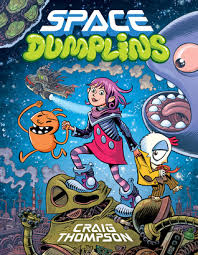
[READ: August 29, 2012] Space Dumplins

Craig Thompson has created a pretty diverse collection of books.  From the serious and beautiful Habibi, to the weird-looking and sad Goodbye Chunky Rice to this trippy sci-fi story.

The story is about Violet Marlocke, a young girl who lives out in a space trailer park.  Her father is a space lumberjack (whatever that means) and her mom is a seamstress.  They are poor but pretty happy, and that’s okay by Violet, since family is everything to her.

But as the book opens we learn that space whales (okay, I’ll stop putting “space” before everything, because he doesn’t) have just eaten her school.  The whales have been rampaging all of the planets in the area. At first Violet is happy to have no school but her parents have to do something with her.  So her mom brings her to work at Shell-tar where they try to see if she can enroll in the state of the art school there.  She can’t because her dad has a criminal record (and he’s opposed to the fancy school anyway).

While Violet is looking around, she meets Elliot Marcel Ophennorth, a small chicken who is incredibly smart (and has visions of the future).  We also meet Zacchaeus, the last Lumpkin in the world. He works at the dump.  Violet quickly befriends them both, although they don’t all get along very well at first.

Two things then happen pretty quickly back home.  Violet and her dad buy an old piece of junk space bike to fix up and Violet’s dad takes on a dangerous job to make some more money. (more…)

Read Full Post »

walkerSOUNDTRACK: THE CIVIL WARS-Tiny Desk Concert #137 (June 27, 3011).

civilMany Tiny Desk performances just show the band playing.  But there’s evidently a lot of time before hand where the band sets up and has fun.  I love seeing that, and it’s kind of a shame they cut so much of it out.

As this show starts, Joy Williams is holding the film clacker with Bob.  He tells her to give it a loud clack.  She kind of lets it go on its own accord and then says she didn’t do a good job.  John Paul White then says “I could have done it so much better,” to much laughter.

The Civil Wars are Joy and John Paul and they have terrific chemistry.  The first song is “Barton Hollow,” John Paul plays a loud percussive resonator guitar and the two sing great harmonies.  He sings loudly with her nice harmonies, but the middle part is quieter with her gorgeous voice singing out the lyrics.   I really like the down step chords in the “walking and running” section at the end of the song.

Before “Twenty Years” Bob asks if they ever had a desk job.

Joy says no: daycare, rock climbing.   John Paul says No: forklift driver, seed cleaning, (she asks what that means, but he doesn’t hear her which is a shame as I’d like to know too) cleaning out chicken houses.  He pauses…. I wanted a desk job.

For the song, John Paul switches to a simple acoustic guitar and plays less percussively for this somewhat quieter song.

It’s really fun to watch the two of them play together.  As the blurb notes: “There’s blissful, swooning chemistry as they stare into each other’s eyes and sing magnificently together.”  So it’s a bit of shock that they are not married to each other (they each have spouses, though).  Turns out that they met at a songwriting session at a Nashville studio in 2008.

Before “Poison & Wine” John Paul asks if they are all so quiet and respectful or if Bob rules with an iron fist.

Joy plays the keyboard for this song while John Paul plays a quiet guitar.  This song has wonderful harmonies in the beautiful if puzzling chorus , “I Don’t Love you, I always will.”

I didn’t know The Civil Wars before this set and I am really hooked.

[READ: February 2, 2016] The Unsinkable Walker Bean

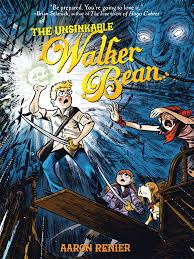
This book has some pretty great blurbs attached to its (from Brain Selznick and Jeff Smith) but I found that I couldn’t really get into it.

A lot of the problem was the artwork.  Interestingly, the artwork on the cover (which I assume is also one by Reiner since it looks like his style) is really great.  But the interior art feels like a sloppy version of this cover art.  And while it’s not sloppy, of course, it just doesn’t look as nice as it might.  Couple that with text that is hard to read, a story line that is full of weird little details and twists and it all wound up being a story that felt way too long for what it was.

There was a lot that I did like about it.  I liked the general premise and I liked two of the crew members that Walker Bean befriends, and of course I loved the various gadgets that they created.  I just didn’t enjoy the story all that much. (more…)

Read Full Post »

flypanam templarSOUNDTRACK: FLY PAN AM-Fly Pan Am [CST008] (1999).

In the Constellation canon, there were four originators: Godspeed You Black Emperor were orchestral, Do Make Say Think were jazzy, and A Silver Mt Zion had vocals.  But Fly Pan Am was the weirdest one—the played with noise, they broke up their songs, they deconstructed their own work and, especially novel to me, everything was in French on the discs.

Roger Tellier-Craig, the main force behind FPA was in GYBE as well.  So he knows post-rock.

Their debut album is a long affair–an hour’s worth of music (in all of 5 songs) taken from two different recording sessions.  (All translated titles are taken from Wikipedia).

“L’espace au sol est redessiné par d’immenses panneaux bleus…” (“The Floorspace Is Redesigned by Huge Blue Signs…”) is a 13 minute song.   There’s ringing noises as a simple melody is plucked out.  The full instrumentation kicks in adding a repetitive guitar line that seems to fall into the background behind the opening notes that are still playing out.  The guitar lines slowly gets longer and longer, almost like a game of Simon.  By around 6 minutes the song has built up a serious head of steam with the bass and drums moving quickly and the guitar getting really complex. By 7 minutes that pretty guitar has turned into a ringing feedback skronking solo which carries on for a minute or so before fading back. At around 9 minutes the song seems to retreat on itself again. The guitars fade away and the bass seems to get a bit louder with the guitars ringing out. The last minute or so resumes a kind of noisy static sound that tells you the song is over.  That’s a heck of an introduction.

“…Et aussi l’éclairage de plastique au centre de tout ces compartiments latéraux” (“…And Also the Lighting of Plastic in the Center of All Its Lateral Compartments”) is a 9 minute song that opens with more scorching guitars and rumbling bass.  The guitar switches back and forth between a two note melody and a chord (dissonant, of course). The other guitar then plays a different three note melody.  About 2:30 in some noisy feedback and samples start taking over the song.  All the music drops away except for the bass.  By 3:15, all the music had dropped out and its just noisy effects and feedback and then outer space sounds.  After about 4 minutes of that (yes, indeed) the bass comes back in playing a kind of discoey rhythm with the guitar supplying a dancey counterpoint which runs to the end of the song.  It’s their first song where something really catchy is utterly dismantled by noise.

“Dans ses cheveux soixante circuits” (“In Her Hair Are Sixty Circuits”) is 17 minutes long (!) and is one of the most abrasive songs I can recall. The song opens with both guitars each playing a two-note melody which rotates through a round. They sound lovely together as the bass and drums play a slow rhythm. The melody changes a few times and then by around 3 and a half minutes the main guitar line grows faster (6 notes instead of 2) and the background feels a bit more tense.   And then at 5:46, the whole song seems to get stuck on repeat. The bass plays a 2 note rhythm, the drums play the same pattern and the two guitars each play one note over and over.  And over.  Evidently it’s “a half-tone interval.”  And this goes on for 12 minutes.  TWELVE!  The only differences through this whole section come from the digitalia of guest electronic musician Alexandre St-Onge, but they are the most unobtrusive electronics I’ve ever heard and just seem to bubble and prickle gently onto the repetition.  It’s maddening and then trance-like and then maddening all over again.  How can they play the same thing for twelve minutes—and their rhythm remains perfect?

“Bibi à nice, 1921” (“Bibi Nice, 1921”) opens with noises and feedback (which is a nice break from the 12 minutes of repetitiveness. But you soon realize that that’s all you’re getting (aside from some distant rumbling noise in the background). It’s a very silent song. For four minutes (out of ten) and then the full band kicks in for a really rocking section—great guitar lines and propulsive bass and drums. But after two minutes, the sound drops out entirely—pure silence (enough to make you assume the disc froze). It slowly returns after 20 seconds–they are messing with us again.  At 7 minutes a new guitar line comes in—slow and pretty with a slow drum beat.  A solo plays over the top—it is primarily electronic, and sounds pretty cool.   The guitars start playing louder and the song feels like it’s going to build up into something huge, but it soon ends and turns into….

“Nice est en feu!” (“Nice Is on Fire!”) seems like it should be connected to the previous song, but it starts off very different with big bass notes playing a very slow riff.  The guitar starts playing a nice accompanying riff. At 3 minutes in, voices come in singing Ahhs in a nice melody. The liner notes say that Kara Lacy and Norsola Johnson do vocals on “Bibi à nice, 1921” and “Nice est en feu!” but I didn’t hear any vocals on “Bibi.”  At 4:30 the guitar line turns to something else and there’s suddenly a whole bunch of noise flooding the track—sounds of water rushing, maybe—but that goes away and a new melody (slightly dissonant) resumes.  With about a minute left the voices resume—angelic and soaring over the rumbling song.  It ends this weird disc on a very pretty note.

I love the crazy stuff that Fly Pan Am creates, even if some of it is hard to listen to.

[READ: February 23, 2016] Templar

I had actually started to read this graphic novel before Prince of Persia.  But when I saw in the introduction that Mechner talks about Prince of Persia, I decided to grab that one and read it first.  The two have nothing to do with each other, but sometimes it’s nice to get things on order.

Who doesn’t love stories about the Templar knights?  The whole premise of the National Treasure is predicated on them after all.  Not to mention, The Da Vinci Code and the book that he says far surpasses all Templar stories: Foucault’s Pendulum [RIP Umberto Eco].

So Jordan Mechner has done a lot of research (there’s a sizable bibliography at the end of the book) to create the story about a couple of Knights Templar.  He says that “much nonsense has been written about the Knights Templar over the years. I’m proud to say that this book has added to that sum.”  He explains that thousands of knights were indeed killed.  Some knights did escape, but the main plot he constructed probably never happened.   One of the histories he read said that “figures of no importance” did escape, and so that was the basis for Martin, Bernard, Isabelle and their gang–inconsequential Templars and their own story.

He also says (in the preface) that all of the movies about the Knights focus on the treasure, but the Knights’ actual story–their rise and shocking downfall– is even more interesting.  He gives a brief backstory.  Formed during the crusades, the Templars gained fame as the noblest and bravest knights in Christendom.  Their legend grew which increased their numbers.   “They were the Jedi of their time.”  They peaked in the 13th century under the protection of the Catholic Church and The Pope.  Then in October 1307 the king of France ordered the mass arrest of All Templars in his kingdom (15,000 of them).  They were brought before the Inquisition and accused of witchcraft, heresy and sodomy.  Guillaume de Nogaret the king’s chef minister staged a huge show trail.  Prisoners who denied the charges were tortured until they confessed, which made everyone who refused to confess seem like a liar. Despite knowing the truth, the Pope bowed to pressure and Templars were destroyed.  Wow. (more…)

Read Full Post »

« Newer Posts - Older Posts »