Feeds:
Posts
Comments

Archive for the ‘Technology’ Category

SOUNDTRACK: THE SWELL SEASON-Tiny Desk Concert #24 (August 10, 2009).

I was going through the NPR recordings that I’ve downloaded and discovered that I had four from The Swell Season.  This Tiny Desk concert is the shortest of the four recordings (although it’s one of the longest Tint Desk concerts–most are about 10-15 minutes, this one is over 33 and has an encore!).  Glen Hansard is charismatic and funny as he says he feels foolish playing just a few songs and would they mind if he played one or two more.

I usually prefer the louder Swell Season songs, but the quieter songs work well in this situation (especially when the NPR staff helps out with backing vocals).  He plays the same songs that you’ll hear a lot on these NPR recordings (“In These Arms,” “Low Rising,” ‘Feeling the Pull” and the highlight of the show: “When Your Mind’s Made Up.”

I’ve liked this song from the first time I heard it in Once.  Every live version I’ve heard is great.  And this one is no exception.  He brings so much emotion to the end of this song as it gets louder and louder and his voice (man he can hold a note) gets louder and more strained.  It’s truly a great musical moment.

And, of course, Markéta Irglová is there as well.  She only sings one song, but her gorgeous harmonies are all over the session (no piano, though).

This is the most subdued of the four concerts, but it’s a good one.  (The NPR halls must have been ringing with his voice during this one!)

[READ: August 21, 2011] JPod

JPod holds a special distinction on this blog.  It is the first book that I have read twice during my time of writing this blog.  It’s also the only book that now follows this pattern:  I read the book, I watched the TV show based on the book, I reread the book.  So now I have the actors from the show in my head as I re-read what happened to them (hi Alan Thicke!).

I’ve been on this Coupland kick (which will now come to a halt for a bit, but will pick up again in the not too distant future) and since I just read Microserfs, I wanted to read this book right on its heels as it is seen as kind of a sequel (but not really at all) possibly because it, like Microserfs has Lego people on the cover.

So let’s get things out of the way first.  This book is not related to Microserfs in any way (except that there’s a (different) character named Ethan, it’s set in a techie world of computer programmers and there are huge swaths of pages that are, if not wasted, then certainly not very practical in terms of reading–more on that).  But there are no overlapping characters, it’s not set in the same country and there’s lots more violence.

The book starts off with a series of pages that tell you the book is not going to be terribly conventional. There’s a series of super large-font words (like in Microserfs) of random ideas.  They’re followed by a break-free four-page rant (in a  different font from the rest of the book) about modern life and technology.  It’s hard to read, but it really conveys a sense of the world we’re entering.

When the book proper starts, Douglas Coupland is mentioned in the first few pages (in a very disparaging way).

“Oh God. I feel like a refugee from a Douglas Coupland novel.”
That asshole?”
“Who does he think he is?”

Then the story kicks into gear. (more…)

Read Full Post »

SOUNDTRACK: RA RA RIOT-Live at the Black Cat, Washington DC,  October 12, 2008 (2008).

I really like Ra Ra Riot’s album The Rhumb Line, and this concert is basically a showcase for that album.  There’ s an interview at the end of the show (all downloadable from NPR), in which the  band says that critics raved about their live show as much as their album.

I don’t really hear that the show is more energetic than the album (maybe visually they are wild), but it did sound fantastic.  It’s amazing to hear a rock band that is dominated by strings–the cello and violin are often louder than the guitar (but not in a competing/drown you out kind of way,  more of a strings do the melodies and the guitar adds bulk to the sound).

I always enjoy hearing a band that is grateful to their audience for showing up (this is most evident in young bands, who seem so much more genuine about their love of the audience) and Ra Ra Riot are certainly that .  They seem genuinely surprised at the turn out, and they play a great set accordingly.

There are two songs that aren’t on the album here “A Manner to Act” and the encore “Everest.”  They both feel like they came off the album, which bodes well for their second album, Orchard, which just came out in May.  Ra Ra Riot also do a great cover of the obscure Kate Bush song “Suspended in Gaffa.”  At the end of the show they tack on a cover of “Hounds of Love.”  Lead singer Wesley Miles has a wonderfully strong voice and he can reach some pretty high notes–not soprano or anything like that, just strong enough to be able to pull off a Kate Bush cover.

This is a great show.  And when you read about the tragedy they suffered just as they were starting to take off, their obsession with death may not be so surprising.  I’m looking forward to Orchard.

[READ: 1995 and August 18, 2011] Microserfs

After reading Life After God and thinking about Microserfs, I looked up Coupland’s bibliography and saw that indeed Microserfs came next.  And I was really excited to read it.  I have recently watched the JPod TV show and I knew that JPod was a kind of follow-up to Microserfs, so I wanted to see how much of it rang true.  And I’ve got to say that I really rather enjoyed this book.

While I was reading this, I started taking notes about what was happening in the book.  Not the plot, which is fairly straightforward, but about the zeitgeisty elements in the book.  And, since I’m a big fan of David Foster Wallace, I was also noting how many zeitgeisty things this book had in common with Infinite Jest.  I’m thinking of tying it all together in a separate post, maybe next week.  But I’ll mention a few things here.

My son also loved the cover of this book because it has a Lego dude on it and he has been really getting into Lego lately.

So Microserfs is the story of a bunch of underpaid, overworked coders who work for Microsoft.  The book is written as the journal of Daniel Underwood (Coupland still hadn’t really branched out of the first person narrative style, but the journal does allow for some interesting insights).  The story begins in Fall 1993.  I felt compelled to look up some ancient history to see what was happening in the computer world circa 1993 just for context.  In 1991, Apple released System 7.   In 1993, Windows introduced Windows NT, Intel released the first Pentium chip, Myst was released and Wired magazine launched.  In 1994, Al Gore coined the term Information Superhighway.  Yahoo is created.  The Netscape browser is introduced.  So we’re still in computer infancy here.  It’s pretty far-seeing of DC to write about this.

Daniel works at Microsoft with several friends.  Daniel is a bug tester, Michael (who has an office, not a cube) is a coder, Todd (a bodybuilder) is a bug tester.  There’s also Susan (smart and independent), Abe (secret millionaire) and Bug Barbecue (an old man–he’s like 35).  The five of them live in a house on “campus.”  There’s also Karla (a type A bossyboots who doesn’t like seeing time wasted) who works with them but lives up the street.

As the story opens, Michael has just received a flame email from Bill Gates himself and has locked himself in his office.  This leads to a very funny scene and ongoing joke in which the office mates feed slide two-dimensional food under his door and he vows to eat only things that are flat. (more…)

Read Full Post »

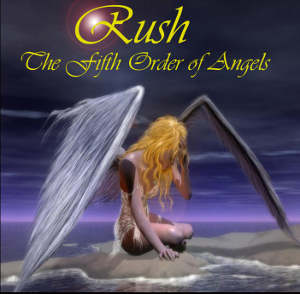
SOUNDTRACK: RUSH-“Garden Road” (1974).

So the bootleg that I mentioned yesterday was in fact incomplete.  On the Up the Downstair site, the track list includes “What You’re Doing” and “Garden Road.”  When I wrote to the cool host of Up the Downstair, he said that these two songs were available on You Tube and that he’d try to find them and add them to the site.

So in the meantime, I got to listen to the song on YouTube.  This is a song that the band wrote but which they never recorded (same is true for “Fancy Dancer”).  I have to imagine that they wrote these songs for their second album (along with “In the End” which they kept) around the time that Neil Peart joined the band.  Once they realized that Neil could write better lyrics, they scrapped these two heavy rockers.  Both songs have great riffs, even if lyrically they’re pretty poor.

The song rocks pretty well, although the solo seems to have been put to better use in “Working Man.”  I enjoy how the song breaks for the shouts of the Garden Road chorus (kind of like “Bad Boy”–perhaps it was a “thing” for them).  I rather like this song, and I think I like it better than a couple of the songs on Rush.

Check it out.

Maybe it’s time to release these old chestnuts for the fans?

[READ: August 10, 2011] Life After God

After the success of Shampoo Planet, Douglas Coupland wrote several short books (which were really short stories).  They were compiled in Life After God.  To me this book also stands out as another odd one from DC, because it is very tiny.  Not in length, but in height.  It’s a small book, about the size of a mass market paperback.  But it makes sense that it was made this short because it is written with lots of short paragraphs that lead to page breaks (kind of like Vonnegut).

For instance, the first story contains at most two paragraphs per “chapter” about–16 lines of text and then a page break.  At the top of each page is a drawing from DC himself which illustrates to a small degree the information on the page.  It leads to incredibly fast reading and even though the book is 360 pages, you can polish it off pretty quickly.

But what’s it about?  Well, mostly the stories seem autobiographical (even though they are classified as fiction.  And actually, I don’t know anything about DC’s personal life so I don’t know if they are based on anything real, although I do know he doesn’t have any kids, so those can’t be true at any rate).  There are eight stories.  They are all told from the first person and are more or less directed at “you.”  They all seem to deal with existential crises of some sort.  They are honest and emotional.  To my ear, sometimes they seem a little forced, maybe it’s contextual, but it’s hard to write this kind of massively introspective piece and have it sound “real.”  (But maybe I’m not very introspective about things like this myself). (more…)

Read Full Post »

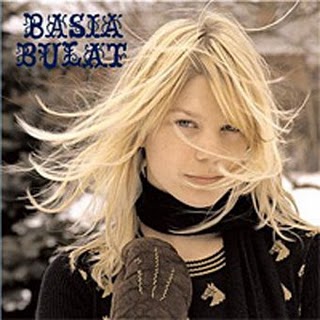
SOUNDTRACK: BASIA BULAT-“In the Night” (2008).

I recently came across Basia Bulat via NPR.  She played a Tiny Desk concert and I discovered that she had several other entries in the NPR canon.

Basia is Canadian (of Polish descent); she has a beautiful strong mid-range/throaty voice and a great sense of melody.  She also has a bit of a gimmick: she plays all kinds of instruments (guitar, piano, sax, etc) including some really weird and unexpected instruments: Zither, pianoette (!) and autoharp–a couple of years before PJ Harvey brought it back to the mainstream.

pianoette

“In the Night” is a wonderfully chipper poppy song.  And that autoharp gives it just a tinge of “huh?’ that makes it more than just a simple pop song.  The beat is fast and energetic, the harmonies are wonderful and the melody is top-notch.

I really like this song a lot, and the other snippets of songs that I’ve heard from her are equally wonderful.   I’ve even noticed that lately she’s been singing a song in Polish!

[READ: July 12, 2011] “Gastronomania”

I’m not going to go crazy reviewing all of the book reviews in Harper’s (that way lies madness), but occasionally an author I like writes a bit that I want to mention.  So Will Self, who I like but have not read a lot of, wrote this essay/book review about food.  He reviews three books, but what I especially liked about it was his introduction, which uses Luis Buñuel’s Le fantôme de la liberté [The Phantom of Liberty] as its starting point.  In the film (which I have not seen), the house’s dining room is actually a well…watch this clip:

It’s a wonderfully bizarre introduction to an essay about food.

It was unclear to me what made Will Self suitable to review three books about cooking.  And then (news to me) he revealed that he used to be a food critic (columns are collected in his book Junk Mail) and that Anton Ego in Ratatouille (yes that Ratatouille) bears “an uncanny, if not legally actionable” resemblance to him.

This essay was so much fun.  Self is as viciously negative about these books as he apparently was about food back in the day.  But he’s not dismissive of them as cookbooks per se, he’s more about trashing the current worship of food (and many other things too of course). (more…)

Read Full Post »

SOUNDTRACK: MOGWAI: GovernmentCommissions: BBC Sessions 1996-2003 (2005).

It’s unlikely that Mogwai will ever release a greatest hits (well, someone probably will, but the band themselves don’t seem likely to do so).  As such, this compilation of BBC Recordings will certainly work well as one.

As I’ve mentioned many times, the BBC recordings are universally superb.  The quality of the recordings is unmatched.  And, typically the band takes the sessions very seriously.  The major different between these sessions and the official studio release is that the band is playing these songs live.  They are mixed well and sound great but they are live, so you can catch occasional subtle differences.

Mogwai, despite their seemingly improvised sound (all those noises and such) can recreate everything they do perfectly, and their live shows are tight and deliberate (except for the occasional moments where they really let loose).

The ten songs here span their career and are not played in chronological order.  This allows all of these wonderful songs to play off the tensions of each other.  And it shows that their later songs, which are less intense than their earlier ones, are still quite awesome and in a live setting don’t really lack for intensity after all.

The highlight of this disc is the scorching eighteen minute version of “Like Herod.”  The original is intense and amazing, and this live version allows them to play with the original in small ways, including allowing the quietness to really stretch out before they blow the speakers off the wall with the noise section of the track.

Even though I’m a fan of Mogwai, I don’t hear a radical difference between these versions and the originals.  Or should I say, it’s obvious which song they are playing.  There are some obvious subtleties and differences as befitting a live album, but unlike some live discs you don’t immediately notice that this version is “live.”

And that works well for both fans of the band (because as you listen and you hear the subtleties) and for newcomers–(because you’re not listening to weird, poorly recorded versions or versions that are for fans only).  And so, you get ten great Mogwai tracks.  Just enough to make you want to get some more.

[READ: June 11, 2011] The Burned Children of America

I found this book when I was looking for other publications by Zadie Smith.  This book kept cropping up in searches, but I could never really narrow down exactly what it was.  As best as I can tell, it is a British version of a collection of American authors that was originally published in Italy (!).  Editors Marco Cassini and Martina Testa work for minimum fax, an Italian independent publisher.  In 2001, they somehow managed to collect stories from these young, fresh American authors into an Italian anthology (I can’t tell if the stories were translated into Italian or not).

Then, Hamish Hamilton (publisher of Five Dials) decided to release a British version of the book.  They got Zadie Smith to write the introduction (and apparently appended a story by Jonathan Safran Foer (which was not in the original, but which is in the Italian re-publication).  This led to the new rather unwieldy title.  It was not published in America, (all of the stories have appeared in some form–magazine or anthology–in America), but it’s cool to have them all in one place.

The title must come from the David Foster Wallace story contained within: “Incarnations of Burned Children,” which is one of his most horrific stories, but it sets a kind of tone for the work that’s included within (something which Zadie addresses in her introduction): why are these young successful American writers so sad?  So be prepared, this is not a feel good anthology (although the stories are very good).
Oh, and if you care about this kind of thing, the male to female ratio is actually quite good (for an anthology like this): 11 men and 8 women.

ZADIE SMITH-Introduction
Zadie Smith was a fan of David Foster Wallace (she wrote a  lengthy review of the ten-year anniversary of Brief Interviews with Hideous Men which is republished in her book Changing My Mind), so she is an ideal choice to introduce this book.  Especially when she provides a quote from DFW’s interview in 1995 about how living in America in the late 90s has a kind of “lostness” to it.  With this in mind, she sets out the concerns of this collection of great stories: fear of death and advertising.

Zadie gives some wonderful insight into each of these stories. The introduction was designed to be read after the book, and I’m glad I waited because while she doesn’t exactly spoil anything, she provides a wonderful perspective on each piece and also offers some ideas about the stories that I hadn’t considered.  And it’s funny, too. (more…)

Read Full Post »

SOUNDTRACKDUNGEN -Skit I Allt (2010).

I’ve enjoyed every Dungen release that I’ve bought and this one is no exception.  Although I will admit that the other ones grabbed me a bit more (there are some amazing songs on earlier discs).  This one is a bit more sedate in general; perhaps this is Dungen’s ballad album.

It opens with “Vara Snabb,” an instrumental with lots of flute (!).  While  “Mid Edna Vän” is a gentle ballad (Gustav Ejstes’ voice is very nice: soft and delicate”).  “Brallor” is a duet with Anna Järvinen–her voice is haunting and beautiful.

“Soda” is another delicate ballad.  It opens with some loud drumming but quickly settles into a very gently sung song.  “Hogdalstoopen” opens with a quiet piano and slowly morphs into a noisy instrumental with an expansive, wailing guitar solo–the kind of which attracted me to Dungen in the first place.  It devolves into some chaotic noise, which is fun and works as a cathartic moment on this mstly quiet disc.

“Skit I Allt” is a pretty standard rock song (very 70s sounding).  And “Blandband” is a catchy piano number with a tone that reminds me of Peanuts, but which concludes with another trippy flute solo.  The last two songs return to the mellow quality of the earlier tracks and “Marken låg stilla” ends the disc with a super catchy chorus.

As I said, compared to their earlier discs which highlighted Ejstes’ firework-like guitar playing, this one shows the bands’ softer side.  It works as a nice companion piece (and still shows off the band’s instrumental chops).

Here’s your quick Swedish translation guide: Dungen (“the grove”), “Vara snabb” (“Being quick”) “Min enda vän” (“My only friend”) “Brallor” (“Pants”) “Skit i allt” (“Fuck it all”) “Barnen undrar” (“The children are wondering”) “Blandband” (“Mixtape”) Nästa sommar” (“Next summer”) “Marken låg stilla” (“The ground lay still”)

[READ: May 23, 2011] “What Animal Are You?”

Etgar Keret was recently in McSweeney’s 37 (I really liked his story).  This short piece is from his forthcoming book, and if they are all unusual like this I would be very excited to read it.

This story seems so much like non-fiction, that I can’t really decide what, if anything, has really happened to him already.  As the story opens, the narrator explains that he is writing for German Public Television.  Literally.  A reporter from GPT is in the room with him right now.  They are filming him for a show and need him to be “writing.”

He tries to fake it, but she says that it will look bad on TV.  So she insists that he write something for real, perhaps about her being there and how it makes him feel to be under pressure like this.  And so he begins writing.  Then his son comes home and gives him a big hug (he’s used to performing for cameras) but his wife (when she arrives) seems far more unnatural on camera–and will probably be cut.

The title comes from a phrase that his son (who is 4) says.  He sits on the stairs and asks everyone who walks by, “What kind of animal are you?”  The narrator reflects on how people respond to him: his wife, some random people who the boy encounters and, ultimately, the reporter.

The whole piece feels like several different snippets, and yet Keret ties them all together very nicely.  And it’s funny too.

It was translated by Miriam Schlesinger.

Read Full Post »

ATTENDED: WEIRD AL YANKOVIC-Live at the State Theater, New Brunswick, NJ May 19, 2011 (2011).

I’ve seen “Weird Al” live three times now and I have never been disappointed by the show.  The first year my friend Matt and I waited out by the bus and got the bands’ (minus Al’s) autograph.  The second time we waited even longer and Al had an autograph (and picture taking) session in the theater after the show (how cool is that?).

This year, Sarah and I didn’t wait around afterwards (kids at home) but the show was still great.  Al made a joke after the first song thanking his opening act, Technical Difficulties. (There were indeed 45 minutes of technical difficulties before the show, but Al’s joke made us quickly forget it–and, kudos to the State Theater: I ordered my tickets online from their site and the day after the concert, the theater owner sent an email apologizing for the delay. Classy!).

Sarah had never seen him perform before, so she was pleasantly surprised by the set selection.  I was also surprised by the set selection because he pulled out a few older, more obscure tracks (“Frank’s 2000″ TV” (!), “You Don’t Love Me Any More”–complete with Al smashing a guitar!).  But he also dazzled with some new tracks from his forthcoming album.

The set opened with the polka medley (“Polka Face”).  This is the first polka medley that I didn’t know any (well almost any) of the sped up songs, but it’s always a treat to watch them play it live.  The one complaint with the show was that the sound in the theater wasn’t very good (which is surprising given that it’s an old theater) so it was hard to make out a lot of the words, especially to the new songs–and what’s Al without the lyrics?).  But his new song “I Perform This Way” (parody of Lady Gaga’s “I Was Born This Way”) was fantastic (Al was dressed up like a cartoon peacock).

Yes, costume changes.  One of the most entertaining things about Al’s shows is the costume changes.  For all of his big video hits, he comes out dressed like the video (the band does as well, although it’s a bit more subtle).  So, we get the Amish garb in “Amish Paradise,” the Michael Jackson red jacket for “Eat It”–(another surprise) and, my personal favorite, the fat suit from “Fat.”  One of the funniest costume changes was for a song that will sadly not be released on the album (but you can hear and download it here), “You’re Pitiful,” in which he wore multiple T-shirts (about 5) which all expressed some kind of funny comment (anyone know who was the face on one of the shirts?) and finally ended in a Spongebob Squarepants shirts and tutu.

So how does he do all of these costume changes? In between songs, when the band runs offstage, they play wonderful video clips.  Some of the clips are from his TV shows, some are faux documentaries, and the best are interviews that Al splices together (you can see a whole bunch here) which are hilarious and surprisingly mean-spirited.  I wish he would release them (and any other AlTv segments) on DVD, but I imagine that no one would ever give permission for that–check out the Kevin Federline one, for instance.  But they’re all pretty great.

The crowd was also totally into it (including the guy behind us with an Al wig (and a Harvey the Wonder Hamster).  And the age range was fantastic–from kids to grandparents.  My only hope is that my kids are old enough to come to a concert next time he comes around.

Oh and a brief word about his band.  He’s had the same four guys with him for years and years and years.  Rubén Valtierra is the newest member of the band and he’s been with them since 1991.  Jim West (guitar), Steve Jay (Bass) and Jon “Bermuda” Schwartz (drums) have been with Al since 1980.  They are tight as a drum, can play incredibly diverse styles at the drop of a hat (check out “CNR” which sounds exactly like The White Stripes) and they all seem to have a lot of fun on stage (see them jump in the air on “Fat” or the crazy vocal-only solo at the end of “Yoda”

–which I think is longer than ever and totally mind-blowing).

[READ: May 21, 2011] This is a Book

I recently read Martin’s “This is Me” in the New Yorker. “This is Me” is, along with about 100 other things in This is a Book.  I also heard Demetri Martin on NPR a few Sundays ago and he read a few short things from This is a Book.  And they were quite funny.

Indeed, the funny things in this book are really very very funny.  It seems to work that the shorter the item, the bigger the laugh.  Conversely there are a number of longer, extended jokes which just go on and on, like a Saturday Night Live sketch that just won’t end.  Those quickly lose their humorous value.  Fortunately  there aren’t too many of those in here.

What makes me smile a lot about the book are the jokes he plays with book conventions.  So the title page says “This is a book by Demetri Martin called This is a Book by Demetri Martin.”  Or the previous page:

Also by Demetri Martin

*

*Nothing yet.  This is his first book.

The book opens with “How to Read this Book.”

If you’re reading this sentence then you’ve pretty much got it.  Good job.  Just keep going the way you are.

I’m not going to spoil the rest of the book (or talk about each piece).  But I will mention some real highlights: (more…)

Read Full Post »

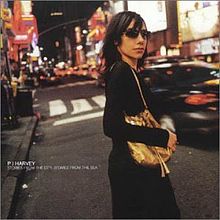
SOUNDTRACK: PJ HARVEY-Stories from the City, Stories from the Sea. (2000).  

When this disc came out it was greeted with rounds of praise.  And it’s easy to see why.  It’s a mature album and it seems very New York City (or, perhaps, more specifically, it seems very Patti Smith–“Good Fortune” practically has Smith singing–I mean the way she says “Little Italy” could have been sampled from Smith).

And after the somewhat wispy Is This Desire and the stopgap Dance Hall at Louse Point, it was great to hear PJ back in full swing. These songs are stripped down (but not raw like her early albums) and most of them pack a punch.  And I just read this quite from PJ  in Q Magazine:

I want this album to sing and fly and be full of reverb and lush layers of melody. I want it to be my beautiful, sumptuous, lovely piece of work.

And it is.  It’s very commercially successful. And it was commercially successful without compromising herself.

“Big Exit” and “Good Fortune” are wonderful rockers, catchy without being predictable.  “A Place Called Home” continues in this vein, with a somewhat slower, moodier piece.  It also exhibits some of her higher register (in the bridge), but for the most part she sings in the deep voice she’s been known for (Uh Huh Her came next, and then she switched over to the higher pitch on White Chalk).

“One Line” even made it on the Gilmore Girls (paragons of good musical taste).

“Beautiful Feeling” is a slow brooding number.  Typically, I find that I don’t like these songs from PJ, but this one is fantastic.  It’s followed by the noisy “The Whores Hustle and the Hustlers Whore” which is very dark lyrically.

Midway through the disc, we get a surprise Thom York from Radiohead sings the lead vocals on “This Mess We’re In” (PJ does backing vocals) and it shows that Yorke sounds great doing anything.  It’s a great song.  “You Said Something” is the first real upbeat moment on the disc, with some nice acoustic guitars.  And it’s followed by the absolutely rocker, “Kamikaze” which harkens to some of the noisier aspects from her earlier records (especially her screaming vocals).

The back half of many PJ albums seem to lose momentum, but not this one: “This is Love” is another great single, catchy with some simple but cool sounding guitars.

“Horses in My Dreams” is one of long (5 minute), slow numbers.  It is a kind of languid piece, which I admit I don’t like all that much.  (I find that PJ’s slow pieces aren’t dynamic enough).  But the album closer “We Float” (at 6 minutes, I think the longest track she’s done) is the kind of moody piece that Harvey does right.  There’s some simple drums and piano that comprise the verses, but when she gets to the chorus, the song perks up with her gorgeous singing “We Float.”

Confusingly, the whole album seems like it is more from the “City” than the “Sea” (“We Float” being the exception), but that’s okay.  It’s a wonderful album and the start of another great decade for PJ.

[READ: late March 2011] discussing The Turing Test

Occasionally things converge in my reading life. And sometimes things converge rapidly.  I had just read an article by Adam Gopnik in the New Yorker that discussed machines becoming (or surpassing) humans.  The timing of this coincides somewhat with the appearance of Watson on Jeopardy! so it’s not entirely surprising to see it.  Watson proved to be very good on Jeopardy!, but that seems mostly because it can buzz in more quickly.  The real test for a computer’s “humanity” is what has been termed “The Turing Test.”

Gopnik’s summary of the Turing Test:

If a program could consistently counterfeit human language in an ongoing exchange, then, many theorists have argued, the threshold of language would have been crossed, and there would be no need for more games to conquer. This is the famous “Turing test,” named for Alan Turing.

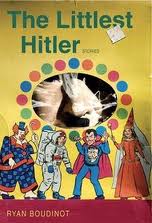
The next night I read a story by Ryan Boudinot (in The Littlest Hitler).  The story is not current at all, and yet he also mentions the Turing test.

The third article is another book review.  The subtitle is “What will happen when computers become smarter than people?”  Again, given everything that’s happening in the world technology-wise, it’s not a total surprise, and yet the items are all quite different and it was interesting to read them all so close together. (more…)

Read Full Post »

SOUNDTRACK: PJ HARVEY-Uh Huh Her (2004).

After the sort of mellow, almost commercial release of Stories from the Sea, PJ Harvey throws the fans a left turn once again with Uh Huh Her.  It’s a heavy, raw album although not raw like Dry was.  It seems  simpler, somehow.  And I think it’s with this disc that you realize that every PJ Harvey record is going to be different.  It was apparent that she had a trajectory on those first few discs, but this one changes everything, and she proves that you’ll never know what’s going to come from her.

“The Life and Death of Mr Badmouth” has a very simple blues riff with kind of chanting (and occasional creepy backing vocals) by PJ.  While “Shame” adds more texture (melodica?) and some more washes of sound.  “Who the Fuck?” is a wonderfully vulgar and raw track with brutal guitars and overly loud vocals.  “Pocket Knife” is a buzzy but quiet track which feels like a demo (the guitar even seems out of tune), while “The Letter” has a great fuzzy guitar sound and a cool melody.

“The Slow Drug” is one of several slower pieces.  As with many of her quieter stuff this does nothing for me, although it’s a nice change on the disc.  “No Child of Mine” is a brief acoustic number.  It feels more like an excerpt or a transitional song than any actual song (being only a minute long).  It leads to the rocking “Cat on a Wall.”  “You Came Through”  mixes things up very nicely with a heavy percussion.  The effects in the song are really captivating.

“It’s You” is a slow piano-based song, while “The End” is a brief instrumental (more melodica).  And “The Desperate Kingdom of Love” is a dark ballad.  The oddest track is “Seagulls” which is a minute of actual seagulls squawking…an unusual addition for any disc.  The album ends with “The Darker Days of Me & Him.” It’s a quiet acoustic song which shows just how many different style she’s willing to experiment with even on one disc.  Even though to me this is a raw rocking disc, there are still a number of acoustic tracks as well.

This album feels like some kind of psychic purge.

[READ: March 31, 2011] The Littlest Hitler

I picked up this collection of stories because I enjoyed Boudinot’s story in the BlackBook collection very much.  I didn’t realize that that story was in fact part one of a two-part story (although part two bore no relation to part one, as you’ll see).  The story in BlackBook was funny and dark, but it didn’t prepare me for just how dark these stories would get.  And for the most part, it seemed like the darkness came at the very end; a surprise, a shock.   I admit i grew a little weary of the device by the end of the collection, although not all of the stories employed it, so there was some diversity. (more…)

Read Full Post »

SOUNDTRACK: RADIOHEAD-The King of Limbs (2011).

I finally had a chance to really listen to this CD and I have some mixed feeling about it.  It doesn’t excite me as much as previous Radiohead releases have and yet, at the same time I can’t stop listening to it.  But I find that I’m listening to it a lot as background music, so I haven’t been able to fully appreciate what’s happening on all the tracks.  Now that I’ve really listened, my appreciation for the disc is higher, although I don’t find it as overall exciting as In Rainbows.

The opener, “Bloom” is a really spare song.  And although I like it, there’s a part of me that wonders almost what’s the point of making an electronica song that is so spare when many others have done much the same.  (It’s interesting to me that iTunes declares that this album is in the genre Electronica).  Of course, with some closer listening, there are some interesting Radiohead things happening, but for me the album doesn’t really start until “Morning Mr. Magpie,” a wonderful weird little song with a great opening guitar riff and excellent use of noisy drumming.  The drumming is really amazing.  It seems to be off-beat and then it speeds up to get on the beat–in every line!  Disorienting and compelling.  But it’s the guitar, I think, that was really missing from the opener.  (Of course, having said that I did like Radiohead’s previous forays into electronica that was sans guitar).

“Little By Little” proves that you can make a weird electronica song that is full of crazy noises and still have a supremely catchy chorus too.  “Feral” is, as far as I can tell, an instrumental (there are lots of sounds that could be voices, but I’m not sure).  It also features one of the great spooky keyboard type sound in a Radiohead song.  Its pretty cool.

“Lotus Flower” is the “obvious” single from the disc (and the radio by me is actually playing it!).  Even though it’s not radically different from the rest of the album, it stands out as the most melodic, the most catchy, the most, well, “single.”  It’s really great.

“Codex” slows things down with, if not a traditional piano ballad, something of a traditional Radiohead piano ballad.  My 5-year-old son made his first venture into music criticism when this song came on.  He said: “Why are you listening to a sad song?”  And when I asked if he liked sad songs he said, “No, sad songs make me feel sad.”  This is a pretty sad song, but it has Thom Yorke’s vocals of redemption pulling through at the end, even while the song retains its sadness.

My son really liked “Give Up the Ghost” though.  He said it sounding like the music at the end of a film, in fact, he was certain it was the music from the end of The Land Before Time movies. (That song is actually a James Horner song, sung by Diana Ross called “If We Hold On Together”).

The final song is a more drum filled track.  Yet despite the manic percussion, the song itself is actually kind of mellow and slow.  It’s pretty much a quintessential late Radiohead song.  Clark’s final review came with this song: “I love this song!  It sounds like someone bonking bananas on your head.”  So there ya go.

So overall, I enjoy the album, but I don’t think it will have as much staying power for me as their other discs.  It’s also surprisingly short (about 35 minutes–although just the other day they released two more tracks).  However, having said that, I’ve since listened again, and I find that I notice something new with each listen, so maybe it will continue to grow and grow on me.

Two of the more interesting things on the album though are the liner notes.  I can’t imagine what inspired, “A big thank you very much indeed to Drew Barrymore”.  And I’m intrigued at “Fluegelhorn on “Bloom” and “Codex” performed by Noel Langley and Yazz Ahmed.”  I’m intrigued that a) there is a fluegelhorn and b) that they needed two people!

[READ: April 10, 2011] The Universal Sigh

This “newspaper” was distributed at some record stores around the world as a tie-in to the new Radiohead album’s release in hard format.  I found out about it from my friend Lar.  He comments that he is too old to be hanging around in the streets waiting for this kind of titbit, and I couldn’t agree more.  He is too old.  As am I.  So it’s nice that there’s a digital version of the paper available.  (Remember when Radiohead snuck little things like this into the backs of their CD cases?)

Now just what is this thing?  Well, it is a newspaper of sorts.  There is a tenuous connection to Radiohead (in other words if you didn’t know they made it, you wouldn’t find out from looking at it). But the main focus seems to be environmental causes.  (Which means that since I printed out the PDF, I have undermined the band’s intention of producing a low carbon footprint product–but hey at least I printed it double-sided). (more…)

Read Full Post »

« Newer Posts - Older Posts »