Feeds:
Posts
Comments

Archive for the ‘Surreal’ Category

SOUNDTRACK: MAC AYERS-Tiny Desk (Home) Concert #118 (November 30, 2020).

I’ve never heard of Mac Ayers and while I respect the fact that he plays everything in this Tiny Desk Home Concert (and syncs things up nicely) and even wears different clothes for each instrument, this 15 minute set was pretty torturous for me.

If you were to ask what kind of singing do I hate the most, my answer would now be Mac Ayers.  I hate the tone of his voice, I hate the way he does those whiny ooooooh at the end of his lines (note in the first song the first verse the way he says “you” and then the way he ends the rhyming word do (he even makes a face like it hurts him as much as it hurts me.

Obviously my opinion is not the popular one, because Ayers is apparently a big star.  But not in my house.

The 23-year-old Long Island native shot this in his basement back in September (hence the ‘register to vote’ comment). Mac’s modus operandi lends itself to the Tiny Desk naturally. No over-produced beats, lots of live instruments and a stunning vocal range — and he handles all duties: guitar, bass, keyboard and background harmonies for three songs from previous albums and the premiere of a new song, “Sometimes.”

He plays “She Won’t Stay Long” and then fiddles on the keyboard as he introduces “Walking Home.”  This song is a little bit more enjoyable for me.  There are fewer grace notes.  Although I do dislike the chorus.

He talks to us from his guitar to introduce the third song (I like that he’s mixing things up).

“Sometimes” is a new song.  It reminds me a lot of Billy Joel (not his voice, but the melody–must be a Long Island thing).

“Easy” has some terrific harmonies, although I hate the lead vocals.  I give him a lot of credit for being an exceptional musician, I just hate the music he makes.

We were well on the way to hosting Mac Ayres at our D.C. offices until we had to shut down and pivot.

I hope this Home Tiny Desk means he doesn’t have to do one in the office.

[READ: December 13, 2020] Modern Times
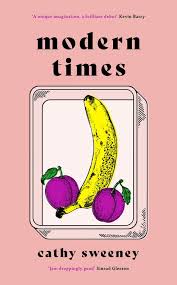
I saw this book at work and, given some of the blurbs, I thought it might be, if not fun then at least unusual to read flash fiction from an Irish writer.  I also prefer this Australian cover (right).

The book starts out with a bang.  “A Love Story” is bizarre and memorable.  In a page and a half, Sweeney talks about a woman who “loved her husband’s cock so much that she began taking it to work in her lunchbox.”  The story is bittersweet and outrageous at the same time.  It was a great opening.

But I feel like the rest of the book lost some steam.  Possibly because I assumed all of the stories would be this short.  It felt like the longer stories dragged on a bit (which is strange for stories about 4 pages long).

Interestingly, “The Woman With Too Many Mouths” even addresses this (to me anyway) as the narrator says, “I could expend many pages recounting my time…. but you would become bored, and worse, you would forget all about the woman with two many mouths.”  The woman with too many mouths had moths (among other things) fly out of these mouths.

“A New Story Told Out of an Old Story” is, as the title suggests, a story within a story.  It feels like a fairy tale with a Woodcutter and a Miller’s Daughter.  There’s even a Grandmother and a Wolf.   In the internal story, the wolf attacks the grandmother.  She survives, but the scar from the wolf makes her husband not want to look at her and the villagers treat her badly.  When you get to the Grandmother’s story, she has a different take on things.

This book is very current and I am reading “The Palace” as being about the pandemic.  Specifically, the outrageous bungling of the response by the current (and soon to be ex!) administration in the U.S.  

The palace was sick  no one believed it, but it was true.  

In the story the palace physically deteriorates.  The king patches it up but doesn’t actually do anything about the problem.

Soon reports of the sickness were breaking in the news on a daily basis. The king gave a rousing speech about battling the forces of evil that had created the sickness and people screamed ‘Long live the King’ until they were hoarse.’

(more…)

Read Full Post »

SOUNDTRACK: KURSTIN x GROHL-“Fuck the Pain Away” (The Hanukkah Sessions: Night Four” December 13, 2020).

   Producer Greg Kurstin (who I have not heard of) and Dave Grohl (who I have) decided that, rather than releasing a Christmas song this year, they would record eight covers of songs by Jewish artists and release them one each night for Hanukkah.

“With all the mishegas of 2020, @GregKurstin and I were kibbitzing about how we could make Hannukah extra-special this year. Festival of Lights?! How about a festival of tasty LICKS! So hold on to your tuchuses… We’ve got something special coming for your shayna punims. L’chaim!!”

The fourth night is very family un-friendly, because it’s a song by Peaches.

Drake’s not the only musical Jew from Canada…tonight we feature a Canadian rock G-Dess…who coincidentally grew up around the corner from a Canadian Jewish rock G-D (G-ddy Lee). Straight out the mikvah, here’s Peaches!

I don’t know Peaches all that well, but I do know this song.

Kurstin plays the minimalist synth line, including the hand claps.

Grohl plays drums and sings.  There’s not much in the way of drums in this song (nor much in the way of lyrics either, actually).  There’s an inherent smile as Grohl sings “sucking on my titties.”

For such a hedonistic song, the pro-school verse is pretty surprising: IUD SIS, stay in school cause it’s the best.

The surprise in this one comes half way through the song when Peaches herself makes a remote appearance.  She sings the chorus with Dave (although they don’t acknowledge each other).

[READ: December 14, 2020] “The Professor”

This year, S. ordered me The Short Story Advent Calendar.  This is my fifth time reading the Calendar.  I didn’t know about the first one until it was long out of print (sigh), but each year since has been very enjoyable.  Here’s what they say this year

You know the drill by now. The 2020 Short Story Advent Calendar is a deluxe box set of individually bound short stories from some of the best writers in North America.

This year’s slipcase is a thing of beauty, too, with electric-yellow lining and spot-glossed lettering. It also comes wrapped in two rubber bands to keep those booklets snug in their beds.

As always, each story is a surprise, so you won’t know what you’re getting until you crack the seal every morning starting December 1. Once you’ve read that day’s story, check back here to read an exclusive interview with the author.

It’s December 14. Sabrina Orah Mark, author of Wild Milk, regrets that she will be unable to attend office hours this week. [Click the link to the H&O extras for the story].

This is the second story in a row that I found very confusing and not very enjoyable.  I really used to enjoy weird stories like this, but my tolerance for this style has thinned as I get older I guess.

It starts plainly enough.  A student, Penny, is waiting for her professor.  Although when the professor calls, “we step over five students I’ve never seen before.” (more…)

Read Full Post »

SOUNDTRACK: KURSTIN x GROHL-“Mississippi Queen” (The Hanukkah Sessions: Night Three” December 12, 2020).

   Producer Greg Kurstin (who I have not heard of) and Dave Grohl (who I have) decided that, rather than releasing a Christmas song this year, they would record eight covers of songs by Jewish artists and release them one each night for Hanukkah.

“With all the mishegas of 2020, @GregKurstin and I were kibbitzing about how we could make Hannukah extra-special this year. Festival of Lights?! How about a festival of tasty LICKS! So hold on to your tuchuses… We’ve got something special coming for your shayna punims. L’chaim!!”

The third night is a rocking version of a Mountain song.

Talk about making a mountain out of a mohel … named Leslie Weinstein at his bris, the singer of our next band built a wailing wall of guitar as Leslie West. Check out our take on a track from Leslie’s monolithic band, MOUNTAIN.

Unlike yesterday’s song, I know “Mississippi Queen” very well. I’ve been a fan of Mountain and even saw them live thirty or so years ago.

Kurstin plays synth and the opening guitar line sounds perfect–he gets a really good guitar sound in this session.

Grohl plays drums and sings.  He’s singing in more of his screaming style for this song which works pretty well.

The joke in this one is that he is using a cup as a cowbell.  The cup is duct taped all over the place and as the song opens, Grohl says “I’m fucking this cup up real bad.”  Kurstin says it’s worth it.  And I agree.  This song rocks.

They play with split screen on this one–during the solo, there’s four shots of Kurstin’s hands.

The only bad thing about this song is that it’s so short!

[READ: December 13, 2020] “Our Humans”

This year, S. ordered me The Short Story Advent Calendar.  This is my fifth time reading the Calendar.  I didn’t know about the first one until it was long out of print (sigh), but each year since has been very enjoyable.  Here’s what they say this year

You know the drill by now. The 2020 Short Story Advent Calendar is a deluxe box set of individually bound short stories from some of the best writers in North America.

This year’s slipcase is a thing of beauty, too, with electric-yellow lining and spot-glossed lettering. It also comes wrapped in two rubber bands to keep those booklets snug in their beds.

As always, each story is a surprise, so you won’t know what you’re getting until you crack the seal every morning starting December 1. Once you’ve read that day’s story, check back here to read an exclusive interview with the author.

It’s December 13. Meng Jin, author of Little Gods, always keeps carbon copies in triplicate. [Click the link to the H&O extras for the story].

I found this story very confusing and not very enjoyable.

It is set in some kind of futuristic society, but hat doesn’t seem to matter all that much.  The narrator works at a job “in those day we still employed a number of humans.”

She was an unusual sight there–being (somewhat) young and (clearly) female.  Most people assumed she was a consultant.

Once she leaves work, the story changes entirely.

On the train she sees a little girl–unsupervised: “young people are rarely seen in the city these days.”

The train breaks down in the middle of nowhere.  The girl encourages the narrator to go with her.

Everyone in the story calls her jiejie (which means older sister).  She seems disconcerted by this.

As they walk through the dark, the little girl tells her that they have become their shadows.  They can’t walk through any unlit spaces, obviously.

She gets back to her apartment. It is pitch dark.  She feels she has lost herself but then she bumps into Duowen, a man from work.  Their mouths meet.

This story really lost me.  I was really interested in the futuristic society and the bots (and their gradual falling apart), but the whole thing with the shadows just didn’t seem very compelling.

Read Full Post »

SOUNDTRACKCOPLAND HOUSE: Tiny Desk (Home) Concert #110 (November 13, 2020).

Every Tiny Desk (Home) Concert is unique.  But this one seems extra special.

the desk – and the home setup – for this performance beats them all. The location is the home, and not so tiny writing desk, of Aaron Copland, America’s beloved composer.

Copland, who would have turned 120 on Nov. 14, gave us Appalachian SpringFanfare for the Common Man and Rodeo, among many other works that helped define a singular American sound.

These pieces are familiar to anyone who has listened to any classical music anywhere (or Emerson, Lake & Palmer).  But these three pieces were ones I didn’t know at all.

The set begins with one of the composer’s earliest pieces in a jazzy vein.

The piece is called “Three Moods: III. Jazzy.”  It is an upbeat, yes, jazzy, bouncy piano piece.  That last all of 80 seconds.  It is indeed, as Michael Boriskin says, delectable.

Michael Boriskin plays Copland’s own piano. He’s the artistic and executive director of Copland House, located an hour north of New York City in the lower Hudson River Valley. What was once Copland’s home is now a creative center for American music.

Up next, Boriskin plays a duet with violinist Curtis Macomber.

The Violin Sonata that follows embodies America’s wide open spaces, filled with possibilities.

“Sonata for Violin and Piano: I. Andante semplice – Allegro” is the only major piece Copland wrote for violin. It is sombre and pretty, with a kind of back and forth violin and piano.  There’s lots of lengthy, slow, almost mournful violin parts.

Macomber departs and is replaced by flutist Carol Wincenc.  They play “Duo for flute and piano: II. Poetic, somewhat mournful; III. Lively, with bounce.”  Those descriptors are part of the title and also describe how the music is to be played.  This piece

 was actually written at the very desk seen in this video.

The first part is slow and sad, while the second one is much more fun and bouncy.  The middle of the second part has a a sow staccato dialogue between the flute and piano.  There’s a fun moment where the flute and piano play the exact same very high note and the sound is really unusual.

I found these pieces to be less engaging than his more famous pieces.  But maybe that’s just because I am much more familiar with them.

[READ: December 9, 2020] “Parade for the Dead and Dying”

This year, S. ordered me The Short Story Advent Calendar.  This is my fifth time reading the Calendar.  I didn’t know about the first one until it was long out of print (sigh), but each year since has been very enjoyable.  Here’s what they say this year

You know the drill by now. The 2020 Short Story Advent Calendar is a deluxe box set of individually bound short stories from some of the best writers in North America.

This year’s slipcase is a thing of beauty, too, with electric-yellow lining and spot-glossed lettering. It also comes wrapped in two rubber bands to keep those booklets snug in their beds.

As always, each story is a surprise, so you won’t know what you’re getting until you crack the seal every morning starting December 1. Once you’ve read that day’s story, check back here to read an exclusive interview with the author.

It’s December 9.  Kelly Luce, author of Pull Me Under, can always pull a quick U-turn if she misses the exit. [Click the link to the H&O extras for the story].

I love how this story started in a kind of surreal location and then did a U-Turn and wound up in an even more surreal place.

Palmsville, Florida, has decided to have a parade for the dead and dying.  The floats were from various hospitals.  County supplied four bodies from the morgue to ride on the back of one of the floats.  Mount Sinai putthree geriatrics (and their ventilators) in a convertible. (more…)

Read Full Post »

  SOUNDTRACK: OZUNA-Tiny Desk (Home) Concert #97 (October 16, 2020).

Ozuna is described as a global superstar and is one of the most watched and listened-to artists on earth. [That link takes you to a Guiness Records page where he is recognized for how much he has been listened to].

Of course, I’ve never heard of him.

Ozuna is a crown jewel in the global crest of Latin pop, a movement whose modern success in reggaeton and Latin trap is indebted to the Caribbean genres Ozuna heard growing up in Puerto Rico, sounds like old-school reggaeton and reggae en español, dembow, dancehall and more.

This Home Concert apparently brings Ozuna’s sound to a more quiet place.

For someone whose work often operates at galactic proportions, this performance of five songs makes room for Ozuna’s sweet tenor to take center-desk in a love letter to the global communities that supported and streamed him to god tier status.

The Puerto Rican singer kicks it off with a breezy rendition of “Caramelo.”

Breezy is a great word for it.  It feels tropical with a reggae rhythm from Freddie “YoFred” Lugo on bass and Elí Bonilla on drums.  The two guitarists (Carlos Mercader and Benson Pagán) play reggae chords and some lead licks.

that leads into a solo version of the sun-drenched “Del Mar” from ENOC, his fourth album that he’s deemed a return to his roots.

It opens with a cool guitar lick and some pleasant keys (Edgardo Santiago).  But Ozuna’s delivery is much faster than the chill music.    I really like the way the backing singer José Aponte matches his voice so perfectly.

Dancing around in the back is the DJ Erick “Yonell” Pachecho.  I’m not really sure what he’s doing back there but he seems very busy.

This pared-down performance makes good on that promise, reworking star-studded collaborations, like the ballad “Despeinada,” as they should be sung: languorously and with intimacy.

“Despeinada” is a quiet ballad.  You can hear Hector Meléndez on the piano playing pretty fills as the rest of the band grooves.  It segues into the banger “Taki Taki” (which I can’t help but imagine is about those purple-bagged chips that I see at the Wawa).

Even the pop smash “Taki Taki” sounds brand new, buoyed by his alchemical flow and energy.

This is my favorite song of the set, from the bouncing rhythm, to the loopy keyboard melody to the fun of singing “taki taki.”  This song is quite short, so it’s clearly just an excerpt. The same is true for “Mamacita” which is barely 2 minutes.  But the flow of this song is great.

I guess the world is right about him.

[READ: November 24, 2020] Nano

I found this book in the hold of our library.  It’s from 2009, although I believe that we received it in 2012.  This means that it has been sitting in our storage area for 8 years and nobody has asked to see it.

This isn’t the only book in this situation–we have many, many books that are unlikely to be read–but most of them are nonfiction and not really timely anymore.  This book, however, is a cute little (40 page) book of cartoons.  And, best yet, they have no words.

There is an introduction (in Spanish) from Máximo, who I assume is the cartoonist Max.  I assume this because Máximo doesn’t come up in searches and because the introduction talks about how Nano is the tiny everyman.  So Máximo is a funny twist on a tiny person.  Or so I think. (more…)

Read Full Post »

SOUNDTRACK: BORIS-präparat (2013).

präparat is Boris’ 18th album.  It contains a huge variety of styles in its 40 some minutes.  It also features a couple of guests.  Michio Kurihara plays guitar on track 3 and 5 and Gisèle Vienne offers spoken word on track 6.

So this album starts with one of the band’s most beautiful instrumentals.  “december” is slow with a cool bassline and gentle drums. The lead guitar perfectly matches the strummed bass.  It’s a lovely post-rock instrumental complete with a section that manipulates the volume knob to bring in extra soft notes.

The pretty guitars continue to ring in on “哀歌 -elegy-” for about 20 seconds before the ominous distortion means an oncoming crash of chords.  But this is a slow crash of chords with some gentle singing (from Takeshi?) in the melodic verses.  About three minutes in the song jumps into a fast rocking section with a great guitar riff and heavy drumming. It’s excellent.

It segues into the 57 second noise fest that is “evil stack 3.”  It’s just distortion and wild soloing, a noisy interlude that is abruptly ended by the gentle “砂時計 -monologue-”  This song is four minutes long complete with gentle drums, and pretty guitars.  About halfway in, it takes off in another postrock spectacle of pretty guitars and a gentle melody.

“method of error” features Michio Kurihara on guitar and starts with some slow heavy thumping chords.  Church bells come echoing in followed by soaring guitars.  The drums interject crashing sounds from time to time.  Two guitars provide an extra wailing solo as the rest of the band jams a heavy chunky riff.  This song runs over 7 minutes.

“bataille sucre” starts off quietly but then brings in a loud ringing guitar.  Then an old school heavy metal riff begins with some screaming lead guitars.  The guest vocals are whispered (presumably in French) and add texture (if you don’t know what she’s saying).

Then comes two songs in under a minute.  “perforated line” is 34 seconds of fast heavy guitar (and synth) that feels like the beginning of song, but it abruptly ends and jumps into the oddball, almost dance stylings of “コップの内側 -castel in the air-” all SEVEN SECONDS of it.  It’s followed by “mirano” which is a warped, carnivalesque waltz with keys and possibly vibes.

“カンヴァス -canvas-” has the tone of a Kim Gordon Sonic Youth song with fuzzy guitars and an almost whispered vocal, although the chorus is pure shoegaze with layers of soft vocals.  About half way through the band add a noisy wall that sounds like it’s going to explode, but it just drops away for some clear crooning from Takeshi.

The disc ends with the eight and a half minute “maeve.”  It opens with skittery percussion and faraway gongs.  Then comes a distorted slow riff.  It’s a slow drone-like song that lumbers along for about six minutes.  The last two are a wave of distortion that sounds like a slow heavy train echoing through your head. 

I love the diversity of this record and the tracks that are not experimental are just dynamite.  I’m really glad this album is no longer hidden away.

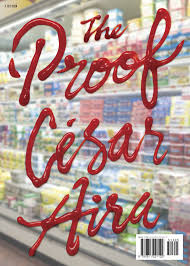
[READ: November 12, 2020] The Proof

The Little Buddhist Monk (written 2005) has been bundled with The Proof (written 1989) together in one book.  Both stories were translated by Nick Caistor.

The Proof is about as different from The Little Buddhist Monk as you could get.  It’s also the most visceral story I’ve read by Aira, whose stories tend to be very “of the mind.”

Indeed, you can tell this story is quite different just from the way it starts.

“Wannafuck?”

This question is asked to Marcia (a senior in high school?–she’s “fourth year”) as she is walking down the street.  There are groups of teenagers hanging around,and this question comes from one of the girls.  (more…)

Read Full Post »

SOUNDTRACK: BORIS-Vein (2006/2013).

Boris continues to reissue their back catalog in streaming format.  Which is pretty amazing since so much of their work is so hard to find.  Possibly not great for collectors, but great for those of us who actually want to hear the music.

Vein is Boris’ thirteenth album.  Because they are Boris, the released two different albums under the same title in 2006.  The packaging was identical on both records and the only way to tell them apart was to check out the surface of the vinyl itself.

The “Hardcore version” had punk, hardcore, and drone.with vocals that are screamed rather than sung.  The  “Noise version” had drone and noise music as well as punk. This version of the album does not include any vocals.

In 2013, the band announced that the album would be released as a 2-CD set not as a reissue, but rather a re-arrangement of both albums combined.

Given all of this, it’s not even entirely clear to me what has been released her on bandcamp.  But it seems like the first two tracks (here labeled “v” and “e” are the hardcore version.  The third and fourth tracks “i” and “n” are a little harder to place.

“v” is 14 minutes long, broken up into several small pieces:

It starts with a wall of noise–static and low feedback swirling and manipulated until 4.01 when it segues into segues into ringing bells and effects that sound like a jet taking off and broken glass swirling and zipping around.   Then some drums and chords are introduced.   At 6:15, there’s a samples from the 1979 film Stalker, by Russian director Andrei Tarkovsky. A man says “И пусть посмеются над своими страстями” (Russian for “Let them laugh at their own passions”) followed by a blistering hardcore song  until 7:52.  After an abrupt halt comes the next screaming hardcore song which is more fuzz than chords with screams and feedback which at 9:06 segues into another super fast song which is distinguished from the others because of a riff where the chords go up and up higher and higher and faster as if they are going to explode, although it rumbles unto feedback at around 10:24 when a new tone of fuzzy nose feedback and a much slower introductory opens before before the pummeling hardcore resumes until 12:03.  This first song ends with a moment of silence and then a woman saying “unpleasant dreams” before a Wata fast high note solo is balanced by slow pummeling chords and drums and cymbals. After a minute or so, the hardcore returns this time with a solo all over the top of the song.  The song ends with a humming and what sounds like car keys jingling

“e” is over 15 minutes long and is one third hardcore punk and two thirds slow lengthy drone.  It starts with an Atsuo scream and hardcore drums. There’s a blistering hardcore song–fast riffage and screamed lyrics (which I assume are in Japanese).  Although the hardcore songs sound similar (and are unnamed) the riffs are distinctive enough to tell them apart.  Some backwards masked sounds come in at 1:05 and a similar riff at 1:15.  I have never seen them play this kind of set–it must be exhausting.  At 2.01 a loud bass comes in with a lot of cymbals and the song is buried under a blanket of distortion.  two minute song starts with.  At 3:04 a buzzsaw sound and a cool riff is coupled with some intense screaming.  At 4:45 it morphs into feedback that contains another sample from an Andrei Tarkovsky film, this time the 1986 film, The Sacrifice.  A man say “I hela mitt liv har jag väntat på det här. Hela mitt liv har varit en enda väntan på det här.” (Swedish for “All my life I’ve been waiting for this. My whole life has been a long wait for this.”)  The rest of the song feels like it might stay a lengthy drone, but at 5:46 after some cracks of the snare, a slow powerful Boris riff emerges.  But the riff dies away for some slow Wata soloing over droning chords.

Track 3 is probably the “noise version” (which is 17 minutes long) or the 2013 re-release (which is 17:25) but this track is 18:04.  Of course, if the “noise” version has no vocals, it can’t be this because it does have vocals.

It opens with a similar kind of noise that opens “v” but more staticky and with distant riffing going on.  At 1:58 a riff comes in.  The songs are like “v.”  A shorter version of the jet sounds are followed by some slow heavy chords.   At 3.22 there’s some chirping feedback that introduces the first hardcore song in “v.”  At 5.22 [#4 above] segues into a scream-filled hardcore song followed at 6:14 by the riff that goes higher and higher.  At 7:36, there’s slow thumping with noise and feedback (this might be new and not on “v”) then a sudden drop off of sound and near silence before the screeching feedback that starts at 8:39 with a blistering hardcore song that sounds unlike anything before. There’s heavy fast riffing with a pause and a big scream before resuming.  At 11:50, warping sounds and a thundering drum compete with a really fast riff which sounds like the first part of “e.”  At 13:05 song 2 from “e” begins–short, fast and loud.  Then at 13:51 comes track 4 from “e” (there’s no track 3) with the buzzsaw opening. At 15.21 there’s some backwards recording which eventually becomes the guitar solo that ended “v,” although this time it’s just under 3 minutes long.

Track 4 is “n.”  Perhaps it’s the “noise version” as there are no words.    It’s 17:59 and is a noisy composition of drone and feedback.  There’s some heavy chords and some quieter moments.  The high soaring notes seem to fit in very nicely with the sludgy bottom parts.  About half way through it turns into a fast, heavy hardcoreish track with a lot of drums, but buried under a wall of feedback and distortion.

[READ: November 12, 2020] The Little Buddhist Monk

The Little Buddhist Monk (written 2005) has been bundled with The Proof (written 1989) into one book.  Both stories were translated by Nick Caistor.

The Little Buddhist Monk is an absolutely bizarre, borderline stream of consciousness story.  It jumps from topic to topic like a fever dream and resolves itself in an even more unexpected way.

The story opens with us meeting the little monk who would very much like to leave Korea (where he was born and where he studied). But he has no money and no reasonable expectation for ever emigrating.  

Then one day a French photographer, Napoleon Chirac, and his wife Jacqueline Bloodymary (!) happened in his path.  They were on vacation and spoke French to each other.  The monk knew French and joined in the conversation.  They were delighted to meet a fellow French speaker in such a foreign land.  He imagined that they could be his ticket out of Korea.  So he decided to help them throughout the day.

They talk a lot about art.  Napoleon photographs empty rooms with a 360 degree camera and then splices it together as one image.  He has traveled the world filming places and he is looking to do a Korean monastery.  What luck, the monk can take them to a good one. (more…)

Read Full Post »

june2020SOUNDTRACK: NORAH JONES-Tiny Desk (Home) Concert # 65 (August 17, 2020).

Norah Jones is a musical force.  Even though her songs are simple and tasteful, she has pretty much conquered or at least dabbled in many genres.

The blurb notes:

I’ve always wished to hear just her voice and her piano in a room. The unfortunate circumstances of our times have given us something beautiful. For this Tiny Desk (home) concert, Norah Jones sits in her music room; it’s just Norah, her upright piano, her poetry, and that golden voice.

I don’t know these songs (I’m sure they are lush), but even with this simple old-school piano, they sound lovely.  All four of these songs are from her seventh record, Pick Me Up Off the Floor.

“How I Weep” and “Heartbroken, Day After” are pretty songs with lovely melodies.

My favorite song of the set is “I’m Alive,” which she co-wrote with Jeff Tweedy.  I don;t know if it’s the Tweedy connection, but I love the melodies in this song–both vocal and musical.  I’ve been hearing this on the radio a bunch and while I do prefer the full on recorded sound, this stripped down version is quite nice.  “I’m Alive” is

a song that at once feels the pain of politics and a pain that is personal.

“You feel your soul / Get hollowed-out / While the world implodes / You just live without.” Yet the refrain is what lingers, “Oh, I’m alive / Yes, I’m alive / But I’m alive / Oh, I’m alive.”

“To Live” sounds like an old spiritual.

Jones is not very animated in this session.  Indeed, if her hat didn’t keep falling off (why not just leave it off?), she’d have very little to talk about.

But I assume one doesn’t listen to Norah Jones for wild storytelling.

[READ: August 4, 2020] “Terrace Story”

This story started out with a young couple moving out of a beloved apartment and into a smaller one.  The couple (Annie and Edward) had a little girl, Rose, and they talked about many things as if they were Proper Nouns: the tree outside the window was Yellow Tree, the place where the pigeons landed was Pigeon Tunnel.  But the most pressing new Noun was Closet Mystery.  The mystery was what would fall out of the tiny closet the next time you opened it.

Annie worked with Stephanie. Stephanie took on some of Annie’s work while she was having the baby.  Annie wanted to thank her, so she invited Stephanie to their tiny apartment.

Stephanie was delightful and funny.  And when she opened the door to Closet Mystery, the door opened onto a Terrace–a terrace that obviously had never been there before.

The terrace was gorgeous–amazing views, plenty of room, a grill, fantastic weather.  It was fantastic.

When Stephanie left, Annie and Edward tried to recreate the Terrace in so many ways.  But it only happened when Stephanie opened the door.

So they invited her over a lot.

They had a great time on the Terrace.  They told Terrace Stories which were stories that were not really true, but it didn’t matter because the Terrace didn’t really exist either.

But soon, Annie grew suspicious of Stephanie.  She felt that the stories Edward was telling Stephanie were more intimate, more detailed (even if false) than they should have been.

Edward told her he would never lie to her outside of the Terrace.

But on the Terrace, the lies were growing too big.  Stephanie started calling Edward, “Eddie” and Rose “Rosie,” and Annie felt that Stephanie was trying to take over their lives.  Annie had once been Anne until someone had started calling her Annie.

It didn’t help that her boss at worked continued to give Stephanie more and more of Annie’s work.

Just what was going on with this Terrace and why oh why couldn’t Annie find it on her own?

I was really delighted in the way this story turned surreal and wonderful and yet still seemed realistic.


Read Full Post »

[LISTENED TO: August 2020] Furthermore

The pandemic pretty much nixed our summer plans.  But we decided to look for someplace close by, in a low-infection rate area, for a short getaway.  It only amounted to a two night trip, but it was well appreciated.  We traveled to the Lake George region and that meant we needed an audio book.

I absolutely love Bronson Pinchot as a narrator.  I will listen to literally anything he reads.  He tends to read darker materials, so the only trick is trying to find something family-friendly.  Fortunately, he reads a lot of those as well.  I’d never heard of this book before (although I was vaguely aware of Mafi’s other series “Shatter Me”).  But as soon as I saw that Pinchot was reading it, I checked it out.

The only bad thing about Pinchot’s narration in this story is that there aren’t all that many characters in it.  Pinchot has an astonishing range of voices at his disposal.  So, to only show off 8 or so means you can’t fully appreciate how great he is.  But the voices he chose were outstanding.

And the story was really interesting.  Mafi has taken a fairly common idea–travelling to another world–and has infused it with all kinds of novel ideas and conceits.

First off, the original world that the characters start in is not our own.  Alice Alexis Queensmeadow lives in Ferenwood, a land full of magic.  Magic is so integral to Ferenwood, that it is a part of everything–including the people who live there.  And that magic is displayed through color.  Color that is abundant and vibrant and breathtaking.

Except for Alice.  Alice was born without color.  She is pale as anything.  Her hair is white, her skin is white–she is unlike anyone else in Ferenwood and she hates that about herself. (more…)

Read Full Post »

20000000SOUNDTRACK: KAWABATA MAKOTO [河端一]-I’m in Your Inner Most (2001).
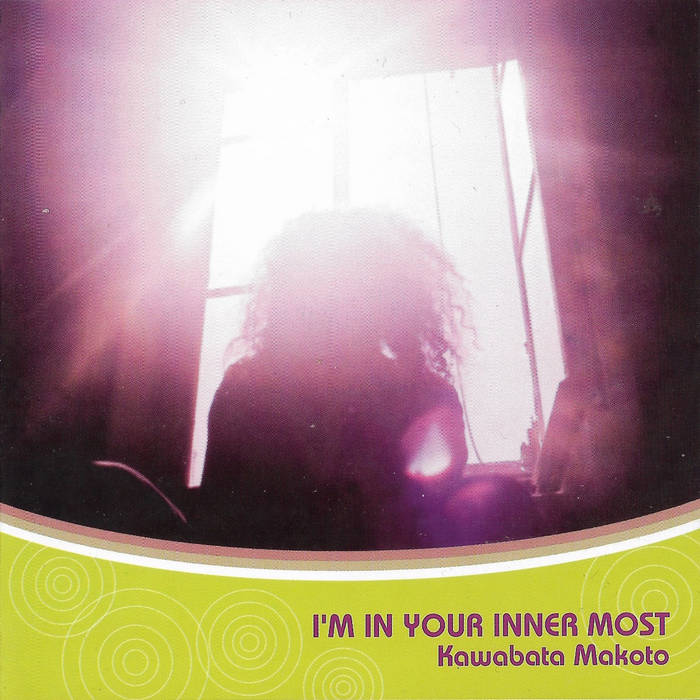
a3548319280_16Recently, Kawabata Makoto [河端一], mastermind behind Acid Mothers Temple, revealed a new bandcamp site for some newer releases.

This is Kawabata Makoto’s minimal music works by his own ensemble reissued in 2002 with a bonus track.

This album is in fact two parts of the same song (technically). And they’re the first of his solo works to predominantly feature organ.  It also features artwork by Kawabata Sachiko

“I’m In Your Inner Most Part.1″ (19.11)  starts with a repeated organ riff and (the inevitable) high-pitched feedback sounds.  This one also has the voice of Audrey Ginestet repeating one word (drift? drip? something in French?).  Every few measure a new item is added and repeated–mostly organ notes in a pattern or a scale.  The last five minutes or so feels like a two note siren as the high notes soar around the top.”

I’m In Your Inner Most Part.2″  (20.24)  opens with that repeated word.  This piece feels a biot more like an improv with organ and the tambura rotating through.

Kawabata Makoto is credited with electric organ, electric harpsichord, violin, tambura, percussion, electronics and electric guitar on this release.

The bonus track is called “Osculation (remix version)”  (15.32).  I can’t tell exactly what it is remixing as it sounds like parts of both songs are melded together.  There is a lot of church organ sounds and repeating motifs.  But around 11 minutes a grinding noise comes into the song and start to take over until the end is just all noise.

Like most of Kawabata’s solo album, this one feels improvised and off the cuff.  The inclusion of the organ however, makes this one solitary in his vast catalog.

[READ: June 13, 2020] “Man-Eating Cats”

Twenty years apart, Murakami has two surreal stories about animals. Actually, this one is far less surreal than the monkey story, but there is a supernatural component for sure.

The story opens with the narrator reading to Izumi from the newspaper.  The article is about a woman who died and her cats ate her–they had been alone in the apartment for about a week with no food.

Izumi wants to know what happened to the cats, but the paper doesn’t say.  She wonders if he were the town’s mayor or chief of police, would he have the cats put down?  He suggests reforming them into vegetarians, but Izumi didn’t laugh at that. (more…)

Read Full Post »

« Newer Posts - Older Posts »