Feeds:
Posts
Comments

Archive for the ‘Surreal’ Category

SOUNDTRACK: L.A. SALAMI-“Day To Day (For 6 Days A Week)” NPR’S SOUTH X LULLABY (March 17, 2017).

L.A. Salami’s full name is Lookman Adekunle Salami.  I really enjoyed Salami’s song “Going Mad As The Street Bins.”  His delivery is great and there were some rather unexpected chords.

For this performance of “Day to Day,” he is standing on the balcony of the Hilton Austin hotel overlooking the downtown skyline.

I usually try to pair kid-friendly songs with books, but there’s some curses in this song).

The music is basically the same for 7 minutes (although it does build by the end), which means you must focus on the lyrics. And they are pretty dark.  It talks about boredom on public transportation as well as gruesome deaths on the news.  There’s talk of mental health, like this section:

Went to work for the NHS –
Mental health, people depressed.
Met Joanne – Scared of living,
Afraid of dying, terrified of being.
Then met Paul, a schizophrenic,
Shaking limbs, paranoid fanatic –
Unwashed 10 days in a row –
So afraid almost paralytic.
I tell them that I do the same –
In certain moods, on certain days…
But despite the sane ways I can think
I could not do much to convince them…

But mostly I enjoy his delivery which has his slightly accented voice and charming mannerisms.  The first time I heard this I wasn’t as drawn to it as I was his other song, but each listen unveils something more to like about it.

[READ: June 1, 2016] Explorer: The Mystery Boxes

This is the first in a series of short graphic novel short stories edited by Kazu Kibuishi the creator of Amulet.

Sarah brought these home for the kids to read and they were sitting around our house for a while so I picked one up.  When I flipped through it and saw all the great authors in it I knew I had to read them.

The three books are not related to each other (aside from thematic) so it doesn’t matter what order you read them in.

This first one is all about “mystery boxes.” (more…)

Read Full Post »

 socks kronosSOUNDTRACK: KRONOS QUARTET-Tiny Desk Concert #322 (November 25, 2013).

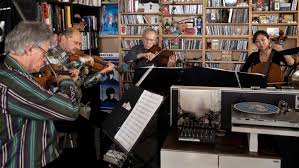
2013 was the 40th anniversary of Kronos Quartet.  I first heard of them about eight years after they started with their cool arrangement of “Purple Haze.”  And then I learned that they were like a sponge, soaking up and playing music from all over the world: In just one year they released albums with tango, songs by South African composers, Polish composers, jazz musicians and so much more.

I have many of their releases, although I realized I more or less stopped listening to new stuff from them around the turn of the century (since when they have released some 16 albums!).

Well, amazingly, the Quartet is still the same original players (except for the cellist–the cello is like Kronos’ drummer as they seem to replace her every couple of years).

They play three pieces here and the three range the gamut from dark and broody to rather sweet to quirky.  In other words, typical Kronos.

For more info:

The musicians —  David Harrington (violin) and longtime members John Sherba (violin) and Hank Dutt (viola) and new (as of 2013) cellist Sunny Yang — could reminisce over more than 800 new works and arrangements they’ve commissioned in 40 years. But instead, the new-music train pushes ever onward to new territories. They remain a living, breathing world-heritage site for music.

Now in the midst of its 40th-anniversary tour, Kronos brings to this Tiny Desk Concert a new arrangement, a work from a new album and, for Kronos, something of a chestnut, a piece the group recorded a whopping five years ago.

“”Aheym” (Yiddish for “homeward”) was written for Kronos by Bryce Dessner; a member of the Brooklyn rock band The National, he studied composition at Yale. The music thrives on nervous energy, pulsating with strumming and spiccato (bouncing the bow on strings) while building to a tremendous fever.”

I love this piece. It is intense and dramatic with its 4-3-3 bowing from all four members.  There’s an interesting cello melody with pizzicato strings from the rest.  The overall melody seems somewhat circular with different instruments taking on different leads.  But this song also plays with some interesting bowing techniques.  In addition to the spiccato (about 4 minutes in), the players drag the bow for momentary scraping and scratching sounds.

Another wonderfully dramatic moment comes at 7 minutes where each musician takes a turn bowing his or her note while the violin plays a super fast series of notes.  The song builds and build in dramatic until it gets to about nine and  half minutes and it reaches its powerful ending.

“Lullaby,” opens with plucked cello notes and strummed viola.  “It is a traditional song with Afro-Persian roots (from the group’s Eastern-flavored 2009 album Floodplain), [and] is woven from different cloth altogether. Colorful tones that lay between our Western pitches are threaded through the music, anchored by a gorgeous solo from violist Dutt; his contribution takes on the warm and weathered sound of a grandmother singing to a child.”  It is slow and moody and beautiful.

Harrington introduces the final piece by saying it’s by a performer that no one had heard of–including, until recently, even himself.

“Kronos caps off the concert with another hairpin turn, this time to a fresh arrangement of “Last Kind Words,” a little-known blues song from around 1930, recorded by singer and guitarist Geeshie Wiley. In Jacob Garchik’s exuberant arrangement (which Kronos premiered this fall), interlocking strums and plucks provide a kind of rhythm section, while Harrington’s violin stands in for the now-forgotten blues singer.”

There’s lots of plucked notes from everyone–including plucked bent note on the viola which gives it a real “early” guitar sound.  While I don’t know what Geeshie sounded like, so I can’t compare the violin to her vocal, the whole thing sounds great together.  In fact the whole thing is unlike any string quartet I’ve heard–so different and wonderful.

I’m going to have to bust out so Kronos CDs.

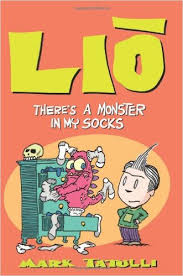
[READ: September 10, 2016] There’s a Monster in My Socks

I’ve been quite puzzled about the publication history of the Liō books.  And this just adds another layer of confusion.  This book covers the exact same time period as Happiness is a Squishy Cephalopod which was published in 2007.  The difference is that Cephalopod placed all of the strips in order, while this one seems to move things around quite a bit (the thinner format also means that it can’t quite handle the single panel strips very well.   But more egregious is that this volume (remember, the one printed after the previous one) prints the Sunday color strips in black and white.

The book also leaves some of the strips out.  It covers the date range from May 15, 2006 – Feb 16, 2007 (Cephaolopod went to May 23), but while it has the Feb 14 strip, it does not have the Feb 15 strip.  Weird.

So, basically this is an inferior version of the same book, but the publishers presumably wanted the books in this more friendly size (or some other nefarious reason).

I’ll include the review of Cephalopod below.

And, here’s the current list of existing Liō books. It’s a shame that there are years and years of strips thus far uncollected. (more…)

Read Full Post »

dragonpunchjohnny SOUNDTRACK: PEDRO SOLER AND GASPAR CLAUS-Tiny Desk Concert #216 (May 14, 2012).

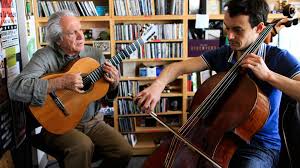
edrogasparPedro Soler and Gaspar Claus are father and son.

Soler plays a delicate, intimate version of flamenco guitar, while his son turns the cello into an exquisitely expressive voice.

I feel like the two could not play any differently and yet their styles meld to create some beautiful music.  The blurb continues:

Though 45 years separate them, pay attention to how they communicate. Music as a living language, and an invisible emotional exchange, is clearly apparent in these improvisational compositions.

The two are pretty fabulous to watch and hear.  Pedro plays so many different styles with his guitar–finger picked flamenco delicacy all the way to aggressive powerful strumming.  Gaspar can also play beautiful soaring melodies–both low and high notes– and then at times he will bow so hard that you can hear the pressure he’s putting on the strings.

They play two pieces.  “La Petenera” is a new song which talks about a woman who was very beautiful.  She had a “love crisis.”  In order to get revenge she had all of the men in the village fight and they all killed each other over her.  Pedro also tells us that Federico García Lorca wrote  three poems about her.

About 4 minutes into the song he plays some crazy noisy stuff that would make any noise band proud. And then he comes out of that chaos with some incredibly delicate bowing.

Gaspar is also not afraid to make serious noise—sliding up the strings to the highest notes and squeaking them or sawing gently while Pedro plays some beautiful melodies.

But Gaspar also plays beautiful passages as well and he seems to be watching hm all the while

Bob asks if they can remember the earliest times they played together.  Pedro (in very broken English) explains that he was giving a flamenco guitar class and Gaspar was watching and then he repeated the exercises on the cello and Pedro says his eyes bugged out.

“La Graneña” is a kind of music from Grenada.  It starts slowly and is a beautiful piece with a lot of lovely guitar playing and Gaspar’s beautiful cello.  It’s very different from the noisy passages of the first piece.   There are some amazingly high soaring notes he plays on the cello, too–almost touching the bottom of the instrument.

About half way through the song it builds and builds with steady chords until it settles down into a quiet picked guitar and plucked cello melody.  It’s delightful and so very different from the rest.

[READ: February 11, 2016] Johnny Boo Meets Dragon Puncher!

It took four years for a new Dragon Puncher book to come out.  And it’s a crossover with Johnny Boo!  (You could also say it took one year for a new Johnny Boo book to come out and its a crossover with Dragon Puncher, but whatever).

This book is set in the winter and Dragon Puncher is looking for the Ice Dragon.

She demands silence as she prepares for battle.  Spoony-E is getting majorly impatient waiting for her to prepare.  And then while “meditating,” Dragon Puncher falls asleep. (more…)

Read Full Post »

zooms SOUNDTRACK: NOVALIMA-Tiny Desk Concert #208 (April 12, 2012).

novalimaNovalima is a band from Peru.  And the blurb really captures them quite well:

Something about tradition inspires reverence and creativity. Throughout Latin America and parts of the U.S., musicians are exhuming centuries-old musical cultures and infusing them with new life to create songs that sound both familiar and new. Peru’s Novalima is doing just that with Afro-Peruvian music.

Over the course of three superb albums, the group has addressed the legacy of slavery in Peru in the form of the traditional lando, a dance rhythm with roots in West Africa. The slow, deliberate beats are played out on a variety of traditional instruments — most notably the cajon, a big rectangular box that drummers hit before drawing sounds out with their palms and fingers. The result can be as deep as a bass drum, but can also hit the high-pitched pops of finely tuned bongos or Middle Eastern dumbeks.

They play three songs which feature acoustic guitar and five string bas anda  lot of percussion–including a donkey jawbone.

“Karimba”is sung by one of the men drumming.  There’s lots of group singing as well–a real party feel.

“Guayabo” and “Festejo” are sung by the female singer.  The bass line for “Guayabo” is just great–weird and almost punk.  It’s kind of sinister even if they don’t sound sinister singing over it.  He’s also wearing a strange kind of drum around his neck–like a box that opens and closes (and you store the sticks in it, apparently.  The middle of the song is all percussion and voice–a celebration of sorts, before that bass returns.

“Festejo” also has a strange, interesting guitar riff.  There’s some great call and response parts of the song–the men really getting into it.  As the song ends the guy with the box and the woman get up and dance in the crowd.  By the end of the song, you realize that it’ sa lot of fun–a groovy dance song like no song you’ve ever head before.

[READ: March 7, 2016] Johnny Boo Zooms to the Moon

As this fifth book opens Johnny is riding a skateboard and Squiggle is towing him.  They are going to go to the moon.  But even Squiggle Power cant get the skateboard to move more than a few inches.  But Squiggles never give up so they wind up falling asleep, no further than when they started.

In the dark, stars come down to see what Johnny is doing.  They tell him he needs star shaped wheels to go to the moon, and that “almost makes sense.”

The stars prove to be very funny–fighting over counting and them fixing his skateboard by braking the wheels of so the stars are now wheels.

And off they zoom, going very fast! (more…)

Read Full Post »

meanSOUNDTRACK: ENDANGERED BLOOD-Tiny Desk Concert #214 (May 7, 2012).

bloodThe Brooklyn jazz quartet Endangered Blood was formed so its members could play benefit concerts for their friend, saxophonist Andrew D’Angelo, who’d been diagnosed with a brain tumor. D’Angelo eventually made a full recovery, but the group — Trevor Dunn (bass), Jim Black (drums), Chris Speed (tenor saxophone) and Oscar Noriega (alto saxophone) — realized that this ensemble had potential to become a real working band. In 2011, the four released a self-titled debut album.

Endangered Blood’s music draws from the members’ diverse backgrounds and influences, combining post-bop, 20th-century chromaticism, traditional New Orleans funeral marches, avant-garde jazz and post-punk to create a sort of mad-scientist concoction. Its compositions are cerebral, but they’re also gritty and full of energy.

The band plays two songs and the description above really gives a feel for what they sound like–kind of all over the place

“Iris” is a slow song that has a real Tom Waits feel (although no vocals).  It has a slow nightclub jazz feel and I love watching the drummer do that kind of swaying lots of arms but quiet hitting drum sound.  There’s an interesting (although quiet) bowed upright bass solo in the middle of the piece.

“Uri Bird” opens with a lengthy bass and drum solo (the drummer seems to be having a ton of fun–including hitting his sticks off the walls and floor).  Then the two saxes come in playing the exact same riff.  This has a bit more bebop feel with the saxes trading off solos.  It ends with a fast wail and a solid beat.

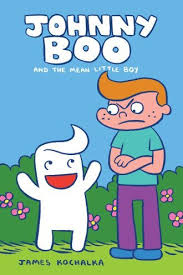
[READ: March 6, 2016] Johnny Boo and the Mean Little Boy

I love how the Johnny Boo universe is so small that characters keep returning.  Like in this one, the fourth book, Johnny Boo tells Squiggle that they can’t play today because his playing with his new friend Rocky the Rock.  This is the same rock that he threatened to make his best friend in the first book.

Johnny promises Squiggle that they will play together soon, as long as Squiggle can give him a “hooray.”  But Squiggle’s hooray is not very enthusiastic.

Squiggle says that he will go off and find other friends, too.  But it turns out to be not so easy.  And then a butterfly starts flying around him.  At first Squiggle is annoyed by it but then he thinks they can be friends. (more…)

Read Full Post »

applesSOUNDTRACK: SO PERCUSSION-Tiny Desk Concert #205 (April 2, 2012).

So Percussion is a quartet who plays nothing but percussion.  When we think percussion we often think rhythm, but these guys (Eric Beach, Josh Quillen, Adam Sliwinski and Jason Treuting) also provide great melody.

The band is inspired by John Cage.  He’s “their guy.”  They have written songs inspired by him and also perform his pieces.

Though audiences are still often puzzled or even infuriated by Cage, the composer brought essential joy and optimism to his work. Music is everywhere, Cage taught; frame sound, even the sounds of everyday life, and hear what is there. In the signature mix of serious play (or is that playful seriousness?) that So Percussion brought to this unusual Tiny Desk Concert, the group mixed a work by Cage (the first movement of his Living Room Music) with two pieces by Treuting: Life Is [ ] and 24 X 24, in which the text Quillen reads aloud comes from Cage’s own writings. Inasmuch as many of their instruments are quotidian tools, the sounds they create can be magical.

The first piece was written by the band’s Jason Treuting, called “Life Is [ ].”  It’s just under three minutes and is primarily wood blocks.  But there are also xylophones and bells (and many other things).

All four have mallets and are clacking on the wood blacks.  But each player has something else that makes a melody–tiny cymbals, the xylophone, bells that you tap with your hand–and they create a pretty melody (and the wood blocks provide interesting counterpoint rhythm).

Since John Cage is their guy they made a piece that celebrates the way he made music: “24 X 24.” Cage celebrated “time-based structures and task-based sound things.”  So this piece is flexible and malleable.  They are going to play an 8 minute version of the song which includes a spoken word of a Cage lecture [the entire lecture is reprinted at the bottom of the post].

The narrator counts down from 8, which is interesting.  Then he recites (including coughs and other noises) a piece by Cage about music and art.  While he is reciting, instruments include the melodica and harmonium, a musical saw, a coffee cup full of change (at one point instead of tapping the cup, he takes the change out and state each denomination out loud).  They also play the side of the desk, a cactus plant (that is pretty cool to see), even plucking the Emmy on the desk.

The final piece is a John Cage composition.  It is the first part of a longer piece called “Living Room Music.”  Back in the early 40s Cage wrote a piece called “Living Room Music” which was supposed to take place in a living room.  And this is our living room.  They play the first part   called “To Begin.” It’s just under a minute, but the sounds they get from a waste basket (like a bass drum), a package of paper towels, a stapler, the desk and the coffee mug is really cool.

Even people who don’t like John Cage have to appreciate what he was going for with this kind of music.

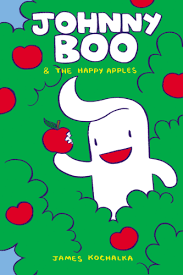
[READ: March 3, 2016] Johnny Boo & The Happy Apples

In this third book of the series, Johnny Boo, Squiggle and the Ice Cream Monster are back.

Johnny eats some ice cream and then shows off how strong it has made him. But when Squiggle accidentally “pops” Johnny’s muscle and it gets all floppy, there is much concern.  Things are even worse for Johnny when the ice cream monster (from the first book) comes and shows off his huge muscles that he got from eating apples.  If Squiggle laughs at Johnny’s floppy muscle you know there will be hurt feelings.  And there are.

Johnny runs off to find some happy apples to make his muscles strong, but he winds up eating apples from the ground, which makes his muscles super floppy (pretty hilarious looking). (more…)

Read Full Post »

johnny-twinkleSOUNDTRACK: SOWETO GOSPEL CHOIR-Tiny Desk Concert #209 (April 16, 2012).

sgcDressed all in black with pink accents the Soweto Gospel Choir certainly looks striking.  And their voices are superb.

The blurb notes that they

managed to tie the all-time record for most musicians squashed behind Bob Boilen’s desk for a single performance in the NPR Music offices. (They join the early-music a cappella ensemble Stile Antico, also with 12).

[I wonder if they keep statistics like this–I’d like to see numbers].

The Choir sings

in a number of South African languages, as well as English, Soweto Gospel Choir fuses the praise music of many Christian cultures, with nods to traditional African songs of celebration — complete with occasional clicks and bird songs.  To watch and sway along was to be blasted with some sort of ray gun that shoots beams of joy and hope.

They sing four pieces.   I don’t know what the songs area bout except for what the brief introductions tell us.

Two different women are the lead singers for the first two songs (no names are given). “Seteng Sediba” and “Emarabeni” which is a wedding song.  A man introduces the rest of the songs.  He says that “Emlanjeni/Yelele” is a traditional song and then he sings lead.  The final song “Kae le Kae” translates to Wherever I Go I Go with Jesus.

For each song the Choir sounds amazing together.  They only person not singing is the guy on the end who is playing the djembe to keep rhythm.  They sway in sync and hold hands up at the same time. They are something to watch.

As the final song ends, the Choir walks out of the room past everyone singing all the while.  It’s a great ending (and gives us a peek into the NPR offices).

[READ: March 3, 2016] Johnny Boo: Twinkle Power

This is the second Johnny Boo book and Johnny, Squiggle and the Ice Cream Monster are all back.

One thing that really cracks me up about the Johnny Boo books is how easily he and Squiggle get mad at each other.  And they always threaten to be mad forever.

In this book, Squiggle flies around Johnny’s head and makes his “hair” stand straight up.  This cracks up Squiggle and makes Johnny very angry and he threatens to never be friends with Squiggle again.

Of course this all started because Squiggle thinks that the stars have amazing Twinkle Power and he thinks it’s even better than Johnny’s Boo Power (GASP!).  Squiggle wants to go up to the stars to see if he can learn Twinkle Power. (more…)

Read Full Post »

johnny-1  SOUNDTRACK: RUDRESH MAHANTHAPPA-Tiny Desk Concert #201 (March 8, 2012).

rudreshRudresh Mahanthappa is a saxophonist whom I had not heard of but who is obviously very highly regarded (he won a Guggenheim Fellowship).

He plays jazz in very different styles, and totally wails (“a swarm of locusts rampaging through an irregular beat”), but has also experimented with different styles.  As the blurb says:

That latest album, 2011’s Samdhi, borrows a bit from … electric funk excesses … and integrates ideas from South Indian scales and modes, hip-hop and computer music programming.

The quartet here is top-notch:

Drummer Rudy Royston and Mahanthappa played in a Denver-based band together some 20-odd years ago, and have since reconnected in New York; electric bassist Rich Brown has played in just about every conceivable setting from his home base of Toronto, including the Canadian Indo-jazz group Autorickshaw; guitarist Rez Abbasi is a long-time confrere in the dual worlds of jazz and South Asian music.

They play two fairly long songs.

“Killer” starts the show.  I really loved the sound that the guitar had–a kind of electric organ/funk sound. Mahanthappa takes off right away.  One thing that was very cool was when I thought he was playing an improvised solo, but the guitarist was able to play exactly what he played both right after him and then with him (clearly it was part of the song–but it sounded great with the two of them together).  After about 4 minutes of wild noisy soloing it mellows out with a long groovy guitar solo–Rez is really impressive.  About a minute after that, the song picks up with some great drumming behind a wild guitar solo.   Around 8 minutes, the drummer gets his own impressive solo.  The ending is great and super fast.  The band sounds amazingly tight throughout.

I really love the sound of his backing band and while his sax playing is amazing and insanely fast, I actually prefer the middle section without the sax–it’s a little too frenetic for me (which is surprising, as I usually like this–I must not have been in the mood when listening).

“Playing With Stones” opens with a lengthy bass “solo” it’s a series of very quickly plucked notes that sounds almost like drums–its very cool. It lasts almost a minute and a half before the rest of the band kicks in.  There’s a great bass line throughout this track too–bouncy and a little funky.  I enjoyed the moment where Rich notices he’s on camera and gives a little smile.  As the song ends you hear them say “pretty pretty good” like Larry David.

Between songs Mahanthappa explains that all of the music on the album resulted from the Guggenheim Fellowship.  It went for research in India, looking for new ways to bridge certain areas of South Indian music and jazz with hip-hop and funk.  There’s also a funny moment when he introduces Rich and says, “He’s Canadian, don’t hold it against him.”  He mentions the CBC and then Rez says “And Tim Horton’s.”  Rich snaps “that’s not funny,” to much amusement.

[READ: February 1, 2016] Johnny Boo

Johnny Boo is a fun children’s series by James Kochalka.

Johnny Boo is a white ghost with a big swirl of “hair?” on top.  Has a pet ghost named Squiggle.  I love how simply these characters are drawn (as Kochalka tends to) and yet they are totally consistent.

As the story opens Johnny and Squiggle are playing around in the field.  Johnny is running while Squiggle is floating around   Squiggle has Squiggle Power and is able to float and swirl.  While Johnny has Boo power which is him shouting Boo very loudly and frightening Squiggle.

Squiggle is upset hat Johnny does this.  Squiggle gets mad, but Johnny says that they will get ice cream.  Which makes everything okay. (more…)

Read Full Post »

pfilSOUNDTRACK: MACKLEMORE & RYAN LEWIS-Tiny Desk Concert #254 (December 3, 3012).

mackI missed the whole Macklemore & Ryan Lewis thing when it happened in 2012.  I was vaguely aware of “Thrift Shop,” but really didn’t know much about him until the hype blew up all over the place.

And now four years later, I’m catching up on him and finding it all pretty great.

This Tiny Desk Concert is interesting for a number of reasons.  All of the backing females vocals are prerecorded, but the trumpet is live (I gather that’s Lewis on the mixing board).  And he and the audience really get into it–I’m not sure when he was in his rise at the time of this show.

I gather that all three of these songs were well-known at the time.  But I’d never heard “Same Love” at all before. It is a surprisingly powerful and moving song about gay rights and human rights.  It seems to start out with a different tone altogether—he is scared that he is gay.  But it quickly turns into something much sweeter and loving. It’s actually quite a tear-jerker.  Then he changes the mood entirely.

“Thrift Shop” has an amazingly catchy melody for the chorus.  The vocal line is a sample as well.  And while I have heard the song before I never noticed the “this is fucking awesome” final line, which has been stuck in my head for weeks now.  This song is really funny.  The R Kelly line is hilarious [Probably should’ve washed this, smells like R. Kelly sheets (Pissssss…) But shit, it was 99 cents! ] and the whole bit about paying $50 for a T-shirt is spot on.  He hops around and is full of infectious energy.  There’s a live trumpet solo at the end.  Lewis plays with a set of sleigh bells and then knocks them off to much laughter.

As the song ends he grabs the Emmy and says, “Thank you, we’re outta here.  Peace.”

The final song is “Can’t Hold Us.”   The chorus of that song sounds so familiar.  I’m sure I’ve heard it before but I can’t imagine where (maybe roller skating?).  But man, is it catchy.  For this version, Ray Dalton sings with them.  I guess maybe he’s the guy who sang the original?  It sounds like there’s also a recording going with it, though, so who knows, and who cares.  The live trumpet is a nice touch.

As Bob notes: “The live, sweet, soulful sounds of singer Ray Dalton belting, ‘Like the ceiling can’t hold us’ had Macklemore standing on my desk and shaking the dust off the ceiling tiles.”  It is fun an exhilarating.  And as the show fades, you can hear him ask, “You guys have a shower?”

[READ: February 8, 2016] The Brief and Frightening Reign of Phil

Saunders wrote this novella during the Bush administration. But it feels shockingly more relevant now.  This is the story of an unqualified buffoon who takes charge and attempts to force his will on a country.

But in typical Saunders fashion it is over the top and somewhat absurd, except that it is all quite real.

The story is about a small country called Inner Horner.  Inner Horner is so small that only one citizen can stand in it at a time.  The other five citizens must stand in The Short-Term Residency Zone.  Outer Horner is huge with lots of empty space.  The Outer Hornerites don’t really mind the Inner Hornerites being in the Zone, but they didn’t want to offer any of their own land to Inner Horner because, well, what if other countries wanted land too.

Then one day, a seismic shift makes Inner Horner even smaller.  Now only 1/4 of a citizen can fit in Inner Horner at a time.  Leon, an Outer Horner Border Guard noticed that this citizen (whose name was Elmer) was mostly in Outer Horn and he sounded the alarm that meant Invasion in Progress.

The Outer Horner Militia (Freeda, Melvin and Larry) came over and glared at Elmer.  They don’t believe in the shrinking–decent countries don’t shrink.  But the militia doesn’t know what to do.  And then Phil, a guy standing nearby, says why not tax them?

Phil was in love with Carol, a citizen of Inner Horner. But she had married Cal (another Inner Horner citizen) and they had a child, Little Andy.  This made Phil very bitter.  (more…)

Read Full Post »

dragonpunchis SOUNDTRACK: JOYCE EL KHOURY AND BRIAN JAGDE-Tiny Desk Concert #196 (February 20, 2012).

joyceI don’t listen to opera, although I don’t dislike it.  I’m amazed at the power of these singers’ voices.  It was interesting to watch this duo up close like this because you could really see them emote the story (especially in the duet).  So even if I had no idea what was going on lyrically (which I didn’t), I could get a sense of how they reacted to each other.

Here’s some background:

Soprano Joyce El-Khoury and tenor Brian Jagde are young, fresh-faced opera singers at the dawn of promising careers. El-Khoury has already appeared at New York’s Metropolitan Opera, while Jagde has sung roles in smaller houses here and in Europe.  Miloš Repickný joined the two singers at our trusty electric piano.

For this Tiny Desk performance, she reprises her role of Lauretta in Gianni Schicchi by singing the hit aria “O mio babbino caro,” in which she pleads with her father to let her marry her boyfriend. Listen for El-Khoury’s immaculate control of dynamics. Her soft, pianissimo notes are silvery and well-supported by the breath.

Jagde steps up next for a number from Puccini’s Tosca — the opening tenor aria, “Recondita armonia” — in which he muses about Tosca, his “dark-eyed mistress.” It takes a lot of work to sing it right, and Jagde produces the requisite drama and decibels.

The two hard-working singers end with the deliciously romantic duet which closes act one of Puccini’s La Bohème. “We’ve just fallen in love,” Jagde notes. “It happens really quickly in the opera.” As their two powerful, love-struck voices intertwine, the sounds of Puccini reverberate off the walls of the entire fifth floor — a good day in the office.

The first piece [Puccini: “O mio babbino caro” (from Gianni Schicchi)] is sung by Joyce and her voice is wonderful.  Its starts a little quiet but really soars by the end.  It is only 2 minutes (which is something of a surprise).  It’s amusing to hear her speak in such a plain American voice after wailing in Italian like that.  Brian then speaks.  He begins with a wonderful Italian pronunciation of the song they will sing and then reveals himself to have a standard American accent as well.  He tells us a bit of the plot of the song [Puccini:” Recondita armonia” (from Tosca)].  He is painting in a church–a beautiful blonde goddess.  And he compares her to Tosca, who is completely the opposite.  And then that quiet voiced guy opens his mouth to sing.  The power in his voice is incredible.  And just before the end, he wails an amazing note.  This piece also lasts only 2 minutes

The final piece [Puccini: “O soave fanciulla” (from La Bohème)] is a duet. He says that they are in love and about to go out together but they have to look at each other one more time. They sing beautifully together.  I can’t imagine his big powerful voice singing right next to her ear (and being romantic at the same time).  They act it out very well.  There’s even a moment where they look about to kiss but she pulls away to keep singing—it’s good convincing acting.

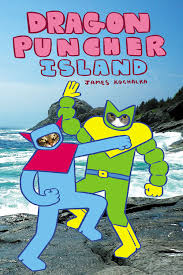
[READ: February 12, 2016] Dragon Puncher Island

This sequel to Dragon Puncher is just as funny as the first.  The Kochalkas got a new cat who takes a starring role.

The story opens up with Dragon Puncher and Spoony-E by the seaside (filmed in Maine).  Spoony-E is bragging about his spoon-wielding abilities (even though his spoon is broken).  Finally Dragon Puncher tells him to be quiet.  And also to stop calling him mister as she is a girl cat.

But when Spoony E stats saying “who’s my pretty little kitty,” Dragon Puncher gets mad and punches Spoony-E!  Spoony is caught by the new kitty, a green bubbly creature called Monster Slapper.  And Monster Slapper doesn’t take kindly to this small, furry and, frankly, smelly creature. (more…)

Read Full Post »

« Newer Posts - Older Posts »