Feeds:
Posts
Comments

Archive for the ‘Supernatural’ Category

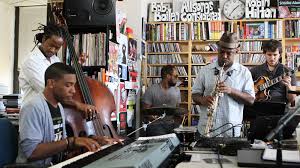
spacedump SOUNDTRACK: YO-YO MA, EDGAR MEYER, CHRIS THILE AND STUART DUNCAN-Tiny Desk Concert #175 (November 17, 2011).

yoyoYo-Yo Ma might be the most well-known cellist in the world.  I suspect that everyone has heard of him.  But it’s likely that people don’t know just how diverse his musical range is.  As the NPR blurb says:

He’s reached out to a broad range of musicians (and Muppets) to play not just Bach and Beethoven, but also Brazilian samba, Argentine tango, jazz, songs from Sesame Street and a smorgasbord of Asian music with his Silk Road Ensemble. American roots music also figures into Ma’s melting pot: He teamed up with double-bass master Edgar Meyer and fiddler Mark O’Connor 15 years ago for the gentle new-grass album Appalachian Waltz.

For this 2011 venture called The Goat Rodeo Sessions, he has created another Americana album, this time with mandolin master (and multiple Tiny Desk Concert player) Chris Thile.  Meyer is back on double bass and they have added Stuart Duncan on fiddle.

I can honestly say I never expected to see Yo-Yo Ma on a song called “Quarter Chicken Dark” but there he is, playing along as Thile begins the song on the mandolin.  The cello, fiddle and bass are all bowed so, despite the mandolin, the song feels a bit more classical (Thile has also made classical music on the mandolin, so the pairing actually makes a lot of sense).  I think Thile comes off as the star of this song with a wild solo in the middle.

For “Attaboy,” the mandolin starts the song again, but pretty quickly the strings dominate.  There’s a beautiful opening by Ma and a great fiddle interplay in which Duncan hints at the big Irish section he’s going to play.  There’s some wonderful fast mini solos from all of the instruments, including the bass, and then the whole song switches to a jig with Duncan playing a very Irish riff while Duncan and Ma keep the low notes coming.   Incidentally, I believe that Thile and Duncan are playing the exact same solo by the end, which sounds great.  But it’s watching Yo-Yo Ma’s fingers and bow move so fast that is really amazing.

For the final song “Here and Heaven” Aoife O’Donovan joins them on vocals.  And for a chance of pace Duncan switches from fiddle to banjo.  (Although mid way through the song he switches back to fiddle).  Donovan and Thile sing the song together.  On the first verse they are a little too quiet.  But once they start belting out they are fine.  This song is catchy and fun and the vocals really do change the feel of their music.

It’s clear that these accomplished musician are having a lot of fun together.  Meyer and Ma actually wave to each other during the second song, and Thile makes lots of little jokes.  And when he introduces Aoife, it’s funny to hear Yo-Yo Ma cheer like a little kid.

While Yo-Yo Ma if probably the most famous musician here, I like them all, and I’ll honestly listen to Thile do anything.

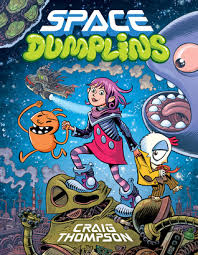
[READ: August 29, 2012] Space Dumplins

Craig Thompson has created a pretty diverse collection of books.  From the serious and beautiful Habibi, to the weird-looking and sad Goodbye Chunky Rice to this trippy sci-fi story.

The story is about Violet Marlocke, a young girl who lives out in a space trailer park.  Her father is a space lumberjack (whatever that means) and her mom is a seamstress.  They are poor but pretty happy, and that’s okay by Violet, since family is everything to her.

But as the book opens we learn that space whales (okay, I’ll stop putting “space” before everything, because he doesn’t) have just eaten her school.  The whales have been rampaging all of the planets in the area. At first Violet is happy to have no school but her parents have to do something with her.  So her mom brings her to work at Shell-tar where they try to see if she can enroll in the state of the art school there.  She can’t because her dad has a criminal record (and he’s opposed to the fancy school anyway).

While Violet is looking around, she meets Elliot Marcel Ophennorth, a small chicken who is incredibly smart (and has visions of the future).  We also meet Zacchaeus, the last Lumpkin in the world. He works at the dump.  Violet quickly befriends them both, although they don’t all get along very well at first.

Two things then happen pretty quickly back home.  Violet and her dad buy an old piece of junk space bike to fix up and Violet’s dad takes on a dangerous job to make some more money. (more…)

Read Full Post »

sleazeSOUNDTRACK: MARKETA IRGLOVA-Tiny Desk Concert #174 (November 10, 2011).

marketaMarketa Irglova came to the world’s attention in the film Once, where she duetted with Glen Hansard.  They formed The Swell Season and made some beautiful music together.  But he has another band and she has done some solo work, like in this Tiny Desk.  Incidentally, watch the video, but listen to the audio.  For some reason the sound in the video is all wonky and weird, but the audio is fine.

This concert is a little surprising because Irglova plays a synth, rather than a piano, and she is accompanied by Iranian singer-percussionist Aida Shahghasemi whom she met in New York.  And Shahghasemi and her drum (called a daf) are actually a bit more interesting than Irglova.

Irglova has a nice voice, and I have really enjoyed a lot of her music, but I found these songs to be a little long and a little undramatic.  However, once you accept that she’s not going for drama, these songs are mellow and lovely.

The opening song, “We Are Good,” has an interesting main riff on the keyboard and her voice blends nicely with the music.  The end section has a very nice melody as it builds and builds.  But as I mentioned, it the daf that is so fascinating.  The drum itself looks like an Irish bodhran (or any other hand-held drum, I suppose), except it has a much bigger diameter and is very thin.  It also has a series of dangling items on the inside, which bring about a lot more percussive qualities.

“Dokhtar Goochani” is a traditional Iranian song sung in Farsi.  Shahghasemi sings the song while Irglova plays.  With the keyboard, the song doesn’t really sound very Middle Eastern until Irglova joins in on harmony vocals in the chorus, when it takes on a very cool quality.  And the drum and percussive sounds in the middle are really enticing.

After this song, Shahghasemi talks a bit about her drum and says that it can be much louder than she’s playing it here.  It’s a traditional Kurdish drum with “jangles” which she explains is usually made of goatskin, but this one is synthetic because the humidity doesn’t affect it as much.

The final song, “Let Me Fall In Love” is about the idea of being in love, with lyrics that are a bit didactic, but whatever.  I really like the middle section where the two women harmonize quite beautifully.  But again the song is a little long.

[READ: October 25, 2015] Sleaze Castle

The cover of this book is crazy.  The full title appears to be:

Markosia/Gratuitous Bunny Comix
Sleaze Castle : The Director’s Cut
Part Zero: “Tales from Sleaze Castle”
Reprinting “Takes from Sleaze Castle” #1-#4
Screenplay by Terry Wiley & Dave McKinnon  Art Direction by Terry Wiley

And then a drawing of a woman with what looks like a magic wand and another woman standing by watching her.

And then there’s a whole list of “Starring” (these names are actually characters in the stories)
and then Film Sound Track Album by MWOWM available on Gratuitous Bunny Audio #GBA3

That’s a lot to take in and it made me wonder if the comic would be that busy.  And it is.  This book is a wonder to behold.  Self published in 1992, this book is just chock full of story, with an astonishing amount of detail included in the drawings–nods to other comics, musical appreciation and all kinds of fun things to look at.  It took me a pretty long time to read this because there was just so much to see and read.  It was a lot of fun.  Even if the plot was a little confusing.

This book collects the original books and adds material (which is not at the end of the story necessarily (so art quality varies).

The book opens on a planet far away.  A blonde woman is talking about the trip she will take which will last for ten minutes their time.

Then we jump to the Prologue set in Jo’s house.  Her sister Petra is giving her a hard time.  Jo wants to take her watchman to school (she is a film studies graduate student) but it was Petra’s new present.  So they are fighting of course.  The amazing detail starts here with books on Jo’s shelves and all manner of other things to look at. (more…)

Read Full Post »

nessSOUNDTRACK: BEN WILLIAMS & SOUND EFFECT-Tiny Desk Concert #170 (October 24, 2011).

ben williasmBen Williams is a jazz upright bass player (I didn’t realize bass players made band leaders, but clearly they do).  In 2009, he won the Thelonious Monk Jazz Competition.  And is an up and coming star.

He plays two original songs from his album State of Art.

It’s not often that the blurb describes a song, but it does a better job than I could have so for the first song, “Home”

the guitar (Gilad Hekselman) and drums (John Davis) lay down an aggressive, snappy foundation. The bass and electric keyboard (Christian Sands) fill out the polyrhythms. That groove, with its snappy hip-hop flavor, feels at home cruising down Georgia Avenue, then turning right on U Street NW, the historic African-American commercial district of Washington [D.C. where Williams is from]. Then the saxophone (Marcus Strickland) enters, and it’s game on.

That saxophone really runs the show on this song.  There’s an interesting keyboard solo (I like the sound he chose, very Stevie Wonder-ish, but it’s a little quiet).

The sax switches to a smaller sax for the second song, “Dawn of a New Day.”  The song is much slower and is more than twice as long as “Home.”

There’s a pretty lengthy bass solo (which sounds very old-school to me).  It’s followed by an electric guitar solo that has an interesting effect on it which made me think at first that it was a horn.  The horn comes next with a lengthy sax solo.  The final solo comes from the keyboard (which now sounds like a piano).  And then the song returns to that interesting main riff.

[READ: April 20, 2016] The Rest of Us Just Live Here

Sarah brought this book home and told me the premise–imagine what the stories of the other kids in the Buffy Universe would be like–wondering about all of those weird kids fighting vampires or whatnot.

At first I thought she meant that the other kids didn’t know what was going on, which would have been funny.  But in this story, the kids know that there are vampires and other mystical things, they just aren’t any part of the action–they are not the Chosen Ones.

It’s a very funny premise for a book, and I looked forward to how Ness would create a story around people who aren’t “doing” anything.

But that’s not the only thing that the story is about.  Ness makes the lives of the other kids so compelling and so, human (even if one of them is a quarter god). (more…)

Read Full Post »

walkerSOUNDTRACK: THE CIVIL WARS-Tiny Desk Concert #137 (June 27, 3011).

civilMany Tiny Desk performances just show the band playing.  But there’s evidently a lot of time before hand where the band sets up and has fun.  I love seeing that, and it’s kind of a shame they cut so much of it out.

As this show starts, Joy Williams is holding the film clacker with Bob.  He tells her to give it a loud clack.  She kind of lets it go on its own accord and then says she didn’t do a good job.  John Paul White then says “I could have done it so much better,” to much laughter.

The Civil Wars are Joy and John Paul and they have terrific chemistry.  The first song is “Barton Hollow,” John Paul plays a loud percussive resonator guitar and the two sing great harmonies.  He sings loudly with her nice harmonies, but the middle part is quieter with her gorgeous voice singing out the lyrics.   I really like the down step chords in the “walking and running” section at the end of the song.

Before “Twenty Years” Bob asks if they ever had a desk job.

Joy says no: daycare, rock climbing.   John Paul says No: forklift driver, seed cleaning, (she asks what that means, but he doesn’t hear her which is a shame as I’d like to know too) cleaning out chicken houses.  He pauses…. I wanted a desk job.

For the song, John Paul switches to a simple acoustic guitar and plays less percussively for this somewhat quieter song.

It’s really fun to watch the two of them play together.  As the blurb notes: “There’s blissful, swooning chemistry as they stare into each other’s eyes and sing magnificently together.”  So it’s a bit of shock that they are not married to each other (they each have spouses, though).  Turns out that they met at a songwriting session at a Nashville studio in 2008.

Before “Poison & Wine” John Paul asks if they are all so quiet and respectful or if Bob rules with an iron fist.

Joy plays the keyboard for this song while John Paul plays a quiet guitar.  This song has wonderful harmonies in the beautiful if puzzling chorus , “I Don’t Love you, I always will.”

I didn’t know The Civil Wars before this set and I am really hooked.

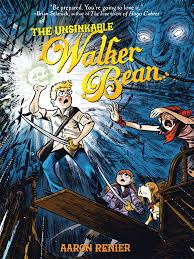
[READ: February 2, 2016] The Unsinkable Walker Bean

This book has some pretty great blurbs attached to its (from Brain Selznick and Jeff Smith) but I found that I couldn’t really get into it.

A lot of the problem was the artwork.  Interestingly, the artwork on the cover (which I assume is also one by Reiner since it looks like his style) is really great.  But the interior art feels like a sloppy version of this cover art.  And while it’s not sloppy, of course, it just doesn’t look as nice as it might.  Couple that with text that is hard to read, a story line that is full of weird little details and twists and it all wound up being a story that felt way too long for what it was.

There was a lot that I did like about it.  I liked the general premise and I liked two of the crew members that Walker Bean befriends, and of course I loved the various gadgets that they created.  I just didn’t enjoy the story all that much. (more…)

Read Full Post »

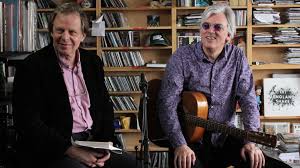
fairytaleSOUNDTRACK: JOE BOYD AND ROBYN HITCHCOCK-“Tiny Desk Concert #142 (July 18, 2011).

robynThis is one of the more unusual Tiny Desk Concerts because it is not just music.  It is music and a recitation.  Joe Boyd (who I didn’t know) is a producer of many classic 1970s albums, including albums by Pink Floyd, Syd Barret and Nick Drake.  Robyn Hitchcock is an unusual and often funny singer songwriter.

Hitchcock opens the concert by stating (in his wonderfully British broadcaster’s voice) “All my life I’ve been Robyn Hitchock [and I’m here with] Joe Boyd who has been Joe Boyd even longer than I’ve been me.”

Joe and Robyn were doing a tour together in which Joe would talk about his experiences with these artists and then Robyn would play a representative song.

Robyn plays two songs.  The first is Syd Barrett’s “Terrapin,” a song I’ve always like.  His cover sounds a lot like Barrett’s version while still retaining Hitchcock’s distinctive singing quality.

The second song is one that Hitchcock wrote for the tour called “I Saw Nick Drake.”  It was planned as the first encore. It’s very much a Hitchcock song, a little trippy and strangely  catchy about him seeing Nick Drake and Nick being fine.

Between these songs, Boyd talks for about fifteen minutes, telling about working with Syd and how amazing he was…until he wasn’t.  And then about working with Nick and how every recording he did was perfect and how big his hands were.

If you care about either of these musicians or about British rock from that era, this is a great performance to check out.  It’s informative and a little funny too.

[READ: January 19, 2016] Fairy Tale Comics

This book follows on First Second’s Nursery Rhyme Comics book. Perhaps because this was a thinner volume or perhaps because Fairy Tales are a bit more substantive than Nursery Rhymes, I found this book even more enjoyable than the other.

And even though I (and possibly you) think that you know every a fairy tale, there were quite a few in here that I didn’t know.  In his editors note, Chris Duffy notes that he encouraged the artists to pick stories other than Grimms (although Grim is well represented).

Brothers Grimm stories include:

“Sweet Porridge,” which I’d never heard of.  This is done in a classic cartoon style by Bobby London.

“The 12 Dancing Princesses” seemed vaguely familiar.  This was done in a very pretty style by Emily Carroll.

“Hansel and Gretel” I did know, of course.  It’s fun to see Gilbert Hernandez doing a children’s story since I think of his stories as very adult.  But his simple drawing style works perfectly for this story.

“Little Red Riding Hood” has a very simple almost anime style from Gigi D.G.  It ends with a happy ending.

“Snow White” was done by the other Hernandez brother, Jaime.  His style is so peculiar and yet so perfect for this tale (the fact that the baby is actually white is a wonderful touch.

“Rumpelstiltskin” is done by Brett Helquist whom I know from the Lemon Snicket stories.  I can see his style a bit in these drawings but the colors really bring his interesting style to life.  It’s a great version.

“Rapunzel”  I have recently become a huge fan of Raina Telgemeier, and I love what she does with this story.  Although as I finished it I had to wonder if this is how the story is usually finished.  This seemed much more positive than what I imagine the Grimms intended.

“Bremen Town” I had never heard of this story.  And I can’t believe that this was how it was originally written. In this story a group of animals forms a band.  They frighten away bad guys so that they can jam.  How weird.  Karl Kerschl’s style suits it well.

“Give Me the Shudders” is another Grimm story that I had never heard of.  It’s about a boy who can’t shudder or shiver and so every one assumes he is fearless. He keeps asking people to teach him to shiver, but when they see he can’t they keep promoting him to better stations in life. David Mazzucchelli’s style works nicely with this because of the simplicity of his design amid the craziness of the story.

In addition to stories from Grimm, there are these fairy tales

From Charles Perrault:

“Puss in Boots” makes me wonder if I don’t know the story all that well.  I was quite intrigued by the way this one turned out.  Vanessa Davis has a kind of sloppy style.

From 1001 Nights Tales:

“The Prince and the Tortoise.” I had never heard of this story.  It’s pretty wild and weird.  The drawing style by Ramona Fradon reminds me of adventure comics from the Sunday papers.

From a Japanese Tale:

“The Boy Who Drew Cats” is a wonderfully cool and interesting story about the powers of fantasy and doing what you are meant to do.  Luke Pearson’s drawing is perfectly old school and nearly monochromatic for the Japanese landscape.

From Bre’r Rabbit”

“Rabbit Will Not Help”  I don’t know this tale but I do know some Bre’r Rabbit.  He’s such a bastard, and the drawing style by Joseph Lambert works nicely with that.  It’s a little weird and dark–perfect for this tale.

From an English Tale”

“The Small Tooth Dog”  I had never heard of this tale.  It’s pretty weird from start to finish, and that includes the art by Charise Mericle Harper whose style is very dramatically cartoony and also a little weird.

“Goldilocks and the Three Bears” I didn’t realize that this wasn’t a Grimm story.  This was my favorite in the book because of the way Graham Annable chose to do it.  There are no words just wonderful illustrations and great looks by both Goldilocks and the bears.  I suppose it helps if you know the story already–it may not be ideal for those who are seeing for the first time (whoever that may be) but as an interpretation, I loved it,

From the Russian Tale:

“Baba Yaga”  Russian Tales are always so dark.  And Jillian Tamaki represents this very well. This story has a house with chicken legs, wolves, talking cats and much more.  I really like Tamaki’s work a lot and I enjoyed her interpretation.

From The King and His Storyteller:

“Azzolino’s Story Without End” is another story I’d never heard of.  In it, a boy king wants to be told a story without an end.  And the king’s story-teller think of a great way to do it The story is short but Craig Thompson’s style is right on.

I really enjoyed this collection a lot.  And I love getting introduced and reintroduced to these stories that I’ve known for quite some time.

Thanks First Second. #10yearsof01

Read Full Post »

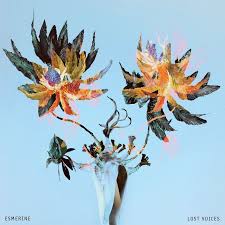
dirkSOUNDTRACK: ESMERINE-Lost Voices [CST116] (2015).

esmerine 2Esmerine’s previous album was recorded in Istanbul and featured a lot of Middle Eastern instruments.  This album was recorded in France and has an incredibly different tone than the previous one.   It doesn’t really have any unusual instruments.  Well, except for the darbuka (a drum) and the riq (a kind of tambouine), both of which appear on the track “Funambule.”  And these interesting items: the ekonting (a West African lute) and the sarod (an Indian lute).

This album has moments that rock a lot harder and louder than anything they’ve done before, but it also has some lengthy mellow moments too.

“The Neighbourhoods Rise” opens the disc with staccato strings and bass.  Then the cello and violin come in.  The song builds and grows more dynamic as drums enter the song, but at 3:30 the song bursts forth with big chords and loud drums.  There’s a great violin melody running through the exuberance.  Then the music all falls away leaving a lovely, sad cello and violin melody to take the song out.

“A River Runs Through This Town” opens with the most conventional sound of an Esmerine record–simple (loud) drumming and an acoustic guitar melody.  More instruments come in, adding complexity. I love that each instrument that comes in–marimba, cello–adds a new layer of notes to the mix until about 3 minutes in when it switches over to big chords.   The song works back and forth between these two styles and rocks much harder than any of their other songs.

“Pas Trop Pas Tropes” is a song of quiet marimba and lots of strings–the cello and violin are once again rather mournful, but very cinematic.  It doesn’t travel very far in its four minutes but it’s beautiful while its there.

“19/14” (can that be a reference to the time signature?) opens with marimba and drums and a deep upright bass (and I believe plucked cello).  When the staccato guitar (or is that the cello?) starts picking out notes the song gets even more interesting.  And then at 3 minutes an electric guitar solo bursts through the melody.  It’s probably the loudest thing the band has recorded yet.  Until the end of the song which gets even louder with pounding drums.  It’s fantastic.

After that, the album mellows out somewhat.

“A Trick of the Light” is but 2 and a half minutes.  It’s washes of keyboards and quiet cello/violin parts.  And then comes–a first for Esmerine, I believe–piano (played by Becky Foon).  The piano is simple but it stands out so dramatically on this track that it sounds amazing.

“My Mamma Pinned a Rose on Me” opens with a cool marimba melody and some ominous keyboard chords.  Some of the middle eastern instruments mentioned come out on this song.  It plays with variations on that simple marimba pattern with different instruments taking turns playing simple chords the top of it.  Somewhere round 5 minutes the song gets so mesmerizing that it nearly puts me in a trance.

“Funambule (Deux Pas de Serein)” opens with some thumping bass and rocks drums along with the Middle Eastern drum playing some cool accompaniment.   And then the nearly 8 minute song is off.   This song revisits the Middle Eastern sounds of the previous record, but with a difference–the drums make the song feel bigger and more intense until about 2 minutes in when the song shifts to a kind of screeching solo.  And then the song resumes with a much faster rhythm.  By 4 minutes the whole song is thudding away, powerful drums and a wall of sound.  When the wall wears itself out, the song’s denouement is more layers of cello and violin–beautiful intertwining melodies.

The final two songs are short.  “Our Love We Sing” is 3 and half minutes of synths and slow cello.  This song also features Becky Foon’s voice, singing wordless passages.  It builds and builds but has no grand climax.   The disc ends with “Lullaby for Nola” a simple piano twinkling and then strings accompany the lovely voice to create this slow, beautiful lullaby.

This album is not as cohesive as the previous one, but it really lets the band explore lots of different avenues.  I’m certainly looking forward to whatever they come up with next.

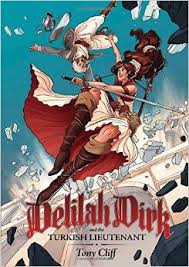
[READ: February 2, 2016] Delilah Dirk and the Turkish Lieutenant

I enjoyed this story quite a lot.  Cliff’s animation which was peculiar but ultimately very satisfying.  And more importantly, he tells a great story.

It opens in Constantinople in 1807.  The King has just begun a game in which the strongest men fight for as much gold and riches as they can grab

Then Chapter 1 shows us Delilah Dirk in prison.  And the guard Selim is reading off the extravagant list of charges against her.  These include–marksman, acrobat, swordsman, world traveler (alone!) and a woman with the ability to fly.  As we flashback to her meeting Selim in prison, we see her being quite cross at getting caught and just about to tell him.  Until she tastes his tea.  Then she reappraises him.

Turns out that Selim’s quite the man with a pot of spices.

As he relates Delilah’s exploits to the king, the king bursts out laughing–primarily because Delilah is a woman.  He doesn’t even think twice that she might try to escape until (and wee see this behind the scenes) she bursts through the wall to her rescue.  And takes Selim with her. (more…)

Read Full Post »

sculptorSOUNDTRACK: ESMERINE-Dalmak [CST096] (2013).

dalmakI really enjoyed Esmerine’s previous record–it was a delightful surprise from a band I didn’t know.  Since then, they have put out two albums.  Dalmak is a Turkish verb with many connotations: to contemplate, to be absorbed in, to dive into, to bathe in, to rush into, to plummet.

The album was recorded in Istanbul and after laying down the basic tracks, they added local musicians who contributed some great sounding Middle eastern and Turkish instruments–bendir (a drum), darbuka (another kind of drum), erbane, meh, barama and saz (a stringed instrument)–on tracks 2, 3, 4, 6, and 7.

“Learning to Crawl” opens the disc and consists of 3 minutes of beautiful swirling cellos and violins that create a wonderful atmosphere.  “Lost River Blues Pt 1” comes in next and it changes the whole tenor of the album with the first of the Turkish instruments.  The marimba keeps a musical rhythm as the other droning instruments play layers of music–creating an unexpected tension.  The repetitions of the rhythm is a wonderful undercurrent to the lovely cello and violin that play washes of music over the top.  Their melody adds a great deal of drama.  It is a 7 minute song and once it’s over it jumps right into “Lost River Blues Pt 2.”

Part 2 opens with some stringed instruments playing a great middle eastern melody alternating with some loud choruses of instruments.   The song grows quiet in the middle and the flute like instrument (the meh?) plays a melody before all of the drums kick in again (there are so many drums) the song grows more intense.

“Barn Board Fire” opens with some Middle Eastern strings again (the saz, I gather) and a simple two note bass to back in up. When the drums kick in the song really feels full.  There’s a cello solo that runs throughout the song and it’s quite lovely.  When the cello matches the rest of the music, there’s few measures that play with loud and soft and it’s quite cool.  It builds to a raucous ending before echoing out

“Hayale Dalmak” opens with some waves of keyboards, almost like a new age song.  it works as something of an intermission before the intense cello melody of “Translator’s Clos Pt 1.”  This time the first part is the shorter one, as the drums and cello play a great melody and rhythm together.  Again, it’s so scenic and evocative.  It builds to a great closure before switching to Pt 2 which opens with a great percussion intro (I need to know how they made those popping sounds).  This part is a little slower than the first, although the drums are still pretty intense.  In fact, even though there is a lot of cello in this song, the drums are really the highlight with all kinds of awesome percussion going on.  The middle of the song introduces the first vocals on the record–I assume they are in Turkish or Persian.

“White Pine” sounds like a western melody played on an Eastern instrument and a mournful violin played over the top.  It’s a neat twist. The final track “Yavri Yavri” opens with glockenspiel and strings.  The song swirls around before vocals come in again.  It stays like this for five or so minutes–always remaining somewhat mellow but never easy.

I really enjoyed this album.  And it gets better with each listen–the combination of Western and Eastern instruments works so well in these songs.  And of course, Becky Foon and Bruce Cawdron write some amazing melodies as well.

[READ: February 20, 2016] Sculptor

I know Scott McCloud from his excellent Understanding Comics, which does a great job in explaining how comics work to novices but also shows keen insight for fanboys as well.

I never really considered that he had created his own comics (even though the above book is also full of his drawings).  He had created a series called Zot!, but really not all that much more.

The premise of this book is fairly simple, but the details and twists and the psychological depth are really staggering.  As is the beauty of McCloud’s drawing. (more…)

Read Full Post »

cst053webmoomin7SOUNDTRACK: THE DEAD SCIENCE-“Throne of Blood (The Jump Off) 7” single [CST053] (2008).

This was a tour only 7″ that Constellation picked up before releasing The Dead Science’s Villianaire album.  There are two songs, “Throne of Blood (The Jump Off),” which is the lead song from the Villainaire and “The Duel of Iron Mike” which is unavailable elsewhere.

“Throne of Blood (The Jump Off)” opens with some lovely harp playing before the eccentric vocal styles of The Dead Science take over.  Everything about this song is unexpected–the weird staccato guitars, the crazy falsetto, wavery vocals.  The song seems totally random until you hear all of the intention in it all where it all gels at the chorus. I love the part where the backing vocal comes in and sings “Villainiare Ice Grillianiare” (or whatever the heck it says).

“The Duel Of Iron Mike” (not to be confused with the Wu Tang Clan track which is what you’ll find if you look up the song n YouTube), opens with an interesting riff.  There’s that low bass and that falsetto vocal that you either love or hate.

The chorus is almost catchy–it’s a little too minor key to be catchy but it’s very intriguing because it’s not quite what you expect and after one or two listens, you can’t stop playing it.  The end section with the two layers of falsetto vocals is weird and very cool, too.  The Dead Science are a unique band.  I wish they’d put out more music.

[READ: February 12, 2015] Moomin Volume 7

Moomin Book 7 and every subsequent book is made entirely of strips written and drawn by Lars Jansson.  These stories originally ran in the Evening News, London 1960-1975.

These four stories continue with the themes that Tove wrote about.  And Lars’ drawings look very much like Tove’s as well.  I have noticed a few things that look different–sometimes he does the eyes differently, and certain angles don’t look quite right.  But otherwise, it’s a pretty seamless transition.  Oh I aslo noticed that in this book, he has begun signing his name much bigger in each strip.

The chapters are “Moomin the Colonist” “Moomin and the Scouts” “Moomin and the Farm” “Moomin and the Goldfields”

(more…)

Read Full Post »

vamplove SOUNDTRACK: DO MAKE SAY THINK-You, You’re a History in Rust [CST045] (2007).

rustYou, You’re a History in Rust feels very different from DMST’s previous album.  That record felt kind of insular and tight.  This one feels expansive and experimental.  Like the first song which has multiple sections that feel completely unrelated and which are only connected by silence.  Or the fact that there are lyrics in a song, or even a fairly conventional song.

“Bound to Be That Way” This song opens in a peculiar way.  There’s a drum rhythm, that slowly builds and some piano chords are laid over the top. This goes on for about 45 seconds and then fades out.  And then a new melody–completely different–with horns and guitar peeks its way out. And then it too fades.  Then around 2 minutes a pretty guitar melody comes through followed by big crashing distorted drums. Eventually a new riff enters the song and it really starts grooving.  It’s fantastic, but it too is just a portion of a song which ends at around 4:30.  And then another new section comes in. Then acoustic guitar riff is counterpointed by some horns.  The final melody is the catchiest one of the bunch and it ends this strange song on a high.

But if that was strange, “A with Living” offers the biggest shock to fans of the band.  There are words in this song!  And they are sung! Words were co-written and sung by Alex Lukashevsky and the Great Lake Swimmers’ Tony Dekker.  Akron/Family also joins in doing “oohs” and “ahs.”  It opens with rumbling drums and then the singing begins.  The song has a conventional verse chorus verse structure with big horns.  It’s catchy (the vocals are great).   But it’s also a 9 minute song and at 4 and a half minutes the song moves way from the melody and enters a lengthy instrumental section with deep rumbling guitars.  The chorus of voices returns briefly before the mellow guitars lead us to the end.

“The Universe!” is one of my favorite DMST songs.  It rocks and rollicks.  It has two notes and then five bashing chords.  Repeated several times.  It’s one of the most straightforward songs they’ve done.  It has screaming guitar solos and a cool sliding bass. It’s also very raw sounding, with all kinds of noise floating around it.  And just like that, it’s gone.  Seguing into the quiet, “A Tender history in rust” which opens with processed guitars or keyboards, layered upon each other.   There are voices fighting through (saying all kinds of sounds—including laughing), before it switches to a pretty acoustic guitar riff.  It’s a delightfully conventional folk melody–another unusual addition for the band.

“Herstory of Glory” has another pretty acoustic guitar melody with some rattling drums (in the right ear).   Then there’s a rumbling bass and distant voices before more and more instruments add to the beautiful song–pianos, trumpets, claps.

“You, You’re Awesome,” is the shortest song on the disc at under 4 minutes.  It opens with slow electric guitars and a e-bowed solo.  After a minute or so, the rest of the band comes in with a slide guitar and banjo making a kind of sloppy folky romp.

“Executioner Blues” is another favorite.  Its 8 minutes long with some lovey guitar riffs and sounds.  It opens with some big guitars and a repeating riff.  A martial drums enters the song and keeps it moving until the next big section.  Horns repeat a similar melody and then a romping bass guitar takes over.  More instruments kick in making the song noisy and slightly distorted.  There’s piano trills, glockenspiel, electric guitar, noises and more.   and the instruments all go up the scale slowly for a few bars and then play a punch of staccato notes.  It’s rather dramatic.  After several permutations of this, they just keep going up and up the scale until the reach the top and then they gradually descend again.  The last minute is a series of quiet bass notes, as if everyone has totally come down from that intensity.

“In Mind” is a quiet disc closer.  A simple guitar melody, it is joined by banjo and trumpet.  Then some bass lines come in followed by a very distorted chorus singing “When you die, you’ll have to leave them behind/You should keep that in mind/When you keep that in mind, you’ll find a love as big as the sky.”  The disc ends with some quite banjo plucking.

This disc goes all over the place and really explores different avenues.

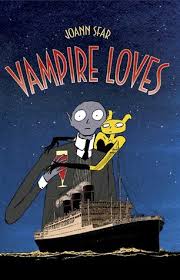
[READ: February 10, 2016] Vampire Loves

Joann Sfar created Little Vampire (and apparently about 100 other comics, some of which have been translated into English by Alexis Siegel and published by First Second).  Of the things I’ve read by him, (and there have been a few) I enjoyed this the most.  It seems like a lot of his books (like Little Vampire) are for kids, bu this one is absolutely for adults (there;’s curses in it and talk of sex and everything).

There are four stories in this book (I just learned that Sfar has written six in total, so maybe there will be more translated). After the third book in this collection, there’s a question as to whether or not Ferdinand, the vampire in this story is Little Vampire.  There’s a little drawing of Little Vampire which says that Ferdinand is him.  “But vampires don’t grow up!  No, but they can grow little.  Ferdinand was me before!  You mean that before being little you were grownup? Yes.”  So there’s that sorted.

“Could Cupid Care Less?” starts us off with Ferdinand the vampire’s woes.  His girlfriend, Lana, (a kind of plant creature) has just come back.  She cheated on him, but turns the conversation around to say that it is his fault–if he weren’t so jealous he never would have found out.  He freaks about this and she storms off again.  Furious, he sets off for his nightly feeding.  Ferdinand is a nice vampire–he takes little sips and only with one fang so it looks like mosquito.  While he is feeding on a woman, a red-haired vampire storms in and shows him how to do it right.  She is a vixen with an ankh necklace and after feeding, she comes on to Ferdinand hard.  She says she likes old, proper-looking vampires–not goth wannabes.  She brings him back to her house but before they can do anything, her sister walks in.  She’s also red-haired and has a shapely figure and actually has more in common with Ferdinand.  And that’s when we learn that the first woman’s name was Aspirine and her sister’s name is Ritaline (ha!).

All of the stories cut back and forth to different sections.  So we cut over the Lani who is staying with the Tree Man.  He is trying to hit on her, but she’s having nothing to do with it.

We return to Ferdinand where he just can’t get rid of Aspirine, even when he wants some alone time.  He can’t get a woman he wants and can’t get rid of the ones he doesn’t.

“Mortal Maidens on My Mind” opens with a Japanese woman meeting Ferdinand in Paris and falling for him.  They do all kinds of things together and she even writes home about him.  But Ferdinand had to return home and that was the end of that.

We cut back to the Tree Man who is still pining for Lani but is having no luck with her.

Back home, Ferdinand runs into the man who slept with Lani, Michael.  He also argues that it was Ferdinand’s fault that things wound up as they did.  He says that he was just looking for fun.  He didn’t want to hurt anyone, so why did Ferdinand have to get involved?  After a fight Ferdinand leaves to go to a bar where he tries to hook up with a woman but it all falls apart.

Then we cut to a man who has created a golem.  He wanted the golem to do bad things, but the golem is so kind that he couldn’t possible have made the him do the evil things he planned.

The postscript of the story contains a few notes on the protagonists of this story which sort of retroactively tries to make sense of the seemingly disparate story lines and lets us know how these characters belong here.

“Lonely Hearts Crossing” shows Ferdinand on a cruise.  But first we meet a woman named Alas, and her spiritual ghost-creature-friend named Sigh.  Alas is looking to score with the captain of the ship (who is the invisible man).

Meanwhile Lani is going shopping with Tree Man.  He has become her buddy and he can’t get out of it.

On the ship, Ferdinand runs into a werewolf who turns into a wolf when he sees a girl.  He only transforms back if he can kiss a girl.  But he is a such charming creature that he has no problems scoring–much to Ferdinand disgust and amazement.

The story turns very exciting as there are armed criminals on board and a shootout.  And by the end of the story Ferdinand is making out with the spirit ghost creature (who teaches him how to go through walls which turns them both kind of ghostly for a time).

“Moonstruck Post Mortem” ends the book with Ferdinand trying to pick someone else up.  His conscience is bothering him lately though so he manages to get rid of it.  The woman is interested in him but already had two boyfriends so she kind of blows him off.

The scenes shifts to Ferdinand at the police station.  He’s not n any trouble.  in fact, the police would like him to help with their investigation of suspicious murders.  Since he’s nocturnal they figure he can look at night.  That’s how police work, right?

Ferdinand decides to go out drinking again. He meets a woman he likes, but she seems disinterested. So he quickly moves on and finds a  creature who is into him.  But he is quickly utterly disgusted by her.  And the first woman just came back. Oh no!

Frustrated, he leaves and goes to see the dentist–because the dentist has some secret information about the investigation. But before he will give the information to Ferdinand, he needs to give him a compete check up.  By the end, he tells Ferdinand not to get involved. And as the story progresses and the criminal is found…  Ferdinand is shot and thrown into a hole!  Can Ferdinand’s conscience come to the rescue?

The whole story concludes with Ferdinand going back to find Ritaline (but of course finding Aspirine instead).  She offers to let him bite her–but when one vampire bites another it’s “catastrophe.”

It’s a totally nuts book but very funny.  Another fun book in my #10yearsof01 February.

I think the reason I don’t enjoy the Sfar books as much as I might is because they are printed so small.  I don’t know what the original size was, but the format makes everything feel really squished.  This makes the dialogue hard to read and means you can’t see all of the details that well.  I think if these books were bigger it would really help their appeal.

Read Full Post »
little vamopSOUNDTRACK: DO MAKE SAY THINK-Winter Hymn Country Hymn Secret Hymn [CST025] (2003).

hymnThis album, at least according to the liner notes, seems to be broken into three sections, as the title suggests.  Although there is no explicit attachment of a particular hymn to the songs, there is a gap between the listings, giving each section three songs.

“Federica” is 9 minutes long and opens with a very lovely slow guitar melody.  Then the drums crash in and the song doesn’t change so much as intensify.  At around 3 minutes the song pauses before a loping bass adds to the mixture and the songs gets bigger and bigger, and even a little funkier. When the distorted guitar comes in at 5 minutes, it’s hard to believe it’s basically the same song all along.  It builds to a cacophonous explosion and then settles down again. A new style emerges—slow and plaintive with mildly distorted guitars. But they can’t stay muted for long. The distorted guitar comes back and forces the song forward with some distorted bass and other noises until it resumes a reprise of the original guitar melody.

“War on Want” is only 2 minutes long.  It is mostly strings that seemed to be looped in some way.  There haven’t been a lot of strings in DMST records so far, so this is new.  They drift slightly out of tune as they introduce the 3rd song “Auberge le Mouton Noir.”  The song opens with some crackling noises and some pretty, slow chords. which resolve into a simple riff.  The song builds, growing faster with a great propulsive beat. I like that it switches back and forth between the chords and the guitar riff.  Is that a slightly out of tune bass guitar before the ringing guitar solo takes over?

The second section begins with “Outer Inner & Secret.”  It’s ten minutes long and opens with an interesting bass line and guitar motif. It’s quiet and insistent, kind of dreamy. After exploring some quieter avenues some feedback squalls float in and out.  About 4 minutes in the song builds, but it quickly recedes only to build again and recede once more.  For the third build the drums kick in and the song launches in a louder direction for a few measures.  But just as you think it’s going to take off for a while, it settles down and then comes back to a quitter style with martial beat and keyboards.   The remainder of the song switches between loud building guitarists and quitter moments with just bass and drums.  For the last-minute or so horns burst forth and then the music drops away except for the horns, which end the song with a plaintive melody.

The 4 minute “107 Reasons Why” is a slow horn & guitar melody song.  There’s some interesting sounds that play over the top of the delicate melody, including a nice horn line.

“Ontario Plates” is 7 minutes long and opens with very jazzy drums and bass–it’s rather noir with a quiet saxophone.   Once the sax plays over the top it just increases the jazziness. DMST has always had a jazz feel but this one really pushes it about as far as the band has gone. The drums start to come to the fore and I love the way about 3 minutes in the drums morph into something else and the song almost imperceptibly switches into a new song entirely. The bass takes over and a new riff enters the piece. About 5 minutes in, the song switches to a very bright and uplifting motif–big horns, bright guitars and a catchy riff.  It’s quite lovely.

The third section opens with “Horns of a Rabbit.”  This song introduces big drums and kind of electronic bass sound.  About two minutes in the noise beaks through—bashing guitars and intense drums.  It even includes a pretty wild guitar solo. I like how the song (which is only 4 minutes (kind of disintegrates on itself before merging into the two-minute “It’s Gonna Rain,” which may indeed be simply the sound of rain on a tin roof.

The final track, the 7 minute “Hooray! Hooray! Hooray!” opens with some synths sounds—unlike anything else on the record.  And then a pretty guitar intro mixes with some lovely horns.  It’s probably the most delicate thing they have created.  After 3 minutes the occasional guitar swirls grow louder and it grinds it way to a happy and uplifting keyboard riff.   Then a bunch of surprises for DMST: A slide guitar plays a little solo and then, most surprisingly, a chorus of voices sings the melody.  The ending slide guitar sounds like it could come from Mercury Rev or The Flaming Lips.  If you listen closely, you can hear people shouting Hooray! in the background.

This album feels a bit more claustrophobic than their others, and while I like pretty much all of the songs, I really like their other albums more.

[READ: December 20, 2015] Little Vampire

Joann Sfar is responsible for the Sardine comics which I kind of liked but mostly didn’t (I think that may have been because of the uglyish drawing style).  But here Sfar has another series called Little Vampire.  (I also just learned that Joann Sfar is a man, so apologies earlier, but I think that’s an understandable mistake).

This book collects three stories into one volume, all translated by Alexis Siegel.  Each story is about 30 pages.  And they follow the “life” of little vampire.  He is a sweet boy with a bald head, big eyes and pointy ears.  He lives in a castle with call all kinds of undead people including his dog Phantomato (he is bright red and rather devious) and several other monsters.

“Little Vampire Goes to School” introduces us to the home where the monsters live.  As the undead are partying, Little Vampire comes down and says he wants to go to school.  The others are horrified, but he won’t give up the idea. He says he’s bored and wants to meet other children (most of the undead are adults).

Little Vampire’s mother (who is strangely pretty in her weird design) and the other elders allow him to go to school, but he can only go at night when it is closed.  So the undead come and all attend school with him.  The class is taught by The Captain of the Dead who is an old dead pirate. (more…)

Read Full Post »

« Newer Posts - Older Posts »