Feeds:
Posts
Comments

Archive for the ‘Short Story’ Category

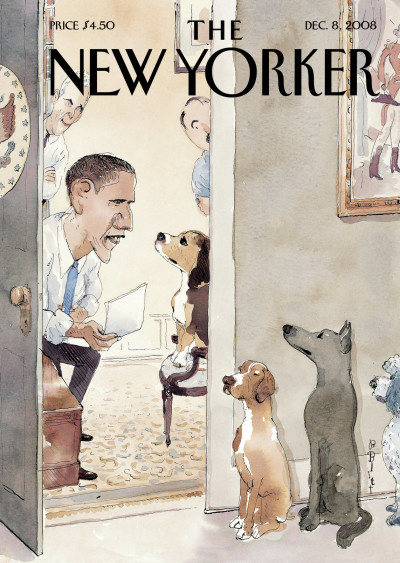
tny 12.08.08.indd SOUNDTRACK: DRIVE-BY TRUCKERS-Tiny Desk Concert #574 (October 24, 2016).

drivebyI have never listened to this band.  Their name turned me off right from the start, so I’ve never given them a chance.

I never even knew exactly what they sounded like.  And I’m still not entirely sure if this is what they typically sound like.  But this set is full of mostly uptempo folk rockers that explore some pretty intense subjects.

The first two songs are sung by Patterson Hood with his gravelly voice.

I am somewhat surprised to see that there were two Tiny Desk Concerts in a row with the word Umpqua in it.  But while Blind Pilot’s “Umpqua Rushing” is about a relationship, Drive-By Truckers’ “Guns Of Umpqua” is about the horrific shooting at Umpqua Community College in rural Oregon last year.

There’s apparently always been a serious political current in their music, but it’s been somewhat hidden. But for this album, they started writing songs that address what’s going on right now.  For “What It Means,” he explains, “I wrote this song a couple years ago. I’d honestly be really happy if it was just outdated and something we could leave in the past, but that’s certainly not the case right now.”  It is about the killing of young black men like Michael Brown and Trayvon Martin.

The final song “Once They Banned Imagine” is sung by Mike Cooley who has a much deeper voice.  He says this song is “about things staying the same, and not necessarily in a good way.”  This has more of a country feel, but with some pretty piano.

I wouldn’t say I’ve become a fan, but I’m far more open to their music than I was before hearing this Concert.

[READ: March 14, 2016] “Waiting”

This is only the second Amos Oz story I’ve read (this was translated by Jill Sand D’Angelo and Amos Oz).

It is very simple story, in which not a lot happens (hence the title).

Set in the old village of Tel Ilan, this story follows Benny Avni, the head of the District Council.  He was a considerate man and was well liked by the people of the village.  As is stated any times, “he walked pitched forward, with a stubborn gait, as if he were fighting a strong headwind.”

Benny was sitting in his office in the afternoon when a knock came at his door.  A man named Adel brought him a note from his wife.  Adel has seen her sitting on a bench in the park.  The note cryptically said “Don’t worry about me.” (more…)

Read Full Post »

nydec SOUNDTRACK: BLIND PILOT-Tiny Desk Concert #573 (October 21, 2016).

blind-piot

I really only know Blind Pilot because of NPR–they are favorites of a few of the hosts of All Songs Considered.

I don’t know their music well, but I remember enjoying what I’ve heard.  But I was still surprised by this Tiny Desk Concert because in addition to guitar and drums, there’s an upright bass (bowed and plucked), a ukulele, the ubiquitous Tiny Desk harmonium and a set of vibes!

Evidently since 2008 the band has expanded from a duo to a sextet.

The band plays four songs.  They are lovely folk song.  The vibes add a cool touch to some otherwise simple melodies.  “Umpqua Rushing” is a pretty song with a very catchy bridge.

Introducing “Packed Powder,” Israel Nebeker explains that it stems from when he was a teenager and they used to modify legal fireworks to make them more interesting.  This is my favorite of the four songs primarily because of the wonderful backing vocals during the chorus–when everybody sings “I want to see how the POWDER BURNS!”  It’s a great moment (or three) in the song.

“Don’t Doubt” is a mellow song, quite pretty, with some more lovely harmonies.

They planned to play three songs, but when Israel asks how many they should play, someone on the staff says “…four.”  So someone in the band then says, should we play, “Hot for Teacher” or “Jingle Bells.”  They decide to play “Joik #3.”  Israel explains that it was his first  attempt to write a song called “Joik.”  “I could tell you what that is, but you have Google…and an amazing team of researchers here.”

He says that before the album came out, Ari Shapiro aired it on NPR.  It’s a pretty song and Israel’s voice sounds especially powerful on it.  And, again, when the band sings the loud harmonies, it sounds terrific.

[READ: March 15, 2016] “In Other Rooms, Other Wonders”

Many authors seemed to get two stories in the New Yorker in 2008, but this has to be the closest gap between stories–Sept 15 to Dec 1.

Like the previous Mueenuddin story, the actual story part is pretty simple to recap.  And the sizable length of the story is mostly taken up with details and interior feelings.

And like the previous story, this one is set in Pakistan and looks at someone who might be able to move up a level of class, but who knows that it is a hard road.

The story begins simply enough. Husna needed a job. (more…)

Read Full Post »

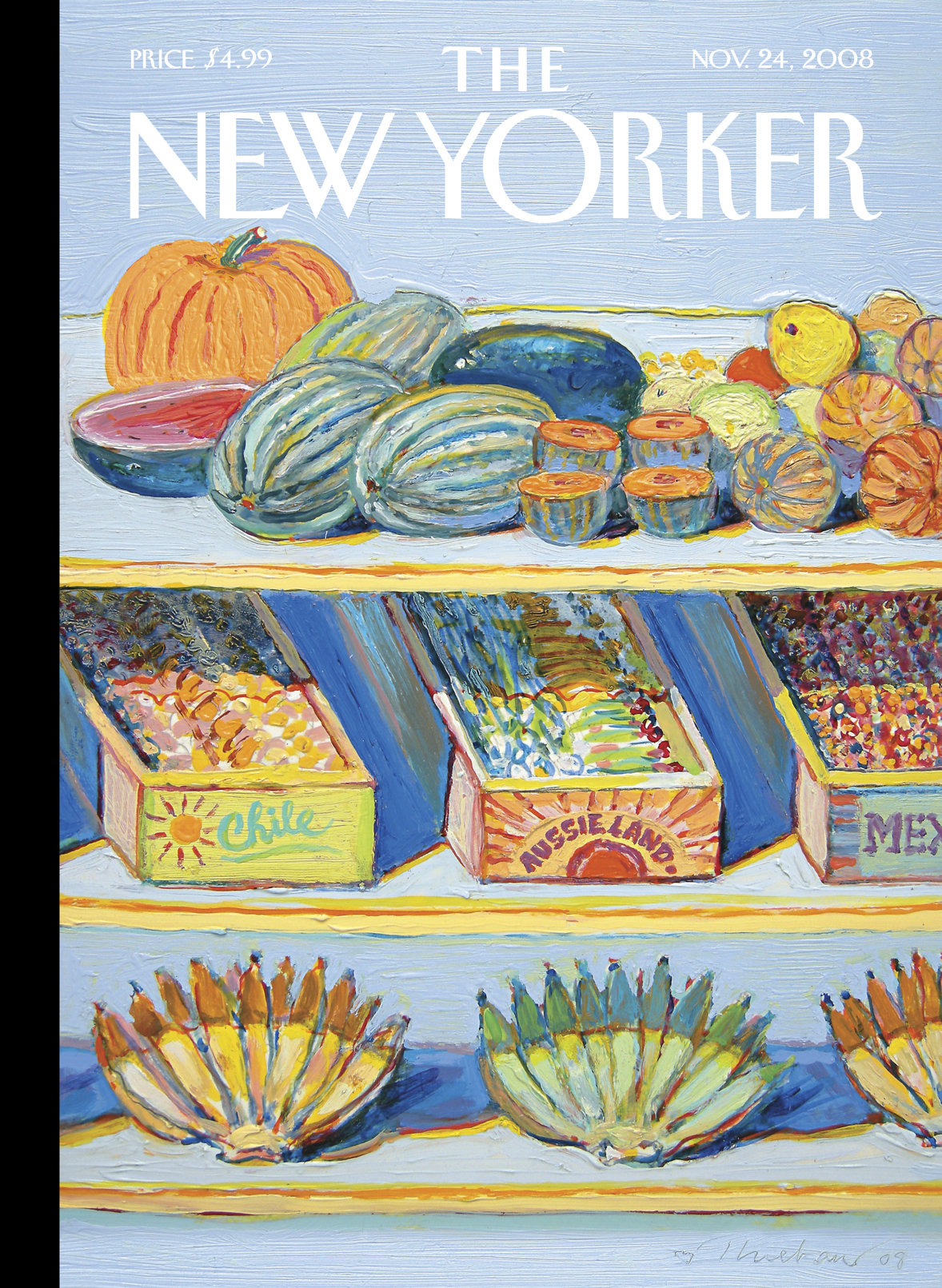
TNY 11.24.08 cvr.fnl.indd SOUNDTRACK: BILLY BRAGG & JOE HENRY-Tiny Desk Concert #572 (October 17, 2016).

bragg-henryI don’t really know who Joe Henry is (although I see that he has released 13 albums).  I’ve heard his name mentioned a bunch of times, but I can’t really place him to any specific music.  Billy Bragg, on the other hand, I know very well.

The two recorded an album this year.  And the NPR blurb is pretty interesting:

Earlier this year, Billy Bragg and Joe Henry set off on a journey. They boarded a train in Chicago, bound for Los Angeles. Each time the train stopped for more than 20 minutes in cities like St. Louis and San Antonio, they’d grab their guitars, hop off, find the waiting room and record an old railroad song. The result of this journey is an album called Shine A Light: Field Recordings From The Great American Railroad.

Their voices sound very different and as a result they play off each other very well.

The duo used Lead Belly as a jumping off point for much of this music.  Bragg explains that the jumping off point for this music is a book he has been working on about when British pop music went from being jazz influenced to being guitar led.  In 1956 Lonnie Donegan became the first Briton to get into the charts playing the  Lead Belly song “Rock Island Line.”

On the second song “Hobo’s Lullaby” Henry explains, the railroad is a mythic poverty–railroads conjure a romance in all of us even if we’ve never ridden a passenger train.  As they start, Bragg hasn’t re-tuned his guitar.  He says it’s always him who messes up.  But he usually plays solo, so “If I put something in the wrong key I just sing it in that key and hope no one notices–fortunately my audience… no one comes to hear me sing.”

As they are about to start, he says, “Sorry mate it was a beautiful intro.”  Henry looks at him and says, “It was,” to much laughter.

Before the final song, Henry says he was listening to Lead Belly since he was 15.  “Midnight Special” was a train that ran past Sugarland Prison in Texas.  The story was if the train’s light shined on you as it swept across the yard, that you would be the next to get paroled.

Even though these songs are old,

This concept record could be seen as a nostalgia trip, but both Bragg and Henry will emphatically say that it’s not. These songs and this journey celebrate the modern railroad as a major economic engine and a still-vital form of transportation.

[READ: March 10, 2016] “Ghosts”

Danticat often writes about Haiti and the troubles that arise there.

This story is set in Bel Air–the Baghdad of Haiti. Children in the neighborhood enter art contests by drawing posters that say “It’s not polite to shoot at funeral processions.”

The protagonist is Pascal Dorien.  He is a good kid who tries to stay out of trouble.  His parents own a small restaurant which has the unfortunate location of being in the heart of gangland (his family lives in a nearby town which is a little safer).  Luckily for them (sort of) the gangsters who make the restaurant their evening hangout are kind to the family and think of their place as their haven.

The family originally sold pigeons (both live and as meat) but then the gangsters started buying them to use in a ritual which involved drinking the pigeons’ blood mixed with evaporated milk.  His parents hated this and eventually stopped selling the bird.   Nevertheless the money they made for this ritual allowed them to expand and make even more money.  Which they hoped would allow their children to flee Haiti for safer locations. (more…)

Read Full Post »

2008_10_13SOUNDTRACK: HALEY BONAR-Tiny Desk Concert #570 (October 11, 2016).

Haley Bonar was born in Canada but raised in the U.S.  She haleyis a folksinger with a country leaning (but without the twang).   For this Tiny Desk, Haley plays acoustic guitar and sings lead.  She had a keyboardist who sings great harmonies.  And behind them there’s a guy playing electric guitar (with great echoed effect), a bassist and a drummer.

“Hometown” has a great catchy chorus (well, and verse too).  It’s upbeat but melancholy at the same time.  There’s a very cool echoed slide guitar solo in the middle of the song.

Bonar doesn’t speak much, expect to joke about the appropriateness of the second song.  “Jealous Girls” is slower and moodier.  (“Jealous girls don’t have no fun unless they’re sure they’re the only one).  The middle section of this song is really cool, the way it changes the mood.  She doesn’t play guitar on this one, but there’s some great lyrics at the end of the song:

And you turn up your guitar
In another shitty bar in another shitty town
And you wonder when you’ll wake up
Yeah you wonder when you’ll wake up
From this long distance daydream of
Playing while girls scream
Alone in a hotel
Like piss in your ice cream

I love that the way this end part is sung and played it seems like it’s going to transition to another part.  But that’s just the end.

“Called You Queen” is a fast folkie song.  I really like her delivery on the verses. The chords for the chorus are fairly obvious but are really catchy anyway.  It’s a really good song.  The abrupt ending (with a hint of echo on the guitar) is spectacular

I didn’t know Bonar before this set, but i really liked it.

[READ: March 9, 2016] “Gold Boy Emerald Girl”

Yiyun Lee had a story in a 2008 May issue of the New Yorker as well.  I have enjoyed pretty much all of her stories. This one was quite different from the others in that the whole story has a feeling of inevitability to it.  And yet it was a kind of gentle inevitability that almost didn’t seem to be there.  Or something.

The story is about two adults, Siyu, 38 and Hanfeng 44.  The opening paragraph tells us that she was raised by her father and he was raised by his mother.

Siyu knew Hanfeng’s mother because she was a Professor and Siyu worked for her a while ago.  But the Professor is now retired and Hanfeng has moved back home after a stint in America to live with her.

And we see now that the Professor has set the two up on a date.

The story is told in a very gentle, unhurried way, as befits the story of these two who have taken their time with thee lives. (more…)

Read Full Post »

nySOUNDTRACK: THE SECRET SISTERS-Tiny Desk Concert #564 (September 12, 2016).

secretsisThe Secret Sisters are, in fact, Lydia and Laura Rogers, two sisters from Alabama.  They sing pretty folk/country or even traditional songs and have wonderful harmonies.

“Tennessee River Runs Low” is from the point of view of the river (and is really quite delightful).  It comes complete with an “oh de oh de oh de oh” section.  The music is pretty simple (just a little strummed guitar) and their wonderful voices.

After the first song she says that she has seen lots of Tiny Desk Concerts and they’re thrilled to be there.  It’s more spacious than you might think.  They could square dance there–except they can’t square dance.  She says that it feels kind of like being a zoo animal.

The second song is “a super duper sad song.”  Since their previous record came out they have both gotten married–to different men, she clarifies.  (Well, they are from Alabama, they joke).  They don’t know what to write about anymore–who wants to hear happy songs?

“You’ve Got It Wrong” is indeed a sad ballad–a very pretty, very traditional sounding country song.  Their voices really sell it.

Before the final song, she says that “if you want to be happy and in a good mood don’t ever come to one of our shows.”  They only play downer music. She explains that  they grew up singing gospel in a church that had no musical instruments.  It was only their voices and no solos or choirs.   She didn’t realize they were learning how to sing at church–that’s where their harmonies come from.

So they are doing an old gospel number, “Flee as a Bird.”  The melody of the verses its wonderful–the kind I’ve never heard in a church song before.

I would never see these guys in concert, but fora Tiny Desk, their songs were quite lovely.

[READ: March 7, 2016] “A Spoiled Man”

This was a lengthy story that seemed to speak to the futility of life.

There were a lot of details which made the story really interesting, but as I think about summarizing it, I realize that the story is bombastically a man lives, succeeds, fails and dies.

Fortunately Mueenuddin tells a lovely winding story that shows just how much a man’s life can change.

The story is set in Islamabad and the main character is Rezak, “a small, bowlegged man with a lopsided, battered face.”  He is outside of the mansion of a local man who has recently married an American woman.   The woman proves to be a nice person who genuinely seems to enjoy her new life.  In Pakistan.  And people liked her as well.

Rezak tried to make himself useful around the mansion. Despite his appearance, he is a strong man and he does wind up helping the workers.  At the end of the day they invite him for dinner, but his pride makes him refuse. (more…)

Read Full Post »

sept1 SOUNDTRACK: WILLIAM BELL-Tiny Desk Concert #563 (September 7, 2016).

william-bellI’d never heard of William Bell before this show, although I see that he is apparently a classic soul singer with hits from Stax records back in 1960s.

Bell has a new album out this year and the title song “This is Where I Live” is a kind of autobiographical story of his life.  He sings of growing up and hearing Sam Cooke and then writing songs of his own that have taken him around the world.

I love the idea of “The Three of Me”: “Last night I had a dream and there were three of me.  There was the man I was, the man I am, and the man I want to be.”

The first two songs sound great–classic soul with horns and lots of bass and backing vocalists.

Bell’s voice sounds great as well.  He sounds like a veteran soulmaker.  And although he sounds timeless, I’d never guess he was 77 years old. And yet, he co-wrote “Born Under a Bad Sign,” which I thought was older than 70 years.

Either way, he plays it here.  I think his is the version I know least well (he mentions that even Homer Simpson has done a cover of it).  Bell’s version is, of course, great.

And here I have to mention his backing band  There are about 12 people all wearing bright yellow shirts.   And just about every person with an instrument gets to do a solo during “Bad Sign” which is why the song clocks in at about 10 minutes.

It starts with a great bluesy guitar solo, and then in turn we get to hear bars from saxophone, bass, organ, piano, bass sax, soprano sax and trombone.  The backing band is called The Total Package Band.  And they sound perfect for Bell’s music.

[READ: March 1, 2016] “Gorse is Not People”

Here’s another case of the same author being published just a few months after their previous story (June).

This story had a date at the end of the story–1954.  I had to look up some details about Janet Frame.  Turns out that she is an author from New Zealand and she began writing in the 1950s.

I don’t know if that’s what makes her stories seem so alien to me or what.  I found her previous story to be pretty inaccessible.  And this one is also pretty out there.  It also seemed very un-PC–which makes sense if it was written 60 years ago.  But the previous story was all about someone in a psychiatric home.  And this one is also about someone who is in a special place “in the yard where they put people who were strange in shape and ways” (more…)

Read Full Post »

TNY 8.25.08 cvr.inddSOUNDTRACK: BIG THIEF-Tiny Desk Concert #562 (August 29, 2016).

bigthiefBob Boilen absolutely loves Big Thief’s debut album (it made his top ten this year).  I think it’s really good, but I don’t quite love it the way he does.

But I think their first song, “Masterpiece” is really a great song.  And in this Tiny Desk Concert, they play it with a slightly different feel.  It seems to allow the sounds of the guitars to come through a little more.  Like the album, though, the harmonies are wonderful.

When the video started, the camera focused on just Adrianne Lenker and Buck Meek, and since the first song starts with just the two of them I wasn’t even sure of the whole band was there.  They are, although it’s odd how isolated the rhythms section looks in this video.

“Paul” is a mellow song with a strangely subdued and yet catchy chorus.  It’s kind of funny to watch Buck Meek really getting down to what is a fairly mellow track–although his guitar parts are pretty cool blasts of music.

“Lorraine” also get a mellow treatment here.  For this version it’s just her singing and playing the guitar.  It works very well in this Tiny setting and her voice really shines.

[READ: March 1, 2016] “Awake”

This story is about a college Economics major who just can’t get enough sex.

Well, that’s how it starts anyhow.  Richard is lying in bed next to Ana.  He moves in close behind her, hinting.  But she moves away quickly (she is actually asleep, so that’s a reflex).  He is annoyed although he shouldn’t be–I mean they did it twice already that night.

So instead of thinking about sex he decides to think about something else.  But what? (more…)

Read Full Post »

6916SOUNDTRACK: GIRL IN A COMA-Tiny Desk Concert #190 (January 30, 2012).

girlcoma I was planning on writing only about recent Tiny Desk Concerts for a while, but Nina Diaz’s (Aug 2016) Concert informed me that she was the singer of the band Girl in a Coma who are presently on a hiatus while Nina tours some solo material.

So I went back and watched this Tiny Desk to see the origins of Diaz’s music.

Girl in a Coma is a three-piece with Nina Diaz on guitar and vocals, her sister Phanie Diaz on drums and Jenn Alva on bass.  The blurb suggests that the band plays punk–typically loud crunchy guitars (although I listened to the recorded version of “Smart” and it doesn’t really sound very different from this version).  So I didn’t get that.

At any rate, the trio sounds great in this setting.  The percussion is simply tambourine and a shaker.  And Alva’s bass is really melodic and lovely playing more than just the same notes as the guitar.

“Smart” is really catchy (although Diaz does some weird things with her voice late in the song).  “Knocking At Your Door” has a fast, almost metal sounding guitar (albeit acoustic here).  But it’s the bass (which is not doing anything crazy) that takes center stage with the melodies she plays.

Before the final song Nina says it feels like show and tell or something.  And while she’s saying this, the other two switch places, with the drummer coming up front and the bass sitting in the back.

“So” has a pretty traditional folk song structure.  The reason for the switch of seats comes in the second verse when Phanie plays the melodica.  It’s a pretty song and Diaz’s voice is really nice.

I really can’t imagine them being a punk band at all, frankly.

I’m also going to point out what Diaz looks like here for contrast of what she looks like in her solo show four and a half years later.  In 2012, she’s wearing dark jeans and a v neck sweater (stripes in the purple family).  Her hair has bangs and a long braid on the side.  And she has no obvious makeup on.  Keep that in mind for the next post

[READ: November 1, 2008] “Tits-Up in a Ditch”

I read this story back in November 2008 and just couldn’t get into it.  I tried several times and could not penetrate the barrier that I felt Proulx was creating.  Well, here it is 8 years later and I tried it again, and not only did I finish it, I sort of enjoyed it.  Even though it, like everything else I seem to have read from Proulx was incredibly depressing.

The story is about Dakotah.  Dakotah’s mother abandoned her when she was a baby and left her own parents to take care of her.  They resented their daughter and Dakotah from the start.  They were harsh and uncaring towards her (although it could be prairie love, I suppose).  The grandparents are named Verl and Bonita Lister (Proulx has fun with names in her stories).

Verl and Bonita are hardscrabble, religious folks who don’t have a lot of joy.  Well, Verl had moments of happiness but probably no joy–he rode hard and then injured himself.  But he was stuck because during the 1980s in Wyoming oil companies came in and took away all the workers.

Verl gives us the title of the story when he says “Had me some luck today.  Goddam cow got herself tits-up in the ditch couple days ago.  Dead, time I found her.”  See, charming people. (more…)

Read Full Post »

manualSOUNDTRACK: LUCY DACUS-Tiny Desk Concert #553 (July 29, 2016).

lucyI didn’t realize that I knew Dacus, but I’ve heard and loved her song “I Don’t Wanna Be Funny Anymore” for months (I just never knew she sang it).

In this Tiny Desk Concert, the songs have a really gentle feel (she plays electric guitar without a pick, using her fingers to gently pick out the melodies.  Although on record, the songs are a bit sharper.  But it’s her that is so intriguing.  A lazy comparison is Sharon Van Etten, but she has that kind of tone and delivery.

“I Don’t Wanna Be Funny Anymore” has a super catchy vocal melody and simple steady rhythm.  But it’s the way the electric guitar swirls around and her voice sounds dry and disinterested (and yet it clearly isn’t).  She’s not posing as a cynical youth, she is full of regret.  The last line is “That funny girl doesn’t want to smile anymore.”  When the song is done she says, “I always tend to smile after that line.”

Before the second song she asks if anyone else’s biggest fear is having a runny nose on Tiny Desk?  She says she woke up with a runny nose, but its fine now.

I like the way “Direct Address” opens with her gentle strumming which gets really fast as she ramps up to a quick vocal delivery on each verse.   But even when she sings fast, her voice is almost like a deep intense whisper.  Once again, the last line is great: “I don’t believe in love at first sight / maybe I would if you looked at me right.”  The song ends with some cool swirling guitars.

Before the final song she tells everyone there that the NPR workers kind of have the coolest job ever and she envies them all–a little bit.

“Green Eyes, Red Face” is a slower song with an interesting, subtle melody.  Another great lyric: “I see the seat next to yours is unoccupied and I was wondering if you’d let me come and sit by your side.”  I love the way the guitar kind of bursts forth for the solo by Jacob Blizard.  This song is the most like SVE here, although you’d never mistake one for the other.  The middle of the song has some really great riffs juxtaposed with the bass.

I like how this lyric quite a bit: “With your green eyes on my red face” and I get a kick out of how she plays her last chord.  And as it rings out she rests her hands on top of her guitar patiently waiting for the song to fade out.

I’m really entranced by her voice.  But one of the most telling things is at the end of the show just as it fades out.  When talking about their show that night, she says “we’ll be a lot louder.”

I’d be interested to hear that.

[READ: November 21, 2016] A Manual for Sons

Back in 2014, I ordered all 16 books from Madras Press. Unfortunately, after publishing the 16 books they seem to have gone out of business (actually they are switching to non-fiction, it seems). They still have a web presence where you can buy remaining copies of books.  But what a great business idea this is/was

Madras Press publishes limited-edition short stories and novella-length booklets and distributes the proceeds to a growing list of non-profit organizations chosen by our authors.  The format of our books provides readers with the opportunity to experience stories on their own, with no advertisements or miscellaneous stuff surrounding them.

The format is a 5″ x 5″ square books that easily fit into a pocket.

Proceeds from Barthelme’s book go to the The University of Texas MD Anderson Cancer Center.

Okay I’ll say it.

I don’t really get Donald Barthelme.  I know that’s sort of the point of his writing–it is all anti-writing, a reaction against the novel.  But I also don’t get things like this “story.”  (It turns out it is an excerpt from a larger novel, but that still doesn’t really help).

So this “manual” is designed for sons to learn all about the different kinds of fathers there are and how to deal with them.  It states that it was translated from the English by Peter Scatterpatter.

The manual lists the different kinds of fathers: Mad fathers, fathers as teachers, falling fathers, etc.

And it’s not really helpful and it’s not really funny, and I have to wonder what keeps things like this from just ending.  How does Barthelme know when his bizarre list of things is actually done?

Some examples:

Mad fathers stalk up and down the boulevard, shouting.  Avoid then or embrace them or tell them your deepest thought–it makes no difference.

Fine, that’s good.  But then he says to notice if their dress is  covered in sewn-in tin cans or if they are simply barking (no tin cans).  If they are barking

Go up to them and, stilling their wooden clappers by putting your left hand between the hinged parts, say you’re sorry.  If the barking ceases, this does not mean that they have heard you, it only means they are experiencing erotic thoughts of abominable lustre.

What the hell?

And what to make of this “some fathers are goats, some are milk, some teach Spanish in cloisters.”

Or this: “The best way to approach a father is from behind, thus is he chooses to hurl his javelin at you he will probably miss.”

There’s an alphabetical list of fathers names which all start with  A and end with Albert.  (And the list is pretty unexpected with names like: Aariel, Aban, Abiou, Aeon and Af.

The most successful section to me was the “Sample Voice” part.  It gave three examples of a crappy dad–abusive and unsympathetic and very masculine.

The “colors of fathers” was presumably modified from a book about horses as each color is a horse color.

There’s a disturbing section about incest and then about the penises of fathers.  And finally a discouragement to patricide.

I just don’t get it.

Rick Moody provides some answers in his Afterword.  He gives some context for this story and some of his favorite bit of this manual (which was originally published in a dark book called The Dead Father.  He says he really related to this story because one of the sections opens “If your father is named Hiram or Saul” (and his father had one of those names).

He puts Barthelme in context with Gaddis and describes this manual as hilarious.

Guess you had to be there.

Read Full Post »
kalfusSOUNDTRACK: XENIA RUBINOS-Tiny Desk Concert #552 (July 25, 2016).

xeniaI am fascinated by the music of Xenia Rubinos.  Every song in this Tiny Desk Concert has something interesting going on.  But for two of the songs, I can’t stand her voice.  Rubinos seems to sing in a free form jazzy / R&B/ improvised manner.  And it bugs me.  No matter how fun she is to watch (and she is), I just don’t like the way she sings (except on the second song).

But the music!  I love the way “Lonely Lover” opens with some interesting drumming and occasional weirdo samples. But the main melody is created by two bassists! (no guitars or anything else).  It’s such a great melody, slinky and smart, with each bassist playing a different aspect of the melody.  It’s super catchy (and when she sings actual words it works well).  It’s just the moaning and groaning that I can’t stand.

Between the first and second song she takes a dance break.  Then “Mexican Chef” open with a cool staggered bass line that is echoed by the guitar (the guitar (not the riff) sounds kind of 80’s punk) and some funky drums.  The lyrics of this song are right on, too.  It’s  a ruthless critique of the way brown people are treate.  It’s sung in a kind of rap style, with no room for soaring vocals.  It’s a really great song:

French bistro, Dominican chef/Italian restaurant, Boricua chef/Chinese takeout, Mexican chef …. Brown walks your baby/Brown walks your dog/Brown raised America /Brown cleans the house/Brown takes the trash/Brown even wipes your granddaddy’s ass …  Brown breaks his back // Brown takes the flack / Brown gets cut coz his papers are wack. … Brown has not / Brown get shot brown gets what he deserves coz he fought.

Right on.

For the final song, “Laugh Clown,” Rubinos plays solo bass and sings.  The bass is just occasional notes as Rubinos scat/sings.  It’s less interesting than the other two songs, but it makes for a  nice change of pace.

Once I got past her vocal delivery, I found I really liked these songs a lot.

[READ: November 18, 2016] Three Stories

Back in 2014, I ordered all 16 books from Madras Press. Unfortunately, after publishing the 16 books they seem to have gone out of business (actually they are switching to non-fiction, it seems). They still have a web presence where you can buy remaining copies of books.  But what a great business idea this is/was

Madras Press publishes limited-edition short stories and novella-length booklets and distributes the proceeds to a growing list of non-profit organizations chosen by our authors.  The format of our books provides readers with the opportunity to experience stories on their own, with no advertisements or miscellaneous stuff surrounding them.

The format is a 5″ x 5″ square books that easily fit into a pocket.

Proceeds from Kalfus’ book go to the Free Library of Philadelphia.

As the title suggests, there are three stories in this book. (more…)

Read Full Post »

« Newer Posts - Older Posts »