SOUNDTRACK: PAUL WELLER-Tiny Desk Concert #457 (July 28, 2015).
Paul Weller is a highly regarded and well respected elder statesman of rock. Some of his songs with The Jam are my favorite songs from the 80s. Weller hops from genre to genre quite a lot, and I did not care for The Style Council at all. So even though he’s been making music forever, I haven’t really paid him much attention. In this tiny Desk, he brings a fairly large band (6 people (4 guitars!)) to sing an acoustic collection of songs. There’s a drums (just a snare) and a percussionist too. And everyone sings.
His voice sounds fantastic—older but still really strong.
They play four songs. Three are from his new album Saturns Pattern. Like “Dusk Til Dawn” which is a delightful folk song. The band sounds really loud, or not loud but big, like there are really 6 people out there. This is especially true on “I’m Where I Should Be” which also has some great harmony vocals and percussive guitar techniques. I love how much the harmonies contribute to the song and the general song structure is great.
“Out of the Sinking” goes back to Weller’s most popular album Stanley Road (which I don’t know). It’s a wonderful song. It showcases Weller’s gruffer vocals and nice finger picking. There’s some more great harmonies from the bongo player. And the song has a real nice campfire song feel (it reminds me a bit of Van Morrison’s folkier songs).
For “Going My Way” Weller switches to piano. It’s a simple song with some great backing vocals and harmonies, (and hand claps), although I prefer the middle two songs.
I hadn’t really given much thought to Weller in the last few decades, but this set was really enjoyable.
[READ: August 7, 2015] The Wallcreeper
This is Nell Zink’s first published novel (she has another novel, 1998’s Sailing Towards the Sunset by Avner Shats) which I read about that I would love to find, but I don’t think it has ever been published).
I really enjoyed Zink’s Mislaid and wanted to see what her earlier work was about. There was an article in the New Yorker which gave an interesting background to this story which involved a long correspondence with Jonathan Franzen and resulted in a book that I would suggest is not completely unlike something he might create–expect that it is way shorter and slightly more erratic.
Zink does not follow conventional story structure exactly. This is not to say that the story is weird or avant garde, not at all. She just doesn’t like to set things up conventionally. For instance, the first sentence of the story is: “I was looking at the map when Stephen swerved, hit the rock, and occasioned the miscarriage.” (more…)
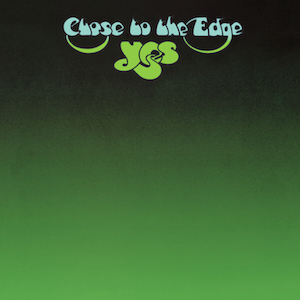
Having such success with Fragile, the same line up toured that album and then planned a tour for the successful follow-up Close to the Edge. This album is the first one to feature their now iconic logo and a clearly designed by Roger Dean album cover (even if it’s fairly plain).
This is also their first album to feature a side one suite, the title track “Close to the Edge.” It also features only two other tracks (10 and 9 minutes each). And despite (or because of that) it was a huge success.
“Close to the Edge” opens with part I “The Solid Time of Change.” The opening is soft and then blam, some crazy guitar lines over a fast and complex bass line. There’s so much going on it’s near cacophony for 3 minutes (I’m not even sure how they did it). Until a beautiful soaring guitar riff breaks from the noise. I love that Howe plays the riff a second time with slight variation to it—really keeping it interesting and complex. And at nearly 5 minutes we get to the “close to the edge” chorus, or at the first part of it (I also love that the chorus gets bigger as the song progresses). I don’t really know where the “parts” begin, (confusingly they sing the titles of the sections through the song).
Ok, so Wikipedia tells me that part II “Total Mass Retain” begins with the big thudding bass at around 6:04. And part III “I Get Up, I Get Down” evidently starts right after the keyboard solo around 8:28 which begins with the slow washes of keyboards. It is the mellow section with the multiple layers of vocals and the gorgeous church organ. Part IV “Seasons of Man” starts with the reprise of the earlier music (in a weird key change). There’s a lengthy keyboard solo here and then more vocals reprising all of the section with a slightly different feel. Until it all fades out much like it faded in. It’s a dynamite track and never feels 18 minutes long.
Side two has two songs. “And You And I” is only 10 minutes long but it too has 4 parts.
Par I “Cord of Life” opens with what is more or less guitar tuning (although it sounds lovely with his guitar). And then there’s some very pretty acoustic guitar playing. I really like when the bass notes come in around 1:15 and then there’s Wakeman’s keyboards. It gets big and bassy just at the end of part 1. Part II “Eclipse” starts around 3.48 right after the “call” when the big orchestral instrumental kicks in. This part lasts for 2 and a half minutes.
The opening guitar returns and then part III “The Preacher, the Teacher” begins with a new guitar section (and more keyboards) this is more or less a reprise of the other verses. Part IV “The Apocalypse” is just 52 seconds long and is the reintroduction of the “and you and I theme” (and is not apocalyptic at all).
“Siberian Khatru” is 9 minutes but only one part. It opens with a fast cool guitar riff and then adds a fast cool keyboard riff. The bass rumbles through and the guitar floats over the top. There’s a great guitar riff that comes in around a minute in, which is the main riff of the song. And then there’s some harmony vocals After the harmonies, the song sort of resets and we get another verse with more great harmony voices. The keyboard solo is on a harpsichord and sounds very classical. Then there’s a trippy guitar solo. A new section of song starts around 4 and a half minutes. Around 6 minutes the song switches to the ending coda, a smooth cool riff with a guitar solo floating over the top. The band jumps in with a sung staccato “doh dah doh” bit which sounds like it would end the song, but they’re not done, there’ another refrain of that cool keyboards section with a neat noodly guitar solo.
This was a band of soloists that were at the top of their game and not only did great work by themselves but played very well together.
Since almost every Yes album had different personnel, I’m going to keep a running tally here. Two albums in row with the same lineup!:
Chris Squire-bass
John Anderson-vocals
Bill Bruford-drums
Rick Wakeman (#2)-keyboards
Steve Howe (#2)-guitar
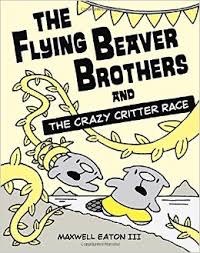
[READ: June 30, 2015] The Flying Beaver Brothers and The Crazy Critter Race
I love the Flying Beaver Brothers. And even though the last couple haven’t been quite as awesome as the first ones, this one has definitely brought the series back on an upswing.
The book casually mentions the baboons from the previous book and what they did to Beaver Island (don’t ask) and then gets right into the action. A local businessman is having a race. Everyone is invited to replant the trees that the baboons destroyed and the winner will win a houseboat.
Turns out the entrepreneur is named Crazy Critter (they assumed that was the name of the race) and he is super gung ho about getting the race started. In Crazy Eddie tradition, he calls himself crazy a LOT. (more…)
This past weekend bassist and founding member of Yes died. Up until about six weeks ago he was supposed to tour with Yes this summer.
It was surprising and sad news. I was a huge Yes fan in college, and of course I love all things prog. But I started to lose patience with Yes since they had such a revolving door policy it wasn’t even clear is the people in the band even were part of the band (although Squire has played on every Yes album). I hadn’t listened to anything new from them since the 1990s, and I was genuinely shocked to see how much new material they had released since then (about ten).
So here’s a bunch of their albums that I own. I’m not going to pretend I don’t know their peak period stuff, so I’m looking at their first two albums with the hindsight of the 70s masterpieces.
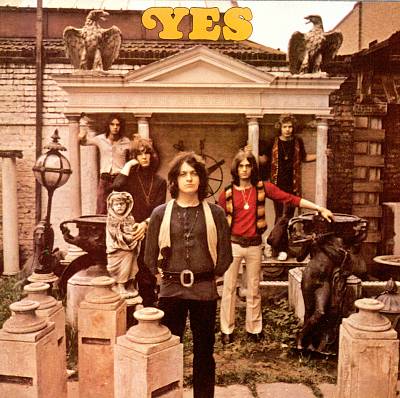
Their debut album (look how 1969 that cover is) opens with a Chris Squire penned song called “Beyond and Before.” Loud (and high) bass notes announce that this might just be a Yes album, even the vocal harmonies suggest Yes, and yet once the verse begins, it is a much more psychedelic version of Yes. The music feels very Summer of Love. And while Squire’s bass does come out from time to time, after that initial flurry it kind of settles down a bit. The song itself is quite good, as long as you’re not expecting classic Yes.
I feel the biggest sound difference is Anderson’s vocals which, while still powerful have a more gentle/sensitive feel (not too far off from his more famous style later on, but slightly mellower perhaps).
Next come s very jazzy cover of The Byrds’ “I See You” (a song I don’t really know, but the lyric “the cave of your hair” is pretty awesome. This version is 7 minutes long with an extended jazzy solo from Peter Banks and suitable jazzy percussion from Bill Bruford. Tony Kaye on keyboards also features prominently. The end is quite loud for such a hippie offering.
“Yesterday and Today” is a piano & vocal performance. It’s very delicate. “Looking Around” has very heavy keyboard opening. The bass sounds like Squire but this is a very keyboard heavy song. “Harold Land” opens with a kind of church organ and singing, but then the Yes sound comes in (you can almost hear the band forming). It feels, again very synthy, but certainly heading in the direction of Yes.
“Every Little Thing is a Beatles cover (! two covers on the debut album). It begins with much chaos—noisy drumming, bass rumblings and keyboard noodling. The song is 5 minutes and the intro is almost 2 minutes. The big bass and drum really makes the song rock and the keyboards build some real drama into the track.
“Sweetness” is indeed a sweet slow track with a lot of acoustic guitars and soft keyboards. It has a great descending chorus vocal line. If this were rerecorded and made a bit more modern sounding I think it could be a hit (well, maybe update the lyrics a bit too).
“Survival” is probably the most enduring track on the record. It opens with some great fuzzy bass and some actual catchy riffs. The opening vocals sound more like what latter-day Yes would sound like (subtle distinction, yes but it’s there). The chorus is very catchy and it’s a fun romp right until the end. It’s a good send off, with a promise of better things.
Since almost every Yes album had different personnel, I’m going to keep a running tally here:
Chris Squire-bass
John Anderson-vocals
Bill Bruford-drums
Tony Kaye-keyboards
Peter Banks-guitar
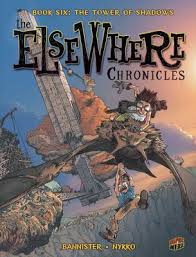
[READ: February 16, 2014] The ElseWhere Chronicles Book Six
I ended my review of the last book by saying “now I’m hooked.” But in the year since I read the last book I lost all the momentum of the series (since I’d read the first five in quick succession). Which is a shame since the book was every bit as exciting as the rest, but I wasn’t quite as into it as I wanted to be.
Since Ilvanna died in the last book I should have been more upset about it and been more excited at the prospect of her return in this one, but I’d forgotten about it all.
As for the rest of the story, Theo, Max and Rebecca meet up with an old man who seems to know the secrets of the Other World. He convinces Theo and Max to capture a creature who can take them to the Other World.
Meanwhile, in the Other World we see that the spirit of Rebecca is held be a mean looking guy known as the Master of Shadows.
At last the Master of Shadows meets the old man and Rebecca meets her double–a creature which he has created from a photo of Rebecca–he just needs her soul to complete the creation. The final battle is pretty epic with swirling shadows all over the place and Rebecca’s grandfather pleading with her to destroy her doppelganger.
Meanwhile Theo and Max find Ilvanna who may or may not be dangerous, but she seems to want to help them.
This was the final book of series two of the series. And the cliffhanger shows that the boys have found Dolean and the two Rebeccas have emerged–to what end?
The story was certainly exciting, but I recommend reading the whole second series together to really maximize the impact.
SOUNDTRACK: MADISEN WARD AND THE MAMA BEAR-Tiny Desk Concert #444 (May 26, 2015).
I love that Mama Bear is actually Madisen Ward’s mother, Ruth. They play some really wonderful roots music.
Madisen has a powerful soulful voice and Mama Bear’s harmonies are excellent–ranging from deep to high pitched.
And their joint harmonies on second song, “Sorrows and Woes” (especially the final note) are really amazing.
Mama Bear also adds some great licks to some of the songs (Madisen plays leads on “Silent Movies” while mama Bear plays the main riff on “Daisy Jane.”
Between songs, Madisen has some funny banter. I laughed when he said that he was now going to retire since he has played the Tiny Desk. And Mama Bear talks about how excited she is that their new record is on yellow vinyl.
The songs are delightful folk songs (with “Daisy Jane” being the boppiest of the lot with some delightful “ooh hoos” at the end). I’d never heard of them before, but I wish them a lot of success.
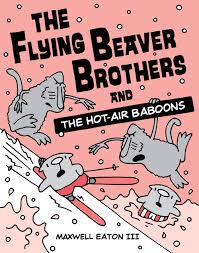
[READ: February 11, 2014] The Flying Beaver Brothers and The Hot-Air Baboons
I saw this book in the library and was delighted to have another Flying Beaver Brothers book to read (I also just saw online that there is a sixth book too!).
Poor Beaver Island is under attack yet again (my kids were surprised to see that there were so many beavers on the island with them, and I admit I didn’t realize there were quite so many either).
The threat this time is a group of baboons who are melting the snow off of the skiing mountain (beaver island really has it all!). When Ace and Bub finally get caught up to speed with what’s happening, the baboons (Pete, Kyle and Ringo) hilariously get mad about having to repeat the whole story that they told everyone earlier. There is a helpful chart with Proboscis and Baboon listed as types of monkeys and buffoon as not a type of monkey. (more…)
SOUNDTRACK: JASON VIEAUX AND YOLANDA KONDONASSIS-Tiny Desk Concert #443 (May 22, 2015).
Typically, the Tiny Desk doesn’t have performers back after they have played once. But occasional exceptions are made, like when performers who played solo come back as a duo. Like this.
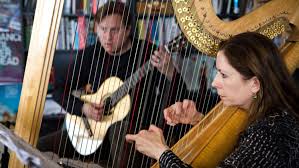
Jason Vieuax was one of the first 20 people to play the Tiny Desk and Yolanda Kondonassis played back in 2010. And here they are touring as a duo, which really helps to accentuate both of their skills. And their music is beautiful together.
Vieuax is an amazing classical guitarist. And Kondonassis plays an amazing harp that is more about singular notes than trills and “heavenly” sounds. And in these songs, they work together doing harmony runs and fills–both instruments are lead instruments.
Apparently there aren’t very many pieces written for the combination of harp and guitar. Kondonassis explains the origins of the Hovhaness piece (which gives some lovely context).
Vieaux explains the origins of the two movements of the Piejo suite.
The first piece is sweet, while the second one is a little more aggressive (but still lovely). And the third one features some cool riffs and chords (especially on guitar) and percussion done on the instruments.
The three songs they play are
Gary Schocker: “Elysian” (from Hypnotized)
Alan Hovhaness: Fuga: Allegro – Andante grazioso, Canon: Allegro (from Sonata for Harp and Guitar, “Spirit of Trees”)
Máximo Diego Pujol: Vals, Candombe (from Suite mágica)
The pieces are familiar and yet quite different. And 456+it is much fun to watch their fingers fly around their instruments.
[READ: January 24, 2015] Tommysaurus Rex
I brought this book home for Clark to read. I wasnt going to read it myself but then I saw that I had read a book by TenNapel before and liked it.
But I did not care for this one. Perhaps it was because it was marketed in my library as a kids book but I thought it was just too violent or something–the story turned me off.
Perhaps it was just that the story opens with the main character’s dog getting hit by a car and dying. I mean, who needs that? And the cover looks so fun, too. (more…)
I knew Bellows from NPR playing one of their songs. They are a new band with one album out. Their Tiny Desk Concert is really short (under 10 minutes) but they do play 3 songs.
I’m curious if they are stripped down for this or if they typically sound this soft and simple.
The opening song “Sacred Heart” is propelled by a very simple synth riff and bass notes (the lefty bassist plays a right handed bass upside down, which is interesting to see). Perhaps the most compelling thing about Bellows is the harmony voices (and the drummer’s hair).
Lead singer Oliver Kalb has a voice that I wouldn’t call powerful, but it is rather distinctive (and perhaps a bit unusual). The songs work best when the unnamed keyboardist (female) and bassist (male, deep voice) all sing together, like in “Hello Morning.”
The final song, “White Sheet” is the one I knew from NPR. It sounds just as good here. It is easily the best of the three songs, probably because the keyboardist does more than sing harmony. (And the ah ah ah ah section, combined with the deep breathing section is very catchy too).
I think it may be the simplicity of the melodies that makes the songs so effective–they do stay with you. And they definitely leave me wanting to hear more.
[READ: January 5, 2015] Stick Dog Chases a Pizza
I didn’t know there was a third Stick Dog book out. It is pretty samey compared to the first two (but since I haven’t looked at a Stick Dog book in a while, it was okay). In the first book, the dogs were after a hamburger. In the second it was a hot dog. In this book they are after a pizza.
The book opens with the dogs all laughing at Karen (the dachshund) trying to catch her tail. When that is over (Stick Dog doesn’t like that they are teasing her even if it is funny), he suggests that they go the park and play Frisbee. There is plenty of funniness as the dogs ignore him but pretend they were paying attention. And then they all come back with what they think is a Frisbee (the results range from bottle caps to flat tires (the poor bike rider) to cardboard discs.
But the cardboard disc has red stuff and white stuff on it and it tastes delicious. I have to say I am surprise that they never tasted pizza before (all dogs root through garbage and grab pizza boxes at some pint right?). (more…)
After all of the Dave Grohl love I’ve been sending his way, Grohl went and fell off a stage and broke his leg. But, he is so badass (and such a thoughtful musician), that he went to the hospital, got his leg fixed up and went back on stage to finish the set! Holy cow.
This is amazing (and he must have incredible endorphins (or something else) to be able to do this (the video is long because it shows his re-arrival):
Grohl has always been very open about his love of heavy metal–and the liner notes here go into pretty good detail about he bands he grew up listening to. He wanted to create a kind of tribute/dream lineup album of metal vocalists. As far as I can tell he was sitting around and banging away riffs and every time he got one that he liked, he recorded it. He eventually added bass and drums and made demo tapes out of them. Then he contacted some of his favorite metal singers from when he was a kid and asked them to write lyrics and sing.
I assume that Grohl sent the demos that sounded most like the bands to the appropriate singer, because so many of them are spot on for the original bands. The Venom song sounds completely like Venom (Cronos’ bass certainty helps) and it’s one of the best songs here. I don’t know Sepultura that well, but the music fits perfectly with Cavalera’s style. And this song is just fantastic.
The Lemmy song sounds unmistakably Motörhead, again possibly because Lemmy plays bass, but the riff is pure Motörhead. It’s another great song and one that the Foo Fighters have played live.
The song with Mike Dean is very punk, very C.O.C. It’s followed by another punk/metal song from D.R.I. This song also matches perfectly with Brecht’s style of singing on the more metal side of D.R.I..
Lee Dorrian used to sing in a guttural cookie monster growl with Napalm Death, but in Cathedral, he turned to proper singing. I don’t know Cathedral, but the main riff coupled with the twin guitar solo notes from Thayil make a great epic song, especially that mosh section in the middle (I didn’t think Cathedral did mosh but whatever), although at 6 minutes it does go on a bit.
I also don’t know Wino, so I don’t know if this is the kind of thing he sang on, although I do hear a bit of Saint Vitus vibe from it. There’s a really long middle section which is interesting for the backwards guitar solo, and while it’s a little long, when it comes out of that, the heaviness is really great.
Tom Warrior is a fascinating guy with all kinds of tricks up his sleeve, so the weird industrial sound on top of the heavy bass is pretty interesting. There’s no way Grohl could hope to emulate Voivod’s Piggy, so he doesn’t even try. Rather than playing up to Voivod’s proggy style, he goes deeper to the heavier stuff. And, perhaps it’s Snake’s voice, the bridge sounds very Voivod. The chorus is more poppy than what Voivod might do, and yet it’s a great song. Voivod’s Away also designed the album cover.
I loved Trouble when I was in high school, although I don’t really remember them that well now. This songs sounds bit more classic rock than metal (and I recall Trouble being pretty heavy), and yet Wagner’s voice works very well with the style. I just read that Trouble went through a more psychedelic period and the middle section ties in nicely with that, so maybe this is inspired by later period Trouble.
Grohl says he was excited to get King Diamond, and who wouldn’t be. Kim Thayil is back to create a suitable Mercyful riff (although it could never live up to the classic Fate). But the mid section’s doom riffs are right on. The song showcases some of the King’s vocal acrobatics, although not quite as many as I could have used (there are some excellent high-pitched notes in there though).
There’s a bonus track at the end of the disc which features Jack Black doing a suitably funny but accurate metal tribute.
This is a really solid heavy record that lets some classic metal singers back on the scene. There won’t be a second Probot record, but there may not need to be one anyhow. I also like that he picked some slightly more obscure singers rather than the obvious Rob Halford, Bruce Dickinson type of singers, even if they would have also been interesting).
“Centuries of Sin” (feat. Cronos of Venom)
“Red War” (feat. Max Cavalera of Sepultura)
“Shake Your Blood” (feat. Lemmy of Motörhead)
“Access Babylon” (feat. Mike Dean of Corrosion of Conformity)
“Silent Spring” (feat. Kurt Brecht of Dirty Rotten Imbeciles)
“Ice Cold Man” (feat. Lee Dorrian of Cathedral and Napalm Death, and Kim Thayil of Soundgarden)
“The Emerald Law” (feat. Wino)
“Big Sky” (feat. Tom G. Warrior of Celtic Frost)
“Dictatosaurus” (feat. Snake of Voivod)
“My Tortured Soul” (feat. Eric Wagner of Trouble)
“Sweet Dreams” (feat. King Diamond of King Diamond and Mercyful Fate, and Kim Thayil of Soundgarden)
“I Am the Warlock” (feat. Jack Black of Tenacious D)
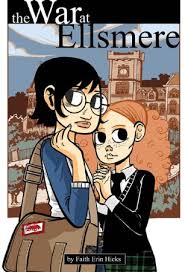
[READ: February 13, 2015] The War at Ellsmere
I’ve enjoyed Hicks’ books in the past–both the ones she’s written and the one’s she’s simply illustrated. In this book she does both which means you get big eyes and the dark hair.
As the book opens we meet Juniper, a girl who has just enrolled in Ellsmere Private School. We meet the headmistress and learn the history of this beautiful school (established in 1810). And then we find out that Juniper is there on a scholarship (merit based) and that Juniper is well aware that she will likely be there to “liven things up for the blue bloods.”
When Juniper meets her new roommate Cassie (who hears her talking to herself), Jun immediately goes on the defensive–until she sees that Cassie is actually quite a nice girl. (Nice, Jun, you just insulted Bambi).
But it’s during the orientation that we meet the real antagonist of the story–Emily, a pretty blonde girl who immediately insults Cassie and calls her “orphan.” When Jun gets involved, it suggests that it will be an interesting year for all of them. (more…)
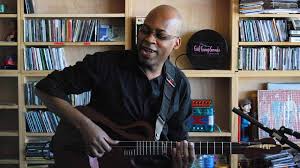
I had never heard of Lionel Loueke. He is a West African jazz player with a wonderfully unique way of playing. He uses low tuning, nylon strings electric guitars (the particular guitar he uses here is beautiful), and paper in his strings (to create a cool buzzing sound).
He also sings (but that’s not the right word), he makes sounds with his mouth–sometimes singing what he is playing, sometimes just making sounds. He seems like he is having the best time up there.
According to the blurb, Loueke usually plays with a trio (with the bassist and drummer contributing to songs and shaping the direction of the band). For this Tiny Desk only Loueke and drummer Ferenc Nemeth play. Nemeth plays bells, bundle sticks and a little rig set up around a hand drum and a jangly tambourine–it’s a very cool percussive sound that perfectly matches Loueke’s guitar style.
They begin with of “Vi Ma Yon.” It’s a five-minute traditional song that appears on Loueke’s album Mwaliko. This is such a fun and interesting song, with Loueke’s voice floating above the interesting guitar styling he lays down (with that paper buzzing away).
The second song, “Merci,” feels more traditional–with what sounds like actual words done in a melody. Although his guitar playing isn’t as interesting (the paper is gone), his skill is readily apparent as he flies around the neck.
This is yet another interesting Tiny Desk with a performer I’d never heard of who really impressed me.
[READ: May 29, 2015] Always Be Yourself.
The second bad book of the weekend is this one. I have to admit I love the title of this book. I don’t know exactly where it comes from (some Tumblr feed no doubt) but I think it’s very funny. And that’s what attracted me to it. But the book itself is really rather lame.
It’s always weird when a book tries to capture an online sensation. Especially one that is completely of a time and basically ephemera. So here we get this book about Tumblr. Notice there is no “author” for the book. Although on the inside we see that the text is by Perille Kok-Jensen and Els Dragt.
My guess is that it is striving to be like a Douglas Coupland book (the font is very similar) with pictures and pithy slogans designed to describe all that is Tumblr. The blurb says this book is designed to look at today’s Tumblr generation who are “bold, dreamy and unfazed by the grim context in which they’re coming of age.” And that it is written “to all the unicorns out there: perhaps you could buy the book for your parents so that they will understand that you are in fact not a freak but part of a greater movement.”
Okay, fine, but how is Tumblr (Tumblr? really?) a great movement? And are people actually defining themselves by using Tumblr? Because I can tell you that all kinds of stodgy places use Tumblr, too.
Anyhow, it starts with a pithy comment: “The nineties called, they want their individualism back.” Which seems like a direct contradiction to page 61: “Blending in is the new standing out.” Whatever.
And then it quotes Farrell’s “Happy.” In fact it quotes lots of song lyrics and other famous quotes (with no attribution, actually). (more…)
SOUNDTRACK: DAVID RUSSELL-Tiny Desk Concert #55 (April 19, 2010).
David Russell is a classical guitar player (or “god,” as they call him). Although I am unfamiliar with his work, apparently he is huge.
And deservedly so. When he started playing the first song I assumed he was looping the low notes while he soloed the high notes. But no, he is playing the low notes slowly with his thumb while he speeds along the nearly pizzicato notes with the rest of his fingers. And that’s just his right hand.
His left hand doesn’t move fast–he’s not shredding–but man, the elaborate chords, the expanse of his hand covering so much of the neck at once–are really stunning to watch. The chords are complex and the way he can play solo notes and low notes at the same time is amazing.
The Couperin piece absolutely blew my mind–there are two melodies going at once. And the Albeniz piece is simply lovely.
It’s also fun to listen to his Scottish accent when he describes what he loves about the guitar he is playing (and his unexpectedly baudy joke about why he doesn’t name it).
The set list includes:
Augustin Barrios: “Una Limosna por el Amor de Dios”
I usually try to only read books that I’ll enjoy, but every once in a while you get a stinker. So this weekend is devoted to two recent stinkers.
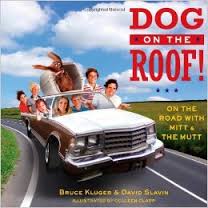
I saw this book on a pile at work. And I thought why on earth did we get this completely out of date book in 2015? I see now that it was donated to the library. My goodness, thank you random person.
So perhaps you remember that in the 2012 campaign, Mitt Romney put his dog on the roof of his car or something. It was a minor scandal (or a major scandal if you love dogs). And it was a jokey talking point for a little while.
Well, as happens in political cycles, some people decided to make a jokey book about it. Kluger and Slavin are satirists who work for All Things Considered. And, as the blurb on the back of the book says (not too overstate what was a minor incident) “It is the inside look at the Man Who Would Be President and the wild ride that’s sweeping and bewildering the nation.” (more…)
DakhaBrakha are a band from Kiev, Ukraine. There are four members, one man (unsure how he is dressed because he plays the accordion which covers his body) and three women. The women are dressed in fetching white gowns (with lovely detail work done on them) and gigantic woolen “farmer’s hats.”
The women play drums, (with what looks like a wooden spoon), bongos a horn instruments that sounds a bit like a kazoo (I wish NPR gave more details here) and a cello. They also provide most of the singing.
The first song, “Sho Z-Pod Duba”features bowed cello. It opens with the male yelling quite loud and some wild yipping and shrieking from the women by the song’s end.
The second song, “Torokh” features lead vocals by the middle woman (the one with the kazoo). But it also features interesting backing sounds and hums from the other two women. The cellist (who is plucking the strings like an upright bass) also sings a partial lead vocal. When the kazoo (which isn’t a kazoo at all, and is more like a penny whistle with some kind of vibrating piece on it) kicks in, the song goes utterly bonkers for a few measures. The male singer starts yelling and the song is just insane until it stops and slowly builds again.
The end of “Torokh” and a lot of “Divka-Marusechka” has the women singing in the style of Le Mystère des Voix Bulgares (Bulgarian folk harmonies). This song is the most unsettling of the three because the accordion and cello play an incessant drone that is a two note lurch. The male sings lead while the females sing harmony and dissonant harmonies as well as a bird call kind of sound. The end has one of the women signing an almost hip hop style while the other sings a higher, faster lyrics (all of which is in Ukrainian, so I have no idea what they are saying).
It is a strangely familiar music and yet it is also disconcerting. I listened to it three times and I loved blasting it in my car–t woks great at loud volumes. I also want to get one of those hats.
This is a collection of three short stories from Irish writer Keith Ridgway. They are quite dark and explore the criminal underbelly.
“Never Love a Gambler”
In this story we meet a family, the father of which is a gambler. We meet his son and wife as they talk tough to the loan shark’s thug. The son is pretty tough, standing up to Mossie, who gets the whole bar quiet when he walks in. Mossie explains that he has been round to their house and they have some lovely things, but he can’t find the gambler himself. They tell him that they don’t know where he is and then set out to try to find him. In the meantime, they find a filthy homeless dog and a boy who is waiting to be picked up by his dad. And they go on a quest together. The stories converge in a dark but funny (but actually very dark) way. (more…)
 SOUNDTRACK: PAUL WELLER-Tiny Desk Concert #457 (July 28, 2015).
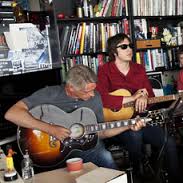 Paul Weller is a highly regarded and well respected elder statesman of rock. Some of his songs with The Jam are my favorite songs from the 80s. Weller hops from genre to genre quite a lot, and I did not care for The Style Council at all. So even though he’s been making music forever, I haven’t really paid him much attention. In this tiny Desk, he brings a fairly large band (6 people (4 guitars!)) to sing an acoustic collection of songs. There’s a drums (just a snare) and a percussionist too. And everyone sings.












 I Just Read About That...