Feeds:
Posts
Comments

Archive for the ‘Punks’ Category

[LISTENED TO: January 12, 2012] Girl with Curious Hair

I saw a placeholder on Amazon for this audio book in early 2011.  And then I promptly forgot all about it.  My friend George just asked if anyone had heard it yet, so I decided to check it out.  I downloaded it through Audible.com.

And here’s my two cents about Audible.  Although it was free (for a 30 day trial), it was a lot of work.  The entire book (14 hours) downloaded in two files.  Each was about 7 hours with no breaks or chapters of any kind–just two huge 7 hour files.  Okay, I often download stuff and bring it into Audacity to make my own chapter breaks.  But you can’t import this file into Audacity because it is its own proprietary format and doesn’t want you to put it in MP3 format.  So, I had to burn it to CD (but not in MP3, only in WAV) and then put the CDs back in to iTunes to import them as MP3.  From there I could import them into Audacity and put tracks where I wanted.  That’s a lot of work to save $29.

I’m also going to say that I didn’t want a membership to Audacity because it costs $15/mo and the savings aren’t really that good anyhow.  Even kids books are about $10 each.  Oh, and just see how many hoops they have you go through to try and cancel.   Heavens to Betsy.

And but so on to the actual audiobook.

The book was read by Robert Petkoff (who is Reader A below) and Joshua Swanson (who is reader B below).  I don’t know anything about them, but their websites will give you more info about them.

I found the readings to be simply wonderful.  They were impassioned and articulate and dealt with some of DFW’s tongue twisting word choices with ease.  They also handle DFW’s dialect and accents with ease.  And while Swanson has a much much broader range of voices to play around with (his women voices are far superior to Petkoff’s), Petkoff also pulls of some amazing voices, especially in “John Billy.”  I never questioned what was happening.

Some of these stories are challenging and I admit I found them difficult to read.  But the audio versions seemed to really clarify things.  (There are all kinds of reasons why this could be so, but I’m not going to delve into that, for there lies madness).  Nevertheless, this was a great way to hear these stories.  Especially the ones that had heavy dialect.

“Little Expressionless Animals” [Petkoff] (90 minutes)
Petkoff sounds uncannily like Kyle McLachlan–no bad thing.  Although Petkoff doesn’t work too hard trying to do different voices, he puts in enough distinction to make the characters distinguishable.  (We have been listening to a lot of kid’s audio books, and the narrators of those are amazing with the kind of vocal acrobatics they can do!).  Petkoff is more subtle, but it is also effective–it’s not just a straight voice, which I think might get confusing especially in the dialogue scenes.

There is a hint of Alex Trebek’s voice when doing Alex Trebek, but he’s definitely not trying to mimic the voices of the celebrities.  For the most part, the voices are slight variations of the main narrator.  Indeed, during the later Faye and Julie dialogue section, he does slight differences between their voices to help distinguish the characters.  Which is quite helpful in the story.

This story works very well in audio book format.

One of the things that I loved about this story this time was really piecing together all of the various compnents.  Inclduing things like the revealtion of why Julie does poorly on the subject of animals.  It’s quite obvious when the story ends, but through the whole story you keep wondering, what is it about the animals?  I’m aslo intrigued at the number of gay characters in the book.

And, of course, this story has a major obsession with pop culture, especially TV.  And knowing (from interviews) that DFW sais he would just get sucked in to watching TV all day if it wa svailable, his tone (as is Petkoff’s) is perfect when dealing with the TV issues.

“Luckily the Account Representative Knew CPR” [Petkoff] (18 minutes)
Petkoff sounds slightly differnt than in “LEA.”  Since thist story has no dialogue, there’s not a lot of differentiation in the story.  His deadpan delivery is perfect for all of the details in the story. Although at the end, his “Help”s are quite empassioned, letting you know there’s a little bit more going on.

“Girl with Curious Hair” [Swanson] (50 minutes)
Swanson’s voice is of a much higher timbre, and it’s kind of fun to have two different voices in this book.  This story benefits quite well from an audio format.

The story is deliebrately flat and, I have to admit, is not terribly easy to read.  Swanson handles the flatness very well, he reads it incredibly deadpan and yet he puts enough inflection in it to keep it from being monotone.  I have to assume it wasn’t easy to read this.  I think that he has really made this disturbing character quite real.

Obsevrations about the story.  Hearing this story out loud was more shocking than reading it.  The explicit sex is pretty shocking for DFW and the revelation about what happened to Sick Puppy when he was a kid is prodoundly distrubing, especially when it is read in this non-inflected voice.  It was uncomforatble and very effetcive.

There were times when I wondered about the believability of the charcter.  The use of the word negro, the utter flatness of him. I realize that he is quite damaged, but at times it seemed like maybe this story was too much.  Which is a bit of a surprise, as I find DFW’s charcatersto be very real.

“Lyndon”  [Swanson] [1 hr 45 min]
I didn’t really enjoy “Lyndon” when I read the story.  It’s a little long and had many different things going on.  I kept wondering about Lyndon himself.  About what made DFW write a story based around Lyndon Johnson, around jhis life and politics.

But hearing this story read aloud, with the Swanson’s various voices and accents and newspaper stories all differentiated really brought this to life.  I felt like it was so much more vibrant and alive and passionate in this audio version.  I read in my post that i found the ending quite moving when I read the story, but it felt even more so, with Lady Bird’s quiet, dignified delivery, here.

Observations on the story.  How odd that he chose to make this story that is about a real, and quite famous and well studied person.  I don’t know a thing about Lyndon, so I have no idea how much of this is true (the few LBJ quiotes I looked up seem faked).  I don’t think I spent enough time thinking about the main character when I read the story.  Boyd is so fully realized and amazing that Lyndon is really superflous.  This is awonderfully emotive story.  And Swanson really does an amazing job.

“John Billy” [Petkoff] (1hr 10 min)
I thought “John Billy” was a real challenge to read.  The dialect is pretty crazy.  And the story is not exactly easy to begin with.  But much like Swanson in “Lyndon,” Petkoff’s voices are outstanding here.  The main voice of John Billy is great–he handles the accent and the crazy word choices that John Billy has with ease.  The story flows perfectly.  It’s really impressive.

And while the voice of Glory Joy isn’t wonderful (Petkoff’s women are just softer versions of his voice), he more than makes up for it with the amazing transformation of Simple Ranger.  In the reading, it is clear that Simple Ranger “grows younger” from a quiet, hard to hear older to a youthful loud charcater.  And Petkoff takes that literally so you can really hear him change into a man with a “curious plus haunting voice that was not…of his gravelly, gray-lunged voice somehow, his own, somehow.”  And then, later in the story Ranger’s voice changes again when he “whispered, the big sharp clear new Ranger in a smooth new clear young voice.”   But nothing prepared me for the voice of T Rex Minogue. It is stunning.  It’s an amazingly processed voice that is as malevolent as it is “mechanical.”  It’ s masterful.

As for the story itself, the whole saga of C.Nunn Jr is bizarre and wonderful, a crazy hyperbole of a story.  It also seems crazily over the top hearing it aloud (like in “GwCH”).  The whole story’s end with C Nunn’s eyes is preposterous (what is it with people’s eyes in this book?).  And yet it feels like the nonsense is there as a balance for the heaviness.

The story is funny and silly but by the end it gets incredibly dark and thoughtful.  It’s a challenge to listen to, especially the end, but I think it benefits from an audio version.

“Here and There” [Swanson] (55 min)
I found this story somehow more confusing while listening than when reading.  There’s so much back and forth with voices and the whole conceit that this is some kind of fiction therpay doesn’t really translate easily here.  I also found some of the more academic sections to be kind of dull in his reading.  It’s a challenge to read aloud and keep interesting, I’m sure, but I found this story to be the least successful of the collection.

“My Appearnce” [Petkoff] (58 minutes)
This is written in frist person from a woman.  Petkoff, who has quite a deep voice conveys a woman very well.  This is a great reading for this story.  He does “versions” of David Letterman and Paul Schaffer.  They are not impersonantions by any means, but he has the tone down perfectly.   The male voices whispering in her ear are done in a very simple whisepred voice.  Very effective.

This is a great story and the audio is also wonderful.

“Say Never” [Petkoff and Swanson] (42 minutes)
Petkoff does a very good job with the accents in this story.  Labov’s heavy Jewish accent is very impressive.  And although Mrs Tebof is not very different from Labov, it is different enough to convey the accent and the tone.   He also does Lenny’s voice, which is the bulk of the story.

Swanson also comes in this story as well, doing the voices of Mikey and Louis (two very distinct voices, even if they are both a little Hollywood Gangster from the 40s).  I would have been interesting to hear them interact more in the book somehow.

I was struck by this story more in the listening than the reading.  There’s something about hearing people say these things that makes them more shocking.  Especially the note that he sends to his family (talking about his wife’s lack of sex drive–gasp!).  This is another one of DFW’s stories that ends before something big happens.  It’s funny how many of his stories seem like preludes.

“Everything is Green” [Petkoff] (3 minutes)
It’s also amazing that this whole story is only 3 minutes and thirty seconds long.  Petkoff reads this story in a perfect DFW deadpan style.  He even does May Flys voice with a (slight) accent.

“Westward the Course of Empire Takes it Way”  [Swanson] (6 hours)
Swanson does an amazing job with this difficult story.  There are nearly a dozen charaters in here and he manages to keep them all separate and distinct.  It’s really great.  This is especially true late in the story, when they are in the car on the way to Collison.  He has six people in the car and he manages to make sthem all unique:  J.D. is dark and gravelly while DeHaven has a kind of Midwestern Stoner tone.  Tom Sternberg is neurotic and aggressive at the same time.  D.L. is snotty and presumptuous (although it may be Swanson’s weakest voice, it really conveys the character well).  Magda is exhausted.  And Mark is a solid late teenager.

Let’s not froget the pissed off Fertilizer salesman, the Avis clerk and the bartender.  And the narrator of course.

This story is also fairly complex and hard to follow (when reading).  There so much going on what with the narrator’s interruptions and the metafiction.

What I really noticed this time is how the parts that are not metafictional, the actual narrative of the story is really good, really strong and emotional.  Not to say that the more meta- sections of it are bad, they just don’t have the same kind of impact.  Of course, the whole point of the story is to play around with meta-fiction, so I’m not entirely sure how successful it is in that regard.

Nevertheless, it’s a fascinting look at youth in America.  And I have to say that it really works as a foreshdaowing of issues that he would explore more in his later stories and IJ.

Some things I notice din this listen.  DFW uses the word “plus” instead of “and” a lot.  It’s a fascinating word choice, and one that I think virtually no one uses.  Sometimes it’s effective and other times it’s very clunky.  I never noticed it while reading but it’s very obvious when listening.

I just read my review of the short story collection, which I think was kind of brief.  I feel like I got a lot more out of the book this time around. Of course this is my second reading so that makes sense as well.  It’s also interesting how I enjoyed some stories more and other stories less.

Overall though, this is an excellent audio book.

Read Full Post »

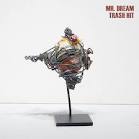
SOUNDTRACK: MR. DREAM-“Holy Name” (2011).

The cool site Bob Dylan Wrote Protest Songs created a Top 20 list of 2011 albums.  It was an interesting mix of stuff other people liked (PJ Harvey, St. Vincent, Bon Iver) and a whole bunch of stuff that I’d never heard of (like this band).

BDWPS explains that the two guys in Mr. Dream met in college and are music critics (with Pitchfork in common among their employers).  And we all reflexively gag at the thought of music critics making music. 

This song opens as a direct rip off of Nirvana’s “Lithium.”  I mean, it’s unavoidable–same quiet guitar playing virtually the same chords.  It infuritaed me.

But on a second listen, I heard the differences.  They are the same chords as “Lithium” except that the final chord in the sequence goes in a different direction, as does the rest of the song.  It’s rawer than Nirvana (at least than Nevermind), but it has the same feel and attitude.  Maybe with a hint of Slint thrown in. 

I was prepared to write this off as a Nirvana rip off, but of course, Nevermind is twenty years old.  I think their music is just part of punk consciousness now.  And it’s nice that Mr. Dream makes good use of it.  Raw and angry.  Very nice.  I can’t wait to hear the rest of the album.

[READ: December 30, 2011] “Max reviews the classics”

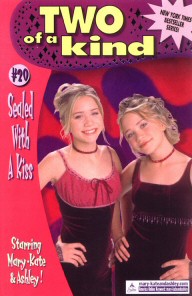
May-Kate and Ashley Olsen are a really really easy target, and I’m a little embarassed for Max that he went after them with this review, but it is still pretty funny (and it’s not like they can’t take it).  The “review” is not as fish-in-a-barrel as it might be. 

The introduction is funny: “Last night I took a break from re-reading Cryptonomicon to pick up a book roughly as long as one of its paragraphs: Sealed with a Kiss” (with links provided for each).

He is clearly setting out to mock the book, I mean how could he not.  But the things he points out are interesting not so much from a Kate and Ashley standpoint as from a book standpoint.  Indeed, he spends a lot of time on just the first sentence: “‘We’re going home to Chicago for only two weeks!’ Mary-Kate Burker told her sister Ashley.”  Max points out, “who, exactly reads the 20th book in the Mary-Kate and Ashley series without realizing they’re sisters?  …If you’re worried about readers that stupid, you probably need to point out that they’re twins too.”  That’s a little harsh to the series as, yes, it is obvious, but the series is clearly written for young kids, and frankly in terms of exposition, that’s pretty brief.

A more salient (and funnier observation): “I can’t help but wonder what percentage of Mary-Kate and Ashley books contain an excalamtion point in the first sentence.  I haven’t checked, but I get the feeling it’s a high number.”  Hilarious. (more…)

Read Full Post »

SOUNDTRACK: KISS-Unmasked (1980).

It was hard to like Unmasked, but, being an 11-year-old boy, who loved Kiss, I never doubted its awesomeness.  Despite kids in school telling me Kiss sucked and, peculiarly, even the cover of this album telling me they stink (whose idea was that?) I knew in my heart of hearts that Kiss was the best.

In a stroke of marketing genius, this album teased the audience with the idea of finally seeing who was under these “masks” (which is weird since everyone knew they weren’t wearing masks, but whatever).  There’s even a poster that came with my vinyl copy!  Yahoo.

I just recently found out that “Is That You?” is a cover.  I always liked the high-pitched part of the song (“you always get the boys you like”), although in retrospect it’s really not very good–simplistic in a way that Kiss songs weren’t but then became.   I always joke about Kiss doing a tour and playing “Shandi.”  It’s such a cheesy ballad and yet I think it’s really good (for a cheesy ballad–Paul sings this type of song so well).  I constantly have the “there’s another mess I’ve got myself in” line in my head all the time.

I liked “What makes the World Go ‘Round” but even I can acknowledge that the song is pretty poor.  “Tomorrow” sounds like another song off of Paul’s solo album and probably should have been a huge hit.  In fact, they could have re-released it in the 80s and it would have fit right in with their non-makeup success–Paul’s soaring choruses are always a hit.  “Easy as it Seems” is kind of the album encapsulated in one song–very sleek, very soft, lots of choruses vocals and really kind of bland.   There’s even a wimpy keyboard solo (gasp!).

Ace was the star of Dynasty, and he gets three more songs on Unmasked.  “Talk to Me” is one of his repetitive songs that drives me a bit nutty (never liked that “talk to me-e” part).  It’s interesting how much Ace moved into prominence on these albums, especially since he was headed for the door soon.  “Two Sides of the Coin,” is a decent rocker, but listen to those crazy synth drums during the instrumental break.  “Torpedo Girl” is the most interesting track on the disc.  It has the cool opening “man battle stations torpedo,” a really funky (!!) bass line from Gene (who knew he had that in him) and a cool weird riff at the opening.  It’s then got a very catchy chorus (although honestly, “c’mon get your feet wet”?).

Gene has a bit more prominence here.  “Naked City” has a pretty menacing riff to open with, but Gene turns in one of his more melodic turns (with some pretty high notes in the chorus)!  The solo, while not blistering, is pretty great (as with Dynasty, the solos are too short).  “She’s So European” aside from being a really stupid title and lyric is the song that really puts this album over the edge–the twinkly keyboards, the “you ought to see her” falsetto, and, basically the same chord structure as “Living in Sin” on the verses.  Gene ends the disc with “You’re All That I Want,” a rather uninspired song that reminds me of the songs on side 4 of Alive II.

You’ll notice that Peter doesn’t get a vocal turn on this album.  In fact, he didn’t play anything on it at all (Anton Fig on drums again), but he was contractually obligated to appear on the cover (perhaps that’s why they did a cartoon).

No matter how much I listened to it back then, I can still admit that this album isn’t really very good.  Although interestingly, some of the songs and sonmg styles foreshadow the kind of music they’d play on Lick It Up: simple songs without a lot of substance, and that album was huge!

[READ: November 2, 2011] “Wildwood”

After reading “The Brief Wondrous Life of Oscar Wao” in the New Yorker, I saw that they had also published Lola’s “Wildwood” adventure as an excerpt from Oscar Wao the novel.

As you can see, this excerpt came out around the same time as the novel.  And as far as I can tell, this excerpt is exactly the same as the novel except for one line that was in the excerpt but not in the novel (the part in italics):

Hija de Liborio she called you after you picked your tia’s winning numbers for her and when you guessed correctly how old to the day she’d been when she left home for the U.S. (a fact she’d never told anyone).  You assumed….

The only other noticeable difference is that the first section of this excerpt is not really separated from the rest of it.  The first section is told in the second person, while the rest is in the first person.  In the novel, the second person section is set off by itself, so it’s a little less jarring when you jump to first person, but I think any reader could cope with that pretty well. (more…)

Read Full Post »

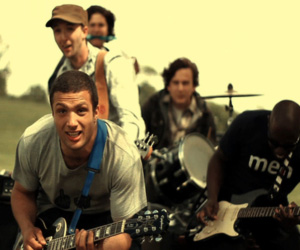
SOUNDTRACK: COSMO JARVIS-“My Day” (2011).

I learned about Cosmo Jarvis through NPR.  The DJs called it a love it AND hate it song.  But I find that I mostly love it.  The video is a blast to watch, but even without the video, the song is quite catchy and fun.  It’s a half punk song and half folkie/trad song.

So who the hell is Cosmo Jarvis?  Well, he was born in NJ, but is really from England.  He’s a filmmaker and musician and he’s had a hit with the song “Gay Pirates” that Stephen Fry raved about on his Twitter feed!  “Gay Pirates” is a fun shanty, but “My Day” is a full-on punk blast.

The song laments the state of things today and talks about how things were back in “my day” (which is of course funny since he’s 21).  The verses are a kind of folkie/storytelling style (but with electric guitars) and the end of each verse has a guitar riff that sounds traditional to me.  But when the chorus jumps in, it’s heavy, rocking, screaming punk.

Okay so the song is nearly 8 minutes long, which is probably overkill.  There’s a fairly lengthy instrumental bridge about 5 minutes in which features guitar and tin whistle solos.  And then the final 2 minutes are just fast metal screams of “My Day” with some wild soloing.  Yes, it’s too much (I’ll bet the single mix is awesome), but it’s still an enjoyable song.  Even without the video.

But you should watch the video, if only because it’s what the guys from Jackass would do if they were in a band and lived in the English countryside.

[READ: July 15, 2011] The Corrections

My company recently asked us if we had read any books over the summer.  I was able to pony up this review for our company newsletter.  I’ll be fleshing it out, but it’s pretty apt.

I’d put off reading this for a number of years, and I wish I had read it sooner.  It’s a very detailed look at one family: Elderly parents, thirty-something kids, and a few grandkids.  The depth of character development is amazing (and includes even depth of characters that the main characters interact with).  It’s a long book but it is very rewarding—comic scenes, moving scenes and one or two shocking moments.  It’s also the first time I’ve read a book where I thought, “even though I like this character, I think it would be better for everyone if he died.”  It’s an unnerving thing to think, but Franzen really makes you think about how family members impact one another.

It took me forever to start reading this book, obviously.  I wasn’t really interested in Franzen when all of the Oprah commotion came out, so I blew off this book entirely.  I’ve recently grown more interested in him.  But rather than reading his novels, I had decided to read all of Franzen’s New Yorker pieces.  (And even though I wanted to read Freedom when it came out, I felt that I should read this one first).  I wasn’t hesitant about reading it, I think I just wanted time to devote to it.  Much like I needed time to devote to writing up this post.  It’s been well over two months since I finished the book.

The Corrections is a wonderful, engaging story about three generations of the Lambert family (and many of the people they interact with).  The matriarch and patriarch of the family, Enid and Alfred, live in the midwestern town of St. Jude.  They have three children: Gary, a banker in Philadelphia who is (more or less unhappily) married with three children; Chip, a former school teacher and current playwright who sponges off of his younger sister while he tries to live the high life in New York City; Denise, a very successful chef who also lives in Philadelphia.  She has no children.  Gary’s children play a small but significant part in the story, keeping the three generations aspect working very well.

I found the first chapter a little slow and somewhat off-putting.  I read an excerpt from the novel in the New Yorker, which was a piece about Chip.  So I was surprised that the book opened with an older couple.  The chapter deals with Alfred and Enid.  Alfred’s dementia is hitting their household quite hard but Enid just feels that Alfred isn’t trying very hard.  Because Enid has very little in her life, she wants nothing more than to have her whole family together “one last time” for Christmas.  Enid and Alfred are long-married and this chapter picks up in the middle of a typical day.  So it takes a few pages to get up to speed.  Of course, once I did, I felt that the whole family was completely real and believable. (more…)

Read Full Post »

SOUNDTRACK: SONIC YOUTH on NPR [interviews and stories] (2006-2009).

While I was finding all of these awesome downloadable shows on NPR, I also found that there are hundreds of downloadable NPR stories about all kinds of bands.  But I was especially interested in the Sonic Youth ones because, well, I’m a fan of the band, but also because it seemed so incongruous to me to hear Peter Sagal introducing a story about Sonic Youth (with noise rock in the background).

The three downloadable shows cover the period from 2006-2008.  It’s no coincidence that this is the Rather Ripped period, where the band is at its most commercial.  And yet it is still pretty neat to hear them play samples of the noisier music as well.

The first one, A 25-Year Experiment in Artful noise (June 12, 2006) appeared on All Things Considered.  It is an interview from WHYY (but with the Peter Sagal intro!).  Joel Rose asks the band about their longevity as well as the history of their sound (this is where Thurston admits that their unusual tunings were because their crappy thrift store guitars sounded very bad in normal tuning).  This interview also revealed to me that Thurston and Kim were married in 1984.  I knew they were an item forever, but didn’t know they were official for that long.  Well done!

The interview also mentions their appearance on the beloved show The Gilmore Girls.  They watched the show with their daughter, Coco and heard Sonic Youth mentioned a few times (by cool chick Lane).  So they got in touch with the producers and were invited on set (I wonder if the actress who played Lane liked them as much as Lane did?).  And they played a fun “troubadour” version of one of their songs on the show (with Coco on bass).

The second download, Story of a ‘Kool thing’ (June 13, 2008) is more of an interview with David Browne, whose book Goodbye 20th Century:  A Biography of Sonic Youth, I have not read (although it sounds good).  This interview delves into their earlier music a bit more (how cool to hear Tom Violence on an NPR show–admittedly this show is The Bryant Park Project, so it’s not quite All Things Considered).  This segment is a general overview of the band’s history and of the book itself (but unlike the book, this offers snippets of music!)

The third one has a rather snarky title: “Turning ‘Sonic Youth’ Fans Into Readers” (January 27, 2009). It’s not so much about the band as it is about a book curated by Peter Wild called Noise: Fiction Inspired by Sonic Youth.

It’s a brief segment which delves into the inspiration for the book and for Wild’s own story “Radical Adults Lick Godhead Style.”  There’s a strangely credulous tone to the whole piece which makes it seem like they don’t really like the book.  I’m curious about the book as there are a few well-recognized writers on board, but I’m not sure if I’ll ever get around to reading it (although Amazon sells used copies for $2.50).

Contributors include:

Hiag Akmakjian • Christopher Coake • Katherine Dunn • Mary Gaitskill • Rebecca Godfrey • Laird Hunt • Shelley Jackson • J. Robert Lennon • Samuel Ligon • Emily Maguire • Tom McCarthy • Scott Mebus • Eileen Myles • Catherine O’Flynn • Emily Carter Roiphe • Kevin Sampsell • Steven Sherrill • Matt Thorne • Rachel Trezise • Jess Walter • Peter Wild

[READ: April 18, 2011] 826 NYC Art Show Catalog

This item is always for sale pretty cheap at the McSweeney’s site.  It recently was marked down to $3 so I figured I’d check it out.  This is a collection of art prints.  Each one is on a stocky paper just under  8 1/2″ x 11″.  The prints are reproduced beautifully (there’s about an inch and a half border (making them suitable for framing).  The back side of the print has a review of the print.  And, most amusingly, the reviews are by 6 to 8 year olds.

The art is hard to summarize, as it covers a lot of ground.  There’s a ton of different styles as well, from straight ahead photography to line and pencil drawing to painting.  These artists each have one page: (more…)

Read Full Post »

SOUNDTRACK: WAVVES-Live at the 9:30 Club (2010).

Wavves opened for Best Coast (what a great double bill).  Wavves play a raucous, rowdy set of bratty punk.  Unlike Best Coast, the lead singer seems like he might be something of a jerk.  But it played pretty well into the personality of the music (sloppy, abrasive).  And I wonder just how many times he said he was drunk?

Personalities aside, the was a really fun set.  I have the newest Wavves album, but I think their live show was more engaging.  For all of their sloppiness, the band was always together, with no missed notes (except when the drummer was apparently not paying attention).

They play 16 songs, including a cover of Black Flag’s “Nervous Breakdown” (which the play very well).  And even if you’re not won over by the singer’s personality (which is kind of funny), you’ll be won over by the simple, punky music.  You can listen here.

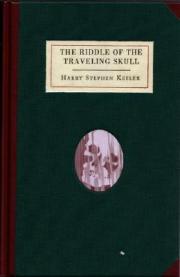
[READ: March 29, 2011] The Riddle of the Traveling Skull

This is the 4th book in McSweeney’s Collins Library Series.  It’s the final book in the series that I’ve read and I have to say that once again, Paul Collins has blown me away with this selection.  Collins apparently stopped his library after 6 volumes.  I wondered if there were more coming, but the Collins Library website is rather confusing.  There’s an almanac with updates as recent as March 1st, and yet the Biography of Paul Collins says: Paul Collins is currently on tour in support of his memoir, Sixpence House, which recounts his time spent living in the Welsh town of Hay-on-Wye, known as the “Town of Books.”  But Sixpence House came out in 2003 (and it sounds awesome!).

Anyhow, back to this book, which was my favorite of the bunch.  It is a genuine mystery from 1939.  Indeed, Harry Stephen Keeler was even more prolific than Agatha Christie (they were born in the same year).  The thing about Keeler though is that his stories are, well, crazy.  Many of his stories were just his attempts to meld disparate ideas into one story.  He includes crazy dialect.  He seems to have no concern for conventional storytelling.  Indeed, he has little concern for conventional mystery storytelling (in one of his stories, he introduced the murderer on the last page).

And this story has similar improbable elements.

In sum: Clay Calthorpe, a salesman returning from the Philipines picks up the wrong bag on the trolley.  When he gets home he finds a skull inside it.  The skull has a name plate affixed to it, a bullet inside it and, in the wads of paper that are keeping the bullet from rattling around, he finds the carbon copy of a poem. (more…)

Read Full Post »

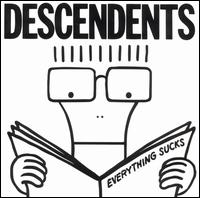
SOUNDTRACK: DESCENDENTS-Everything Sucks (1996).

My three-year old daughter brought this CD out of the shelf of CDs in my house.  I have no idea why she did; she didn’t say.  But I decided to listen to it as I haven’t in many, many years.

The Descendents have been around for a long time and their early records were mostly 1 or 2 minute blasts of punk.  This disc (their first after a nine-year hiatus) doesn’t deviate too much from that track record.  Although the best song on the disc, “I’m the One” actually has a verse-chorus structure and feels like it’s a full length pop song (when in fact its only 2:15).

“I’m the One” more or less set the stage for the kind of pop punk that Epitaph records (who released this record) would bring to prominence with Bad Religion and Rancid (and the rise of emo).  This record offers a fun mix of ludicrously short songs (35 seconds for “Coffee Mug” and 20 seconds for “Eunuch Boy”) and slightly longer songs.  Six of the songs are under two minutes.  And it’s amazing to hear just how much song you can pack into two minutes.

I haven’t really listened to much punk in the last few years, so this is strangely nostalgic even though it doesn’t really sounded dated.  In fact, the slower songs (the 2:30 “When I Get Old”) has a real Bad Religion feel to it–and they never go out of time.  Interestingly they feel a lot longer than 2 minutes after a whole bunch of 90 second songs.

Even after all these years, “I’m the One” stands up as a great song–funny and catchy, and I’m glad to have heard it again.

[READ: February 17, 2011] “The Miraculous Discovery of Psammetichus I”

Following right after Ladies and Gentlemen, The Bible!, is this short story which “fleshes out” The Histories of Herodotus.  In fact Part I of the story is, I assume, an excerpt from Herodotus.

There are Ten Parts, and each part is designed to add more to the simple history that Herodotus gave us.   Indeed, Psammetichus I was a real King of Egypt.

Herodotus tells us that Psammetichus I was curious whether the Egyptians were the most ancient race.  So he took two children, isolated them and made sure no one spoke to them.  They were fed and cared for just not spoken to.  Finally, the children began saying a word over and over, which the wise men determined was a Phrygian word.  This obviously meant that the Phrygians were an older civilization.

The rest of the story is different examples of studies that Psammetichus I did to determine things.  Many of them are kind of funny (absurd, obviously, and sad but sort of funny): raising two children with birds or apes etc.  After a few sections, one of Psammetichus I’s queens (he had twenty-three who were all infertile (!)) asks why he’s so curious. (more…)

Read Full Post »

SOUNDTRACK: fIREHOSE-Live Totem Pole EP (1992).

Listening to Superchunk’s “Slack Motherfucker” reminded me that I knew a live version from somewhere else.  And, with a little help from the web, I remembered it was here.

fIREHOSE is Mike Watt’s post-Minutemen band, and they are a lot of fun (and even managed to get a major label deal before breaking up.  This (apparently really hard to find) EP is a great, weird collection of covers: Blue Oyster Cult’s “The Red and the Black”; Public Enemy’s “Sophisticated Bitch” (yes you read that right); The Butthole Surfer’s “Revolution (Part 2)” (with the repeated coda of “Garry Shandling, Garry Shandling”; Superchunk’s “Slack Motherfucker” and Wire’s “Mannequin”.  There’s two Watt-written songs, “What Gets Heard” (from fROMOHIO) and “Makin’ the Freeway” (from if’n).

The covers are universally solid.  The band sounds punky and kind of sloppy and fun (not so terribly virtuosic on the solos), and they bring an amazing vitality to these songs.  The Public Enemy song is probably the biggest surprise as it sounds fantastic in this rocking band set up (although the original rocks pretty hard too, frankly).  And “Slack” is possibly even faster and punkier than the original (it sounds awesome here).  Interestingly to me, “Mannequin” sounds completely like an SST track (which if you know the label will make sense and if you don’t, it won’t) even though it’s a Wire song (and not released on SST).

I’d always known that Watt was a mean bassist, but man, he is wild on this disc.  The runs and fills he puts in all over the disc are great.  “What Gets Heard” has some great slap bass and “Freeway” is one of Watt’s weird and delightful spoken rants with fantastic bass fills.

fIREHOSE may not have always been brilliant, but they had moments of awesomeness.

[READ: October 16, 2010] “The Failure”

This story is part of the 1999 New Yorkers‘ 20 Under 40 collection (it’s the first story that was not included in that issue).  Its also the first story by Franzen that I have read.

It’s tempting, since I’m in a David Foster Wallace mood, to think that DFW was some kind of inspiration for Franzen (they were friends, after all).  The opening of the story talks a bit about cruise ships.  And Wallace’s “Shipping Out” was published in Harper’s just a couple of years before this.  Having said that, aside from the fact that the protagonist’s parents are taking a cruise (and there’s some cruise-mocking), the story doesn’t have much else in common with the piece, so we’ll get past that.

The story was excerpted in the main 20 Under 40 issue (the first few paragraphs), and I was intrigued, although the excerpt didn’t really indicate where the story would go at all.

Chip is a midwestern guy who has moved to New York City. He has lost a teaching job (for a very bad reason) and is now trying to survive as a writer.  His parents are in town briefly because they are taking a cruise out of New York.  And as he updates his mother and father on what he’s been up to, the list of minor failures (the ones he admits to and doesn’t) grows and grows.  And it’s clear from his mother’s talk that she’s more than a little disappointed in his reality. (more…)

Read Full Post »

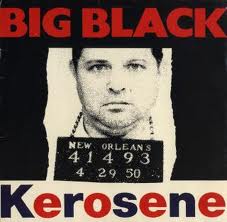
SOUNDTRACK: BIG BLACK-Kerosene [live] (1990).

It never occurs to me to go looking for live versions of songs online, even though there are clearly  thousands of songs I would like. So, I wait for them to come to me.  My friend Andrew posted a video of this song.  And it’s the first time I’ve seen Big Black live.

I’ve liked Big Black for a while (I got into them after they broke up). It’s not pleasant music by anyone’s standards, but there’s something visceral and unsettling about the lyrics and about Steve Albini’s guitar sound that I really enjoy.

I’ve seen pictures of Albini before, but I’ve never seen him in action, and I have to say, I can’t believe a guy as skinny and frankly, nerdy, as him is making sounds like this (although I can see someone like him being this angry).  Watching him in this video is pretty great.  He’s got huge glasses, his t-shirt is tucked into his pants–no that’s not right, it’s tucked into his guitar strap…how is he holding his guitar up??– and then he plays this guitar that sounds like, what…glass, needles, pins, shards of something, certainly.

And just when you think that the song is only noise, this fantastic bassline kicks in.  The riff is outstanding: it’s heavy and propulsive and balances the sharpness of the guitar perfectly.  In this version, about midway through the song he seems to be walking out into the crowd, and they sort of hold him up or push him back on stage, while he’s playing.  And at the end, of course, he destroys the guitar.

Lyrically, it’s as disturbing as anything Albini has written, but man is it cathartic.   And this live version is even more stark and brutal than the studio version.

[READ: June 2010 & October 12, 2010] “Extreme Solitude”

After reading “The Oracular Vulva,” I decided to re-read this, his recently published story.  When this story came out in June, I heard that to some readers the main character reminded them of David Foster Wallace, and they speculated about whether or not this story was inspired by or a tribute to him.  Unfortunately, I read that analysis before I read the story and it automatically influenced my reading (which if you haven’t read it I have now done to you, sorry).

I’m not in any way convinced that it is about him, although there are many similarities–size, athleticism, chewing tobacco, intelligence, semiotics.  But since I know nothing about DFW personally and I don’t know if Eugenides does either, I won’t pursue that line any further.  I will say that I didn’t find that train of thought terribly distracting while reading, though.

Anyhow, this story is about a senior in college named Madeline.  Madeline was a good student and a good girl.  She had dated some, but never had any crazy affairs (and was a bit uncomfortable when her roommate proudly wore (or displayed) her diaphragm–the joke about wearing it to an event is particularly funny).

By her senior year, after breaking of a long relationship with Barry, Madeleine was prepared to settle into her major: English.  She was excited to read and to read a lot (it was her passion as well as her major).  She also decided to sign up for a Semiotics class, which is where she met Leonard.

The description of the semiotics class is wonderful, from the pretentious students to the insanity of the class assignments–from Lyotard to Derrida and everyone in between, authors that I loved in college but since leaving academia I find so convoluted as to be kind of silly. I adored the sentence: “(Could “the access to pluridimensionality and to a delinearized temporality” really be a subject [of a sentence]?)” (more…)

Read Full Post »

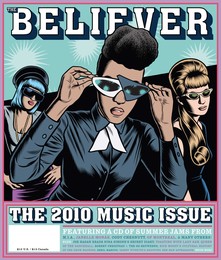
SOUNDTRACK: The Believer July/August 2010 Music Issue Compilation CD: “We Bumped Our Heads Against the Clouds” (2010).

Of all the Believer music compilations, this is by far my least favorite.  It would be oversimplifying things to say that the music is not for me, but in many respects it is not.  Chuck Lightning, the curator of the project states that this compilation is more or less a look into the state of the union for black artists.  And that invariably means a lot of R&B and songs that might be heard on Glee (I like the show, but I never know any of the music).

Deep Cotton’s “Self!” reminds me of novelty dance hit from the late 80s.  Of Montreal, who I thought sounded totally different from this, offer “Hydra Fancies” which is as catchy a disco anthem as any disco anthem can be.  Roman GianArthur’s “Depraved Valet” is an amazingly falsettoed Prince knock off.  Cody Chestnutt’s “”Come Back Like Spring” is a simple almost acapella ode to spring.  Saul Williams’ oddly titled “B.S. in a Tampon” is a spoken word with acoustic guitar that reminds me of Gil Scot-Heron.  Janelle Monáe’s “Cold War” is the first really catchy song (the la las remind me of Carole King), although  I could do without the overstated “Calinda” part and the extended fade.

The first song I really liked was BLK JCKs “Iietys” which sounded enough like TV on the Radio to be really interesting.  Spree Wilson’s “Chaos” also sounds like TV on the Radio (the more R&B side of the band, although the guitar solo is a dead ringer for “Hotel California.”  Scar’s “Rewind” is the song that should be on Glee.  I want to hate it but it is so damned catchy, I can’t.  Again, those Oh Oh Ohs are too perfect (and the auto0tune of course is unassailable).

Rob Roy’s “Velvet Rope Blues” is my favorite song on the disc by a large distance. It’s a weird rap that reminds me of The Streets, with an awesome sung chorus ala OutKast.  Hollyweed’s “Have You Ever Made Love to a Weirdo” is a trippy, juvenile space rap that is really silly.  Sarah hates it but I kind of like it, as it’s in the spirit of Frank Zappa, (although I hate the sax solo).  Fear & Fancy’ s “Off the Grid” sounds also not unlike OutKast.  And George 2.0′ s “Turn Off the TV” is a anti-TV rap rant (with the somewhat ironic conclusion that you yourself might end up ON the TV).

M.I.A. is probably the biggest name on the disc. “Born Free” is a weird little track of highly distorted vocals over a punk guitar buzzsaw sound.  But her vocals are mixed so loud in the mix that they sound unrelated.  It sounds not unlike a Go! Team track.  This track makes me wonder how she became such a sensation.

Hot Heavy & Bad’s “One” returns to that disco sound in the vocals with some contemporary bass sounds.  It wears out its welcome pretty quickly.  Tendaberry’s “Cold Boy” sounds like a less horn-y Fishbone.  Mother Novella offers one of the few all guitar songs, “Closer 9 1/2” and it’s an okay mid tempo rocker.

The final song is pretty awesome in theory: Nina Simone covering Alice Cooper.  That’s right, Nina Simone covering Alice Cooper.  Sadly I don’t know the Alice Cooper song, so it’s a bit lost on me.

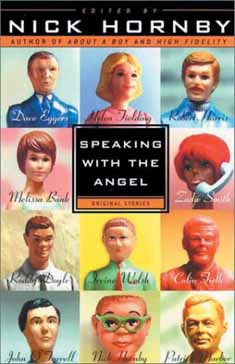
[READ: September 16, 2010] Speaking with the Angel

I bought this volume when it came out (and apparently donated $1 to TreeHouse at the same time).  It’s a collection edited by Nick Hornby (and the cover is designed similarly to the way High Fidelity and even About a Boy were at the time (“the Hornby look,” I suppose).

I didn’t buy it for Hornby alone, although he does have a story in it, but because it looked like a really promising collection of stories from authors I liked.  And for some reason I didn’t read it until now.  It includes 12 stories, and as the introduction notes, $1 was donated to TreeHouse.org.uk (in the US $1 goes to TreeHouse and another $1 goes to New York Child Learning Institute).  I don’t know if the money still goes there, but you can donate with a form at the back of the book.  (more…)

Read Full Post »

« Newer Posts - Older Posts »