Feeds:
Posts
Comments

Archive for the ‘Parenting’ Category

 SOUNDTRACK: AJ DAVILA-“Es Verano Ya” (Field Recordings, September 24, 2014). 

AJ Davila is part of the “unhinged Puerto Rican garage-rock band” Davila 666. For this Field Recording [Garage-Rocker AJ Davila Unplugs In A Hair Salon] he plays an acoustic song in a hair salon.

Davila says that New York is like another town of Puerto Rico.  That people from Puerto Rico and the Dominican Republic have made their homes and communities here.

There’s a joke that says the biggest town in Puerto Rico is called New York. Several waves of diaspora have created a deep and complex relationship between Puerto Ricans and the city. Boricuas have had an immense influence on the Big Apple — its music, its literature, its landscape, and even its cuisine.

He says that a small place like a barbershop (or beauty salon) can feel like you’re in your house.  “This is a song about hanging out with your friends.  It’s a summer song.”

We asked Davila to delight a Spanish Harlem beauty salon with a summer song. It’s appropriate: He’s one of the warmest souls I know — someone with whom it’s a pleasure to discuss art and music, argue about politics or tell silly jokes. He’s also a uniquely talented musician, with a style that combines garage-rock, punk and even elements of hip-hop.

This song probably rocks, but this acoustic version is lighter, with some bouncy chords from the other guitarist Daniel Ortiz and delightful backing vocals from Lola Pistola.  It’s somehow even better when they laugh off a tiny mistake.

[READ: September 14, 2017] ”Sunrise, Sunset”

This is a story of three generations of a Haitain family.

Carole is elderly and is slowly forgetting a lot–a blank look comes over her face and she forgets that she put her keys in the fridge or that her daughter is related to her.

Her daughter, Jeanne, and son-in-law James (they were known as JJ) just had a son, Jude (now known as Triple J).  But Jeanne has been in the throes of post-partum depression. James is a saint about it but Carole is furious that her daughter is lying around.  Back in Haiti, Carole did not have the luxury of depression.

Carole lived under a dictator.  She watched her neighbors get dragged out of their houses by the dictator’s henchmen.  Carole’s father fled the country and she never saw him again. (more…)

Read Full Post »

 SOUNDTRACK: DANIEL BACHMAN-“Song for the Setting Sun II” (Field Recordings, May 21, 2015).

Daniel Bachman plays a gorgeous six string acoustic guitar.  He plays wonderful instrumentals full of melody and feeling which tell a story in their own way.

Bachman grew up around the Rappahannock River in Fredericksburg. It’s a quiet town in Northern Virginia that still has a pharmacy with cheap sandwiches and milkshakes.

The 25-year-old has been at the solo-guitar game since he was a teenager.  That’s why it felt right to bring Bachman back to the area that inspired River, a record surrounded by history, but guided by hands and a heart that know its bends and bumps.

In early March, we met Bachman in Fredericksburg to drive an hour east to Stratford Hall, home to four generations of the Lee family, which includes two signers of the Declaration of Independence; it’s also the birthplace of Robert E. Lee. Bachman knows it well, not only because his dad works there, but also because he can’t help but bury himself in history books about the region.   Bachman plays a version of “Song For The Setting Sun II” in what was the performance space at Stratford Hall. The song leaps boldly around the sunlit, symmetrical room, bouncing off walls decorated with paintings of buxom women and men in powdered wigs.

It’s a gorgeous piece with ringing strings that sounds massive in this Great Hall.  In the second half, he strikes a low E and it sounds like a cannon.  And when you hear that melody amid all of the ringing notes, it’s just sublime.

[READ: January 29, 2015] “F.A.Q.s”

Phoebe is in her mid 20s.  She returns from college withdrawn and single. Her parents are delighted that she is single, but not happy that she is so withdrawn.

Phoebe is also pretty unhappy with the changes that have occurred since she was at school.

A new coffeemaker was where the compost bucket had been.  The chicken coop lay empty (they had reverted so quickly to supermarket eggs).  An exercise machine was in her old room–however after several minutes of exercise Melanie usually ended up lying on Phoebe’s bed.  Her mom tells her that she bought rice milk and oat cakes   Later on she even tries to make her parents granola (her father was supposed to watch his cholesterol but didn’t and her mother nibbled Icelandic chocolate),

One of the few things that remained was Grandma Jeanne’s violin on the top shelf of her closet.  It was unmentioned. (more…)

Read Full Post »

july 28SOUNDTRACKJazz Lives At Duke Ellington’s Resting Place (Field Recordings July 2, 2015).

Playing jazz at a cemetery during the day seems like an odd decision.  But it’s all part of the one-day Make Music New York festival (MMNY) which celebrates music and community.  It happens every June 21 with more than 1200 outdoor concerts across the five boroughs running from morning till night.

For the 2015 edition, the festival’s organizers invited musicians to six different burial grounds across the city to riff on the idea of “exquisite corpse,” a surrealist parlor game popularized by artists and poets in the 1920s. In the game, someone writes a phrase (or draws part of a figure or scene), folds that part of the page over, and then passes it to the next player, who then does the same. The game ends when everyone has had a turn. That game is a natural bridge to the art of improvisation, and to jazz.

Woodlawn Cemetery is a mecca for the jazz world — it’s the final resting ground of royalty like Duke Ellington, Miles Davis and many others, including Ornette Coleman now as well. So as a tribute to their musical forerunners, the group — singers Michael Mwenso and Vuyo Sotashe, trumpeters Alphonso Horne and Bruce Harris, saxophonist Tivon Pennicott, pianist Chris Pattishall, bassist Russell Hall, drummer Evan Sherman and tap dancer Michela Marino Lerman — took as their point of departure W.C. Handy’s 1914 tune “St. Louis Blues,” a tune essential to jazz’s DNA. But they made it their own via surprising and turns that saunter through many textures, colors and rhythms.

The song begins with vocals from “St. Louise Blues” from Vuyo Sotashe and accordion from Chris Pattishall.  After a verse, Michael Mwenso (whose voice sounds very different) takes over.  The accordion drops out and it’s just voice and bass.

They pass the baton along to the horns, two trumpets, one with a mute in, the other using the mute  and a saxophone play a lively instrumental break.  This is followed by the percussion.  Evan Sherman and Michaela Marino have a percussive call and response.  I could have watched that part for a lot longer.

When that’s over the whole group joins together to end the song.

[READ: September 10, 2018] “Audition”

The first line of this story reads, “The first time I smoked crack cocaine was the spring I worked construction for my father on his new subdivision in Moonlight Heights.”

A first implies a second (especially with crack).

The story is about a 19-year-old college dropout. He went to school to study theater but “unmatriculated” and has been working for his father’s construction firm.  His father came from nothing and build up this firm which is presently creating a development.  His father is not too happy about him wanting to be an actor and as such is paying him the same as everyone else (which isn’t much).

He still acts–in community theater, but usually to 15 people at a time.

No one knew that he was the owners son and he liked it that way–he was using this time to study the laborers to learns their mannerisms–he was acting in his job, too,   New workers came through all the time (the pay was lousy after all).

The crack came from a coworker Duncan Dioguardi who was not acting.  He was a laborer living in his mother’s basement and longing to party.

The narrator knew “party” meant get high. When Duncan’s car died and the narrator drove Duncan home (an hour out of his way), Duncan invited him to party. The narrator was intimidated, then intrigued so he did.  And that was the first time he smoked crack.

He marveled how the lump of crack looked like some drywall that could easily be swept away.  Duncan showed him how to smoke it.  It tasted like nothing.  It smelled like nothing.  It was ant climatic except for his new-found fondness for Duncan whom he now considers a good friend.

That following spring he received a call from his old acting teacher to audition for a role  It was a stage show. The character would be on stage for all three acts but would not speak a word.  The narrator didn’t know if this was a step forward or backward.  The audition went well and he was sure he would get the gig.

Duncan’s car broke down again and the narrator told him all about the potential role.  But the narrator was more excited about the option of partying some more.

The story ends soon after this, which is a little disappointing as it is told from many years later and we never learn how he turned out.  But i did like the details of the past like “wiring th ehouse for internet, whatever that was.”

For ease of searching, I include: Said Sayrafiezadeh

Read Full Post »

SOUNDTRACK: JUPITER & OKWESS-Tiny Desk Concert #784 (September 7, 2018).

Jupiter Bokondji comes from the troubled capital of Democratic Republic of the Congo.

He and his band Okwess dress in wonderfully colorful garb.  Jupiter’s jacket is practically a zoot suit with blue and white stripes on one side, a red field on the other and giant white stars  He has a big hat as well.  But he can’t hold a candle on the shirtless drummer who is wearing a red white and blue wrestling mask the whole show.

The guitarist has a beautiful patterned gold shirt with blue lapels and the percussionist in addition to wearing another cool hat has on a terrific sweater.

The band plays “the vibe of Kinshasa street musicians, that feels both African and American” and indeed, “their fierce energy here is an astonishing performance.”

Then of course there’s Congolese rumba, the popular dance music from as early as the 1940s, not too dissimilar from some Cuban music of the day. And the message of the music has been steeped in the complicated politics of the region, stumbling between chaos, anarchy and oppression.

This is urgent music … that stems from the gut but has thought and theatrics to flesh out the feelings. It’s music to be experienced. This is your entry point.

They play 3 songs each with a similar feel but with a very different sound.

“Ofakombolo” is so wonderfully catchy with the percussionist and drummer chanting the chorus on the first time around.  On the second the rest of the band sings too, for a nice harmony.  The bassist gets what sounds like a rap guest verse before playing a kind of funky bass solo.  The percussionist is great for shouts and trills animals noises, too.  The music is nonstop, propulsive and fun, with a distinctive guitar solo sound.

“Pondjo Pondjo” starts with a quiet guitar intro.  But it is joined by the drummer whistling and the percussionist pulling a string through a plastic container, making a crazy squeaky sound that works wonders as a percussive sound.  The bassist seems to be singing lead on this song (a very different voice).

 Jupiter introduces “Ekombe” by saying “Let’s go to dancing!” It opens with a funky bass line and the drummer playing a fast hi-hat beat and chanting.  It’s a very dancey with a slinky guitar line running throughout the song.  There’s a nifty breakdown in the middle which features some fun on the bass and a wild solo to end the song.

This is a wonderful introduction to Congolese music.  Stay for the end, as they end the show with a post-credits kung fu pose.

[READ: January 5, 2017] “In the Act of Falling”

Boy this was a dark, dark story.  After the last line I actually said aloud, “Jesus, Danielle, what the hell.”

This is the story of a family: a woman, her husband and their nine-year-old son, Finn.  Finn was recently suspended from school for punching a fellow student in the mouth.

They live in a an old house that they imagined fixing up but two years later even the dining room is unfinished.

Finn is in the yard setting up a volleyball net–but he is doing it sideways like a hammock.  It turns out he is setting it up to catch ducks as they fall from the sky.  Birds were the next heralders of the apocalypse.  And, she had seen that all of the ducks in St Stephen’s green were dead–all of them.  She probably shouldn’t have told Finn this, but she did. (more…)

Read Full Post »

SOUNDTRACK: TECH N9NE featuring KRIZZ KALIKO-Tiny Desk Concert  #780 (August 29, 2018).

I am constantly amazed at how many rappers this show has on that I have never heard of even though they’ve been around for decades.  I’m not really a rap follower, but you’d think I’d at least have heard of them.  Tech N9ne has 20 albums out and he’s got a number 9 in his name.  I’d think I’d have heard of him at least.

During a career nearly three decades in the making, Tech N9ne has dodged the fickle rap industry while surfing his own wave, stylistically and professionally. The Kansas City native has been a beast for years now, a musical misfit who laid a track record of underground success and struggle before building his own independent empire with Strange Music.

Especially since he is awesome.  He and Krizz Kaliko performed the best rap Tiny Desk Concert I’ve seen. [“Together, they’ve carved out an unorthodox niche: chopper-style speed rap that often plumbs dark, emotional depths”].  The band is awesome.  The two of them are awesome and they have a great rapport with each other and the audience.

Their playful banter between songs personifies that creative connection, as Krizz delivers backing vocals and guest verses from the soul. Backed by a guitar, drums and bass for their Tiny Desk, the trio brought out the rock-tinged hues of such definitive Tech N9ne songs as “Dysfunctional,” “Aw Yeah? (interVENTion)” – dedicated to his mother who died from lupus in 2014 – and “Fragile,” originally assisted by Kendrick Lamar, Mayday and Kendall Morgan.

I also love both of their deliveries which is often fast (yet comprehensible) with excellent inflection to really let the words flow (is that “chopper-style speed rap”?).  It’s a great fun set (with some great metal-inspired guitars).  These start off with the first song, “Dysfunctional.”  There’s inspired lyrics, there’s funny lyrics.  I particularly enjoy this couplet

[They both rap] Listen they call me genius, I run the show
[Then Tech N9ne demurs shyly so Krizz can sing, with emotion] Women on my penis…. it’s wonderful

Krizz sings the chorus with a great heavy metal riff.  He also takes lead on the second verse with Tech N9ne supporting him.

After the song Tech N9ne says, Oh yea, the boy can sing.  He can rap too.
Krizz: I learned it from him.  he taught me something like this: “Dommmmmm inae.” which is a lead into

“Aw Yeah? (interVENTion)” this song has some great lyrics, powerful and political with a very cool Middle-Eastern-ish guitar riff running through it

They gotta suffer the penalty cause of our education
Nobody wanna say nothing but I gotta call it abomination
Pissed off thinkin’ what this cost
What these babies blood drippin’ for?
So I say in Latin, listen Lord!
Audire DOMINE! (Audire DOMINE)
Only way people are gonna be able to kill off a demon is
Pick up a gun and be ready to put it between him
My nigga be screamin’
Audire DOMINE! (Audire domine)

Who the hell a brother gonna trust when it’s always dishonor
Hate me like Obama
And I ain’t even gotta run and askin’ you the question: God what about my
Mama!

Tech N9ne asks for a moment, says he’s shaky.  Krizz explains: he lost his mom on my son’s birthday.  She’s been sick all of his life.  That’s a super emotional song

Tech N9ne segues: “That’s why I’m so “Fragile.”  This song is also excellent with some rapid fire delivery.  I also love hoe exposed he is:

Amateur writer dissin’
He’s a beginner and hopes for your demise, folks some may despise
Never do try to listen
It’s real, I’m mad
Clueless when you scribble on your pad
How you gonna criticize with a chisel on your nads sizzling your ad
You don’t really get why I’m so pissed? Understand this (Understand this)
I’m an artist, and I’m sensitive about my shit, yes I’m Fragile

To close the set, Tech and Krizz performed “Speedom (Worldwide Choppers 2),” a song inspired by folk rocker Richie Havens’ original classic “Freedom.” They laugh over Krizz’ excellent Richie Havens’ delivery.  It’s an excellent conclusion to a fantastic Tiny Desk.

Now off to investigate these guys some more.

[READ: August 31, 2017] “The Metal Bowl”

Miranda July writes strangely personal (but who knows if they are actually personal) and introspective pieces that are often overtly sad graphically sexual.  But she’s also not all that vulgar, even in a story about amateur porn.

It even made me laugh as the story begins.

He cupped the two halves of my tush and spoke directly to them.  “Run away with me, girls,” he whispered. She doesn’t understand our love.”

(more…)

Read Full Post »

SOUNDTRACK: JESSE BOYKINS III-“4 U 2 B Free” (Field Recordings, October 8, 2014).
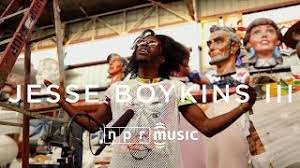
This Field Recording [Jesse Boykins III Breaks It Down] starts with a lot of ambient noise–a giant overhead fan–which I thought might be an interesting component to the song.  But once Boykins starts singing, it’s just his voice. And that’s all–it’s a lovely a capella performance.

The day after playing a set at the Superdome during the Essence Music Festival this summer, eclectic R&B singer Jesse Boykins III wandered into Mardi Gras World — an expansive, airy warehouse packed wall to wall with floats used in New Orleans’ infamous parades. The floats are built from the ground up in-house, so Boykins found himself surrounded by unfinished works and spare parts.

It’s creepy and unsettling to see these giant heads–eyeballs at eyeball height, but just a head–staring at you.  It’s also surreal with the various colors and shapes and the head of Abraham Lincoln looking on as Jesse sings.

He sang one of the most emotional tracks from his latest album a cappella. While singing “4 U 2 B Free,” Boykins pulled back the layers of his own creation, matching his performance to the exposed, oddly vulnerable characters surrounding him.

But Boykins’ performance is really powerful especially at the end as his wonderful high notes as if no no one is watching.

[READ: October 4, 2017] “Enter the Ford: Lost Chapters from A Death in the Family”

I knew nothing about this book, so I had to look it up.

The first chapter sees a young by, Rufus, waking up wearily with his dad.  The boy is very excited and the father seems pretty delighted to be awake with his son so early.  They try their best not to wake the baby girl or the mom.  Of course the mom wakes up and asks for the dad to do some things before he leaves.  The dad makes breakfast–with stern admonitions to the boy not get burnt by the coffee pot, bacon or stove–and then he helps the boy with the difficult buttons.

We don’t know too much about the dad yet, but this exchange is interesting:

“You’re getting pretty good, buttoning yourself.” he said.  Rufus said nothing.
His father thought damn fool thing to tell a child; dumb as a fish.

In the second chapter they head out to Chilhowee Park and the entire chapter is given over to the most exquisite descriptions of this amusement park through the eyes of Rufus.  Everything is amazing and wonderful and the language is of a person taking everything in–from the color of the lake to the swans on the water to the roller coaster and the fairy’s wheel.

And then came the merry-go-round.  We learn how first Rufus rode only on the bench.  And then was allowed to ride the horses that did not go up and down.  And then on the up and down horses only if his dad was holding on.  And finally, today, to ride the up and down one by himself.  The amount of detail about the merry-go round is wonderful.

The only thing more wonderful than the merry-go-round was the little train.  We hear his father’s kind words about how amazing the train is.

Then things go sour a little because there’s also the arcades–where adults play games of chance.  There’s games that one never won–like the seventeen jewel watch.  But the worst was a place where there was “a darky with his head through a hole.”  And the people were meant to, as the carny said, “hit the nigger in the head and you get a cigar.”

Rufus’ mom hated this game.  And Jay wasn’t too keen on it either.  The one time they were there, Jay conceded that the man’s got to make money some way.  Jay tried to ease his wife’s concerns by showing her that the ball wasn’t that hard.  He lifted it up but she refused to even touch it.  The carny got mad at him for touching the ball. And Jay got huffy back.  She calmed him and he walked away.

But on this visit, he did not back down. the carny did. And that made Jay’s day even better.

Chapter 3

This chapter opens with Jay and his wife, Laura, talking about something extravagant.  She wants it, he doesn’t seem to want it and he seems to twist her words against her.

It comes out that he wants to get a car so that they can visit the in-laws once in a while.  She is nervous that cars are dangerous.  He admits they are but sometimes living in a house is dangerous.  But he says that having a wife and kids means he will be even more careful than everyone else out there who has nothing to be careful about.

She agrees to the car.  But in the middle of the night she has a premonition of something bad happening to the family in the car.  He says that they won’t get one.  Then later she gets over the premonition and agrees that they should go ahead and get one.

Chapter Four.

And then daddy drove home in a gas buggy–a new ford  Rufus is thrilled.  Laura can’t believe he drove it there all by himself.  And the neighbors all come out to gawk.

“Course they got an awful name for breaking down… But where Ford’s ahead, he supplies you the parts.”

They go for a before-dinner ride.  Jay drives very well and everyone is enjoying themselves.  Laura is nervous and says so, but he is careful and considerate of them.  He pulls over when another car comes by and he is very cautious around a horse and buggy–the horse is not spooked at all.  But their joy ridge is somewhat ruined by a speed demon who comes buzzing by them scaring them all half to death.

As the excerpt ends, Jay and Rufus take the car out for a spin and Jay really lets the speed fly.  They almost have an accident but Jay is able to handle it and he confides in the boy that they must never tell their mom that they went fast.  He agrees.

I don’t actually know much else about this story.  Between the title and what kind of tension a scene like this builds I expected something bad to happen.  It never did (hooray), but i assume it does),

The writing in this story was exceptional.

Read Full Post »

SOUNDTRACK: CAMP COPE-Tiny Desk Concert #778 (August 22, 2018).

Camp Cope recently played PhilaMOCA, but it sold out so quickly I didn’t even have a chance of going.  Camp Cope plays a deceptively simple poppy punk that really allows the excellent lyrics to shine through.  I love the sound of Kelly-Dawn “Kelso” Hellmrich’s bass lines, which contribute a great melody while singer guitarist Georgia “Maq” McDonald plays a somewhat muted guitar, with a ton of power in here voice.

Camp Cope’s Tiny Desk performance opened — fittingly — with “The Opener,” a song about overcoming the obnoxious, exhausting and all-too-common sexism endemic to the music industry.

Great lyrics:

You worked so hard but we were ‘just lucky’
To ride those coat tails into infinity
And all my success has got nothing to do with me
Yeah, tell me again how there just aren’t that many girls in the music scene

It’s another all-male tour preaching equality
It’s another straight cis man who knows more about this than me
It’s another man telling us we’re missing a frequency, love ya Kelly

[Lyrics genius explains this last line: The bass lines in many Camp Cope songs, contributed by bassist Kelly-Dawn Helmrich, are played primarily in the upper register of that instrument, so there are few low bass frequencies in their music. On the average Camp Cope clip on Youtube, you can usually find a dozen or so dudes helpfully pointing this out in the comments.].

It’s a stunning and deeply gratifying performance; Maq lists off what exes, industry insiders and fellow musicians have said to undermine the band with a measured determination that sometimes tips into a full-throated, impassioned cry. Bands like Camp Cope get told they’re “just lucky,” that they “can’t fill up a room,” that they should “book a smaller venue.” But when Maq roars from behind the Tiny Desk, “See how far we’ve come not listening to you,” she makes it clear which voice deserves the attention.

I love the dismissive final line:

“Yeah, just get a female opener, that’ll fill the quota.”

The second song, “The Face of God” features complex guitar patterns from Maq and (at the start) a simpler bass line).  But once the song takes off, the bass starts throwing in notes all over the instrument.

is a stunning, delicate song about feeling lonely and distraught in the aftermath of sexual violence. It’s a standout from the band’s debut album, How to Socialise & Make Friends, and shows what Camp Cope does so well: using tiny moments of introspection to illuminate life’s bewildering, terrifying, isolating aspects — especially as they apply to women. You can hear equal parts conviction and desperation in Maq’s voice as she sings:

I saw it, the face of god
And he turned himself away from me and said I did something wrong
That somehow what happened to me was my fault.

Camp Cope must usually play more raucously live since after “Face of God” Maq  laughed, “We’ve never done this before — we’ve never been quiet. Not once in our entire lives!” Hellmrich joked that it was perhaps a “good lesson” to “rock out in your mind.”

The band closed its set with “Keep Growing,” an older track about autonomy and heartache.   It opens with Sarah “Thomo” Thompson’s drums, simply and direct and then Hellmrich’s bass is at the fore once again, playing a cool melody.

Elsewhere, it might be too easy to tune into Camp Cope’s powerful message and overlook the strength of the band’s songcraft. But at the Tiny Desk, you can’t miss it: Maq’s gargantuan voice; Hellmrich’s clever, melodic basslines; Thompson’s stoic drumming.

I wish even more that I’d seen them in a small venue while I had the chance.

[READ: August 21, 2017] “Dogs Go Wolf”

This was a peculiar story that felt like it was part of a larger story.  It felt incomplete and yet also that it had accomplished everything it intended.  Which was odd.  In the same way that the title makes sense but only when you think about it.

I enjoyed the way the story worked its way backwards.  Two sisters are on an island.  They are young (four and seven) and they are alone.  Even the dog that was with them has been strangely quiet lately.  The dog was mean and although they missed its companionship they weren’t sad to see it go.

The big sister tells the little sister stories to comfort her.  But they can only go so far when food is scarce, when the generator has run out and when they have little else to do.

(more…)

Read Full Post »

SOUNDTRACK: LALAH HATHAWAY-Tiny Desk Concert #769 (July 25, 2018).

I have no idea who Lalah Hathaway is.  The blurb doesn’t really help, giving her familiar lineage but not much more.

Lalah Hathaway comes from royalty: Her late father Donny Hathaway’s … set the bar for inspired, old-school soul singing. But living in that kind of shadow can also be a burden, robbing the offspring of an identity apart from that of the famous parent.

This was by my estimation, the most boring Tiny Desk Concert I’ve seen.  The blurb raves about her once but I found it dull and flat.  Her lyrics were uninspired and the music was spare to the point of nothingness.

I always watch a Tiny Desk twice to see if I miss anything the first time.  This one was painful to watch twice. At least it was only 11 minutes.

The younger Hathaway’s appearance behind the Tiny Desk pulls back the curtain a bit for a close-up encounter with her powerfully expressive voice  [powerfully expressive?]

In “Change Ya Life,” Hathaway’s dusky contralto paints an exciting portrait of blissful cohabitation — but on her terms. “I’m going to teach you how to treat me like I deserve,” she sings, adding, “I’ll give you the world.” She draws on a tradition of romance and sensuality in the best soul music, but with a feminist twist that eschews old-school, male-centric lyrics and attitudes.

I like the feminist twist, but when a song has twinkling keys (Lynnette Williams) and a cheesy bass line (Eric Smith) the line “I can fuck around and change your life” just doesn’t seem to fit.

“Boston,” her ode to her second home (she’s from Chicago), is a meditation on self-discovery and longing. The band perfectly straddles slow-jam R&B and a jazz-ballad sensibility.

She was signed in college and told to move to L.A. because Arsenio is there (did she work with him?).  She wrote this song about Boston .  It’s a slow torch song type of song (tikki tikki drums) that name checks tons of Boston area locations (Charles River, Cambridge, Downtown Crossing)

So much of the most powerful music from the Civil Rights Era wasn’t about literal accounting of injustices; many of those songs enshrouded morality plays in the guise of romantic longing. Hathaway introduces the set-closing title track of her new album Honestly as an explicit reflection “of my country at this time.” If you heard it for the first time without the introduction, it comes across as a lover’s lament. But Hathaway’s soaring vocals infuse it with the passion of resistance to bring her set to a close on a hopeful, joyous note.

I love the premise of this song and how it was written.  But even a cool, angry song like this is so tepid.  She asks the audience to sing along to these great lines:   “I don’t even want you no more.  You can walk out that door.”  And you can barely hear them (and the audience is certainly loud between songs).  She does a little of that R&B vocal gymnastics that I dislike at the end just to cap it off.

Not my thing, I guess.

[READ: January 15, 2018] “Family Means Nothing to Me”

This is an except from a story called “Family Means Nothing to Me and I Dislike Children.” I can’t really imagine what the context of the rest of the piece is, but this is  a funny/honest appraisal of the narrator’s self.

She says she finds her nephews and nieces odious.

She has had pets in the past but when she breaks up with a boyfriend she makes him keep the pet. (more…)

Read Full Post »

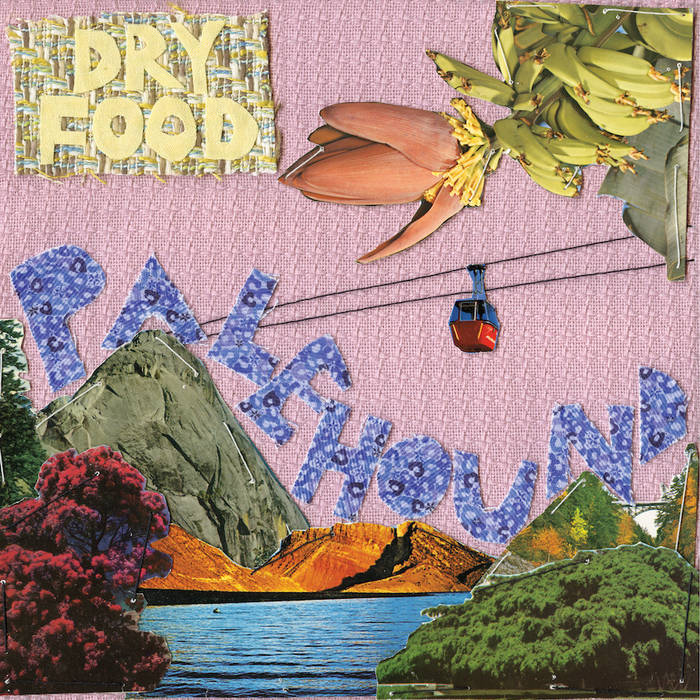
SOUNDTRACK: PALEHOUND-Dry Food (2015).

I have seen Palehound twice, once as a headliner and once as an opening band (in that order).  I love Ellie Kempner’s guitar style and her slackerish vocals.  Her lyrics are usually incisive and the way she pulls all of that together is really terrific.

Her recorded output is pretty stellar.  She has a few EPs and/or singles and then this, her first album, which comes it at less than 30 minutes.  It features some of Kempner’s great guitar, prescient lyrics and really catchy songwriting–a potent combination.

“Molly” opens with a great rumbling bass line, a cool guitar riff and a wonderful overdubbed distorted guitars.  It’s immediately catchy.  The whole verse is crazy catchy and then after two lines, she adds a new riff before returning to the first one.  There’s so much going on and its all terrific.  Next up is a cool bridge followed by a third part with yet another great guitar soloing type of riff and loud chorus of “ooooohs.”  There is so much going on in this song, I was shocked to see that it’s under 3 minutes long

“Healthier Folk” starts out as a kind of bedroom-sounding acoustic guitar song, but after a verse there’s a trippy chorus with soaring guitars

Mouth ajar, watching cuties hit the half pipe
I only feel half-right
Around healthier folk
But oh, why don’t hold me?
They just
Cradle me like a homesick child

Mid way through, the guitars get louder with a heavy riff before returning to that trippy middle section.

Even though Kempner rocks out, she also has some slower songs.  “Easy” is a slow song with this great line: “I’m pushing back your tongue / With my clenched teeth home security system.”  I love how the chorus (and more) is just a blast of noise without speeding up the tempo of the song.  Two thirds of the way through, the song picks up briefly (“All I need’s a little sleep”).  And the last thirty seconds are a wild, chaotic-sounding series of riffs (with a noisy feedbacking guitar solo).

“Cinnamon” has yet another terrific riff.  Live, this song absolutely scorches–vocally and guitar wise.  This version is a little tamer, but you can really hear what a great guitarist she is.

“Dry Food” starts slowly, with a pretty guitar line and a cool vocal delivery.  I love the way the verses are slow and the chorus builds into a strangely catchy melody without really picking the tempo up.

“Dixie” is a quiet confessional with some great lyrics and a catchy chorus.

And people that I’ll never meet
Have been showing up naked in my dreams
And I try to close my eyes but I really want to see
Their breasts like eyes are staring back at me

The hair that’s in my shower drain
Has been clogging up my home
And I try to scoop it up but I retch until I’m stuck
To stare and gag into a Dixie cup (with a cough on the repeat of this line)

“Cushioned Caging” is a more aggressive rocker, but her vocals don’t really match the guitar loudness, making you lean in to hear her.  The disc ends with “Seekonk,” the longest song on the disc (nearly 5 minutes).  It’s slow with a couple of different parts to flesh it out.

Kempner really showcases the various aspects of her songwriting.  It’s a really solid album and could easily be much longer.

[READ: January 15, 2018] “The Little Boy”

This short story was interesting in that it seemed far more about an old woman than a little boy.

Mrs. Bea Davis is walking through an airport after visiting her daughter Megan in upstate New York.

We learn a lot about her and her daughters Megan and Susan as well as her ex-husband.  We learn some about her because she is talking to her self.  A woman with a small boy passed and the boy turned to look at her.

The trip had been okay, as best as could be expected. Bea felt that Megan and her husband enjoyed making fun of ugly people (“That guy is like an anteater in leisurewear. That girl, she can’t wear that dress, look at her stomach.”)  the way Bea’s own sisters Tomasina and Livia would go to Woolworth’s and comment on the ugly poor people.    (more…)

Read Full Post »

SOUNDTRACK: NELLIE McKAY-Reveals ‘Cavendish’ (Project Song: April 2, 2008).

Project Song was a nifty little show that NPR Music created.  The premise was that NPR would give a musician some prompts and a recording studio.  They then had two days to write and record a song.  I don’t know how much of the process was to be filmed, but presumably most of it. Then it would be edited down to a fifteen minute show.  The results are pretty cool and it’s a shame they only made five of them.

The third one they did was five months after the previous one.  As with the Stephin Merritt project, McKay was solo, but she had a lot of problems and recriminations.

When I invited Nellie McKay to participate in Project Song, I figured she’d write some witty words and hammer something out on the piano. I don’t mean to make it sound so simple, but listen to the music of Nellie McKay, and she’s the one who makes it seem so easy.

McKay came into our studio looking as if she’d just walked off a movie set. In fact, at times in conversation, a young Judy Garland came to mind. She took great care with her curly blonde hair and her beautiful pinstriped suit.

I laid some photographs [all from the Library of Congress] and some words on our makeshift bar for her to consider as jumping-off points for the song she would write over the next few days.

It didn’t take long for McKay to settle on a black-and-white photograph of some men dancing the Charleston out in front of a movie theater. To go with the picture, she chose the word “Bravado.” Those two things would inspire and inform her song.

And then, despite a bit of hemming and hawing, McKay proceeded to sit behind the grand piano and begin drawing musical staff lines on some note paper. She began composing her song.

Although perhaps the consternation and questioning was more of her conscious mind, because it sounds like she was much more confident than she appeared.  “Why couldn’t I have written a song in secret and brought it in and pretended to be confused?”

Here’s what I now know that I didn’t know at the time: In just a few hours of playing at the piano, Nellie McKay wrote her song. I know that now, because I can look at the zoom lens of our video camera and see all the scribbles in her notebook. The words are mostly there, and so is the music.

She pokes out notes on the piano and scribbles in her book.  Then she plays the ukulele (with wah wah).  She hems and haws quite a bit, playing with Bob’s computer to make three distinct drum parts.  She talks with Bob.

“Its hard enough to do a bad pastiche which is what I’m aiming at now.  This is the worst thing, I wrote a complicated bad song.”

She finally asks Bob, the constant cheerleader, “where’s your cynicism, you work for NPR?”

From my perspective in the control room of our studio, what I heard for the better part of our first day was some tinkering, some scribbling, and more tinkering. She’d pick up the ukulele and play more piano, but I couldn’t hear a song emerging.

Then she plays some cello on top.  Then it’s on to some haunting backing vocals.

Bob’s mind is boggled: “to put down the uke part first after what I’ve heard, why not play the piano first?  Her answer: “I’m sick of the piano!”

She says she’s big on secrecy and doesn’t understand how other people did it.  Before revealing that she decides to put down “the thunderclap, perhaps the loon, a little bit of backing vocals, and then I’ll freak out a bit more and then I’ll try to do the main vocals.”

The lyrics, however — and even the title — were a closely kept secret until the final hours of the final day.

Then she reveals the dramatic, multi-faceted, three-part song.  It is stunning that she came up with this.  There’s sound effects, spoken word, Latin rhythms and then a torch song part with horns and falsetto.

And this is it, a song about a London hotel called the Cavendish. A song about some of its guests, like D.H. Lawrence and The Beatles, and of better, simpler times. A wonderful theatrical journey from Nellie McKay — someone who seems connected with the past and unsure of her present.

The Cavendish was a real hotel.  They went through a lot of change.  The hotel has been through two wold wars.  The Latin part is exotic–lovely and yet unsettling.

[READ: January 24, 2018] “The Gulch”

The centerpiece of this story is vile and horrible even to think about.  The story begins with it, it focuses on it but then it also kind of dismisses it at the end.

The story is basically about three juvenile delinquents who have crucified a boy in their class (he did not survive).  It begins with a description of the cross they created with pressure-treated wood and rope from a neighborhood laundry line.

It is written in a kind of casual style from Detective Collard’s point of view.  There’s lots of parenthetical asides “The one who dreamed up the scheme (for lack of a better word).”

One of the boys admitted to digging the hole but then said he wasn’t there in sport or heart. (more…)

Read Full Post »

« Newer Posts - Older Posts »