Feeds:
Posts
Comments

Archive for the ‘Tiny Desk Concert’ Category

galchen SOUNDTRACK: HILARY HAHN-Tiny Desk Concert #169 (October 21, 2011).

hilaryHilary Hahn is a violinist.  She looks to be about 12 (although she isn’t, but she did start playing when she was very young).

She plays two beautiful pieces by Bach (she made an album of Bach Partitas when she was only 16):

Gigue (from Partita No. 3) is fun and lively and Siciliana (from Sonata No. 1) is somber and sweet.  Her fingering is perfect.  She is playing an 1864 Vuillaume fiddle and her sound is beautiful.

Earlier in 2011, she had released an album of Charles Ives’ four violin sonatas.   The blurb says that Ives weaved bits of Americana into his sonatas–quotes from old hymns and folks songs.

For her final piece, she combines four of these pieces: “Shall We Gather at the River,” “Jesus Loves Me,” “Battle Cry of Freedom” and “Come Thou Fount of Every Blessing” into her own melody.  She comments:

“I’ve actually never played this before, and it doesn’t really exist,” she admitted before launching into the tunes. “You may recognize them. Maybe after hearing these, if you hear the sonatas, you’ll be like, ‘I know that part!'”

She also says she will try to accompany herself.  I wasn’t sure what she meant–she doesn’t use a looping pedal or anything, but the blurb says she plays “just the right double stops (two strings at once)” and it sounds beautiful.

She also asks if anyone minds if she wears a hat.  Ives was often photographed with a hat  and there was Bob’s fedora.  It looks quite nice on her.

[READ: April 26, 2016] new movies, new drama

I was surprised to see that Rivka Galchen had been doing reviews in Harper’s (that image above is actually from The New York Times, apologies).  It seems like a step down from writing long pieces or short stories.  But who knows, maybe it’s a good gig (heck, wouldn’t I love to write about movies and television …hey wait).

Over the past year she has written five reviews of entertainments.

In March 2015, she reviewed Paddington and I really liked her insights into the movie (I posted about that already, here).

Then in June 2015, she wrote about Unbreakable Kimmy Schmidt.  I had enjoyed the show by the time I read this piece (when it first came out), but I have just re-read it and it really makes me want to watch the new season (I watched the first episode but didn’t really love it as much as the previous season).  She raves about the opening credit sequence (which is fantastic) but spends a lot of the essay talking about how groundbreaking the show is because we are used to seeing adult men act like boys, but rarely do we see adult women act like girls (with glitter sneakers and a backpack).   The interesting thing is that “She invites admiration, yet it will be a rare viewer who would want to trade places with her…That’s what makes her a more radical invention than most earlier female comic leads.”

Galchen likes the “surprisingly glittering quality to dark moments… which appear unexpectedly and then dont quite vanish.”

She ties all this back to Lucy and Desi (Desilu produces the show). In real life, Desi Arnaz was discriminated against and relied on Lucille Ball to get him onto her show, thus the joke of Lucy trying to get into Ricky Ricardos’s show (I had no idea).

In September 2015, she writes about Louie (a show that she mentioned in the previous essay “Hallelujah”).  This time she is reviewing Season 5 of the show.  She talks of Louie as having a superpower: love.  “he transforms his sister’s aggressive gun-wielding ex-boyfriend into a gentle, giggling man who learns to knit.  Galchen focuses on the fourth episode, with his brother Bobby.  “Part of Louie’s superhero of love is his ability to occupy a position of humiliation and dejection, as if this might protect those around him from the same fate.”

She points out that no one on the show actually thinks Louie has any superpowers, but she enjoys reading it as such.  I have never been able to get into Louie, but she certainly make it sound very compelling–maybe I should start with Season 5..

In December of 2015, she wrote under the heading “new drama.” She writes about Mission Impossible: Rogue Nation. She says the movie is about two groups who are above the law fighting each other.  “We never learn what all these missions are intended to bring about. Its’ simply presented as a given that the goals of the I.M.F. are good and that those of the Syndicate are bad.”

I’m intrigued at this note from Galchen: the original theme song was 5/4; “at various points in Rogue Nation, it’s been altered to 4/4.  This is some say, because the 4/4 beat is easier to dance to.

I was delighted at the way she segued the review of this movie into a review of a performance of Antigone, in which  a woman breaks the law to give her dead brother a proper burial.

These are characters for whom what is past–Antigone’s necessitous origins, Creon’s tainted ascent to the throne–is prophetic; the future is there waiting for them all along, and the future is death.  That the dead are still alive and trying to destroy us is, of course, also the premise of Rogue Nation.

She ties in that 4/4 dance beat at the end by mentioning a friend who said after watching the play that he couldn’t stop thinking of John Boehner (who had just resigned).  Galchen say that although it’s tempting to believe that the Pope’s words of kindness were what compelled him to resign, him to retire, it was mostly likely inspired by pressure from the right, but we prefer the Pope version–it’s an easier beat to follow.

Finally in March 2016, Galchen wrote about the Wooster Group, an experimental theater company.  She talks about their lucid, fevered work.  She saw their Hamlet in 2007 and was delighted by their unexpected delivery.  And now (well, then) they are doing Harold Pinter’s The Room.

She speaks of Pinter–his use of violence and long dramatic pauses.  The Room is a one-act black comedy. One of the things the Wooster Group does is show, behind the actors, television screens, partially turned to the audience with what appears to be Chinese political debates.  The actors wear earpieces that pipes the audio from these screens into their ears which no doubt impacts their delivery.

Wooster Group revels in the absurdity of their shows.  I’d be curious to see one of their productions, although i won’t be rushing out to do so.


Read Full Post »

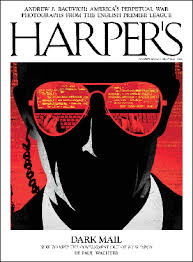
HarpersWeb-Cover-2016-01-410SOUNDTRACK: WILCO-Tiny Desk Concert #168 (October 17, 2011).

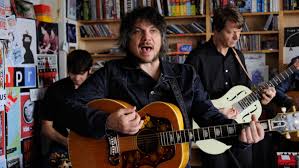
wilco2011Wilco is virtually the only band to have been asked back for a second Tiny Desk Concert.  I’ve listened to this concert a bunch of times but didn’t realize I hadn’t posted about it here.

There is a huge crowd for this show and as it starts, everyone shouts WILCO!

The band sounds great with all the members crowding in behind the Tiny Desk.  Tweedy plays his big acoustic guitar, Nels Cline plays all kinds of interesting sounds in the corner.  The drummer is on a small computer thing that seems to be made up of all manner of small percussive items.  There’s a bassist and keyboardist and a second guitarist all making a great sound.

“Dawned on Me” starts the set and sounds great in this setting—I love the walking bass throughout the song and of course Nels Cline plays a wonderfully insane noisy solo amid this simple and catchy folk song

Before the second song, “Whole Love” Glen’s got to get some things out of his toiletry bag.  This is another great song with Nels playing high notes to complement the rumbling bass.  No idea what the drummer is playing this time—a book?  Tweedy sings in falsetto for much of the song.

Tweedy says “this next song requires a certain amount of tuning—quiet please.”

He asks if anyone has any questions and when Bob says “I’m speechless,” someone on staff says “That’s a first,” which gets everyone laughing.  Bob asks if Jeff likes his bag of toys and Jeff says anyone who would make fun of his bag of toys is an idiot.  Sadly we never see the bag or the toys.

“Born Alone” has another great bass line that opens the song and the drummer is hitting lord only knows what.  This was the song by Wilco that made me really fall in love with the band.  Cline’s slide guitar is very cool.  But there’s something about the end of the song when the whole band plays a series of chords–the steps keep going lower and lower, and each time you think they’re going to stop, they just keep going. It’s very fun.

After that song Tweedy admits to breaking a sweat–Tiny Sweat!

The final song is “War on War.”  He says they played it about ten years ago in the city possibly for the first time.  They messed up the ending the other day, but they hope it doesn’t mess them up this time.  Cline goes berserk on his guitar.  The whole band rocks this song.  There’s some really cool harmonies on this track, too.  The keyboardist even has a little cow sound maker (that you can just barely hear, until the very end).  They get the ending right and Tweedy shouts “Nailed It!”

There is much applause as Bob asks, “Pretty good for a Saturday, huh?”  And as the applause dies down, someone yells, “Now lets trash this dump!”

It’s a great set.

[READ: March 25, 2016] “Hallelujah!”

I wanted to finish up all of the Harper’s pieces by Rivkla Galchen.  I had no idea what to expect from this piece.

It is one of those pieces in Harper’s that has images in the background–in this case musical notes and a portrait of Handel–to go with the  story.  And it is broken up into many little sections labelled 1. Sinfonia (Overture) 2. Accompagnato. 3. Air, etc up through 53 (!).

So this is obviously about Handel’s Messiah and the Hallelujah Chorus. (more…)

Read Full Post »

nov2014SOUNDTRACK: CHRIS BATHGATE-Tiny Desk Concert #167 (October 14, 2011).

bathgateI’d never heard of Chris Bathgate before this Tiny Desk Concert.  Bathgate is a singer and guitarist.  For this show he has a band of five—another guitarist, bassist, violinist and drummer.

The first song, “Everything (Overture),” opens with a lovely slow echoing guitar sound.  And then Bathgate and the violinist sing a lovely, slow duet—their voices play off each other very nicely and the lovely repetitive guitar riff is perfect background.  The song picks up a bit for the chorus (which is mostly them singing do do dos) and the rousing chorus is a nice contrast to the quieter verses.  I really like at the end when the second guitarist switches to the floor tom and adds to the intensity of the song.

He says that “No Silver” is “about living in Michigan and being broke.”  The song is faster and a little heavier.  There more good harmonies and a nice play between the loud acoustic guitar and the fiddle (this song is much more bluegrassy sounding).  When the music drops off and its only drums and fiddle—the song booms.

He introduces “Salt Year” with “Think about the first person you ever had a crush on. so maybe not first crushes but…first lustses”

The slide guitarist messes up on the opening of the song and asks if they can do trainwrecks—his mother will never forgive him.  Bathgate says they should leave it in. So they begin again, with that mournful slide guitar and Bathgate’s delicate vocals.

He tells a lengthy story about the final song “Levee.”  He was in Maine (he had lobster ice cream for the first time–don’t try it, it’s terrible) and he was on an all night drive with a crying friend.  She was inconsolable until the turned a corner and saw a gigantic harvest moon the filled the windshield.  What’s odd about the story telling is that he seems to be telling the violinist rather than the audience.  But that doesn’t matter because this song is fantastic.  It begins with some more great harmony vocals (the violinist has a really great, slightly unusual voice.  I loved that after each line, the violinist and the second guitarist play the floor tom with a great pounding rhythm.  And the bass/guitar riff between verses is great too.

As the show ends, they reveal that they band brought pie for everyone!

[READ: February 5, 2016] “Climbers”

This story is about writers and the publishing world.  But it comes from a wholly unusual angle that I liked a lot

The story begins with Gil raving about the world of Peter Dijkstra.  Peter Dijkstra is a Dutch author who spent some time in an asylum.  He wrote five novels in Dutch and recently had a novella and some short stories translated into English.

Gil works in publishing and says he would do anything–anything–to get Dijkstra published in the States. (more…)

Read Full Post »

may2016SOUNDTRACK: GROUPLOVE-Tiny Desk Concert #166 (October 11, 2011).

grouploveWith a name like Grouplove, I expected a certain sound–I imagined a dancey, funky, R-rated kinda of band.

  But when I listened to this set, I realized that I knew the first song, “Tongue-Tied” and I loved it–it’s incredibly catchy and poppy and with a title that belies the common refrain “take me to your best friend’s house….” I love the two vocalist and that lead singer Zucconi’s voice strains bit still sounds good.  There’s a middle section that reminds me a bit of Edward Sharpe & The Magnetic Zeros’ “Home” with the two lead singers having a call and response section.  I only wish she was a little louder (he’s very loud).  But the rest of the song sounds nothing like that and is definitely is his own thing.  Special attention should be paid to the bassist who throws in some great lines.  I also like that the xylophone is used for percussion in this song.

speaking of the bassist, his cowboy hat bumps into something on the wall and the drummer mocks: “I’m from England I’m going to come back and get revenge.”  Bob asks for more about ths development, but the drummer continues, “He’s just bitter about the War of Independence.”  The bassist mutters, “It still hurts.”

When they released this song/album they’d only been together for a year and a half.  Hannah Hooper and songwriter, singer and guitarist Christian Zucconi met the other members of Grouplove — Sean Gadd, Ryan Rabin (son of Trevor Rabin) and Andrew Wessen on the island of Crete at an artists’ retreat.

Turns out I also knew “Itchin’ on a Photograph” (most notable for the way he sings (with a aching falsetto) “itchin on a photograaaaaph.”  Some more great bass lines here too.  Zucconi’s voice has got to hurt at the end of this song

Their final song is “Colours.”  Hooper’s harmony vocals are great on this song, and I really like the echoing electric guitar.

It’s hard for me to believe that “Tongue-Tied” is five years old, as  feel like I’ve been hearing it on the radio still.  The band has only put out once album since this one but they’ve been writing songs for all kinds of movies and TV shows.   I’d like to hear if they kept up their success of writing super catchy pop songs.

[READ: April 22, 2016] “A Shrinking World, An Opening Sky”

This story is a look a dementia (see, I said the two stories in this month’s issue were dark).  What I found most interesting about the way it was written was that it was from a close third person.  It got inside the demented man’s head but it wasn’t a first person account, so the confusion was presented objectively–a delicate balance, for sure.

It begins from the old man’s wife’s perspective.  She feels that her husband has lived long enough (she won’t say this to her family members, of course).  A while back he’d had some bad days.  There were some good days sprinkled in, but it has been steadily bad ever since.

This story is not set on his last day, but the narrator recounts his last few days which have been much the same. (more…)

Read Full Post »

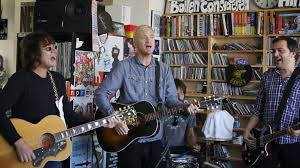
may2016SOUNDTRACK: FOUNTAINS OF WAYNE-Tiny Desk Concert #164 (October 6, 2011).

fowI have never really gotten into Fountains of Wayne even though a) they write incredibly Cathy indie pop, the kind of music I rather like and b) their name comes from a store that I have driven by many times in my life.  I think I didn’t like their first single when it came out or something, so I just dismissed them and never looked back.

Which is a shame because this set is full of delightful, slightly dark pop gems.

Fountains of Wayne put out a couple records in the 1990s and then went away and put out a couple more in the 2000s.  There are two excellent songwriters in the band singer guitarist Chris Collingwood and bassist Adam Schlesinger.  Schlesinger has been writing pop hits for (a lot of) movies and other lucrative gigs.   Clearly he has a knack for pop goodness.  And Fountains of Wayne is on the good side of pop.

“The Summer Place” opens with bouncy chords (the two guitarists play acoustic guitars).  But despite the poppyness, the lyrics are a little dark: “She’s been afraid of the Cuisinart since 1977 / now when she opens up her house she won’t set foot in the kitchen.”  I love the harmony vocals and how the second acoustic guitar sounds vaguely like a violin on the single notes.  “Valley Winter Song” is an older song.  It still has that sound–catchy guitars, nice harmonies and a notable bass line.

“A Dip in the Ocean” (like the first song, it comes from their then new album) features a prominent bass line and wonderful oohs and ahhs.  The lyrics are clever and funny.  Based on these two songs, I’d say that the 2011 album is pretty excellent.

When they ask if they can do one more, Stephen Thompson says that “that clock is one song fast,” and they launch into one of their older songs, the lovely ballad, “Troubled Times.”  The video of the song gets cut off just before the end, but if you listen to the audio you can hear the last few chords.

My friend Steve yelled at me for not liking this band, and I can see that he was right.

[READ: April 21, 2016] “In the Tower”

I had been trying to get caught up on all of the Harper’s stories that I’ve read.  These next two get me caught up to the present, with a couple really old ones left. And man, these two stories are pretty dark.

This is an excerpt from a short story (it must be a long short story).  The narrator, now forty-two years old, explains that he has found a refuge from his family–his tormentors–in the tower of their house.  The tower is a long-unused library which he was familiar enough with to know that the left side was philosophical books and the right side was belletristic books.  He was told over and over to not go into the library.  But it was his refuge.

He grabbed a book, it was by Montaigne.  He didn’t know what he was grabbing as he didn’t light a lamp for fear of mosquitos.

Much of this excerpt is filled with a kind of perverse Oscar Wilde litany:

“In every one of my statements there was nothing but this mockery and scorn in which they will one day perish, but I think that one day I will perish in their mockery and scorn.”

“Our unhappiness isn’t something we are talked into, unlike our happiness, which we talk ourselves into daily”

After several paragraphs denouncing his parents as conflating everything he has ever said he says he has always been in good hands with Montaigne.

“My family was too late in seeing that they had bred their destroyer an annihilator….How often they said that they would have preferred a dog to me, because a dog would have guarded them and cost less than me.”

As the excerpt ends and he is hiding with his Montaigne, he hears his family looking for him saying they hope nothing has happened to him.

It’s hard to know what is really going on, as this narrator sounds totally paranoid, but I didn’t love the excerpt enough to want to find out more.

Read Full Post »

april16  SOUNDTRACK: JEREMY MESSERSMITH-Tiny Desk Concert #158 (September 19, 2011).

jeremyI had never heard of Jeremy Messersmith before this show (the blurb even comments how it’s a shame more people haven’t heard of him since he is so sweetly poppy).

He looks a bit like Buddy Holly although my first though when he started playing was that he sounded not unlike Belle & Sebastian.  But there is more to his music than a simple reduction like that.

Messermith plays five songs (FIVE!).  For the first three he has a four piece behind him–big jangly electric guitar, a cello and a drummer accompanying his really nice picking style.

In “Toussaint Grey, First in Life and Death,” the electric guitar is mostly picking as well.  It’s a gentle song and you can really hear his voice well.

In “Knots” the tempo picks up with bigger drums and louder electric guitar.  I also love the picked cello as a bass guitar (this is the song that reminded me so much of B&S).  But by the end it is wholly his own (the falsetto note at the end is great).  This song is super catchy.  I love the break in the song when the drums kick in again.

For “Violet” the cellist switches to keyboards and the guitar plays some big jangly chords.  The chorus is great once again–super catchy and poppy.  Even better, there’s some great background Bah bahs and then other oohs of harmony.  But it’s the switch to an even higher note at the end of the bah bahs that totally had me hooked.

For the final two songs it’s just him and the cello.  His picking style on “A Girl, A Boy, and a Graveyard” is wonderful.  His voice sounds like someone although I can’t quite place it, but I love it.   The song is sweet and delicate.

Before the final song “Tatooine,” (which is about Star Wars obviously) he says that Steve Earle was in not too long saying that now songwriters write songs for nerds, and so this one is for the nerds.  The first line is “twin suns of Tatooine taught me everything I know.”  Pretty nerdy alright.  It’s just him and the keyboard on this, and the song is perfect this way.

I’m really looking forward to hearing some studio version of these songs.  This Tiny Desk was quite a find.

[READ: March 12, 2016] “Hygge”

I have read several stories by Dorthe Nors and I’ve found most of them a bit odd.  And so was this one, which was translated from the Danish by Misha Hoekstra.  I’m not even sure what the title means.

I’m unclear about a lot of things in this story.  How old is the narrator?  He is at an old folks’ home with a woman named Lilly. She has made the place nice for him (cleaned the dead leaves off the windowsill and put the budgie under its cover so it can go to sleep).

They’d had a fight earlier–she’d said that thing about his face–but she was trying  be nice now.  And she wanted everything to be cuddly.  Her hand was “inside the waist of my trousers.” (more…)

Read Full Post »

april16SOUNDTRACK: SEAN ROWE-Tiny Desk Concert #157 (September 16, 2011).

seanropwe Rowe (rhymes with how) is a burly, bearded folk-singer-songwriter.  When he’s not singing he is into wilderness survival and primitive living.

Before the third song he tells a lengthy story about going out into the woods with just a knife and surviving on whatever he could find.  If you’re interested in his stories, you can read about them on his site.

Rowe plays three songs.  For the first, “Night” he stands and plays a rather delicate guitar.  I don’t love his voice though, especially during the ending “where is my lord?” part.

I was amused by him when he said that for $200 he would eat the toast that is on the shelves behind him.  Robin asks if it’s really that hard out there.

He plays a different guitar (and sits on a stool) for “Bluegrass Baby.”  He sings and plays louder on this song.

The final song, “Surprise,” is my favorite.  I like the repeated riff that he plays, and his voice seems to work better with this louder song.  I especially love the great strumming/picking thing he does at the end

For sure, Rowe is a fascinating character.

[READ: March 13, 2016] “Plexiglass”

This is an excerpt from DeLillo’s novel Zero K (I do like that Harper’s tells you that it is an excerpt right from the get go).

I found that I didn’t rally like DeLillo’s last excerpt that I read.  His books are pretty complex and multifaceted and typically an excerpt doesn’t do it any kind of justice.  And while I enjoyed this one more, it still felt very spare.  And without context clues it’s kind of hard to get invested in the story.

Especially since in this case all of the characters seem to be rather unemotional themselves. (more…)

Read Full Post »

HarpersWeb-Cover-201603-302x410-21SOUNDTRACK: DIEGO GARCIA-Tiny Desk Concert #156 (September 12, 2011).

diegoDiego Garcia is an Argentine-American singer-songwriter.  When I saw the set up of guitar and cello I actually expected a more classical style.  But rather, Garcia is writing some beautiful, catchy songs about love and loss.

The blurb says that his album Laura is meant to be listened to as a full story, not just a few singles.  Since we only get four songs here I don’t know what part of the story we’re missing, but the songs we hear are pretty great.

“Nothing to Hide” is really quite lovely.  Diego sings and strums while Daniel on cello plays some aching notes.  Despite the aching quality the song is actually strangely upbeat sounding as well.

“You Were Never There” is interesting for where he plays the chords (way up on the neck).  And the cello plays the melody quite nicely (even taking a solo).  The song is poppy for such a dark sentiment.  The other guitarist, Zeke, plays a nylon-string acoustic guitar and adds some cool high notes (and a solo) as wonderful accents to what Garcia is playing.

“Under This Spell” begins with some minor chords and a much darker sound.  The tempo is fast again and the harmony vocals during the chorus really make it pop.

After the third song he asks if they can play a fourth song, “Would you mind?” (Who would ever say no?).

“Stay” features some really nice classical style playing from the nylon string guitar as Diego accompanies on strummed guitar and Daniel does some nice oooos as backing vocals.  I don’t really like the fluttering vocals he does in the middle of this song, though.  It might work better in studio or with a loud song, but it jut sounds weirdly affected here.  Nevertheless the way the song ends so dramatically really makes up for it.

I had never heard of him before, although apparently he was the leader of the band Elefant.  I get a sense that these songs tell a full story, and I’d like to hear the whole thing.

[READ: April 4, 2016] “Glory”

There was so much that I enjoyed about this story.  I loved that the main character Glory’s real name is Glorybetogod and how her parents (in Nigeria when she was born) believed that this would set her on the right path: to be smart, to attend church regularly and to “never stray from the Word (amen!).”  But in fact this name has given her nothing but trouble especially since they moved to the U.S.   She would always have to provide copies of her birth certificate for nearly every document and her Facebook account was constantly getting deleted because of their “real name” policy.  Her parents wanted the best for her, but it was her grandfather who was straight with them all: “That girl has something rotten in her, her chi is not well.”

And he proved to be correct as misery and failure followed her everywhere.  While some might say it was fate, a lot of it was her poor decision-making skills.  Like deciding when she was 5 to put her finger into a sleeping dog’s mouth.  And now at thirty she is disappointing everyone by working a terrible job at a call center.

And that is why that night she has written a suicide note and has a handful of sleeping pills. (more…)

Read Full Post »

1985SOUNDTRACK: KING CREOSOTE AND JON HOPKINS-Tiny Desk Concert #154 (September 4, 2011).

creosoteI’d heard of King Creosote but didn’t know anything about him.  He’s a Scottish folk singer.  And Jon Hopkins is an English producer and multi-instrumentalist who is better known for his room-filling electronic works–although here he only plays the…yes, harmonium and keyboards.

“John Taylor’s Month Away” is a somewhat upbeat song–although the King’s voice is somber and mellow on every song.  I like watching him thump on his guitar to keep the beat while he’s not strumming.  And when he comes back in with the guitar again it sounds all the bigger for it.

The chord structure and delivery of “Bubble” sounds like a 1960s British folk song.  It’s quite lovely.  And when Hopkins switches to piano, it really brings out a lot more in the song.

These two songs came from Creosote’s album Diamond Mine, which the blurb says was everyone’s favorite album in 2011 (although I don’t recall hearing anything about it back then).  Stephen Thompson writes: “To immerse yourself in Diamond Mine is to be transported to a small, calm town in the Scottish countryside: For all of [Kenny] Anderson’s [King Creosote’s real name] reflective ruminations on aging and regret, he and Hopkins know how to make listeners feel at peace; to make the faraway seem everyday. “

“Cockle Shell” is not from Diamond Mine, although Jon did work on it, he says.  The guitar is a played differently–more picking, less strumming.  And the piano sounds lovely again. Creosote sings a bit bigger on this song.  The way he sings the preposterously upbeat music behind the lyrics “choke me, blind me, cut off my hands,” reminds me a lot of Frightened Rabbit.

For the final song, Hopkins switches back to harmonium.  It’s a short song, lovely and sweet.  And I’m sure if I followed the lyrics a bit more closely it would be rather sad too, as the final line is “while they were alive.”

I enjoyed Creosote’s music, although I feel like I’d have to be in a certain mind frame to put it on intentionally.  I will have to give a listen to Diamond Mine in total though.

[READ: January 26, 2016] “Three Thousand Dollars”

After reading the Lipsky articles in Harper’s I thought I’d see if he had written anything in the New Yorker.  I only found this one item, a short story from his collection.

I was intrigued from the start by this story because of the duplicitous nature of the college-aged narrator.  This was especially interesting to read after reading Lipsky’s Harper’s article about slackers.

The story begins with the statement that the narrator’s mother doesn’t know he owes his father $3,000.  It transpires that his parents are divorced and his father–who has a ton of money–is going to pay for his college after they get financial aid based on his mother’s lower income.  The balance–$3000 is what his dad will pay.

But when the $3000 check came in, the narrator spent it on other things instead. (more…)

Read Full Post »

00011SOUNDTRACK: PHOSPHORESCENT-Tiny Desk Concert #153 (September 1, 2011).

phospI know Phosphorescent from a Newport Folk Festival Concert a number of years ago.  I remember liking the show, although I feel a little disappointed by this Tiny Desk Concert.  This show is just Matthew Houck and his guitar.

The blurb says that Phosphorescent specializes in “free wheeling weariness.”  And that seems to be true.  It also says that Houck’s voice is weary after a lengthy tour and could barely speak which made his voice sound even more weary.  Phosphorescent was wrapping up months of touring and Houck could barely talk, let alone sing solo for 20 minutes on camera. We quickly hooked him up with as much herbal tea as we could find and coaxed that crooked croon back to life.

I found all four songs to be pleasant and, yes a little weary-filled.

I know that Phosphorescent is basically a solo project for Houck.  but when I heard the Newport Folk festival show back in 2013, he had a full band with him.  And I think the fuller sound made his songs sound, well, fuller.

“My Dove, My Lamb” is a pretty song, gently picked with a rather lovely sound and good lyrics.  After “We’ll Be Here Soon” he says that  “The Mermaid Parade” is in the same key with a lot of the same chords, “I’m okay with that if you are.”  The songs do sound rather similar. Before “Los Angeles” he says he has a new guitar with new tuning.  I can’t iamgine what he means by that.  Is he playing all of his sings with the strings tuned differently?

All four songs were pleasant, but they didn’t make me want to get his record.

[READ: January 26, 2016] “The Packaging (and Re-packaging) of a Generation”

Since I found the essay by David Lipsky in the recent Harper’s I decided to see if he had written anything else for Harper’s over the years.  In fact he hadn’t, but they had excerpted a portion of a book that he co-wrote, Late Bloomers: The Declining Prospects of the Twentysomething Generation.  Interestingly, on Amazon, only Alexander Abrams is listed as an author, but only Lipsky’s bio is given )no respect for Gen X).  Of course, the book is only available used since it is 22 years old, but as the slackers say, whatever.

Back in the 90s I read an enjoyed a lot of books about my generation–Gen X–from insightful commentary to parody.  And I’m somewhat surprised that this one missed my radar–although the title is a bit of a downer, let’s be fair.

The Publishers Weekly Review from back then states “In this sweeping and often dull analysis,” but for what it’s worth I found this excerpt to be pretty interesting.  Now if that could be sustained for 224 pages is something else entirely. (more…)

Read Full Post »

« Newer Posts - Older Posts »