Feeds:
Posts
Comments

Archive for the ‘NPR/PRI/PBS’ Category

wildrobot efterklangSOUNDTRACK: EFTERKLANG-Tiny Desk Concert #270 (April 8, 2013).

Efterklang is a Danish group whose recent album Piramida took its members to an abandoned mining town between the North Pole and Norway. There, they recorded sounds of empty oil tanks, old pianos and pretty much anything they could strike or record.

That blurb made me think this would be a noisy chaotic Concert.  And yet despite the found sounds, their music is really peaceful and lovely.

“Dreams Today” builds on a series of echoing keys and guitar notes.  After nearly two minutes the singer sings a series of high “ahhs and oohs” until the vocals officially kick in.  And then the whole band starts playing a series of fast looping notes while the percussionist plays some water bottles and mugs.  The songs builds and builds, with a steady bass keeping the melody strong and then just as it seems it should turn the corner into a new section, it abruptly ends, leaving you wanting much more.

Before the second song, “Danish Design” they explain that they “never went public” with this song. They played it once before in a huge power plant in Copenhagen.  It was a big room–very reverby (if you can say that).  The office is a very different place and they want to compare how it sounds.   They also sampled the worlds northernmost grand piano for this song.  They were in Piramida, a ghost town in the arctic.  The song begins with slow notes from the sampled piano while the keys play pinked notes. The singer sings in a baritone that is quite lovely.  When the loud drums kick in it’s quite a shock to the mellow music.  The song is only a bout 2 and a half minutes and, once again, it ends just as it seems like it might soar into something new.

“Alike” is from their previous album.  It opens with keys and percussion (all kinds of things like a fork on a mug).  They sing in harmony for much of the song.  It doesn’t use much in the way of guitar or bass (the bassist is keeping time with a pair of scissors and then a beer bottle on a step stool) until the end of the song when the guitar chords kick in fast (but not too loud).  It’s the longest song but the way it builds slowly it feels like it could go on for much longer.

This Tiny Desk really made me want to learn more about this interesting group and to hear more from them.

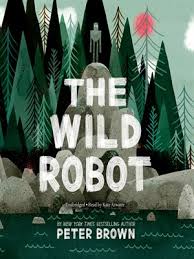
[READ: April 20, 2016] The Wild Robot

I love Peter Brown’s picture books.  I think Chowder is absolutely genius and The Secret Garden brings me to tears each time I read it.  So I was pretty excited to read this novel–his first.

It’s quite a fast read (with about 70 chapters all about 3 pages long) and lots of pictures.  The blurb on the book said that a robot woke up on a remote island. She has to learn to survive from the animals. And once she starts to feel comfortable, her past comes back to haunt her.

And that is a fair summary of the book.  The plot is very simple, but Brown adds a lot of details and a lot of characters to make the plot interesting. (more…)

Read Full Post »

deweySOUNDTRACK: OMAR SOSA & PAOLO FRESU-Tiny Desk Concert #272 (April 22, 2013).

omarOmar Sosa plays piano and Paolo Fresu plays trumpet and flugelhorn.  Many types of music could come from this combination, but this duo creates beautiful, mellow music that is calming and lovely.  Fresu often places a digital delay on his horns which offer occasional notes and echoes.  He also clacks on the horn itself to give some percussive sounds.

Here’s the blurb about this show:

You don’t really listen to an Omar Sosa concert so much as experience it. The Cuban-born pianist’s overall demeanor exudes a sense of calm and deep reflection, while a spiritual connection to music and his ancestors comes through in his piano playing.

You can hear Sosa draw on more than 100 years of Cuban piano in the recognizable rhythms of his country’s music. But in Sosa’s hands, it’s not all fiery and bombastic; he’s most effective when he uses Afro-Cuban tradition as a guide to his distinct, subtle and nuanced approach.

In Paolo Fresu, Sosa has found a sympathetic musical partner. Fresu’s work on trumpet and flugelhorn provides a perfect foil for Sosa’s introspective intersection of jazz, Afro-Cuban sounds and a chamber-music mentality.

Sosa and Fresu’s quietly energetic performance behind Bob Boilen’s desk enveloped everyone in attendance like a soft mist. Fresu’s use of digital delay never clashed with Sosa’ acoustic piano, instead adding another color to the palette; at times, Fresu uses it to add a layer of rhythm with either the ring on his finger or a blowing technique into his horn.

I didn’t hear any of the Afro-Cuban traditions in this music.  It was all just very pleasant.  They play two long songs,”Alma” and “S’Inguldu.”

I loved the strange sounds that Fresu got out of his horns.  At the end of the second piece, he seems to be blowing into the mouthpiece not like he wants to “play” it but as if he just wants the air to go through it.  And the pitches and wind sounds het gets are echoed through the delay.  He also seems to be clicking his mouth to get even more interesting percussive sounds.  I’ve never seen anyone do what he does with the horns before.

And of course, when he is actually playing the horns, they sound wonderful.  I haven’t really mentioned Sosa at all, but his playing is tremendous too.  There’s nothing flashy or fancy about it, it’s just solid, beautiful piano playing with a gorgeous melody and tone throughout.

[READ: May 10, 2016] Dog Gone Dog

This is a book that I funded on Kickstarter.  I thought my kids would enjoy it–especially the gadgets in the back.  Turns out I’m the first one to read it, but Tabby expressed interest in it too.

The story in this book is pretty good, although I feel like the real “selling point” is the back half of the book which teaches you how to make all the cool gadgets that Dewey Mac uses.

As far as kid detective/spy stories goes, this one is pretty simple–although the mystery is satisfyingly complicated.  The story begins with Dewey Mac (short for McClain) sitting in school listening to an announcement from his mayor.  The mayor calls some volunteers on stage. Dewey wasn’t paying attention, so he doesn’t know why, but he is picked but as he gets on stage he knocks over the microphone and breaks it.

Using some items that are around, he makes a new microphone (called Canned Music in the back of the book). (more…)

Read Full Post »

johnny-twinkleSOUNDTRACK: SOWETO GOSPEL CHOIR-Tiny Desk Concert #209 (April 16, 2012).

sgcDressed all in black with pink accents the Soweto Gospel Choir certainly looks striking.  And their voices are superb.

The blurb notes that they

managed to tie the all-time record for most musicians squashed behind Bob Boilen’s desk for a single performance in the NPR Music offices. (They join the early-music a cappella ensemble Stile Antico, also with 12).

[I wonder if they keep statistics like this–I’d like to see numbers].

The Choir sings

in a number of South African languages, as well as English, Soweto Gospel Choir fuses the praise music of many Christian cultures, with nods to traditional African songs of celebration — complete with occasional clicks and bird songs.  To watch and sway along was to be blasted with some sort of ray gun that shoots beams of joy and hope.

They sing four pieces.   I don’t know what the songs area bout except for what the brief introductions tell us.

Two different women are the lead singers for the first two songs (no names are given). “Seteng Sediba” and “Emarabeni” which is a wedding song.  A man introduces the rest of the songs.  He says that “Emlanjeni/Yelele” is a traditional song and then he sings lead.  The final song “Kae le Kae” translates to Wherever I Go I Go with Jesus.

For each song the Choir sounds amazing together.  They only person not singing is the guy on the end who is playing the djembe to keep rhythm.  They sway in sync and hold hands up at the same time. They are something to watch.

As the final song ends, the Choir walks out of the room past everyone singing all the while.  It’s a great ending (and gives us a peek into the NPR offices).

[READ: March 3, 2016] Johnny Boo: Twinkle Power

This is the second Johnny Boo book and Johnny, Squiggle and the Ice Cream Monster are all back.

One thing that really cracks me up about the Johnny Boo books is how easily he and Squiggle get mad at each other.  And they always threaten to be mad forever.

In this book, Squiggle flies around Johnny’s head and makes his “hair” stand straight up.  This cracks up Squiggle and makes Johnny very angry and he threatens to never be friends with Squiggle again.

Of course this all started because Squiggle thinks that the stars have amazing Twinkle Power and he thinks it’s even better than Johnny’s Boo Power (GASP!).  Squiggle wants to go up to the stars to see if he can learn Twinkle Power. (more…)

Read Full Post »

johnny-1  SOUNDTRACK: RUDRESH MAHANTHAPPA-Tiny Desk Concert #201 (March 8, 2012).

rudreshRudresh Mahanthappa is a saxophonist whom I had not heard of but who is obviously very highly regarded (he won a Guggenheim Fellowship).

He plays jazz in very different styles, and totally wails (“a swarm of locusts rampaging through an irregular beat”), but has also experimented with different styles.  As the blurb says:

That latest album, 2011’s Samdhi, borrows a bit from … electric funk excesses … and integrates ideas from South Indian scales and modes, hip-hop and computer music programming.

The quartet here is top-notch:

Drummer Rudy Royston and Mahanthappa played in a Denver-based band together some 20-odd years ago, and have since reconnected in New York; electric bassist Rich Brown has played in just about every conceivable setting from his home base of Toronto, including the Canadian Indo-jazz group Autorickshaw; guitarist Rez Abbasi is a long-time confrere in the dual worlds of jazz and South Asian music.

They play two fairly long songs.

“Killer” starts the show.  I really loved the sound that the guitar had–a kind of electric organ/funk sound. Mahanthappa takes off right away.  One thing that was very cool was when I thought he was playing an improvised solo, but the guitarist was able to play exactly what he played both right after him and then with him (clearly it was part of the song–but it sounded great with the two of them together).  After about 4 minutes of wild noisy soloing it mellows out with a long groovy guitar solo–Rez is really impressive.  About a minute after that, the song picks up with some great drumming behind a wild guitar solo.   Around 8 minutes, the drummer gets his own impressive solo.  The ending is great and super fast.  The band sounds amazingly tight throughout.

I really love the sound of his backing band and while his sax playing is amazing and insanely fast, I actually prefer the middle section without the sax–it’s a little too frenetic for me (which is surprising, as I usually like this–I must not have been in the mood when listening).

“Playing With Stones” opens with a lengthy bass “solo” it’s a series of very quickly plucked notes that sounds almost like drums–its very cool. It lasts almost a minute and a half before the rest of the band kicks in.  There’s a great bass line throughout this track too–bouncy and a little funky.  I enjoyed the moment where Rich notices he’s on camera and gives a little smile.  As the song ends you hear them say “pretty pretty good” like Larry David.

Between songs Mahanthappa explains that all of the music on the album resulted from the Guggenheim Fellowship.  It went for research in India, looking for new ways to bridge certain areas of South Indian music and jazz with hip-hop and funk.  There’s also a funny moment when he introduces Rich and says, “He’s Canadian, don’t hold it against him.”  He mentions the CBC and then Rez says “And Tim Horton’s.”  Rich snaps “that’s not funny,” to much amusement.

[READ: February 1, 2016] Johnny Boo

Johnny Boo is a fun children’s series by James Kochalka.

Johnny Boo is a white ghost with a big swirl of “hair?” on top.  Has a pet ghost named Squiggle.  I love how simply these characters are drawn (as Kochalka tends to) and yet they are totally consistent.

As the story opens Johnny and Squiggle are playing around in the field.  Johnny is running while Squiggle is floating around   Squiggle has Squiggle Power and is able to float and swirl.  While Johnny has Boo power which is him shouting Boo very loudly and frightening Squiggle.

Squiggle is upset hat Johnny does this.  Squiggle gets mad, but Johnny says that they will get ice cream.  Which makes everything okay. (more…)

Read Full Post »

pfilSOUNDTRACK: MACKLEMORE & RYAN LEWIS-Tiny Desk Concert #254 (December 3, 3012).

mackI missed the whole Macklemore & Ryan Lewis thing when it happened in 2012.  I was vaguely aware of “Thrift Shop,” but really didn’t know much about him until the hype blew up all over the place.

And now four years later, I’m catching up on him and finding it all pretty great.

This Tiny Desk Concert is interesting for a number of reasons.  All of the backing females vocals are prerecorded, but the trumpet is live (I gather that’s Lewis on the mixing board).  And he and the audience really get into it–I’m not sure when he was in his rise at the time of this show.

I gather that all three of these songs were well-known at the time.  But I’d never heard “Same Love” at all before. It is a surprisingly powerful and moving song about gay rights and human rights.  It seems to start out with a different tone altogether—he is scared that he is gay.  But it quickly turns into something much sweeter and loving. It’s actually quite a tear-jerker.  Then he changes the mood entirely.

“Thrift Shop” has an amazingly catchy melody for the chorus.  The vocal line is a sample as well.  And while I have heard the song before I never noticed the “this is fucking awesome” final line, which has been stuck in my head for weeks now.  This song is really funny.  The R Kelly line is hilarious [Probably should’ve washed this, smells like R. Kelly sheets (Pissssss…) But shit, it was 99 cents! ] and the whole bit about paying $50 for a T-shirt is spot on.  He hops around and is full of infectious energy.  There’s a live trumpet solo at the end.  Lewis plays with a set of sleigh bells and then knocks them off to much laughter.

As the song ends he grabs the Emmy and says, “Thank you, we’re outta here.  Peace.”

The final song is “Can’t Hold Us.”   The chorus of that song sounds so familiar.  I’m sure I’ve heard it before but I can’t imagine where (maybe roller skating?).  But man, is it catchy.  For this version, Ray Dalton sings with them.  I guess maybe he’s the guy who sang the original?  It sounds like there’s also a recording going with it, though, so who knows, and who cares.  The live trumpet is a nice touch.

As Bob notes: “The live, sweet, soulful sounds of singer Ray Dalton belting, ‘Like the ceiling can’t hold us’ had Macklemore standing on my desk and shaking the dust off the ceiling tiles.”  It is fun an exhilarating.  And as the show fades, you can hear him ask, “You guys have a shower?”

[READ: February 8, 2016] The Brief and Frightening Reign of Phil

Saunders wrote this novella during the Bush administration. But it feels shockingly more relevant now.  This is the story of an unqualified buffoon who takes charge and attempts to force his will on a country.

But in typical Saunders fashion it is over the top and somewhat absurd, except that it is all quite real.

The story is about a small country called Inner Horner.  Inner Horner is so small that only one citizen can stand in it at a time.  The other five citizens must stand in The Short-Term Residency Zone.  Outer Horner is huge with lots of empty space.  The Outer Hornerites don’t really mind the Inner Hornerites being in the Zone, but they didn’t want to offer any of their own land to Inner Horner because, well, what if other countries wanted land too.

Then one day, a seismic shift makes Inner Horner even smaller.  Now only 1/4 of a citizen can fit in Inner Horner at a time.  Leon, an Outer Horner Border Guard noticed that this citizen (whose name was Elmer) was mostly in Outer Horn and he sounded the alarm that meant Invasion in Progress.

The Outer Horner Militia (Freeda, Melvin and Larry) came over and glared at Elmer.  They don’t believe in the shrinking–decent countries don’t shrink.  But the militia doesn’t know what to do.  And then Phil, a guy standing nearby, says why not tax them?

Phil was in love with Carol, a citizen of Inner Horner. But she had married Cal (another Inner Horner citizen) and they had a child, Little Andy.  This made Phil very bitter.  (more…)

Read Full Post »

cardboardSOUNDTRACK: MARY HALVORSON QUINTET-Tiny Desk Concert #267 (February 25, 2013).

maryI had never heard of Mary Halvorson before.  And that makes sense because she is an avant-garde free-jazz guitarist, a sound I like (sometimes) but one which I do not follow.  So a little background is in order:

As a sidewoman, [Mary Halvorson] is often tapped to play in open improvising situations….  Among her sonic signatures are craggy distortions, bent strings and delay-pedaled blurts through a hollow-body guitar….  Halvorson has now recorded two albums with her quintet, one with alto saxophone (Jon Irabagon) and trumpet (Jonathan Finlayson) up top. (The rhythm section is also among New York’s finest, with John Hebert on bass and Ches Smith on drums.) From the way her songs balance order and entropy, you can hear that she’s studied how golden-era hard bop blended those voices, and how later generations morphed, rephrased and imploded those ideas.

The Quintet plays two pieces.  I would have guessed they were improvised but not only do they have titles, they have sheet music!

“Love In Eight Colors” (No. 21) starts out as a slightly dissonant mellow jazz piece.  Then about 45 seconds in, Mary throws in an unusual guitar lick—a slightly weird note.  And then a minute later things get noisy until a simple trumpet solo takes over.  When the music resumes, Mary is playing some strangely discordant chords over the solo—everyone seems to be doing their own thing.  Around 4 minutes in, it turns into something new with an interesting, mesmerizing guitar solo riff.  When the band resumes, the sax takes over and the trumpeter literally stands stock still like a statue staring forward–it’s almost creepy.  At 8 minutes, they introduce a two-minute drum solo.  It’s fun to watch all the strange things he does—elbow on the drum head, vibrato with his hands changing the sound, clicking the sides of his drum.  Then the band resumes until the end.  And it’s more dissonance.

She introduces “Hemorrhaging Smiles” (No. 25) without smiling.  There’s a lot more melody in this song–the sax and trumpet sound groovy.  Even the guitar is pretty. Then she throws in a bizarre scale which cycles throughout the song.  It’s strangely addicting and I enjoyed hearing it every time it came back–even though it wasn’t exactly pretty.  The guitar has a lot of vibrato on it, although about six minutes in she switches the sound of her guitar to a bit more conventional sound and she plays a wicked solo. The second listen through made me appreciate what was happening a lot more.  Even if the song is pretty out there.

Mary Halvorson’ Quintet is not for everyone.  It might not be for many at all, but if you like your jazz free, check her out.

[READ: June 19, 2016] Cardboard

I’ve had mixed feelings about TenNapel’s books.  I loved Ghostopolis, and didn’t love Tommysaurus Rex.  So I picked this up with some hesitation.

But I found that I really enjoyed this weird book a lot.

For a kids’ graphic novel it’s actually quite long.  And, for a kid’s graphic novels there’s a few adult themes (like unemployment and widowhood) that a kid may not get or care about all that much (or maybe they would, what do I know).

As the book opens we see Mike, a big burly carpenter, begging for work.  But he gets nothing.  And as he walks away we see a very strange-looking man (TenNapel’s book are chock full of weird-looking characters) who offers to sell him a gift for his son.  Mike has no money, so he can’t buy the cool gift.  But the man says that for 78 cents (the exact amount in his pocket) he can have this giant cardboard box.

Mike is appalled at the idea of getting his son a box (even if it can be a creative play toy–ha!), but he’s got nothing else.  So he drives home with this box muttering “worst present ever.” (more…)

Read Full Post »

squish-7SOUNDTRACK: CANTUS-Tiny Desk Concert #264 (February 4, 2013).

Cantus is an a capella cantusgroup of nine men with beautiful voices.

The blurb tells that there are many choral groups all over Minnesota (I had no idea):

Is there some kind of weird vocal vortex in Minnesota? The state turns out so many excellent choral groups — at the school, church and professional levels — that it can arguably be dubbed the choral center of the U.S.

Cantus went professional in 2000 and has cut 15 albums on its own label. Unlike some choral groups who specialize in one style of music, Cantus prides itself on diversity. Just take a look at the three songs its members chose for this concert.

“Wanting Memories” is a song steeped in African-American culture, written by Ysaye Barnwell from Sweet Honey in the Rock. “Zikr,” composed by A.R. Rahman — the same guy who scored the hit movie Slumdog Millionaire — has roots in the Sufi tradition, where deep chords and repeated phrases signal a slow burn toward religious ecstasy. And the group closes with German composer Franz Biebl’s gorgeous “Ave Maria,” a signature piece for the group that blends traditional plainsong (or chant) with delicate melody and voluptuous harmonies that ascend heavenward.

I was really impressed with this set.  “Wanting Memories”was very pretty all the way through.  From what I can tell there are two “bass’ singers who hum the melody while the others sing different parts with various harmonies.  (There’s also a shaker keeping rhythm, but that doesn’t count against the acapella in my opinion).  In the middle of the song, the basses stop the humming and sing along (in a fugue style).  The absence of those droning sounds is a dramatic change in the song. They resume the hums and end the song like it began–beautifully.

“Zikr” has incredibly low bass notes–they are genuinely impressive.   There is an occasional drum that adds some Sufi authenticity–but the sound like they have been singing in this style their whole lives.  It’s really impressive that they are doing something that seems so unlike the Minnesotans that they are.  The end of the song speeds things up a bit which is a very cool sound added to a very cool song.

In introducing “Ave Maria” they explain that they started in 1995 with four guys.  They expanded to 7 so they could perform this piece.  This turns out not to be the traditional Ave Maria.  It is very different indeed–with a traditional Latin (not Latin America, but Roman Latin) feel.  And here again there is the amazing deep voice of the bass and some amazing tenors.

It’s amazing how different they sound in each of these three songs–their range is tremendous.  There’s a comment in the blurb about the beauty of the human voice and that is really the case here–their voices are pristine and beautiful.  It’s a marvelous Tiny Desk.

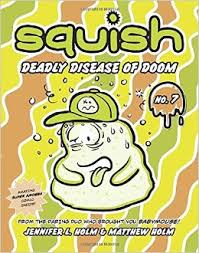
[READ: July 20, 2013] Squish #7

I love the Squish books.  They’re funny and quick and often teach you a thing or two.  I also love that most of the characters are named after real microbes.  And each issue also has a Super Amoeba comic book scattered throughout.

As this book opens, we see Small Pond, where Super Amoeba lives.  Something flies out of the sky and crashes into the pond.

As with every time Squish reads this book though, he is interrupted,  This time it’s to go to school.  His friend Pod is drowsy walking down the street.  He was up late working on his top-secret project.  Squish asks is he can help, and Pod says yes–give him Squish’s Twinkie.

At school the teacher is showing them about acids and bases. The kids are bored until he pours vinegar into baking soda and they all wake up.

The next day on the way to school, sneaky Squish takes a bite out of his Twinkie.  So that when he offers it to Pod, Pod refuses.

But when Squish gets to school, his stomach starts to gurgle and he turns green (literally). (more…)

Read Full Post »

squish-6SOUNDTRACK: ALLISON MILLER’S BOOM TIC BOOM-Tiny Desk Concert #223 (June 7, 2012).

boom I hadn’t heard of Miller–who is a drummer primarily in jazz circles.  Although the blurb says that she has also played live with Ani DiFranco so it’s very possible that I saw her play a decade or so ago.

But this band is all about the jazz.   The quartet has an upright bass, piano, sax and of course Miller’s drums and percussion.

And yet for a band which has her name in it, the drums and percussion are not very prominent.  This was a little disappointing as I wanted to hear some wild percussion, it also makes sense since she’s writing these tunes with melodies in mind.

They play three songs. “Big And Lovely” is primarily a sax song with a few moments of piano playing by itself.  The drums are certainly present but they don’t seem like the centerpiece of this song (and I gather they are not meant to).  It is fun to watch Miller play, though—jazz drummers really do seem to smile a lot more than rock drummers.  This was written for Miller’s friend, musician and activist Toshi Reagon.  During the end of the song—when it’s just bass and piano, Miller breaks out all kinds of bells and percussion which is neat.

“Spotswood Drive” is where a man named Walter Salb once lived; “he was a beloved and respected drummer, and by most accounts a larger-than-life character.  His 2006 Washington Post obituary ran with the headline ‘Drum Teacher Was Scurrilous, Rude — and Greatly Admired.'”  Salb was her drum teacher.  She says he was a “mentor and great guy… sometimes great guy.”  The blurb tells us that “Salb’s mentorship remains so important that Miller started a scholarship fund in his name, and recently dedicated a new tune to him — a searching, slow-burning meditation with lots of percussive coloring between the lines.”  It’s a slow song with lots of interesting percussion which sadly doesn’t really make it to the forefront in the song.  There are gongs and bells and other interesting things—its fun to see Miller scrambling around back there to grab different items.   A few minutes in, there’s a cool bass line (which I’d also like to be louder) that rides under the sax.

She introduces “The Itch” by saying “There’s a story behind this too, (laughter) it’s a little personal…”  Bob says you can stop there.  This was my favorite of the songs.  It opens with a Miller playing the floor tom—but the floor tom has all kinds of things on it—a cymbal, bells, a gong of some sort and she hits them all while keeping rhythm on the tom.  Then she gets to do some really snappy drumming—nice paradiddles and whatnot.  It was a little funny to watch the sax player just standing there watching her for the first minute and a half before joining in. After she gets a rhythm going the bass joins in.  The sax and keyboard lines are interesting and a little wonky sounding.  There’s some piano soloing and then a dissonant section with the sax and the keys playing off of each other.

Overall, this was an enjoyable set.

[READ: March 18, 2016] Squish #6

This book is about admitting to your fears.   Everybody in town wants to go see The Water Bear, a scary horror movie–with a great scary poster.  It’s all anyone can talk about.

When they finally get to the movie, I love that the first scare is a cat jumping out at you (classic horror movie trope).  But then everyone is terrified by the genuinely frightening Water Bear.  A footnote informs us that the Water Bear is entirely real.  Fortunately, it is also only 1 mm long (click if you dare)

The movie is super scary and Squish is terrified for days afterward. However, his friend Pod thought it was cool and Peggy thought the kitty was cute (Squish notes that it was cute until it got eaten). (more…)

Read Full Post »

pipSOUNDTRACK: DANIEL BACHMAN-Tiny Desk Concert #256 (December 9, 2012).

dan-bach Lars Gotrich, an NPR music dude, loves metal and weird music but also amazing Americana folk guitarists.  Daniel Bachman was an early-twentysomething when he recorded this Tiny Desk Concert.  And he is very impressive indeed.  Lars explains:

His approach to the American Primitive style of acoustic guitar — a sonically vivid fingerpicking technique developed by John Fahey and expanded by the likes of Robbie Basho and, later, Jack Rose and Glenn Jones — is conversational and uplifting, much like the man himself. After a rousing performance of “Honeysuckle Reel” from a forthcoming seven-inch single, however, Bachman turned beet-red in the NPR Music office and said, “I’m not going to lie. I’m pretty nervous.”

He only plays two songs, although each one is about 7 minutes long.  Lars says, “Strap on a pair of heavy boots and “Honeysuckle Reel” becomes an ecstatic dance tune or, at the very least, a foot-stomping good time.”  And he’s right.  It’s really amazing to watch him playing.  He uses a thumb pick and the low notes are constantly going–an incredibly fast rhythm, in contrast to the slower melody he’s playing on the higher strings while finger picking.  It’s a very pretty melody.

The second piece, “Seven Pines,” is slower and more reflective.  It comes from one of two albums he put out in 2012). The simple melody “dives in and out of low-string chord crashes and tumultuous swirls of dizzying fingerpicking.”

The sound he gets from his guitar is really fantastic and while I don’t tend to listen to guitar music like this, I really enjoyed this a lot and would like to hear more from him.

[READ: February 3, 2016] Ava and Pip

Since Tabby and I loved Ava and Tacoocat so much, we knew we had to read the prequel Ava and Pip as well.

This book is set up exactly as Tacocat is (I know that this book came first but since I read the other one first I’m comparing things backwards).

There are diary entries and it starts with Ava on her first day of school.  When she gets home she says that she is the only Ava in her class (which is frankly shocking as there are about 5 in my daughter’s grade).  Then we learn all about the Wren family and their love of palindromes.

Bob and Anna Wren had two daughters named Pip Hannah and Ava Elle.  And her diary entries wind up being chock full of spelled out palindromes (some obvious, others not). (more…)

Read Full Post »

tacocaoSOUNDTRACK: CANADIAN BRASS-Tiny Desk Concert #220 (May 26, 2012).

brass I hadn’t realized that Canadian Brass part of the institution of Canadian Brass.  They’re not only part of it, they are it.  Indeed Canadian Brass

led by its avuncular tuba master (and sole original member) Chuck Daellenbach, essentially put the idea of the brass quintet on the map.  Then there are the recordings — more than 100 of them, selling more than two million albums total.  Daellenbach and his fresh-faced players, each with red-striped sneakers and matching outfits, strolled into the NPR Music offices, took their places behind Bob Boilen’s desk and started blowing as if they’d played this peculiar gig a hundred times.

They began with a version of J.S. Bach’s intricately woven “Little Fugue in G minor,” an impressive staple that stretches back to the band’s first recording. In those days, precious little was available for brass quintet (two trumpets, horn, trombone and tuba), so the band relied on making arrangements of existing music. Since then, Canadian Brass has transcribed and commissioned more than 200 works, including “Tuba Tiger Rag,” Luther Henderson’s lighthearted tribute to Dixieland jazz. It’s a showpiece for Daellenbach, who twirls his tuba (while playing) and lands on a final note of such subterranean depth that you feel it more than hear it.

The players closed with another favorite, Rimsky-Korsakov’s dizzying “Flight of the Bumblebee,” in an arrangement by Canadian Brass trumpeter Brandon Ridenour. Although the music buzzes past in less than two minutes, players get plenty of opportunities to shine — as in the lightning-fast runs negotiated by trombonist Achilles Liarmakopoulos, the newest member of the group.

The band consists of   Christopher Coletti, trumpet; Brandon Ridenour, trumpet; Eric Reed, French horn; Achilles Liarmakopoulos, trombone and Chuck Daellenbach, tuba.

The band sounds amazing playing these familiar songs in a way that is–unexpected–but still right on.

J.S. Bach: “Little Fugue In G minor” is probably one of my favorite classical pieces.  I really enjoy Bach’s fugues a lot and this one is just perfect–and the arrangement here is great–everyone gets a chance to explore the phrasing.  It starts with the tuba and then the trombone and then the horn and finally the tuba.

Luther Henderson: “Tuba Tiger Rag”  Introducing this piece he says that in Bach everyone is equal, but he felt they needed a tuba song.  He says that while this song might be low art for other instruments it is high art for a tuba.  And yes he does spin it around while playing it. He uses that instrument to make roaring sounds and incredibly deep notes.  This is a medley, I think, because while the trombone and tuba play, the other three sing “hold that tiger / tuba tiger.”  How on earth does he reach that super low note?

Before the final song Bob says that his tuba doesn’t look brass.  And Chuck replies that there’s an old joke: “How old do you have to be to play the tuba and the answer is old enough to be able to carry it but young enough to still want to.”  He still wants to so he’s been  so he;s lightening the horn with carbon fiber.

For the final song Nikolai Rimsky-Korsakov: “Flight Of The Bumblebee” he tells us that the two trumpets play very fast–it must be easy for them. But the trombonist Achilles didn’t know what was coming when they had him play along.  Chuck says you’ll never see anyone play this song this fast on this instrument.

And it is amazing.  The song flies past–a blurry of fingers.  And I love that at the end, one of the trumpets sings the triumphant final high note.

You wouldn’t expect a band as old and legendary as Canadian Brass to be so funny and good-natured, but they sure are.  And that makes these familiar songs even more fun.

[READ: February 7, 2016] Ava and Tacocat

Sarah brought this book home, in part because Clark’s reading group called themselves tacocat which is a palindrome.  Turns out that Clark wasn’t interested in the book, so Tabby and I got to read it together, which was really fun.

The whole book is a language lovers’ dream, chock full of big spelling words and all kinds of palindromes littered throughout.

It was a few chapters into the book before we realized that this is actually the second book of a series (the first one is called Ava and Pip) and that this book references things that happened in book one without exactly explaining what happened.  That’s a little annoying for us, but it certainly made us want to read the first book.

The book is set up in diary form with Ava writing in it on most days.  I like that she loves palinromes so much (S-E-N-I-L-E-F-E-L-I-N-E-S) and every time she mentions one in the book, they spell it out like that. (more…)

Read Full Post »

« Newer Posts - Older Posts »