Feeds:
Posts
Comments

Archive for the ‘Nostalgia’ Category

SOUNDTRACK: IDLES-Tiny Desk Concert #858 (June 28, 2019).

I had heard of Idles from All Songs Considered.  On the podcast, Bob Boilen raved about seeing them live.  Like this:

My first time seeing IDLES ended with guitarist Mark “Bobo” Bowen frenetically dancing on a bar, his guitar still keeping time, until the swinging neck suddenly shattered some low-hanging, glass lighting fixtures. The band’s set at South by Southwest was fierce and I knew it’d be a challenge trying to figure out how to bring that cathartic rage behind my desk. There was talk for a while of some members of the band strapping on pocket-sized guitar amps and beating on a single drum. But a week before this bunch of British madmen arrived at NPR, the instrument list had grown and what ensued was just about the loudest, most fun and most raucous Tiny Desk Concert in memory.

This is all true, for sure.  But this Tiny Desk, as amazing as it is, doesn’t come close to showing how incredible their live show is.   Idles live is a truly unforgettable experience.

However, seeing all of that energy and fun contained in a small place is awesome and this is one of my favorite Tiny Concerts as well.

The first song “Never Fight A Man With A Perm” opens with a siren sound from keyboardist Jeremy Snyder and the main constant of Idles’ music–steady bass from Adam Devonshire.  Add in the thumping drums from Jon Beavis and you have the ground work for Joe Talbot to start his singing/yelling.

The band also has two guitarists.  Mark “Bobo” Bowen thumps on the floor tom while Lee Kiernan jumps around, slashing at chords.

The title sounds funny and it is, but the song is a serious indictment of male aggression.

What lead singer Joe Talbot and his mates bring to their shows is a mix of love and outrage. Their songs are often bursts of fury, but the message is insightful and not intended to incite. Joe Talbot says their opening Tiny Desk song, “Never Fight A Man With A Perm,” from their album Joy as an Act of Resistance, is an “exploration of the horrid corners of my past.”

The chorus of “concrete and leather” thumps around before the song returns to the verses, with some cockney slang:

Brylcreem
Creatine
And a bag of Charlie Sheen

A heathen from Eton
On a bag of Michael Keaton

Bobo is a ton of fun to watch–shirtless, wearing American flag spandex pants, he climbs on everything: amps, desks, and other unseen things.

“Mercedes Marxist” starts with a thumping single bass note which will remain unchanged for two and a half minutes.  Snyder takes over on the floor tom while Bobo and Lee trade off guitar sections.

The song is almost entirely that one bass note (with all kinds of guitar melodies and riffs swirling around it).  Until a big chorus comes near the end.  Through it all,  Talbot is directing the fun with his scary vocals.

It only took a few seconds for Joe’s face to turn blood-red; as he growled, it stayed that way for the next 13-minutes, even as he curtseyed at the end of the first song and bounced his way into the second.

The one thing that this Tiny Desk misses is Talbot’s love and generosity.

Despite his tone and the roughness of the music, his kindness and consideration is paramount to the band.  Hearing him wish nothing but love on everyone is a pretty wonderful feeling especially after he sings “dirty rotten filthy scum.”

“We are not the Jonas Brothers,” Joe Talbot explained before their final tune. “People get confused.” He said this with his charming smile and began to run in place while singing “I’m Scum,” just to make it clear who they are.

Before the songs, he asks, what song are we doing?  Someone says “Scum.”  He smiles, “I like this song.”  Before it even starts he begins running in place, knees high as he chants “hey! hey!”  The energy of this band is incredible and certainly hard to contain.

 watching the hyperactive movements in this confined space, it’s actually hard to believe that so few things broke.

Mid song Bobo leaves the desk area to grab someone on the crowd.  He gives her percussion instruments to bang. Then Bobo grabs somebody else and he takes over percussion as well.    Then Bono crawls around on his knees, climbs on the desk and is having a great time.  As is everyone else.

I thanks All Songs Considered all the time for the band they’ve introduced me to, but Idles might be the best find ever.

[READ: July 1, 2019] “A Crowded Memory”

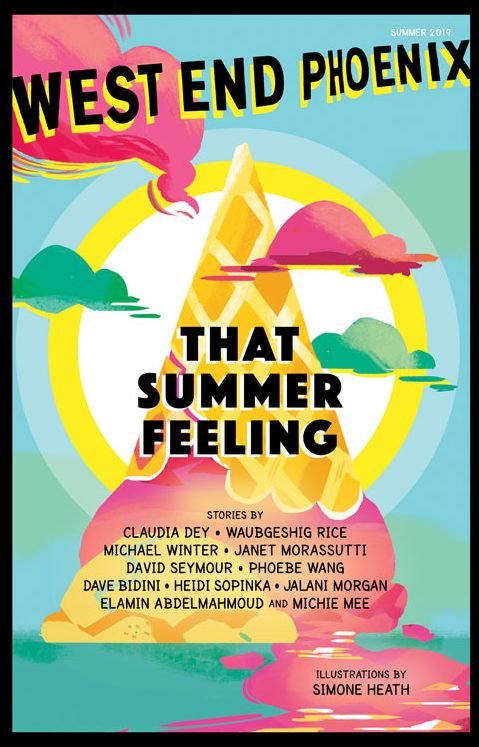
The Summer 2019 issue of The West End Phoenix was a special all comics issue with illustrations by Simone Heath.  Each story either has one central illustration or is broken up with many pictures (or even done like a comic strip).

Each story is headed by the year that the story takes place–a story from that particular summer.

1988: This story is written in paragraphs with drawings in between.

It is the story of a 7 year-old girl going to Hong king for the first time.

She was spending a month in Hong Kong without her immediately family.  She would be living with her Nai-nai and Gong-gong.

The place was total culture shock.  She had never heard only Cantonese before. She had never seen so many Chines people.  There were street vendors and apartments and the colors and smells were overwhelming.  Everything feels to loud, too big and too hot. (more…)

Read Full Post »

SOUNDTRACK: MIYA FOLICK-Tiny Desk Concert #864 (July 5, 2019).

I feel like I’ve heard of Miya Folick, but I’m not sure where.

Miya Folick was raised a Buddhist in Santa Ana, Calif., and is of Ukrainian and Japanese descent. She sings of conviction, not fiction. I find a stirring sense of truth driving that powerful voice of hers.

She portrays a nice mix of tough and vulnerable in this Tiny Desk Concert.  Between the pink hair and her at times gruff voice (and lyrics), she is bad ass.  But she also sings in a delicate falsetto.

Like on the opening song, Thingamajig” in which her voice (with minimal backing music) fills the room.

Miya Folick began her Tiny Desk Concert with an apology in the form of a song. “Thingamajig” opens with Wynne Bennett’s stark piano. The song is also the lead-off track on Miya Folick’s 2018 album Premonitions. On that version, the song crescendos with strings backed by a vocal loop. Here at the Tiny Desk, we get to hear why Miya Folick is such an astonishing performer, her classically trained voice taking charge, wrapping around those melodic piano lines while singing, “I am sorry / I know I am wrong / So take it all / I want to be out of control.”

For the last verse, Wynne Bennett adds some bass synth notes to flesh out the low end.

She is sweetly nervous after the song… I’m talking because I’m not ready.  I was surprised when she said “This song is called Dead Body,” but I enjoyed the way she turns that title around.

For her second tune at the Tiny Desk, “Deadbody,” she sings, “I need you to know I’m not powerless / My strength lies within my gentleness.” And by the time the chorus kicks in, her little band of two is in full throttle while Miya sings, “Over my dead body,” addressing the cruelty of men toward women.

The song opens with a cool shuffle on the drums from Garet Powell and a single repeated bass piano note while she sings.  For the chorus she adds some simple acoustic guitar chords that add a surprising amount of body to the otherwise stark song.  And she sings really powerfully and intensely for the end of the song.

The last song is called “Cost Your Love.”

I could see a deep appreciation for this day in Miya’s eyes. And before she played her final song, she took a moment to be thankful for being in this space. Miya stopped to say that she’s been watching Tiny Desk Concerts since before she was even playing music. Then she tuned her guitar, took a deep breath and launched into the darkness for her final tune.

Despite the intensity of her vocals and lyrics, she’s funny and personable.

She jokes: I only play one string so that string better be in tune.

Although it’s not a joke because she does only play one string.  But the melody is pretty cool and the songs shifts between that low string melody and very pretty piano.  She showcases both extremes of her voice–rough and growly and gentle and tender.  It’s an impressive performance.

[READ: July 1, 2019] “Kelso Lake”

The Summer 2019 issue of The West End Phoenix was a special all comics issue with illustrations by Simone Heath.  Each story either has one central illustration or is broken up with many pictures (or even done like a comic strip).

Each story is headed by the year that the story takes place–a story from that particular summer.

1979.  This story is sort of like a comic strip, but with more elastic panels than the standard boxes.

Every weekend that they could, David’s family would cram into the car with a cooler and towels and head off to Kelso Lake.

There’s even an illustration of Kelso Lake–a bent thumb near the Niagara escarpment.  It was light years from a Mississauga apartment and might as well have been Turks & Caicos. (more…)

Read Full Post »

SOUNDTRACK: SAINT SISTER-Tiny Desk Concert #863 (July 3, 2019).

The first surprise from Saint Sister is the harp.  The second surprise comes when you realize that Saint Sister’s music isn’t going to be traditional harp-centric folk songs.

The third is when Morgan Macintyr speaks after the first song and she has a pretty heavy Irish accent.

It’s a surprise because their voices are angelic and accent-free while they sing their pretty songs.

Saint Sister makes the sort of music I’ve been fascinated with for much of my life, music that mixes the organic with the electronic. In this case, the organic sounds come from that Dusty Strings harp and the harmonies of Gemma Doherty and Morgan Macintyre, with electronics performed on keyboards by Morgan and Dek Hynes, and the mostly digital drums of Shane Gough.

So, yes, even if the harp is the centerpiece (“[when] Gemma Doherty pulled her 34-string lever harp from the band’s vehicle; it seemed bigger than all of us”) the rest of the band fleshes out the harp with waves of synths and percussion.

Causing Trouble” opens with single harp notes and echoing drums.  Then Gemma and Morgan start singing and their voices blend beautifully.

You can tell the Irish connection in the lyrics of this song:

We danced from Belfast to the Basin
When you sang, “And it stoned me”
Well it stoned me

“Shape of Silence” is a short instrumental made up of unearthly sounds and voices as Gemma plays a lovely harp melody.  It’s about a minute long and segues into “Is It Too Early? (Kilmainham).”  They sing in a kind of staccato style (and remind me a bit of Lily & Madeleine here).  There’s no much harp in the verses–it’s almost a dance song, but when the synths fade off, the harp returns and sounds even lovelier somehow.

For “The Mater” Dek and Shane leave so it is only Gemma and Morgan.  This song is quieter with just the harp and their voices.

Although the melding of harp and electronics is cool, they sound beautiful with just harp and voices.

[READ: July 1, 2019] “The Not-Okay Corral”

The Summer 2019 issue of The West End Phoenix was a special all comics issue with illustrations by Simone Heath.  Each story either has one central illustration or is broken up with many pictures (or even done like a comic strip).

Each story is headed by the year that the story takes place–a story from that particular summer.

This story is told in comic book style with panels.

1976: If you are Janet, when you are ten years old, the worst thing about horseback riding camp is the horses.  They are massive and muscular and totally in charge.

Much of the camp seemed to be about teaching the horse who was boss. When the kids were told to walk the horses around the ring, that was okay, even if Janet was clearly letting the horse lead.  But when they left the ring to return to the paddock, the horse let Janet know who was actually in charge.  It stopped following the horse in front of it and stopped to eat some grass. (more…)

Read Full Post »

SOUNDTRACK: LARAAJI-Tiny Desk Concert #846 (May 2, 2019).

Who is Laraaji?

I had no idea, and yet, it seems like I should.

40 years ago … Brian Eno produced an ambient album of his music called Ambient 3: Day of Radiance as part of a series of ambient records from Eno that began with 1978’s Ambient 1: Music for Airports. Edward Larry Gordon, now known as Laraaji, was a comedian as well as a musician. I suppose that explains the laughter as part of his meditative and therapeutic music. Laraaji is now in his mid-70s, has released over 50 recordings as well as an abundance of sound-healing sessions.

Laraaji and his musical partner Arji “OceAnanda” Cakouros (“draped in loose-fitted, saffron-tinted clothes, with a table draped in a similar orange fabric — almost the tones of a setting sun”) play an uninterrupted 15 minutes of chillout, which they call “12345678…”

It begins with a small bell, a set of tiny wind chimes and a plucked, angelic zither sounding much like a harp.

Laraaji plays the electric autoharp/zither and has a cool swirling echoing effect on it.  Meanwhile OceAnanda has all manner of percussion at her disposal, including, chimes, shakers, and most surprising, and iPad synth (but that comes later).

The opening is incredibly soothing with just chimes and the autoharp  Laraaji uses a pick and his fingers to create notes and chords.  With the delay on it, it is incredibly chill.

After about two minutes OceAnanda plays some notes on the iPad.  Then around 3 and a half minutes Laraaji picks up drum stick brushes and begins gentle tapping the autoharp.  OceAnanda plays the kalimba, which is a little too loud, but still works nicely.

Then Laraaji began to laugh. I smiled. (His laugh is infectious). Then more of us in the office smiled as he brushed rhythms on his zither and processed the sounds to add delay and intensify the hypnotic pulse.

I agree that his laugh is infectious, but I found it so jarring that his laughter turned into him singing.  Rather than it being fifteen minutes of blissful chill out, it was now a song with words–even if the words were meaningless, or very familiar.  He sang “12345678” and “lum lum lum lum lumalum la”

But since the majority of the song has him singing over it, I soon got used to it and allowed it to wash over me as well.  But, really his voice definitely brings you out of the headspace you’ve created for yourself.  Even if his laugh is indeed infectious.

At seven and a half minutes OceAnanda starts playing a violin melody on the iPad and it works very nicely–slow and pretty with a melody that works, even if it is random.  After a couple minutes she changes the sound of the violin to a more synthy sound, which fits in even better.

With a few minutes left, OceAnanda switches to a shaker which works its own hypnotizing momentum.  And then for the end, she plays a bit more of  that violin iPad while Laraaji sings the words from “this little light of mine.”

And then it all fades and you come back to reality.

[READ: July 1, 2019] “Bacon Fat”

The Summer 2019 issue of The West End Phoenix was a special all comics issue with illustrations by Simone Heath.  Each story either has one central illustration or is broken up with many pictures (or even done like a comic strip).

Each story is headed by the year that the story takes place–a story from that particular summer.

1974: This is a short story about the summer that Michael’s family wanted to build a log cabin on a piece of land in Newfoundland.  It was a popular place and they had next door neighbors at the lake who built a log cabin in what seemed like a weekend.

His parents were from England. But his dad always wanted to be a cowboy and his mom always wanted to live in New York City.  So they settled on Newfoundland. (more…)

Read Full Post »

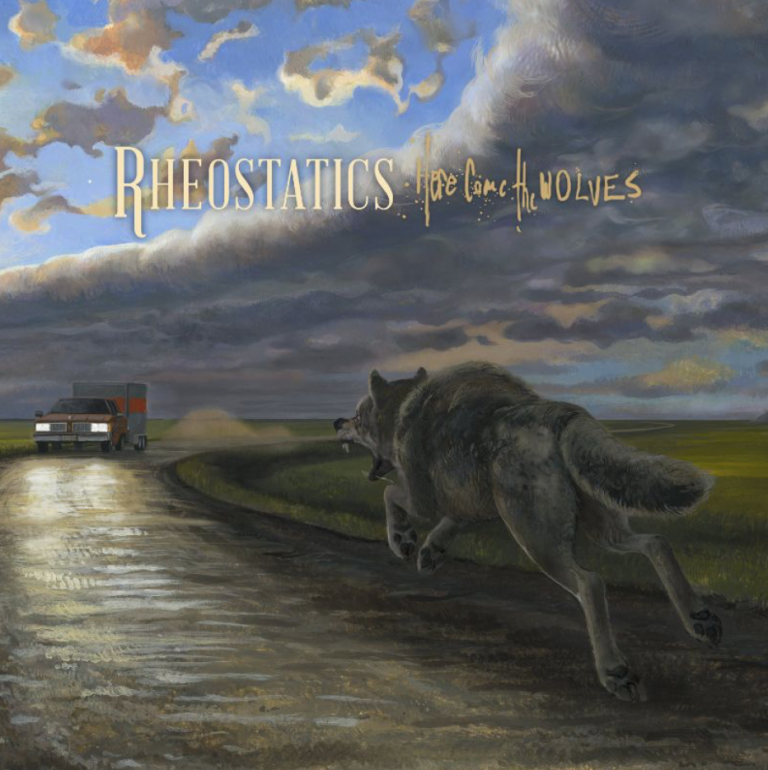
SOUNDTRACK: RHEOSTATICS-“Here Come the Wolves” (2019).

This is the first new officially released Rheostatics song in 15 years.  And it’s a doozy. A six and a half minute epic with a few different parts and styles within.

I’ve heard this song on a few of the the recent RheostatcisLive recordings, but this studio version explores depth and detail in a way that the live version could not.  And it’s really fantastic.

The video is also cool because it shows guitarist/singer Martin Tielli in a timelapse video finishing the cover art.

Starting with a menacing riff including Hugh Marsh on violin (and some interesting whoos! in the distance), the chorus opens the song.  Then comes a stomping series of catchy verses.

After 2 and a half minutes, the song slows down and Martin picks up a quietly sung middle section.  He sings over some eerie violins and keys before the guitars slowly build.  Quietly picked acoustic guitar flesh out the song as Martin continues.

After two minutes of this quieter section, it picks up again with a piano-based version of the melody.  This takes on a more uplifting feel as Martin sings in his whispered vocals.

The song has a nice climax and then a short denouement.

It’s nowhere near as weird as some of my favorite songs by them, although it is far from a guaranteed radio hit.  Nevertheless it is pure Rheostatics, and I love it.

I’m delighted to have them back making new music and holy cow, if I have to go to Toronto to see them play live, so be it.

[READ: June 24, 2019] “Back Then”

This is a story of a woman looking back on her burgeoning adulthood.

In the summers she and her family would go to a lake (in Ohio).  The story begins with them watching the Perseids.  She and her sister wanted to go down to the lake to see them fall into the water, but her mom always said no.

The story is full of sweet details–her sister peeing behind the furnace in her grandmother’s room, walking in flip-flops to buy the paper for their dad, the goat in the neighbor’s yard, even the trailer park.  They had enforced lunch and “quiet time.”  Quiet time was supposedly to prevent them from getting cramps, but it was really just for their mom to have some peace.  And how the last day always brought a double feeling of wanting to stay forever and wanting to go home. (more…)

Read Full Post »

SOUNDTRACKRHEOSTATICS-Copps Coliseum, Hamilton, ON (December 11, 1996).

This is the 22nd night of the 24 date Canadian Tour opening for The Tragically Hip on their Trouble At The Henhouse Tour.  This is the last date of the tour (so far) for which there are recordings.

The show opens with a great “Midwinter Night’s Dream” followed by a rocking “Fat.”  As the song ends with the “bye byes” Dave save “see you in the next song, Martin.”

“All the Same Eyes” is a rocking good time.  And then, after a little riff, Martin starts “Motorino” which sounds great.

Dave says, “Hi we’re the Rheostatics, not to be confused with The Howl Brothers–they couldn’t make it.  But we’ve got their jackets.”  He mentions that they have a new album out, “get it before its reduced to clear.”

During “Bad Time to Be Poor” after “feeling winter through a crack in the door,” Tim goes brrrrrr.  More Tim on “Claire” with some great soaring harmony vocals before Martin’s rather grunting solo.  Although at the end, instead of spelling C-L-A-I-R-E, Tim seems to be singing Steve L.A. yea yea yea confides in me”

The set ends with two scorching tracks.  A terrific “California Dreamline” and a roaring “Feed Yourself” (with a really intense ending).

As the feedback fades, Dave says, “Thanks to the Tragically Hip.  God bless.”

It’s a nice way to end the tour–but maybe someday we’ll hear those last two shows.

[READ: April 9, 2019] “The Unexpected”

This was a darkly amusing story (yes, it is Joyce Carol Oates) that I had to wonder if it was in any way autobiographical or just horrifyingly possible.

The story is about a writer receiving an honorary doctorate of humane letters from the community college near her home town in update New York.  She left and never came back, but has been writing about her home town for much of her career.

She is awkward from the start, “Thank you for the honor.  I am very–honored.”

She receives applause–not thunderous, but polite, even warm .  But her speech seems to fall flat (if it can even be heard over the fighter jets).  But when she is finished, she pauses and the response is enthusiastic and she wonders “Is there where I belong now?” (more…)

Read Full Post »

SOUNDTRACK: KAIA KATER-Tiny Desk Concert #832 (March 13, 2019).

This Tiny Desk Concert was posted under a different category than the others and so does not appear on the Tiny Desk page (yet).  In order to find it you need this link.

The expectation upon seeing a banjo hanging is one of rollicking rowdiness, but when Kaia Kater began to strum her five-string, the mood in the office turned plaintive and a bit mournful. The Afro-Caribbean-Canadian singer and songwriter, who studied Appalachian music at West Virginia’s Davis & Elkins College, often references the Black Lives Matter movement, within a music form that doesn’t exactly snap to mind as being in dialogue with modern issues.

“Nine Pin” is, indeed, a slow, plaintive song with great lyrics.  After a couple of verses, the band (it wasn’t obvious she had one) adds some very sparse accompaniment–low upright bass notes, gentle guitar chords and brushed drums.

These days, Kaia Kater records for Smithsonian Folkways, and some of the songs she brought to the Tiny Desk come from her recent recording Grenades, a record she worked on while exploring her father’s home country of Grenada.

The song feels old, except for the lyrics.

These clothes you gave me don’t fit right
The belt is loose and the noose is tight

and I love the chorus which seems like it should be sung quickly but in the way she sings it it’s meaningful

I’ll be your nine pin, eight ball, seventh day, six pound, diamond quarter girl

Before she gets to “Canyonland” she introduces her band: Andrew Ryan: bass; Brad Kilpatrick: drums; Daniel Rougeau: electric guitar, lap steel guitar.

She says this is from her new album and begins a much faster, but still quiet, banjo picking.  The bowed bass adds a new kind of tension.  The lap steel guitar brings a different kind of tension, especially when the song speeds up for the second half of the song.  This song is compelling in a different way.

I find it interesting that she seems to have a more Canadian delivery (based on the Canadian country/Americana that I know of) which I rather like.

Before the final song she speaks about Grenada and how it impacted the title of her album Grenades.

It’s a country that has “experienced a lot of political turmoil,” she says. “My father left when he was 16 years old and he came to Canada as a refugee, on his own. It’s a story I ran away from for a long time, where I didn’t want to reconcile with myself being this kind of hyphenated Canadian.”

For this final song she doesn’t play an instrument.  She just sings (in a lovely torch song vocal).  Without the banjo, the entire tone of the song is different.  The guitars, bass and drums make this song far more jazzy than folkie.  But it works well once again with those lyrics in which

Kaiatries to come to terms with that history “Rain heavy like carpet bombs, sweetgrass, and lemonade / Fold the memory into your arms and whisper it away.”

There’s much power in her understated style.

[READ: March 21, 2019] “Dandelion”

I rarely think much about how old an author is.  For the most part it’s not relevant unless the story identifies intensely with someone of a certain age.  So this story begins, in a surprisingly clumsy opening that you need to unpack:

That Henry James, when he got old, rewrote his early work was my excuse for revisiting , at ninety, a story I had written in my twenties.

Segal is 91 so this is not a far-fetched claim, although it is a bit odd to include within the story itself.

The original story (unnamed in this story, if it exists at all) is about a hike that she and her father took up a mountain.  She had wished her mother had come too, but her mother had had a migraine. (more…)

Read Full Post »

SOUNDTRACK: Y&T-“Mean Streak” (1983).

In the early 1980s Y&T had a couple of albums that made it onto my radar.   This one, Mean Streak, had this song which I liked enough. It’s got some cool riffs and Dave Meniketti’s raspy but distinctive voice.

I remember liking this song, even though I really had no idea what was going on in the lyrics.  The chorus where everyone sings “mean streak” behind his lyrics was certainly the catchy selling point.   But this is hard rock more than metal and is not really my thing.

I may have bought this album, but I know I have the follow up In Rock We Trust, which was more poppy (and they were more pretty).  I had forgotten all about “Lipstick and Leather” yet another cheesy pop metal song about, well, lipstick and leather.

People who were fans of Y&T (like Posehn) were die-hards, but even listening now I see why I never really got into them, even if I liked them for a bit.  Maybe it was a California thing.

[READ: January 2019] Forever Nerdy

S. got this for me for Christmas after we saw Posehn on a late night show and he talked about his nerdy obsessions, including Rush.  It seemed like an obvious fit.  And it totally was.

Posehn is a few years older than me, but if he had lived in my town we would have totally been friends (except I would have never talked to him because he was older).  Anyhow, we had more or less the same obsessions and the same nerdy outlook.  Although I was never really picked on like he was so perhaps I was a little cooler than he was.  Although I never smoked or drank when I was in high school so maybe he was cooler than me.

Things to know about before reading this–Posehn is a vulgar dude–there’s not much kid friendly is in this book.  Also this book isn’t really an autobiography exactly. I mean it is in that he wrote it and its about him, but if you were dying to find out fascinating stories about his crazy life, this book isn’t really it. I t’s more about the things he was obsessed with–in true nerdy fandom.

Although, Brian, what nerd doesn’t have an index in his own book? (more…)

Read Full Post »

SOUNDTRACK: PHOEBE BRIDGERS-Live at Newport Folk Festival (July 28, 2018).

I saw Phoebe Bridgers three days after this set at Newport Folk Festival (I had no idea).  She plays five more songs at my show than here (yay, me).

The size of the crowd does’t seem to intimate her in any way and she sounds just as great (and intimate) as she did in the small club where I saw her.

A few songs into her sun-drenched Saturday Newport Folk set, Phoebe Bridgers paused and proclaimed, “I am a puddle of sweat.” It was a one-liner that primed those huddled at the Harbor Stage for the 2018 Slingshot artist’s catalog: details delivered with specificity and a subtle sense of humor.

I will say the one thing about this recording is that I don;t think you can hear all of the percussion as clearly as I could at Asbury Lanes.

The show started much the same as mine did with a beautiful languid version of “Smoke Signals” and a try-to-hold-back-the-tears reading of “Funeral.”

For the next song, “Georgia,” she brought out songwriter Christian Lee Hutson who is “going to help me sing harmonies.”  Whether it was the song itself of Hutson’s addition, but Bridgers’ voice really soars on this song.

Even Bridgers’ stage banter reflected her striking style, mixing straightforward address and astute observation. “This song is about how every time I smoke weed, I remember why I don’t smoke weed,” she said of the plainspoken plea “Demi Moore.”

She continued: “I face plant and my brain is erased for many hours and I think I’m thinking too loud.”

There’s some gorgeous harmonies on the darkly sweet song, “Killer.”  Then she played “Steamroller” solo on the acoustic guitar.

Later, she called “Steamroller,” a devastatingly candid cut from her 2015 EP, Killer, “another dark love song, thanks.”

Introducing Gillian Welch’s song “Everything Is Free” she said. “This is my friend Marshall.  We’re going to sing my favorite song about music streaming ever written.”  I loved hearing this live and it sounds just as solid here.

Up next was a song she did not play at my show.  She welcomed Christian Lee Hutson (playing guitar with Jenny Lewis) and Sharon Silva (from The Wild Reeds) played bass with me for exactly one week and I waited for a really bassist…Emily.  Chris wrote this song for me.”  The chorus goes “”lets get the old band back together again, and there’s even a line, “with Emily on bass, it doesn’t feel the same.”

The crowd reacts strongly, as they should to her awesome song “Motion Sickness.”

Despite its venom, it’s a song that unspools with a sonic ease that feel refreshing, even for an overheated festival audience.

The songs sounds great live and she holds a 17-second note just for kicks.  The sets ends (as did ours) with “Scott Street.”  She says “This is about L.A. where we live;  where it’s hot all the time.”  It’s a quiet song, sounds and represents her music pretty perfectly–quiet, sad, with clever lyrics.

At our show, we got two encores after this, so again, yay for us.  But this is a great example of her live show.

[READ: April 22, 2016] “Playing with Dynamite”

Back in February of 2017, I posted about an essay by George Saunders from 2009 in which he remembers John Updike “Remembering Updike“.  He says that back in 1992:

 It was going to be in Tina Brown’s first issue and they marked this occasion by running two stories contrasting the new writers (Saunders) with the established.  Of course the establishment writer was going to be Updike.  Saunders said he was chagrined because he knew the contrast would go something like this:

Wonderful, established, powerful representative of the Old Guard kicks the butt of the flaky, superficial, crass poseurish New Guy.  Saunders’ story was “Offloading for Mrs. Schwartz.”

I can see why they paired the George Saunders story with this particular Updike story.  Both stories deal with grief and memory loss, although Updike’s does so in a very different way.  On the other hand, their writing styles are so very different that it’s nearly impossible to compare the two stories.

The story begins with an interesting image from childhood: “one aspect of childhood Fanshawe had not expected to return in old age was the mutability of things–the willingness of a chair, say, to become a leggy animal in the corner of his vision.”  But living now “in death’s immediate neighborhood” he allowed that things like that might happen and it wouldn’t be the end of the world.

There is then an episode in Fanshawe’s day when his wife, who was younger and more spry than he, passed him going down the stairs.  She caught her heel on her dress and fell down the stairs.  It was only after all the guests had left that she said to him, “Wasn’t I good, not to tell everybody how you pushed me me?” (more…)

Read Full Post »

SOUNDTRACK: JOYCE DIDONATO-“When I am Laid in Earth’ (Dido’s Lament)” (Field Recordings, February 4, 2015).

Joyce DiDonato is an opera singer with a wonderful voice.  She is also an outspoken LGBT+ advocate.

DiDonato, 45, straight and a native Kansan, is outspoken on LGBT issues and one of today’s most sought-after opera stars. At London’s popular Proms concerts she capped off the 2013 festival with “Over the Rainbow,” saying it was devoted to LGBT voices silenced by Russia’s anti-gay laws. At the Santa Fe Opera, she dedicated a performance to a gay New Mexican teen who took his life after being bullied.

For this particular performance, she was drawing attention to Mark Carson, a gay man fatally shot almost two years prior. The city’s police commissioner stated Carson’s death was clearly a hate crime.

The murder happened just blocks away from the famous Stonewall Inn, a historic gay bar.  And that is where she chose to perform this piece [Joyce DiDonato Takes A Stand At Stonewall].

“The idea of a murder happening blocks away from the Stonewall Inn is incomprehensible to me,” DiDonato says. “It shouldn’t happen anywhere. It tells me that we’re not done talking, and we are not done working for people to comprehend what equality is about and why it is important.”

On June 28, 1969, police raided the Stonewall Inn, a gay bar in New York’s Greenwich Village. A riot broke out, sparking successive nights of protest and, many say, the emergence of the modern gay rights movement.

LGBT rights have come a long way since that summer night 46 years ago, when there were still laws criminalizing homosexuality. But mezzo-soprano Joyce DiDonato believes there’s still work to be done, so she chose the Stonewall to gather a few friends, talk about equality and sing a centuries-old song that still resonates.

For this memorial she chose to perform a piece from Henry Purcell’s 17th-century opera Dido and Aeneas. The piece is called “When I am Laid in Earth” also known as “Dido’s Lament.”  She explains the piece: “‘Dido’s Lament’ is about a woman who is dying and she asks for absolution.  When I am in the earth, I hope that I haven’t created any trouble.  Remember me but don’t remember my fate.”

The aria unfolds slowly yet purposefully, with a refrain that seems to predict the mournful strains of an African-American spiritual.

The piece is beautiful and mournful.  And the musical accompaniment (students from Juilliard415) is understated and lovely.  The inclusion of the viola de gamba and the therobo is inspired.  Musicians:  Francis Liu and Tatiana Daubek, violins; Bryony Gibson-Cornish, viola; Arnie Tanimoto, viola da gamba; Paul Morton, theorbo.

[READ: April 15, 2016] “The Lower River”

This story looks at a man from Medford.  As the story opens its says the man, whose names is Altman, always imagined he’d one day return to Africa, to the Lower River.  He had loved it there when he volunteered in a village called Malabo.  He stayed for four years (longer than anybody else had).  He helped to build a school and taught at it.  He felt a real connection with the people there.

And now, some forty years later, as he was getting tired of Medford, as his clothing store was failing, as his marriage was failing, as he had very little left for himself in Medford, he decided, why not.  Why not go back to Africa and see if people remembered him at all.

The Lower River is the southernmost region of the southern province of Malawi, the poorest part of a poor country.  It is also the home of the Sen people.  They were a neglected tribe and rather despised by those who didn’t know them.  They were associated with squalor, credulity and incompetence.  And indeed, when he went there the first time people, were afraid to take him as far as the Lower River.

Now, Malawai is something of a vacation destination where rich people are pampered by the poor locals.  But when Altman arrives and asks for transport to the Lower River, people are hesitant to take him, there, making sure he knows where he is going.    Even after his driver drops him off he speeds away without any concern for formalities. (more…)

Read Full Post »

« Newer Posts - Older Posts »