Feeds:
Posts
Comments

Archive for the ‘Van Halen’ Category

SOUNDTRACK: KISS-Hot in the Shade (1989).

Before this album came out, Paul Stanley did a little club tour.  My friends Matt and Nick and I got to see him in Wilkes Barre, PA. It was a pretty great show, and intimate in a way that Kiss shows can never be.  So we were pretty psyched for this new album.  And yes, this album holds special memories or me because we used to listen to it a lot after the show.

The biggest problem with this album is bloat.  I don’t have any kind of evidence to back this up, but this was the first Kiss album that took advantage of the compact disc’s length.  And so it’s easily twenty minutes longer than most Kiss albums (and the later albums had some filler on the already).  Plus it’s  almost longer than Kiss’ first two albums combined.     That’s just too much.

Even Kiss’ weaker albums usually start with a good song.  Not so much Hot in the Shade.  “Rise to It” is pretty generic even by mid 80s Kiss standards.  They try to make it fun with the Ri–e i-e-i part, but it doesn’t quite make it.  “Betrayed” is a bit more of a rocker and is quite a good song.  Lyrically it’s not so great (it’s funny to think of Gene Simmons trying o be down with the common man), but it rocks pretty hard.  My friend Matt and I liked “Hide Your Heart” quite a bit when it came out.  The chorus: Ah ah ah ah, hey hey hey do do do do do do do do do” is pretty bad though.  “Prisoner of Love” musically sounds like Kiss of old, until the verses come in.  “Read My Body” is really catchy until you realize it sounds just like “Pour Some Sugar on Me.”  That’s embarrassing.  Although the metaphor is well done, at least.  “Slap in the Face” might as well be “Let’s Put the X in Sex” from Thrashes Smashes and Hits.

Then comes the cheesiest ballad in Kiss’ history—actually written by Michael Bolton, yes Michael Bolton.  And man do I love it.  Paul is in full voice, he sounds great, the harmonies are spot on.  It is the cheesiest metal ballad ever, but I never get tired of it.  It even has an acoustic guitar solo—pre-made for Unplugged!  “Silver Spoon” is a good rocker, with a fun chorus.  Although the gospel singers at the end are a bit overkill—it seems silly to have invited them in for 90 seconds of singing.  “Cadillac Dreams” is just a bit too close to a Beatles song for my liking.  “King of Hearts” is a decent song, and “The Street Giveth and the Street Taketh Away” (were Kiss really hard up for money?  what’s up with these lyrics?).  We had an in-joke on my dorm floor, so I can never take this song seriously (that may also be because they steal the “Hey man” right out of David Bowie’s mouth).  Love Me to Hate You” is pretty generic although catchy.  “Somewhere Between Heaven and Hell” is also a decent song.

“Little Caesar” is the first (and only, really) song that Eric Carr sang lead vocals on.  As a singer he’s a really good drummer.  The song is pretty generic too and is unfortunately given the same name as a bad pizza company.  “Boomerang” has a good fast pace (once again, not unlike a Van Halen song).

[READ: August 11, 2012] “The Cryptozoologist”

This is yet another short story broken down into lots of little sections.  What’s neat about the way that this one is done is that because the narrator is a cryptozoologist, each section is headed by a cryptid (animals whose existence has not been proven).  But in addition to discussing these animals, the sections also describe a history of the narrator’s life.  His life in this field started when his grandfather told him about a snake which latched onto the end of its own tail and rolled away from its pursuers (section title: Hoop Snakes).  His grandfather never lied, so it had to be true.

It proceeds through The Mušhuššu (a serpent dragon spoken of in ancient Babylon), through the Jenny Hanivers (jeunes d’Anvers), into The Wolf of Ansbach (believed to be an old Bürgermeister who was transformed into a werewolf), and on to The Batutut, a monkey man in Laos.  Most of these sections describe the origins of the cryptids (and his lack of success at spotting them), but The Batutut section is also about himself and how he was in the war when this particular cryptid entered his life.

Then we move on to The Altamaha-Ha in Southeastern Georgia, while Giglioli’s Whale, which had two dorsal fins dates to 1867.  The Mongolian Death Worm, said to live in the sands of the Gobi desert is a cryptid that he actually experienced in the American desert.  he didn’t see it, but he could feel its presence.  The Madagascar Tree is a killing tree–it looks like a pineapple and eats sacrifices.  This story was told by two adventurers who saw the tree eat a woman.  The best part of is that there is no proof that the two men who are credited with telling the story actually existed themselves. (more…)

Read Full Post »

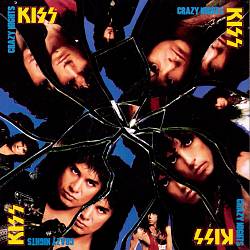
SOUNDTRACK: KISS-Crazy Nights (1987).

I’m going to make a bold statement here—Crazy Nights is worse than The Elder.  Whereas The Elder was a mistake–weird songs, a bizarre concept, it showed some pretty ballsy moves.  Crazy Nights on the other hand is just a pandering mess.  There’s keyboards.  Keyboards!  The band has always been money makers (Gene Simmons’ face could be on the $100), but at least usually their music would find its own version of poppiness.  But this album sounds like any generic metal album from the late 80s.

“Crazy Crazy Nights” is an obnoxiously poppy sell-out of a song (although it is at least catchy, but man…).  “Fight Hell to Hold You” is the exception to the disc, a solid song from Paul with a good chorus.  But “Bang Bang You” is as dumb as it sounds.  It has cheesy keyboards, a lame riff and even has the audacity to reference “Love Gun.”  It’s hard to fault Bruce Kulick for his wild playing, but it seems so out of place on this disc–as if his crazy solos will make the album heavier.  Much like on Asylum, he gets a song to wail on the opening: “No No No” which is sort of winning by virtue of its non-stop propulsion (like say, “Hot for Teacher”).  But it’s not really a song so much as a series of connected sounds.

  “Come Hell or High Water” is pretty close to being a good song, perhaps the rest of the album taints this one too.  What’s especially crazy about the keyboards on “My Way” is that they sounds straight out of Van Halen’s 1984. [None of this is to imply I don’t like Van Halen, I just don’t want Kiss sounding like them].  “When Your Walls Come Down” feels heavy in comparison to the rest of the disc, especially when followed by the super-ballad “Reason to Live” (which despite myself I kind of like).  “Good Girl Gone Bad” is generic lyrically and musically.  “Turn on the Night” brings more cheese and more keyboards.   And “Thief in the Night” ends the disc on a reasonably high note.  But the problem is that the music is such generic pop metal that it’s hard to be inspired by any of it.

I’m kind of surprised Kulick stuck around during this–two albums in a row!.  Although he did get to show off his squealing chops, so maybe he was happy.

[READ: August 10, 2012] “Rainy Season”

This story came in second place in the Narrative Magazine Fall contest.  I had been putting off reading it because it was quite long and I didn’t really have enough time to devote to it.  When that time finally arrived, I was glad I waited.

This is a story about Jill and Maizie.  Their father works at the Thailand consulate (something to do with drugs).  And so the girls have been living in a gated compound for three months in Chaing Mai, Thailand. They are bored out of their minds.  They are not permitted to leave the compound, they are the only Americans around and all they can really do is watch Gone with the Wind (which they have memorized).  The girls have been trying to make the best of things, although it’s not always easy.  Especially given the way their father is.

Their parents got divorced some time ago and the girls have never lived in the same place for more than two years.  What’s worse is that their father is working all the time.  So when he is around, he’s not really around for them.  He is very strict about arbitrary things but is completely blind to others: “Maizie and Jill aren’t allowed to pierce their ears until they’re sixteen, he says. But he goes on trips to the Golden Triangle and leaves them alone in the house.”

Maizie is younger and she is super cute with comment-worthy blonde hair.  She gets away with a lot.  Jill is older.  She is no longer cute and she is resentful of both her father and her sister.  Of course, they only have each other, which Jill resents a bit too. (more…)

Read Full Post »

SOUNDTRACK: KISS-Asylum (1985).

This series of mid-80s Kiss CDs is regarded pretty poorly.  In fact, I believe that Gene and Paul have distanced themselves from Asylum.  And yet, despite its pop metal vine and really dayglo appearance, there’s some good stuff on it.  The solos are really notable on this disc.  Bruce Kulick has taken over lead guitar duties and he is wailing maniac.  He has speed and flash and he, frankly, really stand out (not always in a good way) in these songs.  His solos seem to signal a shift to a more pop heavy metal sound.

The disc opens with a pounding drum salvo and aggressive guitars!  “King of the Mountain” is a classic Kiss song—loud, with a great sing a long chorus from Paul.  “Anyway You Slice It” also rocks pretty hard, one of Gene’s fast, sex songs.  But man I hate songs that break down to just vocals and drums. “Who Wants to Be Lonely” seems like a ballad—lyrically and all—but it’s actually a pretty heavy song, again, perfectly suited for Paul’s voice.  “Trial By Fire” is the first song that really falters.  A generic anthem with the really lame chugga chugga guitars that Kiss would really push in this era.  “I’m Alive” opens with more crazy drumming and wild soloing and for all the world sounds like mid 80s Van Halen.  Until Paul belts out a fast vocal line.  This is a fast, aggressive song with a great chorus.

“Love’s a Dirty Weapon” almost turns into a great song—the chorus is just a little lacking.  And there’s that other part with just drums and a guitar solo—again, very Van Halen, which is good for Van Halen, but sounds really weird for Kiss.  I should hate “Tears Are Falling,” it’s got the chug chug chug guitars, and very little else, but I love a good Paul ballad—when he starts wailing at the end, it’s pretty great.  I am aware that the lyrics suck, yes.  But the solo is more like old school Kiss.  “Secretly Cruel” is cheesy, but delightfully so, and actually sounds like Kiss of old as well.  “Radar for Love” is an awkward song that never quite flows the way it wants.  It’s a good song that shows them branching out, though.  “UH! All Night” is a, well, look at the title.  It’s the kind of throwaway song that is so over-the-top ridiculous that it comes back around to be kind of fun.  And I imagine that some fans are still singing that chorus to themselves.  “When you work all day you gotta Uh all night.”  No one ever said Kiss was classy.  Note:  I listened to this song a week ago and that frikkin chorus is STILL in my head.

[READ: August 11, 2012] McSweeney’s #40

This issue came in a double pack–with a paperback issue of the magazine and a hardback edition of In My Home There Is No More Sorrow by Rick Bass.  I have not yet read Bass’ book [UPDATE: read it at the end of July 2013], because it sounds really depressing [UPDATE: It was].  But I do hope to get to it before the end of the year.  This issue has a few short stories and  a non-fiction at the beginning.  The entire back half of the journal is devoted to the January 25 uprising in Egypt.  It is full of testament and testimony about the event from all kinds of people–bloggers, poets, musicians.  It’s pretty profound–and almost seems like having a silly story in the journal is inappropriate.

As has been the trend lately, the journal also opens up with a series of letters. (more…)

Read Full Post »

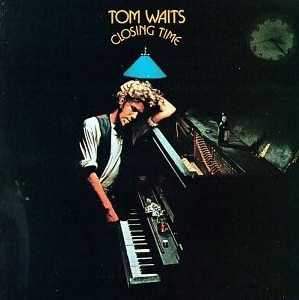
SOUNDTRACK: TOM WAITS-Closing Time (1973). 

This is the first official Tom Waits release.  There’s a couple “Early Years” collections which are really fascinating for how much he doesn’t sound like the 21st century Tom Waits, but these at least show glimpses of the man to come.  There are some songs on here that I knew of from different artists, and had no idea TW had written them  (Tim Buckley covered “Martha” the same year this came out (that’s pretty amazing), The Eagles covered “Ol’ 55” on their album the following year.  However, Van Halen’s “Ice Cream Man” is not a cover of Tom’s song). The funny thing about the record is how much he sounds like a late 70s lounge singer. How can an album as stripped down as this sound of an era? I don’t know, but it does. It’s also nice to know that his opening song “Ol’ 55” has had such a long life.

My wife does not like Tom Waits, but I think I could sneak this album past her.  You can tell that it’s Tom (before years of abuse to his vocal chords).  His voice is in fine non-gravelly form, just a little bass heavy.  And he is crooning to us.  He even has one of his sweet songs (“Midnight Lullaby”).  It’s hard (but not impossible) to imagine that this man would have turned into the man from Bone Machine.

As I was saying about the mid 70’s, the style of songs here could easily have been played on the same radio station as Springsteen (this album came out the same year as Greetings from Asbury Park–and Springsteen made famous “Jersey Girl” one of Tom’s early songs).  Indeed, many of these songs were covered by other artists.  The funny thing to me about the album is that although Tom is the pianist, I feel like the album is more focused on the trumpet (that muted trumpet seems to be everywhere (giving the album more of a jazzy feel than a rock feel).  And yet, despite this overall jazziness, “I Hope That I Don’t Fall in Love with You” and “Old Shoes (& Picture Postcards)” is a pretty straight-ahead folk song.  There’s also the beautiful ballad “Martha” played only on piano–such a gorgeous melody.  Perhaps the least exciting song is the instrumental ballad “Closing Time.”  It’s a simple piano melody with more trumpet.  There’s nothing wrong with it, it’s just not that inspirational.

I find that as I get older I like this album more (which is somewhat ironic since he recorded it when he was 24).  It’s tempting to say that the album–with its many styles–is unfocused, but Waits’ albums all seem to follow in this multiple-styles vein.  He’s not afraid to try something new (see his entire output since 1983).  But this one is a surprisingly straightforward album.  I can’t wait to see if Sarah likes it.

[READ: September 21, 2011] “Town of Cats”

Murakami is (in my limited experience) a master of the surreal. And yet for his more recent short stories, he seems to be switching into more of a story within a story conceit.  And that’s fine too, because the stories and the stories within the stories are clever and creative and still a bit surreal.

This story starts out a little awkwardly: at Koenji Station, Tengo boards a train with absolutely no destination in mind.  He can get off anywhere that he wants, he decides. He imagines going to the beach and enjoying a nice day.  But then he realizes that all along he has ben heading in one specific direction: to visit his father in a nursing home.  This is especially surprising for Tengo as he has not visited his father in over two years (and Tengo is his only relative).

As Tengo thinks back to his childhood, it is full of nothing but anger.  Anger that his father took him on his work (collecting fees for Japanese TV) every Sunday and that Tengo never had any chance for fun.  In fairness to Tengo’s father, Tengo’s mother died when Tengo was just a baby and his father had to take care of him as best as he could.  But there was no love, no warmth, no emotion.  And the more he thought about his father he realizes that that’s what his father was like–no intellectual curiosity of any kind.  Just work work work.

And yet Tengo can’t shake a memory from when he was only a year and a half or so of his mother standing near hs crib with a man who wasn’t his father kissing her naked breasts.  This memory has always been with him and he can’t help but wonder if his father really isn’t his father at all.  (more…)

Read Full Post »

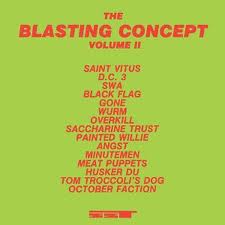
SOUNDTRACK: THE BLASTING CONCEPT Volume II (1985).

I listened to this collection of (then) old and new SST artists almost nonstop the summer I bought this.  I remember my friend Al disliking it quite a bit–except for Hüsker Dü, of course.  (I wonder if he would change his mind about any of it now).

This LP was a kind of transition record from the standard bearers of SST (Black Flag, Hüsker Dü, The Minutemen) to the then new young bands (DC3, Angst, Gone).  The Allmusic review dismisses the disc out of hand, but I think that the disc has held up very well.  I didn’t follow SST records too closely in the 90s so I’m not sure what they were doing, but for whatever reason, most of the bands that the average listener hasn’t heard of were dropped (and sadly most of those discs are long out of print, some never released on CD at all–MP3s do appear to be available). The exception of course is any band that Greg Ginn played in (which is most of them, actually), which he of course has kept in print on SST.

SAINT VITUS-“Look Behind You” This song opens the disc and seems to introduce right away that SST is no longer just a punk label.  This is a very metal sound with a wah wahed and fuzzed out guitar all the way through.  It’s mixed in a weird way (which could be SST), which undermines the real heaviness and actually adds some cool effects.

DC3-“Theme From an Imaginary Western” as mentioned, an awesome track.

SWA-“Mystery Girl” a fuzzy distorted track.  It’s heavy, but not very heavy.

BLACK FLAG-“I Can See You” is one of those Black Flag tracks that is all about Greg Ginn’s weird guitar.  He plays a simple melody out of tune with crazy guitar solos over the top.  Rollins is on vocals which are mostly spoken here.  It’s a bizarre throwaway kind of song that I really like.

GONE-‘Watch the Tractor”  This is a wonderful instrumental.  High speed with a great riff that propels about half of the song.  The other half is a heavy kind of mosh that breaks up the proceedings nicely.  This is one of the few bands that no one has heard of from thee days of SST that actually have the album still in print (because Greg Ginn is on it).

WURM-“Death Ride” is not a very good song, but one which I always liked for its simplicity and stupidity. The screamed chorus is really catchy.

OVERKILL-“Over the Edge”  This is not the famous metal band Overkill, but a different metal band named Overkill who got shuffled aside by the (arguably) better, bigger one.  This is the only song I know from this Overkill (now known as Overkill L.A.) and I really like it.  It has a great riff and vocals like Lemmy.

SACCHARINE TRUST-“Emotions and Anatomy” is one of several odd, improvised tracks on this compilation. It seems like perhaps everyone is playing his own thing and the lyrics are some strange little rant.

PAINTED WILLIE-“The Big Time” is more raucous style of song, reminiscent of earlier SST recording.  The most interesting part comes at the end with the falsetto voices threatening to take over the song.  They play a kind of sloppy punk-lite that would likely be very popular today.

ANGST-“Just Me” After DC3 this is my second favorite unknown song on the album.  It has a great bass line with some angular guitars over the top.  It actually sounds a lot like later Hüsker Dü, and there’s nothing wrong with that.

MEAT PUPPETS-” I Just Want to Make Love To You” I’ve like the Meat Puppets for ages.  And this absurd cover of the blues song is one of the oddest songs this odd band has recorded.  The solo sounds like it comes from under a volcano.  It’s not a great song (and should probably be two minutes shorter), but it is kind of fun.

MINUTEMEN-“Ain’t Talkin’ ‘Bout Love” The always awesome Minutemen engage us with this awesome cover of Van Halen’s “Aint Talkin’ ‘Bout Love.  In 1 minute they undermine all of the overblownedness of the original.  Check out the live version here.

HÜSKER DÜ-“Erase Today” This is simply fantastic.  This is an early punk song of theirs.  Catchy and fast and wonderful.

OCTOBER FACTION-“I Was Grotesque” Another weird improv piece.   It’s filled mostly with drums and strange rantings–kind of beatniky.  Here’s a live show from the band from 1984.

TOM TROCCOLI’S DOG-“Todo Para Mi”  This song has a cool riff. Although Troccoli’s voice is questionable at best.  It more or less devolves into a nonsense jam and is too long at 6 minutes.  It’s not a great way to end the album, but maybe it’s last for a reason.

[READ: March 21, 2011] “Who Am I?”

I have been hearing about Demetri Martin for a few years now.   How he’s the hot new comic. And yet I’ve never come across anything he’s done (even though I think Comedy Central repeated his shows practically on the hour when they first aired). So this short piece is my first exposure to him.  I’m going to assume it is not a fair representation of his comedy as he is normally a stand up and writing is not the same as stand up.  (That’s not to say it’s not good, just that it’s not his natural medium).

This was a short piece in the New Yorker’s Shouts and Murmurs section. It asks and answers the titular question “Who Am I?” (more…)

Read Full Post »

SOUNDTRACK: AZTEC CAMERA-“Jump” (1984).

This is a wonderfully twisted covered of Van Halen’s “Jump.”  VH’s version of “Jump” is bouncy, lively, fun, it makes you want to yes, Jump!  It was many years after the release of VH’s “Jump” that I heard the Aztec Camera version (even though it was released the same year).  The first time I heard it I assumed it was a joke.

I didn’t know much about Aztec Camera (and actually still don’t–looking at their Wikipedia page I don’t recognize the names of any of their singles).   But I have grown to love this cover of “Jump.”  In fact I prefer it to the original.

The opening chord structure makes me think it’s going to be the Rolling Stone’s “Waiting on a Friend” but instead of Jagger’s ooh oohs we get Roddy Frame’s deep voice practically whispering the lyrics that David Lee Roth made famous.  And it stays with this delightfully mellow acoustic style and pacing throughout.  The guitar work in the bridge is actually much more interesting than the bridge in the Van Halen version (ouch).

The chorus seems kind of odd with his very mellowly saying “jump” (although David Lee Roth doesn’t scream “jump” either, it’s the backing vocals that do the exciting part).  I feel like the original VH version hasn’t held up that well, but the Aztec Camera version shows that it’s quite a good song.

Check it out here.

[READ: Week of November 8] Consider David Foster Wallace [first three essays]

I lied.

I said that I wouldn’t feel up to writing posts about all of the articles in this book on a regular basis.  As it turns out, I don’t have a lot to say about these essays, but I had a few thoughts about each one.  Since there’s a group reading going on, I thought it might be fun to post these thoughts now while people were still speaking about the articles instead of waiting until the end.

Before I say anything about this articles, I want to preface that I’m not going to repeat things that were said in the group read (for a couple of reasons).  Everything here is going to be things that I felt about the article and maybe, if something another reader says really sticks with me, I’ll mention it as an influence on me.

Having said that, in one of the comments, author Clare Hayes-Brady says that her article is a part of a longer thesis.  I found this to be a very useful thing to know, and I assume that she is not the only one who had to compress her article because of size and time constraints.  With that in mind, I’m going to accept that if it seems like the author could/should say more about a certain thing within the article that there is probably a larger version of the piece.

And finally, because I don’t have a lot to say about the pieces, I’m only going to mention things that I found puzzling/confusing.  But be assured that if I don’t mention the vast majority of the article it’s because I found it interesting/compelling/believable.  I don’t feel comfortable paraphrasing the articles’ argument.  Besides, what would be the point of that?

(more…)

Read Full Post »

SOUNDTRACK: THE MOMMYHEADS-“Needmore, PA” (2010).

This is the first single from The Mommyheads’ new Dromedary release Finest Specimens.  The album (which is sort of a greatest hits, but not) comes out next month, but until then you can hear th is new track at a number of places, including the blog largehearted boy (which has all kinds of cool free listens on it).

This is a 7 minute (live) track.  It opens with some cool keyboards.  They feature what I’ve come to think of as Mommyheads style, in which the bass and guitars (or in this case keyboards) play different things that seem unrelated but which work together.  A great chorus pulls it all together.

This live song has about 3 minutes of instrumental jamminess at the end.  It doesn’t really help the memorableness of the song (as you’ve long forgotten the catchy “That’s right” hook by the end of it), but man they sound great jamming together like that: a tight, psychedelic freakout that just builds in coolness.  It’s almost like two songs in one.

[READ: September 11, 2010] “The Tuber”

This essay is about Wells Tower riding the rivers of Southern Florida in a tube.  It’s also about John Cheever’s “The Swimmer.”

One of the things that I like about Wells Tower is that even in his non-fiction, he ties things together with literary substance.  And so, he sets up this adventure as a twisted take on Cheever’s Neddy Merrill swimming the 8 miles of swimming pools in suburban New York: Tower wants to try to tube the rivers of Florida all the way down to the Gulf of Mexico. (more…)

Read Full Post »

SOUNDTRACK: DAVE BIDINI-The Upstairs, Sydney Nova Scotia July 26 2007 (2007).

Dave Bidini recorded three shows in 2007 in eastern Canada which are all available on the Rheostatics Live website.  They were acoustic shows and featured a reading from his then new book called Around the World in 57½ Gigs.

On this particular venue, he gives two readings (and the readings are very good.  His writing has grown even more engaging since this first book).

The songs he plays are a couple from the Rheostatics: “My First Rock Show” which sounds good in this format.  “Me and Stupid” which is almost made for this format and “Horses.”  Now “Horses” is a wild and raucous song, typically full of Martin Tielli’s amazing guitar pyrotechnics.  The acoustic version is much more mellow, but no less affecting.

He’s got a number of what I assume are new songs (I haven’t heard any BidiniBand songs yet, so I don’t know from whence they come).  “Song Ain’t Good” is a kind of jokey song about how the song itself isn’t any good.  Lyrically, the song grows on you as it progresses.   “The List” is indeed a list of people and things that are killing us now: Tim Hortons, Chad Kroeger, Stephen Harper etc.  It’s a protest song and is kind of catchy.

“The Land is Wild” is a more interesting song, musically.  Lyrically it’s about Bryan Fogarty, a dead hockey player.  And the final track is “The Ballad of Zeke Roberts” the story of a Liberian singer.

The other shows feature essentially the same songs (one of them includes “Fat” instead of “Horses”).

The difference with these new songs as opposed to the Rheos songs is that these are more pointedly about something.  They are quite message driven.  And one needs to care about the message I suppose.  Bidini does not have a great voice. Or, more to the point, he has a limited voice that works great for certain things, but it’s not always at its strongest in this acoustic setting.  Nevertheless, he has great rapport with the audience, and is a very charming performer.

I’m rather interested in hearing what the BidiniBand have to offer.  There’s an interesting interview with the Bidini here.

[READ: September 1, 2010] On a Cold Road

So Dave Bidini was in the Rheostatics.  This book is a chronicle of their tour as the opening act for The Tragically Hip on their tour across Canada.

The book offers lots of insights into the ins and outs of touring–the frustration, the loneliness, the elation, the confusion, the shattering disappointments, everything.  As a fan of the Rheos and the Hip, I found this to be a really interesting chronicle of a cross-country tour.

And what I found interesting about the book itself is that the main guys aren’t a small band struggling, nor are they a headlining megaband.  They’re a reasonably small band but they are successful, and are certainly well looked after on this  tour.  So it gives the feeling of being the underdog without actually working too much about pathos.

The Rheos are simultaneously jealous of the Hip, but also very grateful to them.   It makes for an interesting read. (more…)

Read Full Post »

« Newer Posts