 SOUNDTRACK: SCHOOLLY D-Smoke Some Kill (1988).
 Since this disc is featured so prominently in Signifying Rappers (and the book is named after the best track on this disc) I thought I’d dust it off and listen to it again. I got this disc probably in 1989 at the suggestion of my friend Al. He recommended “No More Rock N’ Roll,” I think.
I haven’t listened to the disc in years, probably a decade. The last time I listened, I think I wasn’t all that impressed by it, which is why it’s funny to me how much significance the book gives this disc/track. In listening again, I felt more or less the way I did last time, although interestingly, after reading the book, I agreed that some of the tracks are pretty good.
“Signifying Rapper” in particular, seemed better after DFW’s analysis of it (he discusses it in the tradition of the trickster narrator, and I agree it’s a good one). Although, at one point in the book DFW decries the misogyny in a lot of rap, but he doesn’t mention the homophobia. And, despite the trickster style in this song, the homophobia is pretty outrageous (even if, in a surprising twist, the “faggot” kicks the “pimp’s” ass). But really, the thing that upsets the pimp so much, that he went off to fight the faggot about is this rather absurdly childish set of insults: your dad’s a faggot, your mom’s a whore, your granny’s a dyke and your brother’s a faggot too. Now, homophobia aside, would these insults really get anyone so angry? Hard to say. But regardless of the whole thing, the song is set to the riff from Led Zeppelin’s “Kashmir” so, that’s pretty fun.
The rest of the disc is a mix of kind of lame tracks and a few good ones. “Here We Go Again” has some great scratching on it (in fact the scratching throughout the disc is quite good), and there’s some really good background samples on “Gangster Boogie II.” Although I think the best tracks come near the end: “Treacherous” (which samples or reinterprets Gil Scot-Heron’s “The Revolution Will Not Televised”) and “Black Man” which features the cool shout-out “What’s the Word? Johannesburg!).
A few tracks are kind of flat. “Mr Big Dick,” is, at best, silly and even the title track “Smoke Some Kill” is sort of uninspired. What’s interesting about somewhat flat style is that this disc has come out after Public Enemy’s wall of sound changed the face of rap. But Schoolly is sticking with the very sparse Run D.M.C. style. The difference is that with Run, you had two vocalists, but Schoolly is by himself. It’s just not quite as exciting.
And, then there’s the aforementioned “No More Rock N’ Roll” which is a companion to “We Don’t Rock, We Rap”. The whole anti-rock trope rings hollow especially since he samples from it so freely.
It was still early days, but rap has progressed pretty far from this CD. It also turns out that this disc is really hard to find. It’s discontinued and lists on Amazon for $50. How lucky for me!
[READ: October 2, 2009] Signifying Rappers
I wasn’t planning on reading this book this soon. (I’m not turning into a DFW addict, I swear). But this showed up all because of the whims of the interlibrary loan system. I put holds on books for people all the time, and usually it’s for new, popular books, so it’s often several weeks, sometimes months before the books come in. I tend to forget that a 19 year old book that nobody is clamoring to read will show up in about 3 days.
So, those of you thinking about reading this book because you want to complete the DFW ouvre were probably wondering if this co-authored book should really count. And, like, how would you know what he wrote? Well, I didn’t immediately figure out the patently obvious system that they used in the book: When Mark Costello writes a section it is introduced with a large M. When DFW gets a section it starts with a large D (see, obvious). You can also tell because DFW’s section are laden with footnotes and very large words (no, really?)
I think for all readers, the main question is what are these two white, educated, twentysomethings doing writing about rap. And, they both answer in their own way that, well, they like rap. A lot. In fact, DFW goes on to say that rap circa 1989 is the only musical genre that is interesting after some five years of commercial pap (and he’s pretty accurate with that, actually). He also notes that as of their writing of the book there had been no real in-depth treatises written on rap. Oh, and lastly, in the spirit of rap itself, they did it because they wanted to do it. (more…)
Read Full Post »
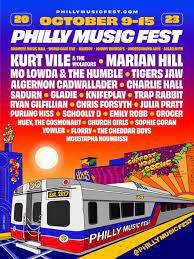 I really respect Philly Music Fest. If I lived closer to the venues and didn’t have other things (like a family), I’d love to go to every night. But I don’t. Lat year I didn’t go to any. This year I’m going to one show.

 I Just Read About That...