Feeds:
Posts
Comments

Archive for the ‘Phish’ Category

SOUNDTRACK: PHISH-Live Bait 04 (2011).

bait04This Live Bait free sampler is compiled of songs from some of their summer tours (all songs are from June-August).  And it’s a fun collection of mostly long jams.

“Scent of a Mule” dates from 1996 and has a very “old” quality, like the band doesn’t sound as full as normal (the vocals also have an unexpected country feel). There’s a bit of “Sunshine of Your Love” from the guitars while Page is doing an elaborate solo.  Indeed there’s a lot of piano on this track—much more than usual (and some of it is crazy).  There’s a Jewish music section done on both guitar and voice which abruptly ends when the song returns to “Scent”.

“You Enjoy Myself” is one of my favorite Phish songs.  This version clocks in at almost 25 minutes.  At around 21 minutes the song devolves into them making a bunch of silly rhythmic noises, which must be very fun to see.  The next track is “The Landlady” (from 1993), a wonderful instrumental that morphs into “Tweezer” which has a pretty wild and raucous jam component.  There’s also a repeated guitar motif (which I don’t recognize) that seems to be a cue for the band to do things (play loud and fast or really slow—including their impossibly slow rendition of The Simpsons theme song.  It’s a neat trip.

The next track is “Mike’s Song.”  It opens a 36 minute jam that devolves at around 18 minutes into real silliness with spacey effects and controlled laughter.  At about 20 minutes, it morphs into the simple song “Contact” and eventually into “Weekapaug Groove.” Which starts in an unusual way—instead of Mike only playing the bass, the band joins the song in progress.

“Split Open and Melt” has some loud bass—I hadn’t really noticed the bass so much before, and in this version in particular Mike seems like maybe he’s mixed a little louder and he’s playing some really funky stuff (and making quite a few errors, it must be said).  Next comes the silly “NO2” (from 1999), which duplicates the effects of the record pretty well, and the guitar solo at the end of very pretty.  “My Friend My Friend” is a pretty dark song but it starts with the very pretty guitar work until the minor keys take over.  It slowly morphs into “McGrupp and the Watchful Hosemasters,” a lyrically insane but musically great song.  Page gets a lot of solo time in this song, too.

The next song is “Twist” always a fun and energetic live track.  There’s a very slow jam in the middle of the song (which in total is 29 minutes) before it turns into a very echoey “Slave to the Traffic Light.”

The next song is a nearly 20 minute, joyous “Free”.  It morphs into a beautiful “What’s the Use” yet another or f Trey’s gorgeous rising melodies.  “Axilla” is a fast almost punky version as is the near barbershop quartet riot of ”My Sweet One” which is the fastest I’ve heard it done.  And “Run Like an Antelope” is as frenetic as I’ve heard it—the pace of this segment (from 1993!) is insane.

“David Bowie” begins but then pauses as Trey sings “Catapult” a short piece that I don’t think I’ve ever heard played before.  Then “David Bowie” resumes for the remaining 10 or so minutes and it is a fast and furious cut as well.  This great free set ends with a 15 minute “Divided Sky,” which sounds as good as ever.

Phish releases a lot of concerts, so it’s nice that they throw these free compilations to us once in a while.

[READ: October 15, 2012] “Puppy”

This story is included in George Saunders’ new collection Tenth of December.  But since I was able to find it at the New Yorker, I figured I’d read it now (this means that of all of the stories in the collection I have only not read two).

This story is dark.  Although it doesn’t seem so at first.

The story begins by looking at a married woman who has their two kids in the car with her.  She is trying to get them interested in the beautiful autumnal day but they have heard it all before.  And besides, her son is deeply engrossed in his video game Noble Baker “Not now, Mom, I’m Leavening my Loaves” (ha).  Which is better than the game he wanted, Bra Stuffer.  We go into the woman’s head and (at least in my case) pity her a little bit for trying so hard with kids who clearly aren’t interested.  Like when she read the instructions to her son’s video game so she could offer him tips while he played (and he swats her away, but at least it is “affectionately”).

She keeps her spirits up.  But every example seems more sad than nice.  When she thinks about her husband who says “Ho HO!” to anything that comes up.  Like all of the animals that they own, and how few of them are actually played with by the children.

The other day she spoke of their dog as a puppy and her daughter cried because she didn’t remember it.  So of course she had to get them a new puppy.  She saw an ad for a puppy and decided to go check it out. (more…)

Read Full Post »

questionableshapeSOUNDTRACK: PHISH-Live Bait Vol 09 (2013).
live bait 9I just recently realized that Live Bait 9 has been released.  So I grabbed it just in time.  Vol 9 is full of long jams.  The shortest track here is 10 and a half minutes and there are three over 30 minutes (true, some of them are actually multiple songs melding into one track, but they still retain that long jam feel).

What I especially liked about this set was that it included a few songs that I feel like aren’t represented all that well in the Live Bait catalog.  Like “Foam” from 1994—a solid rocking jam (at 10:47).  And “A Song I Heard the Ocean Sing” (from 2004—I like how they splice the cuts together, so in this case they jump a decade but it doesn’t sound it).  I feel like this song is not played as much, so it’s nice to hear.  And then there’s a lively “The Moma Dance” from 2000.

There are a number of quirky moments in many of the songs.  Like “Split Open and Melt” which comes in at 31 minutes.  Around 11 minutes, they morph into “Kung,” and what’s weird about this version (aside from the fact that the song itself is bizarre) is that instead of it just being them making noise and shouting, there’s actually music behind it—mostly drums—I’ve not heard it done like that before.  During the jam, at around 15 minutes, Mike plays Collective Soul’s “Shine” riff on the bass, but the rest of the guys don’t join in.

“Mike’s Song” (from 1999) begins a 40 minute jam.  The song seems slower than usual, which I find odd.  But it works well for the very mellow jam that constitute the big instrumental section—they even use the echoey guitar the runs for a few minutes keeping the beat and setting a pace.  At 17 minutes the song morphs into a rousing version of “Twist”.  Then at 31 minutes they morph into “Weekapaug Groove” (with Gordon’s great bass opening.  At 36 minutes Trey starts playing the Macarena, although not exactly right, which is pretty funny in and of itself.

“David Bowie” (from 1995) is a 25 minute jam that gets pretty dark in the middle.  Then comes the most interesting juxtaposition of songs jam.  From “AC/DC Bag” one of their earliest songs to “Ghost” one of their then newest ones.  “Tube” a, to my mind, underplayed song is next.  It has a funky jam and is appreciated.

This free set ends with “Undermind,” one of my favorite new songs (this one recorded n 2012). It opens with a staccato riff which gives it a kind of reggae feel.  But it soon returns to its normal sound and proves to be a great ender to this “set.”

I can’t say enough good things about the Live Bait series.  I’m not one to buy many concert sets, but having free samples is really cool.

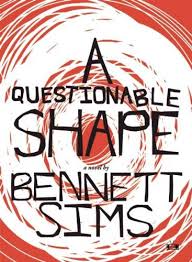
[READ: July 28, 2013] A Questionable Shape

Karen read this book and not only raved about it, she personally recommended it to me. So imagine my surprise to find out that it’s a zombie novel!  But it is a zombie novel like no other.  If Colson Whitehead (in Zone One) made a zombie novel that was literary, Sims has gone one step further, making a zombie novel that is philosophical.

The story is set in Baton Rouge and takes place some time after a zombie epidemic has broken out. In the time since the zombies started appearing (worldwide, it is suggested), the police and emergency teams have managed to contain the worst of it (already that’s something new).  Panic has subsided somewhat and the government has even released a pamphlet on how to deal with everything that’s been going on (called Fight the Bite–I never checked to see if there was a version online, it would make a great “online extra” (having now read Karen’s review, I’m glad to see she agrees)).

The book focuses on two primary characters: the narrator (Michael Vermaelen–referred to mostly as Vermaelen whose name is not given until very long into the story) and Matt Mazoch.  There is a third important character–the narrator’s live-in girlfriend, Rachel, who plays as something of a foil.

The simple plot takes place over a week.  Mazoch is searching for his father.  Mr Mazoch died just before the epidemic and Matt believes that he is among the walking dead.  And so Matt has asked Michael to go with him to try to find him.  There’s a couple things to note right off the bat (the pun was not intended, although Matt carries a bat with him as his line of defense and who knows what else).  Matt and Mr. Mazoch had a weird relationship, one which fell apart considerably over the last few years. Mr Mazoch let himself go completely and seems opposed to everything that Matt believed in–physical fitness and intellectual pursuits (or, as Michael points out, perhaps Matt pursued them to be the exact opposite of his father). The second is that while Michael is happy to go along with Matt, he has no idea and is even afraid to ask what Matt plans to do should he find his father.  And this issue comes to a head later with Rachel.

Matt has given them exactly one week to find his father, with the explicit instructions that after a week thy give up pursuit so that it doesn’t drag on indefinitely.

Okay so far so good–they are going zombie hunting.  But the thing is, the zombies have become a part of the landscape, but they have been tamed.  It is illegal to kill them (what an interesting twist).  Despite their zombie-ness (it’s actually considered an insult to call them zombies), and their desire for human flesh, rather than eradicating them, they are being rounded up and put in camps.  Naturally there are still a number of stragglers (zombies get everywhere), but there is a hotline to call if you see one and within minutes the police come and quarantine them.

So, what’s one to do on a day long adventure hunting zombies–or more specifically, one zombie–if you aren’t actually hunting them?  Well, mostly, you talk.  Michael is a philosophy student (he intended to read all of the important philosophical works although the outbreak has taken him off his goal somewhat), Matt is a literature student (Rachel is an art history major), so the discussions get very philosophical.  In addition to quoting Heidegger, Kant, Nietzsche and many other big names, they also talk video games and seek for metaphors for the zombie invasion.  The video game discussion was quite fascinating–Matt imagines the grid of zombie takeovers to be like a video game–going into blank nothingness. But Michael imagines it more like a filmy haze.

Indeed, since this is all told from Michael’s first person point of view, we learn a lot about what is in his head.  And it turns out that Michael is obsessed with the zombies (which is understandable, really).  But his obsession is different.  When the outbreak first happened he, like everyone else, refused to go outside.  But soon, when the government gave the all clear, Rachel not only went outside, she volunteered at the facilities. But Michael refused–seeing potential contamination everywhere. Indeed, even though he goes out with Matt every day, he still imagines and worries what would happen if and when someone he knows is infected. When they go to a diner, Michael won’t even eat the food, imagining some kind of contamination.

He even tries demilitarization exercises with Rachel (which she is understandably freaked out by).  But as the story moves on Michael’ footnotes (did I say there were footnotes? There are–almost one per page) spend more and more time wondering what the zombies are experiencing–he seems to be trying to pick the best one.  And he goes over and over these ideas in great detail.

After a few days (each chapter is a day) Rachel needs to know what Matt is intending to do if (when) he finds Mr Mazoch, especially since Matt suddenly believes he has some “evidence.”  Michael doesn’t want to know, which enrages Rachel.  She assumes the worst (that he wants to kill his father).  She assumes he would kill him out of malice towards zombies, but Michael suggests it would be to put him out of his misery).

Rachel has a personal stake in this issue.  Her father died before the epidemic, but she was convinced that he would be turned (before they proved that the longer-dead weren’t rising, it was only the recently dead).  So she waited at his graveyard, with the intent of digging him up if need be.  She proves to be a real bleeding heart on the issue.  To make her case, she gives the recent example of a scientist training a  zombie to speak.  She discusses the emotions of the woman whose father was the zombie.  She says this shows that these creatures still have humanity in them and to kill them all would be genocide.

By the end of the book, Matt has taken a polar opposite position–hurricane season is coming and these things are a security risk for all the living.   They should all just be killed.  For the safety of everyone.   Michael–always the intellectual–has a somewhat more nuanced position–he feels that perhaps they should be spared because we have so much to learn from them. And each case is made rather convincingly.

There are some wonderful passages–the discussion about leaves and greenery and the amazing description of Michael’s first encounter with a zombie (not at all frightening, just chilling) show what a great writer Sims is.

The strange thing about this book (aside from the whole “it’s about zombies, but not” premise) is that for such a short book (just over 200 pages), it’s a pretty slow read.  Between the footnotes and the philosophy, the book doesn’t exactly flow quickly.  It’s not light reading by any stretch.  And at times it’s a little…dull?  too in its own head?  Something?  But those moments seem few and far between, because ultimately the language is so interesting and fulfilling.

The end is one of those endings that’s not a real ending–it’s more of a “what would you, the reader, do?” kind of ending.  That’s always unsatisfying.  And yet at the same time, I have not stopped thinking about what I would do in his case.  And so it almost becomes the perfect ending.

Bennett Sims was a student of David Foster Wallace and although this book does have footnotes, the author he resembles most is Nicholson Baker–where not much happens in the body of the work and all of the “action” (which is really thought) is in the notes.

Karen put Bennett Sims along  with Seth Fried and Manuel Gonzales on her “magnificently weird” list, a list that I am intrigued enough by to hunt down these other two authors (and Sims’ story “House-Sitting” which i don’t seem to be able to find online.  So thanks Karen, i wouldn’t have found this one on my own.

Read Full Post »

rickbassSOUNDTRACK: PHISH-LivePhish 01-20 (2000-2002).

livephish To my dismay, my friend Lar recently informed me of a terrible thing that is happening to Phish’s LivePhish series of CDs.  This series came out from 2000-2002 and consisted of 20 CD sets of full concerts.  The “nifty” thing about them was that they were packed in plastic sleeves (4 discs to a sleeve) which had three holes in them so you could store them in a binder (the LivePhish binder with secret pocket for your stash).

Well, it turns out that whatever material they used in the plastic sleeves leeched out of the sleeves and onto the CDs.  For many CDs, it left a goopy residue that wiped off with a little effort.  But on other CDs, the goop actually ate through the paint and, apparently (although I don’t know how) through the music.  When you look at the discs there are clear “holes” in the paint, so you can see right through the disc.  When you play the discs, it ate away at the music as well.

Since this was over a decade ago and Phish is no longer with Elektra and the collections are long out of print, it looks like fans are simply shit out of luck.  I have at least 8 sets that have at least one disc that was eaten away like this.

The shows are available for download at the Phish Dry Goods Store, but then you’re paying $10 for something you already own.

Those sleeves seemed like a great idea, but they clearly weren’t tested for long term durability.

I don’t believe there’s any recourse for this, but if you know of any, do pass it along.  I’m sure fans must have the concerts online somewhere too, but that’s not the point.  Seeing as how the sets are fetching as much as $300 on eBay (which I’m sure no one is paying), there was the possibility that these would have collector’s value.  But clearly not anymore.  Major buzzkill.

[READ: July 29, 2013] In My Home There is No More Sorrow

This book came with McSweeney’s 40.  It is a book unto itself, hardbound and with its own ISBN, so I didn’t feel compelled to read it right then (especially given that the subject was Rwanda and it didn’t seem like an especially happy book to be reading).

But I decided now I was up for it and so in I dove.  And it’s not an especially happy book to be reading.

Bass is a writer with many books to his credits (although I didn’t know him).  He was sent to Rwanda on an assignment.  I gather that as part of the assignment he was sent to teach a writing workshop to local writers.  (The actual purpose of the trip, as far as logistics goes, is a little vague I must say).

At any rate, bass and his family (his wife and teenaged daughter) went to Rwanda for ten days.  And the first few days are as harrowing as one might expect.  I was familiar with the atrocities in Rwanda, but only insofar as I had heard bits and pieces of the story from the news.  I had no idea about the extent of the violence–millions of Tutsis killed by Hutus.  Nor the extent of the way the survivors have dealt with the atrocities in the seventeen years since they happened.  Which is: they have created shrines to the dead and in many cases have not cleaned up or in any way hidden what happened.

And so , we have churches with blood on the walls where people were murdered (I will spare some of the details of the way the children were killed, but I will certainly never forget it).  The family also goes to a shrine where the bodies were exhumed and placed in this area for fuller viewing.  And the creepiest thing about this shrine is that the bodies were packed so tightly in the mass grave–with no oxygen and with quicklime poured on them , that they did not really decompose–they were more or less mummified–their skin just sort of shriveled.  These bodies are practically like living skeletons, left ion their death poses.  That’s another image I will not be able to expunge from my mind any time soon. (more…)

Read Full Post »

SOUNDTRACK: PHISH-Live Bait 5 (2011).

When this was released it was an astonishing free giveaway.  A mix of previously released and brand new recordings that spanned from 1987 to 2009!  Over 6 hours of music!  For free.

It’s fun to hear the really early stuff–like the songs that are from “Ian McLean’s Party at Connie Condon’s Farm” where the band is laughing with the audience (which seems like it’s about 100 people).  And when they invite everyone to another free part coming up.   This was back in 1987 before they had released their official debut Junta (who was taping all this stuff for them back then?  And with such good quality?).  But this one is especially fun because you can hear dogs barking during the quieter parts.

There’s also a big chunk of live Gamehendge material from Townshend Family Park in Vermont (circa 1989).  The middle block features the addition of The Giant Country Horns who play on “Flat Fee” and great versions of “David Bowie” and “Gumbo.”  I wouldn’t want the horns all the time, but they do add something to these shows.

Then there’s a jump to 1996 and a whole series of songs from shows at Loring Air Force base (through 1998).  There’s a 27 minute “Down with Disease” and a fun “Bathtub Gin.”  There’s then a bunch of songs from one show at the Big Cypress Seminole Reservation.

After a few year’s hiatus, they resume in 2003 back at Loring.  There’s a great version of “Waves,” although I found the “Mike’s Song” from this era kind of anemic.  And then, interestingly, there’s a “Split Open and Melt Jam” which is indeed, just the jam from the song and not the song itself.  “Suzy Greenberg” features Sharon Jones–it’s funny to me to hear r&b singers singing about a Jewish woman going to a neurologist. Fish, by the way has some of the funniest lines during the “forgotten my name bit.”  I’m also intrigued by the 2009 version of “McGrupp and the Watchful Hosemasters,” a pretty but kind of goofy song that dates back to 1985!

All in all, this was a very cool freebie to give to fans.

[READ: July 5, 2011] Five Dials 24

The newest Five Dials came as something of a surprise since Number 23 came out not too long ago and there was talk of the next issue being quite large.  But I like the small editions of Five Dials.  And this one is a cool, bite-sized nugget–a little fiction, an interview and an essay.  I have to assume this one was released when it was because it has a remembrance of David Rakoff, making this release rather timely.

…plus bear illustrations like you won’t believe by BECKY BARNICOAT (funny and dark drawings), LIZZY STEWART (beautiful pencil drawings) and NEAL JONES (blue bears). (more…)

Read Full Post »

SOUNDTRACK: PHISH-Live Bait Vol 3 (2010).

This selection of free Phish songs is notable because of a couple of items.

  1. All of the songs were recorded at the Worcester Centrum in Worcester, MA.  Although the first three songs were recorded in 1993, the fourth song was recorded in 1997 and the final track was recorded in 1991.
  2. The first three songs were recorded on New Year’s Eve–technically on New Year’s Day.  The first track actually counts down the seconds until midnight, when the band bursts into Auld Lang Syne
  3. Probably the biggest deal of all: the band plays a version of “Runaway Jim” that lasts 58 minutes and 48 seconds.  That’s right, nearly an hour on one song.  I think if I went to see them live and they did that I’d be pissed, but it sounds great on this recording.  “Runaway Jim” is not one of my favorite songs, but this extended jam is really good–they break into several different sections and it doesn’t feel like a long version of this song so much as a bunch of different jams thrown together.  At one point it almost seems like the band thought they began with “Weekapaug Groove,” but they push back against that.  I’m very curious to know what happened after that song was over, but the end of the disc takes on an early recording of “Llama, ” a song I like quite a lot.

This is yet another great addition to the free Live Phish pantheon of music–I mean, an hour version of one song, how cool!

[READ: August 1, 2012] “Volumes of Knowledge”

Encyclopedias date back thousands of years–Pliny the elder tried to write everything he knew in Historia Naturalis and a Chinese emperor created a similar book Emperor’s Mirror in 220 A.D.  But the art and craft of creating books that contain all the world’s knowledge flourished in the 1700s.  Increased wealth and education in the French bourgeois, a flood of information and a decline of interest in religion all led to the desire to learn more.  The printing press helped to disseminate the information.

It was Denis Diderot, a French enlightenment polymath who best explained the concept of the encyclopedia:

the purpose of an encyclopedia is to collect knowledge disseminated around the globe; to set forth its general system to the men with whom we live, and transmit it to those who will come after us, so that the work of preceding centuries will not become useless to the centuries to come; and so that our offspring, becoming better instructed, will at the same time become more virtuous and happy, and that we should not die without having rendered a service to the human race in the future years to come.

But Diderot recognized the limits of a one-author encyclopedia: “I do not believe it is given to a single man to known all that can be known.”   From 1751 to 1772 he and his assistants edited more than 70,000 articles from 140 authors to create his first Encyclopedie.  Of course having many authors had drawbacks–differences in style, length and quality.  But Diderot shied away from nothing and in many locations the book was banned.  Some of the ideas in the book shook the very foundation of accepted ideas.  And many of the authors hoped to change the world.  Diderot himself even hoped to usurp religion with his knowledge: “It is not enough for us to know more than Christians, we must show them we are better.” (more…)

Read Full Post »

SOUNDTRACK: PHISH-“In the Aeroplane Over the Sea” (2010).

My friend Jay sent me this clip of Phish covering Neutral Milk Hotel’s wonderful song.  He was at the show and sent me a link  to the YouTube video.

The original of this song is wonderful–always sounding like it’s going to collapse in on itself but never actually doing so.  It is full of angst and emotion and after the first listen, where you say, “is he really going to sing the whole thing like this?” you are totally hooked.

The Phish version evens a lot of that angst out.  It’s a strange thing to say about Phish, but they make this song far more commercial.  They turn it into a pretty ballad.  And that’s kind of a shame since the original is so iconic.

In Phish’s defense, this is part of one of their sets (they unveiled a new cover on every day of the tour), and it’s not like they are trying to record a definitive version of it or anything.  So they make it into a Phish song–with a long solo and everything.  And the solo sounds like a total Trey solo.  I’m not sure what songs surrounded this one, but it sounds like it fit perfectly into their set.

As the folks at Stereogum say, “If you’ve always felt “Aeroplane” needed more guitar solo, this is your lucky day.”  For me what it did was make me want to listen to the original–and that’s never a bad thing.

[READ: June 5, 2012] “Quests”

This essay opens up with a history lesson.  In the early nineties, Pizza Hut sponsored the Book It! program to promote reading.  For every ten books you read you got a free pizza.  Well, it turns out that they either still do this or they do it in a modified form because my son has been getting these free pizza coupons all year.  Of course, we live in New Jersey, where the pizza is plentiful and delicious (there are at least 4 excellent pizza places within ten minutes of our house).  And you’d be a fool to eat Pizza Hut, even if it is free.  My son is pretty bummed about this, because of course he wants to redeem his prize.  And I suppose one day we’ll let him do it, but it would painful.  I actually don’t even know where a Pizza Hut is by us.

But that’s got nothing to do with Russell’s essay.  She realizes the truism that there is no greater pleasure than reading for pizza.  Because it’s not just reading for escape and fantasy, now you’re a breadwinner. Literally.  Russell’s genre of choice was fantasy (Terry Brooks in particular–I love that she realizes later in life that he took his ideas from Dresden and Hiroshima and how it blew her mind). (more…)

Read Full Post »

SOUNDTRACK: PHISH-The Man Who Stepped Into Yesterday (1987).

This record was created by Trey Anastasio as his senior project at Goddard College.  The thesis included an essay piece and this collection of songs (recorded by Phish) relating this epic tale from the band’s fictional land of Gamehendge.  It was never officially released, but since Phish is so free with the tape trading, it is pretty widely available online (heck, even Wikipedia has a link to the Lossless SHN download of the album).

This release is legendary in the band’s history because they have played all of the songs from this album many times in their live shows (some much more than others, of course).  And while they have more or less played the Gamehendge saga a few times in concert, I’d always wondered what the original story was all about (many songs have since been added to the saga as it grew larger).

So here in all its tape-hissy glory is the original.  My first thought is that I guess it was hard to get good sound recording equipment in 1987 (or else this is a multi-generational copy—the “white cassette” from a year earlier sounds better).  And there seems to be a few flubs in the narration (which could be from copying).  I actually surprised he didn’t use a more authoritarian voice for the narration.

For fans, this is fun to hear because of that narration.  Live, the narration varies all the time, not always explaining what is going on the same way (some live narrations are far better and much more interesting).  But here you get it straight from the source.  The narration is accompanied by rather pretty instrumental music (which varies depending on who he is speaking about).  But for those of us who know all of these songs, the biggest surprise is finding out that “AC/DC Bag,” “The Sloth,” and “Possum” were part of the story (or maybe the biggest surprise is learning from the narration what the hell an AC/DC bag is (a robotic, mechanized hangman, of course).

The story is pretty interesting (Wilson and the Helping Friendly Book and all that), although by the end it loses itself a bit.  And I’m not really sure that “The Sloth” and “Possum” fit into the story at all.   But hey, he was a college senior when he wrote it, one can forgive a little sophomoric nonsense, right?

[READ: June 11, 2012] “The Republic of Empathy”

This is the first fiction I’ve read of the sci-fi issue.  I’m not sure if it’s supposed to be sci-fi, because it’s not really, at least not in terms of genre (I’d say sci-fi fans would object to the designation of sci-fi for this).  But it is futuristic and neat.  I especially enjoyed the humor and the construction of the story—Lipsyte is usually good for both of these.

It begins with William.  Williams is married to Peg.  Peg wants to have a second child as a gift for their first child (who has just grown out of the new baby smell).  William thinks this is crazy, but Peg says it’s a dealbreaker.  The next day William, who works for a flip-flop company, smokes a joint with an ex-cop friend, Gregory on the roof of their building.  On the roof across from them, they see two men fighting. And then one falls of the roof—splat.

Gregory says he’s seen this before but that William will be traumatized.  And he is in his dreams, but he’s even more traumatized when he dreams that his wife is pregnant and they already have two kids.  Oh, and that the neighbors, the Lockhorns, masturbate each other in the living room with the windows open.

Section two is from Danny’s point of view.  Danny is Gregory’s son.  Every few weeks Gregory is dating a new, younger lady.  This one is only a few years older than Danny.  It’s gross (and Danny feels like a bad YA narrator as he relates the story).  This is all before (I assume) Gregory comes out of the closet.  Because William knows that he’s gay in the above scene. (more…)

Read Full Post »

SOUNDTRACK: PHISH-Live Bait Vol 6 (2011).

Yesterday was my coworker Jay’s last day here, so I’m writing about this Phish bootleg set in his honor.

So these Live Bootleg Series are fun in that they’re a free sample of live songs–warts and all–from various shows in the band’s touring history.  These shows are primarily 1993-1996, with a 1988 song and two from 2003 thrown in for good measure.  The opening of “The Curtain” into “Tweezer” is from Red Rocks.  In fact, the first 8 songs are from Red Rocks at different times in their career (I like that they meld the shows together like this).  From 1996, “The Curtain” sounds amazing, so it’s really surprising how badly Trey messes up the opening guitar riff of “Tweezer.”  It’s so bad I would have thought he might have considered starting over!  But after an ugly beginning the band settles in for a 17 minute version.  “Split Open and Melt” also comes 1994.  The band sounds great on this song.  This is one of my favorite jam sections–it goes in a really weird direction.  And, there’s great bass and a guitar solo.  “It’s Ice” and “The Wedge” are from 1993 (touring their 4th official release!).  They sound really on for these songs.

Next comes a trio of songs from 1995 that always go together: “Mike’s Song” (everybody’s favorite), “I am Hydrogen” and “Weekapaug Groove.”  The middle of the “Mike’s Song” jam gets a little weird (some of their slow sections can sound very strange especially if people overhear them out of context), but they bring it back very nicely.

“The MOMA Dance’ and “Limb by Limb” are from 2003.  And they are fantastic.  “McGrupp and the Watchful Hosemasters” actually comes from the Colorado ’88 CD, but it’s a fun addition within this set.  It certainly sounds older than the others, but not radically out of place.  It’s followed by “Ghost” from 1997.   “David Bowie” has a lot of fun in the intro–the begin playing several different songs, including “Mike’s Song” and several other intros before finally settling into “DB.”  The jam also gets pretty dark, but I love at the end when the conventional shredding solo keeps getting interrupted by a strange minor key riff.  Similarly, “Wilson” takes a really long time to get going, including a nice little nod to “The Simpsons” in the intro.  And then there’s a really long pause before the “blap boom” part comes in.  It’s a fun version of the song.  The disc ends with a wild version of “Run Like an Antelope” from 1993.

It’s a pretty great set, and not bad for free.  You can download it here.

[READ: May 25, 2012] “The Bank Robbery”

I’ve never read Richard Ford.  I have a copy of Independence Day but I never read it. I hear it’s great.

So, here’s this excerpt from Ford’ new novel called Canada.  As has been said before, you can’t really write a review of  an excerpt.  However, a excerpt can get you excited about a book.

And that’s what this did.  It doesn’t make me want to pre-order Canada or anything, indeed, I’m not even sure how this excerpt can relate to the rest of the story as it’s pretty self-contained, but I loved the way it was written and the tone and pacing that Ford employs.

This excerpt opens with the narrator recollecting what he knows about the bank robbery.  The one that his parents committed.  His parents are pretty normal people, except for one thing—they actually thought they could pull of a bank robbery.  I love this section:

Conceivably many of us think of robbing a bank the same way we lie in bed at night and delicately plot to murder our lifelong enemy….  [details excised].  After which we conclude that though it’s satisfying to think we could murder our enemy in ambush…only a deranged person would carry out such a plan.  That is because the world is set against such acts…At which point we forget about our plan and go to sleep….  But for my parents this kind of thinking didn’t occur. (more…)

Read Full Post »

SOUNDTRACK: PHISH-Live Phish Downloads 07.06.98 Lucerna Theatre, Prague Czech Republic (2008).

This live release is fascinating to me because there’s some major mistakes during the show.  It’s interesting to me that when I read other people talking about this show, they rarely speak of the mistakes.  I know that any band that plays as often and for as long as Phish does is bound to make mistakes, and of course, mistakes are part of the live experience.  Nevertheless, they are often jarring. 

And there are three pretty big ones in this show.  The first comes in “AC/DC Bag.”  This one is particularly noticeable because it comes after a brief pause in the song.  The band comes back in after the break and whonk–wrong chord.  A similar thing happens in their cover of “Cities,” it’s a staggered musical section and whonk–they’ve missed it.  But by far the most egregious is in one of my favorite songs, “Golgi Apparatus.”  There’s a really wonderful musical interlude in the middle of the song.  And in this version, holy cow.  Trey misses the notes to start the instrumental and he just cannot find them again, so the wrongness continues for almost a full minute.  It’s incredible.  Trey is a pretty mellow guy, I’d love to see his reaction during all of that.

But aside from these errors, the set is otherwise really good.  They come to a dead halt in the middle of a jamming, really blistering guitar solo section of “Maze” to thank the audience for coming and to apologize for not thanking them last night.  It’s a weird, quirky thing to do, but it’s amazing that they then pick up the song right where they left off, blistering away to the end. 

The version of “Ghost” is really fantastic with an amazing solo in the jam.  There’s a funny interlude near the end of “Makisupa Policeman” in which there are John Fishman, the drummer takes a solo audience is invited to whistle when the solo has gone on too long.  Amusingly, the solo is very simply a high hat and snare–no indulgences at all.  The crowd starts whistling and the song ends.  But the two highlights for me are the amazing 20 minute version of “Piper” with, again, an absolutely ripping guitar solo and “David Bowie, ” another great song with a cool guitar riff.

When live albums used to come out, they were polished and perfect–sometimes fixed up, or entirely recorded in the studio.  In these days when bands release full concerts all the time, it’s more common to hear mistakes.  But this was an offical release, one of but a handful of CD live releases, and I applaud Phish for not shying a way from a concert with some incredible highs and some major lows.   

[READ: September 25, 2011] 4 books reviewed

I’m including this other book review because I like William H. Gass and I labor under the mistaken belief that I will read all of his books some day.  In the case of this review I was totally fascinated by its construct and its length (Gass is not afraid to be long-winded).  The subject is Elizabeth Bishop, an author whom I know nothing about.  He talks about four books by or about her, her two collections: Prose and Poems, as well as Elizabeth Bishop and the New Yorker: The Complete Correspondence and Words in Air: The Complete Correspondence Between Elizabeth Bishop and Robert Lowell.

The review opens with Gass’ serious criticism of one of Bishop’s poems (he really seems to be laying into it).  He proceeds to say that back in the day (when Wallace Shawn was editor and earlier) that the New Yorker was quite different about the kind of things it accepted (wonderful examples include them not wanting to publish a poem at a certain time of year because it didn’t fit the season (!) or that the editors were uneasy about printing a poem that contained a clause about dirty underpants (!!–they published the poem but removed the clause).  The prissy nature of the rejections is hilarious, especially given the kind of explicit stuff they publish now. (more…)

Read Full Post »

SOUNDTRACK: PHISH-Live Bait, Vol 1 (2010).

This first Live Bait release contained songs from Phish’s 2010 tour.  It was a good way to see how the band sounded these days and, as the title suggests, it was a good way to bait the fans into buying full shows.  The sampler covers shows from NJ, NY, GA and MA and it runs about 80 minutes.

Although it features primarily older tracks (a great version of “Tweezer” and a lengthy “Slave to the Traffic Light”) it also includes my first exposure to a live version of one of their new songs: “Backwards Down the Number Line.”  It also contains “Show of Life” a song that’s really a Trey Anastasio solo song–although frankly it doesn’t sound any different from a Phish song here.

The band sounds great–the hiatus did them wonders and it’s an auspicious beginning to a whole bunch of free music.

[READ: September 25, 2011] 3 Book Reviews

When I first discovered that Zadie was going to be writing the New Books column at Harper’s I deliberated about whether or not to write about each one here.  I mean, first off, it’s book reviews, how much can you say about someone else’s book reviews?  But second off, would I be writing about her reviews forever?  I mean, it’s a monthly column, it would be exhausting.

Well, it was exhausting–for her anyhow.  At the end of the column she admits that she can’t keep up the schedule (and frankly, reading that many books a month would be exhausting for me, but she’s also trying to write a novel, teach classes and “bring up a kid.”)  So this is her last one.  She had a pretty decent run from March-October 2011.

And she ends unexpectedly (for me anyhow) by talking about science fiction! (more…)

Read Full Post »

« Newer Posts - Older Posts »