This peculiarly named band comes from the two members of it. Craig Dunsmuir is in a band called Kanada 70 and Sandro Perri has stuck his name on the end of the word “glissando” which is a musical term for gliding from one pitch to another.
Interestingly the music doesn’t glide so much. “Something” opens with a simple, pretty repetitive guitar pattern that keeps getting bigger and bigger. And then bird sounds flow over and around. It’ a very beautiful introduction. When it starts getting faster and more complex, it’s actually quite a musical feat. “Analogue Shantytown” follows with an unusual opening. Someone singing the word “shantytown” into a harmonica. It’s a weird and interesting sound. When the guitar begins it sounds very 80s King Crimson-like with wild staccato guitar Then the chords come in, with a simple repetitive rhythm. And then more and more voices start singing different phrases over the top. Like a rocking fugue.
“Bolan Muppets” has another simple, pretty rhythm and simple but lovely guitar line. More layers of voices (who knows what they are saying) propel this song along. By around 5 minutes (of the 7 minute song) the songs settles down into a simple guitar progression with very nice vocals (in English). “Portugal Rua Rua” opens with some more nonsense words (unless he’s singing in Portuguese). Then a single guitar plays along with the rhythm. Then some vocals come in English and the song fleshes out a bit more. By the end they start chanting lyrics from Model 500’s “No UFOs”) which gets a little crazy but is quite fun.
The final song is 13 minutes long. It opens with a baritone guitar playing a fast riff. The song starts to add layers of music—drums, percussion, guitar squalls. By 4 minutes it kind of settles into a repeated guitar rhythm with chanting in the background. That stays in a kind of holding pattern for a bit until around 8 minutes when they start messing with the sounds. It ends with more chanting in a decidedly Talking Heads feel (and indeed they start using a chant from the Talking Heads at the end).
So this proves to be a wild and raucous record. It has a decidedly dancey sensibility, but is not a dance record.
[READ: April 25, 2014] “Sic Transit”
I really enjoyed this T.C. Boyle story quite a lot. So much in fact that not only have I been thinking about it all day, but I could easily see him fleshing out the story into a novel.
It’s a simple enough story on the surface. In a pleasant suburban town, there’s a house that is overgrown and–out of place. So it’s no surprise to find out that the owner is dead. But it is disturbing to think that he was dead for eight days before anyone noticed and that they only noticed because of the smell.
That’s when the narrator learns that the mysterious neighbor, the one whose house you couldn’t even see from the street because of the overgrowth of bushes was a singer for a band from the late 70s and early 80s called Metalavoxx. (I have to say that I feel this band is not quite right for the time they are depicted as having played–I feel like they are about five years ahead of their time with their name and their look). At any rate, Carey Fortunoff, the singer, is dead. And the narrator feels strangely compelled to learn more about a man he doesn’t actually care about and never heard of.
Mostly this is because the narrator has just turned fifty and is thinking about mortality. What must your life be like to die and not be found for eight days? What kind of strange life did this guy live? So, on a Sunday morning he decides to at least peek in the man’s house. And when he finds a door unlocked, he decides to go in. (more…)
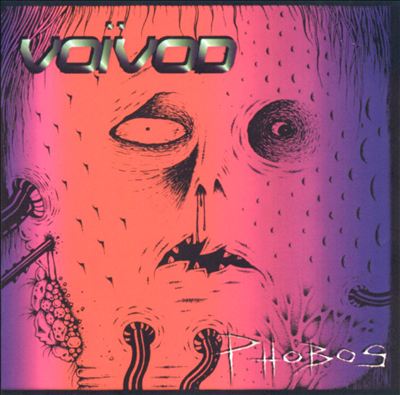
It’s tempting to say that Phobos is a carbon copy of Negatron, but that’s not true. While the line up is the same, and the overall tone is very similar—very heavy, aggressive music—there are subtle differences. The first is that the album sounds vaguely more electronic, as if they were really flirting with industrial after the experiment with Jim Thirwell on the last album. E-Force’s vocals, while still abrasive and screamed have a lot of processing on them which makes them far more interesting and actually quite a bit more understandable. There’s also a lot of weird electronic effects that link the album and make it feel more “spacey.”
And while there are different sections of songs and parts that are actually quiet, this i still a difficult album–the vocals especially are exceedingly harsh and will turn off people who like the instrumental sections. I hate to sound like the band’s declining popular are all down to E-Force, but he is the weakest link in the band at this point. Whats weird about thee two E-Force era albums is that although they are very very heavy with several weird parts per song, the basic structure of them is very conventional. So instead of sounding proggy and weird, they sound more like a bludgeoning metal band. Which didn’t really work for them. Indeed, the band intended to if not call it quits at least take a hiatus after this album.
Phobos opens with “Catalepsy I” an introductory song—noises and whatnot. And indeed, these electronic noises link all of the songs of the record, with different sounds in between the tracks (like the way “Bacteria” opens with spacey effects and electronic drum noises for 35 seconds). But the first proper song “Rise,” has an opening guitar riff that is quite normal—dark, but normal. It’s true that the heaviness of the chugging section is heavier than most (like earlier Voivod), but it’s still not that strange. Until the verses come in. And here’s where E-Force’s vocals are a little different—more processed and robotic sounding. It actually works a lot better. And in the middle of the song while the heaviness is ongoing, that opening normal guitar riff comes back. Rather conventionally.
“Mercury” has a more typical Voivod guitar riff although the pounding heavy chords are still quite heavy. There’s more of the distorted vocals and weird chords for the bridge. It also begins a series of increasingly longer songs. This one is nearly 6 minutes. While “Phobos” is nearly 7. It also has an interesting echoing staccato guitar riff with E-Force’s vocals very distorted (like Nine Inch Nails or Skinny Puppy). The bridge is a crazy noisy monstrosity and yet the middle section is very simple: loud chords delivered at a slow pace with interesting effects and fiddly guitar solo noises. “Bacteria” reaches over 8 minutes long. But it is unlike any of their earlier prog songs. It has an interesting echoing guitar opening and a bunch of staggered parts. But once the song’s major chords start up it sounds probably most like the previous album except for the lengthy instrumental/psychedelic section starting at around 5 minutes.
The album slows down somewhat with the 1:48 “Temps Mort” a short instrumental with what sounds alike an accordion. It’s a weird little time out (which is what the title means), and I like it a lot.
“The Tower” has an underwater kind of feel to it amidst the bludgeoning guitars. The middle and the end have some very cool heavy trippy/spacey metal which is so radically different from the heavy Voivod chords that make up the proper song. Indeed the very end is a minute of mellow spacey guitars. “Quantum” is a pretty straight ahead (for Voivod) metal song with echoed vocals that take some of th edge off (until he screams the chorus). There’s another cool instrumental section. In fact, the whole album has great instrumental sections, it’s kind of a shame the vocals are so offputting (although at the end of this song they are so distorted and computerized that they sound very cool)
“Neutrino” opens with those big loud slow ringing chords of noise before the simple but creepy solo riff comes in. It’s 6 minutes long and has another interesting guitar line amid the noise. It takes 3 minutes (of 7) before the vocals come in and the song gets much darker. “Forlorn” is the closest thing to a hit on the album. The chorus is really easy to sing along to. And the verses are actually pretty straightforward. It’s very very heavy and isn’t going to make the radio anywhere, but it’s still catchy. The album proper ends with “Catalepsy II,” more swirling noises that sound like the beginning.
There are two bonus tracks on the CD. “M-Body” was written by Jason Newsted and is the most industrial mechanized/voiced songs on the album. It’s certainly out of place, although it does hint at what is to come on their next album. “21st Century Schizoid Man” is a cover of the King Crimson song. They’d done Pink Floyd and King Crimson fits pretty nicely. As with the Floyd covers this one is very heavy. Piggy gets the guitars right. But as with the rest of the album, E-Force’s vocals just don’t work. Whereas Snake’s weird pronunciations accented the covers in a cool way, E-Force just seems to be forcing his way through the track (the fact that he puts 3 syllables in “century” is pretty unforgivable. Overall the song is pretty great, although I’m not so sure about the guitar solo which sounds like Piggy doesn’t really know what to do.
And that’s the end of this Voivod lineup. Two albums and a lot of lost fans.
[READ: September 20, 2013] Terry
I have known about this book for a pretty long time. I was never really that interested in reading it because, while I don’t know all that much about Terry Fox, I felt like I knew enough about him to not bother with a full bio.
For those who don’t know (basically anyone from the U.S.), Terry Fox was a young man who developed cancer at the age of 19 in 1977. and had his leg amputated. To draw attention to cancer research he decided to run (yes run) across Canada on the Trans Canada Highway. He had a prosthetic leg, he practiced running every day (he was already a natural athlete) and he decided that in 1980 he would run from the Atlantic Ocean to the Pacific (he even had a bottle of water from the Atlantic that he wanted to pour into the Pacific). His plan was to run between 26 miles a day. Yes, run a marathon every day. He called it the Marathon of Hope.
When he started out, the media coverage was nothing but as he progressed and his friend (who drove the van alongside him) started making media attention, Terry’s cause became more well known. And by the time he made it to Ontario, he was a huge personality—making TV appearances, talking to anyone and, most importantly, making a ton of money for cancer research. (more…)
As I said, this album’s art looks much better. And you can hear from the first notes that this album is better produced and is going to be a lot more interesting than the previous two. It’s hard to know just how much of a leap this is from Rrröööaaarrr because that album was so muddy–maybe there were gems of guitar chords under all that noise. Like the previous openings, there’s a sort of prologue to the album. But unlike the previous album’s swirls, this one is beeping with a computer voice announcing “we are connected”
The opening chords are heavy, but man they sound clear—like they weren’t recorded underground. You can also hear all of Piggy’s weird higher notes—he’s playing complicated chords, not just solo notes. And when the chorus of “Killing Technology” rolls around, it offers stop and start rhythms and Snake’s voice even goes up an octave at the end. But the first real indication that Piggy is on to something new comes in the bridge. Underneath the robotic voice, Piggy is playing some really strange-sounding chords. The story is that he had been admiring Robert Fripp’s guitar work and so he added some of those King Crimson-y angular weird chords to his repertoire. And he melds them perfectly with the heavy thrash that the band had been playing.
Lyrically also, this album has moved away from killing and headaches. “Killing Technology” while having “killing” in the title is a very different subject:
The star wars have started up
The new invention is coming out
Making a spider web over the atmosphere
To make them sure that we can’t get out of here
Computers controlling your functions
Seems like we got electronic alienation
Trading children for a new kind of robot
Waiting for the old people to disappear
Quite a departure from Rrröööaaarr’s “Fuck Off and Die”
Stand up, right now, kill
No pleasure, the pain comes down here
No return, don’t look back, there’s no tomorrow
And if you’re a fucker and don’t believe it
I’d say fuck off and die, fuck off and die
“Overreaction” leans more towards the heavier side—Snake screams a bit more—but the subject (nuclear disaster) is thoughtful. Then comes their first truly amazing song: “Tornado.” Not only building like a tornado, this song allows them to talk about violent imagery without resorting to bloodshed. It’s even scientific:
Cumulonimbus storms arrive
Lightning flashes a hundred miles around
Electrical collision course
Creates the elephant trunk
But the best part is the chorus—it’s simple enough (just the word Tornado repeated) but it’s completely catchy and sing-alongable with bright major key chords.
“Forgotten in Space” features some great drumming from Away—he’s really quite underrated both in speed and technique—which explands even more on later albums. “Ravenous Medicine” is another highlight—an interesting series of uncomfortable chords opens this track about scientific research. It’s a pretty fast, heavy song. Although not too complicated except for the occasional breaks as the story progresses.
“Order of the Blackguards” is another fast song, but this one has so many parts that if you don’t like one, just wait a few seconds for the next one. “This is Not an Exercise” ends the disc proper. The middle section has a great heavy riff. But it’s the beginning of the ending sequence which is so perfectly sci-fi that really sets the tone of the album and looks towards the next one. It’s cool to think of Piggy playing these spacey chords on his guitar. And when Blacky’s bass rumbles in to resume the song, it’s quintessential Voivod.
By th way, this disc is a concept album as well. There’s a “Killing Side” (the first three songs) and a “Ravenous Side.” The strange thing about the CD though is that they have added two tracks from their Cockroaches EP which is nice. But they put one song at track 4 (the end of side one). How odd to put a bonus track in the middle of a sequenced album.
The EP came out before the album and it has a slightly different feel from the album proper. Although as a step towards Killing Technology it’s perfectly in sync. “Too Scared to Scream” is heavy and has some interesting time changes—I love the way the song feels like it is crashing to a halt around 3:30. “Cockroaches” feels like more traditional metal. It opens with drums and Piggy playing a typical sounding metal solo. Then the riffing starts and it’s very heavy indeed. Even the staggered section near the end sounds like a mosh section more than the prog time changes that Voivod uses on the album proper. The song ends with Snake screaming as the cockroaches are coming. A good ending to the EP and a pretty good ending to the disc.
The whole album has a very mechanical and robotic feel—the chords that Piggy plays just sound like mechanical failure, it’s very well constructed and foreshadows the music of their future.
[READ: July 9, 2013] Grantland #6
Grantland #6 covers from Sept 2012-Dec 2012. Despite the short time frame, this is the largest issue yet. And it maintains all the quality that I’ve come to expect from the book/magazine thing. Which means, I love the writing (especially about people/sports I’m not that interested in). And it also means that the editing is typically crap. In this issue the editing was crap more because they simply forgot to remove mention of hyperlinks. At least I assume that’s why sentences like “See here for ____” are included in any given article. But yes, there are some very simple typos that Word would correct pretty easily.
But beyond that, I really enjoyed this issue. And I’m finding it amusing how much certain people and shows crop up in a given time frame. So this is a four month period and Kobe Bryant still dominates (there will never be an issue without at least one Kobe article). But this time Homeland is the big show (since Breaking Bad has been on hiatus I gather). Basketball remains the favorite sport here (even though they speak of football as being the most popular sport).
Chuck Klosertman and Charlie Pierce continue to write thoughtful (sometimes funny) articles. And I like how there is still talk of Jeremy Lin even if Linsanity has gone away somewhat. (more…)
SOUNDTRACK: WXPN (88.5 Philadelphia) and wxpn.org online-Prog rock Marathon (2012-??).
Every January, Dan Reed plays a prog rock marathon on WXPN. This year I was able to enjoy portions of it. I rather wish the playlist was still available (you can search, but only by artist), because I’d love to rave about the tracks they played (like the live “Supper’s Ready.”)
I was delighted by the great mix of songs they played and (as I learned from reading this book) I was surprised by how many prog artists I didn’t even know.
In 2014 I’ll be listening again and maybe this time I’ll copy the playlist to document what I’ve missed.
[READ: July 7, 2013] Yes is the Answer
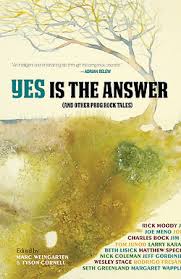
This book was sitting on a cart outside of my cube. I was intrigued by the title (it didn’t have that trippy cover, so I didn’t know what it was). But “Yes is the Answer” was calling me. Especially when I looked at the cover and saw that the cover had an excerpt from a William Vollmann story in which the protagonist plays In the Court of the Crimson King (track 5) for Reepah and watches her face as they band went Ahhhhhhhhhhhhhhhhhhhhhhhhhhhhhhhhhhhhhhhhhhhhhhhhhh!.
Quoting Vollmann (from The Rifles), playing King Crimson? What could this book be? Then I saw the subtitle and I knew I had to read it all.
I’m not going to review these essays because that would be like making a radio edit of a side long track, but I’ll mention the band the author focuses on and any other relevant details. (more…)
VH1 aired this series last year and I was intrigued by it but figured I had no time to watch an 11 hour series on the history of heavy metal. Of course, this being VH1, they have since re-aired the series on an almost continual loop. So, if you’re interested, you can always catch it.
This series was created by Sam Dunn, the documentary filmmaker who made the movie Metal: A Headbanger’s Journey. I had heard good things about the movie, but never saw it. After watching the series, I’m definitely interested in the movie. Dunn is a keener–A Canadian heavy metal fan who is really into his subject. He knows his stuff and he knows what he likes (heavy metal) and what he doesn’t like (glam metal, nu metal).
The sheer number of people he interviews is impressive (as are the number of locations he travels to). Part of me says “wow, I can’t believe he was able to interview X,” and then I remember, “X is really old and is nowhere near the level of fame that he once had.” Given that, the few hold-outs seem surprising–did they not want to have anything to do with VH1? Are they embarrassed at how uncool they are now? Just watch the show guys, you can’t be as low as some.
The only mild criticism I have is that the show relies a lot on the same talking heads over and over. Scott Ian from Anthrax, whom I love, is in every episode. Indeed, he may be a paid VH1 spokesman at this point. There are a few other dudes who show up a little more than they warrant, but hey, you use what you got, right?
What is impressive is the volume of music he includes with the show. I assume that he couldn’t get the rights to any studio recordings because every clip is live. This is good for fans in that we get to see some cool unfamiliar live footage, but some of it is current live footage which often doesn’t compare to the heyday. Having said that, there’s a lot of live footage from the early 80s–of bands that I never saw live anywhere. And that’s pretty awesome.
With an 11-part documentary there’s the possibility of exhaustion and overkill, but Dunn is an excellent craftsman he jumps around from old to new, talks about how the history impacts the current and, because of his own interests, he makes it personal rather than just informative. (more…)
SOUNDTRACK: KANYE WEST-My Beautiful Dark Twisted Fantasy (2010).
Before buying this album I really only knew of Kanye West as a loudmouthed guy who tweeted a lot and told off George Bush. But then everyone was raving about this album (Pitchfork gave it a 10 out of 10!). So I decided to check it out. And I can’t get over how great an album it is.
Now I’m going to start this review by mentioning a few things I dislike about rap as a genre. 1) I dislike all of the “guests” that appear on a record–I bought the album because for you, not your friends. 2) I dislike excessive use of “unh” and “yeah” at the beginning of a track; when you have nothing to say–let the backing music flow, save your voice for actual words. 3) Rap is still terribly misogynist and vulgar–I’ve nothing against vulgarity per se (I do have something against misogyny) but excessive use is lazy, and it stands out much more in a rap song since you’re saying the words not singing them.
The Kanye West album is guilty of all three of these things, and yet I still think it’s fantastic. The first reason is because it goes beyond a lot of rap by introducing real musical content into the songs. This is not an “all rap is just a beatbox” dismissal of rap, it’s an observation that rap tends to be more about the lyrics and the musical accompaniment can get kind of lazy. West’s songs have (beautiful) choruses, strings, and samples that augment the rest of the song, as opposed to samples that ARE the song. And Kanye West’s voice is great. His delivery is weird and twisted, a little cocky but more funny, with a twisted attitude that is really cool–and to my rather limited palate of rappers, it’s original.
The opening of the disc “Dark Fantasy” has a chorus singing “Can we get much higher” which is catchy and cool (and is used in the promo for The Hangover 2). The switch from this opening to the rapping works well (aside from the FOUR “yea”s). Although I don’t love the yeahs, I love his delivery, and that he occasionally ends lines with these weird “hunh” sounds, that are wonderfully emphatic.
The guests start showing up on track 2, but even the guests can’t detract from the excellent guitars of the song (and the cool solo). And I’ll say about the guests that I like some of them, but for the most part I’d rather hear Kanye.
“Power” samples King Crimson’s, “21st Century Schizoid Man”; anyone who samples King Crimson is alright with me. But to use it so perfectly, to make it part of your song is real genius. It works musically as well as within the overall concept of the album.
“All of the Lights” (with the pretty piano intro) features scads of guests including John Legend, The-Dream, Elly Jackson, Alicia Keys, Fergie, Kid Cudi, Elton John (!), and Rihanna. I can hear some of these people but not Elton John (why would he agree to be on a track where you can’t even hear him?). It is a beautiful pop track nevertheless.
“Monster” is a monster of tracks with yet more guests (I like that some of these guests break with the typical guest, like Bon Iver (!)). And I really like Nicki Minaj’s verse. [I’m not familiar with her work at all (in fact I keep wanting to say Minja instead of Minaj) but her verse with the wonderfully crazy vocal styling she displays is weird and cool and very powerful–I would like to check out her solo album, but the samples I heard weren’t that interesting]. It also has a great repeated chorus of being a “motherfucking monster.”
It’s followed by the even more catchy “So Appalled” (with FIVE guest rappers–some of whom I’ve never heard of but who do a good job. I love Cyhi da Prince’s lyrics: “I am so outrageous, I wear my pride on my sleeve like a bracelet, if God had an iPod, I’d be on his playlist” or “So call my lady Rosa Parks/I am nothing like them niggas baby those are marks/I met this girl on Valentine’s Day/fucked her in May/she found out about April so she chose to March” or this line, “y’all just some major haters and some math minors.”
“Devil in a New Dress” opens with a bunch of “unhs” (which I dislike) but this is nice ballad in the midst of all of the noise (and it has some clever lyrics). It morphs right into “Runaway” one of the more audacious singles I can think of. The piano melody is so simple (a single note to start) and the lyrics show Kanye as a loser in relationships. It’s a surprisingly thoughtful song for a song with a chorus that goes: “Lets have a toast for the douchebags, let’s have a toast for the asshole; a toast for the scumbags every one of them that I know. You been putting up with my shit for way too long…runaway fast as you can.” It gets even more audacious when you realize the last 4 minutes of the song are a solo with distorted voice. And the video…the video is 35 minutes long!
The sentiment of that song is erased by the next one, “Hell of a Life”. It opens with a great distorted guitar riff and lyrics about sex with a porn star. “Blame Game” is a surprisingly honest song about being nasty to your girlfriend (“I’d rather argue with you than be with someone else”). It features a sample of Aphex Twin’s (!) “Avril 14th”. And it’s quite a sad but lovely track. It ends with a very long skit by Chris Rock. I like Chris Rock, but this dialogue is kind of creepy because the woman who Rock is talking to (about the great sex she gave him) seems to be a robotic sample–why not have an actual woman talk to him?
The final track, “Lost in the World” has a lengthy intro by an auto-tuned Bon Iver. It’s one of my favorite tracks on the disc, especially the end, where the processed vocals get even weirder but accent the beat wonderfully. This track morphs into what is the actual final track, “Who Will Survive in America” which is basically a long recitation from Gil-Scot Heron. It works great as an album closer.
So, despite several things I don’t like about the disc, overall, it’s really an amazing release. And I can overlook the few things I dislike because the rest is so solid. I can’t decide if it’s worth looking for his earlier releases. How can they live up to this one?
[READ: May 6, 2011] McSweeney’s #37
This is the first McSweeney’s book where I’ve had to complain about the binding. The glue peeled off pretty quickly from the center cover. Fortunately, the back cover held up well. I’m guessing it’s because there’s an extra book tucked into the front cover which prevents the book from closing nicely when it’s removed.
But aside from that, the design of the cover is very cool. It is meant to look like a book (duh), but actually like a 3-D book, so the bottom right and top left corners are cut on diagonals (this makes for a very disconcerting-looking book inside–with triangles cut across the top). The artwork inside is also cool. In keeping with this appearance, each two page spread looks like a book with a spine drawing in the gutter of the pages). And the bottom of each page has lines making it look like the bottom of a book. (The illustrated margins are by SOPHIA CARA FRYDMAN and HENRY JAMES and there are interior paintings by JONATHAN RUNCIO).
The front matter is wonderful. Although it gives the usual publishing information, the bulk of this small print section is devoted to counteracting all the claims that the book is dead. It offers plenty of statistics to show that not only are the public reading, they are reading more than ever. The introduction also goes a long way towards arguing against the idea that people are reading less now than in the past. When was this “golden age” of readers? There’s also the wonderfully encouraging news that 98% of American are considered literate.
This CD had been getting a lot of buzz just before I ordered it. And then, the day after I ordered it I saw a review that really trashed the record. Uh oh, I thought.
But then I played it. Aside from the cover, which I can’t stand, there’s nothing I dislike about the disc. Immediately, I thought it sounded like a cross between King Crimson and Gang of Four. And then I heard more sax and had to add X-Ray Spex in for good measure.
The guitar lines as the disc opens sound so much like they could be King Crimson song…and this continues throughout the record…and then when the rhythm guitars come in you think, oh, Gang of Four (or the Futureheads if you must). And then you hear them together and it blows your mind a little bit.
For those of you who live in the twenty first century, the CD probably sounds closest to Modest Mouse: angular guitars, somewhat shouty vocals, but they don’t have the fluidity that Modest Mouse has. Not that that’s a complaint, just an observation. I’ve listened to this CD a bunch of times now, and I don’t dislike anything on it. Each listen brings out someone new that I hear. One of the reviews I read suggested that they used to a more prog rock band, but were giving up that aspect of their music. And yet, if you reference King Crimson, it’s impossible to think you’ve given up prog rock. I don’t know what The Foals describe their music as, and it is totally not for everybody, but I think it’s pretty wonderful.
[WRITTEN: Some time in the late 1990s] Complex Sentence.
In my previous post (Sister Bernadette’s Barking Dog) I said that I had written a short story about diagramming sentences. I took some creative writing classes a decade or so ago, when I had a lot of free time. I churned out quite a few stories, and then hit the wall that is job, family and kids. Sadly, I don’t have exact dates for when I wrote these stories (what kind of writer doesn’t keep track of when the stories were written for pity’s sake). But maybe if I can ever hack into more poor old Macintosh and uncover the original files it will give me some idea of their origin.
And so, the critic exposes himself to the critics. (more…)
 SOUNDTRACK: GLISSANDRO 70-Glissandro 70 [CST037] (2006)
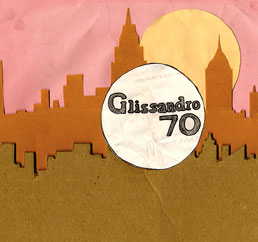 This peculiarly named band comes from the two members of it. Craig Dunsmuir is in a band called Kanada 70 and Sandro Perri has stuck his name on the end of the word “glissando” which is a musical term for gliding from one pitch to another.







 I Just Read About That...