 SOUNDTRACK: NICK BUZZ-Circo (1996).
 Nick Buzz is a side project of Rheostatics singer/lead guitarist Martin Tielli. This album was reissued in 2002, when I bought it But it came out in 1996, right around the time of the concerts I’ve been posting about. Martin says that this album is pure pop, and that he is genuinely surprised that people don’t see this. Of course, when your album has screeching monkeys, cars honking and circus music, pop is not the first thing that comes to mind. There are certainly pretty songs on here, but it is an album that resists easy entrance. There are short manic pieces, slow, languorous, almost lounge music pieces, and an improved cover of Joni Mitchell’s “River.” And then there’s the instrumentation: piano, violin, guitar, voice (no drums, although there is percussion on some tracks) and other weird sound effects.
“Step Inside” opens the disc. It seems like a normal, mellow song (with slightly falsettoed vocals). But 34 seconds in the circus music starts—a deviant and unsettling circus that pushes its way into the song briefly then vacating and allowing the pretty melody to return. It’s like a mild form of Mr Bungle (with more actual circus). It’s unsettling at first but then strangely catchy after a few listens. There is fanfare as the song ends, interrupted by the sound of a tape speeding up (or going backwards) until song two bursts in.
“That’s What You et for having Fun” is less than three minutes and while weird, it is certainly accessible and funny. The guitar sounds like he is slapping the strings rather than strumming them. The refrain of “there’s a monkey in my underwear” gives a sense of the absurdity (especially when the President of Canada (sic) says he has one too). “Just Because” mellows things out a lot—simple guitar with a kind of lullaby feel (it’s a bout wishing on stars). It’s so slow after the craziness of the first two songs. After 3 minutes of a lounge type song, it ends with a distant radio sound of an even more loungey song which melds into the live version of “River.”
The mellow “River” is followed by a raucous bass clarinet solo and wild guitar solo that is interrupted by the long (nearly 6 minutes) “Sane, So Sane.” This is the most conventional song on the record—a simple piano melody with repeated lyrics (conventional aside from the weird distant music in the background of course). Although it does gone on a bit long. “A Hymn to the Situation” is an eerie two-minute wobbly song.
“Fornica Tango” is indeed a tango presumably sung in Italian. This song features a crying baby, an interesting sounding “Italian” chorus and the screeching monkey at the end. “Love Streams” is a pretty, slow ballad. “Aliens Break a Heart” is another pretty song. Although this is the song that ends with traffic sounds. “The Italian Singer/Just Because I’m Nick the Buzz” has a kind of Kurt Weill atmosphere to it with spoken words and falsettos.
It took me several listens before I could really find purchase with these songs. I find that I really enjoy most of them now–some of those slow ones are a little too meandering for my liking. But it seems like a fun outlet for Tielli’s songcraft.
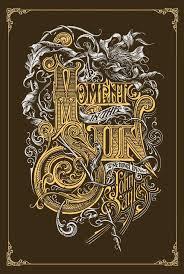
[READ: October & November 2013] A Moment in the Sun
I read this book last year…finished it just before Thanksgiving, in fact (I was proud of my pacing). But it was so huge that I didn’t want to write about it until I had a good amount of time. And now here it is four months later and I probably have forgotten more details than I should have and the post will be nowhere near as in depth as I was saving time for in the first place. Bah.
When people see this book, they say, “That’s a big book.” And it is a big book. It’s 955 pages (and they are thick pages, so the book itself is nearly three inches thick–see the bottom of this post for an “actual size” photo); it’s got three “books” and dozens of characters whose stories we read about in full. It is about the United States, racism, The Gold Rush, the assassination of a President, the Spanish American War, a World’s Fair and even the exploration of moving pictures. This is a fairly comprehensive look at the Unites States from the 1890s to the early 1900s. And, man was it good.
John Sayles is known more for his movies than his books (18 films directed, nearly as many different ones written and only 4 novels), but the cinematic quality that is clearly in his blood comes through in this book as well. (more…)




 I Just Read About That...