Feeds:
Posts
Comments

Archive for the ‘Cheap Trick’ Category

aug2013SOUNDTRACK: KEVIN DEVINE & THE GODDAMN BAND-“Nobel Prize” (2013).

PrintI’d never heard of Kevin Devine before (he apparently has 7 solo albums out).  This track is his first single with his new (radio friendly it seems) band called The Goddamn Band.  Interestingly, the album is called “Bubblegum” and it’s that sentiment that sticks out with this song.

Over buzzy guitars and pounding drums, a screamed (but not unpleasant) voice comes piercing through the fuzz.  And once the guitars come in, it’s all bubblegum pop (fuzzy and distorted absolutely, but pure bubblegum chord structures).  The song (including the voice) remind me a lot of Cheap trick–simple, catchy melodies with vocals that are urgent and intense.  Even the quieter spoken word section sounds like Cheap Trick.  The very mellow bridge or chorus or whatever it is mixes things up when it brings in picked strings and a gentle vocal.

It’s catchy as hell and could fit into a lot of playlists of poppy rock.  At only 2 and a half minutes it’s a pop gem.  Too bad no DJ would ever say the band’s name.

You can hear it an NPR.

[READ: September 19, 2013] “The Way Things Are Going”

As the story opens we read the Gwen had insisted that “Ma and I” move to America (from South Africa). Gwen wanted them to move because “sooner or later…it would happen again.”  The narrator says that what had happened was actually her fault.  But really what difference did it make whose fault it was—once they were tying you up.  She only let them in the first place because she was trying to be mannerly.

The story flashes back to what happened. The narrator had been struck across the head with a gun, praying that the men would leave her alone—just take their few valuables and go.  And then she had to worry about her mother, who was upstairs by herself.  It was only the phone call (and the answering machine) which saved them from further damage because a neighbor said she’d be right over. (more…)

Read Full Post »

SOUNDTRACK: KISS-Gene Simmons (1978).

Even all these year later I feel like there is something very “polished” about this album.  It feels different from the others for an intangible reason.  I like it quite a bit,and yet it doesn’t sound like a record from a demon with blood leaking out of his mouth.  Maybe it’s the surprisingly faithful (and delicate) cover of “When You Wish Upon a Star”?  Maybe it’s the cameo by Cher?  Maybe it’s the weird effects on “Radioactive”?  The whole things just seems different to me.

It starts out menacing enough with the creepy laughing and the crazy strings (like a Disney nightmare) and the chanting (what is that chanting–its sounds demonic but they seem to be saying Hosannah?).  And it all swirls into a…disco sounding guitar?  “Radioactive” is a wonderful ditty and shows that Gene, while not exactly a good singer, has more range than the God of Thunder would have suggested.   (That’s Aerosmith’s Joe Perry on guitar).  “Burning Up with Fever” opens with a bizarre, really out of tune guitar intro (that’s two songs with crazy intros).  This feels much more Kiss than anything else on the album, although again, it’s very slick feeling.  And surprisingly, I like the backing vocals on this track–especially the solo that the woman takes–hey is that Katey Segal?  No evidently it is Donna Summer (!!).  I guess Katey was one of the backing chorus on some other songs.  (And that’s Steely Dan’s Jeff “Skunk” Baxter on guitar).

Musically, I rather like “See You Tonite,” but I find his vocals a little weird on this one.  It’s such a sweet song…again, unusual for the demon (Skunk Baxter on guitar, again).  “Tunnel of Love” seems quite sinister in the beginning with a great bass line.  And then the chorus kicks in with these delicate la las (Skunk Baxter on guitars again–Katey Sagal must be in there somewhere).  “True Confessions” has a pretty hilarious choir in the middle of the song.  My mom felt that “Living in Sin” was bad publicity for the Holiday Inn.  Although I thought it was a very funny line (and yes, Cher is the squeaking fangirl and Joe Perry is on guitar again).  “Always Near You/Nowhere to Hide” is a really slick track in which Gene shows of his more delicate singing style.  The first half is a gentle acoustic track but it builds into a high concept highly produced track–and let’s not forget the amazing high notes he hits (is that really him?).

“Man of 1,000 Faces” is another song with sinister sounds in the verses (cool strings, and is that french horn?) and then a gentle, swelling chorus.  “Mr Make Believe” begins the delicate ending of the album (Skunk Baxter, again).  This is a sweet ballad, showing a very gentle side of Gene.  There’s a little diversion in his cover of Kiss’ “See You in Your Dreams.”  This version rocks harder than the Kiss version, and the backing vocals lend a weird edge to the song which is why I like it better than the one on Rock and Roll Over (that’s Cheap Trick’s Rick Nielsen on guitar).  And then yes, “When You Wish Upon a Star.”  My dad laughed about as hard at the demon guy singing this song as he did about the butch biker guy singing “Oh Danny Boy” in the Village People movie Can’t Stop the Music (which we watched as a family.

Gene’s solo album charted the highest when they were released, although now Ace’s has sold more.  It’s pretty great.

[READ: October 8, 2011] “To Catch a Beat”

There were four one-page pieces in this week’s New Yorker under the heading “Sticky Fingers.”  Each one was about theft in some way (this being the money issue, that ‘s a nice connection).

Lethem, who now appears here twice in just a few short days, also breaks the mould set up by Miranda July (so I guess 2 of four stories about shoplifting is not so much a mould as a half).  Indeed, Lethem goes against all the conventions of the other pieces, for in this story, Lethem is not the thief at all.  There is hardly any thieving going on here.

This story is about Lethem working in used book stores in Brooklyn as a kid.  He mentions several different places where he worked, nut the story focuses on one in particular.  The name isn’t important to the story (in fact it doesn’t exist anymore).  But what happens there is the crux of the story.  It’s basically about a friend of Allan Ginsberg’s armed Herbert Huncke (who I’ve never heard of).  Huncke was a major fixture for the Beats, and is written about (in disguised form) by Burroughs and Kerouac.   But he was also a junkie and an ex-con.  And he came into this bookstore regularly. (more…)

Read Full Post »

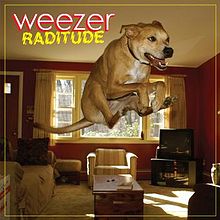
SOUNDTRACK: WEEZER-Raditude (2009).

I didn’t buy this Weezer album when it came out because I had heard really bad things about it (like the “guests”), but when I saw it cheap I decided to check it out.  This has to be the most polarizing Weezer album of them all.  I listened to it twice yesterday.  The first time I thought I had been too harsh on it.  The second time I thought it was godawful.  It’s amazing what a couple of hours can do.

It opens with a wonderful bit of poppy wordplay ala Cheap Trick: “(If You’re Wondering If I Want You To) I Want You To.”  It’s catchy as anything and is a wonderful start to the album, even if it is probably their poppiest song ever.  From there though, the album really degenerates.  And mostly it’s because it’s so dumb.  I mean the album title should tell you what you’re in for, but who would have expected the moronic sub-pop-metal of “The Girl Got Hot” or even the reprehensible lyrics of “I’m Your Daddy” “You are my baby tonight And I’m your daddy.”  It’s just creepy.  Or gah, a song about the mall?  “In the Mall.”  It’s not even worth mocking.  And really, try to picture Rivers Cuomo in a mall.  Any mall.

But nothing could prepare anyone for “Can’t Stop Partying.”  Unlike Andrew WK’s ouvre, which is so sincere about partying that you can’t take it seriously, this song really seems to be about the guys partying.  It’s laughable.  The anemic rap but Li’l Wayne certainly doesn’t help.

Even the collaboration with Indian musicians on “Love is the Answer” (yes, seriously) doesn’t really work.  It feels like they wrote the song and then said, “Hey let’s throw some sitar on it.”  It’s not enough to be exciting but too much to ignore.

This is not to say that these songs aren’t catchy.  I mean, geez, I still have “Can’t Stop Partying” in my head while I’m listening to something else.   Rivers knows how to write a pop trifle.  And the more he writes songs like this, it makes me thing that Pinkerton was the fluke.  Which is fine. The music world needs poppy songs, right?

[READ: early August 2011] various nonfictions

I thought about doing individual posts for all of Arthur Bradford’s non-fiction that’s available on his website (that’s right,  yet another author that I have read short uncollected pieces by without having read any of his bigger works–I’m looking at you Wells Tower).  Bradford has links to all of his nonfiction ( I assume) on his website.  There are 12 links in total.  One is to his blog (which I’m not reviewing).  The rest are for articles covering a pretty broad array of topics from a pretty broad variety of sources.  (more…)

Read Full Post »

SOUNDTRACK: WEEZER-Hurley (2010).

In my head, no band garners as much debate as Weezer.  According to this article, a man offered them $10 million to break up.  Even I go back and forth about whether they are great pop song writers or incredible sell outs.  I mean, look at one of the items on their thanks list for Hurley: “Dodge–makers of the timeless Challenger.”  Is this ironic or not and if not, does it matter?  I’m also torn by Rivers Cuomo’s Harvard degree, which I would think means he would write intellectually rigorous songs–and yet he never does.

But what of it?  Let’s talk about the music.  It has dawned on me that the closest band to compare them to is Cheap Trick.  They write poppy songs with often heavy guitars that are completely sing along-y but are in no way alternative to anything.  And yet everyone loves Cheap Trick, so why not love Weezer, too?

Hurley is no different.  Each song is 3 minutes of pure pop (for crying out loud Desmond Child is on one track–put one in the sell out column).  But they also have some odd fans on this disc: the crew from Jackass sings backing vocals on “Memories” and Michael Cera plays mandolin and sings backing vocals on “Hang On” (although you can’t hear any of them really).  “Hang On,” by the way is their most Cheap Trick-y song to date.

“Unspoken” features a flute and acoustic guitars until about two minutes into a three-minute song.  Then it bursts out of acousticland and into heavy rocking guitars.  The one song I don’t get is “Where My Sex?” which I suppose is the controversial song on the disc.  He’s clearly talking about socks but he keeps saying sex.  I really have no idea why.  It’s not funny, even remotely.  It’s just an odd decision.  And I would say I rather dislike the song, but the chorus is great, as is the totally unexpected third section (which is like  pop song unto itself) that comes in 2 and a half minutes out of nowhere.

“Smart Girls” has to be ironic, but who knows anymore.  To me the most interesting song is “Brave New World.”  It eschews the standard big-chords-for-choruses format they’ve been using with a much heavier guitar and single guitar notes in the verses.  (Although the chorus is, once again super catchy).

My version of Hurley has bonus tracks which are separated by an interesting 10 seconds of string music.  The bonus tracks include a cover of a song from Yo Gabba Gabba ( I really must watch that show some time).  There’s also a great cover of Coldplay’s “Viva La Vida” (in many ways Weezer is like a harder rocking version of Coldplay in terms of success and obvious sellout possibilities).  Although this live version shows that Rivers’ voice is no match for Chris Martin’s.

“I want to Be Someone” is an earnest acoustic solo track while “Represent” (Rocked Out Mix) is one of the heaviest things they’ve done.  I assumed the original was on Raditude, but it’s not.  Evidently it’s the unofficial song of the U.S. World Cup soccer team.  Huh, who knew?

So yes, it seems that they’re pretty much sell outs.  And yet for thirty minutes (all of their discs are so nicely short) it’s easy to stop worrying about “indie or not” and just sing along.

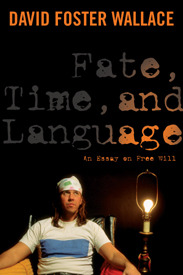
[READ: November 7, 2010] Fate, Time and Language: An Essay on Free Will

First I wanted to thank Columbia University Press for sending me an Uncorrected Proof of this book. I was pretty excited to read it, but to get it a few weeks early was even cooler (and, no, this won’t have any impact on my review).

Second, I wanted to state exactly what this book IS (because I wasn’t entirely sure myself).  The book is a reprinting of David Foster Wallace’s philosophy graduate undergrad thesis.  However, rather than just publishing the thesis (and giving us a short book or a long book with one sentence per page), Columbia University Press has packed the book with a great many essays that help to contextualize the thesis.  The Preface by Steven H. Cahn & Maureen Eckert explains this quite neatly.

So, my (briefer) version of the background: DFW’s thesis is about Richard Taylor’s article “Fatalism” (1962).  CUP has also included Taylor’s initial article (so we can see what DFW is talking about).  And even more than that, when Taylor’s article was initially published, it caused a bit of controversy and a lot of responses.  So, to get a sense of everything that DFW was working with (and against), this book also includes the intellectual dialogue: articles that range from four to ten pages (and also include a dense of Taylor by Steven H. Cahn himself (published in 1964).

Part II of the book includes an introduction by Maureen Eckhart and DFW’s essay.

Part III is a brief look at DFW as a student written by a former professor, Jay Garfield.

Before I get to the meat of the book itself, I wanted to say that I didn’t know anything about this essay.  And I’d thought about this thesis as possibly an interesting piece of philosophy from an author whose work I greatly admired.    Well the introduction to this book states in pretty certain terms that my thinking about this thesis is a massive understatement.  For, in fact, DFW’s thesis undermined Taylor’s argument in ways that no other argument had been able to do before.  His thesis more or less repudiated Taylor’s original essay.  The thesis also won the Amherst University Gail Kennedy Memorial Prize in Philosophy (and a wonderful piece of trivia: DFW’s father James won the same prize in 1959).  So, yes, this isn’t just a graduate undergrad thesis, this is real philosophy.

On to the book: (more…)

Read Full Post »

« Newer Posts