Feeds:
Posts
Comments

Archive for the ‘Black Sabbath’ Category

SOUNDTRACK: EARTH-All Tomorrows Parties, October 5, 2011 (2011).

Anyone who likes Black Sabbath a lot knows that they were originally called Earth.  About mid way through this concert, the lead singer/guitarist of Earth says that he grew up listening to Black Sabbath and reading HP Lovecraft, so Earth is clearly something of a tribute.   Incidentally, he grew up in Manalapan, NJ which is just down the road from us.

All of these bona fides means that I should love Earth.  But I have to say that although I didn’t dislike this show at all, it’s really not my thing.  Earth creates long droney songs.  I tried to measure a couple of BPM of songs and came out with 60 for one song and 42 for another (by contrast Judas Priest’s “Breaking the Law” is 180 BPM).

The songs are all instrumental and range from 8 to 12 minutes.  Again, nothing objectionable about that.  Indeed most of the songs are cinematic and cool sounding.  My problem with them is that there wasn’t a lot of dynamism in the songs.  The bass wasn’t crazy heavy or loud or chest rattling (as I had been led to believe Earth’s bass was).  The melodies were pretty, but it came across as soundtrack music–for a very very slow zombie chase, perhaps.

According to some basic history, Earth used to be a heavier, noisier band, but have morphed away from that, and I suspect I would have liked their earlier stuff a bit more (although the one older that they played, “Ouroboros is Broken” wasn’t that much different from the rest.

NPR broadcast most of the All Tomorrow’s Parties concerts, and I enjoyed listening to them all.  But Earth is just not my thing.  You can check it out here.

[READ: October 20, 2012] “A Farewell to Yarns”

I mentioned the other day that I read one complete piece in the three Outside magazines since I subscribed.  It was this one.  The thing that I have enjoyed about the Outside articles that I have cherry picked is that unexpected writers pop up to write an essay.  So here’s Ian Frazier, comedian and essayist, writing for Outside.  Weird.  (Or maybe not so weird, he’s an Editor).

And, unlike many of the other things I’ve read in Outside, Frazier is not, repeat not going to do anything brave or daring or stupid, he’s just going to muse about a topic.  I like it.

Basically, this whole piece is a compliant about how with everything documented and digitalized it’s impossible to tell fibs about the one that got away or as he calls it, “an outdoorsman’s sacred right to exaggerate.”  What I like is that he takes us all the way back to ye olde mapmakers who wrote Here be Monsters which leads to this wonderful idea that I have never considered “the pictures of the monsters must have been accurate; how would the mapmakers have known what to draw unless eyewitnesses had told them?”

And he moves on through those who spied the Loch Ness Monster and Bigfoot.  He even talks about one I had ever heard of, a hidden city in Siberia called Gorod Koka-Kola, built during the cold war as a reproduction of an American city, they speak English and live and behave like Americans–perfect for spymasters to practice   Genius–and how would anyone ever know if it existed in remotest Siberia?

But Fraizer’s greater point is that “Lies make the wild scary and alluring.”  He grew up in Rural Illinois afraid of the Argyle Monster who haunted Argyle State Park–and, boy, how many adventures he had or dreamed of having back then. (more…)

Read Full Post »

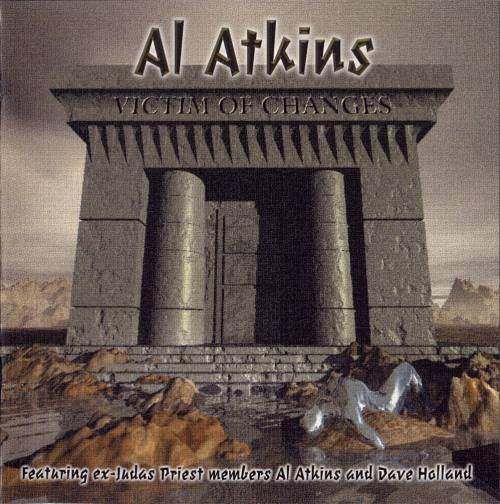
SOUNDTRACK: AL ATKINS–“Victim of Changes” (1998).

Al Atkins wrote “Victim of Changes,” one of Judas Priest’s greatest songs.  And then he left Priest to get a real job.  In 1998, he released the album Victim of Changes which contained a number of early JP songs, primarily ones from Rocka Rolla, but also this title track.

This version is quite faithful to the JP version (which is interesting because the early notes say that “Victim of Changes” was a melding of two songs).  It’s fascinating, in hindsight to wonder if this is how the song really sounded (there are a few differences in it) or he is now covering the JP version.  But the big difference of course if Atkins’ voice.  In the middle, slower section he sounds quite a bit like Rob Halford.  But he just cannot hit any of the notes that Halford brought to the song.  And there’s really just no way to compete with that (even with multitracked and over-processed vocals).

It’s really hard to compare this (and other songs from that album) to the original.  I mean, he wrote them, after all.  But man, the Priest version is just so much better.  Atkins has a strong, gruff voice.  It works well for the style of the songs, but it just isn’t anywhere near as compelling as Halford’s.  The other problem is the music–the guitars are full of cheesy pyrotechnics that overshadow the songs (I like guitar pyrotechnics if that’s what the song is supposed to be about, but not when it’s meant to “embellish” a song).  It sounds like he is trying way too hard here.  Atkins has his own solo career and his own band, he really needs to get past the JP thing, especially since he left of his own accord.

This is the version of “Victim of Changes” from Victim of Changes:

But for heaven’s sake, don’t listen to the more recently recorded version of “Victim of Changes” (yes a second recording–he’s got to let it go) from his 2007 release Demon Deceiver (available on Spotify!)–his voice is lower and gruffer (almost cookie monstery) and guitar solos are just covering all of the song.

Yipes.

[READ: September 12, 2011] The Viper’s Nest

When I finished the fantastic Book Six of the 39 Clues, I put it down and immediately picked up Book Seven.  It opens with a dramatic rescue from an exploding volcano.  When the ash settles, Dan and Amy find themselves on Irina Spasky’s boat.  And in this boat they find Irina’s bag, which contains all kinds of spy stuff (like IDs for every one involved in the 39 Clues search and fake fingerprints and whatnot).

They also find a letter with what looks like lyrics.  I have to credit Peter Lerangis with the wonderful work on this clue.  The clue is a line from a song: “I’m with you and you’re with me and so we are all together.”  Nellie (who is still under suspicion, but seems to have been given a free pass) says that she never guessed Irina would be so cool as to listen to the best song ever by Velvet Cesspool (on the album Amputation for Beginners).  It’s track three, “The Tracks of My Spit” and it goes: “I’m with you and you’re with me and so we are all together….  We are marching to Peoria!”  The kids are all set to go to the exotic locale of Peoria, Illinois when, through a series of events, they realize that the song Irina was referring to was a traditional folk song called “Marching to Pretoria.”  And that they are actually headed for South Africa.  [Incidentally, I just learned that the opening line of “I am the Walrus,” “I am he as you are he as you are me and we are all together” is actually a reference to this folk song].  Check out this video of “Marching to Pretoria” by a guy who has not doubt gotten a lot of hits because of this book.

Anyhow, this book spends most of its time in South Africa.  And Dan, the non-reader of the family, finally finds a book worth reading.  It’s all about Shaka the warrior of the Zulu nation.  Dan reads a lot of information about the man and his military techniques.  Which is a good thing because the kids find themselves in the center of a Tomas family stronghold (the Holt family are the members, so you know their speciality is tough fighting).  The details are quite fascinating.  In the end, they are able to find a clue and to create some wonderful battle scenes in the process.  (more…)

Read Full Post »

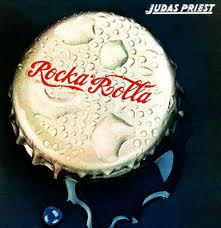
SOUNDTRACK: JUDAS PRIEST-Rocka Rolla (1974).

Unlike Sad Wings, Judas Priest’s debut album is more of a curiosity than a cool surprise. I love this original cover–the new release has a crazy drawing on them that doesn’t make any sense with the title.  Admittedly the title is kind of dumb, but the riff on Coke works.  With the new cover, see below, the title just sounds dumb now.

The album is mostly heavy blues songs.  Although the title track has some bizarre disco elements thrown in as well (including the lyrics).  The chugga chugga in the choruses is not the chugga chugga of metal, but the chugga chugga of disco.

The biggest surprise comes with the third track, the oddly titled, “Winter/deep freeze/winter retreat/cheater.”  It’s 9 minutes long and is not so much an epic as multiple weird little pieces thrown together.

“Never Satisfied” is the closest they get to their future metal sound.  But it owes a big debt to Black Sabbath (down to the guitar sound which has the little high note in the chords that Iommi plays on parts of “Paranoid”–a sound I was always confused by but which seems to have inspired K.K. Downing).  Nevertheless is rocks pretty hard.

“Run of the Mill” has the potential to be a good rocker.  But the 8 minutes of it are rather unfocused and there’s a trippy jam in the middle.  (Again with a major Black Sabbath debt underway).  “Dying to Meet You” also has a cool sinister sound.  Both of these tracks would be well served with a better producer. The second half of this nearly 7 minute song is probably  the most metal sounding of the whole disc, although the guitar solo sound has a very Allman Brothers feel to me.

The final track “Caviar and Meths” is a two-minute instrument that is very reminiscent of trippy” Planet Caravan” style Black Sabbath.  It’s rather groovy and I’ve always liked it.  The reissue has  the band’s cover of “Diamonds and Rust.”  Because all metal bands should cover Joan Baez!

Wikipedia explains something about this album which make me feel better about it.  Apparently the band was really unhappy with the production.  Several heavier tracks were left off the album by the producer (they were later recorded for Sad Wings).  And that odd little 2 minute instrumental “Caviar and Meths” was originally a 14 minute epic written by the guy who preceded Rob Halford.  (He evidently recorded a 7 minute version of the song).  Indeed, many of the songs were written by Halford’s predecessor and Downing, so they are lacking Halford’s input. (the page was very helpful for me).

[READ: September 11, 2011] In Too Deep

Since Book Five was so awesome, I couldn’t wait to move on to Book Six.  Book Six is the first book written by an author who has written a book already (Watson wrote Book 4 as well).  At first I feared that Watson was going to squash my enjoyment of the series; it felt like there was a lot of recapping going on (I know that in a series like this a recap is necessary for people who pick up book 6 instead of book one, but it can be frustrating when you know all that backstory already).  However, at the same time, Watson also started the story in the middle of a scene, so everything was brand new, fast paced and a little disorienting.

I’m happy to say that once the story got going Watson really pulled out all the stops and this made Book Six the most exciting book so far.  In this book they travel to Australia.  As anyone who has looked into Australia knows, most of the deadliest animals on the planet live in Australia (woo hoo!) so that makes Dan quite excited.  Australia is also a much looser place to explore than some of the tightly controlled areas they have recently visited–there’s no guards in the outback.  And, when the kids hook up with an old friend of the family, Shep, they have access to tasty waves, tasty barbie, and…most awesomely, a plane.

They also have access to Isabel Kabras.  Isabel is the mother of Ian and Natalie Kabras–two teens who are rich, spoiled and ruthless.  They tried to kill Dan and Amy once, and Ian, who is a hottie, has some kind of sway over Amy–especially when Isabel tells her that Ian secretly likes her.  Isabel tells Amy that she has information about how Dan and Amy’s parents died.  She will tell her all about it if they can meet in private.   And so, for the first time in the series that I can recall, Dan and Amy are separated.  She meets the Kabras, and Isabel is looking for a trade.  Amy is suspicious, of course, and that leads to the first of many deadly animals.  It’s safe to say that Amy survives but I won’t say how–it’s very cool. (more…)

Read Full Post »

SOUNDTRACK: JUDAS PRIEST-Sad Wings of Destiny (1976).

Before Judas Priest were the force behind “Breaking the Law,” they were still pioneers of heavy metal.  Except that their metal was tinged with all manner of odd progressive embellishments.  Like “Victim of Changes,” an 8 minute (!) multi-sectioned (!) epic. It’s got a great heavy riff and, damn, if Rob Halford’s vocals aren’t the highest-piched in music (I mean, we know he has a powerful voice, but the notes he hits–good grief man!).  The middle section is a delicate ballad that mellows out with breathy sighing and with very sixties-era backing vocals until Halford bursts out of that with his piercing wail.

It’s followed by “The Ripper” a classic metal song.  The best known version comes from Unleashed in the East, so it’s interesting to hear this earlier version where, for instance, “You’re in for a shock,” is followed by a different person’s scream, not Halford’s wail of the word “shock.”  It sounds a little slower but somehow a little more creepy (especially the quiet middle section).

“Dreamer Deceiver” is a creepy quiet song which seems to herald the vocal acrobatics of King Diamond, but this song has a lot more emotion to it, even if it is pretty trippy (like a cooler version of Black Sabbath’s “Planet Caravan,” perhaps).  The piano at the end is a really nice touch and leads into the confusingly named “Deceiver,” a very chugga chugga metal song with more great high notes. 

“Prelude” opens with more piano (technically this song opened the album when it was on vinyl…the cds all seem to have sides A nd B reversed so now this prelude is in the middle. It’s a dramatic near-orchestral opening (that many bands would imitate much later) to the killer track “Tyrant.”  “Tyrant” sounds just as menacing here as it does on the live album except for the backing vocals that sort of slouch through the word “tyyyyyrant”–in the live version Halford crams it all into one breath.   It’s followed by “Genocide” a brutal song that has withstood all of these years as an awesome metal track.

Unlike “Epitaph,” which is a completely strange ballad about a dying man.  It is all piano, it is quite poetic and is indeed quite sad (especially the final line reveal).  But the middle ‘upbeat” section sounds not unlike an Elton John track.  It’s quite peculiar, especially when it ends and the chugging riff slowly builds out of the ashes that turns into the stunning “Island of Domination.”  This is a disturbing track with really creepy lyrics but with awesome music.  The middle section (again with the middle section–did bands just forget about doing cool middle sections in the 80s?) slows the track down with all kinds of echoed vocals.

Although it sounds dated, it still holds up remarkably well as a precursor to later metal albums.  It’s one of my favorite Priest releases and one that I come back to time and time again.

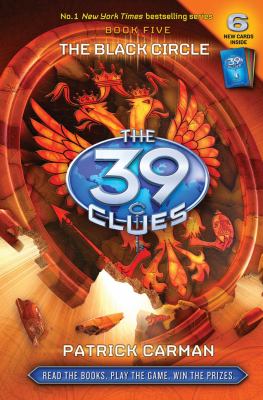
[READ: September 8, 2011] The Black Circle

I haven’t read a 39 Clues book in a couple of months.  It’s not that I was losing interest, I just had other things that I wanted to read more.  But I will admit that a ten-book series (and now a second series) can be a bit daunting.  I’d also never read anything by Patrick Carman before, so I wasn’t chomping at the bit to get into the story again.  Well, Patrick Carman has completely revived my interest in the series.  The first nice thing was that the book is only 168 pages (sometimes a short book can really pick you up).  But aside from that, Carman brings all kinds of cool elements into the story and has more than enough intrigue to keep you guessing and turning pages.

But I was initially concerned about reading this book because Carman reintroduces my least favorite nemeses in the book: the boring and doltish Holt family.  They are big, tough, meat- heads with ridiculous political first names like Eisenhower, Hamilton and Reagan.  And every time we’ve seen them, they’ve been brutish and mean and not terribly clever (and this series is chock full of cleverness, so these guys really stand out like a sore thumb).  But Carman does a wonderful thing with the Holts: he forms a (temporary) alliance between Dan and Amy and the Holt family.  And although it is an uneasy alliance, about midway through the book, we see Dan and Hamilton (the Holt’s son) bonding over driving big powerful trucks and flying helicopters.  It’s nice to see Dan have a “friend,” however tenuous. (more…)

Read Full Post »

SOUNDTRACK: BLACK MOUNTAIN-Live at the Rock n Roll Hotel, Washington DC, February 19, 2008 (From NPR) (2008).

I’ve really enjoyed the two Black Mountain CDs that I have (I’ve yet to hear their debut). Their blend of psychedelia and Black Sabbath is always interesting, especially when singer Amber Webber adds her great harmonies (and leads) to the proceedings.

So it’s astonishing that Webber herself is the sole reason that I can’t listen to this show.

The band sounds great.  The musicians are right on, and the energy is good. But I can’t imagine what possessed Webber to sing the way she does.  At the end of every sung line, she ends with a vibrato that is not so much vibrato as it is staccato.  I thought it was an odd affectation to increase the psychedelicness of the first song, but she does it on every track, even when she sings lead!

Holy cow, is it ever annoyin-in-in-in-in-ing.

There are tracks when she doesn’t participate, and those are fine.  There’s also a song that is mostly instrumental and that sounds great.  But as soon as she starts singing, the whole thing goes downhill.  She doesn’t sing like that on the records, so what ever made her think that was a wise choice for a live show?   To add a really obscure reference, she sounds not unlike Diamanda Galás during her Plague Mask recordings–but that was an operatic style befitting her over the top recording.  It simply doesn’t work here.

Even Bob Boilen, normally an ecstatic reviewer of the shows he hosts seems put out by them.  He says that the band never set up a rapport with the audience.  That’s not exactly true as they do thank everyone for coming out on a Tuesday night.  But there didn’t seem to be a lot of warmth shared between everyone.

Stick to the studio albums!

[READ: March 19, 2011] Half a Life

This book is a memoir by novelist Darin Strauss.  And it opens with the fairly shocking revelation: when he was 18, he killed a girl.  She was a fellow classmate in the grade below his.

He and some friends were driving to a of social event (they were all sober).  She was riding her bike with some friends on the same road.  He saw her, but he was in the left lane, so he wasn’t too concerned and then suddenly she swerved over two lanes and into his windshield.  She died soon after.

He was completely absolved of all blame: police, eyewitnesses, even her family (oh my god, her family), everyone agreed that it was not his fault at all, there was nothing he could have done.  And yet, as he puts it, because of where he was, a girl is now dead.

The rest of the book details how, at 18, one can learn to cope (or not) with the unthinkable.   He has to finish school and prom with all of the kids in his small Long Island town who know that he killed a classmate.  He also can’t stop thinking about her and wonders how he can go on with his life when she won’t be able to do the same.

It’s an emotionally riveting story and I was utterly empathetic.  Not that I’ve had any kind of experience like that, but (especially) now that I have children, I can’t imagine how I would react to such news.  And since Strauss is a sensitive individual I can imagine at how that would eat away at you forever.

By the second half of the book, something newly unthinkable has happened; her family is suing him for $1 million.  Which he obviously doesn’t have.  This trial–and remember he has been exonerated by everyone–lasts on and off for 5 years, all during his college.  And, of course, this isn’t something you tell people–he doesn’t want anyone at college to think of him as a killer–so there’s pretty much no one he can talk to.

The events of the story happened in the 80s.  Strauss has gone on to be a succesful novelist (although I hadn’t heard of him before this book). He also has a family of his own.  Writing this book was his way of trying to cope with this incident that really defined his life.

It’s hard to say much more about the book.  It is really powerful and a simply horrifying thing to consider.  Strauss is a very good writer who never plays for sympathy (he even sides with her family in the beginning). The book is also a remarkably fast read.  Many of his chapters are one or two paragraphs, and you can finish it in a couple of hours.  But that’s also because the story is so gripping.

For ease of searching I include: Diamanda Galas

Read Full Post »

SOUNDTRACK: MOGWAI & MAGOO-Do The Rock Boogaloo (2002).

This split CD features a song each by Magoo and Mogwai.  Both songs are Black Sabbath covers, with Magoo doing “Black Sabbath” and Mogwai doing “Sweet Leaf.”  This was released by Fierce Panda records and it’s clearly kind of a joke (the top of the disc says: two sonic scratches of the big bad rock arse”).

And yet despite the jokey nature of the project, the covers are actually quite faithful.  I’ve never heard of Magoo in any other context so I don’t know anything about them.  But their version of “Black Sabbath” is pretty right on.  The big difference is that it seems like Magoo have no bass in their band.  Everything from guitars to vocals is much more tinny than anything Black Sabbath put out.  In fact, when the really fast part at the end comes up, you can hear the bass, but it sounds like perhaps just more guitar notes.  The vocalist is also far less than scary.  And yet for all of that, the song isn’t really jokey, it just doesn’t sound scary like the original.

Mogwai’s cover of “Sweet Leaf” seems even more jokey.  It opens with a pretty heavy sounding riff and then stops after a few seconds so someone can say “give me the microphone.”  There’s also a lengthy conversation going on throughout the background of the song.  The vocals are quite fascinating.  They are utterly understated, bordering on spoken.  As such, there is a notable Scottish accent for the verses.

After the main body of the song, they never quite get to the heavy drum part at the end, in fact, the song kind of just fades out while the lengthy (drunken?) conversation (and burping) continues for over a minute.

No one is going to say this is an essential recording, although it’s good for a laugh, I suppose.

[READ: February 28, 2011] Consider David Foster Wallace [essays 10-12]

More than half way through the essays, we’re moving away from infinite Jest era and into the Brief Interviews era.  These articles look at sincerity, love and footnotes.

Because I don’t have a lot to say about the pieces (I’m not an academic anymore), I’m only going to mention things that I found puzzling/confusing.  But be assured that if I don’t mention the vast majority of the article it’s because I found it interesting/compelling/believable.  I don’t feel comfortable paraphrasing the articles’ argument, so I won’t really summarize. (more…)

Read Full Post »

SOUNDTRACK : BLACK MOUNTAIN-Wilderness Heart (2010).

As the Tea Party showed, it’s never too late to pay tribute to Led Zeppelin.  Of course in 2010, it seems really uncool.  So, why not go whole hog?  The opener, “The Hair Song” sounds uncannily like Led Zeppelin, from chord structure to guitar sound.  And then just wait until after a verse or two and you get the guitar solo which comes straight from a Led Zep song.  And, amusingly enough, the duet vocals of Stephen McBean and Amber Webber combine to sound an awful lot like Robert Plant.

It may not be fair to compare them to their forebears, but they seem so intent upon referencing them.  “Old Fangs” sounds a ton like Buffalo Springfield’s “Mr. Soul” (at least they’re fellow Canadians).  But the wonderfully 70’s-style sound of the keyboards raise the track above any mere copycat.

“Radiant Hearts” is a gorgeous acoustic ballad where you can really appreciate the split vocals of McBean and Webber (and which should make you go back to the first two songs to really listen to how great they sound together.  This is that rare ballad that doesn’t feel like a kind of sell out track.

“Rollercoaster” returns to the 70’s-lovin’ with a monster riff (and a solo) that Tony Iommi would be proud of.  But rather than simply bludgeoning us, the riff stops in its tracks and then slowly builds itself back up.  “Let Spirits Ride” moves out of the 70s and sounds a bit like a Dio riff circa 1983.  But there’s some cool psychedelic vocal processing on the bridge (and a massive organ solo) to really mess with your retro time frame.

“Buried by the Blues” is followed by “The Way to Gone.”  They’re both folkie songs (although “Gone” features a re harder edge).  After the heaviness of the first half of the album , these tracks seem like a bit of surprise but they match the album’s retro feel very nicely.  “The Space of Your Mind” reminds me in many ways of Moxy Fruvous’ “The Drinking Song” (you won’t see that reference too much to this album).  Until the chorus comes in, when it turns into something else entirely.

But it’s not all mellow for the end. The title track has some heavy riffage (and great vocals by Webber–she reminds me of some of the guest vocalists on The Decemberists’ The Hazards of Love, although she really sounds like any number of great 70s rock vocalists).  I love the way the track ends.  The disc ends with “Sadie” another folk song (which makes the album half delicate folk tracks and half heavy rockers). It’s a fine song, but the album is kind of ballad heavy by the end, and the teasing drums and guitars just never bring forth the climax I was looking for.

Despite the obvious homages to classic rock bands, (if you can get past that, the album actually sounds fresh (or maybe preserved is a better word) and strangely original.  Like the preposterous cover, the album is preposterous–over the top and crazy.  Yet unlike the cover, the pieces all work together to form a compelling picture.  Obviously it helps if you like classic rock, but there’s nothing wrong with good classic rock, now is there.

[READ: February 14, 2011] Literary Lapses

Despite the cover picture above, I actually downloaded this book from Google Books (and the cover of that one was boring).

So, obviously, reading the biography of Stephen Leacock made me want to read some of his humorous fiction.  True, I also wanted to read Mordecai Richler, but his books are much longer and I wanted this done by the end of February!

So, according to Margaret MacMillan, it is this book, specifically the first story, “My Financial Career,” that solidified Leacock’s reputation as a humorist.  And I can totally understand what she means (without having read the other books, of course).  “My Financial Career” is indicative of the others stories: not laugh-out-loud funny, but clever, kind of silly and very smile-inducing.  The gist is that the narrator is very nervous about going into a bank with his large amount of cash ($56!).  He asks to speak to the manager who thinks he’s Very Important and then proceeds to embarrass himself further. And further. It’s quite amusing.

“A Christmas Letter” is one of my favorite in the book.  It’s a very snarky look at a friend’s Christmas Party, with a great punchline.  And stories like “How to Make a Million Dollars” or “How to be a Doctor” are wonderfully amusing tales in which the narrator mocks the wealthy and “professionals.”

There are 42 stories in this book, so there’s bound to be a few clunkers.  Some were mildly amusing, some were mere trifles, and some are crazily out of date for a 2011 audience.  This book turned 100 years old last year.  (Neat). (more…)

Read Full Post »

SOUNDTRACK: DUDLEY MOORE & PETER COOK-“Bedazzled” (1967).

I learned about this song when John Lydon was a DJ on NPR’s All Songs Considered.   His collection of songs included Black Sabbath’s “Paranoid,” Jimi Hendrix’ “All Along the Watchtower” and Planxty’s “The Well Below the Valley.”  The other song was this Dudley Moore/Peter Cook number from the movie Bedazzled (the Brendan Frasier movie was a remake which Lydon says was a travesty compared to the original).

This song is wonderfully bizarre.  It’s got a groovy 60’s beat with female singers seducing Peter with their come on lines.  And after each line from the women, Peter deadpans a line about how disinterested he is.  As Lydon says, the best couplet is:

THE GIRLS: You drive me wiiiiild
PETER: You fill me with inertia.

Obviously the song is comic, but the music is cool and slinky and fun in a completely retro sort of way.   I’m only disappointed that I’ve never heard it before.  Thanks Mr. Rotten.  Oh, and I see the soundtrack just got a reissue!

Hear the song (and all of Lydon’s) DJing here. http://www.npr.org/templates/story/story.php?storyId=126559893

[READ: December 9, 2010] “On the Show”

I don’t really care about carny stories (and yet I’m surprised by just how many there are).  But this story was interesting because of the twist that sucked me into the carny.

The story opens with the narrator describing his carny boss.  And what I loved about this set up is that the carny boss is a tough-guy, braggart, asshole.  [He knocked out Steve Martin on the set of one of his movies].  And the stories are wonderful precisely because we hear them through the ears of the narrator who thinks this guy is full of shit.  I realize that I dislike tough guy stories in general, but you could tell me a tough guy story and have the guy he’ talking to say he’s a jerk and I’ll think it’s okay.  Call me the anti-Hemingway.

We flashback to how this narrator, who we don’t know all that much about, got here.  Turns out the flashback is about twelve hours ago (which is also pretty funny).  The narrator is a young college kid who was home for the summer.  His stepfather really doesn’t like him and they have a huge fight (which gets physical) so he runs off and, yes, joins the circus. (more…)

Read Full Post »

SOUNDTRACK: THERION-Theli (1997).

I bought this disc when I was living in Boston and I immediately fell for it.  I seem to recall I was doing a lot of driving at the time, and this mix of extreme metal, orchestral accompaniment and twinned vocals was very captivating.  It was also really fun to play very loud on a dark highway.

I’d read a very good review of this disc that claimed it was a big step forward in styles of thrash/black metal (and if you Google reviews for this album they are pretty universally great).  The disc is exemplified by the track “To Mega Therion” which is almost entirely a full choir singing what I guess is the chorus.  The verses are populated by a guy screaming in a guttural voice who is answered by an almost mechanically twinned voice which sounds great but is even harder to understand.  Follow this with a beautiful piano (!) solo not unlike something Randy Rhoads put together for Blizzard of Oz, and add a pounding double bass drum all the way through (truth be told the album could be a little heavier in the bass) and you get a crazy mix of styles which is catchy and creepy at the same time.

It’s hard to match a song like that.  And, admittedly, the band doesn’t quite manage to do so, but the rest of the album keeps up this orchestral death metal throughout.

Reading about Therion has taught me that this album is something of  touchstone for a new genre of metal, called variously symphonic or operatic metal (I suppose we have this to blame for the Trans Siberian Orchestra?).

In addition to the choirs and guitars there are a lot of keyboards. They are disconcerting when you’re thinking death metal and yet really they add an even fuller sound, even if at times they are not as grand or powerful as anything else.  At times the album seems cheesey, but that may have more to do with thirteen years distance than the music itself.

Anyone who has seen The Exorcist knows that choirs can be spooky.  And when you mix it with the heavy guitars and guttural vocals, you get a really cool sinister yet catchy (and possibly uplifting) album.  There are certainly a lot heavier albums, but this one is pretty stellar.

[READ: Summer of 2010, finished December 12, 2010] Lords of Chaos

My brother-in-law gave me this book for my birthday this year.  I was familiar with it as it is fairly well-known in heavy metal circles as a fascinating read.  And so it was.

This book is basically a history of black metal in Norway and how some bands’ antics went beyond music into burning churches and even murder.  The authors present a pretty neutral account of the story.  They let the main participants (criminals) have their say and the interviews don’t comment on their answers, they just let them tell their side of the story.  The authors also know a lot about the music scene.  Of course, in the end, the authors (thankfully) disapprove of the violence.  It makes for an interesting and somewhat conflicting read. (more…)

Read Full Post »

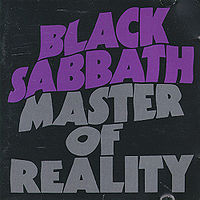
SOUNDTRACK: BLACK SABBATH-Master of Reality.

I recently reviewed this album.  And in light of this book I investigated some of the things that Darnielle’s character mentions.

First: according to Wikipedia, the US release of the LP/cassette DID have “extra” tracks on it.  When you listen on CD, and see the time settings of the songs, it’s kind of understandable what they are.

I have no idea what “The Elegy” is supposed to be (as part of “After Forever”) (unless it’s the intro part…no time is given in Wikipedia).  But “The Haunting” after “Children of the Grave” times perfectly to the “Ch Ch Children” part at the end of the song.

“Step Up” which, as he mentions, is a ridiculous name for a Sabbath song can be seen as the 30 second intro riff to “Lord of This World” as it is very different from that song.

The most unlikely “extra song”  is “Death Mask” as part of “Into the Void.”  The timing claims that it is the first half of the song.  The song changes at the 3 minute mark but it also reverts back to the original, so this “song” is specious at best.

But I do appreciate the book for giving some insight into the songs that I hadn’t considered before.

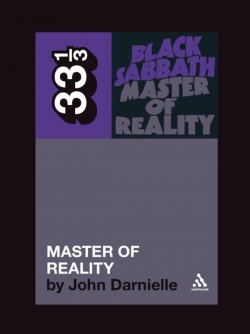
[READ: August 31, 2010] Master of Reality

When my friend Andrew told me about this book (and the series), I assumed it was writers (or musicians) writing about their favorite albums.  I had no idea it would be like this (and, I don’t know if they are all like this).

Darnielle has created a fiction (I assume) about a young man in a psych ward in 1985.  As part of his time there he is told to write in his diary every day.  After the first or second day (in which he just writes Fuck You!) he learns that Gary, the man in charge of him, is reading the diary.  And soon, he begins to use his diary as a way to get his Walkman and cassettes back (they were taken from him when he entered the ward).

Specifically, he wants Master of Reality back.   (more…)

Read Full Post »

« Newer Posts - Older Posts »