Feeds:
Posts
Comments

Archive for the ‘Alex Lifeson’ Category

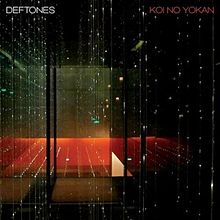
 fwboysSOUNDTRACK: DEFTONES-Koi No Yokan (2012).

koiThis is the disc that got me back into the Deftones.  My friend Cindy told me about an upcoming show (which just passed and which I could not attend, boo), and since I didn’t know that had a new album out, I ordered it and was really really impressed by it.  Diamond Eyes was an amazing culmination of all of their previous successes and Koi No Yokan (which means “Premonition Of Love”) takes it one step further.  They’re moving away somewhat from the really heavy sounds, and yet there is heaviness aplenty, both in Chino’s screams and in Stephen’s guitars.  Indeed, the album opens with big loud guitars–letting you know that they can still rock.

Then “Swerve City” shifts to cool swirling verses.   It’s not as extreme as earlier songs but it’s one of my favorites that they’ve done. The piercing guitar solo is great.  “Romantic Drams” has some of their more complex guitar lines mixed with a vocal line.  The bridge is bright and leads to a really catchy chorus.  There’s some really tight stop-on-a-dime moments as well.  “Leathers” pounds open with some bludgeoning chords and Chino’s screams (see, they haven’t gone soft), and then a great soaring bridge–a great hard/soft song, especially when the chorus kicks in at it’s almost inquisitive.  “Poltergeist” opens with hand claps and then some heavy loud guitars and bass.

“Entomed” presents another beautiful shimmery guitar introduction.  It’s one of their most delicate songs with the soaring chorus “shapes and colors are all I see.”  I can’t believe this song wasn’t a hit.  Why didn’t they release that as a single?  “Graphic Nature” has some great angular guitars but it smooths out into a cool song with some great basslines in it (Sergio Vega shines on this disc and even helped write some of the songs).  “Tempest” is one of those great songs where Chino sings at a different pace than the music–which I always like.  There’s a big heavy section about 4 minutes in that gives the song an extra boost.  “Gauze” has a heavy off-kilter guitar riff (with some really interesting keyboard blasts–Frank Delgado proving indispensable).  There’s a dark bridge and splashes of really heavy guitar throughout.

“Rosemary” is nearly seven minutes long and is has multiple parts.  It opens with some great echoey guitars.  And then the heavier guitars kick in chugging along while Chino’s voice soars over it.  By about five minutes the song gets really heavy and chromatic, rocking along until it suddenly stops and is replaced by a gentle guitar and keyboard  passage.  “Goon Squad” opens similarly to how “Rosemary” ends (in fact the end of “Rosemary” feels more like the beginning of “Goon Squad”) with quietly strummed guitar and swooshing keyboards.  There’s some cool weird screams that are layered in the mix of sounds.  Late in the song there’s a simple guitar solo that reminds me of Alex Lifeson.  Complex drumming (Abe Cunningham is still amazing) opens a very jazzy flavored final song “What Happened to You?”  Chino’s falsetto is in full effect and the song feels like a springboard to new styles of exploration on future records.

This album is really amazing.  It may not be as diverse as White pony but it’s more cohesive and it really highlights what a staggering good band Deftones have become.  I’m rather bummed that I missed that show.

[READ: March 13, 2013] Friends with Boys

Sarah had this book lying around for a while.  I had meant to read it because it sounded cool (and she said it was very good), but I never did.  Then she grabbed it again because it’s on a list of books she wants to read.  It was sitting on the table and I realized that the author (whose name is very very hard to read on the cover) was Faith Erin Hicks who wrote Zombies Calling, a book I enjoyed very much.  Now she’s on First Second Books (a favorite publisher of graphic novels) with this really great story.

I have one gripe I need to get out of the way.  The title is terrible for the story.  According to the drawings in the back of the book, it appears the original title was The Education of Maggie McKay which was an overdone idea at this point, but which actually makes more sense than Friends with Boys.  The title made me think that the story was about a tomboy who gets older and realizes that she can’t hang out with boys the same way.  That is certainly a part of the story, but the full story is far more complex–a girl who has been homeschooled all her life finally goes to high school, where she learns to make friends.  Oh, and there’s a ghost following her around too.  So you see, Friends with Boys, while an engaging title I think does it a disservice.

But that’s neither here nor there.  Because the story is really excellent. (more…)

Read Full Post »

14

SOUNDTRACK: DEFTONES-Diamond Eyes (2010).

diamondBefore releasing Diamond Eyes, Deftones had two band crises. The first was that they didn’t really seem to like each other anymore.  The previous album was fraught with tension and they barely toured.  After deciding that they wanted to remain as a band, they were invigorated and made an album called Eros.  But during the recording, bassist Chi Cheng was in a car accident and was in a coma.  As of yet he has not fully recovered.  So they shelved Eros, hired a temporary bass player Sergio Vega and set about recording Diamond Eyes.  And for whatever reason, it proved to be one of their best releases so far.

“Diamond Eyes” opens with a heavy down-tuned guitar–very abrasive–until the chorus come in and it’s their most beautiful ones yet–with soaring keyboards and  harmonies.  And then the heavy guitars come back–it’s what Deftones do so well–beauty and ugly together.  Stephen Carpenter really shines, as always.  “Royal” is a fast song with a great harmonizing chorus.  “Cmnd/Ctrl” has a shocking low riff that explodes into a  bright chorus.  “You’ve Seen the Butcher” has guitars that seem almost untuned as the song starts.  But it morphs into a kind of sexy butt-shaking chorus.  And Abe Cunningham’s drums are, of course, fantastic.

“Beauty School” is the first that doesn’t really start out heavy, it’s a got a gentle guitar intro and the first song where Vega’s bass is really prominent as a separate instrument and it creates a beautiful alternative song–great vocals throughout.  “Prince” brings in a lot of new textures to the album, including a clanging guitar sound and a great screamed chorus. “Rocket Skates” is one of my favorite songs on the record, it has a classic metal riff and the great screamed-beyond-comprehension chorus of Guns, Razors Knives and a weird little whoooo that ends the chorus.

“Sextape” is a surprisingly gentle song, opening with an echoed guitar riff and one of Chino’s most gentle choruses.  “976-Evil” has an echoey guitar and voices not unlike the Cocteau Twins.  “This Place is Death” has another great alt rock feel–a big song with bright guitars and dark lyrics.  I haven’t really mentioned Frank Delgado on keyboards and samples.  He’s been with the band since White Pony, and I feel like his presence was made notable on a few songs here and there.  But it seems like on this disc he really comes to the fore, adding new textures and sounds to the album which really fill it out.

[READ: March 12, 2013] McSweeney’s #14

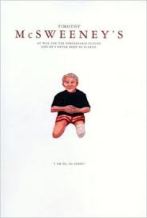
After the colorful extravaganza of the Comics Issue of McSweeney’s #13, this book settles down into something more somber  The book is softcover and all white.  The cover depicts a cartoon of George Bush with both legs blown off and the caption, “I Am So, So Sorry.”  On the spine in small print: “We’re praying as fast as we can.”  It is the most context-full cover they’ve done yet and, nearly a decade away it seems like a rather mean cover, but if I remember correctly at the time it seemed apt and delicious, especially in light of the upcoming election.

Yet despite the overtly political cover, the content inside is not political or even thematic (although it is pretty dark stuff).  Nevertheless, the table of contents gives us a small joke when it says “To help you know which stories to read first, we have indicated with either a * or a † those that deserve special consideration from you, the reader.  If you see either a * or a †, do not miss that story.”  Of course every story has either a * or a † but they cleverly did not put any kind of pattern to the symbols.

The colophon explains that when they were in Ireland, they met an actual Timothy McSweeney.  He had been given a copy of Issue #3 and then promptly forgot about the magazine.  But when McSweeney’s was in Galway to do a reading at the Galway Arts Festival, Timothy (Ted) McSweeney traveled from Dublin to check it out (not a short trip).  This also resulted in a letter from Mr McSweeney which is actually quite funny.

There are also illustrations in the book, although they are small illustrations and are placed on the title of each piece in the book.  All of the illustrations are old, mostly coming from the 1800s, although one dates back to 1670.  They illustrations are all technical scientific ones and don’t have anything to do with the stories. (more…)

Read Full Post »

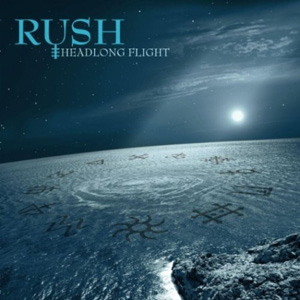
SOUNDTRACK: RUSH-“Headlong Flight” (2012).

A new single from Rush came out on Thursday.  And it’s seven minutes long!  Yeeha!  It’s also really heavy.

It opens with a cool bass riff and then thundering guitars.  This song continues in the heavier, grungier sound from Vapor Trails.  The middle section sounds distinctly Rush (late 80s style), and Geddy’s voice hits some pretty high notes.

There’s a brief extra section with a spoken word part–I’ve not been able to make out what it says, but the instruments (especially the great guitar sound) is fantastic behind it.  That’s followed by a great solo from Alex (that hearkens back to his wild solos from the 70s).  Geddy throws some cool bass fills–although he’s not showing off as much as he might).  And, of course, Neil is doing some cool drum things through the song–little fills and whatnot–and he sounds like he’s pounding the hell out of the drums.

Here’s the video

[READ: April 14, 2012] Squirrel Seeks Chipmunk

As I mentioned yesterday, I bought a book to have David Sedaris sign it, but decided the wait wasn’t worth it.  This is the book I bought.  It very excitedly claims to “with one new story” which I thought was funny both in itself and also because I hadn’t read any of the other ones (I gather they are from This American Life, although they’re mostly too vulgar to have read on the radio).  It also has illustrations from Ian Falconer, who is the guy behind Olivia, the children’s book series.

Anyone who has read David Sedaris essays knows what to expect–funny, presumably exaggerated stories about his family and loved ones.  Indeed, the stories that he read from during the show were just that–dark and funny and about his loved ones.  So imagine my surprise to find that these were all short fictional stories about animals!  No Sedaris’ are harmed in this book.

All of the animals are behaving like people, so Sedaris’ caustic wit and attacks on hypocrisy are all in play.  However, because they are animals, Sedaris can go much much further with them.  Matt Groening said that he could get away with a lot more social criticism because The Simpsons were cartoons; the same applies here.  Indeed, these are some of the darkest stories that I have ever read from Sedaris.

Some of them are kinda funny, but most of them left me mildly bemused at best.  Because while they seem to be a kind of laugh-at-the-recognition-of-our-foolish-behavior (as done by animals), really they are preachy and seem generally disappointed in us.   And who wants to read that?  It basically seemed like an opportunity for Sedaris to make fun of things that he doesn’t like about people.  But he knew it would be obnoxious to makes stories about people acting that way, so he made them animals instead.  And perhaps he thought that would make it funnier.  At times this was true, but not very often. (more…)

Read Full Post »

SOUNDTRACKRUSH-“La Villa Strangiato” (from Rush: Beyond the Lighted Stage) (2010).

In the bonus features of the DVD for Rush: Beyond the Lighted Stage, we see (in addition to some awesome live footage of Rush in 1974 with original drummer John Rutsey) a fantastic live clip of Rush playing “La Villa Strangiato,” one of the best instrumentals around.

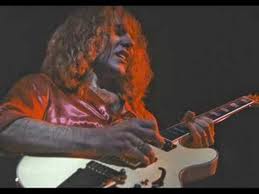
The camera angle focuses mainly on Alex Lifeson.  And man does he rock!

It’s common knowledge, even among Rush haters, that Geddy Lee and Neil Peart are (or at least were) always at the top of the list of “Best” bassist and drummer respectively.  And yup, they are pretty amazing.  But this has always left Alex in the shadows.

Admittedly, there are thousands of great, amazing, ear melting guitarists.  And, typically, the bassist and drummer are kind of dull, so it makes sense that Alex’s playing is in the shadows of the other two.  But I fear that he is often labelled as just not very good.

This video should totally prove that suggestion incorrect.  He plays quickly and with amazing accuracy, in a multitude of styles.

And speaking of the movie, I always wondered if their families minded that Alex and Geddy changed their names for the band (it’s never addressed in the film). It seems like a weird thing to have done circa 1974 in Canada, although Kiss did the same thing at the time in New York (removing the Jewishness of their names).  I just love the name Živojinović, and it’s a shame it’s not better known.  (Huh, although Wikipedia tells me that Lifeson is a sort of literal translation of Živojinović.  Who knew?)

[READ: July 29, 2010] “Grokking Rush”

Since Rush has been everywhere lately, I figured I’d mention this recent article in The Believer.  There’s nothing terribly new in the article.  In fact, it seems like something of an introduction to the uninitiated, giving a basic history of the band and their lyrical themes.

The only thing I didn’t know, which is teased out in the subtitle, was that so many academic papers have been written about the band. Dissertation titles include “Permanent Changes: Rush, Musicians’ Rock, and the Progressive Post-Counter-Culture” and “Grand Designs: A Musical, Social and Ethnographic Study of Rush.”  They have also been written about in The Journal of American and Comparative Cultures and Popular Music and Society.  And, they are the only band ever to be cited in the Journal of Ayn Rand Studies. (more…)

Read Full Post »

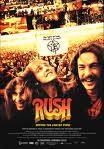
[WATCHED: July 11, 2010] Beyond the Lighted Stage

I had heard about this film around the time that I read .  I was pretty excited about it, and then evidently everyone I know went to the TriBeCa Film Festival and saw it (except me).  And then everyone saw it on VH1 (except me), so I bought the DVD instead.

This film is really fantastic.  Obviously, it helps if you’re a Rush fan, but Geddy and Alex in particular are funny and interesting (even if they think they are boring).  And the film is expertly edited.  They cover 40 years of Rush’s history in 90 minutes.  This leads to a rather cursory look at their history, so the film doesn’t get mired in details, but there are tidbits of fun for die-hards. (more…)

Read Full Post »

SOUNDTRACK: RUSH-Hemispheres (1978).

Or maybe this is my favorite Rush album.
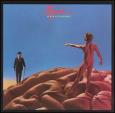
And what’s not to like?  A naked man on the cover, a 20 minute song (in 6 parts (which is a sequel to a previous song!)), and a 9 minute instrumental.  It’s prog rock heaven.

The “title” track is a continuation of a song from the last album (and so is called Cygnus X-1 Book II; Hemispheres)).  It’s a thoughtful look at balancing the two halves of the brain: love and reason.  In true epic style, the forces are represented by Apollo, bringer of Wisdom and Dionysus, bringer of Love.  Apollo teaches the people how to fend and care for themselves.  They’re thrilled and delighted with themselves until they feel kind of empty inside.

Dionysus arrives: he teaches them love and music, dancing and drinking.  And they embrace this wholeheartedly.  But this leads to cold and starvation.

And so, as is natural, the people were split with the two sides coming forth [hey this sounds familiar].  And of course, they fight each other.

It gets a little confusing from there when the spaceship from Part 1 arrives and after telling his story of going through the black hole it unites the fighting forces (You can also hear musical snippets from Part 1).  And yet, musically it works wonders.  The epilogue is a peaceful, well-written acoustic bit that sums up the themes of the song quite nicely.

The second side has three tracks: “circumstances,” a short, heavy rocker that I have always loved.  I think the main reason is because each time they enter the chorus, Neil plays either 1, 2 or 3 cymbal crashes depending on which verse they’re in (math geek!).

The next song, “The Trees,” is another classic.  Starting quietly, with a classical style acoustic guitar, we learn that there is trouble in the forest.  As the song rocks to an end, the trees are all keep equal by hatchet, axe and saw.  Over the years I’ve thought of many different explanations for this song.  And to me that’s the mark of a good story.

The final song is probably my favorite Rush song.  “La Villa Strangiato” is a 9 minute instrumental with a dozen sections and is subtitled “An Exercise in Self-Indulgence.” It is a tour de force showcasing all their skills.  I was delighted that they had started playing it live again on their more recent tours.  And, I was even more delighted to see that the middle section featured Alex telling a ranting, random, crazy story.  Alex has always been very silly, but it hasn’t come out all that much musically. So, this was a great opportunity for him to let loose.  I have no idea what he was rambling about in any of his bits, but the snippets I’ve heard have all ben quite funny.

This was definitely the heyday of prog rock, and yes, it is sadly missed.

[READ:  March 28, 2010] “I.D.”

It’s been a little while since I’ve seen a Joyce Carol Oates story anywhere.  For a time, it seemed like I read one every few days.  So it’s nice to have her and her gruesome stories back.

This story focuses on a young girl, Lizette.  As the story opens we learn that she is feeling the effects of a beer buzz and it is making her 7th grade math class drag on.  (We later learn that she had about a quarter of a can of beer, but that’s still too much at 13)!

She is currently concentrating very hard on getting a napkin with her lipstick print to classmate, J.C.  J.C. has been left back and he is baaaad.  Lizette is wearing lipstick because her mother didn’t come home last night.  In fact, Lizette is not sure when her mom last came home.  It’s been a few days at least. But then, her mom has left her alone before, so she’s not terribly concerned. (more…)

Read Full Post »

SOUNDTRACK: RUSH-A Farewell to Kings (1977).
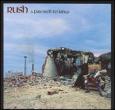
Although I recently said that Caress of Steel is one of my favorite Rush albums, I’m really torn between a number of their albums from the 1970s.  I’ve loved A Farewell to Kings since the time I got it: it’s over the top, and it showcases all of the band’s strengths.

The opener “A Farewell to Kings” features a wonderful classical guitar intro that morphs into a heavy rocking masterpiece.  There’s time changes galore and it’s all over in just about 5 minutes.

It’s followed by “Xanadu,” one of Rush’s all time great epics.  Tubular bells, cool guitar effects, Rush’s first great use of keyboards-as-effects, even a cowbell solo all open this song with sufficient grandeur for what’s to come.  A slow vocal intro leads to a super fast exploration of Coleridge’s “Kubla Khan.”  Whenever people wondered why Neil’s drumset was so big or why Alex (and Geddy) had doublenecked guitars, they needed only listen to this to be amazed that three men could play it all.  11 minutes long and not a wasted second.

One of Rush’s biggest hits and perennial favorite “Closer to the Heart” comes next and it still sounds pretty fresh all these years later.  “Cinderella Man” is an overlooked track on this disc, but it showcases Rush’s drift away from the individualism vs state of 2112, and move toward the individualism of doing what’s right for all: “he held up his riches to challenge the hungry.”  It also features a blistering solo from Alex.  “Madrigal” is a very short acoustic song, quite a departure for the time but a nice delicate track before….

“Cygnus X-1.”  The other epic on this disc.  And right from the start you know you’re in new territory here.  A fully distorted voice, bells echoing like they are floating at sea (or in outer space), all kinds of build-up lead to a noisy bass line coming from far away in the depths of space.  And after 2 and a half minutes of build up, the whole band kicks in with this off kilter heavy rocker.  It’s basically the story of a space ship flying into a black hole. It also features some of Geddy’s most screechy vocals.  I wish I could remember the exact quote, but my friend Joe’s bandmate had a wonderfully derogatory description of the end of this song.

But aside from the end, the main body is great.  From the 5 minute mark, the song is a catchy, driving song as the Rocinante flies through the galaxy.  From the 7 minute mark, the song is seemingly caught in the black hole, as the song drifts about, compressing the song into a manic session of fast fast fast riffs and Geddy’s tortured screams.  It’s pretty intense, and guaranteed to alienate as many people as it wins.

The album features so much experimentation, and it’s wonderful to see a band with so much creative energy release a disc with so many fantastic moments.  Very few records take risks like this anymore.

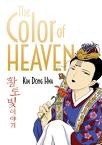
[READ: March 21, 2010] The Color of Heaven

This final book of the Kim Dog Hwa’s trilogy is a wonderful conclusion to this sweet story.  If you’ve read my previous two posts about these books, you know that this is the story of, Ehwa, a young woman as she matures in rural Korea several generations ago.  By this third book, she has turned 17 and has met the love of her life.  Sadly for her, Duksam has had to leave suddenly.  At the end of book two, he set sail in part because he was fleeing an angry mob, but also in an attempt to make money as a fisherman so that he can save up for his beloved Ehwa. (more…)

Read Full Post »

SOUNDTRACK: RUSH-Caress of Steel (1975).

Despite the fact that this album is largely considered a failure, it’s one of my favorite Rush albums.  There’s so much weirdness about it that I can see why it isn’t terribly popular but there’s so much goodness that it makes me a bit bummed that some glorious tracks are overlooked.

It opens with the one track people know from the disc: “Bastille Day,” a rough raw rocker that is heavy and really sets the tone for the first side of the disc. The heavy heavy riff is reminiscent of Black Sabbath and other early metal pioneers.  I also learned that they were touring with Kiss around this time, so maybe that’s where they got some of their heavy riff ideas from. I of course cannot imagine Rush and Kiss touring together.  That must have been a real trip.

The second song, the amusing “I Think I’m Going Bald” is rather obvious, especially the way he delivers the title line, but man the guitar solo just rocks and rocks and rocks.  “Lakeside Park,” a real location outside of Toronto is a gentle tribute to youth.   This quote amuses me no end, and is something I just read about.

The first real highlight for me is “The Necromancer,” a wacked out 12-minute mini epic.  It opens with a spoken word introduction, setting the tale of three travelers fording a river. The first part is pure psychedelia, with screaming guitars going from ear to ear.  The second part is heavy with a slow pounding riff and Geddy’s screamed vocals  It features a long headphone-happy guitar solo.  And just when you think it’s over, there’s some crazy sound effects and, yes more guitar soloing.

The third and final movement sees the return of By-Tor from “By-Tor and the Snow Dog.”  By-Tor is now a good guy and he scares off the Necromancer.  I always enjoyed playing this part on the guitar as the chord progression is really pretty.

Side Two is one song, a full side, their first proper epic. Called “The Fountain of Lamneth” it focuses on a man’s quest for this elusive Fountain.  It has six parts.  The first, “In the Valley” is a pretty, acoustic ballad that expands into a loud rocker.  It introduces our anonymous narrator, and by the end its sets the tone with a loud/quiet explanation of his satisfaction and dissatisfaction with his life.

It’s followed by the insane “Didacts and Narpets” (Teachers and Parents (anagram on Narpets).  It’s just drums and shouting.  Evidently it’s designed to show a young man fighting with teachers and parents, and sure why not.  It’s pretty out there, but it’s only 90 seconds long.  (I’ve always enjoyed it).

The middle sections are really quite mellow.  More of that beautiful classical guitar that Alex does so well.  The songs don’t remain mellow the whole time, with “No One at The Bridge” adding some loud aggressive bits.  But “Panacea” stays quite mellow, with some beautiful guitar harmonics.  The next bit, “Bacchus Plateau” is a really pretty song despite its ultimately downer message, and probably could have been a hit if tit weren’t part of  20 minute song..

The song ends with him finding the fountain.  And yet rather than rejoice, he’s exhausted.  But I’ve always enjoyed the “message” of the song: “Life is just a candle but the dream must give it flame.”  It’s inspirational and depressing at the same time.  It ends with a reprise of the opening acoustic bit. It’s a tidy song and a wonderful first attempt at an epic track.

The only reason I’m surprised this didn’t sell well is that it works so well as a trippy 70s disc, ideal for sitting around with headphones on in one of those round chairs.  I assume its the heaviness that turned away fans of Pink Floyd and the like.  And, well, probably the downer message and really weird title of the disc (what does Caress of Steel mean anyhow?) might have had something to do with it.

[READ: March 10, 2010] Rush, Rock Music and the Middle Class

I read about this book in an article from The Walrus. And I thought to myself, it’s geeky enough to love Rush, but how about reading an academic treatise about Rush? I’m so there.

Well, I haven’t really read a truly academic (as in published by a University Press) book in a while, but it didn’t take too long to get back in the swing of things.  Plus, if I may be so bold, ethnomusicology seems like a lot more fun than philosophy.

As the subtitle implies, this book looks at Rush as music for the middle class.  The only thing I had a hard time with the book was the definition of middle class.  It is specifically aimed at a U.S./Canadian middle class (although the UK does enter into it too), and with all of the definitions thrown around, middle class seems very broad.  The easiest breakdown to see was based on employment and the most prominent type of employment among Rush fans was “professional” (including librarians and IT people).  So, evidently I am middle class.  I only say this because for the most part classes are hidden in the US (they aren’t, of course, but there are many attempts to try to keep them hidden).

This concept of class obviously pervades the entire book.  But before we get too hung up on that, we must not forget that the real focus of the book: the music of Rush. (more…)

Read Full Post »

SOUNDTRACK: RUSH, obviously (1974-present).

I’ve loved Rush since seventh grade.  They introduced me to prog rock, Canadian accents, Lakeside Park and Ayn Rand.  They taught me how to play killer bass lines, wild guitar solos and to ponder the existence of washing machines on stage.

[READ: March 5, 2010] “Living on a Lighted Stage”

I don’t often write about non-fiction pieces in magazines, but because this one is about Rush, it seemed necessary to bring it up.

The rather humorous subtitle of the piece sets the tone here. Rush has been together since 1974.  They’ve been taken seriously by musicians and die-hard fans, but aside from that, the average person likes “Tom Sawyer” and that’s about it.

This article notes that Rush is appearing more and more in unexpectedly public places (to both the delight and consternation of fans).  From the Colbert Report (their first time on American TV in 30-some years), to appearances is movies, including appearing as themselves playing live in I Love You, Man.

In addition to all of this there are two new works that are designed to really delve into the history of Rush. One is a new book, an academic treatise that I am sure I never would have heard about if it weren’t for this article, called Rush, Rock Music and the Middle Class: Dreaming in Middletown by Chris McDonald (which I just received and hope to start reading shortly).  And, there’s also a new documentary coming out (possibly in the Spring) tentatively called: Rush A Documentary.

And finally, a new film coming out has Alex Lifeson (as well as about 100 other musicians) in a cameo (he plays a border guard). It’s called Suck, and you can see the trailer (which has Lifeson in it) at Rushisaband.com.

I can’t possibly explain the recent influx of Rush (“Tom Sawyer” even played a major plot point on Chuck not too long ago) except to suggest that maybe all the die-hard Rush fans have grown up and gotten jobs in some kind of prominence.

Some Rush fans bristle at the idea of the guys selling out (yeah, right) or, heaven forbid, having fun.  They’ve always had a silly side (read the liner notes, look at Geddy wearing a Devo pin in the late 80s), and it’s nice to see them showing that side off a bit.  And the thing is, none of this attention is going to make “Cygnus X-1” any more popular than it is.  But if it gets some new people into prog rock, well, where’s the harm in that?

I won’t be first in line when the documentary comes out, but I’ll certainly watch it!

This article is available here.

Read Full Post »

« Newer Posts