 SOUNDTRACK: NOTHING SMELLS QUITE LIKE ELIZABETH compilation (1992).
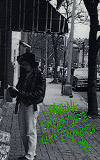 This was Dromedary Records’ first big release: a statement of purpose if you will. This is a compilation of unsigned Jersey indie bands. I listened to this all the time as it was being compiled and mastered. It’s been a while since I listened to the disc start to front.
It’s funny to hear some of these tracks now 18 years later, to see what stands up.
Melting Hopefuls’s “Gondola” has always been a favorite of mine, a weird intertwining vocals/guitars mix. I’ve no idea what it’s about, but it sounds great. Oral Groove’s “She’s Still Here” is okay. The opening riff is pretty great, but the rest of the song isn’t all that memorable.
Planet Dread’s “What We See” is all over the place but manages to be a reasonably cohesive metal song. The time changes are still unexpected and are quite interesting. This was a band who liked to throw everything into a song, so when the trippy middle section comes in, it sounds almost like a different band until that same crazy riff brings it back to metal territory. The triangle at the end is a nice touch too.
When this disc came out, Eternal Vision was this huge buzz band, Jersey’s (specifically my home town of Hawthorne’s) up and coming Dream Theater. And you can hear the talent in this song. I have to say I much prefer the instrumental section to the parts with vocals. Bassist Frank LaPlaca (who yes I played little league with) is now in the prog rock band 4front. His bass work has always been amazing and no doubt still is.
Footstone’s “Forbidden Fruit” is one of the poppier/groovier numbers here. It’s always made me smile, as it’s about office furniture: “That’s not your chair.” The unexpected funk freak out in the middle is just a bonus. And cuppa joe’s “Meanings” is one of their lighter songs with some of my favorite lyrics on the disc. When the song starts I think it’s going to be a bit too twee, and yet it always redeems itself wonderfully.
Ya-Ne-Zniyoo’s “The Man in My Dream” is as peculiar as the band’s name. Jangly guitars, tribal drums, and cool vocal twists (nice background vocals in particular). And, like a lot of these songs, there’s a wild middle section, this one with heavy groove guitars. Ya-Ne-Zniyoo have a disc available on Amazon (at least I assume it’s the same Ya-Ni-Zniyoo).
Godspeed have a really raw, heavy sound on “Child Bride.” When I was younger I always laughed at the “So soft, it makes me hard” line (that’s mixed quite loudly), but now it seems a little too silly. However, it’s a good set up for the weird and almost jokey mosh section that ends the track. I also enjoy any song with a coda that has nothing to do with the rest of the song.
Rosary was my friend Garry’s band. They were a really interesting band out of Hasbrouck Heights. “Asylum” holds up quite well. The guitars sound great and the vocals at the end sound fantastic. There’s something about the overall mix that’s a little muddy, which I think hides how good this song is. The disc ends with Grooveyard’s “Child Bright” (huh, two songs with almost the same title). It’s probably the most metal song of the bunch, even though it has a very jam-band guitar opening. But with the heavy guitars and strong vocals, (and the “time to die” lyrics), this is easily the heaviest song on the disc.
So, 18 years later, this is still a fun compilation. I’m not even sure how many of thee bands are still around. You can hear a few songs on Dromedary Radio. He might even have a few CD compilations left over, if you ask nicely.
[READ: February 18, 2010] “The Insufferable Gaucho”
This is the longest Bolaño short story of this batch. This is a slow paced story following a man in his steady decline (or is it?) from urban lawyer to small town rabbit hunter.
As the story opens, we meet Héctor Pereda an irreproachable lawyer and caring father who lives in the wonderful city of Buenos Aires. His son Bebe and daughter Cuca later accused him of sheltering them from life’s harsh realities. But when Pereda’s wife died (the kids were 5 and 7) he wanted to respect her memory, so he never remarried (and he didn’t want to burden his children with a stepmother).
Cuca eventually married and Bebe became a very successful writer. Both kids eventually moved away. And Pereda seemed to age prematurely. Then the Argentinian economy collapsed. He couldn’t afford to pay his cook or maid, so he decided he would move to his country house where he could be more frugal.
When he gets out to the country, he find the place to be desoltae. His house is in terrible disrepair. He tries to fix it himself, but he finds that he needs to call on the help of some lazy gauchos (who do, in fact, play guitar all day). He buys a horse, meets with people and slowly, slowly starts building a small farm.
By the end of the story he is unrecognizable: unshaven, dirty and dressed like one of the gauchos. But the real question is, is he happy?
There’s some (to me) unbelievable parts of this story: rabbits attacking people on horseback? But it occurs to me that Pereda may be going slowly crazy. Surely his son (and writer friends) think so.
It’s a long story where not very much happens, but I still enjoyed it. Despite the apparent lunacy, it was a very engaging portrait.
For ease of searching I include: Bolano

 I Just Read About That...