Feeds:
Posts
Comments

Archive for the ‘Magazines’ Category

booksSOUNDTRACK: YO LA TENGO-Tiny Desk Concert #271 (April 15, 2013).

y-o-la-tenI’ve enjoyed Yo La Tengo’s music for years and years.  I have many of their records, although I’d never consider them a favorite band. They’re just a reliable band I like.   This Tiny Desk Concert sees the venerable band in acoustic format (with no drums!).  Ira Kaplan sings and plays guitar, drummer Georgia Hubley sings backup and bassist James McNew plays an acoustic 12-string guitar.

Yo La Tengo has a lot of diversity in their records.  And even here, their songs sound quite different.  I had never before considered that on “Is That Enough” Kaplan sounds like someone out of A Mighty Wind (Harry Shearer perhaps?)  I also never considered how much they sound like The Velvet Underground (which I guess others have, but I especially noticed when Hurley sings her slow song).  McNew also adds some lovely high-pitched harmony vocals (compared to Georgia’s deeper harmonies).

After the first song, Kaplan says, “You in the back will never hear this one”  They start “Tears Are In Your Eyes” from their 2000 album (and I can’t help but hing that McNew’s 12 sting is out of tune).  Georgia sings and sounds incredibly like Nico on this song.

It’s strange how Ira keeps whispering to Georgia (you can kind of hear him) throughout the song–the microphone is really sensitive.

“Ohm” is one of my favorite songs from their album Fade. Its simple, but with some great harmonies and I love the way the song–which is fairly straightforward–goes up an octave during the “say goodnight “ part.  That little melody shift really makes this song wonderful.  And it sounds terrific here.   I also love how the end is a repeating of the same chord and chanting vocals while Ira plays a wild (but acoustic) guitar solo.

I’ve never really considered seeing Yo La Tengo live (they tour all the time), but maybe I should.

[READ: January 23, 2017] “Don’t Be Evil”

Before Simon Rich started writing longer pieces for the New Yorker, his Shouts & Murmurs pieces were usually pretty short–and he crammed a lot of funny into that short space.

This piece is all about Google.  It’s kind of one-note, but it’s still pretty funny.  And its brevity prevents it from wearing out its welcome.

So it begins with him saying how much he loves the Google Dictionary feature.  It’s really convenient, but sometimes the results can be strange.  Then he gives some examples: (more…)

Read Full Post »

dressSOUNDTRACK: IMANI WINDS-Tiny Desk Concert #277 (May 29, 2013).
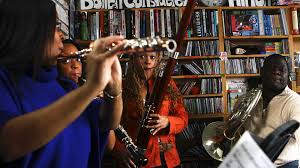
windsFor some reason this video and audio has been removed from the NPR site (no explanation is given).  But I found it elsewhere and was able to really enjoy it.

But they have left up the blurb:

When Igor Stravinsky began composing The Rite of Spring, his ballet for vast symphonic forces, he could hear the music in his head but couldn’t quite figure out how to write it down. It was just too complicated.

Today, 100 years after The Rite‘s premiere, the fearless musicians of Imani Winds make it all sound remarkably easy, given that they’ve condensed Stravinsky’s massive walls of sound down to just five instruments: bassoon, clarinet, flute (doubling on piccolo), oboe and French horn.

Make no mistake: Many of the jagged rhythms and crunching chords remain viscerally intact, albeit on a more intimate scale. As the group huddled behind Bob Boilen’s desk, bassoonist Monica Ellis noted the opposing ratios, saying, “It’s apropos in some strange way that we are playing one of the most massive pieces in some of the smallest instrumentation in one of the smallest settings that it could possibly be played in.”

The setting might be small, but in this clever arrangement by Jonathan Russell, we learn that a wind quintet, when called upon, can make a mighty and sonorous wail. Just listen to how the Imanis cap off “Dances of the Young Girls” with the entire quintet in full cry (at about 4:30 into the video). The bassoon repeats a fat bass line while the clarinet runs its snaky scales. The piccolo, in piercing chirps, serves as a foil to a frenzied oboe and snarling “whoops” from the French horn.

But not everything in The Rite is all pound and grind. Stravinsky’s transparent introduction, almost impressionistic, is a fluttering aviary of winds — even in the original — with individual colorings for each instrument. It’s all rendered beautifully here by Imani Winds, musicians brave enough to play David to Igor Stravinsky’s imposing Goliath.

This concert is fascinating to watch (and listen to) because even though this piece is familiar (to me) in theory, it’s apparent that I don’t really know it.  And I can see why this piece was so controversial when it came out–it is weird and chaotic and almost random at times.  I imagine that seeing it as a ballet might make it more cohesive, but it’s still pretty out there.

I love that the bassoon seems to be the primary instrument–one that doesn’t typically take center stage.

The group breaks up their selections into three primary chunks.

Selections from The Rite of Spring:

For “Introduction” the bassoon is the primary instrument playing the initial melody.  Then the clarinet and oboe give the whole thing an unsuaul sound–to say the least.  The French horn actually works as the the bass for this part.  It’s also neat watching the flautist switching between flute and piccolo.  I’m not sure when the second part “Augurs of Spring” begins, but I assume it’s when the bassoon repeats that initial melody and then the French horn plays a staccato bass note. The music sounds kind of threatening but whimsical at the same time.

Somewhere in here “Dances of the Young Girls”  begins.  I assume once the piccolo starts chirping and swooping.   And then the band grows very loud before abruptly stopping.

The second segment she describes as incredibly picturesque. “Ritual of Abduction” begins nosily with almost total chaos from all the instruments–the piccolo stands out as sharp and piercing.  As with the other segments, I’m not sure when “Spring Rounds” begins, but I have to wonder if this is when the music seems to go circular and then slow down. There are low notes from the French horn while someone is playing accent notes that sound, not off, but dissonant–providing stark contrast with the rest of the slow movement.  There are some blares of music from the French horn as well.

I’m guessing that “Dancing Out of the Earth”  begins with the fast bassoon melody: up down up down up down up down with trills and swirls from the flutes and clarinet.  It rises and rises very dramatically and then stops.

They tell us that it’s not possible to play the entire ballet so they have taken the “greatest hits” and for this show it’s the greatest hits of the greatest hits.  Consider it a deconstruction with five instruments. But it still evokes the spirit of this sacrificial dance.

She talks about how controversial this was in 1913, “when ballet was meant to be about… I was going to say flamingos…. fairies swans, the other water animals.”   This is the final moment the virgin who sacrifices herself dances herself to death.  And they are going to exemplify trombones and timpani and all that loud stuff (the French horn player laughs and says “Grr I am trombone”).

“Sacrificial Dance: The Chosen One” begins with a three note melody–again it is somewhat threatening.  There’s lots of little fast runs by the French horn with accents from everyone else.  It stops dramatically at one point and then resumes with so many different melodies.  And then comes the surprise ending with a rising flute line and then a low end from the horn.

Without taking away anything from Imani Winds, I ‘m sure this performance doesn’t do the whole thing any justice.  But it is amazing to imagine how much more there is to it.  And it is amazing that these five instruments can evoke so much.  It’s an uncomfortable and somewhat shocking first listen.  It’s amazing that is over 100 years old, although it sounds so contemporary.

I don’t know why it’s not on NPR any more. I found it on YouKu (whatever that is).  I have been able to watch it twice but on two other times I was unable to watch it.  So keep trying, it’s worth the effort.

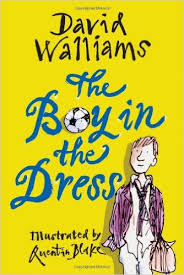
[READ: May 5, 2016] The Boy in the Dress

David Walliams is best known (if he is known at all) as the tall one on the sitcom Little Britain.

I had no idea he wrote books (he has done over half a dozen children’s books), and I was happy to start with this, his first one.

This book is illustrated by Quentin Blake, who is best known (if he is known at all) as the illustrator for the Roald Dahl books.  So his simple, somewhat sloppy, style might look familiar.

The story is, as the title suggests, about a boy who wears a dress.  And the story is very funny–not because it makes fun of him for wearing a dress, oh no.  In fact, I love the story for going out of its way to show that it is normal that a boy might want to wear a dress. (more…)

Read Full Post »

SOUNDTRACK: LA SANTA CECILIA-Tiny Desk Concert #327 (December 16, 2013).

santaAs this disastrous presidency continues to dismantle all the goodness in our country, and as the liar who current resides in the White House continues to claim that those who disagree with him are enemies of the people (I mean COME ON), I wanted to share magazine covers that show that a majority of people (both inside and outside of our country) think that Trump is the real enemy.

Originally I planned to just run these covers with no comment.  Then I heard this band La Santa Cecilia and decided that they needed to be put with these images.

La Santa Cecilia are from Los Angeles, California.  “Some of us were born here some of us were brought here and we have a passion for traditional Latin American music; but we also love to rock n roll.  We love blues and jazz.  And we love to celebrate that diversity.  And we love to celebrate where we come from and where we are.”

And unlike the hatred that we are inundated with: “La Santa Cecilia spreads joy every time its members plug in to do a show. They do it one dance step at a time, with cumbias, corridos, elegant mambos and plain old rock ‘n’ roll.”

La Santa Cecilia plays a traditional Latin American sounding music, although there is definitely a twist–lots of rock leanings.   “Falling” is sung in English and it is beautiful and heartfelt.  It’s also got a great guitar solo (and a cool little bass solo).

Introducing the next song, she says: “We’re proud to be from immigrant parents, to have been able to come to this country and to travel the world and share what this music is all about and that it is from the United States.  And we just need immigration reform so we can all be able to travel.  This is for all of the people who are out working in the kitchens in the beautiful strawberry fields.”

The song, “El Hielo (ICE)” is sung in Spanish.  But in the middle she recites a passage in English that has become more relevant now.  “Ice like snowmen in the wintertime; like ice cream under the summertime sun.  Happiness.  ICE: immigrations customs enforcement… and we never know when it will get… us.”

The final song returns to the joy.  “Monedita” is happy song.  “It’s Friday, lets dance.”  It’s got a wonderfully upbeat melody from the button accordion.

This push to ban immigrants is short-sighted and ignorant.  We are all from immigrants and immigrants have so much to offer.  Even if it is music and happiness.

So RESIST.

3068356-inline-i-1-nyt-one-side-effect-of-trump-seriously-great-cover-art

RESIST!

RESIST!

and more importantly

IMPEACH (and preferably IMPRISON) the racist hate mongerer.  #ITMFA

It is not normal for our country’s president to be so despised, especially by our allies.  It is not normal for our country to be humiliated by a man who spends more time on Twitter and then has the temerity to say ‘Nobody Knew Health Care Could Be So Complicated.’  Idiot.

So Democrats, Clinton earned 3 million more popular votes–do not cave to this White Power endorsing man who cares nothing for the citizens of this country.

And Republicans, stop putting your personal gains ahead of what is good and just.  Supporting neo-Nazis, bigots, polluters, dismantlers of the foundations of our country will certainly come back to bite you on the ass. (more…)

Read Full Post »

manner SOUNDTRACK: BEN GIBBARD-Tiny Desk Concert #251 (November 19, 2012).

benBen Gibbard is the voice of Death Cab for Cutie.  His voice is instantly recognizable and his melodies are surprisingly catchy.

This Tiny Desk Concert (they say it’s number 250, but I count 251) is just him and his acoustic guitar.  I didn’t know he did solo work, but apparently he does (in addition to being in The Postal Service and All-Time Quarterback).

Gibbard just released a solo album, Former Lives, which he’s said is a repository for material that didn’t work as Death Cab for Cutie songs; from that record, only “Teardrop Windows” pops up in his Tiny Desk Concert. For the rest, he draws from Death Cab’s most recent album (“St. Peter’s Cathedral,” from Codes and Keys) and, of all places, last year’s Arthur soundtrack (“When the Sun Goes Down on Your Street”).

As mentioned he plays three songs and his voice is so warm and familiar I felt like I knew these songs even if I didn’t.

I knew “St. Peter’s Cathedral.” It is a lovely song with very little in the way of chord changes.  But the melody is gentle and pretty.  And the song appears to be entirely about this church.  Which is interesting because the second song is also about a building in Seattle.  “Teardrop Windows” is a surprisingly sad song about an inanimate object.  It’s written from the building’s point of view as he mourns that no one uses him anymore.  And such beautiful lyrics too:

Once built in boast as the tallest on the coast he was once the city’s only toast / In old postcards was positioned as the star, he was looked up to with fond regard / But in 1962 the Needle made its big debut and everybody forgot what it outgrew

The final song “When the Sun Goes Down on Your Street” was indeed for the Russel Brand movie Arthur.  Somehow I can’t picture those two together.  It’s a lovely song, too.

I prefer Gibbard’s more upbeat and fleshed out music, but it’s great to hear him stripped down as well.

[READ: January 2017] “My Writing Education: A Time Line,” “The Bravery of E.L. Doctorow,” “Remembering Updike,” and “Offloading for Mrs. Schwartz” 

I had been planning to have my entire month of February dedicated to children’s books.  I have a whole bunch that I read last year and never had an opportunity to post them.  So I thought why not make February all about children’s books.  But there is just too much bullshit going on in our country right now–so much hatred and ugliness–that I felt like I had to get this post full of good vibes out there before I fall completely into bad feelings myself. It;s important to show that adults can be kind and loving, despite what our leaders demonstrate.  Fortunately most children’s books are all about that too, so the them holds for February.

George Saunders is a wonderful writer, but he is also a very kind human being.  Despite his oftentimes funny, sarcastic humor, he is a great humanitarian and is always very generous with praise where it is warranted.

The other day I mentioned an interview with Saunders at the New York Times.  Amid a lot of talk with and about Saunders, there is this gem:

Junot Díaz described the Saunders’s effect to me this way: “There’s no one who has a better eye for the absurd and dehumanizing parameters of our current culture of capital. But then the other side is how the cool rigor of his fiction is counterbalanced by this enormous compassion. Just how capacious his moral vision is sometimes gets lost, because few people cut as hard or deep as Saunders does.”

These first three pieces are all examples of his love and respect for other writers–both for their skill and for their generosity.

“My Writing Education: A Time Line”

“My Writing Education” comes from a book called A Manner of Being: Writers on Their Mentors.  Saunders’ mentor was Tobias Wolff.  And for this essay, his admiration takes the form of a diary.  (more…)

Read Full Post »

2008_03_24-400SOUNDTRACK: MILAGRES-Tiny Desk Concert #198 (February 27, 2012).

milagresI hadn’t heard of Milagres before this set.  Bob mentions how they are a band with many layers of music–practically a wall of sound.

The big sound of Milagres is built from small, simple elements: the boom of the kick drum, the clack of the claves, the repetitive tap-tap-tapping of a piano. This is a band of selective minimalism — which, in the end, somehow gets me thinking about the big sounds Phil Spector made. It’s all about attention to detail, and Milagres is a band that cares.

And yet for this Tiny Desk:

Frankly, I worried more when the band’s list of gear didn’t include a single amp and its members said they didn’t need to use our keyboard. They came armed with a red toy piano, an autoharp, a shaker egg, a melodica, a glockenspiel, a few acoustic guitars and not much else.

But in the end, that same attention to detail made this a great Tiny Desk Concert. In spite of the tiny sound, the songs were big and strong — delicately built, yet sturdy enough for the emotive sounds of Kyle Wilson’s voice.

Wilson’s voice is kind of  loud whisper, but the band, with all of their funny gear sounds really full and the elements come together very nicely.

“Hard to Stay” starts out nicely, but when the band adds the lovely “ooohs” during the first verse it sounds amazing.  And you can hear all of the instruments perfectly balanced—the authoharp, the melodica and then the xylophone.  Couple that with some lovely lyrics

All the leaves are glowing green / as the seasons rage all the birds seem to sing in the key of A

“Halfway” opens with a toy piano—which doesn’t sound cheesy.  Wilson hits lots of delicate falsetto notes that work perfectly with the piano and xylophone.  The chorus “Halfway, halfway, I could be halfway” is all sung in gentle falsetto.  And then add more of those beautiful ooohs during the second verse.  I also really like at the end when he keeps playing his chords higher and higher up the neck–getting kind of noisy–until it all abruptly stops

“Glowing Mouth” opens with shaker and melodica and again, the sound is nice not cheesy.  he sings wonderful falsetto “haaas” in the middle and the autoharp returns with the great sound.   He play a simple but pretty riff on the acoustic guitar as the song ends (its fun to watch his fingers playing it close up).

The band really won me over with their sound here and now I’m very curious to hear what they’re “supposed” to sound like.

[READ: January 27, 2017] Y’all Torture Me Home”

I am astonished that this essay had to be written at all back in 2008.  But I am even more upset that now, 8 years later, issues of torture are being considered again.  Really the only word that should be coming up regularly is impeachment.

When I was in college I wrote a humorous piece for my college newspaper that was all about Deconstruction.  There had been a debate going back and forth about it (seriously), with the people who were opposed to it saying that it led to a belief that nothing had meaning–which could cause a spiritual crisis.  (Ah, the 90s).

Since no one was winning this argument, I jumped in with my piece which was all about “de construction” at “da University” (our school was expanding and there was orange construction fencing everywhere).  It was hailed and enjoyed (at least by one of the professors in the philosophy department).

I bring this up only because Saunders takes a similar mis-understanding approach in the essay, which, sadly, is timely once again.  His piece begins:

I was overjoyed that Congress refused to override President Bush’s veto of a bill outlawing the washboarding of prisoners, a technique that some have described as torture—a ridiculous notion if I’ve ever heard one.

[After you unpack the negatives, the ruling was that “washboarding” can continue]

And thus begins Saunders detailed account of his own experience with being washboarded. (more…)

Read Full Post »

rand SOUNDTRACKPISTOLERA-Tiny Desk Concert #199  (March 1 2012).

pistolPistolera is the brain child of a woman from Brooklyn who wanted to showcase music made in Mexico. [RESIST THE WALL].

The motivation was a longing for Mexican music on the part of the band’s principal songwriter and lead vocalist, Sandra Velasquez, a California native who was studying music in New York. Her solution: to form a band that played the music of her youth.

Sandra plays acoustic guitar and sings.   She is accompanied by a five string bass, accordion, electric guitar and percussion.  She has a delicate voice and sings everything in Spanish.

“Polvo” is pretty song.  She plays a lovely finger-picked guitar while everyone else adds flourishes to flesh out the song–never overpowering her voice or guitar.  The song has a louder moment with some oh oh oh ohs before growing quiet again.  It ends as prettily as it began with the delicate finger picking.

“Ponle Frenos” means put on the brakes.  She wrote this after having her first child when she realized that she needed to rest from time to time.  It is upbeat and bouncey with a reggae feel in the verse.  And there’s a fun refrain of what I hear as “beep beep beep.”

“La Despedida” is the final song, appropriately translated as “The Goodbye.”   This song feature “the symbol of the dessert,” the donkey jaw.  It is a quiet and slow ballad with bongos as the featured percussion.  There is great work from the (mostly unseen) electric guitar–nothing fancy but adding great textures and melodies over the main acoustic guitar.  He also adds a beautiful, lonesome-sounding guitar solo.  About 3 minutes in, the percussion starts playing the jaw bone along with the bongos.  He just hits it with his fist to make the rattle sound,  And then, she walks “off stage” with her guitar—standing in the audience watching.  And then the accordionist puts her instrument down and walks off—leaving just bass guitar and percussion. Then the bass departs.  After the last chords ring out the guitarist leaves just the bongo and donkey jawbone.  After a measure or two, he gets up and walks through the audience with the jaw.  It’s a great ending to the set.

It’s wonderful hearing music from other cultures, especially one that is so close to us, yet which we tend to spurn.  RESIST THE WALL.

[READ: January 27, 2017] “I Was Ayn Rand’s Lover”

This story was written near the election of Obama’s first term when Paul Ryan was a weasel with bad ideas but little power.  Now, sadly he is a weasel with worse ideas, no spine whatsoever and access to a lot of power.  But this essay is at least a fun way to make fun of him.  It begins like this:

Many of my Republican friends have said to me, “George, why are you voting for Barack Obama?” They assume it is because I believe in his radical socialist agenda of being fair to everyone, even the poor. But that’s not it at all. I could actually care less about the poor. We have some living near us, and pee-yew. They are always coming and going to their three or four jobs at all hours of the day and night. Annoying! No, the reason I am voting for Obama is more complicated.

The reason is that back in 1974, when he was just 17 and she was an internationally famous author, he and Ayn Rand were lovers: (more…)

Read Full Post »

index SOUNDTRACK: LYLE LOVETT-Tiny Desk Concert #257 (December 10, 2012).

lyleLyle Lovett was the first country musician I ever enjoyed.  And that came mostly from his Large Band recordings.  Lovett, while clearly of the country ilk, is a different kind of country—perhaps it’s because his country comes from Texas.  He is not afraid to bend genres and sing about whatever is on his mind (with a great, unique voice that eschews country flavors.

For this tiny desk it is just Lyle and a fiddle by Luke Bulla.

One of the things I’ve always liked about Lyle is his sense of humor. He doesn’t write funny songs, but some of his songs are funny.  And he himself is very funny–very deadpan–which he demonstrates amply here.

And, according to the blurb, he’s also rather humble

Lovett not only showed up at NPR Music’s offices without an entourage, but also booked his Tiny Desk Concert himself, emailing us out of the blue to express his interest. (Our reply: “We would only agree to have you perform a Tiny Desk Concert if it’s under any conceivable circumstance.”)

So it’s appropriate that Lovett would open this performance at the NPR Music offices by performing “Cowboy Man,” the first track on his 1986 debut: He may be a music-industry veteran, but in many ways, he’s starting over. With a fresh-faced accompanist in fiddler and backup singer Luke Bulla, Lovett gives a loose, engaging performance that feels like both an introduction and a victory lap.  He follows “Cowboy Man” with two songs from 1989’s Lyle Lovett and His Large Band, so this is no mere promotional appearance.

He’s charming right up front.  After the “Cowboy Man,” which sounds great, he looks up and laughs, “thank you very much,” with a sense of wonder.  He starts right into the second song and then stops and stop again and then says “I just about got it.”  He plays the melody for a few bars and the violin comes in and they play a few bars together and then, I gather, Lyle screwed up because he kind of smiles over at Luke and then stops playing and says “you sure you want to play that?”

Everyone laughs, some tension is broken.  And he looks up at everyone.

“This is…it’s kinda weird, right?”  Someone shouts out “Good weird!”  He laughs, “Good for sure, no question.”

Then he picks up a CD off the desk and says, “Just one of those chance meetings.”  He holds up the CD, “Iris Dement, she was just right here.”  To much laughter.  Stephen, who booked the show shouts, “We’ve got all those inventoried, so don’t even think about it.” Which cracks everyone up.

Then he tells a story about meeting Iris’ daughter  He asks them is they know about the Cayamo Folk Cruises.  No one replies so he says “It’s a popu….it’s not that popular.”  He says it is a festival on the water (it must have been one of the first music cruises).  He describes it and says its fun a deal.  And then stops and says “I don’t know why we’re talking about it.”  Then they remind him about Iris Dement’s daughter.

His story about her is very funny, told in a great deadpan way:  I saw this cool chick, about ten years old, leaning against the elevator.  Wearing skinny pants and a hat.  She looked at me in that skeptical way, and I said, so you in a band?  She rolled her eyes, gave me a sideways look.  She said, No.  So I said, Well, you oughta be.  She said, My mom’s in a band.  Who’s your mom?  She said Iris, just like that.  She was cool.

Finally starts playing “If You Were To Wake Up” again and jokes, “Pretend like this is going well.”  It is, the song is very pretty with gorgeous violin.

The final song is “Good Intentions”  He looks at Luke and says. “Play it just…do it however you want.”  Lyle starts the song,  “It’s a sunny day in Sunny…” and he stops and looks at Luke and says “Don’t mess me up anymore, alright?”  To more laughter.  It’s one of his great songs–jazzy and with swell lyrics.  There’s even a plucked violin solo.

I have loved Lyle and his Large Band, but I also like him in this small duet as well.

[READ: January 21, 2015] “Youngthing”

Boy I hated this story.

It is the story of a young Somali thug (nicknamed Youngthing) who has been conscripted into a the Shabaab-led insurgency.

He is sent on a mission for the insurgents.  He is meant to secure (steal) a house for the group.

He doesn’t pay attention, winds up going to wrong place and inadvertently “captures” the wrong house.

There is an innocent old man living there.  We see the story from the man’s point of view we see for half of the story; we see it from Youngthing’s point of view for the other half).  The old man doesn’t realize the trouble he is in right away.  He even manages to convinces Youngthing that everything will be okay. (more…)

Read Full Post »

oct28SOUNDTRACK: JASON LYTLE-Tiny Desk Concert #249 (November 5, 2012).

sonJason Lytle was Grandaddy.  Sure there were other people in the band, but it was pretty much all him.  And then he dissolved Grandaddy and started recording discs under his own name.

I loved Granddaddy, but didn’t listen to any of his solo stuff.  So I don’t really know how different it sounds.  For this Tiny Desk Concert, he plays two songs from his 2012 solo album Dept. of Disappearance and one Grandaddy track.

“Willow Wand Willow Wand” is a catchy song with just him and a drum machine playing a backing beat.  He sounds like the guy from Grandaddy but slightly different….

Introducing “Get Up and Go,” he explains that he’s been really enjoying playing his songs in this stripped down format.  He really likes making records that are big and produced.  And now he likes not feeling pressure to do them in concert that way.  He’s happy to not try to pull off all of the bells and whistles in a live environment.  “Get Up and Go” is a “happy and peppy song and this isn’t a happy and peppy version of it.”

This song is quite slow.  Again its him on guitar but at the appropriate moments in the chorus he hits a key on the keyboard and a little melody (very Granddaddy) plays briefly.

After this song you can hear Stephen Thompson ask “Robin, you like this?” to much laughter.

He says he finished an hour long session at Sirius XM.  He was completely by himself and he was really comfortable.  But playing music in front of people makes him nervous—you’d think he had it down by now.  But he tells us “if you’ve never done it before as weird as you imagine it being… it’s that weird.”

The final song is a request for Grandaddy’s “Jed the Humanoid” and that’s when I realized why he sounds different.  He sings slightly more falsetto in Granddaddy than on the solo songs.  It’s very subtle, but I can hear it.  The original of this song is very synthy, so hearing it on acoustic guitar (with the lyrics very clear) really changes the feel of the song.

After a verse, he turns a knob on the keyboard and this weird frog-like sound bubbles under the song (similar to the one on the record, which is neat).

And as he leaves the Desk, you can hear Robin say “the saddest song in the world.”

[READ: July 20, 2016] “Samsa in Love”

Basing a story on another story can be risky, especially when the story you base yours on is incredibly famous with a first line that many people can quote without looking.

But Murakami does something very interesting with Gregor Samsa in this story.  “He woke to discover that he had undergone a metamorphosis and become Gregor Samsa.”  We don’t know who or what “he” was before this and neither does he.  He’s not even sure exactly what he is–but he knows his name.

The first few paragraphs are all about him getting used to even being human–scoffing at his body, wondering why he was so cold and what that gnawing pain was in his stomach–hunger, it turns out.  He spends several paragraphs just trying to learn how to walk on two legs.  It’s all somewhat comical although not exactly funny.

Finally he gets downstairs–the table has been set for a meal but no one is there. Everything is still warm and yet the house appears empty. No matter, he tucks into the food wand eats everything.  Then he sets about trying to cover himself.  He looks out the window and sees everyone dressed, but he’s not willing to even attempt to put clothes on so he grabs a dressing gown and slips into that. (more…)

Read Full Post »

CV1_TNY_03_18_13Kalman.indd SOUNDTRACK: THE MILK CARTON KIDS-Tiny Desk Concert #232 (July 16, 2012).

milk-cartonI was unfamiliar with the Milk Carton Kids before seeing them on NPR.  I had always assumed they were a punk band with a name like that. Well, nothing could be further from the truth.  The Milk Carton kids are a delightful folk duo.  And they give the origin of their band name a little later in the Concert.

Joey Ryan sings lead and plays rhythm acoustic guitar.  Kenneth Pattengale plays lead guitar and sings beautiful harmonies.  It’s his guitar work that is so disarming because he plays leads throughout the songs, so rather than having the two guitars doing the same thing, his guitar is all over the place–playing beautiful trills and lines while Ryan is singing.

The first song they play is “Michigan.”  I love how in the middle of the song between the melodies and the harmonies it sounds like about three different bands—there’s a kind of Simon & Garfunkel vibe, a Jayhawks vibe, and maybe even a CS&N vibe–and yet it retains their original sound.  There’s some beautiful melodies in the vocals and the lyrics are really good (but sad).

After the song, Bob asks about the neckerchief on Kenneth’s guitar.  he says, “well it looks good.”

Then he explains that in a technical way, “This guitar is a bit crummy.”  When they play higher chords the strings buzz, so the neckerchief keeps that from happening: “It’s practical and it’s alluring—this is what got Stephen to stop at our concert to listen.”

Kenneth then says that Joey usually talks more than this “I don’t know why he’s so demure today.”  Joey deadpans, “I don’t know what demure means, but I’m, sorry if that’s how I’m behaving.”

Before the next song, Joey deadpans, “This is something we’ve been looking forward to for a long time.  Hence our palpable excitement.”

They’re very happy to be behind this desk so “We’ll play you a love song to the desk.  This song is called ‘To the Desk.'”  The song is actually called “Stealing Romance.”  They sing a duet with Ken taking the high notes.   It’s a slow ballad.  During the song you can hear all kinds of sirens going past the offices.  When it ends, Ken says, “I think Joe Biden drove down the street during that one.”  Joey reacts: “Who’s that?”

Then Joey explains the origins of their band name Milk Carton Kids.  The name comes from one of their songs “Milk Carton Kid.”  The song itself is named after a lyric in the song.  He says it’s an attempt to answer the question that’s one everyone’s mind with a completely unsatisfactory answer.  Then he says they’re not going to play that song.

Rather, they play “their happy song” “I Still Want A Little More”which proves to be really fast and uptempo—a real surprise after the other two songs.  Ken is wailing away on his guitar while they sing in great harmony.  There’s some rollicking guitars and singing.  This is my favorite song of the three.

I don’t love their slower songs. Although as far as slow songs go, their setup is great–the harmonies, the interesting guitar.  But I really like the two of them.  They are great performers and excellent storytellers.

[READ: July 20, 2016] “Checking Out”

This story is bookended with a man planning on marrying woman.

Obinze is African, and he is in London on a work visa.  He is arranging a sham marriage to be able to stay in the country.  The arrangement has been set up by some Angolans. They claim that he is a friend of a friend and they’re doing him a favor, but they are keeping lot of the money that is meant to go to his bride.

When he met Cleotilde, he was surprised to see that she was young and pretty.  And it seemed that she was pleased with him when she saw him as well-0ff.  I guess expectations are pretty low in this situation.  He was kind to her from the start, making sure that she was okay doing this. And she said she was–she really needs the money for her family.

Obinzne and Cleo meet up a few times to get their details straight, and he finds that he is really falling for her–although he knows he can’t really act on it until after the marriage. (more…)

Read Full Post »

ny SOUNDTRACK: ROBERT CRAY BAND-Tiny Desk Concert #246 (October 22, 2012).

crayRobert Cray is a well-respected blues singer.  He has a smooth voice and a good bluesy guitar sound.

However, I don’t really like the blues all that much, so this Concert was simply fine to me.  Cray’s band includes bassist Richard Cousins, keyboardist Jim Pugh and drummer Tony Braunagel, “who performs here by tapping a wooden box” (it’s one of those cool box drums).

They play three songs, “Sadder Days,” a sad slow blues with some beautiful guitar soloing.  “(Won’t Be) Coming Home” is a faster, darker song about her leaving him.

“I’m Done Cryin'” is nearly ten minutes long and it is a pretty classic blues song with lengthy solos and much bemoaning that he is still a man.  It’s got some good soling and, I imagine if you like the blues, this is a killer track.

[READ: July 20, 2016] “Naima”

I really didn’t enjoy this short story very much.  It took a really long time before it did anything. I realize part of that is the nature of the story–building up characters and setting up the basis for the relationship–but it felt like half the story was just extraneous.

The crux of the story is that a boy’s mother has died.  (For the first half of the story I was sure the main character was a girl, so I was quite shocked to find out otherwise).  The boy was very close with his mother.  His father was a joyful person while she was alive but in the short period since her death, the father has become very distant.

The only person the boy is close to is Naima, the maid. (more…)

Read Full Post »

« Newer Posts - Older Posts »