Feeds:
Posts
Comments

Archive for the ‘Magazines’ Category

SOUNDTRACK: SAD13-Tiny Desk (Home) Concert #105 (October 30, 2020).

After yesterday’s Concert, this was an excellent palate cleanser.  Sad13 is basically Saude Dupuis of Speedy Ortiz.  Sadie is a fun and great frontwoman in Speedy, whose songs tend to rock.  For Sad13 she plays more synth and the songs are a bit quieter.

It was also fun to see bassist Audrey Zee Whitesides whom I have seen in many bands over the years playing on a Tiny Desk (and wearing rather convincing vampire fangs).

“We weren’t sure what to wear and the only thing we could agree on was devil costumes.” In a pink wig, blue horns and a purple cheerleading outfit, Sadie Dupuis brings a brightly ghoulish spirit to her Tiny Desk (home) concert, just in time for Halloween.

Drummer Zoë Brecher is also in costume–wearing a black cape and horns.

Sadie says “we are a coven of musical demons” and she hoped this would air around Halloween, but if not, haunted cosplay is “good for the whole month of October.  For 12 months a year.”  Plus it ties in with the new album.

Haunted Painting, her terrific new album as Sad13, is, in part, about metaphorical and literal ghosts: their weight and place in your life, but blasted with the sonic glee of a neon rainbow. While Dupuis’ guitar unmistakably squiggles with a vocal vibrato to match, Sad13’s pop sensibility differentiates from her other band, Speedy Ortiz; these sweet-and-sour songs explode with creative arrangements and nerdy production techniques.

I haven’t heard the record but I guess it sounds different from this Concert

Recording separately from their homes in Philly, New York and Stamford, Conn., Sad13 (featuring drummer Zoë Brecher and bassist Audrey Zee Whitesides) doesn’t so much slim down the wild details but finds different textures in these songs.

They open with “Oops…!” which has simple echoing guitar riffs and some fancy bass work from Audrey.  I love Audrey’s backing vocals when they sing opposite Sadie.  Sadie also throws in some waverly synth parts.

Between songs she says “they don’t make pink desks for adults so this is where I make music that I have to crouch over for and is giving me premature back pain.”

“Hysterical,” is up next.  Sadie moves to the organ for some cool synth lines.  Zoë sings backing vocals along with Audrey’s pumping bass line.  There’s terrific backing vox during the chorus, in particular.  The song

leans into a fuzzy space-age boogie, as Dupuis hooks up her Farfisa organ to an array of effects pedals, sounding like one of Joe Meek’s idiosyncratic productions from the 1960s.

“WTD?” (What’s The Drama?”) has a fun off kilter guitar riff and more killer playing from the band.

Sad13’s set ends with “Take Care,” a song that beautifully blossoms from grief. “It’s about caring for and missing people to an extent that’s detrimental to your own well-being,” she shares as cellist Sasha Ono and violinist Camellia Hartman take their virtual places. “I think, as we’re all secluded and cloistered away from the people we care about, this one’s been resonating harder with me than it did when I recorded it.”

It’s a lovely ballad with Sadie on acoustic guitar and delicate pizzicato from Camellia.  It’s a beautiful song and a great selling point for getting the album. They song fades out at the end but it feels like it could go much longer.

[READ: November 18, 2020] “A Bit on the Side”

This was the slow detailed story of a couple breaking up.

They met at their usual cafe and she sensed something was wrong.

He spoke positively of how nice she looked. (more…)

Read Full Post »

SOUNDTRACK: TY DOLLA $IGN: Tiny Desk (Home) Concert #104 (October 28, 2020).

I didn’t know much about Ty until his previous Tiny Desk Concert, which I kind of liked.

When I saw this one, I still thought he was a rapper.  But he is a full on crooner in this concert.

I was fascinated to see that he was manipulating all of his effects himself–autotune and whatnot-on the box in front of him, which he kept walking around with.  But perhaps the most fascinating thing about this was that Skrillex was there playing with him (they are mates, I gather) and that Skrillex was playing the guitar for the first track.

This is one of those “six songs in 15 minutes” sets.  Each song is more or less a verse and a chorus.  And in between there’s a kind of fun jam.

“Temptations” features Skrillex on guitar.  It’s pretty short and soon enough Skrillex puts down the guitar and they are playing that interim music and starting “Something New.”  This song features a groovy bass line from Joe Cleveland.  I don’t quite know what the lyrics are but they are remarkably vulgar.

“Or Nah” opens with a cool spiky guitar riff from Brandon Chapman who Ty calls “my twin, Baby Dolla $ign).    Up next is “Paranoid” which is without question the worst song I have ever heard.

The lyrics are bad enough

I seen two of my bitches in the club / I know they know about each other / I think these bitches trying to set me up.

What the hell?  And worse than the lyrics is that he does that awful love song crooning, but it’s about he’s crooning about his bitches setting him up.  Oh god, its dreadful.  Although I was amused at the amusign way he introduces his keyboardist.  I gather he changes the lyric to “your bitch smells like Camper” [point to keyboardist].

After the excerpt the band jams out and it’s really good.  The band is tight and really rocks.  There’s some great drumming from Mike Moore and some more wild soloing from Chapman.  This was my favorite part of the set.

Although the sinister bass riff that opens “Ego Death” is pretty cool.  Again the jamming in the middle of the song is great (and the samples that Ty triggers are really fun).

The set ends with “Your Turn.”  Ty picks up the guitar but mostly plays occasional chords.  The song is all guitar and vocals to start with.  Then backing singer Ant Clemons sings a call and response.  By the end of the song he is singing “yee yee yee yee” for some reason.  I was really happy when this set was over.

[READ: November 25, 2020] “A House on the Plains”

I tend to think of E.L. Doctorow as writing kind of formal books.  That’s not based on anything except that he’s been writing for a long time and that some of his books have been turned into movies (and musicals).

So I was surprised at the tone of this story.   And then even more surprised as the plot started to reveal itself.  The story was wonderfully written.  There’s the story that’s not being revealed as well as the part that is.  And both are really engaging.

The story begins in Chicago.  The narrator says that his mama tells him that he has to start calling her Aunt Dora.  Why?  Because when they move, she can’t have other people believing she has a child his age.

The boy, Earle, (who is at least a teenager because he is having sex with a local girl, Winifred) is not happy about leaving Chicago.  Both because of the girl and because Chicago is a cool city and they are planning to move to the middle of nowhere. (more…)

Read Full Post »

SOUNDTRACK: BEBEL GILBERTO-Tiny Desk Concert #96 (October 15, 2020).

Typically, I don’t know the international performers that Tiny Desk brings out.  Of course I’ve heard of Bebel Gilberto, although I don’t know all that much about her music.

Bebel Gilberto is, of course, the daughter of one of the creators of bossa nova, João Gilberto.

And while her music is lovely, as the blurb says, I’m more blown away by her view!

When we invited Brazilian vocalist Bebel Gilberto to do a Tiny Desk (home) concert, we had no idea her home would have a spectacular view of speed boats gliding across the lagoon in the heart of the picturesque Leblon neighborhood overlooking the iconic Dois Irmãos mountain in Rio de Janeiro.

Her first song, “Cliché,” is mellow and smooth.  There a ton of music going on behind her, but she only has one other player with her, Chico Brown.  Is it all samples?  What’s going on there?

During this concert, she is accompanied by Chico Brown, the son of famed musician Carlinhos Brown and grandson of the legendary Chico Buarque.

Between songs she sits with Ella her tiny dog and talks about her new album–her first in six years.

“Na Cara” opens with a very cool deep bass line.  Brown plays the keytar and sings backing vocals.

You can feel the presence of all of that Brazilian musical royalty in one of Bebel Gilberto’s most popular songs, the closing “Aganjú.”

“Aganjú” was written by Chico’s father and is her most popular song.  Chico plays the acoustic guitar.  The song has a slow beginning but a much bigger sexier chorus.

[READ: November 23, 2020] “Ghoul”

This George Saunders story reminded me a lot of another George Saunders story, “Pastoralia.”

In that story a man and a woman work as “cavemen” in a living diorama.  They are watched all the time and must alway be “acting” when there are visitors.

In this story, everyone seems to be working in a living diorama.  In fact, their entire world seems to be a theme park or museum and everyone must perform for the visitors.

This story takes the premise of the first story further in almost every way–their entire world s underground with only one way in.  Everything has been turned into this amusement area.  They eat at Vat of Lunch, and every area of their universe has a clever name like Beneath Our Mother the Sea and Wild Day Out West.  The people in each of these scenes act as their are name implies.

The main character, Brian, is a Squatting Ghoul.  He and his fellow Squatting Ghouls are with Feeding Ghouls and Li’l Demons.  It’s not clear exactly what Brian does, but it doesn’t sound pleasant. (more…)

Read Full Post »

SOUNDTRACK: CARLOS VIVES-Tiny Desk (Home) Concert #95 (October 14, 2020).

This is a hugely fun Tiny Desk (Home) Concert.

Everything about Vives’ music feels uplifting and joyful.  And boy is that a nice feeling.

Carlos Vives kicks things off in high gear on this Tiny Desk (home) concert with his trademark sound: a celebration of the music from his beloved home country of Colombia, mixed with rock and other Latin music styles.

The opening song “Pa’ Mayte” starts out with a ripping accordion melody from Christian Camilo Peña and some wonderfully funky fluid bass lines from Guillermo Vadalá.  Vadalá is my favorite component of this set without question.

Vives’ voice is strong and powerful and he is joined with a chorus of backing vocalist and percussionist, especially Guianko Gómez from Cuba and Mayte and Tato Montero.

The middle of the song has a rap followed by some really fast and complicated lead guitar from Andrés Leal (followed carefully by Vadalá).

Spirited champeta dance grooves from the country’s Pacific coast permeate his classic 1995 hit “Pa’ Mayte,” and if you look closely you’ll see two of his backup vocalists also playing traditional gaitas Colombianas (flutes).

Then comes the flute solos.  First Mayte Montero on the traditional gaita then Tato Marenco joins in.  Of course no song like this would be complete without some excellent drum and percussion and Martin Velilla is fantastic in that role.

Vives speaks in Spanish between songs. He says that “Cumbiana” is dedicated to his country (Colombia) and the people there.  It opens with pretty, echoing guitar and some wonderful lead bass notes.

It starts slowly, like a love song but turns into a bit of a banger in the chorus.  He even plays a harmonica solo.  During the quiet ending there’s just guitar and harmonica as the song fades.

Next is transition between the title cut of his new album Cumbiana and “La Bicicleta” a vallenato fueled by a bit of reggaeton.

It was originally recorded with his compatriot Shakira and he dedicates the song to her–“the bike to travel the whole world.”

The song is upbeat and a lot of fun.  The middle has a lead flute solo which is echoed by the lead guitar–a great combination. It ends with with a solo accordion melody as the song fades out.

Vives says that “cumbiana is that amphibian territory that I call where cumbias vallenatos and porros are born.

Evidently this is Vives’ signature sound:

a celebration of the music from his beloved home country of Colombia, mixed with rock and other Latin music styles.

They end with “No te Vayas” (“Do Not Go”) opens with quiet guitar.  As he sings the two flutes come in playing the melody along with his voice.  It’s a wonderful combination and an altogether fantastic set.

[READ: November 20, 2020] “A is for Alone”

This story has an interesting setup,.

The narrator is an artist and her latest project is inspired by Mike Pence.  She has called it “Interrogating Graham/Pence” and plans to interview a series of men.  She will give them a questionnaire and take their Polaroid.

The two key questions are:

When, prior to today did you last spend time alone with a woman who is not your wife?  Are you aware of the Modesto Manifesto also known as the Billy Graham Rule, also known as the Mike Pence Rule?

The first man she interviews, Eddie, is an old friend from college.  They took a ceramics class together. They both have fond memories of those days, although since school Eddie has become very successful in the investment world.  Eddie is married and has children and admits that he isn’t alone with other women very often.  But he agrees that the Mike Pence rule is weird.

One of the other questions on the questionnaire is “what did you think when I invited you to lunch?” Eddie assumed that she was sick or dying.

She had planned to meet a different man each week, but then realized she didn’t know 52 men.

The next man she invited was her son’s hockey coach.  He is confused and somewhat alarmed at the lunch invitation.  He assumes there will be more people.  He thinks that the Graham/Pence rule makes sense.  He is not willing to contribute to or particulate in her project. (more…)

Read Full Post »

SOUNDTRACK: LIDO PIMIENTA-Tiny Desk (Home) Concert #94 (October 13, 2020).

This set is utterly fascinating.

I’d never heard of Colombian vocalist Lido Pimienta, although apparently she

had one of the musical highlights of a year marked by tragedy and uncertainty. The healing magic of her album Miss Colombia transfers beautifully to this visually stunning Tiny Desk (home) concert.

Pimienta is dressed nicely with ribbons in her hair. Her hair is fascinating and, in braids, reaches the floor!

The set design is set up to recall a quinceañera.

I actually thought that Pimienta was a teenager (she is in her thirties), because after the first song she says:

Welcome the show that celebrates … me.  I am fifteen years old and I am a musical prodigy.

She even acts fifteen when she says, “you can hire us for the very cheap price of one million dollars USD” and “Wikipedia, get my birth date correct, I am fifteen and just starting out.”

The quinceañera design is

a coming of age tradition that Pimienta could not share with her mother who had to flee Colombia. With her mom, Rosario Paz, present at the video shoot, Pimienta uses her energetic performances to close a dramatic circle with her mom as we celebrate with her.

The first song “Eso Que Tu Haces” is mostly voice and percussion.  There is just so much percussion here, it’s hard to believe only two guys play it all: Brandon Valdivia and Reimundo Sosa.

The vocalists are varied and add such a wall of beautiful voices to the song.

Backed up by a bevy of international musicians based in her new home of Toronto (I see you, members of the Cuban group Okan).

Magdelys Savigne and Elizabeth Rodriguez of Okan sing along as do The Road to Avonlea choir: Felicity Williams, Robin Dann, Isla Craig, and Ivy Farquhar-McDonnell.

The song gets bigger and more musical as it moves along with a tenor saxophone solo from Karen Ng that combines with the trumpet from Tara Kannangara.

“Nada” starts as Ng plays flute (Pimienta comments that this is her show not Ng’s so she should stop being so multitalented).  It’s a catchy dancey song and the end is a beautiful mix of the backing vocals and Pimineta’s solo soaring voice.

When her mom comes out on stage she jokes, are you glad that I’m finally a woman?

Introducing “Coming Thru” she says she always likes to work with women and feminine energy.  The world needs feminine energy so we can heal.

As the song starts, Elizabeth Rodriguez plays violin while Lido sings.  They are joined by the horns which flesh out the sound nicely.  Lido really does have a wonderful voice.

And as the variety of sounds indicates,

you can hear… how Pimienta’s quartet of songs challenge the concept of just what qualifies as “Latin music” in a way that both honors and expands tradition.

They are also joined by Prince Nifty, who plays keys and fleshes out the songs.  Although the start of the final song, “Resisto Y Ya” begins with just voice and percussion.

Lida explains that the song means, “I just resist.”  She says it is about Colombia and all of its drama and beauty.  The country is full of anger and also breathtaking landscapes.  The full band joins in by the end and the song just grows and grows as the set ends.

This is a terrific introduction to Pimienta’s music, whatever her age is.

[READ: November 20, 2020] “The Ability to Cry” 

This essay came out over a month after yesterday’s essay.  But they seemed so thematically similar that they work well together.

I’ve really enjoyed Yiyun Li’s stories over the years.  This piece of nonfiction was remarkably sad.

It begins with the death of a valued friend.  Or maybe not a friend so much as a caretaker.  The woman Julia, was supposed to dog and baby sit for Yiyun while she was out of town before her husband got home.  But she never answered the phone calls.  Julia had dogsat for thame on many occasions in the past and she always took pictures of the dog to show how well the dog (and garden) were doing.

Yiyun Li says that death has been prominent in her life in the last year and a half.  Her eldest son, her mother-in-law and her father have all died.

She did not cry when any of then died.  But when she saw Julia’s obituary, she broke down.   She felt like she was part of the delayed crying club. (more…)

Read Full Post »

SOUNDTRACK: THE FLAMING LIPS-Tiny Desk (Home) Concert #93 (October 9, 2020).

The Flaming Lips have recently performed a live concert in front of an audience (Yes!).  They did this by putting themselves and every audience member in one of Wayne Coyne’s giant bubbles.  What an amazing idea and a wonderful experience, I’m sure (especially after nine months of no live music).

Back in October, The Lips did their very first Tiny Desk Concert.  And, being the Lips, they decided to do their home concert entirely in their own bubbles.  (Although technically two people share two bubbles).

This Tiny Desk Concert features two songs from their newest album American Head.

The Flaming Lips have always embraced the surreal. Drugs are undoubtedly part of the culture, and on their new songs from American Head, drugs are at the core. These are songs for the lost, the overdosed dreamers, the damaged, the car crashed.

The open the set with “Will You Return/When You Come Down,” a simply wonderful song.

On the album’s opening track “Will You Return/When You Come Down” (which also begins this concert), Steven Drozd asks in falsetto, “Will you return? Will you come down?” while Wayne Coyne responds, “Thinking back to those lost souls / And their ghosts / Floating around your bed / Hear it said / Now all your friends are dead.”

I love everything about his song.  Gentle bells (from percussion Nicholas Ley) open the song along with Steven Drozd’s falsetto singing the refrain.  (Drozd is an amazing guitarist but only plays the keys in this set).  Wayne begins singing the verse.  It’s gentle and pretty, and then with a drum flourish from Matt Duckworth in comes Michael Ivins’ typically wonderful bass lines.

The song builds beautifully into a big major chord with Derek Brown’s acoustic guitar leading the way.

Whenever I’ve seen The Lips live, Jake Ingalls almost always sits on the floor.  In this set he’s sitting with Steven.  I’m never quite sure what he does, but I imagine he’s creating all kinds of interesting sounds.  Ingalls’ band Spaceface is pretty wonderful, but the way.

“God and the Policeman” features one of Ivins’ coolest basslines around.  It’s a stuttering rumble that seems to come from nowhere and adds a fantastic element to this song.  Ley adds in some tubular bells and Wayne plays the siren on his megaphone.  The main musical melody is a pretty piano circuit that soars with Wayne’s voice.

On the record, Kacey Musgraves sings the backing vocals but Steven takes them here. Wayne says that he has a good Kacey-esque voice.

Steven replies:

It sounds like you’re saying something nice but I can’t hear anything you’re saying.

The go back to 2013’s The Terror for “Be Free, A Way.”  Wayne says he wrote this when he was depressed.  He’s only been really depressed once or twice and this song came out of one of them.  I love the echoing vocals as Steven follows Wayne’s lead.  The vocal melody of two word sentences is just fantastic.

They end the set with “It’s Summertime” from 2002’s Yoshimi Battles the Pink Robots. Yoshimi is a fantastic album from start to finish, although this song is somewhat of a left-field choice–not one of the big hits from the album. Wayne gets a nice trumpet solo too.

This is a wonderful set to see.  And I really hope they bring their bubble shows to a theater near me.

[READ: November 20, 2020] “My Three Fathers”

I have not read any of Ann Patchett’s books, although I keep meaning to.  Her soon to be released novel is supposed to be fantastic.

This essay sounded kind of interesting even without knowing anything about her.  She talks about having had three fathers during her life.  She prefaces all of this by saying that marriage is irresistible to her family members: “we try and fail and try again.”  She and her sister have both been married twice, while her mother married three times (thus, three fathers).

Her first father was her biological father.  He and her mother divorced when she was little. Her second father was her mother’s second husband–he adopted her.  Her third father was her mother’s third husband.  Her mother married him when Ann was an adult.

She writes about this third wedding, the rare time when all three of Ann’s fathers were together and at which she got a picture of herself with the three of them.

Then she talks about all three men. (more…)

Read Full Post »

SOUNDTRACK: THE HU-The Gereg (2019).

The HU were something of a novelty when they released this album.  A band from Mongolia!  Playing weird instruments!  Throat singing!

But they really proved themselves.  They toured the U.S. (and were great live), they’ve even had some famous-ish singers do some remixes).  A year later, this album really holds up.  The songs are simple, mostly relying on rhythm, but the melodies of the choruses really grab you.

Most of the songs revel in the low end–deep vocals, throat singing, and lots of drums and bass.  The first song “The Gereg” (Гэрэг “Home”) sets the example.  There’s pumping drums and chanting–perfect for a live event.  They also have some soaring solos from their Mongolian instruments, the Ayanga Morin Khuur and the Baigali Tovshuur.  There’s also prominent use of the Tumur Khuur (the jaw harp).  But its the chorus melody that is so wonderfully catchy.

“Wolf Totem” (Чонон сүлд) is really catchy.  It starts with some call and response singing and then a simple but gripping riff–like a slow heavy metal song.  When the band starts chanting “Hu Hu Hu” you can imagine the fists raised along.

“The Great Chinggis Khan” (Их Чингис Хаан) is a slower song with an epic feel. The vocals are quieter in the beginning, but the song slow builds.  There’s a lot more instrumentation and different types of throat singing by thened.

“The Legend of Mother Swan” (Хун ээжийн домогnext) has a fantastic groove as the song moves almost relentlessly forward, growing in intensity as the melody slowly goes up the scale.  The vocal melody is really enticing.  It’s like the Mongolian “Kashmir.”

“Shoog Shoog” (Шөөг шөөг) opens with the Tsuur, a traditional flute, and chants of “Shoog Shoog.”  But when the bass comes in with a very cool riff, the song becomes something else entirely, a kind of metal song.  When you add in the chorus (which is catchy and intense) it sounds fantastic.  It’s easy to sing along to and is a great love song.

“The Same” (Агаар нэгэн буй “Whisper Whisper”) is a slower song, built around a dramatic melody and vocal line.  With lots of high soaring solos.  But once again, it’s the propulsive rhythm that is the real hook.

“Yuve Yuve Yu” (Юу вэ юу вэ юу? “What is What?”) is a wonderful propulsive song.  The vocal melody is fantastic (the way it ends with the title which is fun to say even if you didn’t know what it means) is a terrific hook and the chorus is also lots of fun.  There’s even a sort of “oooh” singalong but it sounds different from any one I’ve heard in a Western song.

“Shireg Shireg” (Ширэг ширэг) sounds very different from the others–lighter and more ubeat.  There’s some gorgeous tsuur throughout the song and the vocal melody feels inviting.  It shows another side to the band and is really a nice addition.  The returning flute melody is very catchy.

“Song of Women” (Бүсгйн дуун) is the final song.  It’s another epic, this time seven minutes long.  It builds slowly.  Musically this song is nice and full and has some really pretty vocal harmonies.

This album is really terrific, with not a bad song in the bunch.  I really hope they can come back to the States when they tour again.

[READ: November 18, 2020] “Too Skinny”

Marv Bertel was a successful man in an unhappy marriage.  He was also very heavy and had been for most of his life.

So he started losing weight (he makes it seem very easy, too).  And when he reached his goal weight, he divorced his wife and tried to start a new life.

He went to bars, he met women, he appreciated being admired.  But he also had resentments from when he was heavy and these same women wouldnt look at him.

So he never did anything with them.  He accepted the the flirtations.  He lied about himself (a different lie for each person) and he started to feel strange.  Guilty that he could lie so easily, but also strangely powerful.

So I never saw where this was going.  (more…)

Read Full Post »

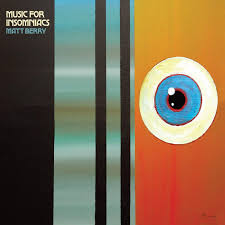
SOUNDTRACK: MATT BERRY-Music for Insomniacs (2014).

Matt Berry is a renaissance man and I love everything he does.  Whether it’s acting in over the top comedies or making over the top prog rock, Berry is my guy.  He has several albums out already.  This one was his fifth. Evidently he created this album in the middle of the night while unable to sleep.

The back cover image is of him sitting amid a Rick Wakeman-like array of keyboards.  And if you’re into gear, he lists everything that he plays on this album:

Arp Odyssey Synthesiser, Korg MS-20 Synthesiser, Korg MS-20008 Synthesiser & Vocoder, Korg Sigma Synthesiser, Korg Polyphonic Ensemble, Korg SV1 Electric Piano, Minimoog Synthesiser, Mellotron-Pro, Solina String Ensemble, Roland Jupiter 4m Synthesiser, Roland Pro Mars Synthesiser, Roland juno 6 Synthesiser, Roland Gaia Synthesiser, Roland Jupiter 80 Synthesiser, Yamaha CS-15 Synthesiser, Yamaha CS-60 Synthesiser, Hammond XKB Organ, Korg & Roland rhythm boxes and found percussion.

Why would anyone need so many synthesisers?  Well, to make an album like this.

It is two 23 minute “songs.”  They are meandering, trippy sounds mashed up with snippets of “songs.”

Part 1 opens with vocals and then an organ playing a familiar-ish classical organ melody but it’s only a nod to classical music because soon enough a bass comes in and turns the music into a very different sounding piece.  I particularly love the way he phases and echoes the drums.  Variations on this song/theme run for about five minutes with more and more interesting sounding effects, until it all fades out into waves of synths.

The swirling synths create an atmosphere for another five minutes when abruptly, you hear something being turned off (or on) and a shushing.  More trippy synth washes follow and then at 13 minutes a new keyboard melody is added to the washes–a gentle tune that give the washes some momentum.  It starts building until 16 minutes when it grows distinctly dark.  Creepy echoing voices come out of the fog.  And you can hear someone shouting okay okay.  Then out of the quiet, a martial drumbeat grows louder and louder as a song starts to form.  At 19 minutes, the melody from “October Sun” from his Kill the Wolf album starts playing.  A processed voice sings the lyrics, but they are very hard to hear.  I assume it is Cecilia Fage, as she is credited with voice/choir.

Part two is not radically different.  It opens with a choir of voices.  It morphs into gentle washes of synths like mid-period Pink Floyd, complete with space sounds–whooshing and zapping.  Then comes what sounds like a horse walking by and some slightly dissonant keys before some hugely vocodered voice start singing a melody.  It’s followed by pianos at seven and a half minutes which merge with the rest of the synth melody.  There is much more going on in the background–voices, sounds, who knows what.

Things abruptly end with a big splash of water at 8:45 and remain underwater for a time before a new synth pattern emerges. Things become celestial with a choir around 13 minutes.  After a big explosion at 14 minutes, spacey chords return followed by another explosion and a return underwater–squishy sounds, then a distant bay crying (my daughter just walked in and said this music is creepy).  Other sounds swim in and out as angelic voices sing.  This goes on until 17 minutes when things settle down into a more stately organ-fueled section.  Things drift away almost to silence and then at 19, a pulsing synth bass starts things up again.  He adds a jaunty synth melody to the bass and it’s suddenly a new wave song.  This dancy part continues until the end of the song when things grind to a halt.

This is a peculiar record for sure.  It’s not soothing for sleep, nor is it particularly upbeat for non-sleep.  But it is an interesting look into Matt Berry’s headspace.

[READ: November 18, 2020] “Fata Morgana”

This is an excerpt from Koeppen’s novel Pigeons on the Grass which was translated by Michael Hofmann.

I’m not sure where in the story this comes from, but I feel like it jumps in right in the middle of a scene.

A black man, Washington Price, is walking through the streets of tenement houses (in Germany) with a bouquet of flowers: “he had marriage on his mind.”

He wasn’t particularly notable in this area, but the fact that he arrived in a blue limousine started a lot of people grumbling behind the tenement windows.

He was there to see Carla.  Carla lived on the third floor with some other girls and their minder, Frau Welz.  The other girls were there for the soldiers.  As (maybe?) was Carla.  They all knew he was there for Carla, but that didn’t stop them from trying to entice him into their room. (more…)

Read Full Post »

SOUNDTRACK: GRUFF RHYS-Yr Atal Genhedlaeth (2004).

In 2004. Super Furry Animals frontman Gruff Rhys released his first solo album. The sung-entirely-in-Welsh Yr Atal Genhedlaeth.  It’s a lo-fi bedroom kind of recording.  Mostly catchy as anything, but with some typically weirdo songs as well.   Most of the songs are well under three minutes.

I’ve included some notes from Wikipedia (in italics) that offer translation advice.

The album opens with “Yr Atal Genhedlaeth” which is 8 seconds of warping looping nonsense.  In Welsh the title means ‘The Stuttering Generation,’ but ‘atalgenhedlu’ is also Welsh for a contraceptive.

“Gwn Mi Wn” is a proper song with Gruff singing over a drum pattern.  As the song moves along more looped vocals are added making the song bigger and bigger–almost trance like by the end.  Gwn Mi Wn translates as ‘I Know [that] I Know’, but could also mean ‘a gun I know’, a reference to the battle in the song.

“Epynt” is a 2 minute rocking raw song of guitar and synth and some shouted lyrics.  It’s oddly catchy.  The song is named after a mountain in Mid Wales, but is about money, with the ‘E’ standing for the Euro, and ‘pynt’ sounding similar to the Welsh word for Pound.

“Rhagluniaeth Ysgafn” is a slower, more electronic-sounding song (from the drums and sound effects).  Although guitars do move the song along.  There’s a kind of scream/laugh effect that’s played here and it gets repeated on other songs.  It translated as ‘Light programming’, but ‘lluniaeth ysgafn’ means a light snack.  This is also a catchy song that is a total sing along, if you know Welsh.

“Pwdin Ŵy” literally means ‘egg pudding’, or “egg custard’, two love songs.  “Pwdin Ŵy 1″ is a swinging song that features some nice layered vocals.  It’s upbeat and dancy.  “Pwdin Ŵy 2” is very different–it’s a mellow guitar song with a harmonica solo.

“Y Gwybodusion” (‘The Experts’) is a garage rock song with a cheesy synth solo.  The addition of a (cool) bass line half way through really fleshes the song out.

“Caerffosiaeth” is literally ‘sewage fortress’. ‘Caer’ is a common part of Welsh place-names used to indicate that there was a castle in the town.  It’s an all drum-machine rap full of sound effects.  As with all of the other songs he manages to make it really catchy by the end.

“Ambell Waith” (‘Sometimes‘) is a quiet folk song with interesting sound effects floating around.  The slight echo on everything makes it feel very full.  And the trumpet (!) solo comes as quite a surprise.

The final two songs are much longer than anything else on the disc.

“Ni Yw Y Byd” means ‘We Are The World,‘ but is not a cover.  It’s upbeat, four minutes long and feels fuller than the others.  It reminds me a bit of the melody of “The Gambler” and is therefore crazy catchy.  It’s even easy to singalong to even if you don;t know Welsh.  There’s a clapalong section followed by a flute solo.

“Chwarae’n Troi’n Chwerw” means ‘When Play Turns Bitter’ and comes from a Welsh proverb.  this song is a Welsh language standard originally written and sung by Caryl Parry-Jones.  It’s got a quiet electric guitar playing some lead riffs as he sings in a deeper register.  It ends with 30 seconds of quiet banjo playing.

This is a true solo record from Rhys–snippets, excerpts and home recordings.  It’s a quiet treat.

[READ: November 17, 2020] “New Poets”

When I started reading this story I was afraid that it was going to be one of those grimy violent stories that doesn’t exactly glorify bad behavior, but kind of revels in it.

The narrator, Monk, is recently sober, but he has had a string of bad luck and has moved in with an old college buddy named Dogman.  Dogman has not stopped drinking.  Indeed, he drinks a lot.  Which is odd because Dogman is an accountant in the Philadelphia office of one of the country’s largest banks.  It’s a boring job, so the weekend is for drinking.

They are in a pub (it’s the middle of the day) and Dogman tells Monk that a surprise guest is coming.  The guest is Sudimack.  Monk is really not happy about that. (more…)

Read Full Post »

SOUNDTRACK: BORIS-“warpath” (2015).

Back in 2015, Boris released three albums on the same day all under the “new noise literacy” banner: “urban dance” “warpath” and “asia” [according to their label numbers, this is the order they go in].

All three records are experiments in abrasive noise.  Despite the adorable child on the covers, these records will scare children.

This album has four songs, all of which are variations on drone.

“Midgard Schlange” is 11 minutes of heavy distorted chords played slowly, as they ring out and rumble.  Its a a sort of seven-note melody but stretched out impossibly long.  At around 5 and a half minutes the electronics start to fade in from far away.  The first time I listened to the song I thought an airplane was flying overhead as these sounds came in.  These sounds eventually resolve into chords that acts as a kind of counterpoint to the guitar drones. It’s relatively fast tempoed for a drone song, but it still long and stretched out.

“Behind the Owl” continues the drone, but in a different way. There aren’t pummeling guitar chords that ring out.  Rather, they are just quietly building distortion waves, pulsing in and out.  It’s rather understated, a low menace that seems to cycle slowly between two notes.

The wonderfully named “Dreamy Eyed Panjandrum”starts with a kind of staticky electronic pulsing with occasional glitchy percussion sounds.  It sounds like somebody doing light construction for about 8 minutes.

The guitars come back on “Voo-vah,” and ominous ten and a half minutes of dark rumbling.  This time, the guitars are low and ringing, with waves of pulsing bass and stretched out chords. Around 8 minutes some higher-pitched notes come in, almost sounding like ghosts in the night.  Closing credits to a nightmare.

The album is credited to: takeshi: guitar, bass / wata: guitar & echo / atsuo: electronics.

[READ: November 5, 2020] “Sitting with the Dead”

I really enjoyed the way this story revealed its details.

It begins with an old, sickly man asking to go out to his barn. It was winter and he wore only his pajamas and a winter coat.  A week later, the doctor assured his wife Emily that that’s not what killed him–it didn’t even hasten the inevitable.

At half past seven on the day he died, the Geraghty sisters knocked on her door.  They were two middle-aged women who sat with the dying.  They were known in the area although Emily didn’t know them personally.  They had heard that her husband was dying and they came to sit with him, but they were too late.

Emily laughed to herself at how much he would not have wanted these two there to sit wit him.  He was not religious and he would have said that their sitting with him had an ulterior motive. (more…)

Read Full Post »

« Newer Posts - Older Posts »