Feeds:
Posts
Comments

Archive for the ‘New Yorker’ Category

[ATTENDED: March 3, 2018] Andy Borowitz

When we saw Darlingside at SOPAC, the director announced that New Yorker columnist Andy Borowitz would be performing in March.  It was just before Sarah’s mom’s birthday so that seemed like a fun present for her (and us).

I obviously know Borowitz from the Borowitz Report, but I didn’t know anything else about him.  We wondered if he voice would sound weird (it didn’t), we wondered if he would be awkward on stage (he wasn’t) and of course we wondered if he would be funny (he was).

He began the night with some general introductory material about himself and his life.  He made some good anti-Trump jokes and then explained that even though he was preaching to the choir, if he could encourage the choir to get other people to vote in the upcoming election then he had done his job.

He also had merch for sale, and 100% of Andy Borowitz’s profits from merchandise sales benefit The International Rescue Committee to aid refugees around the world.  The merch was simple and straightforward.  Shirts and hats in blue that stated: MAKE AMERICA NOT EMBARRASSING AGAIN. (more…)

Read Full Post »

815SOUNDTRACK: BORIS-DEAR (2017).

The plan was that after 25 years, Boris would retire.  They recorded songs for Dear, but then toured the anniversary of the album Pink.  This inspired them to write more songs, and somehow through all of that, Dear was created (with apparently enough music for two more albums).

Then they toured Dear (a tour I was lucky enough to see) and are still going.  Who knows if they are done.  Who knows if this is their final album.  Either way, this is a doozy.

10 songs and 70 minutes (on the U.S. release), Dear specialized in slow droney heavy songs.  The album opens with seven smacks of a drum before loud heavy chords signal the beginning of “D.O.W.N -Domination of Waiting Noise.”  The vocals are loud but just loud enough to add to the overall drone sound.  Things slow down further with “Deadsong” a deep bass drone with whispered, rather spooky/demonic vocals.

Despite the drones there are moments of catchiness (relative).  “Absoluego” is a faster, downtuned song with a big shouted chorus and “Beyond” is a quiet, moody song featuring Wata on vocals.  About 90 seconds into the song there is blast of metal guitars and drums that lasts for 30 seconds or so before fading out.  When it happens again, one of the guys starts singing too, a faster heavier, catchier melody.

“Kagero” opens with a low rumble.  Eventually a slow, heavy guitar comes in with near falsetto singing.  “Biotope” has a steady pulsing bass drum through the track.  The guitars are slower with an occasional plucked string that resonates. This song even has some ooohs in it.

“The Power” has my favorite Boris riff since “Tu la la.”  It’s got six notes all of which are strangely menacing and yet catchy at the same time. This was a great song to see live.  “Momentio Mori” is slow and menacing with cool echoed/chorused vocals–there’s an Alice in Chains vibe to the vocals.  With about a minute left, the song slows down and grows quiet almost as a lead in to the 12 minute “Dystopia -Vanishing Point.”  This song opens with two minutes of warbly accordion (I loved watching Wata play this part live) and some thundering drums.  It all fades away into some quiet ringing guitars and whispered vocals.  This continues for a few minutes as waves of guitars are added.  And then at 7 minutes the loud guitars and drums blast forth and Wata gets to do a screaming solo for the final 4 minutes.  She is still soloing as the song abruptly ends and switches to the final track.

“Dear” opens with those low downtuned guitars echoing.  I love that the guitars simply slide up to a very high note and hold it until sliding back down.  There’s a muffled chug on the low chords while the heavily echoed vocals ring out.  The song continues like this, a mountain of low rumble, for 9 minutes until it starts to consume itself–feedbacking and disintegrating until it sounds like all of the plugs are pulled.

There’s not a lot of diversity on this disc, which resembles some of their earlier music.  I’m very curious to see what they do next.

[READ: February 9, 2016] “The Republic of Bad Taste”

This story (it feels complete and not like an excerpt, although the title seems unlikely as a short story title) was 20 pages long in this issue of the New Yorker.  That’s one of the longest pieces I’ve seen in the magazine.

And it covers a lot of ground.

Like how does an at-risk-youth counselor agree to commit murder?

It begins by introducing us to Andreas Wolf in East Germany circa 1987.  He is a disaffected youth, an atheist with a super libido and he has found employment at the church on Siegfeldstrasse.  Andreas felt the whole regime was ridiculous.  In fact he felt that a lot of things were ridiculous.  The Republic was just so German that it couldn’t even go after misfits unless it was by the book.

His “job” at the church was as a youth counselor.  He was surprisingly good at it. In part because he really didn’t care and in part because he himself was almost at risk.  He wasn’t really at risk because his father had a good position with the government, but they had more or less disowned him (aside from agreeing to make sure he never got into real trouble).  Plus, he was pretty good-looking so many of the at risk girls found him attractive–with all that implies.

He took advantage of this.  He found that his monetary reward was so pitiful that a reward in beautiful girls made up for it.  At the same time, he did have some scruples.  He never had sex with anyone underage or anyone who had been sexually abused.  What a guy. (more…)

Read Full Post »

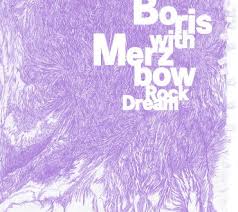
SOUNDTRACK: BORIS WITH MERZBOW-Rock Dream (2007).

Rock Dream was recorded live in November 2006 at Tokyo’s Earthdom festival.  It is a mix of the heaviness of Boris and the noise of Merzbow.  And it is lauded as a spectacular live document.

The Austin Chronicle discussed the album in their overview of Boris’ career, declaring it “definitive live document, an impossibly dense double album that touches down on nearly every point of their career, from Dronevil to Smile’s contorted stairway to heaven (“Flower Sun Rain”), with Merzbow’s electronic manipulations stitching it all together like connective scar tissue.”
In a retrospective review Tiny Mix Tapes, declared Rock Dream to be “not just the best album Boris ever made, but also one of the finest live albums I’ve ever heard.” and that “It’s incredible then that someone recorded Boris and Merzbow that night, because for two hours they got to be the best band on the planet.”

And what live show that opens with a 35 minute song wouldn’t be fantastic?  “Feedbacker” starts quietly with just guitar and Merzbow’s effects.  It has an almost spaghetti western feel to it with all the reverb.  Unsurprisingly, there’s moments throughout the 35 minutes where things dramatically change.  At 6 minutes there’s loud ringing guitars.  At 9 minutes things slow down and then slowly build back up with swells of music from the guitars, keys and effects. At 20 minutes, muted vocals come in and then grow louder.  It feels like it’s building to an end but it turns into faster guitars and a lot of noise.  By 31 minutes things have slowed down heading towards an ending which is primarily Merzbow’s pulsing sounds.  (And there’s so much more going on in that half an hour).

These sounds segue into “Blackout” full of thrashing guitars, crashing cymbals and Merzbow’s noise.  This segues into a song that I gather is only heard here: “Evil Stack” which features a lot of Merzbow’s knob twiddling and noise making and a lot of feedback as well.

This all segues into “Rainbow,”  a far more mellow song that opens with bass harmonics and simple drum beat with Wata’s quiet vocals.  It’s a slinky cool song with a mellow guitar solo.  Merzbow throws in some interesting sounds and and mild noises throughout.

If Disc one showcased their more expansive sound, Disc two opens with a bunch of really short fast loud songs all from Pink.

First off is the raging punk blast of “Pink.”  It is all-out thrash with a lot of yelling from Atsuo and wailing solos from Wata.  It’s followed by the 2 and a half minute rager “Woman on the Screen” with a great punk riff, lots of Atsuo’s screams and of course Merzbow putting a wall of distorrted noise over the top.  The trio concludes with the two minute  “Nothing Special.”  The punky blasts continue with “Ibitsu.”   It’s not from Pink but it’s just as fast.

Things slow down somewhat with “A Bao A Qu.”  It is 4 and a half minute with a lot of squealing feedback and thunderous drumming.  The final four songs return to that epic style–they are alternately 13 minutes or 8 minute long.

“The Evilone Which Sobs” slows things down with more of that reverbed spaghetti-western style guitar.  There’s squeals of feedback, slow plucked guitar and Merzow as this 13 minute song gets under way.  After three minutes the loudest guitar and bass imaginable come crashing through the melody.  The rest of the song is full on loud drone and feedback.  It all slows down for their surprisingly catchy of cover of Pyg’s “Flower Sun Rain,” which sounds just as good live as on record–including Wata’s wailing solo.

The final two songs return to Pink.  “Just Abandoned My-self” runs over 13 minutes and opens with a scream from Atsuo, wailing guitars from Wata and vocals from Takeshi.  The song barely lets up for seven minutes, and when it finally changes pace, it’s more for the guitars to do some e-bow working while Atsuo continues to pound away.  The last four minute are those droning chords with Merzbow making some really interesting sounds while the band plays on.  Merzbow ends the song with a kind of looping siren that leads into the show ending with a great version of “Farewell.”

Unlike the one from Crossing Waltz, Merzbow’s presence make a pretty big difference in the dynamic of “Farewell.”  The band sounds terrific and it’s a fantastic take on this by now iconic song.

For sure this live set isn’t for everyone–it’s loud, there’s some uncomfortable moments–but it really captures a band at full power.  And as with most Boris releases, it had a different cover in Japan.

Disc one   Total length:       49:58
“Feedbacker” (Originally from Boris at Last: -Feedbacker-) 35:05
“Blackout” (Originally from Pink) 5:19
“Evil Stack” 5:04
“Rainbow” (Originally from Rainbow) 4:30
Disc two  Total length:       60:32
“Pink” (Originally from Pink) 4:14
“Woman on the Screen” (Originally from Pink) 2:37
“Nothing Special” (Originally from Pink) 2:14
“Ibitsu” (Originally from Akuma no Uta) 3:35
“A Bao A Qu” (Originally from Sound Track from Film “Mabuta no Ura”) 4:35
“The Evilone Which Sobs” (Originally from Dronevil) 13:41
“Flower Sun Rain” (PYG cover, later released on Smile) 8:04
“Just Abandoned My-self” (Originally from Pink) 13:21
“Farewell” (Originally from Pink) 8:11

[READ: February 21, 2017] “Mrs Crasthorpe”

This story revealed itself slowly and in interesting ways.

We meet Mrs Crasthorpe in the first paragraph.  She is humiliated because her husband’s funeral has just been poorly attended.  It was also, by his own design, in a small, unassuming, frankly embarrassing cemetery.  Mrs Crasthorpe is 59.  Her husband was 72.  Yes, she had married him for money and yet it didn’t really make her a more fulfilled person.  She had cheated on her husband, but he didn’t seem to mind or care.

She had felt herself to be always a rosebud, claiming to be 45 when she was late nearly 60.  She also told no one she had a son.

Then we shift to following Etheridge, a man whose wife is near death.  He is tender to her, caring, but she doesn’t have long to live. (more…)

Read Full Post »

815

SOUNDTRACK: BORIS-Crossing Waltz (2016).

Boris have put out (by my understanding) eight live albums.  As with most of their releases, they’re not all easy to find.  I happened to get this one because they were selling it at the show I was at (many of their releases seem to be only for sale at the merch table).  This one is from their own Fangs Anal Satan label.  It was released in 2016 but was recorded sometime around 2011.

It happens that this era is one that I know best (they put out three albums on the same day and they are all still available) so this is a fun live album for me since it’s fun to hear the distinctions and their ability to translate them in a live setting.

The disc opens with a two-minute intro–sirens from the opening of “Heavy Rocks 2011” which leads into “Riot Sugar.”  The song is heavy–it rocks out and is full of Atsuo’s whoops and yells–the sign of a real rocking song.  “8” is a song I didn’t know.  It starts with a lot of gong and has some great falsetto vocals.

“Statement” is great to hear live because it’s cool that they can play the songs just like on record.  Not that it sounds like the record exactly, but that they can recreate the music live–and keep it all catchy too.

Then things slow down for a few songs from Wata.  “Attention Please” is quiet and silky with cool guitar and effects.  I love the way Wata delivers the quiet, whispered lyrics.  It’s followed by “Party Boy.”  “Party Boy” appears on two records.  It’s hard to know which “version” this is but this one is slinky, dancey and heavy at the same time (we’ll say Attention Please, since there’s not much synth)..

“Flare” is from a 7″ and it is very heavy.  Then it’s back to Wata singing the really catchy “Spoon” with heavy drums.  The first disc ends with the 16 minute “Missing Pieces” (longer than the album by a few minutes).  Like a good epic, it starts slowly.  After three minutes Atsuo introduces a lot of drums and then the bass and guitar roar for about a minute.  It fades to near quiet once again.  There’s a minute or so of just vocals before the guitars come back, this time with soloing while Takeshi is singing.  Around six minutes in it turns to noise, noise, noise–both guitars on feedback and scraping and the drummer going bananas.  The band stops on a dime for complete silence and then takes off again–noise and more noise.  There’s feedback and gongs and more feedback.  And then at 11 and a half minutes the drums return–continuing through to the end.

Disc two opens with “Window Shopping” which is all about fuzz and buzz, full of Atsuo’s yeahs and a crazy wild solo at the end from Wata. 

Then they move back to some older albums for 2 songs.  “1970” comes from 2002’s Heavy Rocks album (the orange one).  It is full of bass rumble.  It leads to the classic “Pink” with gongs as the transition.  Even all of these years later, these songs are full of power.

“Alierion” is the longer version.  It starts slow and quiet and builds and builds, getting heavier for 12 or so minutes. The last minute is a solo piano melody, a dramatic departure for them.  Then the sirens come in again for “Looprider.”  “Looprider” is eight catchy minutes of shoegazey fun.

The by now standard closing of “Farewell” ends the show.  Hearing those opening notes live was great and it is great here.  The song sounds terrific.

One of the things about Boris live is that their vocals are never clear.  Perhaps if you understand Japanese the vocals are more obvious, but it feels like they may be something of an afterthought, especially live. The band is all about the sonic experience and the vocals, the voice, is just another piece of that.

1.1 Intro  2:35
1.2 Riot Sugar — Heavy Rocks (2011)  4:53
1.3 8 — Japanese Heavy Rock Hits Vol 1 (2009) 4:03
1.4 Statement — Smile (2008)  3:49
1.5 Attention Please — Attention Please (2011)  6:34
1.6 Party Boy — New Album (2011)  3:55
1.7 Flare — Asobi Seksu x Boris 7″ (2012)  4:24
1.8 Spoon — Attention Please (2011)  4:57
1.9 Missing Pieces — Heavy Rocks (2011)  16:01
2.1 Window Shopping — Heavy Rocks (2011)  5:58
2.2 1970 — Heavy Rocks (2002)  5:03
2.3 Pink — Pink (2006)  4:52
2.4 Ailerion — Heavy Rocks (2011)  13:52
2.5 Looprider — New Album (2011)  8:18
2.6 Farewell — Pink (2006)  7:37

[READ: February 8, 2016] “Quaestio de Centauris”

I was sure that I had read or posted about stories from Primo Levi before 2016, but I see no evidence of it.

Perhaps I have never read him, just heard of him.  I don’t know if this story is anything like what he typically writes, but it was a pretty unexpected story topic (continuing with the theme of this issue, apparently).

The story was translated from the Italian by Jenny McPhee.  And, as one might decipher from the title, the story is about centaurs.

The narrator says that his father kept a centaur in the barn.  Although he admonished the boy not to bother it, the bot and the centaur, Trachi, became friends.  Trachi even allowed him to ride on his back from time to time. (more…)

Read Full Post »

815

SOUNDTRACK: BORIS-Noise (2013).

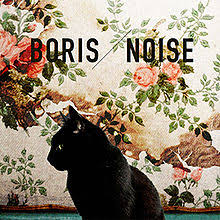
You really never know what you’re going to get with Boris.  Most of the time, there are multiple editions of releases with different covers and different mixes.

In this case, despite the different covers of this record (see below), the track listing is exactly the same (except that the Japanese version came with a bonus disc).  Total length: 57:52

I like that this album cover parodies (sort of) Nirvana’s Bleach album cover.

“Melody” (黒猫メロディ) 6:40 The disc opens with some ringing alt-rock wit a distorted rocking chorus.   Despite the cover, it’s not like Nirvana, it’s more soaring  there’s catchy backing oohs and a cool hi-hat flourish.

“Vanilla” 4:15 is heavy in the same vein as “Melody” and “Ghost of Romance” (あの人たち) 5:49  has slow guitars and soaring leads with a heavy solo.  “Heavy Rain” (雨) 6:12 starts quite slowly with vocals by Wata and then there’s a big crash and the heavy section follows.  It alternates between quiet and loud at intervals.

“Taiyo no Baka” (太陽のバカ) 3:36 is almost a pop metal sound with dancey vocals and woah hos.  There’s even a simple guitar riff that follows along.  At three and a half minutes it’s a pure pop gem.

“Angel” 18:42 Angel, on the other hand pushes 19 minutes and it’s an epic workout.  It begins with a pretty, quiet guitar riff interlaced with a second guitar and interesting percussion.  There’s slow vocals as well.  But after 6 minutes, a loud distorted guitar interrupts the pretty melody, but it’s only playing an intermittent chord.  Even the powerful drums blasts don’t change the overall tempo of the song until a minute later when it takes on a loud droning quality with harmony vocals and a distorted bass moments.  There’s a soaring guitar solo as well.  By around 10 minutes the song turns into an uptempo rocker with falsetto vocals!  The song seems to climax at 13 minutes with a big gong.  But there’s more.  The song turns into a kind of soaring instrumental with echoing guitars and thumping drums.  With two minutes left the song returns to that opening guitar riff with a tidy solo over the top.  It’s like the song is nicely bookended with itself.  It’s quite the centerpiece.

“Quicksilver” 9:51 Who know what another band might follow a 20 minute song with, but Boris chose a nearly 10 minute song.  It seems at first that “Quicksilver” is going to be a short blast with the super fast pummeling hardcore sound.  There’s screamed vocals and wild drumming but it’snot that simple.  At 3 and a half minutes, the song slows down some although it stays heavy.  By around the 5th minute there;s lou dbacking voclals to accompant the lead vocal.  Once again, a false climax comes at 7 minutes but there’s more feedback to come along with a quiet, pretty guitar outro.  Until the final two minutes when there are loud droning chords that play through to the end.

“Siesta” (シエスタ) 2:50 Siesta is the shortest song on the disc, an instrumental that is kind of pretty and kind of woozy at the same time.  It’s definitely a slow down from the erst of the album and a nice conclusion.

This was the first Boris album I bought and it’s still a favorite.

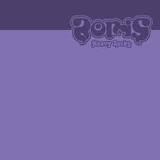
The Japanese edition (cover to the right) came with this bonus disc, which I’ve not heard.

CD 2 (Another Noise) Total length: 23:26
1. “Bit” 9:35
2. “Kimi no Yukue” (君の行方) 4:51
3. “Yuushikai Revue” (有視界 Revue) 3:32
4. “Discharge” (ディスチャージ) 5:32

[READ: July 23, 2015] “Love is Blind and Deaf”

This was the 2015 New Yorker fiction issue.  It featured several stories and several one-page essays from writers I like.

In addition to those essays on Time-Travel it also included this short piece from Safran Foer.  I hadn’t seen much from Safran Foer recently, so I was interested to read this (very) short story.  It’s all of one page.

Much as Zadie Smith’s story about celebrities was unexpected, so was this one (on the following page in the magazine no less) about Adam & Eve.

We learn that Adam was blind and so never had to see Eve’s hideous birthmark.  And that Eve was deaf and never had to listen to Adam’s whiny narcissism.  And then they ate the apples and knew everything.  (more…)

Read Full Post »

815

SOUNDTRACK: BORIS-Attention Please (2011).

Attention Please marks a departure from the Heavy Rocks sound, returning to the dream pop sound explored on New Album, but this time, it has elements of noise pop and alternative rock. It features Wata’s vocals on every track.

Attention Please shares the songs “Hope,” “Party Boy” and “Spoon” with New Album
Attention Please shares the tracks “Aileron” with Heavy Rocks, although it is radially different.
New Album shares the tracks “Jackson Head” and “Tu, La La” with Heavy Rocks.

“Attention Please” 5:12 has a pulsing bass and gentle drums that lie under Wata’s whispered sensuous vocals.

“Hope” 3:26 Sounds a lot like the version on New Album, although the synths have been replaced by strings and the sound effects are removed.  This song feels more organic but still slick and catchy.

“Party Boy” 3:50 The thumping bass drum and a really buzzy bass give this version a very different sound.  There’s almost no synth although the vocals sound pretty much the same.  There’s a lot of strange effects that reward headphone listening–when Wata whispers in your ear it might even make you turn your head.  Although the song is basically the same, the New Album version is definitely catchier.

“See You Next Week” 3:56 has warping synth sounds that push the song forward as Wata’s whispered vocals come in.  The speed of the “percussion” is contrary to the gentle echoing vocals.  “Tokyo Wonder Land” 5:42 opens with repeated, high-pitched Huh huh huh and super distorted wild guitar riffs.

On “You” 6:13, it sounds like she’s singing “anatomy” quietly at a whisper (which she obviously isn’t).  It’s a slow, smooth song that meanders beautifully.

“Aileron” at 2:01, this is a much abbreviated version from the one on Heavy Rocks.  This one is all acoustic with some pretty guitar soloing going underneath the lovely melody.  The melody is the same but the whole song is very different.

“Les Paul Custom ‘86” 2:09 has whispered vocals from Wata and the men.  There’s guitar washes and a sense of menace but mostly it’s kind of tinny and effects-filled.  Its one of the few songs where understanding the words might actually help.

“Spoon” 4:16 For this version, there;s no keyboard notes, just heavy guitar.  But that whole shoegaze vibe from Wata’s vocals remains. The only real nod to the other version is the sound of breaking glass at the end of select verses.

“Hand in Hand” 4:30 is quiet and pretty with the tinny guitar and Wata’s gentle soaring vocals.

Between these three discs you get a pretty complete picture of the music of Boris–largely heavy,but always guitar based.  They really show off their diversity with this trio.

[READ: July 22, 2015] “Escape from New York”

This was the 2015 New Yorker fiction issue.  It featured several stories and several one-page essays from writers I like.

In addition to those essays on Time-Travel it also included this short piece from Zadie Smith.

This story is quite the peculiar one from Smith.  It eschews just about everything I think she writes about and focuses on a very unexpected subject.

There is a catastrophe in New York (presumably 9/11 although it could be a fictional disaster).  Lead character Michael is trying to coordinate an escape for his friends Elizabeth and Marlon.  Now, the accompanying photo was a clue, and anyone with any familiarity with celebrities should recognize those names.  I wasn’t sure if it was a coincidence; I assumed it must be. (more…)

Read Full Post »

815SOUNDTRACK: BORIS-Heavy Rocks (2011).

Heavy Rocks, also known as Heavy Rocks 2011, was released at the same time as Attention Please and New Album.   The album has the same name and cover style and font as their 2002 album Heavy Rocks, although this one is purple and the 2002 release was orange.

Heavy Rocks shares the tracks “Jackson Head” and “Tu, La La” with New Album.
Heavy Rocks
shares the tracks “Aileron” with Attention Please, although it is radically different.
New Album shares the songs “Hope,” “Party Boy” and “Spoon” with Attention Please. 

The vinyl edition features extended versions of “Missing Pieces” and “Czechoslovakia.”

Unlike the other two albums, this one is largely heavier, exploring their more metal urges.

“Riot Sugar” (“甘い暴動”, lit. “Sweet Riot”) 3:56  has a raw sound with a soaring solo and a chugging, heavy tone.  It abruptly ends mid guitar solo and segues into “Leak-Truth,yesnoyesnoyes-” (“Leak-本当の反対の反対の反対の反対-“, “Leak (The Opposite of the Opposite of the Opposite of a Real Opposition)”) 4:11  which opens with a quiet unprocessed guitar and then the song starts rocking out–a kind of grungy alt-rock sound.  The vocals are whispered with a kind of throbbing bass line throughout.

“Galaxians” 4:09 opens with pummeling drums and all kinds of (80s) arcade sounds–including a bomb dropping and Atsuo screaming and shouting.  It is heavy and raw and pure punk.

“Jackson Head” (“ジャクソンヘッド”) 3:00 The version of this song is less synthy than that on New Album.  It’s got those punky distorted vocals right up font a shouted chorus of Jackson Head repeated over and over.

“Missing Pieces” (14:27 on vinyl release) 12:22  starts slowly with a pretty guitar melody and muted vocals.  After 6 minutes the song rocks but doesn’t get too noisy.  But after two more minutes it turns into complete and utter noise for another 2 minutes.  Then it all drops away and goes back to the quiet intro guitars.  The last two minutes just rock out.

“Key” (“扉”, lit. “A Door”) 1:46 This is a quiet brief instrumental with twinkly keys and a soaring solo.  It segues into “Window Shopping” 3:57 which opens with a woman speaking Japanese and then some heavy riffage.  There’s a shoegaze echo on the whole thing, especially the doo doo/ doo doo chorus.

“Tu, la la” 4:21 Such a great riff they had to play it twice.  This is a heavier and more guitar based version than on New Album.  It’s my favorite Boris song.

“Aileron” (“エルロン”) 12:45  The version on Attention Please is 2 minutes of acoustic guitar.  This one is nearly 13 minutes, and it begins with a slow echoing guitar notes but it soon gets heavy.  It’s a long, slow, heavy piece with drones and echoed vocal for nearly the whole song, although after 12 minutes there is a delicate piano coda.

“Czechoslovakia” (“チェコスロバキア”, 5:46 on vinyl release) 1:35 Not sure what happens in the vinyl version, but this short rocker has loud guitars and thunderous drums.  Just as it’s about to take off it fades after 90 seconds and ends the album.  Always leave them wanting more.

[READ: February 8, 2016] “Package Tour”

This was the 2015 New Yorker fiction issue.  It featured several stories and several one-page essays from writers I like.  The subject this time was “Time Travel.”

For the final time travel essay Sam Lipsyte balks at a couple’s genuine desire to use a time machine to go back to Brooklyn a few decades to buy a cheaper brownstone.  People in Brooklyn apparently constantly bemoan who cheap places were in their youth, but this one, well:

I pictured the couple hunched in some rattling claptrap wormhole-traverser–because all time machines are built with scrap iron and held fast with duct tape and cut-rate rivets, even those designed for hunting down investment lofts.  Their lips would be peeled back by G-Forces as their ship shredded along the seam of the space-time continuum until they landed in Cobble Hill, 1974.  There they’d hop out, buy a building, and head back. (more…)

Read Full Post »

815SOUNDTRACK: BORIS-New Album (2011).

In 2011, Boris released three albums at roughly the same time.  The three albums are linked because they share tracks (usually very different versions, sometimes radically different).  And, of course, the CD and LP feature different versions of several tracks (but none seem to have a different cover).

New Album shares the songs “Hope,” “Party Boy” and “Spoon” with Attention Please. 
New Album shares the tracks “Jackson Head” and “Tu, La La” with Heavy Rocks.
Heavy Rocks
shares the tracks “Aileron” with Attention Please, although it is radically different.

Sargent House CD (Total length: 50:10).  Interestingly, this American release is longer than the other two.  It is quite poppy with some heavier elements.  There’s a lot of songs that could even be considered dancey (!).

“Flare” 5:04 opens with sirens blaring and a gentle electronic introduction a song bursts forth that feels like total J-pop.  A little heavy (in parts) but this is really dancey.  There’s a great Wata solo in the middle and a rather heavy ending.  The percussion throughout is very mechanical sounding like ea car engine sputtering.  It’s a remarkable sound for Boris.

“Hope” 3:43 is a poppy / shoegazey song sung by Wata. It’s synthy (with trippy synth sound effects  throughout).  It’s slick and catchy.  The version of Attention Please is a more organic, with strings instead of electronics.

“Party Boy” 3:48 opens with a synthy riff and thumping bass drums.  It is the catchiest thing they’re released with a really poppy chorus and interesting swirling synths around the vocals.  There’s even a harp in the middle of the song.  The version on Attention Please is much heavier with a buzzy bass guitar and almost no synths.

“Luna” 8:29 has fast electronic drums and processed Wata backing vocals.  It is super techno sounding.  The middle section is an instrumental with electronics that sound very Eastern (sped up, but that kind of scale).  It’s followed by some heavy guitars and pounding drums.  A ripping staccato guitar solo follows.  There’s even a few moments that sound like Sigur Rós.  Why the song “Black Original” didn’t make this album but is on the Japanese versions is a mystery to me.

“Spoon” 4:29 Opening with single keyboard notes over a pounding drums and distorted guitars, this song sung by Wata is fluid and catchy.  It’s the most shoegazey thing they’ve done so far.  There’s a total Stereolab vibe in this song.  The ending features a series of intense ascending chords.  The version on Attention Please has no synths, just shoegaze guitars.

“Pardon?” 6:00 The song opens with woozy electronic but soon changes to very gentle guitars and an almost jazzy bassline.  The whispered vocals are downright soothing.  There’s a trippy almost delicate guitar solo that runs through until the end.

“Jackson Head” 3:11 This is the most punk song on the record, but it’s electronic punk with very dark synths.  The lyrics are shouted with a repeated chant of “Jackson Head.”  The solo sounds like single, distorted snyth notes under the pulsing of the rhythm.  The version on Heavy Rocks is less synth menace, although it does sprinkle trippy synths throughout the song.

“Les Paul Custom ’86” 4:10 A whispered vocal over a thumping potential dance beat.  When Wata takes over vocals the song changes style, but only slightly.  Distant synths enter the song and try to install a melody on it, but it seems to be fighting everything else.  Wata’s spoken “echo” echos around your heads in a cool swirl (if you wear headphones).

“Tu, La La” 4:15 “Tu La La” has the best riff of any Boris song, It is fast and catchy and really interesting.  This version has strings that kind of overwhelm the greatness of the riff. (I prefer the version on Heavy Rocks)  The end of this version has an intense buildup of staccato strings.

“Looprider” 7:01 is a quiet song with a slow bassline and interesting guitar lines.   The last minute or so is fast synths, building and building with a siren effect that echoes the start of the album.

This is a pretty unexpected release from the band who created Heavy Rocks and Amplifier Worship, but I think it’s a great addition to their catalog.

For comparison sake:

Daymare LP Total length:       45:40

  1. “フレア (Vinyl Version)” (“Flare”; features introduction quoting the end of “Looprider”) 5:02
  2. “希望 -Hope-” 3:40
  3. “Party Boy (Vinyl Version)” 3:43
  4. “Black Original (Vinyl Version)” 4:33
  5. “Pardon?” 5:54
  6. “Spoon” 4:23
  7. “ジャクソンヘッド” (“Jackson Head”) 3:09
  8. “黒っぽいギター (Vinyl Version)” (“Dark Guitar”; English title “Les Paul Custom ’86”) 4:06
  9. “Tu, la la” 4:11
  10. “Looprider (Vinyl Version)” 6:59

Tearbridge CD Total length:       45:39

  1. “Party Boy” 3:49
  2. “希望 -Hope-” 3:43
  3. “フレア” (“Flare”) 4:21
  4. “Black Original” 4:27
  5. “Pardon?” 5:59
  6. “Spoon” 4:28
  7. “ジャクソンヘッド” (“Jackson Head”) 3:12
  8. “黒っぽいギター” (“Dark Guitar”; English title “Les Paul Custom ’86”) 4:09
  9. “Tu, la la” 4:15
  10. “Looprider” 7:13

[READ: February 5, 2016] “Fall River”

This was the 2015 New Yorker fiction issue.  It featured several stories and several one-page essays from writers I like.  The subject this time was “Time Travel.”

For this essay McGuane travels back to 1955 to his grandmother’s house in Fall River section of Boston.

He says there is little compassion between the duchies of this town.  The Irish Catholics dominate every neighborhood, with each having its own church.  But eventually Irish Catholic men like his uncles started showing interest in the Italian, French Canadian and Jewish girls–going so far as to marry some of them.

He wants to go back there to 1955 when there were half as many people and each town had its own personality.  The ragman is known as “the sheeny” and he imagines that the sheeny is a soon-to-be-famous sculptor.  He brings up a lot of other single incidents, like the “Portagee” boy who came to exact revenge on the author;s brother for breaking his arm.  Or how Emeril Lagasse comes from “up the Flint.”  There’s Cockney immigrants Down Almy Street who are known as “jicks” (a one-size-fits-all Irish insult). (more…)

Read Full Post »

815SOUNDTRACK: BORIS -Smile (2008).

Boris followed Pink with a couple of limited edition albums of drone music, collaborations, seven inch singles, live albums and other things.  And then they released Smile.

As Wikipedia explians:

Shortly after [the Japanese] release, the album was released by American label Southern Lord with a slightly different track listing, different artwork (by Stephen O’Malley), and an almost entirely different sound.   The different versions of Smile contain different mixes: the English version was mixed by Souichiro Nakamura, while the Japanese version was handled by You Ishihara.

I have the Southern Lord CD, but I’ve put the listing for the Japanese release (and cover) below

“Flower Sun Rain” (with Michio Kurihara).  This is a cover of the song by Pyg.  There’s quiet guitar and singing with wailing solos.  The song is quite faithful to the catchy original, except that around 6 and a half minutes in Wata puts in a wailing guitar solo as the band gets even heavier.  The American version ends abruptly mid-solo, but is two minutes longer than the Japanese release.

“Buzz-In” opens with static an a baby crying/talking before the song turns into a big pile of catchy heavy metal–pounding drums, chanted lyrics and lots of heavy guitars.  “Laser Beam” (“Hanate!” on Japanese version) opens with wailing guitars and bass solos before the heavy thrash follows.  There’s even a catchy chorus.  There’s a noisy section of feedback in the end.  As the song fades out there a series of cymbal smashes which slowly fade out while a quiet acoustic guitar plays for about a minute.  Just as he starts to sing, the song is cut off by the raw power of  “Statement” (“Messeeji” on Japanese version).

“Statement” is the first song (and video) I’d heard by Boris.  I heard it and was hooked.  It opens with a simple riff, two cowbells and a scorching guitar solo.  The verses and chorus are really catchy (whoo-hoos).  The Japanese version sounds completely different and is about twice as long.  It eschews the guitars almost entirely, leaving just a distorted bass drum as the main musical component. The guitar solos are relegated to the background.  But the vocals are pretty much the same.

“My Neighbor Satan” (with Michio Kurihara) (“Tonari no Sataan” on Japanese version) changes the tempo completely.  The song is quiet and kind of pretty.  There’s some really distant looped clacking drums, but the song is a quiet guitar melody and gentle vocals.  There’s a quiet (but very distorted) guitar solo in one ear.  And then after 2 and half minutes really heavy guitars and drums come in and overpower the melody for about a minute before dropping out again.  The quiet part resumes until the big snare drum fill which leads to a moment of silence before the really heavy rocking one-minute ending.

“Ka Re Ha Te Ta Sa Ki—No Ones Grieve” (“Kare Hateta Saki” on Japanese version) opens with loud droning chords.  After about a minute, it takes off with a wailing solo and power from the whole band.  When the vocals come in, the heayy rocking band kind of fades but is still audible over the slow and fairly quiet vocals–it’s a dramatic juxtaposition until the whole song is taken over by the guitar solo.  There’s some whispering in each ear as well (no idea what they’re saying).

“You Were Holding an Umbrella” (with Michio Kurihara) (“Kimi wa Kasa o Sashiteita” on Japanese version).  This is a pretty song, quiet and understated.  It sounds like a fairly traditional melody. There’s a quiet click track and a pretty guitar with whispered vocals.  It lasts for about four minutes before the squealing guitar solo introduces the rest of the band as they crash into the song.  This makes the song heavier but no less pretty.

“[untitled]” (with Stephen O’Malley).   This is a full on epic.  And like a good epic it begins with backwards guitar swirling around and forward guitars playing a simple melody.  At 4 minutes a noisy guitar solo fades in and fades out for about thirty seconds before the quiet vocals begin.  Around 7 minutes in the loud guitars come in with a vengeance.  They play with the melody which makes the whole thing feel much bigger.   The last four minutes or so just play with the droning guitars as they work on harmonies with what sounds like an e-bow, harmonies coming in an out.  The Japanese version is 4 minutes longer.

I’ve been listening to the Japanese mix online and I can’t get over how different it sounds.  Sometimes whole chunks of sound are removed while other sounds come to the forefront.

Diwphalanx CD

  1. “Messeeji” (“メッセージ”, “Message”) 7:06
  2. “Buzz-In” 2:34
  3. “Hanate!” (“放て!”, “Shoot!” (“Laser Beam” on English version)) 5:02
  4. “Hana, Taiyou, Ame” (“花・太陽・雨”, “Flower, Sun, Rain”; cover of the song by Pyg) 5:35
  5. “Tonari No Sataan” (“となりのサターン”, “Next Saturn” (“My Neighbor Satan” on English version)) 5:20
  6. “Kare Hateta Saki” (“枯れ果てた先”, “Dead Destination” (“Ka Re Ha Te Ta Sa Ki -No Ones Grieve-” on English version)) 7:26
  7. “Kimi wa Kasa o Sashiteita” (“君は傘をさしていた”, “You Were Holding an Umbrella”) 9:19
  8. “untitled” 19 20

[READ: July 21, 2015] “Morlocks and Eloi”

This was the 2015 New Yorker fiction issue.  It featured several stories and several one-page essays from writers I like.  The subject this time was “Time Travel.”

I enjoyed the way Curtis started this essay with the amusing (but maybe not) “some months ago I briefly became pregnant with the child of a PhD in quantum physics and for a  few seconds I understood the nature of time.”

She says that time is a like a tennis ball full of rubber bands.  Each strand is a line of time–linear while you are on it but so easy to cross from one to the next with so many places touching. (more…)

Read Full Post »

815SOUNDTRACK: BORIS-Pink (2005/2016).

You never know exactly what you’re going to get with an experimental band like Boris.  Well, you sort of know what you’re going to get–it will be loud and heavy (mostly).

Boris is and pretty much always has been a trio from Japan: Takeshi on vocals, and double neck bass/ guitar;  Atsuo on drums and some vocals and Wata – with guitars effects and vocals.

.  Their first album came out in 1996 and was a 60 minute continuous piece of drone metal.  It is considered ground breaking (and ground shaking) and is completely influential.  It (along with half of their catalog) is currently out of print, at least in the U.S.  Boris is also nigh impossible to collect all of their music, if you like that sort of thing.  Their Japanese releases are inevitably different from any American release (and sometimes vinyl differs from CD).  Either by track order or length of song or even the mix of particular songs

A decade and eight (plus) releases later with names like Amplifier Worship and Heavy Rocks, they put out Pink.

Pink is a landmark album for Boris (two years ago they toured the album),  because even though it was still incredibly heavy, it also experimented.  Most notably with shoegaze.

.

Pink has a specific track listing on both American and Japanese releases, but the vinyl mixes things up.

The CD releases open with “決別” (“Farewell”) a beautiful soaring 7 minute slow song with a catchy chord sequence and lovely ringing guitars.  Although the beauty is interrupted by Wata’s wailing guitar solos.  She plays some wonderful soaring notes although at times they are rather piercing.  But it’s still kind of soothing and dreamy

Until track 2, when “Pink” scorches forth with a  super fast super heavy super guitar blast.  Four minutes of all out metal with soaring guitars, heavy drums and some appropriate screams from drummer/singer Atsuo.  And if you listen with headphones, there may be two or three guitars echoing in there (in addition to Wata, Tetsuo exclsuivly plays a doubleneck bass/guitar so you never really know what you’re going to get form him next.

The two and a half-minute “スクリーンの女” (“Woman on the Screen”) continues the thrash while the two-minute “別になんでもない” (“Nothing Special”) only increases it with a guitar so fuzzed out as to be almost recognizable.

“ブラックアウト” (“Blackout”) shows another side of the band.   Still loud, still heavy, but grindingly slow and sludgy (those shoegaze days are long gone).  The song ends with nearly a minute of ringing feedback before abruptly cutting off and switching to a more standard heavy metal sound in the 75 second instrumental “Electric.”

“偽ブレッド” (“Pseudo-Bread”) stomps along with fast drums and all kinds of distortion.  It’s even got a kind of mumbly sing-along chorus.  In the second half of these song there’s a great riff and even some “ooh oohs” to sing along to.  It’s really catchy until the ten seconds of noise tacked on at the end (the vinyl version extends this sheer brutal wall of noise to six minutes!).

“ぬるい炎” (“Afterburner”) changes tempo a lot.  It sounds like a big old 1970s rock song with chanted vocals and hand claps.  Wata’s solo is pure old school classic rock.  Prominent drums and highly distorted guitars split headphones as the vocals sit in the middle of the three-minute “6を3つ” (“Six, Three Times”).

“My Machine” is only two minutes on the CD, but it is eleven on the vinyl.  The Cd version taken from the middle of the song–where there’s more bass and echoed guitars underneath, while the eleven minute version has soaring guitars and washes of waves moving back and forth.  It’s dreamy and lovely until the ending feedback, of course.  But that fades out and then it’s just relaxing washes of waves until the main melody pokes it head back up briefly and then fades once more.  There’s a kind of rumble for the last minute or so of the extended version which leads into “Farewell” on the vinyl.  But the CD continues with “俺を捨てたところ” (“Just Abandoned Myself”).  On the American release, it’s eighteen minutes long, although it’s only ten minutes on the Japanese version.

The song is a favorite of many fans.  It’s got a totally catchy riff with distant vocals singing a catchy melody.  It’s like 7 minutes of a super catchy metal song with great vocals, a catchy melody and a terrific baseline riff.  There’s some very cool sounds that bounce around the song too.  Around eight minutes the heaviness goes away and soaring guitars take over, but with a low rumble to keep it grounded.  The next six or so minutes are pretty much classic metal drone–two chords repeated slowly while a feebacking guitar wails over the top.  The only difference is the kind of quieter guitar that;s sort of soloing throughout–almost plucking out notes amid the noise.

Pink was reissued in 2016 as a deluxe two disc package.  The second disc is called Forbidden Songs with nine well-produced and great-sounding tracks.

“Your Name Part 2” is dreamy and melodic.  It opens quietly almost like a spaghetti western with some bass notes, soaring guitar notes, and quietly echoed vocals.  “Heavy Rock Industry” starts with some loud droning chords and then about a minute an a half in there’s just drums and Atsuo whooping until the song takes off again.  “SOFUN” is four minutes of a heavy pummeling riff and scorching solos.

“non/sha/lant” is like a heavy short jam with bass riffage and soloing followed by some guitar work.  “Room Noise” is catchy with a cool bassline and soaring guitars.  “Talisman” is slow and heavy with loud distortion.  There’s a shouted chorus with heavy downtuned guitars that makes it almost singalongy.

“N.F. Sorrow” is nearly eight minutes long.  starts off slow with echoed vocals and a shaker.  It’s a quiet moody piece that builds to a heavy chorus with rumbling slow bass.  When the song really gets moving around 6 minutes there’s some great driving bass under Wata’s solo.

“Are You Ready?” is a simple two note riff on the guitar with a chorus of loudly whispered menace.  The song fades on a wild solo.  And the bonus disc ends with the 2 minute “Tiptoe” a quiet piece of gently plucked guitars and echoed notes that resolves into a really catchy melody.

Boris has dozens of records out but this is certainly the place to start–you get to experience pretty much all phases of the band.

[READ: July 21, 2015] “Lost Luggage”

This was the 2015 New Yorker fiction issue.  It featured several stories and several one-page essays from writers I like.  The subject this time was “Time Travel.”

Mueenudin imagines travelling back in time to the 1930s when India was still unified, to visit his father when he was young.

His father was a lawyer and when he studied at Oxford, the girls nicknamed him The Shiek. (more…)

Read Full Post »

« Newer Posts - Older Posts »