Feeds:
Posts
Comments

Archive for the ‘New Yorker’ Category

april2301SOUNDTRACK: LOS LOBOS-“Guantanamera” (1978).

220px-Los_Lobos_del_Este_de_Los_Angeles_coverI never listened to much Los Lobos, although their recent tiny Desk Concert opened my eyes to the,

This review from Hornby made me want to check out some of their music.  I’m not interested in their rock n’ roll songs, but I am quite interested in their Mexicali and more diverse songs.

Their debut album was mostly traditional songs.  I hadn’t heard their take on “Guantanamera,” a song that is in my consciousness, although I’m not sure from where, exactly.  I know the Pete Seeger version, but that can’t be the one I am most familiar with, right?

The Los Lobos version is, surprisingly, slower and a but less catchy that the version I am familiar with.  Although I imagine their version is more accurate.  Los Lobos has three lead singers.  It’s interesting that the guy with the fewest lead vocal songs, bassist Conrad Lozano is the lead singer here.

[READ: September 10, 2019] “The Entertainers”

This essay is about Los Lobos and the art of box sets.

The turn of the century was a pretty big time for the box set.  I have too many of them myself.

You get home busting with anticipation, and sit down to listen to the first half-dozen songs of a beloved artist’s recording career, and to read the weighty accompanying essay and then, somewhere along the line, a vague disappointment kicks in.  You become irritated that your favorite song is represented only by a demo or a live recording or an alternate mix that omits the horns.  Pretty soon, you find that you’re playing only the last few tracks on the second CD–tracks that you probably already own.  A few weeks later, you realize, guiltily, that the fourth CD has not yet been removed from the box and that it never will be.

This is a bit excessive in my experience, but the general tenor is spot on. (more…)

Read Full Post »

2000SOUNDTRACK: BERLIN“Sex (I’m A)” (2019 version) (2019).

berlinBerlin had a few more hits than most people remember.  There is of course, “Take My Breath Away,” and “The Metro” but also had and the infamous hit “Sex (I’m A)” which is the most 80’s song I can think of.

So here it is 2019 and the Terri Nunn has reunited with Berlin co-founders John Crawford and David Diamond for their first Berlin album together since 1984.  That album, Love Life, featured “No More Words” (I had forgotten that one).

I also didn’t know that Terri Nunn was not the original singer of Berlin.  Their first album, Information had Virginia Macolino on lead vocals.

But in 2019, the three got together to release Transcendance.  And this album has an update of “Sex (I’m A).”  Terri Nunn pointed out in an interview that she still wanted to sing about sexuality now that she is in her fifties, but didn’t want to make songs that made it sound like she was still in her twenties.

So why they decided to cover this song, I don’t know. It’s not very different.  The lyrics are (I think) the same (It’s hard to remember all of the things she “is”  in the song.

The music is different–the drums are bigger and the synth is a little less plastic sounding.  The vocals sound almost identical. Terri Nunn’s voice sounds great.

The one big difference is the inclusion of a lot of guitar. Both in the chorus (which rocks a bit more) and in the occasional solos after the verses.  And after the chorus there’s a more modern pulsing rhythm which sounds pretty good.

It’s a fine update–adding some things and not really losing anything, but it doesn’t seem entirely necessary.

[READ: September 10, 2019] “Beulah Berlin, An A-Z” 

This story was created with a kind of gimmick, but it works.

Almost every paragraph (some sections are longer than one paragraph) starts with an oversized capital letter, A to Z.  And each capital letter is the first word of the new section and (almost) the last word of the previous section.

So paragraph one begins with “Angst” and ends with “Berlin.”  Section two begins with “Berlin” and ends with “cooler.”  Section three opens with “Color” (so there’s a slight variant at work sometimes).

This formal structure sort of makes the story forced, but not really.  Mostly it’s fun to see how Boyd set it up. (more…)

Read Full Post »

garhSOUNDTRACK: CAYETANA-New Kind of Normal (2017).

cayetanOne of the worst feelings is when you find out about a band right after they’ve broken up.

I feel like I’ve been aware of Cayetana forever, but they only formed in 2011. I wonder if there’s another band I’m confusing them with.

Well, Cayetana played their last concert at Union Transfer this past August 3.  It’s nice that they played their final show in front of  a home crowd.  I would have gone had I known I liked them.  Which I now do.

Cayetana were Allegra Anka: bass guitar / back-up vocals; Augusta Koch: guitar / lead vocals; Kelly Olsen: drums / back-up vocals.  For a band with an exotic-sounding name, their music is pretty straightforward.  But boy is it good.

Their songs are pretty standard alt-rock with a 90’s feel, but there’s really interesting instrumentation under Koch’s satisfying vocals.

 One of the most immediately pleasing things is the sound of the bass guitar, and that the bass doesn’t simply follow the guitars–there are basslines galore on this record.  I love the counterpoint of the fast and complex New Order-like bass line and the ringing guitar notes on the opener “Am I Dead Yet?”

There’s great guitars (with feedback) and thumping drums on the really catchy “Mesa.”  There’s great drums on “Too Old For This” as well.

The harmonies are terrific like on “Easy to Love” where you can clearly hear all three of them.

Most of the songs are pretty catchy, but there are few with a twinge of discord.  “Bus Ticket” has some harsh notes and a thumping ending.   And “Side Sleepers” slows things down and feels more bass heavy, which is no bad thing when the basslines are as cool as this one.

“Certain for Miles” starts quietly with just bass and drums but adds a nice ringing guitar about midway through.  The wonderfully titled “Phonics Failed Me” is a midtempo rocker with a great instrumental break.

“Follow” has more of that great opening bass work like The Cure or New Order and “Dust” has an even better bass introduction–slow and moody with lots of bass chords.

“World” ends the disc with a slow moody tone with echoing guitars and lots of great bass lines and chords.  It’s quiet and ends with a car starting up and driving away.

A fitting ending to the bands final album.

[READ: August 22, 2017] “Harbor”

I read a story by Greenwell a couple of years ago.  It was written in 2017.  They are both set in Bulgaria. They both have a character named N.

I found this story confusing, probably because of the cultural information that I couldn’t quite parse.

Underneath all of the action, the narrator is coining for R. who just broke up with him.  Every couple of months he flew to Lisbon to be with R., but R. said he needed to figure things out.  The narrator wanted a new life too.  He was tired of teaching.  But he wanted the new life to come with R. in it.

As with the other story, the Bulgarians and Americans writers are hanging out.  The narrator explains there is no such thing as a Bulgarian professional writer–they all had other careers.  The Americans were younger and boring by comparison.They play spin the bottle.  But before they can finish, the waitress comes over and tells them to stop.  She removes the bottle.

(more…)

Read Full Post »

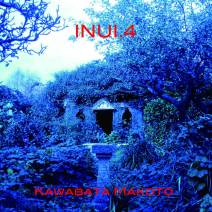
30SOUNDTRACK: KAWABATA MAKOTO [河端一]-INUI 4 (2007).

a2911123677_16Kawabata Makoto [河端一] is the guitarist and mastermind behind Acid Mothers Temple. The band is hugely prolific. But he still had time to record solo albums. Often times without any guitar.

This was Kawabata’s fourth solo LP, now available on bandcamp

NUI 4 is the fourth volume in Makoto’s series of occasional solo releases for VHF. While widely and rightly known for ear-splitting Deep Purple style guitar demolition with Acid Mothers Temple, Gong, etc, Kawabata’s INUI works are highly personal and introspective, with lots of room given to cosmic atmosphere and acoustic instruments. INUI 4 is a single 68 minute track, a slow building and evolving multi-layered swath of acoustic & electric guitars, electronics, and hurdy gurdy. The final 20 minutes of the track features prominent “glissando” guitar, ala Daevid Allen, a very fine sound to be lost in.

This album consists of 1 hour-long song called RYO (01:07:51).

A piercing high note lingers throughout the track as a beautiful bouzouki melody plays and trippy space sounds swirl around.  The piercing note seems to fade into the background as soaring swirling sounds begin around 5 minutes with a kind of high whistling melody running through from about 8 minutes.

AS the song  continues, new sounds continue to enter.  At 15 minutes, warping and buzzing sound swirl in.  At 23 minutes, deep moaning sounds cycle through.  At 30 minutes swirling spaceship sounds float in.

Around 35 minutes a melody seems to come through the hazy distance (possibly from the hurdy gurdy).  Around 40 minutes a “beat” (made of possible reversed guitar chords) starts to come in.  This adds a kind of quiet propulsion to the sound as the soloing in the distance gets more intense (yet still quite).

Then at 46 minutes it shifts dramatically.  All the drones drop away and the song starts fresh with gentle swirling guitars.  Everything feels like it is ringing and chiming and it stays in this beautiful glissando style for the next 20 minutes.

Not a bad way to spend an hour.

[READ: September 13, 2019] “On a Bad Day You Can See Forever”

This story seems mostly like an opportunity for Woody Allen to throw in as many fifty-cent words as he can.  Which is kind of funny since it is about overpaying for renovations.

You’d never quite guess that’s where this story is going from the opening.  As it opens the narrator is at the gym and has just thrown out his back (“my spine suddenly assumed the shape of a Möbius strip”) trying to “tickle pink the almond-eyed fox” doing push ups near him.  Given Allen’s history, this is unfortunate to say the least.  Not the least of which is because this character is married.

But whatever, it’s a comic story, right? (more…)

Read Full Post »

indexSOUNDTRACK: KAWABATA MAKOTO [河端一]-INUI 3 (2005).

a0649002429_16Kawabata Makoto [河端一] is the guitarist and mastermind behind Acid Mothers Temple. The band is hugely prolific. But he still had time to record solo albums. Often times without any guitar.

This was Kawabata’s third solo LP, now available on bandcamp

Third volume in an acclaimed series by the Acid Mothers Temple leader. INUI 3 focuses on Kawabata’s highly personal brand of epic instrumental drone. Performing on bouzouki, sarangi, electric guitar, viola, and ECS-101, Makoto emphasizes the gradual build of monumental sound structures. Running 12 minutes each, “Sui” and “Ken” are darkly spun tales, with wisps of sound keening over a distant backdrop. Recalling the Speed Guru’s lovely 2001 collaboration with Richard Youngs, the 47 minute “Fuku” is based on a hypnotic arpeggio plucked out on the bouzouki over which Gong-style glissando guitar and other zonked sounds are carefully layered.

Sui (12.33) over a drone it sounds like he’s playing a hammered dulcimer, but I gather it is the bouzouki.  There’s a very pretty melody which seems to morph into a reverse-sounding musical style after about 5 minutes.  These pulsing waves slowly shift into washes of synths over the drone.

Ken (12.35) starts was a drone–whether electronic or acoustic is hard to tell.  Waves of sound like waves swoop through this rather relaxing piece.

Fuku (47.08) has more of that hammered bouzouki style of playing.  It’s a lovely melody with a drone behind it.  After 9 minutes the backing chords change the texture of the song.  Around 11 minutes the melody starts to grow slightly discordant as the backing chords start to morph and the bouzouki plays some discordant notes.

The discord seems to weave in an out–never growing too harsh, just enough to give the song some tension.

Around 30 minutes, waves of electronics start to take over, there’s a slightly sinister sound to them.  By the end things get a little intense and it feels like the closing credits to a dramatic film.

It’s amazing that he can keep this up for 47 minutes.

[READ: September 10, 2019] “What I Saw From the Forest”

In this story Charles and Dulcie have been together for a while.  They lost their baby when Dulcie was six months pregnant.  It was nobody’s fault but Dulcie can’t help but try to figure out what she did wrong.

Their relationship has been prickly ever since.

Dulcie hates to drive on freeways–she doesn’t like that she can’t exit when she wants, so they tend to take back roads.  They had been to a party and Charles was too drunk to drive home so Dulcie drove his car.

He woke up when they were rear-ended.  It was a a group of young men with a gun.  They asked for the keys.  Charles gave them the keys and his wallet and then he and Dulcie ran.  The police promised them they would not see their car again.  When Dulcie worried that they would come to their house since the registration was in the car, the policeman said not to worry, “crackheads never did that.”

Dulcie took a few days off (she was a teacher) so Charles drove her car to work.  When he got home she had moved the mattress into the living room.  There was a rat in the bedroom walls.  They could hear it and had gotten used to it because when they told the landlord he said he would take care of it –which means “there’re ten other people in line for your apartment.”

She insisted on leaving the lights on all night.  She even talked about getting an inflatable person to sit in a chair to let people think someone was home.

The next evening as he was driving home, someone threw an egg at his car.  He freaked out until he realized it was Halloween.  They hadn’t bought any candy, so when he got home Dulcie was cowering saying people kept ringing the doorbell and she couldn’t trust anyone.

A week after the holdup, police called to say their car was found. It was in a lot in South Central.  The policeman asked if he was white.  Charles said yes, and the polieman said to go early in the morning before “wake-up time.”  They arrived and the car was stripped–even the steering wheel–so they turned it in rather than having it towed.

Charles took a day off from work.  He drove to a park and sat, thinking.  He realized he could either stay or go.  He had a decision to make.


Read Full Post »

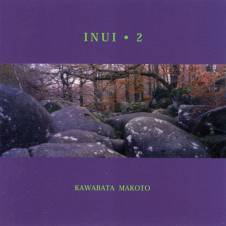
amazSOUNDTRACK: KAWABATA MAKOTO [河端一]-INUI 2 (2000).

a1729275931_16Kawabata Makoto [河端一] is the guitarist and mastermind behind Acid Mothers Temple. The band is hugely prolific. But he still had time to record solo albums. Often times without any guitar.

This was Kawabata’s second solo LP, now available on bandcamp

INUI 2 was the first widely available solo CD by this prolific Japanese guitarist/composer/bearded guru. Known primarily for his recent work with oddballs Acid Mothers Temple, Kawabata’s career actually goes back to the late ’70s and spans many styles, including solo guitar improv, electronics, folk, and, of course, the deranged acid mayhem associated with the PSF scene. Performed entirely solo on violin, kemenje, zurna, electronics, sarangi, taiko, gong, water, bouzouki, cello, vibes, organ, and sitar, the four tracks that make up INUI 2 are perfectly executed dream-music, equal parts delicately floating and heavily droning. There’s also one all-too-short modal essay for bouzouki that is amazingly beautiful.

“Mou” (9:56) has a drone underpinning the song as he plays a quiet keyboard melody over the top.  About half way through the zurna comes in playing its somewhat harsh melody (although it is less harsh here).  This is a pretty cool chill out song.  [Instruments: Violin, kemenje, zurna, electronics].

“Meii” (11:02) is composed of slowly plucked sarangi strings.  They ring out loud and are accompanied by thumps on the taiko and occasional crashes of the gong. There is also a high pitched feedback/electronic sound that rings out form time to time.   About midway through the bowing become s a little wild and improvisational until it settles back down again.  [Instruments: Sarangi, taiko, gong, water].

“Shi” (3:47) is the ‘all too short” piece and I agree that it is too short.  It features a quietly plucked string melody on the bouzouki that is very pretty.  It has mild drones behind it.  About half way through the melody changes, a faster more deliberate style but still quiet and pleasing.  I could listen to this one for much much longer.  [Instruments: bouzouki, cello, vibe, organ].

“Kan” (14:18) starts as harsh electronic drone with occasional blips of hi frequency sounds.   It’s the first unpleasant sound on the disc.  Although after 2 and a half minutes, the string drones enter and smooth things over.  At some point a pulsing possibly, backwards recorded series of notes comes in to give the drone some drive.  [Instruments: bowed sitar, violin, electric sitar, electronics].

[READ: September 10, 2019] “Ranch Girl”

This brief story was collected in Meloy’s Half in Love.

It starts with the fatalistic sentence:

If you’re white and you’re not rich or poor but somewhere in the middle it’s hard to have worse luck than to be born a girl on a ranch.

The unnamed protagonist grew up the daughter of the foreman of the Ted Haskell Running H Ranch.  Haskell’s brand was a slanted H–she had seen it all her life and didn’t know an H was supposed to be upright until she went to school. (more…)

Read Full Post »

New_Yorker_September_11_2000-2015_02_20_13_56_46-1000x1400SOUNDTRACK: KAWABATA MAKOTO [河端一]-INUI 1 (2000).

a2061426618_16Kawabata Makoto [河端一] is the guitarist and mastermind behind Acid Mothers Temple.  The band is hugely prolific.  But he still had time to record solo albums.  Often times without any guitar.

This was Kawabata’s first solo LP, now available on bandcamp

from way back in 2000 (about 100 releases ago, in Kawabata terms). Originally released by the mighty SIWA label in a tiny, hand printed edition of 300, this has long been the most sought-after Kawabata item, pretty much impossible to track down without a wallet full of ebay slush funds. The music, as on all of Kawabata’s INUI series releases, is intensely personal and introspective, with long tracks built up of soft-focus layers of mid-fi violin, sarangi, oud, sitar, bouzouki, etc.

And that’s what this is.

The credits indicate that he plays violin, sarangi, oud, sitar, bouzouki, lyra, shou, nei, and sings.

There are three tracks.

“Shin” (11:09) is a quiet drone of him playing any or all of the instruments mentioned.  I like the middle eastern drone style paired with a kind of lead bowing improv.  The piece ends with a fifteen second moaning voice.  The voice is French film maker and musician Audrey Ginestet.

Tai (9:45) is combination of drones and plucked notes.  He sings a melody along with a bowed solo, making this song very calming.

Son (21:45) is nearly twenty minutes of unchanging drones.  It can really make you feel transcendent.  After about 16 minutes his voice comes in, echoing and distant.

This album is not for everyone, but it can certainly put you in a different head space.

[READ: August 15, 2019] “Water Child”

Nadine is a nurse.  She has moved to Brooklyn from Haiti and is living by herself.

The story opens wit her receiving a letter from her parents. It is positive and warm and asks her to call them.  Nadine wants to call but does not. For days and weeks.  But she reads the note several times a day, marveling at the lightness of the airmail paper.

Nadine ate lunch by herself.  A fellow nurse, Josette’s lunch began when Nadine’s ended and they crossed paths every day.  But their conversations were brief and functional. (more…)

Read Full Post »

yorkernSOUNDTRACK: SOUL COUGHING-“Is Chicago, Is Not Chicago” (1994).

soul cI really enjoyed Soul Coughing’s output, and Ruby Vroom stands out as a great debut.  They had a terrific blend of great music played behind a more or less spoken word.  The idea wasn’t unique, but they made it work as more than a gimmick.

The musicians of Soul Coughing were tremendous and Mike Doughty’s voice has a wonderful resonance for telling is offbeat/absurd stories/poems.

This track seems especially appropriate when talking about Saul Bellow.

Starting with rhythmic guitar chunks, an upright bass plays a very cool rising and falling bass run.  It sounds like modern noir.

Then Doughty tells us “a man drives a plane into the Chrysler building.”  It’s difficult to hear it now, but in 1994 it was simply a fantastical image.   The drums come in as the guitar starts making shapes and slashes of sounds.

The chorus is a rather boppy moment amid the noise as things slow down for the recited “Is Chicago is not Chicago.”

Then the bridge(s):

Saskatoon is in the room
Poulsbo is in the room
Bennetsville is in the room
Palmyra is in the roomKhartoum is in the room
Phnom Penh is in the room
Pyongyang is in the room
Cairo is in the room

The song ends with a wonderful cacophony of guitar scratches and drum beats that definitively ends the song without it having to end itself.

[READ: September 1, 2019] “Re-Reading Saul Bellow”

I decided to read this article because I like Philip Roth and because I have never read any Saul Bellow.  In fact, although Saul Bellow is a name I was familiar with, I wasn’t entirely sure what he had written. So I was pretty surprised to read that he wrote The Adventures of Augie March, which I had without a doubt heard of, but which I knew very little about.  I was also really surprised to find out that he was still alive when Roth wrote this esay (Bellow died in 2005).

Roth knew Bellow, of course, and Bellow had once told him that his Jewish heritage led him to doubt himself as a writer.  This was mainly because “our own WASP establishment, represented mainly by Harvard-trained professors considered a son of immigrant Jews unfit to write books in English.”

By the time he wrote Augie March, he was prepared to open not with a line like “I am a Jew, the son of immigrants,” but “I am an American, Chicago born.”

Roth summarizes a few of Bellow’s works and talks about how he progressed as a writer.  Of course, he writes this re-reading as if we ourselves have read the books (so, spoiler alerts).

He more or less dismisses the first two novels Dangling Man (1944) and The Victim (1947) and moves straight on to The Adventures of Augie March (1953) saying how the transformation from the earlier writer to the writer of Augie is remarkable.  It won the National Book Award.

He especially likes “the narcissistic enthusiasm for life in all its hybrid forms” that is propelling Augie.  He cries out to the world “Look at me!”

What appeals to me about the way Roth describes this book is the “engorged sentences” as “syntactical manifestations of Augie’s large, robust ego.”  That sounds like a fun 500 page book to me.

Up next was Seize the Day (1956) which is a short novel and the fictional antithesis of Augie March–a sorrow-filled book about the culmination of a boy who is disowned and disavowed by his father.  Whereas Augie’s ego soars, Tommy Wilheim’s is quashed beneath its burden.  Tommy cried out to the world “Help me!”

Bellow seemed to alternate between comedy and tragedy and I would much rather read the comedies myself.

Next came Henderson the Rain King (1959) which contain an exotic locale, a volcanic hero and the comic calamity that is his life.  Henderson is a boozer, a giant, a Gentile, a middle-aged multimillionaire in a state of continual emotional upheaval.  He leaves his home for a continent peopled by tribal blacks who turn out to be his very cure. Africa as medicine.

According to Wikipedia, Bellow became very conservative and somewhat (or very) racist as he got older.  I hesitate to read this book although it was written when he was younger.  On the other hand, I do enjoy that Roth calls it “a screwball book but not without great screwball authority.”  So that’s a tentative maybe on reading this.

Herzog (1964) also won the National Book Award.  Moses Herzog is a labyrinth of contradiction and self-division. He is Bellow’s grandest creation.  Herzog is American literature’s Leopold Bloom.  Although in Ulysses, “the encyclopedic mind of the author is transmuted into the linguistic flesh of the novel and Joyce never cedes to Bloom his own great erudition… whereas in Herzog, Bellow endows his hero with a mind that is a mind.”

Much of the plot is given away in the review, presumably because a 50 year-old award-winning book is pretty well known.

Roth says that Herzog is Bellow’s first excursion into sex in a novel. Adding sex allows Herzog to suffer in ways that Augie March never did.  He also says that “in all of literature  I know of no more emotionally susceptible male, of no man who brings a greater focus or intensity to his engagement with women than this Herzog.”

In Herzog, there is barely any action that takes place outside of Herzog’s brain.  Roth suggests, the best parts of the book are the letters that Herzog writes.

This book sounds rather appealing.  Unlike Mr. Sammler’s Planet (1970) which also won the National Book Award (dang this guy must be good).  Roth gives it a rather short write up, but it appears to be about a man dealing with the culture around him.  It is a darker story, that sounds like a critique of the sixties.

That leads to Humboldt’s Gift (1975) which won the Pulitzer Prize for Literature [that is an impressive amount of awards Mr Bellow].  Roth describes it as the “screwiest of the euphoric going-every-which-way-out-and-out comic novels.”  It is “loopier and more carnivalesque” than the others.  It’s like the tonic that helps him recover from the suffering in Sammler.

Interestingly. Roth doesn’t really talk about the rest of Bellow’s works: The Dean’s December (1982); What Kind of Day Did You Have? (1984); More Die of Heartbreak (1987); A Theft (1989); The Bellarosa Connection (1989); The Actual (1997); Ravelstein (2000).  Rather he continues with Humboldt and talks about Bellow’s relationship with Chicago.

Roth says that in Bellow’s early books Chicago was barely mentioned–a few streets here and there, but by Humboldt Chicago infuses the book.

Perhaps Below didn’t seize on Chicago at the start of his career because he didn’t want to be “a Chicago writer” any more than he wanted to be “a Jewish writer.”

Roth does in fact mention The Dean’s December, but only to say that the exploration of Chicago in this book is not comical but rancorous.  Chicago has become demoniacal.

It feels like Bellow is no longer a part of Chicago.

Read Full Post »

SOUNDTRACK: LAURA MARLING-NonCOMM (May 18, 2017).

I enjoyed listening to the sets from NonCOMM back in May, so I dug into the archives and found out that a lot of sets are still available.  I was especially happy to see this one from Laura Marling.  The end of the blurb says:

You’ll have another chance to witness this fixating performance when Laura Marling comes to the TLA tomorrow night.

And that’s the show I saw.

After a hearty introduction from Bob Boilen, Laura Marling and crew swan-dived right into debut single, “Soothing,” off of her latest album, Semper Femina.

“Wild Fire” is an amazing example of her incredible voice as she speak-sings, whispers, coos and soars all over the verses which come together in the beautiful harmony of “meeeeeee” in the chorus.  This song has a bunch of curses in it, but she kept it clean for this performance.

With a piercing yet still somehow soft gaze cutting through the crowd (I don’t know how she does the thing, but it’s true), Marling unleashed her otherworldly vocals — flawlessly ebbing and flowing with the track’s funkier rhythm.

“Always This Way” is a beautiful song off of Semper Femina.  The guitar melody is delightful and, of course, her voice is outstanding.

“Next Time” has a simple, quiet, guitar melody which allows her voice to just wend all over this song.  When the backing vocals come it it’s quiet angelic.

“Nothing, Not Nearly” has some wonderfully fast vocals that are as fun to try to figure out as they are to sing along to.  It ends Semper Femina and is my favoirte song on the record.  From the main melody to her wonderfully high notes this song is amazing.

She ended the set with “Once” from Once I Was an Eagle, the album that introduced me to her.

This song is very different from the others, but it still sounded great.  When I saw her I wished she’d played ten songs from each album.  Maybe some day I’ll see her do everything.

[READ: September 7, 2019] “The Stone”

This was an otherworldly story about an earthly object.

As a young girl, the main character’s family drove to an island in Lake Superior every summer.  She was wandering in the brush one day when she felt sure someone was looking at her.  There was no one there, but then she saw the stone.

It was smooth and black, half the size of a human skull and rain had carved what looked like two eye holes in it.

She was spooked at first but then was drawn to it.  She brought it back to the vacation home and put it where she slept.  But then she was sure one of her siblings would try to take it, so she hid it in her sleeping bag.

She brought home after the summer and put it in her room. Her mother saw it as she was getting them ready for school in September. Her mom asked if she’d found the rock the summer.  She nodded and, after dinner, hid it in her room. (more…)

Read Full Post »

SOUNDTRACK: EATING OUT-Burn 7″ (2013).

Orville Peck has been getting a lot of attention lately.  In his act, he is a masked cowboy and his identity was (for a time) unknown.

It was fairly recently revealed that Orville Peck is actually Canadian musician Daniel Pitout (those tattoos will always give it away).

Pitout is in a couple of bands including Eating Out and Nü Sensae.

Eating Out plays a noisy grunge.  They have a bunch of one-song singles on bandcamp and this 7″ collects three of them.

Pitout is the singer (and he sounds NOTHING like Orville Peck).  I’ve felt like Orville Peck is a joke character because of the insane way he sings.  Hearing this, I’m evening more convinced of it.  But I’m glad he’s in on it.

“Burn” opens with a clean guitar intro followed by the biggest most distorted guitar around.  It’s certainly grunge and not metal and it runs through the verse and chorus.  The middle reintroduces the opening guitar riff and then the big distortion returns.  The song ends with that same clean guitar–it’s reall catchy–before crashing to a conclusion.

“Come Around” has two lead guitars (nicely fuzzed out) and a big fuzzy sound.  The sound reminds me of an updated version of SST bands.

“That’s My Man” closes the 7″ with a quiet intro.  Echoed vocals and a simple guitar melody.  It’s a poppy, almost do-wop melody with a bit of reverb drenched over the whole thing.  The song doesn’t change much, it just gets bigger as it goes along.  It’s probably the least interesting of the three, but it certainly shows Pitout looking to stretch beyond punk and grunge way back in 2013.

[READ: September 2, 2019] “To-Do”

This is a story about feminism, sex, and a woman’s relationship with her mother.

Constance is in front of a crowd of women at Antler’s Bar for Storytelling Wednesday.

She is telling them that her mother had been a beauty.  She had gotten a degree and was successful in a typing pool in New York City.  Although her boss told her that she had to cut her long hair and adopt the stylish updo of the time.  When she refused, her boss called her hysterical.  I can imagine her telling the audience: Do you know the origin of the word hysterical is the belief that the uterus could reach up through the body and and grip the throat.

The women in the audience seem agitated and bored.  Constance tries to win them over by reciting her mother’s to-do list, something she found in her mother’s effects after she died.

She tries to convince them of the significance of post its and to do lists in a woman’s life.

None of the women see it. (more…)

Read Full Post »

« Newer Posts - Older Posts »