Feeds:
Posts
Comments

Archive for the ‘Harper’s’ Category

SOUNDTRACK: SHARON VAN ETTEN-Epic (2010).

Sharon Van Etten caught my attention with the song “Don’t Do It,” which I love.  The rest of this album doesn’t have the intensity of that song, but rather, it gets under your skin with some great songs and interesting and subtle textures.

There’s only seven songs (running time just over 30 minutes), so “epic” is kind of a joke.  But she packs a lot into these songs.  The opening two songs are about 3 minutes each, and they are great alt-folk songs, especially “Peace Signs.”  They are sparse but effective.

“Save Yourself” adds more instrumentation, including a slide guitar.  But it’s the harmonies that really make the song great.  “DsharpG” is a cooly brooding song that never wears out its 6 minute length.   And “One Day” also has major potential to be a hit.

Of course for me the highlight is still “Don’t Do It” which gives me goosebumps with each listen.

What’s really impressive about the disc is how on the surface it seems like a simple folk album and yet every song has subtly different sounds and textures to makes this a really complex recording.

[READ: February 16, 2011] “Homeless in Sacramento”

Vollmann wrote a lengthy piece about death in the November issue of Harper’s.  Now, four months later, he’s back with an 18 page (!) article about homelessness. Now, normally I wouldn’t read an article about homelessness, because, well, because its a major bummer, but also because there isn’t anything that I can do about it and it doesn’t seem like there’s much new to say about it.

But I decided recently that I was going to try to read Vollmann whenever I encountered him, since it was unlikely that I’d ever go back and read his vast output.  So, here I am.

Vollmann does, in fact, manage to say something new about the homeless.  He begins by explaining that the house he bought had a vacant lot next to it.  And he has been tacitly encouraging homeless people to sleep there when they need to.  He has learned to like many of them and he finds that the frequent users have become “friends”–as much as you can in that situation. (more…)

Read Full Post »

SOUNDTRACK: PORTLANDIA: “Dream of the 90’s” (2011).

This is song that I think of as the theme song for the show Portlandia. (I’ve only seen the one episode so far so I don’t know if it is or not, but if it isn’t, it should be!).  This song is so indicative of the show that, if you like the video, you’ll likely enjoy the show too.  Portlandia is written by and stars Fred Armisen and Carrie Brownstein (of Sleater-Kinney).

Although this song is meant to be evocative of the 90s (the chorus is “The dream of the 90s is alive in Portland”), musically, it’s not a 90s-era song (despite the comment that flannel still looks good in Portland).  It is actually a keyboard-only song, kind of discoey (dare I say Pet Shop Boysish?).  It’s a simple musical motif, with a catchy chorus and spoken verse, but really you listen for the lyrics:

Remember the 90s when they encouraged you to be weird?

Portland is the city where young people go to retire.

It’s like Gore won, the Bush administration never happened….  Portland’s almost an alternative universe.

It’s all tongue-in-cheek (with a surprisingly catchy chorus).  But, oh to dream.  Sleep ’til eleven…

Watch the video here.

[READ: January 24, 2011] “Always Raining, Somewhere, Said Jim Johnson”

This second Harper’s story suffered from a similar problem as the previous one.  This story felt like several snippets that never tied together.  In any way.

We see a student at the Iowa writer’s program (this sent up red flags immediately for me–not a story about being in  writing program).  And we read a lengthy section about rain.  Except it’s not really about rain, it’s about a pub in Iowa City.  And the concreteness of it is very cool.  You can really see and smell the bar.   The bartender’s routine is so exact you can win bets on when he’ll finish.   He ensues that everything is tidy and that everyone gets the hell out.  Cool, I’m with you.

Then there’s more rain and the narrator and a guy named Rich crash at Rich’s place.  Rich’s wife, Liz is also there and we learn a word or three about her.  And then the narrator starts really checking out Liz, who is completely naked on the bed with Rich.  And there’s some interesting intense moments where he thinks he’s caught.

Then we jump to another bar scene and some pretty funny comparisons between Liz and Gayle Sayers.  These come from the titular Jim Johnson who is apparently dead by the above scene.  (You don’t have to know who Gayle Sayers is to get the joke, I don’t think.  But if you don’t know who he is, he was a football player).

(more…)

Read Full Post »

SOUNDTRACK: THE DECEMBERISTS-“The King is Dead Live from Portland” on OPB (Oregon Public Broadcasting) (2011).

NPR loves The Decemberists, and so do I.  Not only did NPR stream their new album before it came out, they are also showing the audio and the video of this hour-long concert of the band playing The King is Dead start to finish.

I haven’t really had time to digest the whole album yet, but I am quite fond of it.  I’ve listened a few times and it’s very different from their previous releases, it has a much more folk/country feel (with harmonicas!).  And from what I can tell this live set is quite faithful to the recording.

Interestingly, when they played the entirety of The Hazards of Love live (also available from NPR), they played that entire epic album straight through with no chatter in between.  This live set is much more cordial and relaxed (like the disc itself), with some amusing delays and chatter between tracks.  (There’s an amusing reference to the lyrics of the new IFC show Portlandia).  There are tuning and tech malfunctions, and everyone plays along very nicely.  It really shows the difference between the two albums and how adaptable the band is.

Much has been made of the fact that Peter Buck plays on the album, and I have to say that the live mixing of “Down By the Water” makes it sound even more like R.E.M.’s “The One I Love” (that guitar, wow).  But it’s the country and bluegrass really comes out in this setting.  Sara Watkins’ violin really stands out.  They also mention the band’s side project, which I’d not heard of before now.  The band is Black Prairie and features Chris Funk, Jenny Conlee and Nate Query (I guess Colin Meloy is  real taskmaster that they needed to escape?).

The middle of the set is an interview with the OPB DJ (unnamed as far as I can tell) and Colin Meloy.  They talk about Hazards and the new one.  And at the end of the set there’s a Q&A from the audience (hear of Jenny’s wardrobe malfunction!).

But stay until the end because they also play “We Both Go Down Together.”  It’s a great, fun, loose set.

[READ: January 23, 2010] “The Hare’s Mask”

One of the fun things about vacations for me is that I bring all the magazines that have been idling around my house and I read them during down time.  So, I grabbed all of the magazines that were unread or half-read and put them in my suitcase.  After long days at Disney, when the family crashed, I took the time to finish those final pages.

I often find myself falling very far behind on my magazine reading, but I was delighted that after this vacation I was totally caught up (except for the 4 that awaited me when I got home).  This Harper’s story (and the next post) were the only stragglers from the trip.

And I find that I have much more to say about my trip and my magazines than about this story.  I feel like it was meant to be profound, and it certainly had the ingredients for profundity, but it failed to move me.

Perhaps it was the metaphor of tying fishing lures, which I don’t care about. Perhaps it was the rabbit killing, which was heart-string tugging, but was more distasteful than anything else. (more…)

Read Full Post »

SOUNDTRACK: LUDICRA-“A Larger Silence” (2010).

Ludicra’s The Tenant came in at #9 on Viking’s Top Ten.  Ludicra was the first band they played in the (downloadable) show and I knew that this was going to be a different Top Ten list as soon as it started.  Ludicra plays pounding black metal but they have a real difference: both of their singers are women.  True, they use the same growling screaming vocals (and I first thought it was a guy with a higher pitched voice) until the two-minute mark hits and both women harmonize beautifully.  Suddenly the song jumps several notches ahead of its peers.

It’s quite disconcerting to hear thudding double-bass drums and pounding snares behind two women who are harmonizing (a little creepily) over extended notes.  At the end of the track (about 5 minutes in) the song shifts gears into an acoustic guitar and drum thumping near-folk song.  It doesn’t last long, but the respite prepares you for the wailing end which features a really catchy guitar solo.

This is band I’d like to watch a live video of to see how they do their singing and harmonizing (oh, here ya go–wow, the singer looks inSANE!).  Man, I’d be afraid to see them live.

[READ: January 5, 2011] “Radical Will”

I’ve enjoyed Unferth’s fiction quite a bit.  And fortunately, this memoir uses her distinct writing style to huge advantage.  At age 18 (in 1987), Unferth ran away from college and traveled to Central America with her boyfriend to be in a revolutionary movement.

In this excerpt, Unferth and “George” travel to San Salvador.  Unlike other stories where the young, innocent Americans are stopped at gunpoint and left to endure excruciating torments, for the most part these two seem to be ignored.  By almost everyone. (more…)

Read Full Post »

SOUNDTRACK: RICHARD THOMPSON-Dream Attic (2010).

I was a little disconcerted by this CD when I first listened to it.  The opening song, “Money Shuffle” has a really long sax solo.  I’m not a big fan of sax solos in general, and the fact that this was so prominent was really confusing to me.  It was only more confusing when later in the disc I noticed some clapping.  Was this a live album?  Made of songs I’d never heard before? What the hell was going on?

Well, this is an album of all news songs.  They were all recorded live in California on West Coast tour.  It’s unclear why you can occasionally hear the crowd noise.   RT’s live records have always been a place where he really shines.  He lets loose with amazing solos and just seems so less constrained than he does by his studio work.  This is  logical way for him to record an album.  And I think it’s one of his best.

So anyhow, “Money Shuffle” is one of RT’s great indignant songs about the banking industry. It rocks hard (I can get into the sax solo at this point) and it features some great angry (but intelligent vocals).  It’s also got a nice wailing guitar solo (and an electric violin solo, too!).

As with many RT discs, this one is sequenced beautifully.  The second track is the beautiful melancholy ballad “Among the Gorse, Among the Grey.”  It’s a quite track with minimal accompaniment and the melody is haunting.  It’s followed by the shuffling rocker “Haul Me Up” complete with all kinds of deep backing vocals.  It’s the perfect place for RT to put in a long guitar solo.

“Burning Man” is a slow, quiet track with a great melody line.  It’s followed by the upbeat, hugely sarcastic “Here Comes Gordie” about a puffed up guy.  It’s rather funny and has a great violin solo.  “Demons in Her Dancing Shoes” has an unexpected chorus, with a rhyme scheme that is unusual in a rock song.  I wind up singing this song all day after I hear it.  The horns play fantastic accents and the guitar solo is brief but fiery.  It ends with a great jig that feels like a different song altogether.

“Crimscene” is one of RT’s fantastic stories.  It is a slow building affair about a crime, obviously.  It opens with slow violins as the scene is set.  But it quickly reveals itself to be the kind of angry RT song that is going to feature a scorching guitar solo. And does it ever!  The only surprise is when the raging solo is over that he can get back to that earlier mellowness so seamlessly.  “Big Sun Falling in the River” is another great singalong.  The chorus is just so darn catchy (even if it’s hard to remember the words exactly).

“Stumble On” is another classic RT type of song.  It’s a slow mournful song of failure, something he does with incredible beauty.  And “Sidney Wells” is a vicious story about a serial killer. It’s 7 minutes long with dozens of verses and a solo after each verse (sax, violin, guitar–which is brutally great).  It’s a wonderfully told murder ballad (and also features an interesting jig at the end).

It’s followed by “A Brother Slips Away.”  This is a sad mournful song that RT also does very well.  I don’t really care for these songs in his catalog (I prefer the faster songs), although this one is really pretty.  After many listens, I have started to rather enjoy this song too.  He follows this ballad with “Bad Again” a stomping rocker about losing in love (if he ever had a successful relationship, he’d have no more songs!).  It’s a fun old-timey rocker, that even sounds like it might be from the fifties.

The disc ends with the amazing “If Love Whispers Your Name.”  This 7 minute song can easily sit alongside his other majestic epic tracks.  It opens with great minor chords and a dejected but not bowed RT standing up for Love.  And by the end, everyone in the house should be moved to tears.  The lyrics are simple but powerful:

If love whispers your name
Breathes in your ear
Sighs in the rain
Love is worth every fall
Even to beg, even to crawl

‘Cause I once had it all and
I once lost it all and
I won’t miss again
If the chance should come my way
If love should look my way

You can hear the aching in his voice as the song builds through several verses.  And then he lets his guitar speak for him–an amazingly aching solo if ever there was.  And how do you come out of a soul-wrenching three-minute guitar solo?  You don’t.  You let the disc end with nothing but applause.  Amen.

RT has made a really stunning album–unmistakably RT, and yet original and wholly enjoyable.  It’s never easy to say where to start when advising someone to gt into RT, and I would definitely say that this is as good a place as any.  He covers all the bases in terms of style, and the playing is simply wonderful.

[READ: December 22, 2010] “A Year of Birds”

After reading several Jonathan Franzen birding articles in a row, I wasn’t sure if I was up for another one.  But Proulx–whom I’ve never read before even though I’ve planned on reading The Accordion Crimes for years–takes a very different approach to our avian friends.

This piece is a memoir of her stay in Bird Cloud, near the Medicine Bow ranch in Wyoming.  The house that she is living in overlooks a vast gorge with a river and mountains on either side.  From her dining room window she can see a family of bald eagles who swoop around and dive for fish.  They chase away other birds of prey and, despite what the books say, they do not seem to overtly fear Proulx when she wanders around.  (The books say they will never nest within a 1/2 mile of a house).

Most of the story is taken up with her trying to figure out what the dark birds circling another area of the mountains could be.  After several months of fruitless binocular searching, she finally realizes that they are golden eagles.  Again, the books suggest that golden eagles would never nest so close to bald eagles, and yet there they are. (more…)

Read Full Post »

SOUNDTRACK: BUKE AND GASS-“Page Break” (2010).

NPR has selected the 50 best CDs of 2010.  I knew a few of them but had never heard of a bunch of other ones (about 20% are classical).  This CD with the bizarre cover has a great write up:

The wannabe tech-geek in me was initially attracted to Buke and Gass for the band’s two handmade instruments, which modify a baritone-ukulele and a guitar/bass hybrid run through heavy-duty amps (also handmade, mind you).

The problem (and perhaps its because I’m listening at Xmas time) is that the main melody line of the bridge makes me want to sing “Hark, Hear the Bells” and so this feels like a Christmas song even though it’s not.

Whoops– check that.  That melody is certainly there, but I just learned that I was listening to it in mono.  The other speaker presents all kinds of interesting things that distract from that melody (and project much more coolness).

I like the intensity of the track (and the fact that it’s under 2 minutes long).  It’s pretty heavy and the female vocals are nicely aggressive.  And by the end of the song, the syncopation is downright awesome.

It’s amazing how listening to the ENTIRE song can really change your mind.  This is definitely a cool track and will make me investigate the band more.

[READ: December 22, 2010] “One Night of Love”

I had recently gotten interested in reading Javier Marías when I was looking for information about Roberto Bolaño.  I discovered that New Directions Press, the publisher of all of Bolaño’s smaller books also published translations of all of Marías’ books too.  This story comes from his new collection of short stories While the Women Are Sleeping.  (I had also forgotten that McSweeney’s published his book Voyage on the Horizon a few years ago).

I didn’t know where Marías was from when I first started this (I assumed he was Mexican because of the New Directions connection–he’s actually from Spain).  Anyhow, when I thought he was from Mexico, I wondered if there was some kind of connection between his style and Bolaño’s, but also if he was trying to reintroduce magical realism to Bolaño (who abhorred magical realism).

Well that’s moot, (he may be doing that but not because he is from Mexico).

So this story concerns a man who is dissatisfied with his wife’s sexual appetite and performance.  He has taken to visiting prostitutes (see why the Bolaño thing rang true?), but he is concerned because the prostitutes  have grown “increasingly nervous and increasingly expensive” ([Nervous]?). (more…)

Read Full Post »

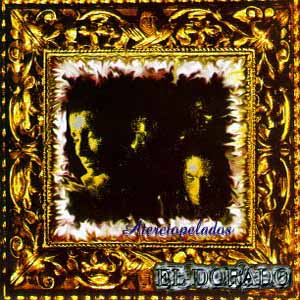
SOUNDTRACKATERCIOPELADOS-El Dorado (1995).

One of the other Rock en Español bands I bought in the 90s was Aterciopelados (the hardest to pronounce).  Aterciopelados come from Colombia and they play a variety of styles of music.  They also feature a female vocalist (Andrea Echeverri) who has a great voice in a variety of styles.

The opening song “Florecita Rockera” is a heavy blast of punk.  “Suenos del 95” is a kind of a lite pop song.  “Candela” is a latin-infused song that sounds not unlike a more psychedelic Santana track.  And “Bolero Falaz” is a winning acoustic ballad.  Meanwhile “Las Estaca” is a sort of county/cowboy song that breaks into a fun rocking chorus.

“No Futuro” starts as a slow balald and builds and builds to a heavy rocker.  I would have liked this song to go a bout a minute longer to get really crazy.  The rest of the disc works within this broad framework: ballads that turn into heavy rockers (“De Tripas Corazón”), hints of punk and latin accents.  And then there’s a song like “Colombia Conexión” which reminds me a bit of The Dead Milkmen: simple sparse verses with heavy punk choruses.  Meanwhile “Pilas!” is straight ahead punk.  The final song “Mujer Gala” has some ska-lite aspects as well (and I have to say that it seems like No Doubt may have been inspired by them).

Although for all of the different styles of music, the disc is really a venue for Echeverri’s voice.  She’s not a rocker or a screamer and she could easily sing pop ballads, but because she chooses to sing over so many styles, she really showcases the multifacted nature of her voice.  She can hold a note for quite a while and although she never really shows off, it’s clear that she’s got a powerful voice.  She even sings beautifully over the punkier tracks, never devolving into a scream, but never losing her edge either.

Aterciopelados is a hard band to pin down (especially with this one disc).  Of the rock en Español bands, Aterciopelados had one of the longer lifespans.  They released several albums with very different styles.

El Dorado suffers from weak production, some more highs and lows would really makes the listening experience better, but it’s a solid disc overall.

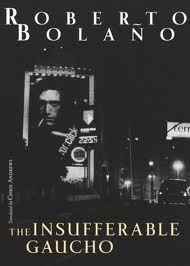
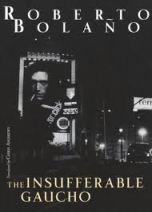
[READ: December 10, 2010] The Insufferable Gaucho

This is a collection of five short stories and two essays.  Two of the short stories appeared elsewhere (which I read previously).  This is the first time I’ve seen the essays translated into English.  The fabulous translation is once again by Chris Andrews, who really brings Bolaño’s shorter books to life.  They are vibrant and (in light of The Savage Detectives, this is funny) visceral.

“Jim” is a four page story which focuses very specifically on a man named Jim.  As the story ends, we see Jim locked in an existential struggle.  For such a short work, it’s very powerful.

“The Insufferable Gaucho” (which I had read in The New Yorker) was even better after a second read.  I find this to be true for much of Bolaño’s work.  He tends to write in a nontraditional, nonlinear fashion so you can’t always anticipate what is going to happen (quite often, nothing happens).  In this story, a man in Buenos Aires, feeling that the city is sinking, heads out to his long neglected ranch in the country.  He spends several years there, slowly morphing from a cosmopolitan man to a weather-beaten gaucho who doesn’t shave and carries a knife.  But there is much more to the story.  The countryside is virtually dead: barren, wasted and overrun by feral rabbits.  The rabbits offer an interesting metaphor for the wilderness as well.  His interactions with the few other people he encounters are wonderfully weird, and the ending is thought-provoking.  It’s a wonderfully realized world he has created.

“Police Rat,” is that strangest of Bolaño stories: a straight ahead narrative that works like a police procedural.  I assumed from the title that it would be something about a metaphorical rat in the police force.  Rather, this is a story about an actual rat who works on the rat police force.  Bolaño spends a lot of time setting up the story (details are abundant) making it seem like perhaps there would be no plot.  But soon enough, a plot unfurls itself.  And although the story is basically a police story, the underlying reality behind it is fantastic and quite profound.  The story is beyond metaphor.

“Álvaro Rousselot’s Journey” was published in The New Yorker.  This story was also better on a second reading.  In many ways this story is a microcosm of Bolaño’s stories: a man goes on a quest for an elusive man.  Unlike the other stories, he actually catches up to the elusive guy.  But, as if Bolaño were commenting on his other stories, actually catching the guy doesn’t really solve the crisis.

This basic premise is that a writer believes that a filmmaker is stealing his ideas for his films (even though he is from a different country).  But more than just the simple plot, when Álvaro Rousselot leaves the comfort of his homeland things change fundamentally within him.

“Two Catholic Tales” is, indeed, two tales.  I had to read this piece twice before I really “got” the whole thing.  There are two separate stories (each story is a solid block of text but there are 30 numbered sections (which don’t seem to correspond to anything so I’m not sure why they are there).  The first tale is of a young boy who desires to be like St. Vincent, with designs for the priesthood.  As the story ends, he is inspired by a monk who he sees walking barefoot in the snow.  The second tale (we don’t realize until later) is about the monk himself.  It rather undermines the piousness that the boy sees.  On the second reading I realized just how dark of a tale this turned out to be.  It’s very good.

“Literature + Illness = Illness”
This is the first non-fiction by Bolaño that I have read.  It is a meditation about his terminal illness.  The essay is broken down into 12 sections about Illness. They range in attitude from the realization that when you are gravely ill you simply want to fuck everything to the fear that grips you when you finally accept your illness.  Despite the concreteness of the subject, the essay retains Bolaño’s metaphorical style.  Each subdivision is “about” an aspect of illness.  “Illness and Freedom,” “Illness and Height,” “Illness and Apollo,” “Illness and French Poetry.”  But it’s when he nears the end and he’s in a tiny elevator with a tiny Japanese doctor (who he wants to fuck right there on the gurney but can’t bring himself to say anything), and she runs him through his tests showing how far advanced his liver failure is, that the reality of his illness really sinks in.

“The Myths of Cthulhu” is the other essay in the book and I have to say it’s the only thing in the book that I’m a little frustrated by.  About midway through, he reveals that this is a speech and I wish that an introductory note would have given context for this speech, or indeed, indicated whether it was really a speech or not.

One of things that struck me about it (and also about “Literature +Illness=Illness” is how frequently he is unspecific about his research (and just never bothered to go back and fix it).  For instance:

For books about theology, there’s no one to match Sánchez Dragó.  For books about popular science, there’s no one to match some guy whose name escapes me for the moment, a specialist in UFOs.

Because I don’t know his non-fiction and I don’t have context (and I’ve no idea who Sánchez Dragó is) I don’t know what to make of that unspecific recommendation.  As for Sánchez Dragó, in the speech he’s noted as a TV presenter (Wikipedia confirms this).  But why the uncertainty in a written piece?  Laziness or deliberate commentary?

This essay has many elements of local information that are completely lost on me.  However, by the end, he brings it back to folklore and literature.  He also makes some biting criticisms of George Bush, Fidel Castro, Penelope Cruz (!) and Mother Teresa. Actually, I’m not sure if he’s mocking Penelope Cruz, although he is definitely mocking Mother Teresa.

The ending is general moaning about the state of Latin American fiction.  Even though I didn’t follow all of what he was talking about, there’s something about his delivery which is so different from his fiction. It’s honest and fast and kind of funny and enjoyable to read.

——

This may be something of a minor work, and yet the stories are really wonderful and are certainly a treat to read.  The essays definitely need more context, but it is interesting to finally have a chance to read the “real” Bolaño.

Read Full Post »
SOUNDTRACK: DUDLEY MOORE & PETER COOK-“Bedazzled” (1967).

I learned about this song when John Lydon was a DJ on NPR’s All Songs Considered.   His collection of songs included Black Sabbath’s “Paranoid,” Jimi Hendrix’ “All Along the Watchtower” and Planxty’s “The Well Below the Valley.”  The other song was this Dudley Moore/Peter Cook number from the movie Bedazzled (the Brendan Frasier movie was a remake which Lydon says was a travesty compared to the original).

This song is wonderfully bizarre.  It’s got a groovy 60’s beat with female singers seducing Peter with their come on lines.  And after each line from the women, Peter deadpans a line about how disinterested he is.  As Lydon says, the best couplet is:

THE GIRLS: You drive me wiiiiild
PETER: You fill me with inertia.

Obviously the song is comic, but the music is cool and slinky and fun in a completely retro sort of way.   I’m only disappointed that I’ve never heard it before.  Thanks Mr. Rotten.  Oh, and I see the soundtrack just got a reissue!

Hear the song (and all of Lydon’s) DJing here. http://www.npr.org/templates/story/story.php?storyId=126559893

[READ: December 9, 2010] “On the Show”

I don’t really care about carny stories (and yet I’m surprised by just how many there are).  But this story was interesting because of the twist that sucked me into the carny.

The story opens with the narrator describing his carny boss.  And what I loved about this set up is that the carny boss is a tough-guy, braggart, asshole.  [He knocked out Steve Martin on the set of one of his movies].  And the stories are wonderful precisely because we hear them through the ears of the narrator who thinks this guy is full of shit.  I realize that I dislike tough guy stories in general, but you could tell me a tough guy story and have the guy he’ talking to say he’s a jerk and I’ll think it’s okay.  Call me the anti-Hemingway.

We flashback to how this narrator, who we don’t know all that much about, got here.  Turns out the flashback is about twelve hours ago (which is also pretty funny).  The narrator is a young college kid who was home for the summer.  His stepfather really doesn’t like him and they have a huge fight (which gets physical) so he runs off and, yes, joins the circus. (more…)

Read Full Post »

SOUNDTRACK: BAD BRAINS-I Against I (1983).

I don’t remember buying this album, but I remember getting it because of the connection to SST records (not because Bad Brains were an amazing hardcore band–I didn’t know that yet).

All of these years later, this album is still pretty astonishing.  The heavy punk blends so well with the reggae-inspired jams.  Perhaps the biggest band where Bad Brains influence is evident is Fishbone (especially their later metal songs).  But you can hear t hem in Faith No More and many other mid 90’s bands as well.

The disc opens with a great off-beat instrumental (“Intro”) which leads into the amazing yell-along “I Against I.”  “House of Suffering” follows with some more speedy hardcore.  Then it all slows down with “Re-Ignition,” the first indication that this is an album unafraid to take risks.  Although the thumpy riff and heavy beats are still there, the vocals are more of a reggae style (especially towards the end).  “Secret 77” follows with a kind of funk experiment (but those drums are still loud and stark–Earl is a maniac!).

Darryl’s bass work is tremendous throughout the disc, and Dr. Know’s guitar is amazing–speeding fast soloing, heavy punk riffs and delicate intricate reggae sections intermingle with ease.  And, of course, we can’t forget about H.R.’s vocals.  He has several different delivery styles from the speedy punk to the reggae deliveries and the all over the place (including high-pitched shrieks on “Return to Heaven”).

The second half of the disc experiments with more diversity, and it is somewhat less punk sounding (although not by much).

Historically, it’s hard (for me) to place exactly how influential they were.  Listening to  the disc today (which doesn’t sound dated in any way) it sounds utterly contemporary in stylistic choices.  Did they come up with the mosh break?  They certainly are the first punk band the embrace Jah (that’s a trend that never really took off though, eh?), but their funk metal sound predates the popular Faith No More style by over a decade.

[READ: November 21, 2010] “The Kids Are Far-Right”

I know I subscribed to Harper’s when this article was published (I distinctly remember the jelly bean portraits of Reagan), but I’m pretty sure I didn’t read it then because the whole idea of it sounded depressing (the subtitle: “Hippie hunting, bunny bashing, and the new conservatism”) was just too much for me in 2006 (and was almost too much for me in 2010).

And so our correspondent (not long after his trip through the Bush/Cheney volunteer minefield) heads out to the twenty-eighth National Conservative Student Conference.  He meets exactly what you would expect: right-wing campus types (several from ultra-religious schools) who are there to learn to hate liberals even more than they already do (and boy do they).

Wells’ article is full of details about all of the speeches and programs, as well as biographical information about some of the attendees.  Most of them just want to get rid of liberals on campus, but some want to go into politics themselves someday (they are viewed with suspicion here).  Many also hate George W. Bush because he raised taxes.  In hindsight what we have here is the origins of the tea party.

The only comforting news to come from the article is that only 400 people attended (but they were willing to spend a few hundred dollars and give up a week of their summer vacation, so it’s still a pretty high number). (more…)

Read Full Post »

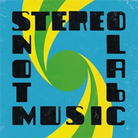
SOUNDTRACK: STEREOLAB-“Everybody’s Weird Except Me” (2010).

I was able to listen to another track from the upcoming Stereolab album Not Music.  This song is just fantastic.  It’s a faster, uptempo track.   Laetitia’s voice is backed by some other female singers (I wonder who they are, is it just Laetitia multitracked?).  And the propulsive beat is infectious.  The backing track of the music sounds like their earlier experiments with “space age” sounds.  Yet the guitar over the top is warm and inviting.

The song drops out at about the 90 second mark and offers a very cool respite from the bopping around that the song is doing.  After the break, the song seems to jump back and forth between this new mellow bit and the bouncy earlier part.  It’s a great track and a welcome opening to their last CD before going on hiatus.  Because, yes, according to the information on the NPR page, Stereolab is going on hiatus.

This CD is full of songs that were created around the time of their previous disc Chemical Chords, and it’s also packed with mixes, remixes and seemingly alternate version of some of those songs.  I haven’t heard the whole disc but it sounds like they’re going out with a winner.

[READ: November 15, 2010] “A Good Death: Exit Strategies”

I’ve mentioned before about my reader-relationship with Vollmann–I feel that I ought to read a lot more of him, yet I haven’t brought myself to do it (those books are huge!).  Nevertheless, I’ll keep reading the new pieces that I stumble upon.

So this piece is a nonfiction essay.  I’m tempted to say it’s more personal than the other pieces that I’ve read because it concerns the death of his father.  Yet from the little Vollmann I have read, it feels like he takes all of his writings very personally and invests himself pretty much bodily into them.

So, this piece, as I said, is sort of about the death of his father.  He died just a few months ago and Vollmann wants to find out a number of answers about death: should he be afraid of it, will he suffer, what should he expect?  So he interviews several “experts” in different fields:  coroners, funeral directors and many religious people of different faiths (Vollmann and his companion/translator are agnostic).  He’s given a vast array of answers, some of which are comforting to him and others just kind of piss him off. (more…)

Read Full Post »

« Newer Posts - Older Posts »