Feeds:
Posts
Comments

Archive for the ‘Harper’s’ Category

HarpersaprilSOUNDTRACK: CHVRCHES-“The Mother We Share” (SXSW, March 23, 2013).

chvrchesThis year NPR doesn’t seem to be offering many full shows from SXSW for download.  But they do have a number of streaming songs.  And since I have recently reduced the amount of time I can dedicate to posts, I’m going to talk about a few songs rather than albums for a bit.

I’ve never heard of Chvrches although NPR leads me to believe they have a buzz around them.  They’re from Glasgow (I like the Glasgow scene), but this song is really way too poppy for me.  At least in this live incarnation, it’s so spare and keyboardy.  The lead singer has a great voice but it is firmly placed in the pop realm (especially with the Oh Oh Ohs).

The band is good though, and I enjoyed the synth guy making most of the sounds of the song.    I’d be curious to hear more (especially t hat cover of “Purple Rain.”  Watch it here.

[READ: March 18, 2013] “A Delicate Truth”

I have never read John Le Carré before.  Indeed, I don’t typically read any kind of spy/thriller type books.  I realized recently that I like mysteries but I don’t have a lot of time for hard spy novels (if I may use the language of sci-fi to describe a spy novel–perhaps spy-fi?).

We recently watched some of Skyfall (the Redbox had to go back so we didn’t finish it–I think I’m not down with the Redbox, it’s just as inconvenient as a video store), so this British spy-fi story seemed nicely timed.

This was an excerpt from Le Carré’s forthcoming book.  And regardless of the story itself, I’m delighted that it was a self-contained excerpt.  It is a mission and the mission ends by the end of the chapter   Obviously there is a lot more to the book, but I was pleased that the excerpt didn’t having any kind of cliffhanger.  And now I don’t feel like I have to read anymore of the story.

So this is the story of Paul Anderson or, “Paul Anderson,” a “middle-ranking British civil servant  hauled from his desk in one of the more prosaic departments of Her Majesty’s Foreign & Commonwealth Office to be dispatched on a top-secret mission of acute sensitivity.”  That pretty much sums up the story and you can tell from that sentence whether or not you’ll like the book.  I have no idea if this sort of thing happens in real life at all.  And maybe that’s not the point.  In the Afterword, Le Carré talks about The Spy Who Came in from the Cold, his first novel, which everyone assumed was all true (he says you know it’s not true because they printed it).  And he;s always been annoyed that people think of his as a spy who started writing rather than an author who did some spy work.

So I guess that means he knows of what he speaks. (more…)

Read Full Post »

Harpersmaerch13

SOUNDTRACK: DEFTONES-“My Own Summer (Shove It)” single CD 1 (1998).

shoveitThis is a four track single (it’s out of chronological sequence, but it does follow the B-Sides release, so lighten up!).

Obviously, “My Own Summer” is awesome.

The other three tracks are live from Amsterdam.  The sound quality is not as great as I would like–Chino’s voice is mixed strangely and he seems to be “above” the music–almost like he is rapping to prerecorded music. It’s especially notable on “Lotion” which I don’t especially like here–it doesn’t really sound like the song so much as a guy talking over background.  It’s better on “Fireal-Swords,” but what’s most notable about the song is that in the middle of it, while the band are still playing, he talks to the crowd and asks them to be a little gentle to some guys (I can’t imagine the context) at least for the rest of this song, okay?

In the final song, “Bored” the band sounds great–and Chino’s vocals distortions are incredible (and incredible in how consistent they are–does he have pedals or something).  But in this case, in the middle of a verse, the band completely stops when Chino sees a kid on the ground.  He asks if the guy’s okay and you can hear the relief in his voice when you find out he’s just looking for his shoe.  So they bring the kid on stage and tease him a bit and then let him stage dive off as they pick up at the next chorus–from zero to ten –like nothing happened.  Cool.

It was very impressive to hear genuine concern from such a loud and screamy band.

[READ: March 5, 2013] “Deeper Winter”

This is a story about an illegal immigrant.  And what’s interesting about it is that there’s no “message” one way or the other about illegal immigrants.  Eduardo is just a guy looking for a job and a place to stay.

The story opens with Eduardo and his Uncle Luis at a Dodgers game.  Luis is telling him that he has to move out because he and his lady want to get married and have the place to themselves.  Eduardo understands, he knew the place was only temporary for him.  Luis feels bad, but he has already gotten in touch with a friend in Idaho who can get him a job and give him a place to stay.  He also gives Eduardo a down parka and a bus ticket.

Eduardo sets out on a quiet Sunday morning bus.  They stop briefly in Las Vegas and then they’re off to the north.  When the bus arrives, Miguel is there to pick him up.  Miguel’s mother is very excited to see Eduardo (Eduardo of the Angels she calls him).  She reveals that she and Luis were an item a long time ago and she thinks of Eduardo as family.  They give him his own room and tell him that he’ll be working with Miguel on a construction site–working for Johnny Danilo.

Eduardo is a quick study and learns the fine art of roofing so that when the job is finished (it’s a big job and takes awhile), Danilo lets him put on the finishing caps–something of a rite of passage.  There’s plenty of work upcoming, so Danilo invites Miguel and Eduardo to keep working for him.  Eduardo becomes friendly with Danilo and his son Leo.  Eduardo even shows Leo how to pitch like Fernando Valenzuela.  But one day when Eduardo returns home, Miguel and his mom have taken off–they left Eduardo’s things but cleared out everything else.  Eduardo has no one to turn to except Danilo. (more…)

Read Full Post »

Harpersmaerch13SOUNDTRACK: DEFTONES-White Pony (2000).

Iwhitepony had forgotten how much I loved this album when it came out.  It’s been a while since I listened to it but it still sounds great.  I remembered thinking Around the Fur was the album that blew me away but it proved to be White Pony.  I have the “limited edition” red cover for whatever that’s worth (not much really, although I did get a bonus song).  This album really explores their more alternative side, with quiet guitars and very non-metal sounding songs including some trip-hop drums on a track.  But there are three or four really heavy songs showing they’re not giving up their heavy roots by any means.  It’s a really accomplished and complex album and is definitely a high point in alt-rock.

The album starts with “Fieticeira” which has a cool alt guitar sound (Stephen Carpenter really displays an amazing range on this album) and some lurching verses.  The choruses get big and loud (in the way that the Foo Fighters do now), although there is a weird noisy section that keeps it from being a totally polished track.  “Digital Bath” is a dark creepy song where the guitars are nearly as menacing as Chino Moreno’s whispered voice.  The drums are actually the loudest instrument and you can hear how intricate the Deftones drumming can be.  I haven’t mentioned the other members in the other two write ups and shame on me.  Abe Cunningham’s drumming is great–far beyond most metal drummers.  But when the bridge kicks in the song lifts up and by the chorus it’s a big vocalled song.  “Elite” shows that the Deftones haven’t given up their heavy side–it’s a loud screaming distorted fast thrasher.  It never lets up and by the end the voice is distorted almost beyond human sounds.  “RX Bath” is one of my favorite songs on the disc.  It’s slow but with a cool slinky bass (Chi Cheng, always outstanding).  “Street Carp” is a short song–with loud guitars for the verses and a creepy slow chorus that I’ve always loved: “Here’s my new address…six six four oh I forget.”

“Teenager” is the biggest surprise  it has a slow acoustic guitars and a kind of trip hop drum beat with glitchy effects.  It’s followed by “Knife Party” a song that opens with flanged guitars until the big chords crash in.  It’s probably their most commercial sounding song yet, except when after the second chorus Rodleen Getsic starts singing a wild vocal solo (like a crazed version of Pink Floyd’s “Great Gig in the Sky”), some of the notes she hits are inhuman.  “Korea” returns to the heavy dropped D sound with big noisy guitars and screams.  It’s one of their mist abrasive tracks.

“Passenger” is one of two songs that’s over 6 minutes long.  It’s a duet with Maynard from Tool–it’s unusual how their voices are so similar  They don’t sound alike but they have that same wavery tenor and vulnerability   It’s a perfect match.  “Change (In the House of Flies)” starts as a slow slinky song with a big chorus (and a great chorus of Ah ahs which somehow make the song seem even more claustrophobic.  It proves to be surprisingly catchy.  “Pink Maggit” ends the disc proper with a beautifully, agonizingly slow guitar and vocal intro–the guitars are buzzy and slow and sound almost out of tune (but aren’t).  Chino’s voice strains itself before the song proper starts.  I love songs like this when the chorus does one thing and the vocals play a slightly different melody (as if he;s singing a minor note and the guitars are playing a  major note), it’s very cool and a little spine tingly. At seven minutes this is a wonderfully claustrophobic alt rocker.   The album ends with what sounds like a heart beat (again, another Pink Floyd nod).

The red version has a bonus track called “The Boy’s Republic,” a big heavy song that encapsulates a lot of the album down into one track–the great vocal/guitar interplay, swelling chorus and interesting interplay of the instruments.  Even though it’s clearly a bonus song (you don’t have a song that ends with a slow heartbeat and not have it actually end your album), it fits in perfectly with the set and is a real treat.

Even though this album is 13 years old it still sounds fresh and amazing.  It really is a masterpiece.

[READ: February 25, 2013] “So Who Could I Tell the Story To”

According to Harper’s this is an excerpt from City of Angels: Or, the Overcoat of Dr. Freud.  It was translated by Damion Searls.

The excerpt begins in the middle of a question: “–the story that now needed to be told, even though it wasn’t a story at all?”  A very strange opening to be sure, and not as compelling as one might want.  And that was how I felt about this whole thing.  I wanted to be more excited by it but I never was.

There was something confusing about the whole setup.  The narrator is talking to Francesco.  But the narrator is talking about and apparently to “you.”  So there are lots of you’s floating around but we also know she’s talking to someone.  And while it’s all about clandestine behavior, the whole proceeding was confusing. (more…)

Read Full Post »

Harpersmaerch13SOUNDTRACK: DEFTONES-Around the Fur (1997).

furOn this album, the band sounds older than they did on Adrenaline.  And they are, obviously, but it sounds like they grew up a bit–maybe that’s Chino Moreno’s voice.  I kind of thought that I loved this album.  Turns out I like it a lot, but that I love their next album more.  This album is a marked improvement over the first one, but doesn’t quite get to the experimental nature of their later music.

Having said that, “My Own Summer (Shove It)” is the quintessential early Deftones song.  The verses are creepy whispered (nobody whispers like Chino) with a really neat and unexpected slinky bass.  And then the chorus is huge–big loud guitars  screams and shouts of Shove It.  The post-chorus keeps that whispery style of vocal but with the heavy guitars.  It’s dramatic and really unsubtle and nobody does it like they do.  It’s hard to follow that song but “Lhabia” does an admirable job.  “Lhabia” also features Chino’s quite singing.  I love that he stretches out his words over fast chugging guitar, seemingly contradicting their sound.  “Mascara” slows things down, making for a very creepy song.  There’s no real bridge or even chorus but when the song slows down and he quietly sings “it’s too bad.  it’s too bad.  you’re married.  to me.”  It’s packs a punch.  “Around the Fur” brings in some real heaviness including some rage-filled screams at the end.

“Rickets” has some of that oddball guitar signature that bands like Korn would also play (Korn and Deftones are sort of the founding fathers of this genre of metal so they are allowed some similarities.  “Be Quiet And Drive (Far Away) is the most melodic thing the band has done yet.  Big full guitars and an upbeat bridge–it introduces some alt rock elements and a hint of shoegazer guitar.  It’s followed by loud guitars and real guttural screams.  I really like the ope tuning of the guitars that sound almost metallic   “Dai the Flu” opens with a great full bass sound.  “Headup” features a duet with Max Calavera of Sepultura.  The song has Calavera singing the word “Soulfly” which is the name of the band that he formed around the same time.  I wonder which came first.  The final song “MX” features a female voice questioning Chino during the chorus (and some really crazy sounds).  There’s something strangely sexy about the whole song even if the crazy sounds have it veer towards the creepy.  “MX” is listed as 35 or so minutes but it’s really only 4 minutes.  There’s two bonus things stuck in the dead air space.  A goofy thing called “bong hit” at around 19 minutes (which is indeed, a bong hit) and a hidden track at 32 minutes called “Damone.”  “Damone” is a fast song that never really lets up.

In hindsight it’s easy to see that the band were heading towards something amazing but hadn’t gotten there yet.  But at the time, this was pretty revolutionary on its own.

[READ: February 25, 2013] “#37 Guy Bleeding All Over Skype”

According to Harper’s this is an excerpt from “More Little Tales of the Internet” that was published in Conjunctions.  I’m curious to know more about the whole thing, but figured I’d write this before investigating further.  So, are there #37 of these little snippets?  Are there lots more?  Are there just a few random numbers?  I wonder.

This story is told from the point of view of a man at a business meeting.  The “guy” of the title is a big man, calling into the business meeting via Skype.  He seems to be big in terms of the company, but he also big in that he has positioned his head to be very large (mostly forehead and crown) on the screen.  The guy seems oblivious to this as he talks about the important stuff he needs to discuss (of which we learn nothing).

The narrator muses that he assumes everyone noticed things exactly when he did but nobody compared notes or anything.  Unless, he says, you thought it was some kind of technological glitch on screen, then you had to notice what happened. (more…)

Read Full Post »

02013SOUNDTRACK: THE CAPSTAN SHAFTS-Revelation Skirts (2010).

capstanI’d never heard of the Capstan Shafts when Sarah bought this disc for me for Christmas a few years ago.  (It was in the NPR recommended discs for 2010).  Turns out the band has been around for nearly 20 years but have been making home recordings with little publicity for much of that time.  They (he, really, as it has always been one guy) finally decided to release a proper album with a second guy in the band.  I wouldn’t have known any of that if I hadn’t looked it up just now–because even with the accolades, this is still a low selling record.  I also wouldn’t have known that for some fans this album is the commercial sellout for this band who usually makes weird personal songs.  And yet I like this album a lot–and it is plenty weird.  Or perhaps a little weird-sounding–like the buzzing noisy guitars (which I guess are from the “new guy”).

The songs are pretty straightforward folkie indie rocky.  They are bouncy and poppy, and the buzzy guitar solos adds a nice contrast to that bounciness   There’s an air of Guided by Voices (“Let Your Head Get Wrong”, with the singer’s slightly faux British accent (he sounds like about half a dozen different singers throughout the disc).   There’s definitely a feel of 90s rock here–maybe Sebadoh (“Little Burst of Sunshine”) or even Dino Jr (“Versus the Sad Cold Eventually”).  The album has 14 songs in 30 minutes–and it feels like a full record–there’s not a lot of shilly-shallying with solos or extended verses, and yet the song are not fast punk tracks either–the pace is leisurely.

I really enjoyed this record and I like popping it in from tome to time for a good album that will never be overexposed.

[READ: February 5, 2013] “The Bloodline of the Alkanas”

I found this story to be quite challenging.  The prose was awkward and not very fluid.  I found it slow going until the end, but even that seemed a mite slower than necessary.

This story has three informal parts.  The first shows the narrator’s parents–her father is Cyrus Alkana, a poet who believes in older, more formal rules of poetry.  He is passionate, but far more passionate about his dislike for more modern writers, especially Alexander Alcott to whom he writes nasty letters.  Or actually his wife writes them–she does everything for him believing unquestioningly in his genius.  She works a full time job then comes home and takes care of the house and also types his correspondence.

The parents have no respect for the narrator because she did not receive The Bestowal–what they call the poetic gift.  The narrator doesn’t care about any of that–she explicitly states that she doesn’t know half of the poets that her father admires.  Consequently, her parents show her no respect.

Cyrus can’t seem to get published anywhere.  His wife unfailingly sends out his poems but they receive nothing.  Finally, she decides to bundle up his work and to include a cover letter expressing how wonderful the work inside is.  We later learn that the name she put on the letter was Alexander Alcott.  Obviously, this would show an instant sign of respect and it would be a rather shocking development in the land of poetry.  Especially when the publisher agrees to publish the book only if Alcott’s accolades are included.

The narrator is understandably freaked out about this–her mother is publicly defrauding another (far more famous) writer–surely there will be hell to pay.  But her mother is not concerned in the least.  She says that Alcott will be happy for the publicity.  After its publication  critics do talk about it–most wondering what happened to Alcott to endorse such a poet, but there is never any formal repercussion.  And no word from Alcott at all. (more…)

Read Full Post »

02013SOUNDTRACK: TRENCHMOUTH-More Motion: A Collection (2003).

moremotionSeven years after they broke up, a Trenchmouth compilation was released.  Does a band with four albums, no chance of hits and a bizarre evolution of sound warrant a collection?  Well, in that most of their discs are out of print?  Yes.  In that Fred Armisen has become more and more famous and people might be curious what his band sounded like? Sure.

The fact that there are a few rare songs is a nice feature, although again, most of these albums are hard to find anyhow, so they’re almost all rare.  But what this disc really shows is the fascinating evolution of the band from noisy punks to smooth dubsteppers.  I have two of their albums and that progression is not really clear, but hearing them all laid out in chronological fashion it all becomes apparent.

The early songs are noisy and  jittery–the kind of songs that they would perfect on their second album, they’re just not quite as screamy.  As if they haven’t quite pushed the envelope far enough.  “Making Money for the Freak Machine” comes from an early 7″.  The song is challenging because of several abrupt halts–the song sounds like it ends but then after a longer than expected pause it resumes with a bass heavy reintroduction.  “Gold” and “The Volcanic Action of My Soul” show the kind of music they would be known for–bass heavy, noisy guitars and chanted choruses.  “Volcanic” in particular rocks hard (and the chorus is great).  Armisen’s drumming is great too.

The bulk of the songs of the collection come from Inside the Future and they are really a highlight.   They sound great in this context, too.  There’s also five songs from Vs the Light of the Sun.  Hearing the music chronologically like this, you can hear that the band is moving away from the frenetic punk and into a more dub style.  Although there’s still a lot of noise and noodly guitar solos and such.

By the last four songs, the dubstep version of Trenchmouth is fully in play.  The jangling wild guitar solos have been replaced by subtle echoing guitar notes.  The bass is as wild as ever, but the pace is slower  The instrumental “Contrast Beneath the Surface  is downright mellow–things seem calmer without Damon Locks sing/screaming).  The final song is live and the audience really responds.

The switch to the dub sound is an interesting choice–possibly a chance to make more money although it seems like jumping from an unpopular niche to a more unpopular niche.  Did their later live shows have both sides of the band?  That would be crazy.  Nevertheless, this is a good collection of songs from an underrated and really, unknown band.

[READ: February 5, 2013] “That Doubling is Always Observed”

I don’t know Robert Leonard Reid.  And I don’t understand this story at all.  I don’t even really understand this type of story–it is a very detailed history of a fictional thing.  It’s not so much a story as a historical background–told in sections that sound very formal and official.

The story is about the kupuestra which appears to be some kind of un-sensual dance.  Reid devotes many paragraphs to explaining this “dance” and its unsensual nature.

Edward Vekner was the father of the kupuestra, although that seems to have been accidental–his heart attack appears to have inspired others to emulate his moments.  There’s also someone named Lop, a woman who sank into the kupuestra (which means she was very good at it).  Lop was brittle like a cracker and the color of bacon grease–in other words, perfect. (more…)

Read Full Post »

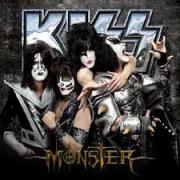
2013SOUNDTRACK: KISS-Monster (2012).

monsterThis is Kiss’ second album with their new line up–guitarist Tommy Thayer (dressed as Ace) and drummer Eric Singer (dressed as Peter).  I saw them recently and they (well,Paul and Gene) seemed…old.  Which they are, but you don’t always notice that under the makeup.  But Eric and Tommy were in good form (although I have to think it must be weird being somebody else–almost like being in a cover band even though you make new music).  Anyway, this album was said to be a hearkening back to Kiss of old, and in many ways it is.  I rather wish they went back a little further, but it definitely feels like classic Kiss.

The lead single, “Hell or Hallelujah” sounds like great classic Kiss– a great riff and a big chorus that is fun to sing along with.  The biggest surprise is probably “Wall of Sound”, one of the best Gene songs in ages.  It’s got a typical gene bridge–poppy but with a heaviness that recalls Creatures of the Night.    And Gene isn’t being cheesy on it, a trap he often falls into.

“Freak” is a cool nonconformist  song, although it sounds a little odd coming from these old men.  From a younger band (that’s not hugely popular) it might rock a little harder

“Back to the Stone Age” starts out very promising, but they fall into that bad pop-Kiss trap on the chorus–it just goes right into a super pop territory which kind of undermines the aggressiveness of the verses.  And then there’s that awful moment where the music stops and (a bad sign in general) and Gene says “I like it”  ugh.  There’s the cheese.  “Mercy” reminds me of “Young and Wasted” and that heavy era.  Although you can hear that Paul doesn’t quite have the scream he used to. “Long Way Down” is a decent middle of the album song-it doesn’t really stand out or anything.  “Eat Your Heart Out” is the standard sleazy sex song–updating it for the new decade I guess–nothing terribly interesting (but points off for using the phrase “hot mess” in the chorus).

“The Devil is Me” is one of those “evil” Gene songs that is less evil sounding than it would have been in the 70s (not sure why that is, but it’s true).  I like the scary Gene songs better than the sexy Gene songs and this one is a good one–Gene really brings it on this song–even in his bass playing.  I am always impressed when he does little bass licks–pedestrian as they may be.  (Although yea, I hate when he “talks” in songs).

Next comes the part of the album where things get weird.  “Ace” sings a song.  What’s weird is that he sings a song that’s not unlike something Ace would sing–it’s about rockets and outerspace.  He even sounds  little bit like Ace vocally.  (although the guitars don’t really sound like something Ace would write).  But how strange to write a song as if you were someone else.  Even weirder is “Peter’s” song.  Singer sounds an awful lot like Peter.  And this song sounds crazily like a half a dozen Kiss songs from the 70s (Baby Driver and others).  It’s about rock n roll, which is what Peter often sang about. This one is the more uncanny of the two.  I don’t really like the song but  I can’t get over what a good job of aping old Kiss it s.

“Take Me Down Below” is that wonderful extended metaphor for sex that really works–it’s quite funny and since Gene and Paul both sing it, it’s more of a funny song than a salacious one–nice puns, hon.  The final song is “Last Chance.” It opens with a great bass sound and ends the album on a positive note.

All in all, this is a really solid album from Kiss.  They did go back to basics–not as far as their early 70s stuff which I think we all would have liked, but at least to their second bet era–and he band seems really invigorated.   There’s a few clunkers (they can’t seem to escape  the cheese that they sprinkled on their makeup-free albums), but the hits hit big.

[READ: January 4, 2013] “The Hidden Person”

I was surprised that this story was set in Iceland.  Especially since when it started, it seemed far more city-centric.  But soon enough it transpired that the girl’s full body coverings were not religious in nature but simply sensible because of the cold weather .

This is the story of Unnur, a young girl who has bounced around from parish to parish–and recently getting mixed up with Magnus, a man who employed her, but was not kind to her.  But perhaps it was all she could expect.  She had more or less been run out of her previous parish, accused of petty crimes  theft and what not, and with that reputation preceding her, all troubles were naturally her fault.  So when some ewes go missing, she is a suspect.

There is also the shocking story of her past,  Unnur has been a foundling.  She was taken in by a widow who helped with foundlings.  When Unnur was 8, the widow died during the winter.  The girl, not knowing what to do or who to call, simply put the woman outside.  In the Spring when the widow’s brother came, he found the girl.  And the smell.  The girl was well-mannered but starving.  No one thought she killed the widow, but they did wondered at her behavior and empathy.  But what was worse was the condition she was in.  The old woman, in an attempt to rid Unnur of fleas, poured boiling grease on her head.  Now she wore a wig.

AS for the ewes, some were discovered with shotgun shells in them, and so Unnur was cleared–it was likely the work of the recluse Gudmundur Jökulsson who owned the whole valley.  No one saw him–he was solitary and territorial and not above killing sheep for his own use if they came on his own property.  Of course, he was more rumor than reality at this point–many thought he didn’t exist and some thought he was a hidden person (a fairy). (more…)

Read Full Post »

2013SOUNDTRACK: a parrot-“Let the Bodies Hit the Floor” (2010).

parrotI remember when this song came out and that it was a pretty big hit in metal circles.  I had pretty much forgotten about it (and Drowning Pool, whose name I had to look up) when this parrot version started circulating.

My friend had a parrot who could mimic her (and my) voice so uncannily that I actually thought she was in a room when she wasn’t.  The fact that this parrot can mimic the cookie monster style vocal of this song just makes it all the funnier.  I also enjoy when the parrot gets squeaky on a few of the notes.  Even though this video is two years old, it was one of my favorites of 2012.

There appears to be an “original” video of this, but it’s only 40 seconds long.  The one I have below is almost 80 seconds, so there’s twice as much fun.

[READ: January 3, 2012] “Opportunity Knocks”

The only reason I’m writing about this article is because I once went to an Arena Football game.  It was the year I graduated high school.  I now cant even find any history of the team existing–I’m sure they were based in New Jersey, but the only team I can find from that time in the area was a New York team which played in Madison Square Garden–and I can’t imagine we drove to MSG for a football game.

Anyhow, this article discusses the future of the AFL–Arena Football League.  The league was founded in 1986 and has expanded and contracted over the years with teams forming for a year and then moving elsewhere the next.  The league began was 4 teams and has had as many as 18.  It’s a crazy scenario with the league’s popularity rising and falling not in proportion to the number of teams, but to some seemingly arbitrary force.

The article’s main question concerns the AFL’s recent contract which will have the league airing games on CBS during prime time.  So, is this league–which shut down completely and filed Chapter 7 bankruptcy in 2009 ready to be on network TV?  (After the bankruptcy, the worked out some kind of deal and reformed in 2010.)

Rich suggests that it may indeed be time.  As I mentioned the other day in the Grantland review, the NFL has been cracking down on violence (to whatever degree) over the last few years.  And so, as the NFL gets more delicate, it’s time for the AFL to step in.  The AFL has no such delicacies in place.  Indeed, it is almost designed for violence and injuries.  Why shouldn’t it succeed? (more…)

Read Full Post »

2013SOUNDTRACK: ARCADE FIRE-The Suburbs (2010).

suburbsWhen The Suburbs came out, it was hailed as a masterpiece and also panned as a hack job (more the former than the latter).  It was impossible to listen to it without hearing raves and rants.  And then Arcade Fire became a kind of punchline or punching bag, the band people loved to hate (although not as much as Nickelback).  I didn’t write about this record then because I wanted to let the air clear.  And then I kind of forgot about it.  I pulled it out again recently and found that I really enjoyed it.  It’s a long album with a lot of different tempos.  It reminds me of the kind of albums I used to listen to as a kid, yes in the suburbs, in which I could absorb an entire hour in one sitting (preferably while driving).

It’s not as indie as their first album nor is it as dark as Neon Bible.  Indeed, with the instrumentation and easy melodies, the album is almost pop (or more like radio friendly AOR music from the 70s and 80s).  There’s orchestration (but Arcade Fire has always had orchestration, that’s why there are eight of them in the band).  There’s heavy piano (which is possibly the most notable difference on this album–the keys have gone acoustic, which definitely makes the album sound more 70s than 2000s.  And there’s big choruses.

“The Suburbs” starts the album, but it’s really hard to deny “Ready to Start”–a bouncy number with a very winning chorus (yes, nominated as song of the year, but deservedly so).  “Empty Room” opens with a violin section that I assume is sampled (its sounds very classical and more as a quote than an introduction to the pumping, rocking song that follows.

“Private Prison” has great backing vocals in the chorus–Wim Butler and Régine Chassagne play off each other so well.  “Suburban War” has a great guitar riff–melodic and pretty in its repetition.  “Wasted Hours” is one of the few folky songs I can think of Arcade Fire playing–but it’s a traditional kind of folk–with la la la las–with a twist.

There are two tracks with a Part I and a Part II.  In both cases the second part complements and surpasses the first part in terms of overall energy and catchiness. “Half Light II” is a beautiful soaring track and “Sprawl II” (the one with Régine singing lead), is one of the best tracks on the album (the way the “mountains beyond mountains” section soars is wonderful).  That honor of best tracks also goes to “We Used to Wait” with its simple piano and cool guitar riff at the end of the verses.

The album feels like a lot of music I grew up with–radio friendly hits that perhaps Butler listened to as a kid, and as he reflects back on them he updates and deconstructs them.  “Modern Man” and “Empty Room” feel this way.  “Month of May” sounds like “Beat on the Brat” while “Deep Blue” opens with a  vibe of “Happy Together” but moves beyond it to a massive (and massively good) chorus.

It’s safe to believe the hype–there’s nothing here that will blow your mind, but  taken together it is a very satisfying collection of songs.  I also just learned that there were 8 different covers created for the album (although they all look vaguely the same).  The one above is the version I happened to get.

[READ: January 4, 2013] “Knowledge”

I didn’t know anything about Gordon Lish when I read this story.  The name sounded vaguely familiar.  Then I looked him up.  Evidently Lish has been writing for a long time, although he hasn’t written much recently.  He is more known for his editing than his writing.

This story is a self-obsessing tale in which the words that the narrator is saying are more important than what the words mean.  So the beginning of the story has the narrator stumbling, repeating, reiterating and then alliterating (which he criticizes himself for doing) without really getting anywhere.  He frets that everyone is watching him–the neighbors, the doorman–and that his sneaky actions were seen by all, especially when the masking tape stuck to him.

Strangely, as the story reaches its midway point we see that the narrator is Gordon Lish himself and he asks rhetorically if the reason he has removed the flyer from the telephone pole (hence the masking tape) is because he himself had something to do with the message on the flyer itself. (more…)

Read Full Post »

woesSOUNDTRACK: ATERCIOPELADOS-Live at Bumbershoot, September 5, 2010 (2010).

atercioA rock en Español band who have returned after a brief hiatus, Aterciopelados have changed a bit since their early more punk days.  Their last album Rio came out in 2008, I knew them back in the mid nineties.  This brief set (7 songs) at Bumbershoot showcases their more mellow tracks (there’s pan pipes) on “El Estuche.”  The Colombian band has always been political, but it seems like they are much more explicit about it on this record.  As singer Andrea Echeverri introduces a number of song, she talks about how they are “important” and are meant to bring attention to the troubles of Colombia.

“Ataque de Risa” has a wonderfully catchy melody (and I believe she says her daughter is singing with them on it).  The song “Bandera” (which means “Flag”) is pointedly directed at Arizona’s anti-immigrant law.  She introduces it as saying that all peoples are together under a rainbow flag.   It’s a more angry sound for Echeverri’s voice, but she does a great job.  Her voice is really impressive.  “Rompe Cabezas” has a rollicking chorus that’s a lot of fun and “Bolero Falaz” ends the set with a very cool and catchy song.

Here’s a video of El Estcuhe

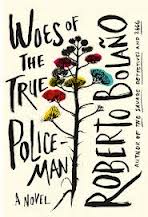
[READ: December 2, 2012] Woes of the True Policeman 

This is yet another unfinished novel from Roberto Bolaño.  Bolaño knew that he was dying and he created a lot of work in anticipation of his legacy.  The afterword of the novel says that they found all of the various parts of this novel in various locations among his work–hand written and computer drafted.  And they all mention this titles, so they are pretty certain about the order and that it is as finished as it could be.

Unlike some of his other posthumous releases, this one must be deemed pretty significant since it was published by Farrar, Straus and Giroux instead of New Directions (publisher of most of Roberto Bolaño’s other smaller works).

And really what it reads like is a kind of prelude to 2666.  For this is the same Amalfitano as in 2666.  But it is his story from before he moves to Sonora, Mexico–before all of the murders started.  Indeed, there are parts of 2666 which make Amalfitano’s past seem like it is unknown but this story fills in the gaps quite well.  One of the details in 2666 is that Amalfitano’s teaching contract had expired at the University of Barcelona, although this book gives the behind the scenes reason why it expired.

Bolaño has many many stories in which he explores the past of a character from a different story.  Typically, it is a novella in which a minor character from a bigger novel gets his or her own story told.  And that seems to be the case with this as well.

The story is set up in five sections (just like 2666).  Section I of this story (part of which was as excerpted in Harper’s recently) is called The Fall of the Berlin Wall and tells how Amalfitano, a professor, fell for a young poet named Padilla.  He wound up having an affair with him, which ended his career (I’m unclear whether it is because he is a student or because the affair was homosexual that the University wanted him out).  Amalfitano had never had homosexual desires before, and he was a proud husband and father, but he found that Padilla really affected him.

And so Amalfitano and Rosa, his daughter, moved to Sonora and the only school that would have him. (more…)

Read Full Post »

« Newer Posts - Older Posts »