Feeds:
Posts
Comments

Archive for the ‘Harper’s’ Category

harperioctSOUNDTRACK: BROOKLYN RIDER-Tiny Desk Concert #44 (January 26, 2010).
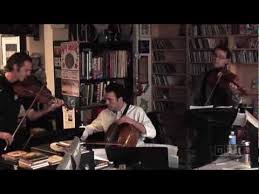
brooklynThis is one of the darkest Tiny Desk Concerts I’ve seen.  Meaning it is rather poorly lit.  I’m not sure why it is so dark in the office–oh, I see that it’s 4;30 PM.  But this string quarter isn’t hindered by it (although they do remark on it before the final song).

The notes state that the quartet (two violin, a viola and cello) loves Debussy and Brahms but they also write their own music and have teamed up with a Kurdish kamancheh player (or as the one player states, a Japanese shakuhachi player and an electronics musician).

The first song, “Vagharshabadi Dance” is an Armenian dance written by an Orthodox priest named Komitas. And they are quite animated as they play it.

In the introduction to the second piece called “Second Bounce” (which is a companion to a Debussy piece, which they play next). Colin Jacobsen (violin) says that he based it on the way a super ball’s first bounce is expected but the second can go anywhere.  And the notes they play are often unexpected (and bouncy).  They’re also quite hard (the viola player (Nicholas Cords) says the piece hurts his hand).  That piece is only a trio–they wanted to mix it up a bit.

The Debussy piece “String Quartet in G Minor: 2nd Movement” is very nice.  It’s got a lot of pizzicato (from all the instruments) while the others play a cool riff.  Johnny Gandelsman (violin) sat out of “Second Bounce” but he gets some great “solos” in this one.  I don’t know all that much by Debussy, but I like this.

“Ascending Bird” is sort of their theme song–an arrangement of a Persian folk song.  It has some incredibly fast riffs (even from the cello (Eric Jacobsen)) and some interesting scratching on the strings.

Check them out here.

[READ: March 6, 2015] “The Monkey Did It”

I had just read a short story by Murakami, so I was interested to read this piece by Galchen, whose insights are, I think, spot on.

toricelliShe talks about Murakami’s latest book, Colorless Tsukuru Tazaki and His Years of Pilgrimage and she uses the simile  that Murakami’s works are like Torricelli’s Trumpet or Gabriel’s Horn–finite space with infinite surface area.  And while I wouldn’t say that I thought of that myself, I would say that I have often thought that his stories seem so simple (at least in plot) but there is so much more in them.

I like the way that she talks about his books as having a plot that sums up pretty easily, but within the plot several other new threads are opened.  And they are more metaphysical at the same time.

In the novel friends vanish, but that is not the main plot.  Rather, Tazaki is haunted by the fact that his friends abandoned him some time ago.  His girlfriend Sara tells him he needs to figure this out.  So he sets off on a kind of quest.  Galchen notes that the girlfriends in his stories are always encouraging the main characters to do these quests. (more…)

Read Full Post »

aprilSOUNDTRACK: RHEOSTATICS-The Horseshoe Tavern Toronto (February 16, 2001).

horseshoeThere are seven live shows from 2001 on the Rheostatics Live website.  In this block, I’m going to talk about the first four shows because the final two of the four are drummer Don Kerr’s final shows with the band.

There is a lovely introduction by the club owner, who thanks the Rheostatics for playing there so much.  The sound quality is great and the crowd is really into it.  At one point someone shouts out “Californication” (which is a line from “California Dreamline”) and Martin says that the Red Hot Chili Peppers are playing down the street.  Another funny line is when someone shouts out “Jessie’s Girl” and Dave says that there’s a trend in shouting out bad songs.  Nobody wants to hear the “Rheos do Rick Springfield.”  That’s just bad energy.

“Fat” sounds great and it’s quite a long version.  The vocals for the next few songs are fun.  Martin is crazy on “CCYPA.”  “When Winter Comes” has a great and fun intro.

The notes say that song 12 is “We Went West” but it is actually a cover of a Celtic Blue song  “Heading Out West” with Alun Piggins (from Celtic Blue) on harmonica.  It works well with them.

“California Dreamline” has some funny banter.  Dave says he loves the way Martin says “Sowthern” California.  Martin says English is not his first language.  But that he is wearing an amazing shirt.

They have a lot of fun with “Legal Age Life” which they open with a “pa pa ooh mow mow” refrain and in the middle they throw in some “I Wanna Be Sedated.”  This show also has one of the best versions of “Claire” that I’ve heard.

This is the first version of “Mumbletypeg” that I’ve heard where it includes the spoken word part (like on the record).  And I love that they throw in “PROD” into the end of “Four Little Songs.”

This show was simulcast online (which is pretty high tech for 2001, no?).  You can also watch the simulcast on the Rheostatics live site.

[READ: April 20, 2015] “If You Cannot Go to Sleep” 

I enjoyed that this story was pretty much a fictionalized version of many people’s insomnia.  It opens, “First she tries counting.”  As it progresses through a series of nights, we encounter her fears, both reasonable and excessive.

But interestingly, before it even gets into her dream fears, she has a long unsleeping thought about the difference between working at a discount store and an upscale store–the discount store must be depressing, but the upscale store must be full of insufferable people–what would be worse?.

Then we learn a bit about her life.  She studied French and even lived in Paris for a time. Now she works translating technical manuals and she hates it.  Her husband finally quit the job that he hates–something she hoped he would do for years.  But now that he did that he has moved to France–without her. (more…)

Read Full Post »

onfgoingSOUNDTRACK: MUCCA PAZZA-Tiny Desk Concert #419 (February 10, 2015).

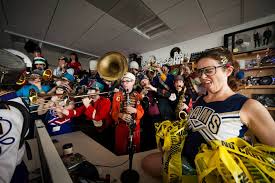
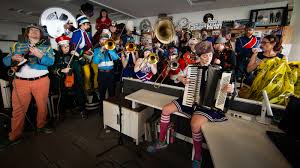
Evmucca2en though I said that the Dan Deacon Tiny Desk was the most fun to watch, it is a close tie with this one from Mucca Pazza.  Mucca Pazza are a 23 piece band comprised of a huge horn section, violins, guitars, percussion, an accordion and even cheerleaders.  The group dress like a marching band (but everyone with a different colored (often ill-fitting) outfit).  The cheerleaders use caution tape as pompoms and do prompts between songs.  They tip their hats when songs are done.

They have been around for ten years (and have four albums out).  For this cramped Tiny Desk, they play four instrumental tracks (23 people and no vocalist!): “Subtle Frenzy” “J’accuse” “Dirty Chompers” and “Holiday on Ice.”

The songs are fast and fun and while there is an obvious marching band feel, they aren’t really marching band songs.  The electric guitar and strings tends to undermine the machine band tendencies (even if the xylophone adds it back).   Indeed, the electric guitars add a cool and sometimes disconcerting sound, like the guitar solo on “J’accuse” which is done on a teeny tiny guitar with a slide.

I love the melody of “Dirty Chompers”–such a fun song.  And “Holiday on Ice” is chock of full of the mayhem you might expect from the description of this band. The middle section slows down somewhat and sounds a little demented (in a good way) It also really highlights the different components of the group–with different horns playing different scales and the trombones keeping the main somewhat menacing riff consistent.

mucca 1So there’s a kind of Balkan Brass band element underpinning all of this–but there’s also discord and rock and psychedelia.

I don’t know if I’ve ever seen so many people having so much fun before.  Their full stage show must be a riot.

You can watch the Tiny Desk here and listen to a full show (with a video of one song) here.

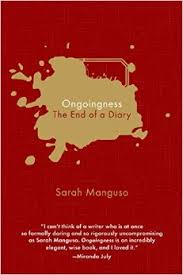
[READ: April 10, 2015] Ongoingness.

This book was excepted in Harper’s in December. I read the excerpt just a few weeks ago.  And then when I saw someone request it at work I found our copy and, since the book was short, decided to read it at lunch before sending it off to the requester (such power I wield!).

In my post about the excerpt, I said that I couldn’t imagine how there could be much more than the excerpt and that I wouldn’t want to read a lot more of the book.  Well, it turns out that the book itself is a brief 96 pages and the bulk of those pages are only a few lines.  So a rough count would suggest about 36 pages altogether–an easy to read at lunch request.  And that’s good, because if this book were 400 pages it would be either obnoxious or really tedious.

But at this length, it’s an interesting and enjoyable look at memory and life and how much we should be concerned about remembering. (more…)

Read Full Post »

dec2014SOUNDTRACK: AURELIO-Tiny Desk Concert #424 (March 7, 2015).

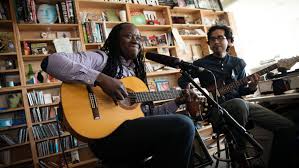
aurelioAurelio is from West Africa.  He plays a nylon stringed guitar (finger picking and chords) and is accompanied by traditional Garifuna musicians and an electric guitar.  The Tiny Desk blurb says he “weaves together intricate layers of acoustic guitar to capture the polyrhythms of West African and the Caribbean.”

He sings in what I assume is Garifuna.  He is not young and his voice sounds like it.  From his chat, I believe he may also have been mayor once.

They play three songs: “Lándini,” “Funa Tugudirugu,” and “Nari Golu”  The guitar solos are (surprisingly to me) provided by the electric guitar while the acoustic keeps the rhythms.  The maracas and drum (box) keep the beat.  This is my introduction Garifuna music, which doesn’t sound too different from any other music (except the vocals of course).

[READ: March 22, 2015] “Keeping Time”

I’ve read somethings from Manguso before, in particular her McSweeney’s book of flash fiction.

This is an excerpt from a book called Ongoingness: The End of a Diary.  At first I found the entry a little annoying.  “I started keeping a diary twenty-five years ago.  It’s 800,000 words long.”  Manguso basically got into a frame of mind where she felt like she had to record everything–the perpetual loop of recording things as they happen and then recording how you feel about when you are recording them.

She says “I couldn’t face the end of a day without a record of everything that had ever happened.”  The fact that this was 25 years ago certainly predates the live bloggers and the daily diarists who tape everything. And it is interesting to see that her rather unhealthy obsession has been around longer than the technology allowed for it.

Manguso says she didn’t want to miss anything and by writing it down it was proof that she hadn’t.  She says that “the trouble was that there was so much I failed to record.” (more…)

Read Full Post »

dec2014SOUNDTRACK: BOOGIE-Live at SXSW (March 21, 2015).

boogieAt this year’s SXSW, NPR had a showcase featuring 5 artists.  One was Courtney Barnett (see Saturday’s post).  The other artists were Stromae, TV on the Radio and Shamir.  I assumed that they’d be posting full shows from all the artists.  But aside from the Courtney Barnett show and two songs from Stromae, the boogie show is the only other one that we can view.

The first artist was rapper Boogie. Boogie is from Compton and he defied Compton stereotypes by not only not singing about gangs (well, he does but not as a gang member) but actually speaking about love and change. Like many rappers he has a weird tic (most seem to say Uh huh, yeah, but he says “wuh wuh” a lot). It’s a bit tiresome but not the end of the world.

I didn’t enjoy his first few songs because although his introductions to the songs were really nice—about love and respecting women while disrespecting bitches etc, I thought his lyrics were really poor.  Just a ton of repeated fucks and bitches. It was lazy.  And the second song “Bitter Raps” was just list of things he doesn’t like, which I also thought was weak—although may be the crowd enjoyed it.

And the beats weren’t all that interesting to me—I don’t really like the music behind West Coast rap so that’s a strike against it for me anyhow.

But by the end of his set I thought he really showed some good stuff.  “Gangbangin’” was a really good song (rhyming bullshit with pulpit was clever). “God Work” was also good, but “Oh My” was the best song of the night—a great chorus of “Oh my goodness” was funny but also effective.  Using his 5 year old son as a sample was also fun as the boy really enjoyed putting so words down for his dad.

By the end of the set with “The Change,” he had won me over, and while I won’t be listening to him again, I imagine he was a good warm up for the night.

You can watch his set here.

[READ:March 25, 2015] “Forbidden City”

I enjoyed this story a lot more than I was expecting to.  It’s not that I thought it would be bad, I just didn’t really have any expectations.  I barely know Dyer at all.  But it proved to be really enjoyable.  Although I feel like the ending was a bit of a let down (and how could it not be, with the way it was set up?).

James is a (British) author on a tour of China.  He has been to many cities in China and he is exhausted.  He had been to Shanghai and Beijing and he had been plied with many many drinks.  These combined with his jetlag to wipe him out.

He was being chaperoned by Min, the coordinator from his Chinese publisher and although she had done just about everything with him, she was relentlessly cheerful and up.  And on his last day the last thing he wanted to hear was that she had scheduled a tour of the Forbidden City.  He feared the well meaning and knowledgeable tour guide would bore him silly as they walked around the huge Forbidden City in stultifying Beijing heat. (more…)

Read Full Post »

dec2014SOUNDTRACK: TORRES-“A Proper Polish Welcome” NPR Lullaby SXSW (March 21, 2015).

torresFrom March 17-March 21, the SXSW festival raged on. And my friends at NPR Music were there so I didn’t have to be. In past years they have had a nightly recap of their favorite shows of the day. This year they upped the ante by inviting a musician to sing a lullaby.  Most of these lullabies occurred in some unexpected outdoor location at 2 or so A.M. after a long day of music.

The final lullaby comes from new to me singer Torres. She has one of my favorite songs from the NPR Austin 100 “Strange Hellos.” It starts slow and builds and builds.  This is not that song (which would never work as a lullaby).

This is the only lullaby to feature an electric guitar.  And even though it is played quietly you can hear her fingers sliding up and down the strings squealing away.  This is a song from her new album Sprinter.  And it’s quite lovely.  I’m looking forward to hearing the full album when it comes out.

Check it out here.

[READ: March 23, 2015] “Hammer Island”

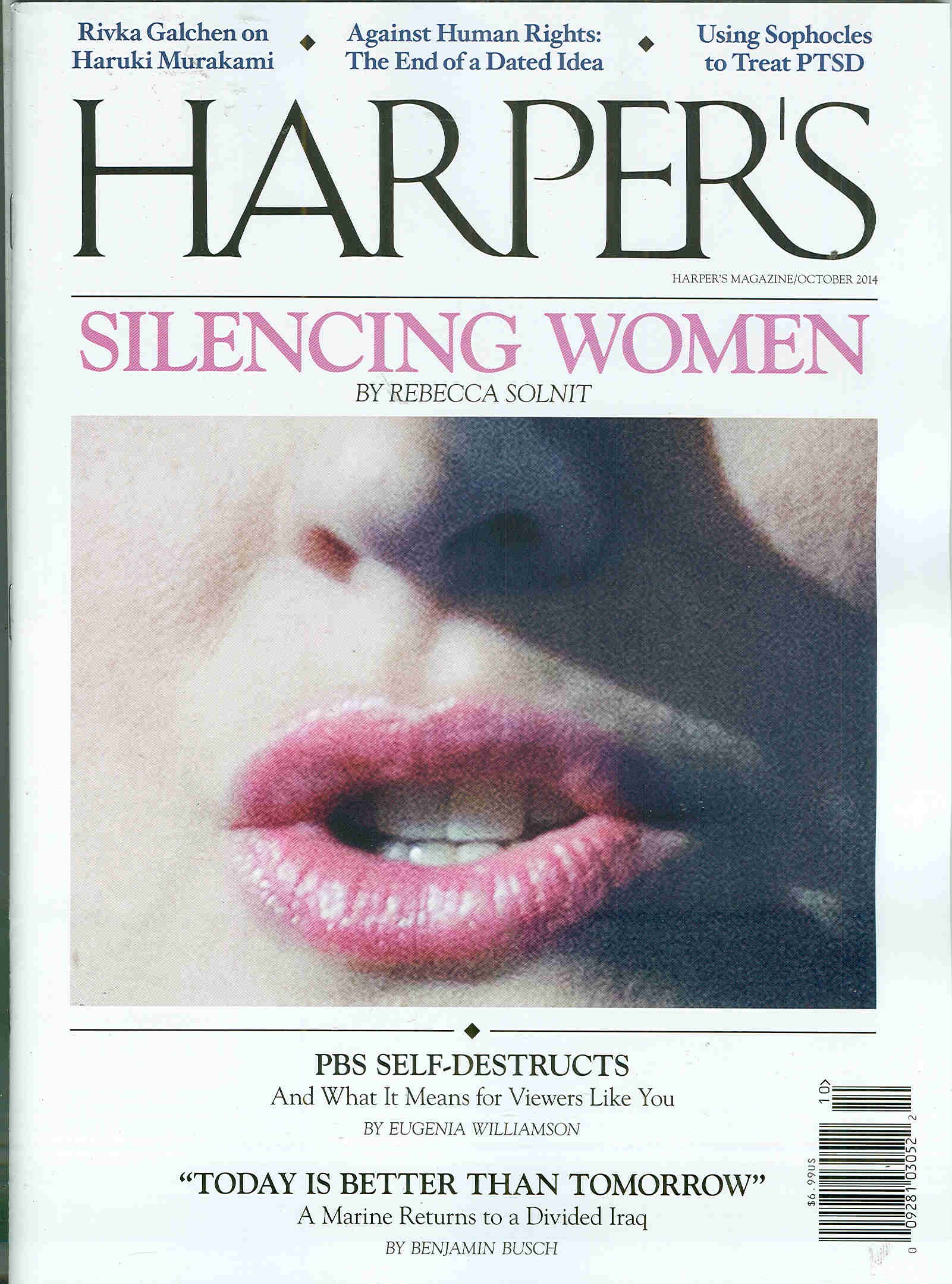
This issue of Harper’s featured five essays (well, four essays and one short story) about “Growing Up: five coming of age stories.”  Since I knew a few of these authors already, it seemed like a good time to devote an entire week to growing up.  There are two introductions, one by Christine Smallwood (who talks about Bob Seger) and one by Joshua Cohen who talks about the coming of age narrative.

I’m not sure why Wells Tower submitted fiction rather than an essay (he comfortably does both), but I’m glad he included this story as I think it’s a really interesting one.  And yes it does cover growing up–and may even be based on fact, who knows.

This is written from the point of view of a seventeen year old girl, Maxine.  She has been invited to Hammer Island (of the coast of Maine) for the summer to watch the (frankly wicked) daughter of famed film producer Morris Walls.  Walls terrifies people in Hollywood, but when he comes to Hammer Island he is treated like everyone else.  I loved this example:

Morris flicked a cigarette butt over the boardwalk rail. A teenage boy walking behind us retrieved it. He jogged up to Morris, tapped him on the shoulder, and slipped the cigarette butt into his palm. “No littering,” said the boy. “I know you’re new here, but we take it pretty seriously. Technically, there’s a three-hundred-dollar fine. I’m not going to report you, but just so you know, most people would.”  In California or New York, threatening Morris Walls and handing him garbage would have been a sure way to get sworn at, slapped, doused with hot coffee. But Morris understood that attacking the boy would be pointless. The boy was of the island, and he spoke with the full authority of the place behind him.

And I loved the general pretension of the island:

Whenever anybody walked by, you had to call, “Hello! Come up, come up! We’re picking crabs!” Or you had to say that if you owned the house and the person passing by owned a house on Hammer, too. If you had been coming to Hammer Island for thirty summers, renting the same house for $4,000 a week, you did not get summoned to a porch for crab picking. You were still looked upon as an interloper and a thug.

Interestingly, this is all just set up for the real story which has little to do with Walls and nothing exactly to do with the island.  For this story is about Maxine and a teenaged boy, Todd Greene.  When Maxine is able to get a way from Lola (the brief story about Lola is hilarious), she would watch Todd play tennis.  He was masterful.  And after his matches he would talk with her.  And soon enough he invited her onto his boat.

When she arrived at the dock, a short, dwarfish man was polishing the boat and Todd was nowhere to be seen.  The man seemed to have nothing but admiration for Todd, talking about what a good sailor he was and making the boat perfect for the young man.  When Todd finally arrives, he takes the keys, says nothing to the man and he and Maxine head out to open waters, where “Todd talked me out of some but not all of my clothes.”

Two days later, Maxine was invited to the Greene’s house where she discovered that the “dwarf” was actually Todd’s father.  Todd’s mother and brother are, like Todd, gorgeous, and she can’t figure out the father’s place.  But it seems that his place is simply to serve everyone.   And when he makes a mistake with dinner, the whole family reams him out.  But this time, having had enough, the father storms out and is not seen on the island again that summer.

Maxine is surprised that Todd keeps in touch over the year with quarterly updates on his exploits.  And they both plan to return to Hammer Island next summer.  When they do return Todd’s father is there waiting (and he has a plan).  The end of the story is exciting and emotionally complicated.  It’s a very satisfying story indeed.

I’m looking forward to more fiction from Tower.

Read Full Post »

dec2014SOUNDTRACK: LAURA MARLING-“Walk Alone” NPR Lullaby SXSW (March 19, 2015).

marlingFrom March 17-March 21, the SXSW festival raged on. And my friends at NPR Music were there so I didn’t have to be. In past years they have had a nightly recap of their favorite shows of the day. This year they upped the ante by inviting a musician to sing a lullaby.  Most of these lullabies occurred in some unexpected outdoor location at 2 or so A.M. after a long day of music.

This late night lullaby was actually recorded much earlier than most (around 9:30P.M) because one of the gang had to leave early.

Marling has become one of my favorite new (to me) voices. I love the way she sings. It feels unconventional or unexpected somehow.  The way she doesn’t follow the melodies of her guitar playing is really cool and exiting. And when she drops into a nearly spoken word it’s quite arresting.

This song is from her soon to be released new album Short Movie, and it is as enchanting as anything she’s done.  You can check it out here.

[READ: March 23, 2015] “Nina”

This issue of Harper’s featured five essays (well four essays and one short story) about “Growing Up: five coming of age stories.”  Since I knew a few of these authors already, it seemed like a good time to devote an entire week to growing up.  There are two introductions, one by Christine Smallwood (who talks about Bob Seger) and one by Joshua Cohen who talks about the coming of age narrative.

This is a story of meeting a bad person and getting sucked into her life.  There’s nothing terribly original about this.  However, the characters (her name has been changed) are not your typically teenage angsty college students.  Set in 1981 at NYU, the narrator is Indian and the girl sitting next to him is Latina.  It’s cool to have a familiar story told with slight differences like this one does.

The girl asks him for help with her computer.  He fixes her problem and she asks to get his number so they can keep in touch.  She is very pretty.  He couldn’t resist calling her, so he invited her to a play and she agreed. (more…)

Read Full Post »

dec2014SOUNDTRACK: MYNABIRDS-“All My Heart” NPR Lullaby SXSW (March 19, 2015).

mynaFrom March 17-March 21, the SXSW festival raged on. And my friends at NPR Music were there so I didn’t have to be. In past years they have had a nightly recap of their favorite shows of the day. This year they upped the ante by inviting a musician to sing a lullaby.  Most of these lullabies occurred in some unexpected outdoor location at 2 or so A.M. after a long day of music.

For this lullaby, the NPR gang met by Waller Creek, giving Laura Burhenn a perfect backdrop to her 2 A.M. lullaby. It’s just her and her tiny Casio keyboard (which is on an interesting setting that makes it sound more like a harmonium).

This is an as yet unreleased song.  It is simple and charming.  And I really like the way she plays an unexpected note in the chorus. Her voice is dusky and quiet and it all works so well in this setting. It’s a beautiful lullaby.

Check it out here.

[READ: March 23, 2015] “My Mother’s Apartment”

This issue of Harper’s featured five essays (well four essays and one short story) about “Growing Up: five coming of age stories.”  Since I knew a few of these authors already, it seemed like a good time to devote an entire week to growing up.  There are two introductions, one by Christine Smallwood (who talks about Bob Seger) and one by Joshua Cohen who talks about the coming of age narrative.

I don’t know Barrodale’s writing.  She says that she was 24 and took a writing class but only lasted for one day in the class.  She felt that getting an MFA was dishonorable.  Rather, she wanted to a have a real job but to write fiction on the side:  “I wanted to be like William Gaddis.  I wanted to work, drink, wear normal clothes, pay my bills and write.”

She was 31 when she realized her plans were not going to come true. (more…)

Read Full Post »

dec2014SOUNDTRACK: LULUC-“Star” NPR Lullaby SXSW (March 18, 2015).

lulucRecorded outside of Stubbs while the groundscrew was cleaning up the huge mess, Luluc play a beautiful quiet ballad.

Steve Hassett plays lead acoustic guitar and sings harmonies while Zoë Randell plays rhythm guitar and sings lead. Interestingly, his voice often goes in higher registers than hers.

I really like the solo that he plays that adds a bit of uptempo feel to this otherwise quiet song.

Check it out here.

[READ: March 23, 2015] “At First Blush”

This issue of Harper’s featured five essays (well, four essays and one short story) about “Growing Up: five coming of age stories.”  Since I knew a few of these authors already, it seemed like a good time to devote an entire week to growing up.  There are two introductions, one by Christine Smallwood (who talks about Bob Seger) and one by Joshua Cohen who talks about the coming of age narrative.

Here’s yet another piece by Karl Ove (like the recent essay in the New York Times Magazine) translated by Ingvild Burkey

It’s hard for me to imagine that Karl Ove (who has written literally thousands of pages about his life) could have anything more to say–any incident that he hasn’t gone over with a microscope.  And yet, here he is with a new incident.

As with most things from Karl Ove, it explains a minute detail which proves to be a big event.  He was 12 and in school and told to spit out his gum.  As he walked up to the wastebasket the attention made him blush.  The first time he can recall the burning shame making him more self-conscious which then kept repeating itself.   And then some one said “Karl Ove’s face is all red!” (more…)

Read Full Post »

dec2014SOUNDTRACK: TOM BROSSEAU-“Will Henry” NPR Lullaby SXSW (March 17, 2015).

tbFrom March 17-March 21, the SXSW festival raged on. And my friends at NPR Music were there so I didn’t have to be. In past years they have had a nightly recap of their favorite shows of the day. This year they upped the ante by inviting a musician to sing a lullaby.  Most of these lullabies occurred in some unexpected outdoor location at 2 or so A.M. after a long day of music.

Tom Brosseau was the first up. He has a long history with All Songs Considered, and he was game to play a song he has never recorded–a murder ballad about Will Henry.

Brosseau has a delicate voice. And with just him and his acoustic guitar (and the sounds of bird and traffic, this is a delightful lullaby.  Even if the words are a murder ballad.

The song is pretty consistent in its simple musical pattern, so that at around 3 minutes when he runs a riff, it’s quite stimulating.

Check it out here.

[READ: March 23, 2015] “Beeper World”

This issue of Harper’s featured five essays (well four essays and one short story) about “Growing Up: five coming of age stories.”  Since I knew a few of these authors already, it seemed like a good time to devote an entire week to growing up.  There are two introductions, one by Christine Smallwood (who talks about Bob Seger) and one by Joshua Cohen who talks about the coming of age narrative.

Russell’s essay is all about growing up in the age of beepers in Florida. For her 14th birthday she received a Motorola beeper.  She says the beeper was an evolutionary adaption for teenagers.  [I for one am not that much older than Russell, but I missed the whole beeper phenomenon and found them incredibly silly].  Before she turned 14 she was a solitary person but the beeper was a way to get hee out and mingling with people (more…)

Read Full Post »

« Newer Posts - Older Posts »