Feeds:
Posts
Comments

Archive for the ‘Japanese Music’ Category

SOUNDTRACK: BORIS-Archive Volume Three “2 Long Songs” (2005/2020). 
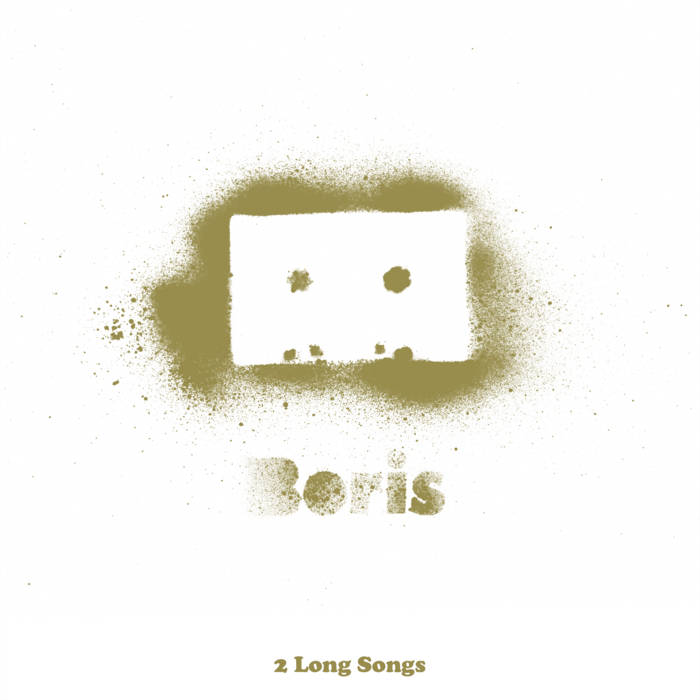
In early August, Boris digitally released six archival releases.  Volume Three is called “2 Long Songs” and that’s what it contains.

There are two songs in this live recording, one is 15 minutes, the other is 22 and this whole recording is just fantastic.

Originally released in 2005 from the US label “aRCHIVE”, limited to 600 copies which sold out immediately. A precious live recording from their early days, of Boris’s 1996 debut single song release, “Absolutego”, and “flood”, released in 2000, performed live together as “1 song, 1 production”.
(Reissued as part of Archive 1 on March 5, 2014. Limited to 1,000 copies).

Like the other Archive releases, this one was also recorded at Koenji 20000V.  This time in 2001–so the band and the quality of the recording are much improved.

“Absolutego” is a sixty minute song released as one long track on Boris’ debut album.  So a 15 minute version is quite truncated.  This version has a slow three-note bass line that slowly adds feedbacking guitars and cymbals.   At two and a half minutes, the drums loudly pound in–like Atsuo is introducing himself to the set.  But five minutes, the full on washes of noise have taken over the song and a few minutes later, Atsuo starts scream/singing.  The song starts speeding up and by 12 minutes there’s lots of cymbal crashing as the song crescendoes into a conclusion of feedback and warped sounds.

“flood” is a 70 minute song (!).  It is their third album (which was recorded in four parts).  This song is much prettier and far less abrasive and here is only 22 minutes long.  It opens with a pretty, quiet melody.  It is slow and moody punctuated by cymbals and echoing noises.  At four minutes the vocals come in–quietly singing in harmony.  Then the drums come crashing in, building to waves of guitar noise and cymbals as the loud bass pushes the song along.  A break introduces a high three note riff as the singing continues.  Is that Wata singing?  By fifteen minutes, Atsuo is making judicious use of the gong–a great punctuating sound.  The last seven minutes are a conclusion as the song drones out to the end.

This is one of my favorite archival releases.  The band sounds great and they perfectly jam out these long songs.

Takeshi: Bass & Vocal ;  Wata: Guitar & Echo ; Atsuo: Drums & Vocal

[READ: August 15, 2020] “The Report”

This is a short story and I agree with the first sentence: “The report is bizarre.”

A woman has hired a man to bring information about her husband.  The man followed the woman’s husband who worked at an office in Barcelona.  But he spends a lot of his time in Madrid.  With another woman.  They meet every Thursday and Friday

The wife does not want to know the other woman’s name.

But the man tells her that the other woman is very ugly–her husband turns off the light as soon as he can because, “her face frightens him.”  He takes long showers after lovemaking.

Then the man stands up and says that there are solutions to problems like this–we know how to get rid of people.   But the wife is not interested. (more…)

Read Full Post »

download (89)SOUNDTRACK: BORIS-Archive Volume Two “Drumless Shows” (2005/2020). 

a2895361933_2

In early August, Boris digitally released six archival releases.  Volume Two is called “Drumless Shows” and that’s what it contains.

I tend to think of drummer Atsuo as the leader of the band–he’s the mouthpiece after all. Plus, he’s the most larger than life of the three.  And, his drum sound is huge.

To have 46 minutes of drummless Boris music is quite a change.  It is, as the blurb says, the beginning of Drone Metal history.

Originally released in 2005 from the US label “aRCHIVE”, limited to 600 copies which sold out immediately. Includes 2 songs recorded live from Boris’s 1998 studio album “Amplifier Worship” and 1 song from “Early Demo”, all arranged for a drumless performance. The beginning of Drone Metal history in 1997.
(Reissued as part of Archive 1 on March 5, 2014. Limited to 1,000 copies)

The first of two songs from Amplifier Worship is “Huge” which was also on Archive 1 (this version was recorded at Nagoya Music Farm 9th Aug 1997).  It is 17 minutes long and is very different sounding without the drums.  It’s all drone with one of the instruments sounding almost like a didgeridoo.  After ten minutes echoing screamed vocals comes in but the drone remains.

The final two songs were recorded at Koenji 20000V 8th Aug 1997.  “Mosquito” was also on Archive 1.  It was three minutes there, but it is stretched out to 17 minutes of slow pummeling chords and guttural noises from Atsuo (I assume).  After ten minutes Atsuo starts chanting slowly with the thumping chords.  The final chords echo and feedback as they segue into

“Vomitself” also from Amplifier.  This track is only 12 minutes of drone.  About six minutes in the melody changes briefly before reverting back to the original sound.  For the final two or so minutes, squealing feedback brings this archive to a close.

Takeshi: Bass & Vocal ; Wata: Guitar & Echo ; Atsuo: Drums & Vocal.

[READ: August 12, 2020] Peep Show

Thirteen years ago I read Braff’s The Unthinkable Thoughts of Jacob Green and really liked it.  Then I forgot all about him.

This book was nothing like his more whimsical first novel.

It is set in the mid 1970s.  The main character is David Arbus, a seventeen year old high school student in New Jersey.  His main interest is photography.  He has a younger sister, Debra, whom he loves very much.  But his parents are something else entirely.

David’s father owns “real estate” in New York City.  This means that he owns The Imperial, a burlesque theater where women strip for money.  But this is the 1970s and men don’t just want tame strip shows anymore–they want to see everything.  They want porn flicks.  They want peep show booths.  They want sex toys.

But David’s father doesn’t want any of that.  He wants his business to stay “classy,” even though all of his friends and partners think he’s crazy for passing up the opportunity to make a lot more money.

David is aware of his father’s business although Debra is not. (more…)

Read Full Post »

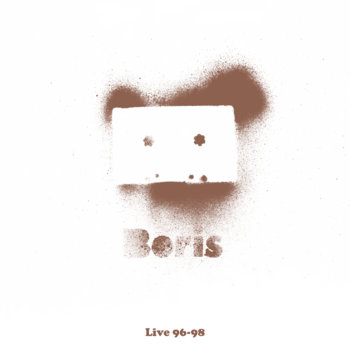
SOUNDTRACK: BORIS-Archive Volume One “Live 96-98” (2005/2020)

In early August, Boris digitally released six archival releases.  Volume One is called “Live 96-98” and that’s what it contains.  There’s eight songs all recorded in the same place Koenji 20000V, once a year or so.

Originally released in 2005 from the US label “aRCHIVE”, limited to 600 copies which sold out immediately. Compiled from live recordings during Boris’s “Power Violence” period 1996 – 1998, including songs from the 1998 studio album “Amplifier Worship” and Archive Volume Zero “Early Demo”.  (Reissued as part of Archive 1 on March 5, 2014. Limited to 1,000 copies).

The first two songs were recorded in December 1996.  They are not for the faint of heart.

“Huge” is a ten minute drone.  It’s full of feedback and slow chord progressions that repeat until after five minutes, when Wata hits a high note and Atsuo starts screaming along with the thumping drums.  It segues into “Hush” which is 53 seconds of thrash: pounding guitar and drums, including something of a drum solo by the end while someone sings to it.

The next chunk of songs were recorded six months earlier.  “Soul Search You Sleep” is nearly 9 minutes of crashing chords with lots of screamed vocals.  There’s a brief fast section before the slow drones return.  Wata takes a guitar solo near the end which segues into “Vacuuum” which is a minute and a half long.  It starts with that wailing guitar solo until the pummeling drums and screamed vocals take over.  It ends with feedback that segues into “Mosquito” a slower song that has chanted vocals from both Atsuo and Takeshi.

“Mass Mercury” was recorded almost a year later.  Things aren’t radically different, but they allow some of the noise to drop away a bit more.  It opens with feedback and fast riffing guitars.  After a minute and a half everything drops out but some pulsing bass and guitar effects from Wata. The pulsing runs through to the end after a middle section of growls and drums.  It segues into “Scar Box,” which is a big slow riff.  Unexpectedly, mid song it briefly turns into a crushing hardcore song with shouted growly vocals until it slows back to crashing heavy chords.

The final track is the newest of the bunch.  It’s 8 minutes long and starts as a fast hardcore song.  Then a bass and drum rumble takes over and things slow down while Wata makes some airplane-like sounds it her guitar.  The solo loops and phases through to the end until about a minute left when both singers start shouting through to the crashing end.

I’m not sure if they are singing in Japanese or just growling, but it’s a pretty intense 45 minutes of live music.

[READ: August 12, 2020] A Very Punchable Face

I wasn’t really sure how I felt about Colin Jost.  I like him on Saturday Night Live’s Weekend Update and yet as the title of his book says, he has a very punchable face.  And, as I say every time I read a memoir–I don’t really care about memoirs all that much.  And yet here’s another one I’ve read.  And it’s yet another one from a cast member of Saturday Night Live–a show that I don’t think is all that great (but the memoirs are usually quite good).

There was an excerpt form this book in the New Yorker and it made me laugh at loud, so I looked forward to reading the rest of the book.

The beginning is interesting in that he says he had a hard time learning to speak–an odd thing for a TV news presenter.  But really the most fun part starts when he tells us about the astonishing amount of bad fortune he has had–his delivery about it all is hilarious.

The chapter “You’re Gonna Need Stitches” lists the six times (throughout his life) that he has had to get stitches–one was from getting a surfboard to the face!  Indeed there are two stories of surfing –not something I expected from a guy from Staten Island.  The second one involves being saved by Jimmy Buffet (and how much Jost enjoys eating at Margaritaville restaurants–I can’t get over how much alcohol must be consumed at a this franchise).  There’s also a crazy story about him visiting Google and getting injured by the VR machine.  He even somehow managed to possibly have insect eggs laid under his skin.  Ew! (more…)

Read Full Post »

20000000SOUNDTRACK: KAWABATA MAKOTO [河端一]-I’m in Your Inner Most (2001).
a3548319280_16Recently, Kawabata Makoto [河端一], mastermind behind Acid Mothers Temple, revealed a new bandcamp site for some newer releases.

This is Kawabata Makoto’s minimal music works by his own ensemble reissued in 2002 with a bonus track.

This album is in fact two parts of the same song (technically). And they’re the first of his solo works to predominantly feature organ.  It also features artwork by Kawabata Sachiko

“I’m In Your Inner Most Part.1″ (19.11)  starts with a repeated organ riff and (the inevitable) high-pitched feedback sounds.  This one also has the voice of Audrey Ginestet repeating one word (drift? drip? something in French?).  Every few measure a new item is added and repeated–mostly organ notes in a pattern or a scale.  The last five minutes or so feels like a two note siren as the high notes soar around the top.”

I’m In Your Inner Most Part.2″  (20.24)  opens with that repeated word.  This piece feels a biot more like an improv with organ and the tambura rotating through.

Kawabata Makoto is credited with electric organ, electric harpsichord, violin, tambura, percussion, electronics and electric guitar on this release.

The bonus track is called “Osculation (remix version)”  (15.32).  I can’t tell exactly what it is remixing as it sounds like parts of both songs are melded together.  There is a lot of church organ sounds and repeating motifs.  But around 11 minutes a grinding noise comes into the song and start to take over until the end is just all noise.

Like most of Kawabata’s solo album, this one feels improvised and off the cuff.  The inclusion of the organ however, makes this one solitary in his vast catalog.

[READ: June 13, 2020] “Man-Eating Cats”

Twenty years apart, Murakami has two surreal stories about animals. Actually, this one is far less surreal than the monkey story, but there is a supernatural component for sure.

The story opens with the narrator reading to Izumi from the newspaper.  The article is about a woman who died and her cats ate her–they had been alone in the apartment for about a week with no food.

Izumi wants to know what happened to the cats, but the paper doesn’t say.  She wonders if he were the town’s mayor or chief of police, would he have the cats put down?  He suggests reforming them into vegetarians, but Izumi didn’t laugh at that. (more…)

Read Full Post »

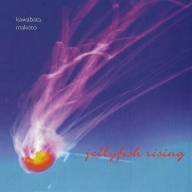
june8SOUNDTRACK: KAWABATA MAKOTO [河端一]-Jellyfish Rising (2005).

a1318054058_16Recently, Kawabata Makoto [河端一], mastermind behind Acid Mothers Temple, revealed a new bandcamp site for some newer releases.

This is another one of Kawabata Makoto’s minimal music works by electric guitars.  It also has two lengthy tracks.

“Astral Aurelia Aurita Laavarek” (28:05) is an echoing looping solo guitar piece.  It is chill and pretty. The looping is fairly quick until about 11 minutes when he slows it down to single notes.  The faster notes are still floating around in the background–ever so slowly fading away.  The pace speeds up and slows down through the rest of the song, creating a wall of new agey vibes.

“Meditation Of Pelagia Panopyra Perea” (27:16) is a similar style but deeper notes and a much lower backing drone.  This whole piece feels less relaxing but still soothing in a different way.

This might be my favorite solo record so far.

[READ: June 13, 2020] “Confessions of a Shinagawa Monkey”

The narrator met the titular monkey about five years ago in Gunma Province at a small Japanese-style inn.  He had arrived at the hot springs town and needed a place to crash for the night.  The place was practically a flophouse, but it was cheap and it was just one night.

But the hot springs bath was wonderful.  He was by himself and he spent a long time there, getting light-headed.

That’s when the monkey walked in and said “Excuse me.”  The monkey asked if the bath was satisfactory and if the narrator would like his back scrubbed (he did).

The monkey “didn’t have any clothes on.  Which, of course, is usually the case for a monkey, so it didn’t strike me as odd.” (more…)

Read Full Post »

june8SOUNDTRACK: KAWABATA MAKOTO [河端一]-That Awaking: Good​-​bye Me (2020).

a0192176181_16Recently, Kawabata Makoto [河端一], mastermind behind Acid Mothers Temple, revealed a new bandcamp site for some newer releases.

This album is his most recent release (and I believe the impetus for this new site).

This album has two sons, each over a half an hour.

On “Summoning Souls To Meet” (35:47), a quiet, pretty acoustic guitar melody plays throughout the background while on top comes a series of electric guitar noises an explorations.  It’s a pretty improvisational song that never goes too crazy in the experimentation (although there are a few times when he plays some wild solos).  That acoustic melody keeps it grounded.

“That Awaking : Good-bye Me” (31.29) opens with a piercing sound which slowly morphs into another beautiful acoustic melody.  He then overdubs a pretty electric wah wah guitar solo.  It’s a lovely piece of music, although I wish that piercing ringing note was not there (it wouldn’t be Kawabata if there weren’t some high frequency sound floating around).  Eventually, you lose that high note amid the wonderful soloing he’s doing.  It’s soaring and psychedelic, sometimes fast sometimes echoing.  The last ten minutes or so seem to have some backwards looping going on.

Kawabata Makoto recorded this in May 2020 using electric guitar, acoustic guitar, and driftbox.

[READ: June 13, 2020] “White Noise”

This story is about Harvey Weinstein, except that it technically isn’t.

It’s about a movie mogul named Harvey who is on trial for abusing women.  It basically covers a short time before his verdict.

I wondered why Cline would feel compelled to write this fictionalized account of such a dreadful man.  I don’t often read the accompanying interviews with writers (I guess I should). The important takeaway is that “Curiosity about a consciousness doesn’t translate into endorsement.” (more…)

Read Full Post »

june8SOUNDTRACK: KAWABATA MAKOTO [河端一]-Mizu Naranu Ao Ni Sae [水ならぬ青にさへ] (1998).

a1335809529_16Recently, Kawabata Makoto [河端一], mastermind behind Acid Mothers Temple, revealed a new bandcamp site for some newer solo recordings.

 This album is more along the lines of what you might expect from Kawabata Makoto: electric guitar solos from 1998.

Dazzling music for the temporal world, overflowing with a sense of pellucidity totally different from his work with Musica Transonic.

The album has two songs.

The first is “Mai Sagarisi Negai [舞い下がりし願ひ] (16:38). .   It is loops of guitar noises and feedback.  It’s not a lot of guitar “playing” but more like guitar experimenting.

“Amou No Shibuki [天生の水沫] (17:59) is different.  It features ringing, chiming guitars and sounds like he has something metallic resting on the strings to keep everything vibrating.  This one is more spacey.

[READ: June 13, 2020] “Pursuit as Happiness”

I haven’t read a ton of Ernest Hemingway.  Honestly, his stories of hunting and boxing and whatever other masculine things he was up to while somehow also being a sissy writer never appealed to me.

This is the story of the pursuit, capture and slaughter of marlins.  Now frankly, I think a marlin is about the coolest thing in the ocean.  And while it may be very manly to wrestle one in with just a fishing line, it sure seems like a waste of a beautiful fish.

So Ernest (for the narrator’s name is Ernest Hemingway) and the captain of the boat he was on fished off of Cuba for a month.  They caught twenty-five but that wasn’t enough, so they went back for more. (more…)

Read Full Post »

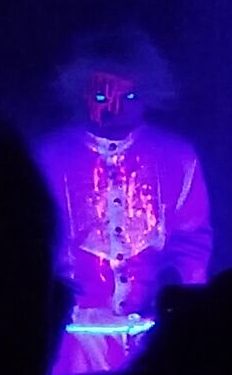
[ATTENDED: October 24, 2019] Hyde

I had taken C. to a couple of live shows before and he had been to see Ice Nine Kills with his friends.  But this was my first time taking him to see a club concert.

This was going to be a long night too.  Four bands!  With the opening band going on at 7 and Starset ending around 11 (and it was a school night!).

After A Brilliant Lie, some people moved around and we were right in the middle for Hyde.

When I looked up this concert I saw that  lot of people were more excited about Hyde than anyone else.  Someone even suggested that Hype might play solo–just him and his guitar.

I had no idea who Hyde was, but based on that (erroneous) information I assumed he might be a metal guy doing some mellower songs.

Boy was I wrong. (more…)

Read Full Post »

[ATTENDED: September 13, 2019] Babymetal

I first heard of BABYMETAL back in 2014 when they were a massive WTF in the music scene.

Here was a band that played heavy heavy music but the singers were teenage Japanese girls who were totally kawaii and who sang in a distinctly pop style.  The 17-year-old metal purist in me would have been infuriated by this abomination to metal.

But my adult self things this is an amazing amalgam of style and one that is designed to shake people out of their comfortable bubbles.   Even if you balk at the singing style (and the dancing), the music is really really heavy.  Like, impressively heavy.

But the juxtaposition doesn’t end there.  Between the heavy music comes occasional moments of synthy pop goodness.  It made my brain explode the first time I watched the video for “Gimme Chocolate.”  By the time I watched it a second time I was hooked and was determined to see them live.

Back in 2016, I somehow missed that they were playing the Electric Factory.  I was seeing Mastodon there two nights before their show but when I asked if there were any tickets left, they had sold out ages ago.  Boo!  [Looking at that setlist I see they played seven different songs last time!]

So, three and a half years later they finally came back into town and I bought a ticket right away.  Actually, I was supposed to be away for the weekend so I bought a ticket for Sunday in New York City.  This would have been so much work because I would have just come back from a camping trip, I would have had to drive into NYC to a place I’ve never been and it was a Sunday night.  So I was glad the trip was cancelled and I could go on Friday night after all!

I arrived and ran past the merch hoping to get a decent spot, but it was pretty packed.  I managed to get behind some short people and all was well for the opening band.  Then, when Avatar left, somehow 200 people pushed their way in front of all of us who felt like we were packed in pretty tight already.  I didn’t step back at all but somehow twice as many people were in front of me.  Woah. (more…)

Read Full Post »

amazSOUNDTRACK: KAWABATA MAKOTO [河端一]-INUI 2 (2000).
a1729275931_16Kawabata Makoto [河端一] is the guitarist and mastermind behind Acid Mothers Temple. The band is hugely prolific. But he still had time to record solo albums. Often times without any guitar.

This was Kawabata’s second solo LP, now available on bandcamp

INUI 2 was the first widely available solo CD by this prolific Japanese guitarist/composer/bearded guru. Known primarily for his recent work with oddballs Acid Mothers Temple, Kawabata’s career actually goes back to the late ’70s and spans many styles, including solo guitar improv, electronics, folk, and, of course, the deranged acid mayhem associated with the PSF scene. Performed entirely solo on violin, kemenje, zurna, electronics, sarangi, taiko, gong, water, bouzouki, cello, vibes, organ, and sitar, the four tracks that make up INUI 2 are perfectly executed dream-music, equal parts delicately floating and heavily droning. There’s also one all-too-short modal essay for bouzouki that is amazingly beautiful.

“Mou” (9:56) has a drone underpinning the song as he plays a quiet keyboard melody over the top.  About half way through the zurna comes in playing its somewhat harsh melody (although it is less harsh here).  This is a pretty cool chill out song.  [Instruments: Violin, kemenje, zurna, electronics].

“Meii” (11:02) is composed of slowly plucked sarangi strings.  They ring out loud and are accompanied by thumps on the taiko and occasional crashes of the gong. There is also a high pitched feedback/electronic sound that rings out form time to time.   About midway through the bowing become s a little wild and improvisational until it settles back down again.  [Instruments: Sarangi, taiko, gong, water].

“Shi” (3:47) is the ‘all too short” piece and I agree that it is too short.  It features a quietly plucked string melody on the bouzouki that is very pretty.  It has mild drones behind it.  About half way through the melody changes, a faster more deliberate style but still quiet and pleasing.  I could listen to this one for much much longer.  [Instruments: bouzouki, cello, vibe, organ].

“Kan” (14:18) starts as harsh electronic drone with occasional blips of hi frequency sounds.   It’s the first unpleasant sound on the disc.  Although after 2 and a half minutes, the string drones enter and smooth things over.  At some point a pulsing possibly, backwards recorded series of notes comes in to give the drone some drive.  [Instruments: bowed sitar, violin, electric sitar, electronics].

[READ: September 10, 2019] “Ranch Girl”

This brief story was collected in Meloy’s Half in Love.

It starts with the fatalistic sentence:

If you’re white and you’re not rich or poor but somewhere in the middle it’s hard to have worse luck than to be born a girl on a ranch.

The unnamed protagonist grew up the daughter of the foreman of the Ted Haskell Running H Ranch.  Haskell’s brand was a slanted H–she had seen it all her life and didn’t know an H was supposed to be upright until she went to school. (more…)

Read Full Post »

« Newer Posts - Older Posts »