Feeds:
Posts
Comments

Archive for the ‘Hotels’ Category

SOUNDTRACK: IMOGEN HEAP-Tiny Desk Concert #859 (June 20, 2019).

I know of Imogen Heap from a song called “Come Here Boy” that she released way back in 1998.  It was stark and dramatic and somewhat sexual. In short, a quintessential 90s track.

Then she disappeared.

Well, she actually made an album with Guy Sigsworth as Frou Frou.  And then she disappeared a again.

Actually she didn’t disappear at all. She released a song, “Hide and Seek” which was mostly just her singing into a vocoder (and was quite transfixing.  It became a huge hit (which I didn’t know about because I didn’t watch The O.C.).

But in 2011, she started experimenting with these high tech gloves that allowed her to do all kinds of audio manipulation just by moving her hands.

She even says, some people know me because I am interested in block chain technology and some people know me for these gloves.  They don’t even know I make music they just know about the gloves.

But in this Concert, the gloves come last.

Up first is the first song that she and Guy Sigsworth have written together in 17 years.  “Guitar Song” (she tends to leave placeholder names, so that will likely change) is a quiet pretty song with a lot of, yes, guitar from Steve Jones.  It’s a simple melody fleshed out with keys from Sigsworth.  It’s really pretty and very catchy.

Up next is “Speeding Cars” which she says was a B-side that was never released as a single but which her fans really love.  Zoë Keating plays cello and Imogen says she has a terrific album of her own called Snowmelt and she hopes Keating gets her own Tiny Desk someday.  Tim Keiper is on drums and vast array of percussion.  Imogen is on the piano she has an excellent falsetto for this very pretty song.

Then she puts on the Mi.Mu gloves.

Imogen Heap not only has an enchanting voice but also the talents of a world-class audio engineer. She’s completely engrossed in a technology she’s helped to develop, one that makes it possible to alter sounds, create loops and compose tunes all with the wave of her glove-wearing hands. The high-tech gloves, now called Mi.Mu Gloves, were first shown at a TEDGlobal conference eight years ago. Her performances, with her sound-altering arm and hand gestures, resemble a summoning of spirits, a far more compelling live experience than what Imogen said used to look like she was standing behind her laptop checking email.

She gives a lengthy explanation and brief demonstration of these very cool loves.  Then it’s on to “Hide and Seek,” which she had re-imagined for the Broadway play, Harry Potter and the Cursed Child and which she says that if she doesn’t play people throw tomatoes at her.

It really sounds nothing like the original but it is amazing to watch her make the song with her hands waving around.

[READ: June 1, 2019] “The Maid’s Story”

This story introduces us to the Gersons, a family on vacation in a hotel. The husband is small and insignificant. But the wife is larger than life.  Both physically and in personality.

Hannah Kohl, the maid, was taken with Mr Gerson’s red brooch and when she went to clean the room later, she pocketed it.  As she did so, she promised herself it would be the last thing she ever took from a patron.

But Mrs Gershon walked in before the maid had time to close the jewelry box.  She told her it was costume and worth nothing but how could the maid have thought Mrs Gerson wouldn’t notice?

The maid is very apologetic.  She begs not to be ratted out and pleads with the woman.  She says her eight-year-old son has polio (“So did our president, but Eleanor doesn’t go around stealing jewelry).

Mrs Gerson asks where Hannah is from–Wroclaw Poland.  In the camp? No, her father moved them before.  And the hotel owner’s second cousin helped them.  Then Hannah did something unexpected–she opened up to Mrs Gerson about her travels and her life.

Mrs Gerson diagnosed her as a kleptomaniac (she compulsively stile things she didn’t need).  But she was mostly concerned about the boy, Isaac.  She insisted that he receive proper care for his polio  The doctor Hannah’d been going to was an elder in the old country synagogue who showed no evidence that he knew anything about medicine  He said the polio would clear up and go away on its own.

The new doctor was in Manhattan, a lengthy trip for Hannah and Isaac.  Mrs Gerson said they could stay with her family when they traveled in.

The doctor gave many recommendations and said that Mrs Gerson was paying for it all.

The Gerson children were uninterested in Isaac until he told them a story about people dying at the hotel.  They found his story (which was partly made up) to be engrossing.

After dinner Mr Gerson excused himself and left the two women to talk.  Mrs Gerson pulled Hannah on to her lap  She soothed her and stroked her head but soon the stroking became sexual.  This made Hannah very uncomfortable and she froze, enduring the touches which gave her revulsed pleasure.

Hannah and Issac went to Manhattan twice a month.  Each time, the same thing happened.  Mrs Gerson never said anything about it, but it happened nonetheless. It was especially upsetting because Hannah very much liked Mrs Gerson otherwise. She was funny and bold and seemed genuinely interested in their health and prosperity.  And Hannah would put p with anything for Isaac;s welfare.

Soon, Issac was deemed just about normal;–one more visit would do it.

One night, Mrs Gerson revealed that all of their money was her husband’s–her family is as poor as Hannah’s. Nobody least of all Mrs Gerson really understood why Bert chose her.  Plus, he always knew that Mrs Gerson liked girls better.

Bert wants things to be easy.  So Mrs Gerson does everything—raises the kids, takes care of family affairs.

The thing with wives is they can leave. Mothers can’t.

Finally Mrs Gerson declared that she loved Hannah.

Hannah grabbed her things and Isaac and left.

When Hannah returned to the hotel, she was called to the office and informed that a guest said that Hannah had stolen from them.  They had to let her go.

What could Hannah possibly do?


Read Full Post »

 SOUNDTRACK: MOUNTAIN MAN-3 songs from Tiny Desk Family Hour (March 12, 2019).

These next few shows were recorded at NPR’s SXSW Showcase.

Mountain Man have been all over NPR the last couple of months.  And here they are again, showing off their beautiful voices in a church.

When Mountain Man began a decade ago, it consisted of three close friends arraying their voices in a resplendent blend, often without so much as an acoustic guitar for adornment. Today, the configuration remains exactly the same, except that all three members — Alexandra Sauser-Monnig, Molly Sarlé and Amelia Meath — have developed strong solo identities along the way. Sauser-Monnig also records wonderful folk-pop songs under the name Daughter of Swords, Molly Sarlé released a magnificent single under her own name earlier this year, and Meath is the singing, dancing half of the transcendent synth-pop powerhouse Sylvan Esso.  So when Mountain Man showed up for a softly joyful set at NPR Music’s Tiny Desk Family Hour — recorded live at Austin’s Central Presbyterian Church during SXSW on Tuesday night — it was almost like seeing four acts at once: three solo, one collective. Choosing a single excerpt was a fool’s errand, so here are three: the breezy a cappella “AGT,” from 2018’s Magic Ship, as well as Mountain Man arrangements of Sarlé’s “Human” and Daughter of Swords’ “Grasses.”

The opening song is a capella.  It is started by Alexandra with first Molly and then Amelia all joining in to make their gorgeous harmonies.  After the first round through the song, they start singing faster and faster.  To a frankly impressively rapid speed by the end.

The second song is by Molly Sarlé.  She says it’s about how “unfortunately easy it is to talk to god like he’s a man.”  Molly sings the main body while gently strumming her guitar.  Amelia and Alexandra provide the lovely backing vocals.   (I love that Amelia seems to be cracking up a lot through the show, but is always pitch perfect).

Alexandra Sauser-Monnig’s Daughter of Swords song “Grasses” is up next.  The guitar is more picked than strummed, but it is still a very quiet, gentle song.  I really like Molly’s voice as a backing vocalist.

They’ll be performing at Newport Folk Festival and I’m intrigued to see them.

[READ: March 18, 2019] “Color and Light”

I assumed that this story is set in Ireland, although there was nothing explicitly stated about the location–except that it is by the water.

The main character Aidan, has an older brother Declan (could be Ireland or just America).  When we first meet them, they are in Declan’s car and he is driving a woman, Pauline.  Pauline is bold and flirtatious.  She is a screenwriter.  Declan doesn’t say much and Aidan is very shy.  So that leaves Pauline to make all of the comments.  She learns that Aidan works in the hotel.  And at one point she stares at him for a couple of minutes while he puzzles out what she’s after.

A few weeks later Pauline comes to the hotel restaurant with an entourage.  Aidan is surprised at how deferential everyone is to her.  She sort of recognizes him at first and when he explains who he is she seems happy to see him.  When she leaves with her crew she invites him along but he refuses.

A few nights later Declan picks up Aidan from work and a drunk Pauline is in the back seat.  She is feistier than usual and asks Aidan all sots of personal questions–like has he ever slept with a guest at the hotel.  Declan yells that she is flirting with him.  And when Aidan turns around to look at her, sprawled on the backseat, Declan punches him.  By the time Declan drops them off, Aidan can’t tell if Declan is mad at him or at her. (more…)

Read Full Post »

SOUNDTRACK: CLOUD CULT-“That Man Jumped Out the Window” (Field Recordings, September 12, 2012).

I feel like I know the name Cloud Cult, but this song sounded entirely alien to me.  This was an other Field Recording [Cloud Cult: A Moment Of Serenity] set backstage at Sasquatch! Music Festival.

I love the drama that they set up with this blurb

We were about to call it. The band was running late, our phone service wasn’t working well backstage in the remoteness of the Sasquatch Music Festival in rural Washington state, and the next band was about to begin on the main stage nearby — thus making the prospect of a Field Recording impossible. Then, suddenly, a white van rolled up, straight from the main gate, and out popped six musicians with stringed and brass instruments. Within minutes, they’d set up, sound-checked and performed a jaw-dropping rendition of “That Man Jumped Out the Window” (from 2005’s Advice From the Happy Hippopotamus) with no practice whatsoever.

I enjoy the orchestral nature of this song–reminding me of many other bigger bands that I like quite a lot.

It took me a couple of listens to “get” this song–there’s a lot of different vocal parts, almost as responses to the main part.

It opens with an acoustic guitar and is accompanied by strings and a French horn.  But the main verse is all acoustic guitar and cello (with stark backing vocals–the vocals are not really pretty exactly (they’re not un-pretty either), just powerful).

I’m not sure that this song is all that memorable for me, but I love reading this about the band:

More a family than a band, the Minneapolis collective does everything with purpose, talent and conviction, from its environmentally conscious lifestyle — in which it self-produces and releases albums from its geothermal-powered organic farm — to its charitable efforts to its emotive, even cathartic songwriting.

The song is quite pretty–although I wonder if it would be more so in a fuller setting.  But as It ended, I found myself enjoying it and wanting to hear it again.  Someone asks if they should do another take.

Then, just as the song ended and the band members finally had a chance to view the majestic natural scenery around them — and as we prepared to record another take, just in case — the festival roared back to life. But for those few minutes, we were able to stop, breathe and take in the emotional significance of a moment of serenity. At which point Cloud Cult piled back into the van and rode off to its next gig.

[READ: April 7, 2016] “Indianapolis (Highway 74)”

This story was published in the New Yorker just eight weeks after the previous Sam Shepard story.  I had to look him up and it is the same Shepard who has been writing since forever.  But he is not especially known for his noir books.  His style has changed over the years although he does often write about rootless characters and absurdist ideas.

So this story is about a rootless character, “I’ve been crisscrossing the country again, without much reason.”  This character drives all over the place for long stretches of time.  On this particular night with a blizzard heading into town, he pulls into a Holiday Inn (more for its familiar green logo and predictability than anything else).

But when he asks for a room, they are booked.  There is some kind of hot rod convention in town–which he thinks is odd for the winter, but whatever.

The concierge tells him that there is one room that might be available–the people haven’t shown up and are going to call to confirm whether the weather will prevent them from showing up.

So he waits. (more…)

Read Full Post »

(Field Recordings, January 12, 2012). 

This is a lengthy Field Recording [Mantra: Post-Minimalist Percussion In Aisle 12].  It has some interruptions by one of the guys.  Then he talks about how they have set up the board–suspending it on pegs.

There’s something primeval about guys banging on wood. But the New York percussion group Mantra takes such primitive pounding to a surprisingly refined level. For composer Michael Gordon’s mesmerizing new work — Timber, written for six two-by-fours — Mantra set up a public performance of the piece in the lumber department of a big-box hardware store in Alexandria, Va. Who knew 60 inches of processed pine could sound so good?

It’s unclear how long the piece is since there are constant interruptions.   Although it does run for about 2 and a half minutes uninterrupted.

For the most part the six players play a constant rhythm that creates overtones and resonances.  It’s a little monotonous until one of the starts to play a slightly different rhythm.  And by the end, there’s a couple of different rhythms that make it sound even better.

It’s a neat piece and would be fun to walk unto a hardware store and see that.

[READ: January 22, 2018] “Elf-Cio”

This is from a children’s book called Elves for Dignity.  It was published by a worker’s cooperative in Buenos Aires–one of 170 worker-run businesses in Argentina. The piece was translated by Burke Butler.

Once upon a time there was a greedy and merciless King.  One morning he awoke with the idea of converting one of his palaces into a hotel.  He hired a legion of elves whom he considered selfless and docile. They all abandoned their markets and farms to serve the King.

They worked night and day to ensure the splendor of the hotel. (more…)

Read Full Post »

SOUNDTRACK: JOHN CARPENTER-“Halloween-Main Title” (1979).

This song is so wonderfully creepy.  Even some 40 years after it was made, it still can give you shivers.

It opens with that piano melody in 10/8 time.  It adds minor key synth chords.  And it keeps going–morphing, changing slowly but never straying far from the original.  It adds intense strings as it progresses.  And all along it has this ticking metronome that is going very fast–much faster than anything else in the song, like a ticking time bomb.

Somewhere in the middle of the song a drum beat is added.  But it’s not so much a drum beat as it is a footstep.  It’s subtle at first–you kind of feel it in there.  You don’t really notice it.  But when the music all drops away at 2:30 to just the piano and the ticking, that footstep is there with you.

Don’t settle for covers or samples.  Don’t accept the version that has the thumping drum right from the start.

Take that late-1970s recording, that old quality, the weird drum footstep sound, it’s all perfect.

It’s the original or nothing.

[READ: October 31, 2018] “The Pale Man”

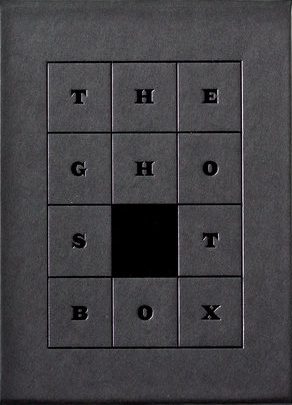
Just in time for Halloween, from the people who brought me The Short Story Advent Calendar and The Ghost Box. comes Ghost Box II.

This is once again a nifty little box (with a magnetic opening and a ribbon) which contains 11 stories for Halloween.  It is lovingly described thusly:

The Ghost Box returns, like a mummy or a batman, to once again make your pupils dilate and the hair on your arms stand straight up—it’s another collection of individually bound scary stories, edited and introduced by comedian and spooky specialist Patton Oswalt.

There is no explicit “order” to these books; however, Patton Oswalt will be reviewing a book a day on his Facebook page.

Much respect to Oswalt, but I will not be following his order.  So there. (more…)

Read Full Post »

SOUNDTRACK: SIOUXSIE AND THE BANSHEES-“Halloween” (1981).

For all of the Halloween songs that are not really about Halloween (even songs that are called Halloween), this one is about Halloween (and more).

Siouxsie and the Banshees created some really catchy songs that they swathed in layers of creepiness.  The chorus of this song is “trick or treat trick or treat the bitter and the sweet.”  It’s catchy, but not treacly.

The night is still

And the frost it bites my face
I wear my silence like a mask
And murmur like a ghost
“Trick or Treat”
“Trick or Treat”
The bitter and the sweet

Just listen to that jagged guitar that introduces the the verses.  Then during the verses, it’s pretty in a minor key way.  About midway through the song the bass takes a few fast runs up and down the fret board to create a tense moment that is followed by a tribal drum section.

And just so you know that this is more bitter than sweet, the next part:

I wander though your sadness
Gazing at you with scorpion eyes
Halloween……Halloween

Seals the deal that this is a goth/post-punk song after all.

[READ: October 26, 2018] “Witches”

Just in time for Halloween, from the people who brought me The Short Story Advent Calendar and The Ghost Box. comes Ghost Box II.

This is once again a nifty little box (with a magnetic opening and a ribbon) which contains 11 stories for Halloween.  It is lovingly described thusly:

The Ghost Box returns, like a mummy or a batman, to once again make your pupils dilate and the hair on your arms stand straight up—it’s another collection of individually bound scary stories, edited and introduced by comedian and spooky specialist Patton Oswalt.

There is no explicit “order” to these books; however, Patton Oswalt will be reviewing a book a day on his Facebook page.

Much respect to Oswalt, but I will not be following his order.  So there. (more…)

Read Full Post »

SOUNDTRACK: “This is Halloween” (The Nightmare Before Christmas) (1993).

Danny Elfman is pretty awesome at creating catchy and spooky songs.

This song, the theme from The Nightmare Before Christmas, is remarkably catchy.  I mean you hear it once and you’re singing “This is Halloween, This is Halloween!” and it leaves you feeling pretty good and excited for the holiday.

Somehow while you’re watching the movie, the creepiness is in the visuals more than the lyrics.  But divorced from the movie, the lyrics (and vocals are really creepy).

I am the one hiding under your stairs fingers like snakes and spiders in my hair.

or better yet

I am the clown with the tear-away face
Here in a flash and gone without a trace
I am the “who” when you call, “Who’s there?”
I am the wind blowing through your hair
I am the shadow on the moon at night
Filling your dreams to the brim with fright
You can do some pretty amazingly scary music when you market it as a children’s song (and maybe throw in this caveat):
That’s our job, but we’re not mean
In our town of Halloween

[READ: October 20, 2018] “How He Left the Hotel”

Just in time for Halloween, from the people who brought me The Short Story Advent Calendar and The Ghost Box. comes Ghost Box II.

This is once again a nifty little box (with a magnetic opening and a ribbon) which contains 11 stories for Halloween.  It is lovingly described thusly:

The Ghost Box returns, like a mummy or a batman, to once again make your pupils dilate and the hair on your arms stand straight up—it’s another collection of individually bound scary stories, edited and introduced by comedian and spooky specialist Patton Oswalt.

There is no explicit “order” to these books; however, Patton Oswalt will be reviewing a book a day on his Facebook page.

Much respect to Oswalt, but I will not be following his order.  So there. (more…)

Read Full Post »

SOUNDTRACK: NELLIE McKAY-Reveals ‘Cavendish’ (Project Song: April 2, 2008).

Project Song was a nifty little show that NPR Music created.  The premise was that NPR would give a musician some prompts and a recording studio.  They then had two days to write and record a song.  I don’t know how much of the process was to be filmed, but presumably most of it. Then it would be edited down to a fifteen minute show.  The results are pretty cool and it’s a shame they only made five of them.

The third one they did was five months after the previous one.  As with the Stephin Merritt project, McKay was solo, but she had a lot of problems and recriminations.

When I invited Nellie McKay to participate in Project Song, I figured she’d write some witty words and hammer something out on the piano. I don’t mean to make it sound so simple, but listen to the music of Nellie McKay, and she’s the one who makes it seem so easy.

McKay came into our studio looking as if she’d just walked off a movie set. In fact, at times in conversation, a young Judy Garland came to mind. She took great care with her curly blonde hair and her beautiful pinstriped suit.

I laid some photographs [all from the Library of Congress] and some words on our makeshift bar for her to consider as jumping-off points for the song she would write over the next few days.

It didn’t take long for McKay to settle on a black-and-white photograph of some men dancing the Charleston out in front of a movie theater. To go with the picture, she chose the word “Bravado.” Those two things would inspire and inform her song.

And then, despite a bit of hemming and hawing, McKay proceeded to sit behind the grand piano and begin drawing musical staff lines on some note paper. She began composing her song.

Although perhaps the consternation and questioning was more of her conscious mind, because it sounds like she was much more confident than she appeared.  “Why couldn’t I have written a song in secret and brought it in and pretended to be confused?”

Here’s what I now know that I didn’t know at the time: In just a few hours of playing at the piano, Nellie McKay wrote her song. I know that now, because I can look at the zoom lens of our video camera and see all the scribbles in her notebook. The words are mostly there, and so is the music.

She pokes out notes on the piano and scribbles in her book.  Then she plays the ukulele (with wah wah).  She hems and haws quite a bit, playing with Bob’s computer to make three distinct drum parts.  She talks with Bob.

“Its hard enough to do a bad pastiche which is what I’m aiming at now.  This is the worst thing, I wrote a complicated bad song.”

She finally asks Bob, the constant cheerleader, “where’s your cynicism, you work for NPR?”

From my perspective in the control room of our studio, what I heard for the better part of our first day was some tinkering, some scribbling, and more tinkering. She’d pick up the ukulele and play more piano, but I couldn’t hear a song emerging.

Then she plays some cello on top.  Then it’s on to some haunting backing vocals.

Bob’s mind is boggled: “to put down the uke part first after what I’ve heard, why not play the piano first?  Her answer: “I’m sick of the piano!”

She says she’s big on secrecy and doesn’t understand how other people did it.  Before revealing that she decides to put down “the thunderclap, perhaps the loon, a little bit of backing vocals, and then I’ll freak out a bit more and then I’ll try to do the main vocals.”

The lyrics, however — and even the title — were a closely kept secret until the final hours of the final day.

Then she reveals the dramatic, multi-faceted, three-part song.  It is stunning that she came up with this.  There’s sound effects, spoken word, Latin rhythms and then a torch song part with horns and falsetto.

And this is it, a song about a London hotel called the Cavendish. A song about some of its guests, like D.H. Lawrence and The Beatles, and of better, simpler times. A wonderful theatrical journey from Nellie McKay — someone who seems connected with the past and unsure of her present.

The Cavendish was a real hotel.  They went through a lot of change.  The hotel has been through two wold wars.  The Latin part is exotic–lovely and yet unsettling.

[READ: January 24, 2018] “The Gulch”

The centerpiece of this story is vile and horrible even to think about.  The story begins with it, it focuses on it but then it also kind of dismisses it at the end.

The story is basically about three juvenile delinquents who have crucified a boy in their class (he did not survive).  It begins with a description of the cross they created with pressure-treated wood and rope from a neighborhood laundry line.

It is written in a kind of casual style from Detective Collard’s point of view.  There’s lots of parenthetical asides “The one who dreamed up the scheme (for lack of a better word).”

One of the boys admitted to digging the hole but then said he wasn’t there in sport or heart. (more…)

Read Full Post »

 SOUNDTRACK: ÌFÉ-Tiny Desk Concert #736 (April 29, 2018).

ÌFÉ is from Puerto Rico.  Creator Otura Mun has a fascinating history as to how he wound up creating this band:

Otura Mun started out in the world as Mark Underwood, a Goshen, Ind., native whose parents were Mennonites and who managed to snag a coveted spot on the University of North Texas’ drumline. But that was before a flight mixup landed the percussionist, composer, DJ and producer with a free trip to Puerto Rico. Two years later, he moved permanently to the island, became a Yoruban high priest and began creating electronic music that channeled the African diaspora.

Woah.

So ÌFÉ (pronounced ee-faye) combines traditional Afro-Cuban drumming and chanting with a kind of Jamaican dancehall sound.  Midway through the set, Mun explains that he drilled holes into the traditional acoustic drums and has attached electronics to them, essentially making them triggers, but with the traditional acoustic sound as an overtone.  It’s pretty amazing.

The group’s debut album, IIII+IIII, (pronounced “Edgy-Og-Beh”) is a fresh electronic take on tradition that’s winning over even the most devout practitioners of the western African-based spiritual ceremonies that form the base of their music. That’s hard to do with ritual music.

Although interestingly, for the first song “House of Love (Ogbe Yekun),” they play acoustically.

For their turn behind the Tiny Desk, Otura Mun and his ensemble unplug their drums for their first tune, an acoustic version of their “House of Love (Ogbe Yekun)”.

This acoustic sound is quite compelling in itself.  Yaimir Cabám plays a beautiful acoustic guitar (pretty, simple chords) and sings, I believe wordlessly.  Meanwhile, the rest of the band plays various percussion: simple electronic percussion and shaker and various hand drums.  Anthony Sierra on congas keeps the rhythm.

After a verse, Otura Mun joins in on vocals (with deep backing vocals from Beho Torrens).  It’s a quiet, soothing song with occasional punctuation from the drums.  When the melody finally changes after 4 minutes, it sounds like a massive shift even if it’s just a few notes.

“Prayer for Oduduwa (Para Meceditas)” opens with bells and shakers and some interesting electronic splashes before the massive amounts of electronics take over the song.  I believe Rafael Maya joins them and was not their for song one.

The sound of the second song here is what startled me when I heard the band’s debut CD last year: the parts normally performed on Afro-Cuban bata drums and chekeres are electronically treated for a traditional prayer for the deity Oduduwa.

They sing in a traditional chanting style including an awesome low chant (from Torrens) that sounds otherworldly.

By the last tune, “Bangah (Pico Y Palo),” the electronics have created a sonic playground that plays perfectly against the battery of Afro-Cuban rhythms.   “Bangah,” focuses on a reflection of the Orisha Ogún, the owner of war in the religion, whose main tool is the machete.

Mun says he wanted to play urban music you could improvise and to use percussion as the basis–Cuban rumba combined with Jamaican dancehall.  He demonstrates some sounds and then a deep rumbling bass: “we got your nasty subs that you know from that the stuff that’s nasty.”

The song is a shout out to those struggling against the vestiges of colonialism still prevalent in Puerto Rico.

They begin the song with a “breathe in” [inhale] let it out Ahhh!

I love the way the various voices are processed.  Torrens sound deeper and Cabám’s voice sounds alien and like it is three voices at once.  The various lines are interspersed with interesting vocals sounds: grunts and screams that punctuate the verses.

It’s a very cool set.

[READ: March 19, 2018] The Rat with the Human Face

In 2014, Angelberger’s first book The Qwikpick Adventure Society was reissued as Poop Fountain.  He then wrote two more books in this trilogy.

This is the second book (written in 2015) and it opens with this

This is the second of three stacks of papers this guy found in a storage room at the old Qwikpick gas station in Crickenburg.  The guy, who asked me not to use his name, called me because one of my old newspaper articles was in the first stack.  (You know I was a reporter before I wrote the Origami Yoda books, right?)

Then he reminds the readers that this book is set in 2000–kids didn’t have iPhones or smartphones.  They didn’t have phones at all and cameras took forever to charge the flash and they drained the batteries fast.

So the entire Qwikpick Adventure Society: Lyle, Marilla and Dave is back, but this story begins with bad tidings–the Qwikpick Adventure Society was disbanded after this adventure.  (more…)

Read Full Post »

SOUNDTRACK: DEE DEE BRIDGEWATER-Tiny Desk Concert #725 (April 2, 2018).

It’s fascinating to read about singers who have been around for a long time about whose names I have never heard before.

Dee Dee Bridgewtaer is such a singer.  Sadly, this blurb, while very informative, doesn’t say anything about her career.  So I don’t know how long she has been singing or what she actually sings.  Although it does say what her new record is about.

When she was just three years old, her family moved from Memphis, Tennessee, to Flint, Michigan. Years later, Bridgewater could still hear the soul sounds of Memphis on WDIA, the first radio station in America programmed entirely by African-Americans for African-Americans. She recalled, “I could catch it when I was in Flint as a teenager and I would listen to it after 11:00 at night, because that was the only time I could get it — when all the other stations were off the air. I know it was real, ’cause I went through it and these were all songs I heard on WDIA.”

Bridgewater, now 67, brought three of these songs to the Tiny Desk: First, is the celebrated blues hit, “Hound Dog,” first recorded by not by Elvis Presley but by Willie Mae “Big Mama” Thornton in 1952. What makes this presentation special is not only Bridgewater’s sultry and soulful interpretation, but her adorable Daisy, perhaps the cutest “Hound Dog” to ever bless this song.

Bridgewater’s version is great and really puts a different spin on the song if you’re used to the Elvis version.  It’s much more sassy and gives you a sense of what the song was really about a lot more than the standard version.  There’s a cool slide guitar solo too.

Before the next song, she says, “I’ve watched the Tiny Desk before but I’ve never seen this many people.”

Then she explains what this song is about:

The first lines of the next tune will quite actually send chills down your spine. Bridgewater and backup singers Sharisse Norman and Shontelle Norman-Beatty’s close harmonic voicings add a spiritual dimension to the already hallowed song. “Why (Am I Treated So Bad)?” was written by Roebuck “Pops” Staples in response to the harassment of the Little Rock Nine, brave students who decided they had the right to attend an all-white Arkansas high school in 1957.

Their version is excellent and powerful.  The backing vocalists add so much to this song.  There’s also a cool keyboard solo that’s kind of under-documented.

Last here is “B.A.B.Y.” Bridgewater recorded this song and the entire album in Memphis’ historic Royal Studios and told NPR this story, “I stepped outside of the studio right after they started mixing ‘B.A.B.Y.’ and I said a prayer. I said, ‘God I need a sign, that I’m moving in the right direction because I am stepping completely away from jazz music.'” Before Bridgewater could get back into the studio to record the next track she got a surprise visit from Carla Thomas, the Memphis soul queen herself and daughter of Rufus Thomas, influential entertainer, singer-songwriter and former WDIA radio DJ. It was a true return to her Memphis roots, a memorable and beautiful moment for Bridgewater.

The song has a sweet soul sound with the addition of horns.  Bridgewater’s voice is perfect for this song and the other songs, too.  I don’t know what Bridgewater’s other songs sound like but she seems perfectly suited to these.

[READ: April 12, 2016] “Visitation”

This is the story of a man, Loomis, who has made many bad relationship choices and who is now stuck realizing that he is not only not a great father but also stuck in a horrible situation with regard to his son.

Loomis and his wife separated and she moved with their son to Southern California.  Since then, he’d flown out (it doesn’t say from where) every three weeks.  He would go for three to five days and stay in the same hotel each time.  He hated the crappy hotel but his son liked it, so he continued to go there, even as he noticed it got worse with each visit.

His wife and son lived in the basement of an ex-marine’s house.  The marine hated him even though they had never been introduced.  Whenever he would visit, his wife would be sure to not be around.

Their hotel stay is pretty bad.  The boy watches anime while Loomis fixes himself a drink. (more…)

Read Full Post »

« Newer Posts - Older Posts »