Feeds:
Posts
Comments

Archive for the ‘Hobo’ Category

SOUNDTRACK: ANDY GILL-January 1, 1956 – 1 February 1, 2020.

I wasn’t a huge fan of Gang of Four, but I really liked what I knew.  I probably should have been a bigger fan–I certainly should have listened to more records than Entertainment (1979) and Mall (1991).  I also probably should have seen them when they were touring around here last February.

Alas.

Andy Gill was a fascinating musician.  His guitar playing style was angular and distinctive and very influential.  His songwriting was also quite unusual.  As he explained, “Instead of guitar solos, we had anti-solos, where you just stopped playing, left a hole,”

Gang of Four was definitely punk, but they also had a kind of danceable quality (and not just slam dancing) that sucked people in before hitting them with their power.

But mostly, they were known for their charged lyrics.  Like “At Home He’s a Tourist”

At home he feels like a tourist
He fills his head with culture
He gives himself an ulcer

or 5.45

How can I sit and eat my tea
With all that blood flowing from the television
At a quarter to six, I watch the news
Eating, eating all my food
As I sit watching the red spot
In the egg which looks like
All the blood you don’t see on the television.

But there was always room for a catchy love song, too.

And I feel like a beetle on its back
And there’s no way for me to get up
Love’ll get you like a case of anthrax
And that’s something I don’t want to catch

I often say that I have been going to as many shows as I can before the bands I want to see break up or die.  I should have taken my own advice.

[READ: February 1, 2020] “Things We Worried About When I was Ten”

This story is indeed things that Dan worried about.  It even starts as if the title were not a title, but the first line:

High on the list was trying not to have the older boys decide to de-pants you and then run your pants up the flagpole.

That’s a pretty valid concern.

They mostly did this to Freddy Boyd–nobody knew why.

Generally you wanted to not meet anyone’s eyes. Especially if the boys were pushing and spitting on Devin Sleverding. One time Devin fought back with a stick and accidentally hit Dan in the face.  The older boys took some pity on Dan at that moment.

But the more important thing was that he would never have to box Sharon Weber again.  Dan’s father brought him to the Weber’s house where he was supposed to box Ron Weber–the boy who was a year older than Dan.  But Ron wasn’t home, so Ron’s dad suggested Dan box his daughter Sharon.   She was just as tall as Dan but a year younger.  He did not want to fight her.  He couldn’t hit her face–she needed to be pretty.  Couldn’t hit her stomach because that was where her baby machinery was.  And you couldn’t hit in the breasts.  So he stood there getting pummeled until his disgusted father pulled him away. (more…)

Read Full Post »

edwardSOUNDTRACK: HAM AND BURGER-“Don’t Put Your Finger in Your Nose” (2010).

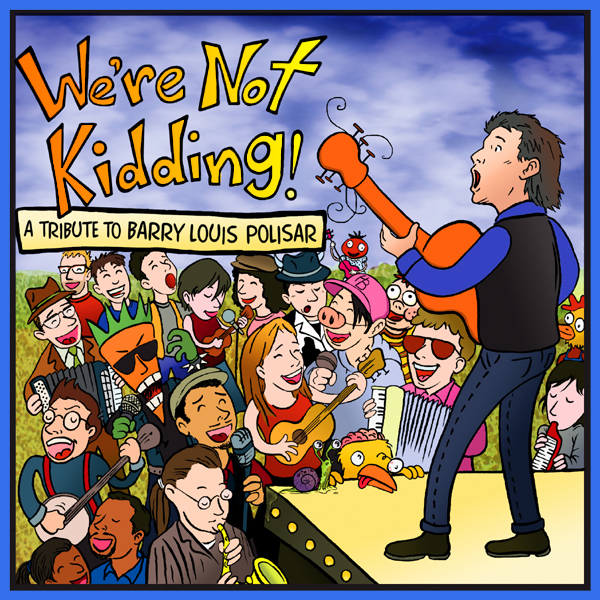
tributeCoverA very serious and sad book needs a very silly song to accompany it.

I heard this on Kids Corner last night and it led me to this tribute album to Barry Louis Polishar, an artist whom I’ve never heard of (and am not sure why he has a tribute album to him, but whatever).

The title of the song tells you all you need to know.  But I enjoyed the way it went beyond the nose, into other body parts where you shouldn’t put your finger–eyes, ears, throat.  As with most kid’s songs, this one is short.  And when it starts to fade out at around a minute fifty seconds, you think it’s over.

But they add an extra chorus and then a final punchline which is really funny.  Check it out at this link to the Tribute to Barry Louis Polisar record.

[READ: September 8, 2014] The Miraculous Journey of Edward Tulane

The students entering fourth grade in our town were supposed to read this book over the summer. Clark’s teacher actually read the book to them last year, and he was disinclined to read it again.  So I offered to read the book to everyone in the family.  I figured if it was important enough for all the kids to read, maybe I should read it, too.  He said he really didn’t like it, but I persisted and read it to everyone anyway.

And I totally understand why he didn’t like it.

Although the cover looks kind of haunting (the illustrations by Bagram Ibatoulline are awesome), I didn’t realize just how dark this book could get–all in the name of love.

I’ve never read anything else by Kate DiCamillo so I don’t know if this is typical of her work.  But man, is it a tear-jerker.

The book itself is rather short.  It’s 200 pages, but there’s a lot of pictures and the type was very large.  And it read fairly quickly, perhaps because it was so episodic.  Before I get on to the story, I want to say how beautiful the illustrations are.  The chapter headings are wonderful grayscale drawings, and the occasional full color plates are stunning.  Very dark and foreboding and at times a little creepy, but very evocative of an older time.

The strange thing is that the book is summarized pretty well on the jacket, as well as in the book’s coda.  So, if you prepare yourself in any way, you might expect just how low Edward has to go before the miracle happens. (more…)

Read Full Post »

SOUNDTRACK: GRINGO STAR-“Shadow’ (2011).

This song was forecast as a great Fall song on NPR.  The band’s name is perhaps too cutesy, but the music is interesting.  The verses are jangly and in no way prepare you for the Beatlesesque (ie., soaring harmonies) chorus that follows. 

There’s not a lot to the song, and on my first listen I wasn’t all that impressed in the beginning.  But by the end of the song I was won over. 

The song feels very familiar, but I can’t say that it sounds like anything in particular.  The ooo-ooohs in the chorus are really pretty, the intro guitar is more intricate than I realized.  And after just a few listens I was totally hooked.  It just seems like more of a summer record to me.

I’m curious to see what else is on this record. 

[READ: September 15, 2011] “A Hobo Memoir, 1936”

My company provided some links to interesting articles that are available on JSTOR, an electronic archiving resource.  If you have access to a university database, chances are you have access to these articles.  I was particularly struck by the fascinating subjects of a few of these pieces and for the next few posts I’m going to mention them.

I had to start with this article because for some reason my kids are obsessed with hobos.  I don’t really know how it came about–reading older kids’ stories, I suspect.  On our first train ride, we saw a freight car with a door open and there was much talk about hoboes sleeping in the cars and, hoo boy, it just escalated from there.  And, despite the fact that hobos haven’t really existed in eighty some years, once you keep an ear open for the word, you hear it quite a lot (Craig Ferguson was calling his audience hobos for a while–it’s a good comedy word).

This article contains an introduction by Elizabeth Rambeau, assistant editor of the magazine, who gives us a brief history of John Fawcett and of hobos in general.  Including this very informative distinction: a hobo is a transient person who looks for work while he travels, a tramp is a drifter who does not look for work and a bum is a stationary person who does not look for work.  So, be mindful of the epithets you use!  Fawcett, Rambeau tells us, was unlike most hoboes at the time.  Indeed, he wasn’t really a hobo at all.  He was the son of a wealthy doctor.  But he grew tired of his life at boarding school and decided to take a trip on the rails from West Virginia to Texas.  But he lived the hobo lifestyle, hopping trains, getting busted by the police, and not carrying any (or much, anyhow) money.  He even hung out with a hobo named Shorty.

The reason that this article is noteworthy (in terms of hobo literature) is that unlike other hobo memoirs from the time, Fawcett was an educated man and a decent writer in his own right (most hobo memoirs were recollections from the hobos themselves, written by ghostwriters).  This Memoir comes from meticulous diary entries that he kept during his entire trip.  And, of course, the article includes hobo signs, everyone’s favorite piece of folk art.  What’s interesting is that there are no extant records of original hobo signs.  They were made with chalk and all were ephemeral.  All of the signs we have are from people’s recollections and the signs included here were done by an art dept.

Fawcett’s original work comes from an unpublished 1991 book called Awakening of Conscience.  What we have is a twelve page excerpt.  In the author’s introduction, he explains his life situation, his family situation and his pressing need to have some freedom in his life.  In hindsight, he can’t imagine what kind of grief he put his parents through (he left a note saying he was going to a friend’s house but then took a month-long hobo journey) and he regrets that.   But he’s also pretty proud of what he did. (more…)

Read Full Post »