 SOUNDTRACK: HAM AND BURGER-“Don’t Put Your Finger in Your Nose” (2010).
 A very serious and sad book needs a very silly song to accompany it.
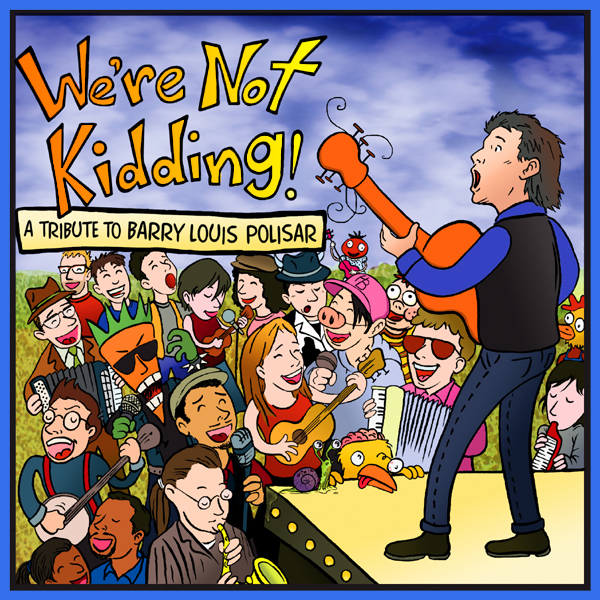
I heard this on Kids Corner last night and it led me to this tribute album to Barry Louis Polishar, an artist whom I’ve never heard of (and am not sure why he has a tribute album to him, but whatever).
The title of the song tells you all you need to know. But I enjoyed the way it went beyond the nose, into other body parts where you shouldn’t put your finger–eyes, ears, throat. As with most kid’s songs, this one is short. And when it starts to fade out at around a minute fifty seconds, you think it’s over.
But they add an extra chorus and then a final punchline which is really funny. Check it out at this link to the Tribute to Barry Louis Polisar record.
[READ: September 8, 2014] The Miraculous Journey of Edward Tulane
The students entering fourth grade in our town were supposed to read this book over the summer. Clark’s teacher actually read the book to them last year, and he was disinclined to read it again. So I offered to read the book to everyone in the family. I figured if it was important enough for all the kids to read, maybe I should read it, too. He said he really didn’t like it, but I persisted and read it to everyone anyway.
And I totally understand why he didn’t like it.
Although the cover looks kind of haunting (the illustrations by Bagram Ibatoulline are awesome), I didn’t realize just how dark this book could get–all in the name of love.
I’ve never read anything else by Kate DiCamillo so I don’t know if this is typical of her work. But man, is it a tear-jerker.
The book itself is rather short. It’s 200 pages, but there’s a lot of pictures and the type was very large. And it read fairly quickly, perhaps because it was so episodic. Before I get on to the story, I want to say how beautiful the illustrations are. The chapter headings are wonderful grayscale drawings, and the occasional full color plates are stunning. Very dark and foreboding and at times a little creepy, but very evocative of an older time.
The strange thing is that the book is summarized pretty well on the jacket, as well as in the book’s coda. So, if you prepare yourself in any way, you might expect just how low Edward has to go before the miracle happens.
So what is Edward’s deal, anyway? Well, Edward is a china rabbit. His ears are real rabbit fur and can be positioned in any way. His tail is also real rabbit fur. He is 3 feet tall and he is beloved by Abilene, his human owner. She dresses him n the finest outfits and changes his clothes several times a day. Edward was given to Abilene by her grandmother Pelligrina. Pelligrina and Abilene are the only ones who treat Edward as if he is something more than a toy, more than an “it.” Abilene’s parents are condescending to him and he does not care for it. In fact, Edward is rather a snob. He doesn’t have time for human conversations, and gets very cross when he is not left in a position of comfort where he can look up at the sky.
For the most part Abilene treats him very well, always telling him she will be home after school and showing him his pocket watch so he knows just how long it will be. And things go on like that for some time. There were only two incidents that disrupted Edward’s peace–when the neighbor’s dog grabbed him and shook him and when the new maid thought of him as a toy and put him on a shelf out of the way. Of all the nerve.
Edward proves to be a fascinating character, he can neither talk nor move on his own, but he is quite proud and cocky and had little time for fools. He’s kind of unlikable, in fact. And that’s where Pelligrina comes in. She is a stern woman who often doesn’t have time for stories. But one night she tells the story of a princess who could not love. Despite all of the people who loved her, the princess could never reciprocate. In fact, she scoffed at the very idea of love. And then one day when she was lost in the woods, a witch turned her into a warthog and she was later killed. Quite a story! Even Edward paid attention to it. But he did not care for it.
Shortly thereafter, the Tulane family went on a trip, an ocean voyage. And on that trip, Edward was mocked by boys on the boat. They tore his fancy clothes and tossed him around like a toy. He did not care for that. And then in the fuss and fighting, Edward Tulane was thrown overboard. And down he went to the bottom of the ocean. And thus began a very lengthy troubled existence for Edward.
He is found by a fisherman whose wife treats him nicely (but assumes he is a girl). She mends him and gives him new clothes. And he starts to care for the woman who fixed him up so nicely. But months of happiness comes to and end when her daughter, an incredibly mean woman, (inexplicably so) throws Edward into the dump. Where he lingers until he is found by a hobo’s dog. Then he stays with the hobo (with another new name) for quite some time until they are also separated (by another very mean person). He is found later by a woman who treats him like a scarecrow until a little boy brings him home to his sister (that’s where the story gets incredibly sad). And then even sadder when Edward meets the meanest man yet.
Edward, poor Edward, even has a dream in which he gets to see all of the people who have ever cared for him. He even dreams that he has wings and can get revenge on the people who have harmed him. But in realty, he is now just lingering in a doll shop where the dolls make fun of him for not being a pretty princes.. What kind of journey is this for poor Edward?
So yes, the story is surprisingly sad (with a happy ending of course, but one I didn’t exactly expect). The story feels much older than it is (2006), which I believe is the point (especially with the hobo and the fisherman and some other details that read much older). And that old quality gives the story a darkly nostalgic feel, where violence seems like it could have been meted out with little cause. And yet there is redemption, in the name of love, and that’s pretty grand.
I’m not entirely sure I liked the story (it was really very sad in places), and I understand entirely why Clark did not. It is pretty emotion inducing, but I did like the way she made the rabbit the emotional core of the story. And the coda, which for the most part is just a retelling of the story adds a few lines at the end that really bring home the joy that the story ultimately brings.
So yes, it was quite good, I just don’t imagine I’ll ever want to read it again, either.


Leave a Reply