Feeds:
Posts
Comments

Archive for the ‘History’ Category

photoSOUNDTRACK: WILCO-Tiny Desk Concert #509 (February 23, 2016).

wilcoAs far as I can tell, Wilco is the first band to be invited back for a Tiny Desk Concert (there was a stated rule that no one would come back twice, with some people skirting that by coming with another band).  Laura Gibson was invited back since she was the very first attendee, but since Wilco’s newest album has been so successful, it seems somehow fitting that they get invited back.

And perhaps in honor of that, while their last performance was noisy and raucous, this one is decidedly more mellow—with all acoustic instruments.  But that doesn’t mean it’s quiet and calm either.

For the first song “The Joke Explained” from Star Wars, they used banjo, acoustic bass, hollow bodies electric guitar (w/ slide), the ever-present melodica and muted drums (w/shakers).  And it sounded great.

For the second song, the older “Misunderstood” everybody seemed to switch instruments.  Tweedy switched guitars, the acoustic bass became an acoustic guitar, the hollow body became a slide guitar.  Nels Cline’s slide guitar brings so much to the song by doing seemingly so little.  I love how this simple, sweet song has a wild middle section–a crazy breakdown with noisy cymbals and drums–drummer Glenn Kotche is fantastic–and everyone else playing some crazy high-pitched notes until it all settles back down again.

Tweedy has another guitar for the third song “I’m Always In Love” and the melodica is back.  There’s xylophone keeping the melody.  And as with all of these songs, Tweedy sounds great and the backing vocals add wonderful harmonies.  Cline plays a wonderful slide solo, too.

Before the final song and there’s another guitar change for Tweedy, and he says that after this song, “you guys need to get back to work solving this Trump problem. Figure it out! Its weird!”  They play “Shot in the Arm,” another great old song.

The band sounds excellent—a wonderfully full sound even without amplification. I am really excited to see them his summer.

There’s also a nifty video showing “Misunderstood” with two 360 degree cameras so you can see what goes on in the audience during a Tiny Desk Concert.  Check it out.

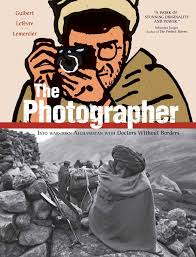
[READ: February 7, 2016] The Photographer

I loved Guibert’s book Alan’s War, in which he took the words of Alan Cope and put them to an amazing graphic novel.  Well, he is back again doing the same thing with the words of famed photograph Didier Lefèvre.

Didier Lefèvre died in 2008, but before he died he left a legacy of amazing photojournalism.  That includes this trip to Afghanistan which he took with the team from Doctors without Borders.

Alexis Siegel translated this book again, and he offers an excellent introduction which not only explains Lefèvre’s life, it also gives context for everything tat these men and women were up against in that war-torn region.

As mentioned Guibert draws out the story that Lefèvre told him.  But this book is different from Alan’s War in that it also uses the photos that Lefèvre took.  Guibert fills in the gaps where Lefèvre, didn’t or couldn’t, shoot.  And there was a lot he couldn’t shoot. (more…)

Read Full Post »

SlewisOUNDTRACK: BEN FOLDS-Tiny Desk Concert #508 (February 16, 2016).

benfolds I’ve liked Ben Folds for many many years.  He’s funny, he’s amazing live and he plays a mighty good song or two.  He’s the kind of artist you say, Has he really not done a Tiny Desk Concert before? (He did an episode of Live from Daryl’s House after all).  But he’s finally here to bang the hell out of their piano and curse up a storm.

He plays several songs from his new album So There, which is  a collaboration with the sextet yMusic.  I haven’t actually listened to the record much because I gave it to Sarah and haven’t grabbed it from her pile yet.  Since there’s no strings for this Tiny Desk, these songs sound just like normal Ben Folds songs–clever lyrics, fun piano and unexpected twists.

The first song is “Phone in a Pool,” one of his rollicking stompers.  It’s catchy and fun to sing a long to and after one listen, you’re right there with him in New Orleans throwing a phone in a pool.  Midway through the song, he forgets the words and just starts laughing: “In a world where you get applause for fucking up.”  And then he makes up a verse about forgetting the words.

“Not a Fan” is a slower song with a beautiful piano melody and biting, funny lyrics (get your T-shirt signed, fangirl).

“Capable of Anything” is a fast, romping song.  He says on the record the vocals are very quiet, so he’ll see what he can do.  After a run through a verse he stops and realizes that he has knocked the piano out of tune.   And when he bangs on the keys at the end, its easy to see how.  There’s some really fast piano work (and you can hear him stomping along).

he says he’ll play some old songs.  He asks for a song and someone shouts “Emeline,” which he immediately starts playing.  And then about a verse in, he gives some story behind the song.  He says that when he was a kid 8 or 9, he wrote earnest songs, but when he was a teenager he wrote “cool”s songs like “Having Two Dicks is Cool.”

And then he started using songwriter vernacular, words you only use in pop songs, “why’d you make me cry, girl?”  Why do people do that? When he was 18 or 19 he started to write songs that were more natural, like Emeline, the first song he was proud of–using the word “stupid” or a money analogy–and which he still loves playing.

He’s willing to do more songs and asks for requests saying which ones he can or can’t do.  And then Bob points out that he’s going to miss his plane if he does more than one song.  So he chooses for everyone and plays an amazing version of “One Angry Dwarf And 200 Solemn Faces.”  he says it can probably be done and will put the rest of the piano out of tune.  And he’s not kidding.  He really pounds the heck out of that thing–how does his own piano manage?

The song is bouncy and fun and he even jokes with the lyrics near the end.

It’s an amazing, invigorating set and has me really excited to see him this summer.

[READ: February 28, 2016] Lewis and Clark

In 2014, Bertozzi made the excellent Shackleton graphic novel.  But three years earlier he had created another historical graphic novel, this one about Lewis and Clark.

Like Shackleton, it aims to be truthful but not comprehensive.  Bertozzi himself explains that it is not meant to be a replacement for the scholarly recounting of the journey.  Rather, he hopes to show the “experience” of the journey.

The book doesn’t really include any historical context, so in a brief summary:

Shortly after the Louisiana Purchase in 1803, President Jefferson commissioned a group of U.S. Army volunteers under the command of Captain Meriwether Lewis and his close friend, Second Lieutenant William Clark to explore the territory.  Their journey lasted from May 1804 to September 1806. The primary objective was to explore and map the newly acquired territory, find a practical route across the Western half of the continent, and establish an American presence in this territory before Britain and other European powers tried to claim it.The campaign’s secondary objectives were scientific and economic: to study the area’s plants, animal life, and geography, and establish trade with local Native American tribes.

(more…)

Read Full Post »

SOUNDTRACK: mohawk CHELSEA WOLFE-Tiny Desk Concert #507(February 12, 2016).

chelseaI know Chelsea Wolfe from my fiends Liz and Eleanor who are fans of her. I have her album Pain is Beauty, which is atmospheric and gothic and reminds me of Siouxsie and the Banshees.

For this Tiny Desk, she strips away all of the band and noise and plays just her electric guitar (with some major fuzz) and sings (with some looping as necessary). I’m especially intrigued that one of her strings seems to be ever so slightly out of tune, which brings a really interesting tone to her echoed guitar playing.

Her voice is really pretty.  On the record I’d been trying to think who she reminded me of.  I hears Some Siouxsie Sioux, but in this set it’s someone else and I just can’t quite place it.

“Maw” really showcases her voice as she sings a lot of lines that soar, ever so briefly, and her voice sounds really powerful.  There’s a whole goth kind of tone going on with her low guitar and her echoed voice.  I especially like the end of the song where she wordlessly sings as her guitar echoes to a close.

She doesn’t talk between songs.  And immediately she begins “Crazy Love.”  This song has a beautiful melody and great singing but with a  very dark overarching feel.  I saw that her music was described as “doom folk” which certainly makes sense.

I like “Iron Moon” best.  The slow riff in the beginning and the way her voice seems to want to crack but never does, it’s really powerful.  And the way she always sounds great while she hits those big notes.  It’s a great set and a rather unique sound for her.

It’s also nice to hear her talk at the end, just to know that she actually spoke to the people there.

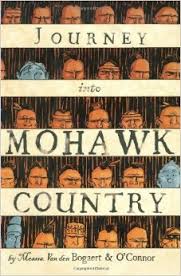
[READ: February 27, 2016] Journey into Mohawk Country

Harmen Meyndertsz van den Bogaert was only twenty-three in 1634 when he ventured into Mohawk territory in search of the answers to a pressing question: where were all the beaver skins that the Indians should have been shipping down the river?  And he wrote a journal of his experience of traveling into the future-New York State in the dead of winter accompanied by the delegates from the Mohawk tribe.

George O’Connor has taken van den Bogaert‘s diary and used it word for word (after being translated by Charles T. Gehring and William A. Starna in 1988) to create a visual representation of this journey.  I know O’Connor mostly because he is the editor of First Second’s Fables and Fairy Tales collections.  I gather he is also an illustrator, although this is my first exposure to him. (more…)

Read Full Post »

boothSOUNDTRACK: SOFA-New Era Building 7″ [CST001] (1997).

sofaSofa was a band that is notabkle for being the first band released on Constellation Records.  They had some releases before that but then guitarist Ian Ilavsky started Constealltion where they released their final 7″ and CD before disbanding.

This 7″ has two songs, “Canyon (Fade)” and “With It” which do not appear on their CD Grey.  if you know the band, these songs fit in perfectly with thie sound–low throbbing bass, noisy buzzy guitars and spoken/sung deep vocals.

“Canyon (Fade)” opens with tribal drum beats and a low rumbling bass (which reminds me a bit of early Cure and other goth bands), but with a bit of a heaver edge.  The singer has a deep speaking style of singing. I’m not really sure what he’s singing, but it adds a great tone to the song.  About midway through the song the guitar (which has been mostly scratchy and noisy) breaks out with some harsh feedback squalls that kind of overpower the song. But then the bass fights back.

Of the two songs, I prefer “With It.” The bass rumble is super cool, low and wicked sounding. And the drums a are bit more spare. The guitar is playing some occasional notes while the singer mumbles his way through whatever he’s talking about. It’s a totally atmospheric piece—you can just picture where this noir thing is happening.

Just before the chorus comes in, his voice gets louder, the guitars start squalling and feedbacking and a rather high pitched “withit” punctuates the noise, after which the deep voice seems to moan.  It’s pretty cool.

I really enjoyed how the bass doesn’t really change for the whole song except in a couple of places where it places a similar yet distinct bass line. It’s neat and changes the tone of the song briefly.  At 2 and a half minutes the song stops abruptly and then the guitar notes resume to get the song started again.  Groovy noise.

Shame the band disbanded.

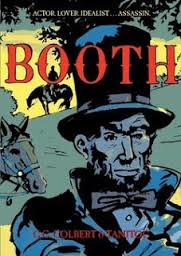
[READ: February 6, 2015] Booth

Here’s another First Second book for February #10yearsof01.  And what better day to post a book about John Wilkes Booth?

I really didn’t know much about John Wilkes Booth except for the obvious–he shot Abraham Lincoln and shouted sic semper tyrannus.

Well, this book take a relatively sympathetic look at the life of the world’s most famous assassin.  This is not to say that the book endorses what Booth did or anything like that–no hate letters please.  It just looks at Booth as a human who had opinions and acted on them.

Thankfully, Colbert does not show Booth’s life in a vacuum so we get proper context for what he did and we also hear the opinions of the people who were also opposed to him.   But it is fascinating to see the things he believed and what forced him to act on his beliefs. (more…)

Read Full Post »

alansSOUNDTRACK: DO MAKE SAY THINK-Do Make Say Think [CST005] (1999).

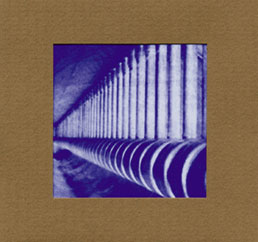
cst005web This album was self-released in 1997, but then the guys at Constellation took it and released it in a beautiful package in 1999.  And Constellation did it right: CD gatefold jacket made from 100lb. textured uncoated cardstock with foil-embossed text and window cut.  Three different two-sided duotone insert cards can be interchanged to show through the front cover window cut. Snazzy!

So this album was recorded in two different locations and it feels a bit more like  compilation of their songs than an album proper.  This doesn’t detract from the music at all, it’s just not as cohesive as their later releases.

“1978” has a raw sound.  It builds slowly, with waves of sorta static getting slowly louder for the first minute. And then the drums kick in. They sound very “live” and crisp. There’s a jazzy pattern accompanied by an unusual bass line.  At 3 minutes a big guitar riff breaks up the droning feeling as it rocks out and then disappears just as quickly.  There’s some saxophone and trippy headphone panning going on, too. This sets in motion a more funky bass line that runs like a lead instrument through the proceedings. There’s some noise bashing around at 8 minutes and a even wah wahed guitar solo at 9.  These occasional disruptions give an interesting melodic sense to this otherwise droney (in a good way) 10-minute song.

“Le’espalace”  feels a little warmer.  It opens with some analog synth trippy sounds and a pretty guitar riff. This is a lovely song that meanders around. The song gets more dense with a synth taking over the guitar line and another synth playing a contrasting melody, too.

“If I Only…”  is 7 minutes long.  It also has a rawer feel.  It’s more staccato with keyboard notes propelling the song forward. There’s a trippy middle section with a nice drum breakdown. It stops at about 5 & a half minutes and resumes with a fuller sound as it rides to the end.  “Highway 420” continues with that more raw sound.  It opens with washes of synths like Tangerine Dream or something.  There’s also a slick guitar line that begins about 3 minutes in.  It’s all rather atmospheric.

Do Make Say Think have always had a bit of jazz at their roots.  That’s evident in “Dr. Hooch” which has jazzy cymbals and slow atmospheric guitars.  About half way through, a wild synth riff comes in and takes over the song for a minute or so before returning to the atmospheric sound.

“Disco & Haze” is a warmer song that slowly builds with a spacey keyboard section.  Around 3 minutes in (of 9) a wah-wah’d guitar takes over—seemingly unrelated.   At 5 and a half minutes the song crashes into a big noisy “chorus,” probably the loudest thing on the record. There’s a noisy skronking sax solo to accompany this as well and it ends with washes of keyboards.   It really sounds like nothing else on the record.

“Onions” is only 90 seconds long.   It’s a simple keyboard riff with echo and little variation.  It’s an odd inclusion but maybe serves as a palette cleanser before the nearly 20 minute final song.  “The Fare to Get There” is warm with spacey keyboard washes and occasional woodwinds–there’s even flute at the end.  It’s 20 minutes long so just sit back and let it unfold over you.  Around 5 minutes in, eerie and spooky drums begin.  Then there’s some reverbed guitar chords and echoed notes which keep the song going.  About three-quarters of the way through, they add a simple guitar riff that continues for several minutes. With a couple of minutes left the song introduces some flutes as it mellows it way to close.

This is a pretty impressive debut.  The band knows the sound they are going for and they definitely achieve it.  Later records are more consistent (and consistently better), but this (especially the opening track) is a great place to start with this band.

[READ: February 7, 2016] Alan’s War

One of the things that First Second hoped for in their ten-year anniversary was that people might read books that they wouldn’t normally.  And boy was this ever one.  The title didn’t sound very appealing to me–I don’t really like war stories all that much.  And frankly I didn’t even know what to expect from the story, really.  Certainly not what I got!

This is the story of a man named Alan Cope.  And the origin of the story is as fascinating as the story itself (almost).  Turns out that Emmanuel Guibert met Alan Cope in the street in France.  Guibert asked the older for directions in June of 1994. Cope was 69, Gilbert was 30. They struck up a conversation.  And soon after, Cope began telling of his experiences in World War II.  What happened to him during and after the war and why this American solider now living in France.

Guibert asked if he could draw the stories that Cope was telling him and Cope said yes.  So this is a story of World War II but it is unlike any story I have ever read.  There is very little in the way of “familiar” WWII stuff in it.  Cope wasn’t in any of the major battles, he never came under heavy fire.  Rather, Cope had a fairly easy war, but he had a ton of stories that were interesting, funny, sometime unbelievable. And the number of famous people he encountered is pretty surprising.

I enjoyed this story so much.  On a side note, My father was in WWII and he also had a fairly easy war, although he was in the Pacific, he was on a small island that saw no action..  I wouldn’t say he enjoyed the war, but he came out with good experience and good friends, which is what Cope did, too.  My fathers stories were far less amazing than Cope’s, but it goes to show that everyone has interesting stories and that no amount of film or history channel commemoration will ever cover everyone’s story. (more…)

Read Full Post »

books SOUNDTRACK: PRESERVATION HALL JAZZ BAND-Tiny Desk Concert #328 (December 21, 2013).

peshallThis show is tangentially Christmassy.  I mean, it does feature a tuba player in a Santa Claus outfit, after all.  But the music isn’t Christmassy per se (except for one song).

Rather, the Preservation Hall Jazz Band does what it does best–play fun dancey jazz songs.  There’s trumpet (and trumpet solos) and trombone, there’s saxophone and piano and most importantly, there are two, count em, two tubas!

“Sugar Plum” is their instrumental version of a holiday song (about the sugar plum fairy).  It’s a fun bouncy swinging song.  “I Think I Love You” has vocals, and they are fine, but it makes the band swing a little less.

“Happy Holiday” is indeed a Christmas song, and a nice one with sweet lyrics.  It’s also got a lengthy some trade off trombone and saxophone solos.

The final song, “Dear Lord,” sees the Santa tuba player removing his instrument and taking over as lead singer (and commenting that he’s from the South Pole which is why he is so hot).  This final song seems to be a familiar one with people singing and clapping along as he blesses everyone from South Pole to North.

[READ: December 23, 2015] The Haunted Man and the Ghost’s Bargain

This is the final book in the Christmas Books collection. And it does return to the Spirit of Christmas more than the previous stories did.

As I learned from the previous story, the plot is quite simple but its length comes primarily from Dickens’ intense amount of detail (and lots of humor).

The story focuses on Mr. Redlaw.  Redlaw is a chemist and a kind man.  But he is beset upon by sadness at all of the things that have happened to him in his past.  One night he is visited by a spirit (who seems to be something of a version of himself, maybe?).  The spirit tells him that he can help to “forget the sorrow, wrong, and trouble you have known.”  Basically he proposes that he will remove all of the bad memories Redlaw has ever had.  And if he accepts this proposal, he will also be able to do this to everyone else that he meets.

This seems like a good deal–no bad memories!  So he accepts. (more…)

Read Full Post »

books SOUNDTRACK: MATT WILSON’S CHRISTMAS TREE-O-Tiny Desk Concert #99 (December 20, 2010).

trreoMatt Wilson is a jazz drummer.  And he joined forces with Paul Sikivie on bass and reedman Jeff Lederer on saxophone, clarinet and piccolo.

Wilson is a great drummer and he normally plays standard (if wild) jazz.  But for this group (the name is an indicator of the silliness), they play a spirited and fun set of Christmas songs–some of them crazy and unrecognizable and others simply fun and jazzy.  And despite the fact that Wilson does some amazing things with just a snare and a cymbal, it’s hard not to say that the show belongs to Lederer.

“Hark the Herald Angels Sing” starts out pretty straightforward.  The initial melody is present and then Lederer goes off on a lengthy solo in the middle.  “O Come All You Faithful” is a sing-along in which Lederer plays a very slow staccato line on clarinet for the audience to sing along with.  It’s Sikivie’s steady bass that keeps the crowd in line.  Meanwhile Wilson is playing his brushes on everything–his snare, a desk, anything that comes along.  It’s good fun with everybody really getting into it by the end.  “O Come, O Come, Emmanuel” starts out slow with Lederer’s sax laying down a smooth melody line and then drifting into his own space.  It’s quite pretty if unusual.

“Angels We Have Heard on High” is audio only and it begins with a rattling of jingle bells and Lederer’s skronking sax (I’d actually like to see that part–it seems like the most interesting visual songs are the ones left off the video).  Then he starts playing a sax melody (although nothing like “Angels” normally sounds).  There is some notation of “Angels” by the end, but it’s very minimal.  The most unlikely Christmas song ever (well, until what comes next).

The final song is a version of Handel’s “Hallelujah Chorus” and it is completely unrecognizable.  It opens with skronking sax noise and martial drums.  Aside from a few seconds where the bass plays a part of the familiar melody, the rest is mostly noise.  As the song draws to a close Matt starts playing the four note “ha – leh – lu – jah” on the snare, he then starts hitting that rhythm on everything–the rim, the bookcase, he even grabs a mug off the shelf and plays it on that.  It’s pretty funny and clear that Wilson is having a grand old time.

This nonsense ends when Lederer picks up the piccolo and plays a fun if silly version of “We Wish You A Merry Christmas,” which is very slow despite Matt’s super fast drumming.

It’s a funny, silly good time and an unexpected way to sing Christmas carols.

[READ: December 18, 2015] The Battle of Life

This book is the third of four in the collected Christmas Books.  This book is very tangentially related to Christmas (although he did publish it as a Christmas book) as one section takes place at Christmas time.

The thing that I really caught on to while reading this is that Dickens’ stories were really written for a very different time.  His books unfold slowly.  I find that I like to read fast (as many others do, I suspect), and I think the reason people dislike Dickens is because he really forces you to slow down.  But if you do slow down, you can really appreciate his descriptions and his humor.

This story begins on a battlefield.  And Dickens tells us all about the battle that took place here and all the people who died here.  For several paragraphs he goes on about it.  And then you learn that the battle has nothing to do with the story–except as an underpinning to the attitudes of people who live there.

Rather, the story is set on the battlefield many many many years later (and has nothing to do with the battle).  For this is a love story, after all. (more…)

Read Full Post »

 ganeSOUNDTRACK: DAVE BIDINI-The President of Mount Allison’s House, Sackville (July 28, 2007).

allisonUntil I looked it up, I didn’t know what Mount Allison was, nor why he would be playing at the President’s house.  I’m still not sure why he was playing there, but as part of his solo mini tour, Dave graced the beautiful house.

For this show he read for 17 minutes and played 5 songs.  He plays “My First Rock Show” as the only Rheos song.  And then plays the same four “new” songs as in yesterday’s post: “Song Ain’t Good,” “The List” “The Land is Wild” and “The Ballad of Zeke Roberts.”

He explains the Zeke Roberts song a bit more.   He spent a few days in Ghana and went to a Liberian refugee camp (all documented in the book Around the World in 57 1/2 Gigs) which is how he learned about Zeke Roberts.

He talks about staying locally in the Marshland Inn and the scary doll in his room (and also how he hopes to have his picture among the famous people who have stayed there).

For the reading portion he talks about the guys he played with in China: Alun Piggins, drummer Jay Santiago and guitarist Dwayne Gale.  He talks about the scene where they get massages (very funny).  There’s another excerpt in which they meet some people on the street where a baby is playing with a lighter.  The band starts taking pictures and then—eventually one of the adults puts an unlit cigarette in the baby’s mouth, and much hilarity ensues.

Overall though, this reading gets pretty dark as he gets into fight with Jay about Rush, and he feels bad that the Rheos had broken up especially when he sees the up and coming band The Wombats loving their set.

As for the music in this set, it is too loud and peaks a lot in the recording.  There also seems to be a hornet pestering him.  It’s probably the least interesting of the three shows.

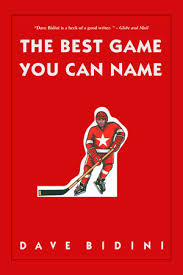
[READ: November 7, 2015] The Best Game You Can Name.

This book is about hockey.  Specifically it is about Bidini’s rec team the Morningstars and their quest for another championship (and how after winning two years in a row, they were the main target for all the other teams).  Much like how his book On a Cold Road included quotes and stories from musicians, this book includes quotes and stories from former NHL players (I didn’t really recognize any of their names, but then I wasn’t a hockey fan in the 70s and 80s).

So each chapter talks a bit about his team and then has several stories about a specific topic from the hockey guys.

He begins by talking about his athletic renaissance in his 40s (after having given up on professional hockey).  I enjoyed the stories from the hockey players who loved playing so much as kids that they would spend hours and hours and hours on the ice.  I also liked them saying that you could still become a pro if you only started playing at 15 unlike today when kids are starting at age 5. (more…)

Read Full Post »

S57OUNDTRACK: DAVE BIDINI-The Upstairs, Sydney, Nova Scotia (July 26, 2007).

sydneyAfter the Rheostatics broke up, Dave Bidini did a solo tour and then wrote a book about it.  This is that book.  And this show is from the mini-tour he did as promotion for the book.  I don’t know too many details about this tour.

I wrote notes about these shows before I read the book (which I recently found and tread).  But I’m going to leave in some of the notes I took about the audio portion for posterity.

I gather he was in town to promote his book and was invited to do a few shows as well.  So these three shows from the Rheostaticslive site include a short reading from the book and then many songs.  This show has two readings and 8 songs (and runs over an hour).

He opens with a description of the book and the tour of china with a band they called the Rheos Not Rheos.  They were asked over and over to play The Beatles.  They played at the Sculpting in Time café.  Dave hung out with the Chinese singers Dirt Star and Airbag (who were also in a cover band that played Radiohead).

For the music, it is just Dave an his acoustic guitar (and a tuner). He plays three Rheos songs “My First Rock Show,” “Me and Stupid” and “Horses” (to much applause).

He plays four new, solo songs “Song Ain’t Good,” “The List” “The Land is Wild” and “The Ballad of Zeke Roberts.”  All of these would appear on the debut Bidiniband album which would come out in 2009.

“The List” is a diatribe against Canada: Tim Horton’s, Stephen Harper,  Zack Werner, and Chad Kroeger.  He says that it was inspired by taking a close look Tim Horton’s bacon and wondering just what it was.  And the mention of Chad Krueger gets a big reaction from the crowd.  The Zeke Roberts song is about a Liberian singer who was killed.  “The Land is Wild” is about Bryan Fogarty, a hockey played who died (it’s not the most upbeat concert I’ve heard).

There’s an extra song “Moncton Hellraisers” (you can watch a video of this one).

He ends the show with second reading and there’s a drunk guy who keeps shouting and interrupting.  I feel bad for Dave, but he handles it well—different than a rock show obviously.  This section involves meeting a TV show producer (of a show called Super Girls) and the Chinese version of the Spice Girls (who sing for them).  He also mentions going to an all night record shop and finding a copy of the Toronto band The Diodes.  He plays their song “Tired of Waking up Tired” for the employees.

If nothing else, this book will introduce you to a lot of little-known bands.

It’s interesting to hear him in such a casual setting.  He sounds good and the audience is really responsive.

[READ: November 5, 2015] Around the World in 57 1/2 Gigs

This book chronicles Dave Bidini’s solo tour after the Rheostatics broke up.  He explains that it was Tim Vesely who wanted to break up the band (no doubt inspired somewhat by Dave and Martin’s harsh critiquing of the songs Tim wanted to submit to their final album 2067).  Nevertheless, Dave was devastated and angry and unsure what to do, especially since they were planning to gig China for the first time.  So he decided to do it himself.  A world tour unlike any other.

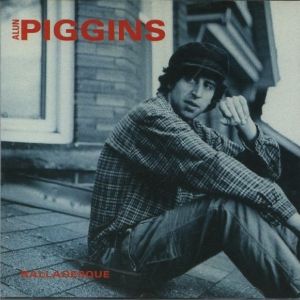
disc_baladesqueHe scheduled a few gigs in Finland.  And he decided to invite his friend Alun Piggins along.  Piggins has been in a number of bands and has released several solo albums.  He seems notable for being a little crazy (with wild hair).  And I automatically respect him for making this album cover.  When Dave asked Alun what to do about being a solo artist (Dave hadn’t really played solo before).  Alun gave him some comforting advice and then said that with his band The Quitters, they would play “our loudest song then tell the crowd, “‘Thank you and fuck off.'”

The two would play separate shows on a double bill and occasionally duet on Rheos songs. They decided to tour Finland.  They flew into London and were only staying for 24 hours.  He wanted to try to get a gig before they left for Finland.  They scored one at the last minute in the Maple Leaf Tavern (which had never staged a live show before) and was themed in Canadian kitsch.  He talks about one man bands like Bob Log III “probably the superstar of all one man bands” (his song “Boob Scotch” is surprisingly straightforward).  He says he spent most of his 35 minute set worrying an doesn’t recall too much about it.

Then they set out for Finland.  First stop Hämeenlinna ( enjoyed typing out all these Finnish towns). (more…)

Read Full Post »

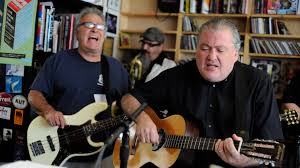
skin SOUNDTRACK: LOS LOBOS-Tiny Desk Concert #90 (November 10, 2010).

loslobosI don’t really know all that much about Los Lobos.  I frankly got sick of them because of “La Bamba” (which came out 20 years ago!) and I don’t think I’d ever heard much else by them.  So I wound up enjoying this Tiny Desk much more than I anticipated.

The one big problem with this tiny desk is that the drummer is playing one of those plastic mail bins and it sounds awful.  Especially on the first song.  I think anything would have had a better drum sound than that.

I really enjoyed the first song “Burn It Down.”  It has a propulsive minor key structure and an excellent bass line.  I would never have guessed it was Los Lobos, but that may be because it’s not the singer I most associate with them (he sings on the next two songs).

“Yo Canto” is a cumbia, sung by a different guy (in Spanish) who also plays lead guitar.  The mail bin sounds better on this song because of the placement (and use of) a cowbell.  The singer sounds amazing.  I rather like the riff that underlines the song.

Those two songs are from their then latest album.  And the band sounds really good all these years on.

The final song is “Don’t Worry Baby.”  It has the same singer as the middle song (this time in English) although it is a pretty standard blues song that I found just okay.  It also features a bunch of saxophone.  I didn’t realize that it was from their major label debut in 1984! and is something of a classic.

So three songs, all of them enjoyable, from a band I didn’t really think I’d enjoy.  The funniest part is just before the show stops and someone asks, “Okay, where’s the beer?”

[READ: October 1, 2015] How to Skin a Lion

This book sounded awesome–I love outdated things that we can laugh about now (because I’m a superior git, of course).

But this book proved to be not all that funny.  The outmoded advice wasn’t treated comically exactly (well, some was), rather it was looked at rather seriously–some as good advice that still stands, some as crazy advice that is way outmoded and a few things that are, yes, just comical.

Cock-Starkey (insert joke here) says that this is a collection of materials from the vast archives of the British Library.  It culls from medieval manuscripts, Victorian manuals and self-help guides from the early 20th century.  She explains that the book aims to reveal the secrets of lost arts, remind us of how modern conveniences have changed our lives, recall the complexities of etiquette, highlight changing attitudes and beliefs and furnish us with still useful tips and guidance.

Although she also points out that readers should be advised that some pieces of advice contained herein have stood the test of time better than others. (more…)

Read Full Post »

« Newer Posts - Older Posts »