Feeds:
Posts
Comments

Archive for the ‘Graphic Novel’ Category

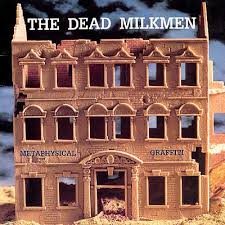
empireSOUNDTRACK: THE DEAD MILKMEN-“Anderson, Walkman, Buttholes and How!” (1990).

deadmYesterday’s album could only be followed by this song.  The Dead Milkmen, always willing to mock, wrote this song with that hilarious title.  Interestingly, the “buttholes” part is a reference to Gibby Haynes, singer for the Butthole Surfers, on lead vocals.

Despite the title, the song itself sounds nothing like a progressive rock song.  It’s only 3 and a half minutes.  On the other hand it is almost entirely instrumental and changes style about 3/4 of the way through.

But check out the topical lyrics:

We’ve got to get together
And we’ve got to save the snails
Let’s board the purple spaceships
Before they set sail

I want a Yes reunion
And you know I want one now
No more Anderson
Walkman, Butthole Surfers and How!

Listening to the opera
And smoking angels’ dust
You can’t get more fucking
Progressive than us

The guitar riff is pretty interesting and angular.  And it’s sloppy in a wonderful Dead Milkmen way with stupid sound effects at the end of each line.  And of course, it’s just funny.

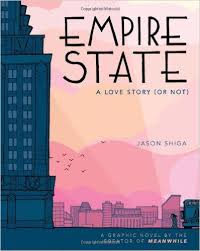
[READ: April 12, 2015] Empire State

I was delighted to see this book at the library.  I have really enjoyed the four other books by Shiga that I’ve read (I was sure I’d read more, but I guess they were all close together).  This one comes before his mind bending Meanwhile.  While it is a pretty straightforward narrative, he does play with time a bit to make the story a little more interesting.

One of the great things about Shiga’s art is how simplistic (I would almost say childish, but that’s not right or fair) his drawings look.  His characters are pretty much round-headed with round eyes and oval mouth.  They could be done on a computer but I hope they’re not.

The story starts in Oakland, CA, where Jimmy is talking to his best friend, Sara.  They talk about her date last night and the creepy Craigslist date she went on recently.  All the guy’s profile said was looking for a nice Jewish girl.  And Jimmy (who is Chinese) says that he may have to use that line next time. (more…)

Read Full Post »

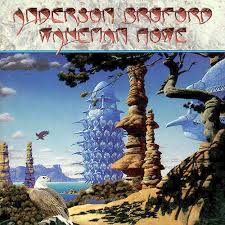
shadowSOUNDTRACK: ANDERSON BRUFORD WAKEMAN HOWE-Anderson Bruford Wakeman Howe (1989).

The band with an amazing pedigree created a band with a preposterous name and an equally preposterous album title.  But who cares, right?  After the pop frenzy of Big Generator, why shouldn’t the “real” members from Yes (excepting Squire) form a band?  They even brought Bruford back (he has said that he didn’t realize all three other guys were part of it, he thought it was a solo recording).  Perhaps the most insulted person should be Tony Levin.  Not only did I not know he played bass on the album (Bruford brought him over from King crimson), but I can’t even hear him on it!  I have listened to this record a couple times recently and I can’t hear any bass at all.  It’s like the anti-Chris Squire album!

I remember when this came out I was pretty excited.  I remember drawing the album cover (look, kids, Roger Dean is back!), and I remember joking about the preposterous “Teakbois.”  But when I listened to it again (first time in probably twenty years), I didn’t recognize a lot, and I liked even less.

abwhThe album opens with “Themes,” a six-minute, three-part mini epic which should hearken back to Yes of old.  There’s an interesting slow circular keyboard piece and a pretty piano melody and then it gets funky, sort of.  About 4 minutes in, it changes to a new thing altogether but again the sounds are so…bleah,  the guitars sound pretty good (some great guitar work from Howe) while those keys just sound….  You know I said that Wakeman would never play the sounds on 90125 & Big Generator, but he went even blander on this song.

Track two is only 3 minutes long.  It’s dramatic and angry with some good keyboard sounds.  It’s probably the best thing on the album.

“Brother of Mine” is another three-part mini epic that runs over 10 minutes.  The guitar chords and style remind me of mid 80s Rush. There’s lots of interesting elements and the main verse reminds me of maybe early Genesis or Marillion.  Although the solo and other sections seem…obvious instead of groundbreaking.  The middle part is pretty good, with a very classic Yes feel.  But the final section sounds exactly likes something from a Disney movie, perhaps The Little Mermaid (which came out the same year).

“Birthright” starts off ominous with some interesting percussion.  Although all the percussion on this album is rather disappointingly electronic.  Not that’s there’s anything inherently wrong with electronic drums, it just seems wasted on someone as amazing as Bruford.  It feels vaguely like a Peter Gabriel song.  It’s pretty good but it gets a little melodramatic by the end.

“The Meeting” is a treacly ballad.  It sounds nice but is nothing special.  “Quartet” is the third mini epic.  This one is nine minutes and four parts.  The first part is folky and reminds me of Simon and Garfunkel.  Part 2 references tons of old Yes songs in the lyrics (which seemed to make reviewers of the album giddy) but which really just shows how weak this song is compared to those other songs.

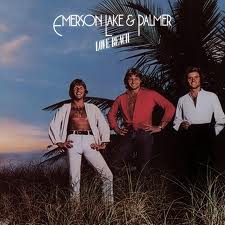
elp“Teakbois” has got to be the biggest WTF recorded.  I’m all for bands embracing other cultures and it’s awesome that after Paul Simon released Graceland other bands added multicultural elements to their sound, but this 7 minute monstrosity sounds like AWBH went to the Caribbean and joined a tourist band.  I don’t know if they released many band photos for this album, but this songs makes it seem like this could have been their cover.  There is a chorus near the end of the song in which they sing “cool running” and I was relieved to find out that the film with that name came out four years after this song.

“The Order of the Universe” is another 9 minute, four-part epic.  Just thinking of this song makes me think of the closing credits for The Lion King (which came out five years after this at least) or something.  There are some interesting parts to it.  But the “Rock Gives Courage” section is dreadful and Anderson sounds like he’s singing a pop metal band

“Let’s Pretend” closes this album.  It’s only 3 minutes long and is co-written by Vangelis.  It’s a fine song, completely inoffensive.

So what is up with this disc?  Am I imposing a 21st century attitude on it?  Am I missing that it was actually really influential (on Disney songwriters anyhow) and that it’s not their fault that other people have poisoned the sound for me?  I understand that musicians change and grow, but with these four names, you’d expect something a lot bigger and better than this.

Maybe when I listen to it in another 20 years I’ll actually like it again.

[READ: May 10, 2015] The Shadow Hero

I really enjoy the stories that Gene Luen Yang creates.   And this one (which I later found out is actually meant to be an origin story of an already extant character) was really interesting.

The story begins in China.  In 1911 the Ch’ing Dynasty collapsed and soon after the Spirits who were born with China and watched over her had to decide what to do.  The Dragon, the Phoenix, the Tiger and the Tortoise came to a council.  Later, the tortoise left the country with a man who was too drunk to know why he was even on the ship he was sailing on.

Then we see that the story is told by a first person narrator when he says that his mother came to America a few years later.  She had high hopes of the prosperity and beauty of the country, but her hopes were dashed by the realization of the ghettos and slums of Chinatown.

His father (the drunk from above) owned a grocery store and Hank (the narrator) helped out.  His mother, the stronger-willed of the two was a driver for a rich woman and took no crap from anyone. (more…)

Read Full Post »

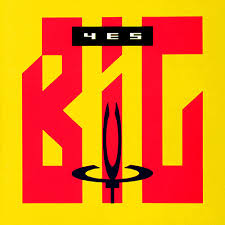
profxSOUNDTRACK: YES-Big Generator (1987).

big genAfter the huge success of 90125, Yes released that solos EP and then buckled down to make the follow up.  It took a few years and sounded an awful lot like 90125, although not as good. I remember enjoying the singles, but when I listened to it recently I felt that it didn’t hold up at all.

Wikipedia tells me that there was lots of trouble while making the album (really??).

Big Generator’s sessions dragged on for two years, largely because of creative differences. Guitarist Trevor Rabin was aiming to progress beyond 90125, while founding lead vocalist Jon Anderson was beginning to yearn for more traditional Yes music. Trevor Horn, who was a major factor in the success of Yes’ previous disc 90125, was part of the early recording sessions. However, he dropped out after a few months due in major part to his inability to get along with keyboardist Tony Kaye. Anderson stated that Horn had told Anderson to stay away from the rehearsal and recording sessions for three months, presumably so that Horn could develop material with the other band members.

Given all that, is it any surprise that the album isn’t all that good.  90125 inspired a lot of music, including this album.  So this album sounds more like a retread rather than a moving forward.

“Rhythm of Love” opens with lovely Beach Boys harmonies (although at this point I’m imagining more “Kokomo” than “California Dreaming” even if “Kokomo” came out 2 years later).  That opening guitar section sounds so much like a pop 80s song (in a not so good way).  The chorus is quite good although it takes that group harmony one level further into uncomfortably sterile pop land.

“Big Generator” sounds like the b-side follow up to 90125.  The guitars are meaner and there are more orchestral hits.  There’s some interesting sections that Yes of old might have played–but they are recorded very differently here.

“Shoot High, Aim Low” is fairly uninspired (even if it was popular on the radio) and at 7 minute it’s way too long.  “Almost Like Love” is another song that sounds so much like 80s pop, it’s kind of icky.  “Love Will Find a Way” is credited solely to Trevor Rabin who really did sort of take over the band in the 80s (what does Chris Squire do at band meetings anyway?).  It is also very poppy but it has some interesting guitars and textures.

“Final Eyes” would be good if it was 2 minutes, but once the second part of the song starts, it drifts into less interesting territory (especially at over 6 minutes).  “I’m Running” is quite polarizing for me.  I like the interesting bass line that opens the song (occasionally Squire does something cool on this disc), but the overall Caribbean Feel is just so wrong.  If the song ended at 3 minutes after that interesting guitar riff it would be much better.

“Holy Lamb (Song for Harmonic Convergence)” ends the disc.  It is written (surprise) entirely by Anderson.  It’s pretty good and a surprisingly decent ending to the album, although there’s an awful 80s synth sound on it.

This was the last Yes album I bought.  I think I heard about Union when it came out in 1991 and featured nearly every person who ever recorded a Yes song, but I wasn’t interested in it.  Since that album they have released 8 studio albums and countless live albums, but I’m content with what the past has given.

Incidentally, this whole travel through Yes started when Chris Squire died recently.  Squire is the only person to have played on every Yes album.  But as I said earlier, I often wonder what he was like to work with.  It seems like when new players come in they kind of take over the sound and Squire is often shunted to the background.  I don’t know a thing about him personally or professionally for that matter. I just know that he could play an amazing bass and wish he’d shown it off more.

[READ: May 20, 2015] Who Killed Professor X?

This graphic novel intrigued me, in part because it was originally written in Greek (can’t think of too many modern Greek books I’ve read–translated by Phil Holland) and in part because it is a comic about mathematics.

The Foreword explains that the book is intended for two kinds of readers: those who have some knowledge of mathematics and those who have no knowledge of mathematics…. The first category of readers can try to solve the problems and determine whether or not each suspect has a valid alibi, whereas the second can simply skip this step.

So the (fairly thin, I must admit) premise of this book is that Professor X was killed while at a conference for mathematicians.  The room was empty for 20 seconds, so the killer must have been more than x meters away from the Professor in order to be considered innocent.

The suspects (we learn later) are all of history’s greatest mathematicians.  They go only by first name in the story, but the end of the book gives biographies of all of the real people they were based on (from throughout history).

Each of their alibis is a mathematical explanation of why they could not be the killer.  And as the Foreword mentioned, if you know math (high school level or so) you could figure out where each suspect was based on the clues given. (more…)

Read Full Post »

colonySOUNDTRACK: YES-9012Live: The Solos (1985).

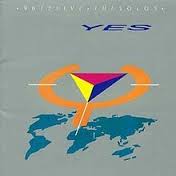
9012liveYes had released live albums before, and most of them had been quite indulgent, but none were as strange and indulgent as this live EP–a tie in with the popularity of 90125.  And yes, I have it on LP.

There are seven songs (in 33 minutes).  Two of them are proper songs from 90125.  The other five are the titular “solos.”

The two songs, “Hold On” and “Changes” both sound quite good.  The are notably less perfect than the album which is to be expected, but it’s still a little disconcerting given how perfect that album is.  The guitars are heavy and Anderson (and the other singer) sound in very good form.

Then there’s the solos:

“Si” is a rather uninspired keyboard solo.  It lasts 2:30 and the biggest cheers come when he starts playing “Toccata and Fugue in D Minor.”  I just have to wonder what Wakeman would have done with this–or if his head would have exploded at the sound of the disc.

“Solly’s Beard” is the guitar solo from Trevor Rabin.  Not unlike Howe, he plays mostly classical guitar.  It’s a good solo, although really not that mindblowing (or even as interesting as Howe’s “Clap”).  There are some keyboards in the background too, which I guess means this isn’t a solo.

“Soon” is Anderson’s solo.  He sings the end of “The Gates of Delirium” from Relayer.  I imagine that’s the only thing you’d hear from that album, so it’s a nice addition.

Chris Squire and Alan White get two solos together (so I guess they are duos, but then the title of the album is wrong).  The first is Squire playing “Amazing Grace,” which bleeds into the 8 minute “Whitefish.”  This is actually a medley of a few past performances like: “The Fish (Schindleria Praematurus),” “Tempus Fugit” and “Sound Chaser.”  Since Anderson said he would never sing anything off Drama, you can only hear “Tempus Fugit” during this solo.

I’m not really sure anyone needs to hear this more than once or twice, but it was fun to dig it out all these years later.

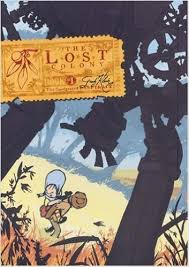
[READ: April 25, 2015] The Lost Colony

I really enjoyed the graphic style of this book.  It has a look of a wood press–thick lines and dark colors.  It was also very cartoony, which was a great way to address many of the issues that were brought up here–especially slavery.

The book opens with a man in a green suit and bowler hat hanging up signs for a slave auction.  There’ a little girl, Bertha Snodgrass, who sees the sign and thinks that she can afford one.  She follows the stranger as he heads to an island (the lost island presumably) in which Alexander Hamilton Snodgrass seems to have made himself president and treasurer.  There are black and white people on this island.

Obviously, there’ a lot of racial issues in this story.  There’s a “Chinaman” named Pepe Wong who dresses in a “bathrobe” and offers Chinese medicine but also speaks in Spanish (Madre dios!).  There’s a black woman who distrusts the heathen Chinaman and wants nothing to do with the slave auction. (more…)

Read Full Post »

foiledSOUNDTRACK: YES-90125 (1983).

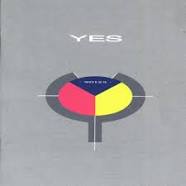
90125After the tumultuous release of Drama, Yes broke up.  And then, soon after, they got back together.  This time Jon Anderson was back on lead vocals and Trevor Horn was…producer?  Steve Howe did not return after the breakup.  He was replaced by a different Trevor, Trevor Rabin.  And returning behind the keyboards was original original keyboardist Tony Kaye (woah).

This reincarnated Yes was supposed to be a band called Cinema with Squire, Alan White and Trevor Rabin.  But when Anderson and Kaye joined in and Horn agreed to produce, they became Yes again.

They got rid of the old logo and replaced it with a bland one but a new symbol.   Long gone is Roger Dean, replaced by a high-tech looking cover and a high-tech sounding album title 90125 (which, rather lamely was just the records catalog number (7-90125-1).

Despite the old school returnees, this album was pure 80s pop.  I can imagine that many diehard yes fans hated it when it came out.  There are moments of yes (Anderson’s voice and the harmony vocals), but there’s no intricate guitar, there’s no melodious synths, even the drums are modern sounding.  The biggest difference between this and previous albums (aside from the whole new wave feel) is the crispness of the recording–sudden starts and stops, and really quiet breaks of songs.  It’s very “produced” and not very warm.

But I wasn’t a die hard fan when it came out and I rather liked it and I still do. In fact I talked about this album a while ago, so i figured I’d just contextualize some of those ideas.

“Owner of a Lonely Heart” is a much-sampled 80s classic.  The quality of the sound is pretty great and the music is also really spare–not a bad thing, just surprising.  This and “Hold On” were written originally by Trevor Rabin (even though “Hold On” sounds very Yes with the choruses and big vocals).  “Changes” was also written by Rabin.  And I am fairly certain he sings the lead vocals, although I can’t find that information anywhere–it certainly isn’t Anderson.

“It Can Happen” is a very poppy song (well, they all are) which was originally written for Cinema, but which they modified for Yes.  And so was “Cinema,” the two-minute instrumental.  It was originally 20 minutes long, but they seriously reduced it for the Yes album–I’d like to hear the original to see if there’s any sense of a Yes epic in there.

“Leave It” is one of my favorite songs from the album with the voices which I assume are sampled, but possibly not  There’s just so much electronic manipulation here, it is so un-Yes, but it sounds great.  The production is perfect and the song is great.

“Our Song” has a really good chorus but it doesn’t quite achieve the excitement of the earlier songs.  “City of Love” is the same for me, moments that are good, but the quality had to drop off somewhat on the record, right?.  “Hearts” is the longest song and it actually lasts too log.  Again, the chorus is good, but it kind of drifts after a bit.

That doesn’t stop it from being a great album, with a ton of great songs front loaded on the album and presumably a nice load of cash for the guys to spend (how mad must Howe be that he chose that time not to come back?).

Since almost every Yes album had different personnel, I’m going to keep a running tally here.  This is a biggie, look who has left!

Chris Squire-bass
Jon Anderson (#1, replaced Trevor Horn #2) vocals
Alan White (#2)-drums
Tony Kaye #1 (replaced Geoff Downes #4)-keyboards
Trevor Rabin (#3 replaced Steve Howe #2)-guitar

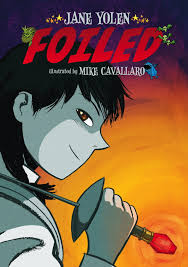
[READ: April 20, 2015] Foiled

Jane Yolen has written over 300 books apparently.  I know her more as a children’s book maker and hadn’t read any of her YA books.

This book was really wonderful.  And I’m aware that it’s part one of two, although it ended satisfyingly.

Aliera Carstairs is a fencer in high school.  She started fencing when she was 11 and had a real aptitude for it.  Her coach suggested she could make nationals.  She has defeated girls and boys much older than her.  She has a gift.

She has no social life, but she doesn’t mind.  She doesn’t fit in with the jocks, the goths, the nerds or really anyone, she just is herself.  She also has a cousin whom she visits every Saturday.  Her cousin has rheumatoid arthritis so she is confined to a wheelchair.  But she and Aliera play role playing games every Saturday.  While they play, Aliera becomes queen Xenda of Xenon, swordfighter extraordinaire (which she knows is not much of a stretch, bit it’s still fun).

She also has a mom who loves buying things at yard sales and Salvation Armies.  And she manages to get Aliera a practice fencing sword for $2.  It has a really cheesy ruby on the handle but aside from that it’s quite good. (more…)

Read Full Post »
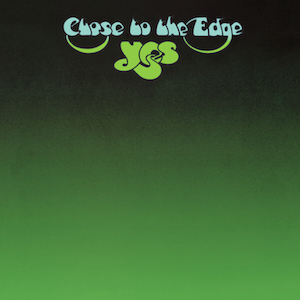
critterSOUNDTRACK: YES-Close to the Edge (1972).

Yes-closeHaving such success with Fragile, the same line up toured that album and then planned a tour for the successful follow-up Close to the Edge.  This album is the first one to feature their now iconic logo and a clearly designed by Roger Dean album cover (even if it’s fairly plain).

This is also their first album to feature a side one suite, the title track “Close to the Edge.”  It also features only two other tracks (10 and 9 minutes each).  And despite (or because of that) it was a huge success.

“Close to the Edge” opens with part I “The Solid Time of Change.”  The opening is soft and then blam, some crazy guitar lines over a fast and complex bass line.  There’s so much going on it’s near cacophony for 3 minutes (I’m not even sure how they did it).  Until a beautiful soaring guitar riff breaks from the noise.  I love that Howe plays the riff a second time with slight variation to it—really keeping it interesting and complex.  And at nearly 5 minutes we get to the “close to the edge” chorus, or at the first part of it (I also love that the chorus gets bigger as the song progresses).  I don’t really know where the “parts” begin, (confusingly they sing the titles of the sections through the song).

Ok, so Wikipedia tells me that part II “Total Mass Retain” begins with the big thudding bass at around 6:04.  And part III “I Get Up, I Get Down” evidently starts right after the keyboard solo around 8:28 which begins with the slow washes of keyboards.  It is the mellow section with the multiple layers of vocals and the gorgeous church organ.  Part IV “Seasons of Man” starts with the reprise of the earlier music (in a weird key change).  There’s a lengthy keyboard solo here and then more vocals reprising all of the section with a slightly different feel. Until it all fades out much like it faded in.  It’s a dynamite track and never feels 18 minutes long.

Side two has two songs.  “And You And I” is only 10 minutes long but it too has 4 parts.

Par I “Cord of Life” opens with what is more or less guitar tuning (although it sounds lovely with his guitar).  And then there’s some very pretty acoustic guitar playing.  I really like when the bass notes come in around 1:15 and then there’s Wakeman’s keyboards.  It gets big and bassy just at the end of part 1.  Part II “Eclipse” starts around 3.48 right after the “call” when the big orchestral instrumental kicks in. This part lasts for 2 and a half minutes.

The opening guitar returns and then part III “The Preacher, the Teacher” begins with a new guitar section (and more keyboards) this is more or less a reprise of the other verses.   Part IV “The Apocalypse” is just 52 seconds long and is the reintroduction of the “and you and I theme” (and is not apocalyptic at all).

“Siberian Khatru” is 9 minutes but only one part. It opens with a fast cool guitar riff and then adds a fast cool keyboard riff.  The bass rumbles through and the guitar floats over the top.  There’s a great guitar riff that comes in around a minute in, which is the main riff of the song.  And then there’s some harmony vocals   After the harmonies, the song sort of resets and we get another verse with more great harmony voices.  The keyboard solo is on a harpsichord and sounds very classical.  Then there’s a trippy guitar solo.  A new section of song starts around 4 and a half minutes.  Around 6 minutes the song switches to the ending coda, a smooth cool riff with a guitar solo floating over the top.  The band jumps in with a sung staccato  “doh dah doh” bit which sounds like it would end the song, but they’re not done, there’ another refrain of that cool keyboards section with a neat noodly guitar solo.

This was a band of soloists that were at the top of their game and not only did great work by themselves but played very well together.

Since almost every Yes album had different personnel, I’m going to keep a running tally here.  Two albums in  row with the same lineup!:

Chris Squire-bass
John Anderson-vocals
Bill Bruford-drums
Rick Wakeman (#2)-keyboards
Steve Howe (#2)-guitar

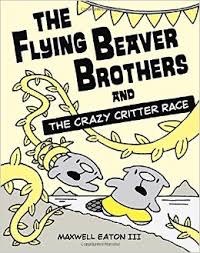
[READ: June 30, 2015] The Flying Beaver Brothers and The Crazy Critter Race

I love the Flying Beaver Brothers.  And even though the last couple haven’t been quite as awesome as the first ones, this one has definitely brought the series back on an upswing.

The book casually mentions the baboons from the previous book and what they did to Beaver Island (don’t ask) and then gets right into the action.  A local businessman is having a race.  Everyone is invited to replant the trees that the baboons destroyed and the winner will win a houseboat.

Turns out the entrepreneur is named Crazy Critter (they assumed that was the name of the race) and he is super gung ho about getting the race started.  In Crazy Eddie tradition, he calls himself crazy a LOT. (more…)

Read Full Post »

staticSOUNDTRACK: YES-Fragile (1971).

fragileComing out just nine months (!) after The Yes Album, Fragile (which included new keyboardist Rick Wakeman) was a brilliant classic rock album that (depending on how much you like Wakeman) eclipses The Yes Album in greatness.

This was the first Yes album with a cover by Roger Dean (not up to his usual style for the band and prior to his creating their iconic logo).

Some might argue that Fragile is a better album than The Yes Album, and I might be one of them, but it’s really close (and depends on the day).  Fragile has bigger hits in “Roundabaout” and “Long Distance Runaround” (at only 3 minutes an actual radio song!), but it also has a number of weird little “solo” items.

“Roundabout is a staple in classic rock—not bad for an 8 minute song.  The opening notes are iconic, and then the bass comes in, big and round and heavy.  And there’s so many little fiddly bits-the keys, the guitars, even the bass, that it’s not even that clear to me how they did it all.   But there’s also the “in and around the lake” part that has such simple guitars and is so catchy.  It’s also the first time you really get to hear new keyboardist Rick Wakeman who is insanely talented and full of all kinds of interesting notions (and evidently a rack of 12 keyboards). And sure, the end of the song is mostly a chance for everyone to show off their skills and that’s pretty cool.  The final section has some great harmonies ala Crosby, Stills and Nash.

According to Bruford: “I said—brightly—’Why don’t we do some individual things, whereby we all use the group for our own musical fantasy? I’ll be the director, conductor, and maestro for the day, then you do your track, and so on.’  And that’s why there are five tiny pieces of songs scattered between the longer songs.  The first one is by Wakeman and is called “Cans and Brahms” a piano and organ piece.  Wakeman later described the track as “dreadful” as contractual problems with A&M Records prevented him from writing a composition of his own.  The following solo piece is by John Anderson and has multiple vocal lines overlapping over a simple musical base.  I never knew the lines were “Tell the Moon dog, tell the March hare.”  I love that it ends with footsteps running away and a door slamming—to what?

“South Side of the Sky” returns to a proper 8 minute song. It opens with a cool drum fill and some great guitar lines (all with Squire’s rumbling bass underneath–or actually in front).  After about two minutes there’s some interesting piano sections, including an almost spooky solo section of high notes.  There’s a pretty section of “la las” after this until the song comes bouncing back to the noisy part nearly 6 minutes in.

“Five Per Cent for Nothing” is a Bruford composition.  It’s staccato and all over the place and was, evidently his first composition (all 38 seconds of it).  Then comes “Long Distance Runaround,” another classic with an iconic guitar intro.  There’s some more unusual guitar lines (and a lot of open space) in this song.   It segues (and when I grew up the radio station often played both parts) into the next track written by Squire: “The Fish (Schindleria Praematurus).”  Even though it is Squire’s it does not have a lot of crazy bass in it, well, until the end when he gets to really fly.  This isn’t really a solo song since the rest of the band plays along.   The final solo piece is Howe’s flamenco guitar piece “Mood for a Day” which is lovely.

And then comes “Heart of the Sunrise” one of my favorite Yes songs.  It has one of the most amazing  introductions to a song.  It’s incredibly fast and intense riffage followed by a very slow section that has complex drumming an interesting bassline and keyboards.  It’s great how Squire and Bruford keep the steady beat amidst all the flourish.  The chaos goes on for nearly 3 and a half minutes before it totally mellows out to a delicate section sung by Anderson.  Then as you settle into this more mellow (and very pretty) section, around 7 minutes in we get a wholly new section of some wild keyboard.  And then some interspersing of weird keyboard and that awesome opening riff.  And although it sounds like it’s going to fade out, there’s more to come—another delicate section with repeats of the great guitar riff (not the opening heavy riff, the other one).  The song slowly builds to a climactic section that then switches back to the wild riff for a quick end.  It’s exhilarating  But that’s not exactly the end.

The disc ends with the door opening again and “We Have Heaven” reprising for a few seconds before fading out.

It’s outstanding and is unquestionably a classic.

Since almost every Yes album had different personnel, I’m going to keep a running tally here.  Our second change occurs with this their fourth album:

Chris Squire-bass
John Anderson-vocals
Bill Bruford-drums
Rick Wakeman (#2 replaced Tony Kaye)-keyboards
Steve Howe (#2)-guitar

[READ: January 15, 2015] Static Shock: Trial by Fire

In the old DC vs Marvel war I have clearly become a Marvel guy.  In fact, when asked to name some DC guys, after Superman and Batman I fall flat.  And, unlike the Marvel Universe, Superman and Batman are never really seen together.  Let’s say that Marvel has done an awesome job at marketing.

So here’s a DC book, and I was pleased to give it a try. I was also pleased to see that the superhero is black–an all too rare experience in graphic novels.

The back of the book says that Static Shock is the “hot new animated series on the Kids WB!”  I wasn’t sure if Kids WB was still on, but that’s irrelevant because this book was published in 2000 (! why are we getting it now?).  The book was printed in 1993, so nothing in the introduction (which talks about the Kids WB ) is at all relevant.

Not to mention that the TV show was clearly adapted from the comic to make a much more kid friendly show.  I didn’t realize that when my son grabbed this and started reading it.  He put it down after a few pages.  I don’t know if he got to the point where the boys in high school call each other fag and queer or the black kids are called monkey, or what.  I had to apologize to him and he declared it “weird” so I don’t know what he actually thought.

Suffice it to say that this book is not for kids.  It is a harsh look at racism in high school and the opportunity for a black nerd (who is into comics) to actually fight back against he white playas (who are way too into the hip hop scene). (more…)

Read Full Post »

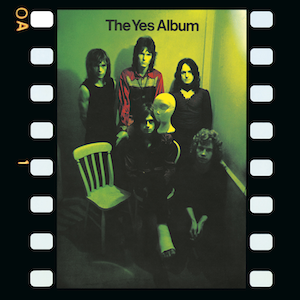
marvel SOUNDTRACK: YES-The Yes Album (1971).

The_Yes_AlbumAnd then came The Yes Album and everything changed.  Whether it was the addition of Steve Howe on guitar or just more confidence in their songwriting, I don’t know, but The Yes Album is leaps and bounds above Time and a Word.

The opening staccato notes of “Yours is No Disgrace” are tight and loud—what is now considered classic Yes sound—Squire’s bass is low and rumbly but ever so precise.  There’s the true Yes keyboard sound and some amazing guitar work.  It’s got a great introduction followed by some excellent harmony vocals (that’s don’t sound psychedelic any longer).  Then comes the great slow jazzy section with the awesome bass meandering through.  The song has so many great parts and they all fit together perfectly.  This is how you make an awesome 10 minute song.  Even the ending which isn’t exactly different adds more drama.

The next song is a live version of “Clap” (apparently not called “The Clap” as our discs say).  It’s a fun romp from then new guitarist Steve Howe.  It’s a delightful masterpiece, although it’s kind of oddly placed (and the fact that it’s live also makes the flow seem odd).  This is all my way of leading up to saying that Fragile is a slightly more cohesive album than The Yes Album even if they are equally excellent.

“Starship Troopers” is another classic with some more great basslines and some really crisp drums. It also has a middle section (acoustic guitar with great vocal harmonies) that really holds the song together very well.  They do a great job at making instrumental sections interesting.

“I’ve Seen All Good People” has a great opening with harmony vocals and acoustic guitar and then a full chorus.  When Squire’s bass comes in at around 3 minutes, it’s like the heaviest thing on earth.  I happened to be listening in only one ear while writing this (never do that with Yes) and for the first time I hear the choral voices sing “Give Peace a Chance” before it switches over to the rocking second half of the song.  “A Venture” is like a truncated version of a Yes song.  It may be the least interesting song on the disc, but that’s just because of the company around it.

“Perpetual Change,” the third 9 minute song opens with some great loud guitars and then some quiet sections where Anderson’s voice really shines.  And just when you think that the song is going to be nine minutes of more or less the same sweet music, at 5 minutes it shifts gears entirely into a crazy staccato section of fast notes and drumming.  It’s such a strange riff (and when the bass starts following a slightly different riff and the guitar solos over the top, it’s beautifully controlled chaos.  And after a minute and a half of that, it switches back to the delicate harmonies of yore.

There’s not a bad song on this disc and depending on your proclivities it is either a little better or a little worse than the next masterpiece, Fragile.

Since almost every Yes album had different personnel, I’m going to keep a running tally here.  Our first change occurs with this their third album:

Chris Squire-bass
John Anderson-vocals
Bill Bruford-drums
Tony Kaye-keyboards
Steve Howe (#2 replaced Peter Banks)-guitar

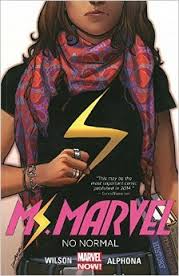
[READ: March 15, 2015] Ms Marvel: No Normal

This collection collects books 1-5 of the Ms. Marvel series (Adrian Alphona is the artist for all of the books).  When I saw it at work, I assumed it was related to the new Captain Marvel series that I had just read.  But it turned out to be a different story altogether.  And I loved the new character that the Marvel universe has added to its fold.

For this story is about Kamala Khan an ordinary girl from Jersey City.  She is a Turkish Muslim with very strict parents.  Her brother doesn’t work but spends all his time praying (much to her father’s dismay).  Her best friend Kiki (call her Nakia now, thank you) has recently found her religion and begun wearing head scarves.  And her other best friend, Bruno, is busy working all the time.

As the story opens, we see these three in the Circle Q where Bruno works (there’s funny joke about “Chatty” Bob, which I liked). In walks a spoiled white girl Zoe who seems nice but really probably isn’t.  Kamala seems to like her but Nakia does not (and Zoe’s insensitivity to Nakia is part of the reason).

Zoe invites them to a party (knowing they won’t go), but Kamala sneaks out and heads to the party anyway.  She immediately doesn’t fit in, and as she wanders away from the festivities a mist covers the ground and she is visited by Captain America, Iron Man and Captain Marvel (in her new female form), and, better yet, she can speak Urdu. (more…)

Read Full Post »

sumoSOUNDTRACK: YES-Time and a Word (1970).

yes timeThe second Yes album feels like a step towards what we know of the prog masters, but it’s more of set sideways as they have added an orchestra to the mix. Chris Squire’s bass sounds a lot more like the Yes we know, but those strings kind of mess with the synergy.

Opening track “No Opportunity Necessary, No Experience Needed” is a cover of a Richie Havens song (it’s hard to imagine such an original band doing so many covers). In this one, Chris Squire shows the kind of bass he’s capable of—big deep bass notes, high fast riffs and far more complex rhythms. It’s just odd that the song opens with a string version of title music from the movie The Big Country. There’s some cool bass sounds and drum fills. It’s a great opening song. The strings are a weird addition but I think they work here (mostly).

“Then” opens with some interesting descending keyboard chords. There’s some wonderfully dramatic moments in the verses and the chorus gets nice and big and catchy.  The middle section has some good rumbling bass (with a strange addition of horns that give this a kind of soundtrack quality) and lot of keyboards. The lyrics are still pretty hippy “Love is the only answer hate is the root of cancer, then.”

“Everydays,” is another cover (Buffalo Springfield) is a kind of jazzy song with 70s keyboards and quiet jazzy drums. But after two minutes it turns into a heavy staccato riff that’s all bass and keyboards (and very cool).  This is followed by a big jam with wild drums, keys and bass. It then jumps back to a mellow section of mostly vocals. It’s a pretty wild song.

“Sweet Dreams” opens with some very distinctive Chris Squire bass.  The keyboards are big again.  “Prophet” opens with some ponderous keyboards and then the string section playing.  Then there’s some great loud bass playing.  The main body of the song is nearly all strings, which is an unusual sound for Yes.  But it’s just waiting for the bass to rumble in (opposite horns again). “Clear Days” is a 2 minute song which is all strings and Anderson’s voice.  It’s an unexpected track on this album for sure.

But the final two songs are once again real highlights.

I love “Astral Traveller” or (as-ter-al trav’lr as it is sung).  The opening chords are sharp and unusual. There’s some great rumbling bass and the chorus has some really interesting dissonance–really the first for the band who is usually pretty sweet up til now. There’s a keyboard section which feels a little displaced from the rest (later albums would make this kind of segmentation a bit more seamless) although Squire’s super high bass riffs are a fun addition. There’s also a great bass riff as the song heads to the final chorus.

And “Time and a Word” ends the album quite nicely.  Although this song is more delicate than others, it has some great elements—guitar harmonics, some cool bass and a very catchy chorus.  This record is pretty well overlooked (and is deservedly in the shadow of its successors, but there is some real quality stuff here).

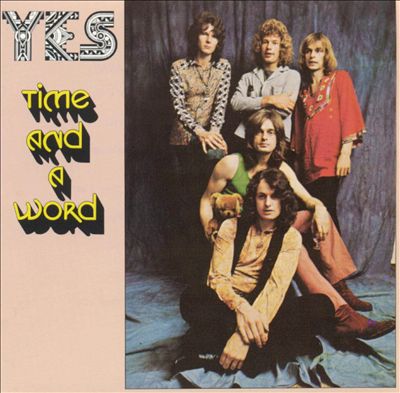
Yes_-_Time_and_a_Word_-_UK_front_coverI also just leaned that the original album cover was quite different from the one that Americans are familiar with.

Since almost every Yes album had different personnel, I’m going to keep a running tally here.  Interestingly, it was the same lineup for these two records, but Peter Banks left right at the end of recording to be replaced by Steve How on the next album:

Chris Squire-bass
John Anderson-vocals
Bill Bruford-drums
Tony Kaye-keyboards
Peter Banks-guitar

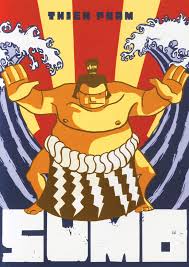
[READ: January 15, 2015] Sumo

I loved this book.  I loved the illustration style (which was so very cool) and I loved the story which was simple but poetic.

The simple story is this: Scott is a football player with potential.  But when things don’t pan out (and his girlfriend dumps him) he decides to try a different route.  What if he becomes a sumo wrestler?

Scott is a blond haired American, but evidently this is not an unheard of transition, and so Scott decides to fly to Japan to try it out.  Scott is blond with a big square head.  Actually Pham’s drawing style is very blocky, which give it  an especially memorable and interesting look

The book si told in 4 sections (and the pages are designated by the color/symbol of that section.  The first is a circle in a square, which is primarily where we see Scott, in Japan, working out with the sumo.

The section (set off by a water tower) shows Scott on his last night at home–getting drunk with his friends.  They are sad to see him go, but wish him well. Until his ex girlfriend comes in and wants to talk to him. (more…)

Read Full Post »

nurserySOUNDTRACK: FRANK FAIRFIELD-Tiny Desk Concert #445 (May 29, 2015).

frankFrank Fairfield and friends Tom Marion (who plays mandolin on the third song) and Zac Sokolow (on guitar) play old-timey music (marches, polkas and mountain tunes).  Fairfield plays banjo and plucked cello (and apparently fiddle, although not here).

The first song “Tres Piedras” is an upbeat instrumental.  The second song “I Ain’t A Goin’ To Weep No More” was written by Harry von Tilser whose brother wrote “Take Me Out to the Ballgame.”

The final song “Campanile De Venecia/Sharpshooters March” has an overwhelming Italian feel (that mandolin, I gather).  I like that Fairfield yells “take it, Tom” so that Marion will play a lengthy mandolin solo on the for the final song.  There’s also a “traditional” Italian melody in the song that I know more from cartoons than elsewhere.

The songs feel like they leaped out of a 78 record (even Fairfield’s voice seems suitably “old” on “Weep” (although it appears that they were up playing late last night so he may not quite be up to par).

This was a fun Tiny Desk by an artist I’d never encounter anywhere else.

[READ: January 21, 2015] Nursery Rhyme Comics

This is a collection of Nursery Rhymes as drawn primarily by First Second artists.

The 50 nursery rhymes includes here are the traditional rhymes which remain unchanged.  So this was an opportunity for these artists to draw interesting visuals to accompany the traditional stories.  Some artists stayed traditional, while others went in a totally new direction.

It was fun to see that while I knew most of the nursery rhymes, there were quite a few that I didn’t know.

I always wanted to get a  collection of nursery rhymes for my kids when they were younger, and I feel like I never got one that would have been as satisfying as this one. (more…)

Read Full Post »

« Newer Posts - Older Posts »