Feeds:
Posts
Comments

Archive for the ‘Graphic Novel’ Category

walkerSOUNDTRACK: THE CIVIL WARS-Tiny Desk Concert #137 (June 27, 3011).

civilMany Tiny Desk performances just show the band playing.  But there’s evidently a lot of time before hand where the band sets up and has fun.  I love seeing that, and it’s kind of a shame they cut so much of it out.

As this show starts, Joy Williams is holding the film clacker with Bob.  He tells her to give it a loud clack.  She kind of lets it go on its own accord and then says she didn’t do a good job.  John Paul White then says “I could have done it so much better,” to much laughter.

The Civil Wars are Joy and John Paul and they have terrific chemistry.  The first song is “Barton Hollow,” John Paul plays a loud percussive resonator guitar and the two sing great harmonies.  He sings loudly with her nice harmonies, but the middle part is quieter with her gorgeous voice singing out the lyrics.   I really like the down step chords in the “walking and running” section at the end of the song.

Before “Twenty Years” Bob asks if they ever had a desk job.

Joy says no: daycare, rock climbing.   John Paul says No: forklift driver, seed cleaning, (she asks what that means, but he doesn’t hear her which is a shame as I’d like to know too) cleaning out chicken houses.  He pauses…. I wanted a desk job.

For the song, John Paul switches to a simple acoustic guitar and plays less percussively for this somewhat quieter song.

It’s really fun to watch the two of them play together.  As the blurb notes: “There’s blissful, swooning chemistry as they stare into each other’s eyes and sing magnificently together.”  So it’s a bit of shock that they are not married to each other (they each have spouses, though).  Turns out that they met at a songwriting session at a Nashville studio in 2008.

Before “Poison & Wine” John Paul asks if they are all so quiet and respectful or if Bob rules with an iron fist.

Joy plays the keyboard for this song while John Paul plays a quiet guitar.  This song has wonderful harmonies in the beautiful if puzzling chorus , “I Don’t Love you, I always will.”

I didn’t know The Civil Wars before this set and I am really hooked.

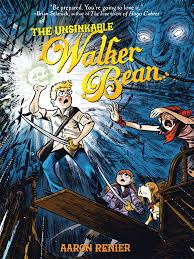
[READ: February 2, 2016] The Unsinkable Walker Bean

This book has some pretty great blurbs attached to its (from Brain Selznick and Jeff Smith) but I found that I couldn’t really get into it.

A lot of the problem was the artwork.  Interestingly, the artwork on the cover (which I assume is also one by Reiner since it looks like his style) is really great.  But the interior art feels like a sloppy version of this cover art.  And while it’s not sloppy, of course, it just doesn’t look as nice as it might.  Couple that with text that is hard to read, a story line that is full of weird little details and twists and it all wound up being a story that felt way too long for what it was.

There was a lot that I did like about it.  I liked the general premise and I liked two of the crew members that Walker Bean befriends, and of course I loved the various gadgets that they created.  I just didn’t enjoy the story all that much. (more…)

Read Full Post »

fairytaleSOUNDTRACK: JOE BOYD AND ROBYN HITCHCOCK-“Tiny Desk Concert #142 (July 18, 2011).

robynThis is one of the more unusual Tiny Desk Concerts because it is not just music.  It is music and a recitation.  Joe Boyd (who I didn’t know) is a producer of many classic 1970s albums, including albums by Pink Floyd, Syd Barret and Nick Drake.  Robyn Hitchcock is an unusual and often funny singer songwriter.

Hitchcock opens the concert by stating (in his wonderfully British broadcaster’s voice) “All my life I’ve been Robyn Hitchock [and I’m here with] Joe Boyd who has been Joe Boyd even longer than I’ve been me.”

Joe and Robyn were doing a tour together in which Joe would talk about his experiences with these artists and then Robyn would play a representative song.

Robyn plays two songs.  The first is Syd Barrett’s “Terrapin,” a song I’ve always like.  His cover sounds a lot like Barrett’s version while still retaining Hitchcock’s distinctive singing quality.

The second song is one that Hitchcock wrote for the tour called “I Saw Nick Drake.”  It was planned as the first encore. It’s very much a Hitchcock song, a little trippy and strangely  catchy about him seeing Nick Drake and Nick being fine.

Between these songs, Boyd talks for about fifteen minutes, telling about working with Syd and how amazing he was…until he wasn’t.  And then about working with Nick and how every recording he did was perfect and how big his hands were.

If you care about either of these musicians or about British rock from that era, this is a great performance to check out.  It’s informative and a little funny too.

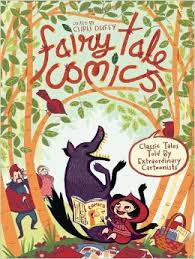
[READ: January 19, 2016] Fairy Tale Comics

This book follows on First Second’s Nursery Rhyme Comics book. Perhaps because this was a thinner volume or perhaps because Fairy Tales are a bit more substantive than Nursery Rhymes, I found this book even more enjoyable than the other.

And even though I (and possibly you) think that you know every a fairy tale, there were quite a few in here that I didn’t know.  In his editors note, Chris Duffy notes that he encouraged the artists to pick stories other than Grimms (although Grim is well represented).

Brothers Grimm stories include:

“Sweet Porridge,” which I’d never heard of.  This is done in a classic cartoon style by Bobby London.

“The 12 Dancing Princesses” seemed vaguely familiar.  This was done in a very pretty style by Emily Carroll.

“Hansel and Gretel” I did know, of course.  It’s fun to see Gilbert Hernandez doing a children’s story since I think of his stories as very adult.  But his simple drawing style works perfectly for this story.

“Little Red Riding Hood” has a very simple almost anime style from Gigi D.G.  It ends with a happy ending.

“Snow White” was done by the other Hernandez brother, Jaime.  His style is so peculiar and yet so perfect for this tale (the fact that the baby is actually white is a wonderful touch.

“Rumpelstiltskin” is done by Brett Helquist whom I know from the Lemon Snicket stories.  I can see his style a bit in these drawings but the colors really bring his interesting style to life.  It’s a great version.

“Rapunzel”  I have recently become a huge fan of Raina Telgemeier, and I love what she does with this story.  Although as I finished it I had to wonder if this is how the story is usually finished.  This seemed much more positive than what I imagine the Grimms intended.

“Bremen Town” I had never heard of this story.  And I can’t believe that this was how it was originally written. In this story a group of animals forms a band.  They frighten away bad guys so that they can jam.  How weird.  Karl Kerschl’s style suits it well.

“Give Me the Shudders” is another Grimm story that I had never heard of.  It’s about a boy who can’t shudder or shiver and so every one assumes he is fearless. He keeps asking people to teach him to shiver, but when they see he can’t they keep promoting him to better stations in life. David Mazzucchelli’s style works nicely with this because of the simplicity of his design amid the craziness of the story.

In addition to stories from Grimm, there are these fairy tales

From Charles Perrault:

“Puss in Boots” makes me wonder if I don’t know the story all that well.  I was quite intrigued by the way this one turned out.  Vanessa Davis has a kind of sloppy style.

From 1001 Nights Tales:

“The Prince and the Tortoise.” I had never heard of this story.  It’s pretty wild and weird.  The drawing style by Ramona Fradon reminds me of adventure comics from the Sunday papers.

From a Japanese Tale:

“The Boy Who Drew Cats” is a wonderfully cool and interesting story about the powers of fantasy and doing what you are meant to do.  Luke Pearson’s drawing is perfectly old school and nearly monochromatic for the Japanese landscape.

From Bre’r Rabbit”

“Rabbit Will Not Help”  I don’t know this tale but I do know some Bre’r Rabbit.  He’s such a bastard, and the drawing style by Joseph Lambert works nicely with that.  It’s a little weird and dark–perfect for this tale.

From an English Tale”

“The Small Tooth Dog”  I had never heard of this tale.  It’s pretty weird from start to finish, and that includes the art by Charise Mericle Harper whose style is very dramatically cartoony and also a little weird.

“Goldilocks and the Three Bears” I didn’t realize that this wasn’t a Grimm story.  This was my favorite in the book because of the way Graham Annable chose to do it.  There are no words just wonderful illustrations and great looks by both Goldilocks and the bears.  I suppose it helps if you know the story already–it may not be ideal for those who are seeing for the first time (whoever that may be) but as an interpretation, I loved it,

From the Russian Tale:

“Baba Yaga”  Russian Tales are always so dark.  And Jillian Tamaki represents this very well. This story has a house with chicken legs, wolves, talking cats and much more.  I really like Tamaki’s work a lot and I enjoyed her interpretation.

From The King and His Storyteller:

“Azzolino’s Story Without End” is another story I’d never heard of.  In it, a boy king wants to be told a story without an end.  And the king’s story-teller think of a great way to do it The story is short but Craig Thompson’s style is right on.

I really enjoyed this collection a lot.  And I love getting introduced and reintroduced to these stories that I’ve known for quite some time.

Thanks First Second. #10yearsof01

Read Full Post »
dragonsbewareSOUNDTRACK: GIVERS-Tiny Desk Concert #144 (June 22, 2011).

giversGivers play a light on poppy tropical kind of music.  Their music feels summery and light.  Between the sorta reggae guitar and the tons of percussion, the songs are fun and danceable.

As “Meantime” opened the show, I was really struck by the bass.  The bass plays a lot of high notes and some seamless riffs.  It’s really the lead instrument.  And there’s also percussion all over the place.  The sound the great is really full for so few instruments.  Of course, it really comes as no surprise to hear there’s a flute solo, even though it wasn’t apparent that anyone had a flute–it’s as if a wandering flute minstrel happened by just at the right time.

The band has two singers, Taylor Guarisco and Tiffany Lamson.  On “Up Up Up” the two duet in the beginning and then switch off vocal lines.  Taylor’s voice is higher, while Tiffany’s is deeper, raspy and interesting (although I’m not quite sure it works with their sweet music, or perhaps she’s just not loud enough).  There’s more fun bass lines in this song (I’m intrigued that he switches from a pick to pickless playing).  This song features some xylophone which also sounds perfect with their music.  Perhaps it’s the way he sings the “up up up” part but it definitely gives the song a reggae feel (especially with that afropop bass).  I really like this song, especially the surprise ending of one, two, three, four-xylophone slide-five.

For the final song, “Atlantic” there’s much switching around.  Tyler and the bassist switch instruments and Tiffany picks up a large ukulele.  She sings lead and you can really hear her raspy voice (again, not loud enough).  This song is mellow and as such the bass isn’t quite as fun (although Tyler does have a similar bass sensibility).  I’m curious to hear what they sound like when they are not unplugged.

Although frankly, I can do without Tyler’s crazy faces.

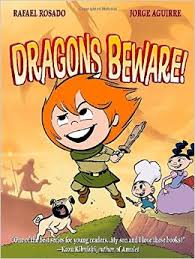
[READ: March 27, 2016] Dragons Beware

After the successes of Claudette in Giants Beware, everyone is back (with a new problem created by Claudette) in Dragons Beware.

As the book opens, Claudette is telling the story of a great sword made by the great blacksmith Augustine (her father).  The sword was called Breaker and no magic could defeat it.  One day Augustine went to fight the fearsome dragon Azra the Atrocious.  Sadly for him, the dragon is the one who did the damage that we saw in the first book (missing an arm and a leg..and the dragon swallowed the sword too).

When she finishes the story, she says that she can go fight Azra herself, with her own little wooden sword.

In the next scene we see that the evil Grombach is amassing an army–he has been magically converting ravens into giant walking gargoyles.  So although Claudette has invented a problem to solve, the village has a real problem coming their way. (more…)

Read Full Post »

bewareSOUNDTRACK: YACHT-Tiny Desk Concert #136 (June 22, 2011).

yachtYacht is a synthy band with a dramatic and charismatic lead singer–Claire Evans.

There are tons of synth and funky synth sounds on “Dystopia (The Earth is On Fire)”.  But what really sound great are the excellent harmony vocals.  There is some guitar but it’s pretty overshadowed by the synth (and synth drums).  I don’t love the line “The earth is on fire.  We don’t have no daughter.  Let the mother father burn.”  But I’m willing to accept it because the synth solo is pretty cool.

The keyboardist and programmer switch places for “Psychic City (Voodoo City).”  The guitar is more prominent in this song primarily because the song is practically a capella–the chorus is principally Aye Yi Yah Yah HOOH, Aye Yi Yah Yah HO HO, which would probably be a lot of fun to sing along to live, but feels a little tedious here.

After this song it is revealed–horrors–that there was gum under Bob’s desk and Jona Bechtolt gets some on his nice pants.  There is talking of sending them the dry cleaning bill, but Claire grimaces and says “too soon.”

“Shangri-La” opens with an interesting synth riff (and the guys in back switch places).  The chorus “If I can’t get to heaven let me go to L.A.” is pretty funny.

I’m not sure what the band sounds like when it is not stripped down (the blurb talks about how long it took them to get settled), but I feel like their lyrics don’t support the stripped down sound.

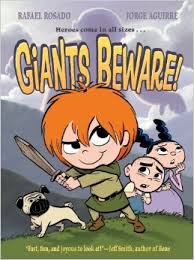
[READ: February 17, 2015] Giants Beware

This is a First Second children’s graphic novel.  It is quite long for a children’s book (200 pages) but it’s a lot of fun and the design is fantastic.

The story opens with an old storyteller telling a story to a bunch of kids.  It’s the story of the Baby Feet Eating Giant.  The giant liked to eat the feet of all the babies in the village.  No one was safe until the brave leadership of the great Marquis Pierre the XXXII. He chased the giant into the mountains and built a wall around the village to keep it secure.

The end.

Except, as the young girl on the cover of the book says…  Well?  How did he kill the giant?  Did they “tell the evil giant a pointless story and he died of boredom?”  This is Claudette; she wants to hear action.  She wants to hear about giant slaying.  She thinks that leaving the giant outside and simply building a wall around the city is irresponsible.

As the story teller walks away he mumbles that she is just like her father and look where that got him. (more…)

Read Full Post »

jan2016 SOUNDTRACK: STEVE EARLE-Tiny Desk Concert #123 (April 25, 2011).

earleSteve Earle is pretty cool.  He’s a country outlaw who is a socialist and an outspoken Bernie Sanders supporter.  He is a vocal opponent of capital punishment.  He’s also written a song “directed towards the state of Mississippi and their refusal to abandon the Confederate Flag and remove it from their state flag.”

For this Tiny Desk it’s just him and his guitar as he sings songs from his then new album.

He opens with “Waitin’ On The Sky” and says it’s the first time he’s played it in front of people.  He has to restart the song because “debris from a Cobb salad shifted in his throat.”  He also forgets some of the words, but it still sounds great.

He is very chatty with lots of stories about the recording of the record and how a song that he mentions isn’t on the record, but it is on a download or vinyl.  “We used to make records for girls and now we make them for nerds.”

“Every Part Of Me” is a slow ballad, it’s quite pretty.  His voice sounds good and hard-worn as he sings.  He says it is “the song you’re most likely to hear on the handful of radio stations that actually play me.”

While tuning before his third song he says that he is  involved with a show called Treme “that’s ‘treme,’ just like it sounds… if you’re French.”  In the show he’s a street performer in New Orleans.  He says that there are non-traditional buskers–professional musicians who sing on the streets for tips (hundreds of dollars a day).  And he tells about the turf wars that began in the 80s.  Eventually an agreement was reached between the players.   That’s all a lead in to a song that is on the Treme soundtrack called “This City.”  It’s a touching song about New Orleans.

I’d always thought that he was much more “country” sounding, and maybe he is on record, but at least here, he is simply singing well writing and well-though out songs.

[READ: February 23, 2016] “To Laugh That We May Not Weep”

This is a brief essay about cartoonist Art Young.  Young would be 150 years old this year and Spiegelman says that Bernie Sanders would have been the best birthday present we could have given him.  Because Art Young was a radical! Political !! Cartoonist!!!  (the oblivion trifecta).  The only concept less inviting is a political radical.

Spiegelman says that once upon a time political cartoonists were very powerful (although in some respect they still are, as you can see by the the murdered Charlie Hebdo artists).

Young was a talented cartoonist who drew for all kinds of publications.  He was never convicted for his drawings, but he was put on trial for libel.  He was found not guilty; he drew a picture of himself sleeping with a caption “Art Young on trial for his life.”

Spiegelman contends that political cartoons are usually short-lived and timely but that Young’ are more timeless–and perhaps sadly still relevant.  And that he was never shrill or humorless. (more…)

Read Full Post »

photoSOUNDTRACK: WILCO-Tiny Desk Concert #509 (February 23, 2016).

wilcoAs far as I can tell, Wilco is the first band to be invited back for a Tiny Desk Concert (there was a stated rule that no one would come back twice, with some people skirting that by coming with another band).  Laura Gibson was invited back since she was the very first attendee, but since Wilco’s newest album has been so successful, it seems somehow fitting that they get invited back.

And perhaps in honor of that, while their last performance was noisy and raucous, this one is decidedly more mellow—with all acoustic instruments.  But that doesn’t mean it’s quiet and calm either.

For the first song “The Joke Explained” from Star Wars, they used banjo, acoustic bass, hollow bodies electric guitar (w/ slide), the ever-present melodica and muted drums (w/shakers).  And it sounded great.

For the second song, the older “Misunderstood” everybody seemed to switch instruments.  Tweedy switched guitars, the acoustic bass became an acoustic guitar, the hollow body became a slide guitar.  Nels Cline’s slide guitar brings so much to the song by doing seemingly so little.  I love how this simple, sweet song has a wild middle section–a crazy breakdown with noisy cymbals and drums–drummer Glenn Kotche is fantastic–and everyone else playing some crazy high-pitched notes until it all settles back down again.

Tweedy has another guitar for the third song “I’m Always In Love” and the melodica is back.  There’s xylophone keeping the melody.  And as with all of these songs, Tweedy sounds great and the backing vocals add wonderful harmonies.  Cline plays a wonderful slide solo, too.

Before the final song and there’s another guitar change for Tweedy, and he says that after this song, “you guys need to get back to work solving this Trump problem. Figure it out! Its weird!”  They play “Shot in the Arm,” another great old song.

The band sounds excellent—a wonderfully full sound even without amplification. I am really excited to see them his summer.

There’s also a nifty video showing “Misunderstood” with two 360 degree cameras so you can see what goes on in the audience during a Tiny Desk Concert.  Check it out.

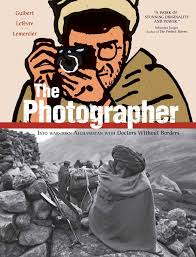
[READ: February 7, 2016] The Photographer

I loved Guibert’s book Alan’s War, in which he took the words of Alan Cope and put them to an amazing graphic novel.  Well, he is back again doing the same thing with the words of famed photograph Didier Lefèvre.

Didier Lefèvre died in 2008, but before he died he left a legacy of amazing photojournalism.  That includes this trip to Afghanistan which he took with the team from Doctors without Borders.

Alexis Siegel translated this book again, and he offers an excellent introduction which not only explains Lefèvre’s life, it also gives context for everything tat these men and women were up against in that war-torn region.

As mentioned Guibert draws out the story that Lefèvre told him.  But this book is different from Alan’s War in that it also uses the photos that Lefèvre took.  Guibert fills in the gaps where Lefèvre, didn’t or couldn’t, shoot.  And there was a lot he couldn’t shoot. (more…)

Read Full Post »

SlewisOUNDTRACK: BEN FOLDS-Tiny Desk Concert #508 (February 16, 2016).

benfolds I’ve liked Ben Folds for many many years.  He’s funny, he’s amazing live and he plays a mighty good song or two.  He’s the kind of artist you say, Has he really not done a Tiny Desk Concert before? (He did an episode of Live from Daryl’s House after all).  But he’s finally here to bang the hell out of their piano and curse up a storm.

He plays several songs from his new album So There, which is  a collaboration with the sextet yMusic.  I haven’t actually listened to the record much because I gave it to Sarah and haven’t grabbed it from her pile yet.  Since there’s no strings for this Tiny Desk, these songs sound just like normal Ben Folds songs–clever lyrics, fun piano and unexpected twists.

The first song is “Phone in a Pool,” one of his rollicking stompers.  It’s catchy and fun to sing a long to and after one listen, you’re right there with him in New Orleans throwing a phone in a pool.  Midway through the song, he forgets the words and just starts laughing: “In a world where you get applause for fucking up.”  And then he makes up a verse about forgetting the words.

“Not a Fan” is a slower song with a beautiful piano melody and biting, funny lyrics (get your T-shirt signed, fangirl).

“Capable of Anything” is a fast, romping song.  He says on the record the vocals are very quiet, so he’ll see what he can do.  After a run through a verse he stops and realizes that he has knocked the piano out of tune.   And when he bangs on the keys at the end, its easy to see how.  There’s some really fast piano work (and you can hear him stomping along).

he says he’ll play some old songs.  He asks for a song and someone shouts “Emeline,” which he immediately starts playing.  And then about a verse in, he gives some story behind the song.  He says that when he was a kid 8 or 9, he wrote earnest songs, but when he was a teenager he wrote “cool”s songs like “Having Two Dicks is Cool.”

And then he started using songwriter vernacular, words you only use in pop songs, “why’d you make me cry, girl?”  Why do people do that? When he was 18 or 19 he started to write songs that were more natural, like Emeline, the first song he was proud of–using the word “stupid” or a money analogy–and which he still loves playing.

He’s willing to do more songs and asks for requests saying which ones he can or can’t do.  And then Bob points out that he’s going to miss his plane if he does more than one song.  So he chooses for everyone and plays an amazing version of “One Angry Dwarf And 200 Solemn Faces.”  he says it can probably be done and will put the rest of the piano out of tune.  And he’s not kidding.  He really pounds the heck out of that thing–how does his own piano manage?

The song is bouncy and fun and he even jokes with the lyrics near the end.

It’s an amazing, invigorating set and has me really excited to see him this summer.

[READ: February 28, 2016] Lewis and Clark

In 2014, Bertozzi made the excellent Shackleton graphic novel.  But three years earlier he had created another historical graphic novel, this one about Lewis and Clark.

Like Shackleton, it aims to be truthful but not comprehensive.  Bertozzi himself explains that it is not meant to be a replacement for the scholarly recounting of the journey.  Rather, he hopes to show the “experience” of the journey.

The book doesn’t really include any historical context, so in a brief summary:

Shortly after the Louisiana Purchase in 1803, President Jefferson commissioned a group of U.S. Army volunteers under the command of Captain Meriwether Lewis and his close friend, Second Lieutenant William Clark to explore the territory.  Their journey lasted from May 1804 to September 1806. The primary objective was to explore and map the newly acquired territory, find a practical route across the Western half of the continent, and establish an American presence in this territory before Britain and other European powers tried to claim it.The campaign’s secondary objectives were scientific and economic: to study the area’s plants, animal life, and geography, and establish trade with local Native American tribes.

(more…)

Read Full Post »

kokoSOUNDTRACK: CAR SEAT HEADREST-Tiny Desk Concert #506 (February 8, 2016).

carseatI only know of Car Seat Headrest from NPR.  They have really liked some of his previous songs and both Bob and Robin raved about his new song “Vincent” (which is really good).

For this Tiny Desk Concert, Will Toledo (who is kind of the only guy in the band, although not currently if you know what I mean) plays acoustic guitar on a tall stool.  Accompanying him are two friends from Leesburg, Va, who don’t actually do anything, and his two band mates who also don’t do anything (well, the drummer plays a toy “desktop” drum set for the song “The Drum”).  And yes, they all sing along during the sing along at the end of song three.

It’s worth mentioning that Toledo has released some 12 albums under the name Car Seat Headrest since 2010 (and Toledo is only 23).  Find them at bandcamp.  Unlike someone like Robert Pollard who has written hundreds of songs that are about 30 seconds long.  Most of Toledo’s songs are really quite long, with multiple parts.  And amazingly, all the parts are pretty catchy,

He plays three songs in this set.  His voice is a little creaky and high-pitched, but it is really-spot on for the kind of songs he writes.  By contrast,. it’s funny to hear how deep his speaking voice is.

“The Drum” opens with a riff that is almost out of tune seeming (like his voice).  The melody lines in the verses are simple but often unexpected.  And lyrically, the song is quite interesting (“the drum reads James Joyce,” “the drum’s in debt”).  And just when it seems like the song could end, it switches to a slower middle section, after which it all comes back to that catchy chorus.  By the end of the song it’s totally grabbed you.

For “Drunk Drivers/Killer Whales,” he pushes his falsetto pretty high.  The  song starts out rather slow but once the verses start properly it picks up.  I love the way in the drunk drivers part he adds vocal melodies that are not in the music to make the song even fuller.   And then unexpectedly, the song shifts gears from the melancholy drunk driver section to the powerfully sung (and I’m not exactly sure how it’s related) “Killer Whales” part. It runs to 6 minutes and is constantly shifting and always stays interesting.

“Sober To Death” is also about 6 minutes long. There’s some great lyrics in here as well “every conversation ends with you screaming.  Not even words just ah ah ahhhhh” (with his voice breaking during the ahhs).   The sing along part at the end has a neat intro where the first guitar line is plucked slowly and the second line picks up speed.  And when everyone sings along it really elevates the song.

After just two listens to this show I was totally hooked and I’m really looking forward to hearing his last album, which is reworking of his earlier songs for Matador Records, and his soon to be released new album with “Vincent” on it.

[READ: February 25, 2016] Koko Be Good

I absolutely adored the art in this book.  I really thought it was outstanding and it has made me search out more of Wang’s stuff (she has a number of online comics at her website).  I also didn’t realize that she drew In Real Life–with Cory Doctorow–her style is similar there but a but less wild as it is here.  And the story is pretty great too.

So this is the story of two main protagonists and a third character who plays a smaller but pivotal role.  Koko is a wild Chinese girl who is carefree and careless.  Jon Wilgur is a tightly wound young man who is planning to change his life pretty drastically.

koko2The story opens with Jon–he is drawn so perfectly, I can’t get over it–a great combination of realism and cartoon style.  He is listening to an audiotape sent by his girlfriend (I love that he is listening to an audio cassette).  He and his girlfriend are planning to move to Peru together very soon. She is currently there and he is about to pack up and head down there himself. (more…)

Read Full Post »

redSOUNDTRACK: LE FLY PAN AM-fpamCeux qui inventent n’ont jamais vécu (?) [CST019] (2002).

After their previous EP, Le Fly Pan am (note the addition of the Le) come back with an album that can be described as funky.  True, it’s weird funky that gets dismantled while its going along, but it’s still pretty funky.

They wouldn’t be them if there weren’t some crazy noises.  And so the first song (parenthetical translations are from Wikipedia), “Jeunesse sonique, tu dors (en cage)” (“Sonic Youth, You Sleep (In a Cage)”) is just noise and static for 90 seconds before leading to the first song proper:

“Rompre l’indifférence de l’inexitable avant que l’on vienne rompre le sommeil de l’inanimé” (“Break the Indifference of the Inevitable Before We Come to Break the Sleep of the Inanimate”) which kicks in with a really funky bass guitar and drum section. It’s really catchy and almost danceable. But throughout the song’s ten minutes there are elements of destruction going on. There’s screeches that sound like a dentist’s drill. About a minute in, the guitars just seems to stop playing riffs and just tart going crazy–playing loosened strings and just random notes like a beginner (even though the original rhythm is still there).  That funkiness stays for about 5 minutes until the songs shifts gear into a loping melody with a big bass and simple repetitive guitar lines. And then it kind of falls apart all together with some sounds like broken strings and lots of chatter (in French).  At 7 and a half minute it resumes at breakneck speed with the drums and bass pounding away and all kinds of effects splashing on top. The song ends with low rumbling noise before jumping into….

“Partially sabotaged distraction partiellement sabotée” (“Partially Sabotaged Distraction Partially Sabotaged”) This song opens with a four-note, slightly off-key guitar and then loping bass riff that reminds me of SST Records bass guitar of the 80s. It switches between this and a slightly funkier sounding section. But the destruction is apparent from the get go as early in the song, the sound just completely drops out on a couple occasions, making you think the disc is broken (it isn’t).  The song starts to get more intense as the notes seem to get faster and more insistent (those repetitive notes and ringing guitars just seem to scream tension).

“Univoque/Équivoque” (“Univocal / Equivocal”) opens with static and then a very funky bass line.  There a music box playing over the top and some quiet guitars. About half way through the bass ends but the music box (tiny and distorted) continues.  At 3:30 a new bass line, similar to the previous but with a new section added pops up.  It’s a simple song showcasing their groove and their noise.

“Arcades-Pamelor” starts with low distorted noises.  Like the first “song” this is mostly sound effects and things slowed down. Until a screaming noisy static takes over about half way through.  It’s really quite unpleasant.

“Sound-support surface noises reaching out to you” opens with another funky bass and drums and some simple guitar notes. About a minute in a sound emerges that sounds like a skipping CD (but it’s not your CD).   And then a new, different bass pattern emerges with lots of noisy percussion(sounds like people banging things). The skipping sounds seems to work as a segue between section, with some great funky parts and and then the final section which opens with what sounds like a mildly out of tune guitar ran and more great bass. This really enjoyable section winds up glitching to a halt with the  sound of a skipping record player.

“Erreur, errance: interdits de par leurs nouvelles possibilités” (“Wandering Error: Prohibited by Their Opportunities”) has the sounds of sticks clacking together and silverware dropping and mechanical sounds.  And they all seem to somehow settle into a rhythm of piano notes. Unlike the other tracks this one is pretty consistent—strange noises and a simple piano motif.  It’s also probably the least interesting of the bunch.

The disc ends with “La vie se doit d’être vécue ou commençons a vivre” (“Life Must Be Lived or Begun to Be Lived”) another great, funky bass and piano line, with some interesting guitar sounds round the corners. This song is so catchy, it’s wonderful.  After about 2 minutes there’s another breakdown. The music all stops except for the guitars which sound like they are getting strangled.   The second half of the song has the same funky bass but very different guitars and lots of squeals and feedback. After a couple more glitches at 6 minutes in, the bass takes off playing fast rocking riff as the guitar tries to keep up. It’s such a satisfying ending that it’s hugely disappointing that it only last 45 seconds before the album ends.

While it was always obvious that Fly Pan Am were going to play weird experimental stuff, it wasn’t clear before just how funky and dancey they could be too.  If you can handle some noise in your dance, this is a great album.

[READ:January 10, 2016] Red Handed

I absolutely loved this graphic novel.

I had never heard of Kindt before and I didn’t really know what to expect from the book, but I certainly didn’t expect the complicated and super clever plot and structure that this book had.

It opens with a newspaper story that tells us about Detective Gould’s ten years on the force.  Since his arrival there have been no unsolved murders.  He credits the rise in technology for his success.  (continued on A12) and then it moves into the graphic format.  It is headed Detective Gould (in black and white).  Then it shows some mug shots of suspects in color.  And it turns out that these people’s stories will comprise the bulk of the book.

The next chapter opens with a woman fleeing a diner with a stool.  She worked there and is told the stool is coming out of her paycheck,.   We learn that stealing chairs is kind of her thing.  And then we see what her next acquisition after this stool is.

The next chapter is called the Jigsaw and it involves a man who is an art dealer.  As the story opens he steals a giant painting form a woman he has picked up at a bar. And then we learn what he did with it and how he made his reputation.

After he is caught, the story shifts to a series of dialogue boxes on a black background in which Sgt Gould is speaking to a woman who Sgt Gould assumes is connected to all of the cases in the book.  She is playing innocent and has explanations for everything.

After this there is another black and white section designed to look like newspaper stories of The Detective’s Wife  (in which the two are sweet together) and then Tess’s True Heart in which we learn that Tess (whoever that is) is a very smart girl.

The next chapter is The Ant in which an artist wants to tell a story told from the point of view of an ant.  But since the ant cannot write, it must collect letters from the newspaper.  This turns into an art installation in which the author’s editor begins finding the words all over town and using them to tell the story (it’s much more convoluted than that and really clever).  Then we learn that Tess is the author’s editor–the first connection is built.

And after that short piece, we see more black and white stories from Detective Gould and Tess’ True Heart.

The next chapter is The Forgotten about a sleight of hand magician who has stopped doing magic and has become a pickpocket.

The Repair Man is about an elevator repair man who takes pictures up women’s skirts when they are stuck between floors.  And then he begins selling them to a smut dealer.  The way these pictures connect to the rest of the story is amazing.

The next section is The Performance Artist in which a woman is set up to look like she is cheating on her husband (elaborate ruse once again).

The Escape Artist tells the story of a car thief and how so many thieves think they are going to stop but they are afraid of losing the rush.  Well, this guy retired for real.  Until he ran into Tess.  He knows from long ago.  And she brings him back to the city.

Finally, The Fire Starter is about a guy who gets paid to start fights with the intention of a payout coming somewhere down the line.

The last fifty or so pages show how all these crimes, all these cases solved by Detective Gould, are tied together.  And the way it is told just gets more and more interesting.

This was an outstanding book.  I loved the art and design–the various ways that the medium was used to tell the story.  I loved that it was confusing but not too confusing and that it unraveled in the way it did.   I really can’t say enough about this book.  This was another big win for First Second in their #10yearsof01 celebration.

Read Full Post »

americusSOUNDTRACK: FLY PAN AM-Sédatif en fréquences et sillons EP [CST011] (2000).

330px-SedatifsEnFrequencesCover This is an EP that works as a kind of remixes and deconstructs further the debut. There are three songs, the first is fourteen minutes, the second is 11 and the final is 4.  As the Constellation site describes the disc:

This 3-song EP of fractured, tape-infested experiments is an intransigent slab of self-referential auto-criticism. The band was sticking to its agenda of acutely self-conscious musical manipulations, re-working its own materials and assumptions to yield new compositions of uncompromising formalism. Side A is a medley of sorts, consisting of phrases and fragments reconfigured and replayed from their self-titled debut (Fly Pan Am). Various melodies are reassembled and played off of one another, creating an extended live remix with blissful passages of layered guitars, drones, sampled backing vocal lines, and the requisite incidental noise break in the middle of the piece. The result is something like a ‘Stars On 45’-style musical encapsulation of the entire debut record.

“De cercle en cercle, ressasser et se perdre dans l’illusion née de la production de distractions et multiplier la statique environnante!” (“From Circle to Circle, Rehash and Get Lost in the Illusion Born of Production and Increase the Static Distractions Surrounding!”) opens with the sounds of machinery rumbling and then slowing to a stop. The song proper opens with a rapid bass line and squalls of feedback.   Some beautiful guitars play over the noise. More guitars come in along with all kinds of crazy noises—scrapes and scratches, radios and distortion.

The propulsive music stops around 3 and half minutes in and the noise takes over. There’s loud noises and static and all kinds of things. Then the noise shifts to what sounds like someone emptying a bag of ball bearings onto a metal table.  And then maybe making microwave popcorn.  About five minutes later (seriously) a drum starts playing in the background and then a guitar line that references the debut album starts up.  It sounds a bit like the two note guitar from “Dans ses cheveux soixante circuits” with the voices from “Nice est en feu!” thrown on top.  And then at 11:20 that two note half-tone thing from “Dans ses cheveux soixante circuits” resumes, but it’s only for 20 or so seconds before different sounds come to take away the repetitiveness (although the guitars do continue that until the end of the song).  It seems like the band wanted to revisit their debut but also wanted to make sure that it was properly buried under chaos as well.

The second song “Éfférant/Afférant” (“Unrelated / Related”) (11 minutes long) is described as “somnambulist clockwork repetition.” The bass and drums are kinda funky with some simple guitar chords playing in the background. While things do change somewhat throughout song (including notes that seem inappropriate at times), the main source of change is the weird electronic sounds that play over the top. The noise starts to grow louder and louder around 9 minutes and just when it gets unbearable it fades out to the end of the song.

“Micro Sillons” (“LPs”) is only 4 minutes long and it opens with static and noises—different ones in each ear.  After about three minutes of that, the noise mutates into a kind of machine-like hum.

This is definitely a challenging listen.  There are rewards to be had, and it s amazing what good songwriters these guys are, if they’d ever let their songs stay unmolested.

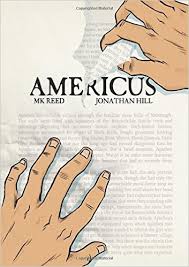
[READ: December 17, 2015] Americus

I didn’t really have any idea what this book was about–the title Americus evokes many different things.

So imagine my surprise to find out that this First Second graphic novel [go First Second!, #10yearof01] tackles the idea of banning books in schools.  It looks at religion, freedom of speech and middle school.

The story is about Neil Barton, an unpopular kid who loves fantasy and books, especially the Apathea Ravenchilde series (such a great name). Neil and his friend Danny race to library after school because the latest volume is out.  Neil is bummed that his library could only afford one copy of the book (budget cuts!) and Danny gets it first.  And as he starts reading, the artistic style switches to the Ravenchilde world (I loved that).

Then we meet Neil’s and Danny’s families.  Neil’s parents are divorced.  He lives with his mom who is harried and exhausted.  Danny’s family is an intact nuclear family, with two younger siblings.  And we learn soon enough that his mother (and father to a degree) are very Christian. (more…)

Read Full Post »

« Newer Posts - Older Posts »