Feeds:
Posts
Comments

Archive for the ‘First Second :01’ Category

boothSOUNDTRACK: SOFA-New Era Building 7″ [CST001] (1997).

sofaSofa was a band that is notabkle for being the first band released on Constellation Records.  They had some releases before that but then guitarist Ian Ilavsky started Constealltion where they released their final 7″ and CD before disbanding.

This 7″ has two songs, “Canyon (Fade)” and “With It” which do not appear on their CD Grey.  if you know the band, these songs fit in perfectly with thie sound–low throbbing bass, noisy buzzy guitars and spoken/sung deep vocals.

“Canyon (Fade)” opens with tribal drum beats and a low rumbling bass (which reminds me a bit of early Cure and other goth bands), but with a bit of a heaver edge.  The singer has a deep speaking style of singing. I’m not really sure what he’s singing, but it adds a great tone to the song.  About midway through the song the guitar (which has been mostly scratchy and noisy) breaks out with some harsh feedback squalls that kind of overpower the song. But then the bass fights back.

Of the two songs, I prefer “With It.” The bass rumble is super cool, low and wicked sounding. And the drums a are bit more spare. The guitar is playing some occasional notes while the singer mumbles his way through whatever he’s talking about. It’s a totally atmospheric piece—you can just picture where this noir thing is happening.

Just before the chorus comes in, his voice gets louder, the guitars start squalling and feedbacking and a rather high pitched “withit” punctuates the noise, after which the deep voice seems to moan.  It’s pretty cool.

I really enjoyed how the bass doesn’t really change for the whole song except in a couple of places where it places a similar yet distinct bass line. It’s neat and changes the tone of the song briefly.  At 2 and a half minutes the song stops abruptly and then the guitar notes resume to get the song started again.  Groovy noise.

Shame the band disbanded.

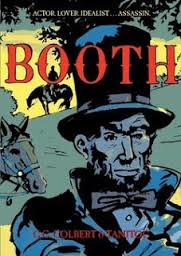
[READ: February 6, 2015] Booth

Here’s another First Second book for February #10yearsof01.  And what better day to post a book about John Wilkes Booth?

I really didn’t know much about John Wilkes Booth except for the obvious–he shot Abraham Lincoln and shouted sic semper tyrannus.

Well, this book take a relatively sympathetic look at the life of the world’s most famous assassin.  This is not to say that the book endorses what Booth did or anything like that–no hate letters please.  It just looks at Booth as a human who had opinions and acted on them.

Thankfully, Colbert does not show Booth’s life in a vacuum so we get proper context for what he did and we also hear the opinions of the people who were also opposed to him.   But it is fascinating to see the things he believed and what forced him to act on his beliefs. (more…)

Read Full Post »

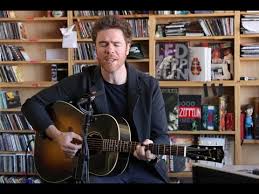
deogrataisSOUNDTRACK: JOSH RITTER-Tiny Desk Concert #119 (April 11, 2011).

ritterNot too many performers mention the actual day that they are performing their Tiny Desk Concert.  But Ritter mentions Valentine’s Day twice during his set so I thought I’d post it on Valentine’s Day even if the actual date of the posting is much later.

I don’t really know Ritter, I’ve heard of him, but I’m not too familiar with him.  Nevertheless, I was quickly won over by him.  He is charming and polite and is certainly having a good time (he even laughs at some lines in his songs).

His first song “The Temptation Of Adam”sounds vaguely familiar.  The melody is very catchy and his voice is strong and excellent.  Lyrically the song is quite interesting.  I especially loved this section: “We passed the time with crosswords that she thought to bring inside/ ‘What five letters spell apocalypse?’ she asked me/ I won her over saying, W.W.I.I.I.’/ She smiled and we both knew that she misjudged me.”

“Lark” is a faster song, but still very folksy and clever.  I love that although the melody is fairly simple, the way he plays it (with very fast fingerpicking) makes the song sound more complicated.  “Rattling Locks” is a dark minor chord song, louder and heavier than the other two.

The site says there is an audio only track called “Pale Blue Eyes,” but I can’t find it.  For the last track, his 2003 song “Kathleen,” he introduces the song by saying, “I think Valentine’s Day is the most awkward self-imposed holiday — even worse than New Year’s — so this is an awkward song.”  It’s a louder song, with Ritter’s voice reaching great intensity.  It’s a great way to end the set.

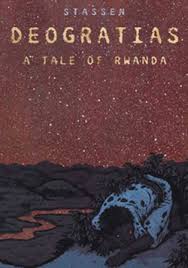
[READ: February 14, 2016] Deogratias

Here’s another story that I would never have read if it were not for First Second’s #10yearsof01 challenge.  The thought of reading a story about the genocide in Rwanda just seems to depressing to undertake.  And yet in the spirit of reading things outside of your comfort area, I decided to read this this weekend.

And I am incredibly glad that I did.

I feared that this story would be one of rampant genocide–struggle and death and mutilation and everything else that I could imagine.  But rather, what Stassen has done is created a story about how the toll of genocide can impact one person.  Yes, it affects him directly and the story is incredibly sad, but it was a very different story than I expected, and it was so personal that it made it more tragic without having the oppressive unreality of millions of dead people in the plot.

The introduction alone is worth reading, as translator Alexis Siegel gives a brief summary of the Rwandan tragedy.  I’ve always found the conflict to be really hard to grasp.  Hutus and Tutsi, a privileged minority, a brutal majority.  The back and forth was so hard to grasp, and the names of the tribes were similar as well.  It is hard for a lazy person to keep straight.

But I found Siegel’s explanation to be succinct and very effective. (more…)

Read Full Post »

catblackSOUNDTRACK: EL VY-Tiny Desk Concert #505 (January 29, 2016).

el vyMatt Berninger of The National and Brent Knopf from Menomena joined together to form EL VY.  I’m not sure what the band sounds like on record, but for this tiny desk, it’s just piano and voice.

It’s always interesting to see a singer with nothing else to do.  Berninger doesn’t really do a lot when he’s singing with the National, so here, he just stands with his hands in his pockets, singing his intensely personal lyrics.

In “No Time To Crank The Sun” Berninger’s voice is higher than usual.  It’s quite nice.  I especially like the piano melody and the way he created some really unexpected notes in the transition from verse to bridge (or whatever parts they technically are).  This song feels a little long at 5 minutes but there are a lot of parts to it.

Berninger’s speaking voice is quite deep, and that’s the way it sounds on the second song, “Careless.”  he introduces it as “another sad love song.”  Lyrically it’s a little obvious, especially given that there’s not much music to hide behind.  But it is a nice ballad.

My favorite of the three songs is the third one, “Need a Friend.”  Berninger is a fun performer, commenting, “Happy New Year and thanks for having us.”  Then looking at the audience and saying “Could you keep it down back there?”  This song is a bit more bouncy in the piano.  A little more upbeat, which is nice.

After most shows, the audience claps, and maybe you hear people chatting.  At the end of this one, people clap and there’s some silence and you hear Berninger joke, “Awkward,” before the show cuts off.

[READ: December 10, 2015] Cat Burglar Black

I’ve been reading so many graphic novels recently, that I haven’t had time to post about some of the ones I read a while back.  But since this is First Second’s #10yearsof01 month, now’s the time.

I wasn’t sure what to make of the title of this book until it was used in context–the girls are wearing “cat burglar black” to sneak around.

K. is a teenager.  She is an orphan and had been living in an orphanage until her Aunt learned about her and invited her to the Bellsong Academy.  She doesn’t know this Aunt and is a little apprehensive.

When she shows up there, things are mighty weird.  There are only four girls in attendance, the headmistress is scary (I hate the drawing style of her, although the other characters are pretty interesting), and there’s a ton of unusual things going on.  The most notable thing is that whenever anyone speaks their speech balloons are filled with ellipses, making it seem like they are hiding something….which they are. (more…)

Read Full Post »

alansSOUNDTRACK: DO MAKE SAY THINK-Do Make Say Think [CST005] (1999).

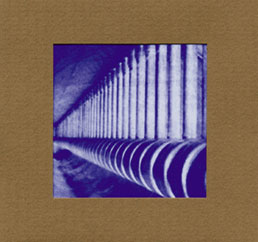
cst005web This album was self-released in 1997, but then the guys at Constellation took it and released it in a beautiful package in 1999.  And Constellation did it right: CD gatefold jacket made from 100lb. textured uncoated cardstock with foil-embossed text and window cut.  Three different two-sided duotone insert cards can be interchanged to show through the front cover window cut. Snazzy!

So this album was recorded in two different locations and it feels a bit more like  compilation of their songs than an album proper.  This doesn’t detract from the music at all, it’s just not as cohesive as their later releases.

“1978” has a raw sound.  It builds slowly, with waves of sorta static getting slowly louder for the first minute. And then the drums kick in. They sound very “live” and crisp. There’s a jazzy pattern accompanied by an unusual bass line.  At 3 minutes a big guitar riff breaks up the droning feeling as it rocks out and then disappears just as quickly.  There’s some saxophone and trippy headphone panning going on, too. This sets in motion a more funky bass line that runs like a lead instrument through the proceedings. There’s some noise bashing around at 8 minutes and a even wah wahed guitar solo at 9.  These occasional disruptions give an interesting melodic sense to this otherwise droney (in a good way) 10-minute song.

“Le’espalace”  feels a little warmer.  It opens with some analog synth trippy sounds and a pretty guitar riff. This is a lovely song that meanders around. The song gets more dense with a synth taking over the guitar line and another synth playing a contrasting melody, too.

“If I Only…”  is 7 minutes long.  It also has a rawer feel.  It’s more staccato with keyboard notes propelling the song forward. There’s a trippy middle section with a nice drum breakdown. It stops at about 5 & a half minutes and resumes with a fuller sound as it rides to the end.  “Highway 420” continues with that more raw sound.  It opens with washes of synths like Tangerine Dream or something.  There’s also a slick guitar line that begins about 3 minutes in.  It’s all rather atmospheric.

Do Make Say Think have always had a bit of jazz at their roots.  That’s evident in “Dr. Hooch” which has jazzy cymbals and slow atmospheric guitars.  About half way through, a wild synth riff comes in and takes over the song for a minute or so before returning to the atmospheric sound.

“Disco & Haze” is a warmer song that slowly builds with a spacey keyboard section.  Around 3 minutes in (of 9) a wah-wah’d guitar takes over—seemingly unrelated.   At 5 and a half minutes the song crashes into a big noisy “chorus,” probably the loudest thing on the record. There’s a noisy skronking sax solo to accompany this as well and it ends with washes of keyboards.   It really sounds like nothing else on the record.

“Onions” is only 90 seconds long.   It’s a simple keyboard riff with echo and little variation.  It’s an odd inclusion but maybe serves as a palette cleanser before the nearly 20 minute final song.  “The Fare to Get There” is warm with spacey keyboard washes and occasional woodwinds–there’s even flute at the end.  It’s 20 minutes long so just sit back and let it unfold over you.  Around 5 minutes in, eerie and spooky drums begin.  Then there’s some reverbed guitar chords and echoed notes which keep the song going.  About three-quarters of the way through, they add a simple guitar riff that continues for several minutes. With a couple of minutes left the song introduces some flutes as it mellows it way to close.

This is a pretty impressive debut.  The band knows the sound they are going for and they definitely achieve it.  Later records are more consistent (and consistently better), but this (especially the opening track) is a great place to start with this band.

[READ: February 7, 2016] Alan’s War

One of the things that First Second hoped for in their ten-year anniversary was that people might read books that they wouldn’t normally.  And boy was this ever one.  The title didn’t sound very appealing to me–I don’t really like war stories all that much.  And frankly I didn’t even know what to expect from the story, really.  Certainly not what I got!

This is the story of a man named Alan Cope.  And the origin of the story is as fascinating as the story itself (almost).  Turns out that Emmanuel Guibert met Alan Cope in the street in France.  Guibert asked the older for directions in June of 1994. Cope was 69, Gilbert was 30. They struck up a conversation.  And soon after, Cope began telling of his experiences in World War II.  What happened to him during and after the war and why this American solider now living in France.

Guibert asked if he could draw the stories that Cope was telling him and Cope said yes.  So this is a story of World War II but it is unlike any story I have ever read.  There is very little in the way of “familiar” WWII stuff in it.  Cope wasn’t in any of the major battles, he never came under heavy fire.  Rather, Cope had a fairly easy war, but he had a ton of stories that were interesting, funny, sometime unbelievable. And the number of famous people he encountered is pretty surprising.

I enjoyed this story so much.  On a side note, My father was in WWII and he also had a fairly easy war, although he was in the Pacific, he was on a small island that saw no action..  I wouldn’t say he enjoyed the war, but he came out with good experience and good friends, which is what Cope did, too.  My fathers stories were far less amazing than Cope’s, but it goes to show that everyone has interesting stories and that no amount of film or history channel commemoration will ever cover everyone’s story. (more…)

Read Full Post »

aareentry SOUNDTRACK: THE BLACK ANGELS-Tiny Desk Concert #132 (June 8, 2011).

I hblakangelsave The Black Angels’ 2013 album Indigo Meadow and I like it a lot.  It has a cool retro psychedelic vibe while still retaining a heaviness that sounds great.

For this Tiny Desk Concert, which is more or less in support of their 2010 album Phosphene Dream, the band strips down to almost a folk band.

There is an acoustic guitar, and hollow-bodied electric which I think is not plugged in (one guitar plays the bass lines and other one plays the solo notes), there’s a harmonium (the second one in a few weeks on the Tiny Desk), there’s a drummer (with basically a floor tom) and the lead singer with a tambourine.

No one is amplified except the singer–whose voice is processed to sound extra trippy (note especially the first lines of the second song, where he sounds like he’s singing from outer space).  His singing is very gentle (especially since they are basically unplugged, which makes the effects seem even more powerful).

The band plays four songs, “Bad Vibrations” which is a great way to start off.  “Haunting At 1300 McKinley” showcases that echoing voice very well.  One of the guitarist sings nice harmony vocals as well.  The harmonium has that vibrato sound that also makes the song seem trippy.

“Entrance Song” has the other guitarist singing harmony (deeper voice compared to the singer’s rather high voice).

For the final song, “Too Much Hate,” the singer plays the guitar (leaving the former guitar player with nothing to do).  The sentiment of the song is excellent, really showing off a hippy vibe.

I really like The Black Angels a lot, and this makes me think I need to check out their earlier stuff too.

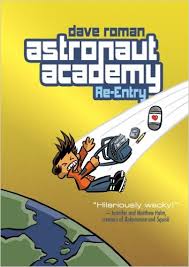
[READ: February 3, 2016] Astronaut Academy: Re-Entry

I enjoyed Book 1 a lot but I enjoyed this sequel so much more.  I’m glad that I put off reading this one until after the first because even though there were no mysterious things that I wouldn’t have gotten, the whole experience is definitely greater if you read these in order.

This book opens with a similar style–brief episodes about each person–and what they have been up to over the summer.  I enjoyed that Hakata Soy has been spending his time on earth (such a novel idea).  But that’s when he gets the devastating news that Princess Boots, the girl he gave his second heart to in the backstory, actually gave it away and is now dating his arch-nemesis Rick Raven.

Scab Wellington was released from prison (which makes Maribelle Mellonbelly happy).  And Thalia Thistle still hasn’t told her dad that she plays Fireball. (more…)

Read Full Post »

aazero SOUNDTRACK: FUTURE ISLANDS-Tiny Desk Concert #128 (May 16, 2011).

futureI don’t really know that much about Future Islands.  I know they were huge in 2014, but this Tiny Desk comes from three years earlier, when perhaps they were less known?

I didn’t really like the single that was very popular in 2014, but I can’t recall how it compares to this show. The band consists of a bassist and a keyboardist/electronic drummer and Sam Herring the lyricist/vocalist/melodramatic front man.

It’s odd seeing him sitting casually on the edge of the desk before he starts singing.  He seems so mellow and then he sings with a crazily arch voice and unexpected dramatic flourishes.

Given his general appearance and some of the faces he was making I kept thinking that Jack Black would do an aces impersonation of him.

The songs are simple musically–simple keyboard lines and, it must be said, some solid bass holding things down.  All the drama comes from the lyrics, like in “On the Water”: “Body of mine, body of Christ, can I be the one who saves your life.”

It’s funny to hear him talk between songs so deadpan and unaffected, before resuming that unusual singing style.

“The Ink Well” has some weird echoing keyboards sounds before the solid bass comes in again.  I have a hard time taking his vocals seriously, it seems so over the top.  Although the blurb says that “What Future Islands is really going for, with the mordant wit in the lyrics, the melodramatic chord progressions and Herring’s yowling, scratchy voice [I wouldn’t describe it like that, actually], is catharsis. And catharsis can happen in your head and in your heart.”    And I do like the line “the ghost of you still haunts me at night and that’s enough to keep me happy, sometimes.”

He says that the second song is hard to song quiet.  Perhaps his singing style would work better if the music was bigger, fuller (matching the size of the amp they brought with them).

“Walking Through That Door” works best of the three songs.  It is a little faster, with a more propulsive bass and it feels louder, so that Herring’s voice seems to work better. And when he wails his lines at the end it seems appropriate.

Still not sure if I’m a fan, but I appreciate them a little more than I did.

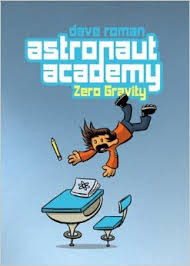
[READ: February 1, 2016] Astronaut Academy: Zero Gravity

Both of the libraries that I go to had copies of the second book in this series, and I waited and waited for the first book to be returned, but it just appears that neither one ever arrived.  So I finally put in a request for book one (I couldn’t read the second first even if this is from First Second).  #10yearsof01

I really didn’t know what this story was about, but I was surprised to discover that it was a series of small incidents (each with an End). Was this a series of single web comics, or is it just a fun way to tell a bigger story?  I’ll never know.  The whole story is set at the astronaut academy.

As the book opens we see a promotional guide to Astronaut Academy from the principal (who carries a big sword and has big spiky hair).  We learn what the school has to offer and we see some of the teachers like Mr Namaguci who has even bigger hair than the principal and “may or may not have magical powers but is still handsome.”  There also Señor Panda (still not extinct) who has a secret.

We also see that the application is for Hakata Soy. (more…)

Read Full Post »

primatesSOUNDTRACK: OTIS TAYLOR-Tiny Desk Concert #120 (April 13, 2011).

otisOtis Taylor is a big, burly, bearded man who plays the banjo. His band consists of fiddle, drums and electric guitar and bass.

The songs are bluesy without being like the blues, and they are folky without really being like folk music.  And the way he plays the banjo is unlike any typical banjo song I’d heard before.

The blurb explains what makes his songs sound so different:  He plays a style of music he calls trance blues.

Taylor’s music is trance-inducing, and he achieves that effect by playing songs that are modal: Sometimes, they sit on one chord for the entire song. Taylor says that by doing that, by eliminating chord changes, you also eliminate reference points, so songs can run as long as 10 or even 15 minutes in length.

And it’s true.  The basic melody of he first song, “Ten Million Slaves” (which is only 4 minutes) stays the same throughout the song.  It’s the fiddle (played by Anne Harris) that throws the new notes and riffs into the song that keep it so interesting,

He does throw in a simple but affecting solo at the end of “Ten Million Slaves” but it’s more fun to watch him rock out the end of the song.  That song also appeared in Public Enemies, the Michael Mann movie.

He calls his music trance blues music, came from Mali and Mississippi Hill Country.

The main riff of “Ran So Hard The Sun Went Down” is instantly familiar and a little dark.  I love the middle jam section where it just seems to gets bigger and bigger (I guess that’s the trance).

For the third song, “Talking About It Blues,” Taylor switches to acoustic guitar.  This is a fairly simple blues song, but I love the guitar riff that punctuates the verses.  The verse is simple enough “my daddy cut down a tree, make a guitar for me.”  This song features a lengthy solo by J.P. Johnson.

The drums (by Larry Thompson “Bryant Gumball of the drummers,”) and bass (by new bassist Todd Edmunds) are really simple but they sound great and really punctuate the song.

It’s a short song that segues into the final song, “Think I Won’t” which has a heavy five note riff to open with.  I love that it takes him forver to end this song.  Saying one more time even though they do more than one more time.

I don’t really like blues songs that much.  But this band is really tight and the addition of the fiddle really makes these songs stand out. Plus after those cool droning blues songs I was hooked.

[READ: December 15, 2015] Primates

I had been planning to post magazine stories this week.  Then I learned that it is First Second’s ten-year anniversary and they are trying to promote it with the cool hashtag #10yearsof01.   Since I’ve read a bunch of First Second books in the last couple of months, I’m going to give them a deserved shout out by posting a few in a row and including that hashtag.

This is a non-fiction graphic novel from First Second and it is outstanding.  In a wonderfully kid-friendly style, it talks about the incredible work done by Jane Goodall, Dian Fossey, and Biruté Galdikas.  And the man behind their success, Leonard Leakey.

The story opens on Jane Goodall.  After visiting a friend in Kenya, she spoke to Dr Leakey (who tells of his childhood growing up in Kenya).  Through their meeting, Leakey gained funding and sent Goodall to Gombe to study chimpanzees in 1957.  She soon discovered them using tools and eating meat.   Her work caused them to, as the book puts it, “redefine tools, redefine Man or accept chimpanzees as human.”

Then she went further and learned so much more about chimpanzees, using techniques that were not exactly scientifically approved (sifting through dung, setting up places for them to eat) but wound up being amazingly effective.

Jane married Hugo, her photographer and then they were visited by Dian Fossey. (more…)

Read Full Post »

resist3SOUNDTRACK: CHARLIE SIEM-Tiny Desk Concert #134 (June 15, 2011).

siemWhen he was 3 years old, Charlie Siem heard violinist Yehudi Menuhin play Beethoven’s Violin Concerto. That was all it took to inspire him to pursue the violin. Siem studied at Eton and the Royal College of Music, and now he plays one of Menuhin’s old violins—a stunning 1735 Guarneri del Gesu.  Upon describing this centuries old instrument he says “it helps me a lot when I’m doing my… little thing.”  He is also greatly amused when NPR’s Stephen Thompson asks if he can borrow it.

Siem recently discovered that he’s related to the 19th-century Norwegian violin virtuoso and composer Ole Bull. So he started off his Tiny Desk show with Bull’s bucolic Cantabile.  His introduction is great.  He says that Bull was a precursor to Paganini, who emigrated to the States and set up a colony on Pennsylvania.  He calls him a “really crazy guy.”  It’s a beautiful piece with occasional really high notes.  This violin seems to have an unreal sound to it, bringing it what sounds like harmonic notes or something.

Paganini’s Introduction and Variations on Paisiello’s “Nel Cor Piu”  (an aria from a now-forgotten Paisiello opera), contains a grab bag full of violin special effects.  This is just incredible.  His fingers move faster than can be believed.  There are trills all up and down the neck, there’s pizzicato plucking with his left hand (how?).  In a section of “harmonics” he even whistles the final note.  It’s amazing to watch.

Leopold Godowsky: Alt Wien (“Old Vienna”) (arr. Heifetz)  This is a lovely piece with lots of high keening notes in an arrangement by the incomparable Jascha Heifetz.

It’s amazing that Siem can be so good and yet somehow I’d never heard of him.  His kind of virtuosity is amazing.  And, as it turns out he’s a total hunk with a deep resonating actor’s voice as the pages of Italian Men’s Vogue magazine.  He’s also the 2011 spokesman for Dunhill, the men’s fashion house.  The write up says that for his Tiny Desk Concert appearance, you could say Siem dressed “casual, but with an understated elegance,” right down to his left-hand pinky, with its pink-painted fingernail.

I definitely need to hear more from him.

[READ: December 8, 2015] Victory

This final book in the trilogy sees the culmination of French Resistance against the Nazis.

We learn in the introduction that it has been four years since the occupation began and although victory seems within sight, things have been getting worse.  There’s hardly any food or resources and the Nazis are growing even more angry and vicious.  On June 6, 1944 the Allies landed in Normandy.  But they had a lot of fighting to do before they could liberate Vichy.

As this book opens we see Paul called into the prison because of his drawings.  He looks older now (a great detail on the drawing) and he finds it much easier to lie to the guards.  After an interrogation, Lucie’s father–the policeman we saw in the previous book who seemed to turn a blind eye to Paul’s activity–accuses him of sneaking around to see Lucie.  Paul catches on quickly that the man is helping him and when they are free together, Paul learns that there are people on his side who he never suspected. (more…)

Read Full Post »

resist2SOUNDTRACK: SIERRA LEONE’S REFUGEE ALL STARS-Tiny Desk Concert #118 (April 6, 2011).

sierraSierra Leone’s Refugee All Stars are famous for their story.  Its members met in refugee camps during Sierra Leone’s civil war and formed a band to spread joy during an otherwise difficult time.  But the band’s music is what has stood the test of time.  Ten years, two albums and an award-winning documentary later, these eight men are still riding that upbeat reggae groove.

The band consists of three drummers (all with hand-held drums) and one percussionist.  There’s 2 guitars (one electric and one acoustic) a bass and everybody sings.  Their music has a reggae feel, although it’s not exactly reggae, I don’t think.

“Jah Come Down” opens the show. The acoustic guitar keeps the melody while the electric guitar plays a riff throughout.  Occasionally the bass comes in with a cool line or two adding a nice low end.

“Living Stone” has a different singer (the percussionist).  His vocals are a bit more mellow, as this song is.  It’s amazing to see the age range of the players.

“Tamagbondorsu (The Rich Mock The Poor)” is the final song.  It opens with a guitar lick that reminded me of Paul Simon’s Graceland until i re-thought and realized that Graceland sounded like this.

The songs are fun and lively, perfect for dancing (as the singer does during the long instrumental outro).  Most reggae sounds the same to me, and these three songs do tend to blend together quite a lot.  But the music is fun and the players’ skill is undeniable.

Here;s to ten more years.

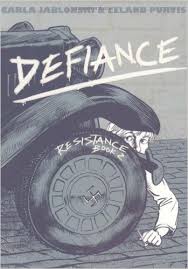
[READ: December 4, 2015] Defiance

This book is set three years into the Nazi occupation of France.  Things are sort of the same but worse for the residents of Vichy.  Neighbors inform on neighbors, and some residents collaborate with the Germans (and are more successful because of it).  And then in 1943, a new French-based Nazi police force called the Milice begin keeping watch over their own people

This aggressiveness causes more resistance, of course. And Paul has been drawing detailed and insulting pictures and posting them all over town (which is making the Milice quite upset).

Of course the kids are taking more aggressive stances now, too.  Some say that the posters are causing more harm because it makes the police mad.  But other kids’ parents have joined the police–some of whom are nice to the kids.  Even Paul’s sister, Marie, believes what her teachers say about Marshall Philippe Pétain (there’s a lesson about Pétain at the end of the book) and his governance.  And no one is going to say anything about the Resistance.   (more…)

Read Full Post »

resistSOUNDTRACK: LUISA MAITA-Tiny Desk Concert #100 (December 26, 2010).

maitaI’ve not heard of Maita.  The NPR write up speaks about the electronic flourishes and deep grooves of her songs.  Felix Contreras worried that their stripped down ensemble (only guitar, bass and fascinating bongos) would have a hard time creating that sound.

And in one way they do.  Except that it’s clear they didn’t even try.  Rather, they play a simple, but engaging kind of mellow Brazilian dance music.  In the first song, “Ai Vem Ele,” the guitar and bass play the same grooves except when they each take some meandering moments.  The percussion keeps a quiet but steady rhythm and Maita sings vocals and accent notes all over the place to keep the song interesting.  I really enjoyed at the end of the song when the bassist played exactly the vamping solo that she was singing.

“Alento” is a much faster song, with quickly sung lyrics.  It allows for rapid guitar playing and more uptempo feel.

They only play two songs (about 8 minutes long), but it really shows the kind of range she is capable of.

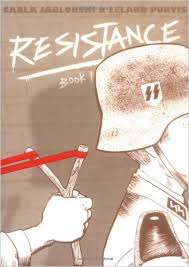
[READ: December 1, 2015] Resistance

This First Second graphic novel is about the Nazi occupation of France.  It’s not exactly light reading and yet Jablonski has taken this incredibly dark story and found an excellent and compelling narrative about one family who works as part of the resistance to fight back against their oppressors.

This is the first book in a trilogy and I am curious to see what the next two books bring as this story was nicely wrapped up but there are so many more stories which could be told.

Jablonski also helpfully sets up the situation in the introduction.  She explains how France was split in two as a result of the armistice agreement.  She gives a very brief but powerful explanation for why they would agree to splitting their country in half.  Paris and the upper portion of France became Occupied while Vichy and the southern part of France were “Free” (but still with a large Nazi presence).

This story is about an average family.  Paul Tessier and his parents and little sister live in the free part of France. Paul is an artist, and I love the way Purvis juxtaposes Paul’s art with what is actually happening (placing Paul’s “drawing” in the middle of the action so we know he is observing everything. (more…)

Read Full Post »

« Newer Posts - Older Posts »