Feeds:
Posts
Comments

Archive for the ‘Drawn & Quarterly’ Category

moomin8SOUNDTRACK: VAN-ANH VANESSA VO-Tiny Desk Concert #329 (January 4, 2014).

voOne of the things I love about the Tiny Desk Concerts is that they expose listeners to artists that we’d never encounter anywhere else.  As a person who loves rock, there’s no way I’d encounter this artist who plays traditional Vietnamese music.  Even though I think she;s amazing, I’d have no exposure to her otherwise.  So this is a wonderful treat–even more so to see her play in such a small space.

Van-Anh Vanessa Vo is a Vietnamese born musician living in America.  Typically the field of Vietnamese traditional music is dominated by men, but she fought to learn and here she demonstrates her skill on three very different instruments.

The first song “Three-Mountain Pass” is played on the Hang.  The Hang is like a steel drum with different sounds at all of the flattened indentations.  There’s also a tone in the middle which resonates nicely.   It is played with the fingers rather than mallets.  It’s a cool instrument to be sure.  For this song she also sings a Vietnamese song that is very breathy.

For the second song, she has taken Erik Satie’s Gnossienne No. 3 and arranged it for dan Bau, the traditional 9th century Vietnamese monocord. The instrument (“invented by beggers on the street”) has a single string, but by bending it with a kind of whammy bar made from a water buffalo horn.  Despite having one string the bar allows her to go 5 steps up and 1 and a n half octaves down.  She plays a backing track of a while playing the main melody line on the dan Bau.  Watching her play this one string and get ting so many interesting sounds out of it is very cool.

“Go Hunting” is an original composition played on the dan T’rung, a bamboo xylophone from Vietnam’s south highlands. This instrument, which looks a bit like a skeleton, is struck with double-headed mallets.  She says on the album she has a taiko drum, but there is no drum here.  But she doesn’t need it as the song begins slowly but grows faster and faster with the crowd offering some extra percussion.  She plays some amazingly fast melodies as the song reaches its climax.

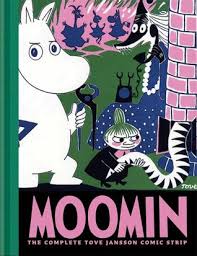
[READ: March 19, 2016] Moomin Volume 8

Moomin Book 8 and every subsequent book is made entirely of strips written and drawn by Lars Jansson.  These stories originally ran in the Evening News, London 1960-1975.

The story is much more reflective of Lars now.  His art is slightly different is subtle ways, but you can see him using his sown style rather than trying to exactly mimic Tove’s.

The chapters are “Moomin Family Robinson,” “Artists in Moominvalley,” “Sniff’s Holiday Camp” and “The Inspector Nephew” (more…)

Read Full Post »

stroppy SOUNDTRACK: LISA HANNIGAN-Tiny Desk Concert #171 (October 29, 2011).

lisahI thought that Lisa Hannigan’s name sounded familiar, but given this Tiny Desk Concert, I’m going to assume I had never heard her before.

Hannigan has a really interesting voice–kind of deep and raspy but with splashes of falsetto.  It’s really pretty.

And she plays a variety of instruments.

For “Knots” it is just her and her large ukulele (and she gets a remarkably full sound out of that tiny 4 stringed instrument).

It’s between songs that you notice her accent as she welcomes John Smith to accompany her.  Lisa switches to guitar as well.  It’s interesting that she plays a similar picking style on the guitar which of course just sounds bigger.  The two guitars play very nicely off of each other.  This song is a bit quieter, with her singing most of it in a whisper that makes you want to lean in to hear more.

Before the third song, “Passenger” Bob asks if she’d like to stay the whole day.  She says yes with all of the lovely tea. Bob says there’s plenty and she jokes “Not for long once I get going.”

John needs to tune his guitar, “it was in tune when I bought it,” and Lisa switches to a mandolin.  The high notes of the mandolin work perfectly with her deeper voice.  She shows off a powerful side with some of the sections of this song and the guitar adds some nice bass notes to the music.  For the middle section, Smith sings low harmonies and they both sing louder than before.  It’s a great transition in this song.  And she hits some lovely high notes as well.

Hannigan came to people’s attention while working with Damien Rice.  Then she put out two solo albums.  But she hasn’t put out anything since (except one-off songs).  That’s a shame, I’d love to hear more.

[READ: July 30, 2015] Stroppy

I don’t know anything about Marc Bell, although his art looks very familiar.  The telltale sign is that every character has white eyes which look a bit like capsules.  This book is put out by Drawn & Quarterly and while I thought his art looked familiar, it could just be a D&Q aesthetic.

This story is pretty bonkers.  Stroppy works for Monsieur Mustache at the remote villager processing plant.  In this plant, small villagers who look a bit like Minons (yellow capsules) have their brains removed an a new brain inserted, turning them into security guards and other roles. But then there’s a visitor.  A large shirtless man comes through the tiny opening clogging up the works.

His name is Sean and he has come to put up posters for The All-Star Schnauzer band Song Contest (meanwhile, the villagers are piling up in Stroppy’s work area.

Monsieur Mustache arrives, fires Stroppy and then, upon hearing about the song contest, he Hires Sean, in hopes of buying him off.  Turns out Monsieur is a pretty evil dude (and his songs are just as bad). (more…)

Read Full Post »

cst053webmoomin7SOUNDTRACK: THE DEAD SCIENCE-“Throne of Blood (The Jump Off) 7” single [CST053] (2008).

This was a tour only 7″ that Constellation picked up before releasing The Dead Science’s Villianaire album.  There are two songs, “Throne of Blood (The Jump Off),” which is the lead song from the Villainaire and “The Duel of Iron Mike” which is unavailable elsewhere.

“Throne of Blood (The Jump Off)” opens with some lovely harp playing before the eccentric vocal styles of The Dead Science take over.  Everything about this song is unexpected–the weird staccato guitars, the crazy falsetto, wavery vocals.  The song seems totally random until you hear all of the intention in it all where it all gels at the chorus. I love the part where the backing vocal comes in and sings “Villainiare Ice Grillianiare” (or whatever the heck it says).

“The Duel Of Iron Mike” (not to be confused with the Wu Tang Clan track which is what you’ll find if you look up the song n YouTube), opens with an interesting riff.  There’s that low bass and that falsetto vocal that you either love or hate.

The chorus is almost catchy–it’s a little too minor key to be catchy but it’s very intriguing because it’s not quite what you expect and after one or two listens, you can’t stop playing it.  The end section with the two layers of falsetto vocals is weird and very cool, too.  The Dead Science are a unique band.  I wish they’d put out more music.

[READ: February 12, 2015] Moomin Volume 7

Moomin Book 7 and every subsequent book is made entirely of strips written and drawn by Lars Jansson.  These stories originally ran in the Evening News, London 1960-1975.

These four stories continue with the themes that Tove wrote about.  And Lars’ drawings look very much like Tove’s as well.  I have noticed a few things that look different–sometimes he does the eyes differently, and certain angles don’t look quite right.  But otherwise, it’s a pretty seamless transition.  Oh I aslo noticed that in this book, he has begun signing his name much bigger in each strip.

The chapters are “Moomin the Colonist” “Moomin and the Scouts” “Moomin and the Farm” “Moomin and the Goldfields”

(more…)

Read Full Post »

aboveSOUNDTRACK: DO MAKE SAY THINK-& Yet & Yet [CST020] (2002).

DmstandyetandyetAfter the previous album, keyboardist Jason McKenzie departed the band.  I’m not entirely sure how this impacted the band, but this album is warmer and a little more delicate feeling.  It’s also their first album that was recorded all in the same place (in band member Justin Small’s house).

The disc opens with static and effects before a jazzy drumbeat comes in.   “Clasic Noodlanding” is mellow with a complex (for them) riff on the guitar and nice washes of keyboards.  It is primarily atmospheric until about two minutes in when it suddenly changes with the introduction of a great bass line.  And then this atmospheric song turns really catchy. The five and a half-minutes feel too short in this song.

“End of Music” opens with jazzy drums and keyboards.  It’s a slow piece that stretches to nearly 7 minutes.  About half way through the song, the drums come crashing in and a brighter, noisier melody takes over.  This end section is really catchy with some great chords and excellent drumming.

“White Light Of” opens with a cool slow bass line and drum pattern.  As the song grows in complexity I like the new bass rumble that is added and the way the guitar lines seem to intertwine. About half way through horns get added to the mix, quietly at first and then they slowly take over the song. About five minutes in the song comes to abrupt halt with some interesting echoed effects on the drums. It resumes again with a stranger version of the song—it feels unsettled and really interesting, with a nice riff interspersed with one that feels off somewhat.

“Chinatown” opens unlike any DMST song.  The bass sounds electronic and skittery with some interesting keyboard sounds over the top (it actually sounds a bit like later period Radiohead).  The song is slow and moody for all of its 5 and half minutes with keyboard washes and skittery guitars.  There are quotes thrown in throughout the song but I can’t tell what they are saying.  This song was features in the film Syriana.

“Reitschule” is one of two songs that are 9 minutes long. It opens with a slow meandering guitar line interspersed with another guitar playing an interesting counterpoint.  A cool bassline comes in around 2:30 which takes the song in a new direction.  Horns propel the song along until about 4 minutes when a jangly guitar takes over the song. It builds with some abrasive guitar chords until everything washes away except the bass.  And then it rebuilds as something else.  Distant horns play in the back as the guitars play overlapping lines.  It’s an epic song that demonstrates how much this band can do.

“Soul and Onward” has a pretty conventional melody line. It’s warm and friendly It also features wordless vocals by Tamara Williamson. I love the little tiny guitar lick that works as a bridge between the two sections.  This is my favorite song on this record.

“Anything for Now” is the other 9 minute song. It is slow and pastoral to start with a beautiful multi-guitar piece with gentle drums. At around 4:30 all the instrument vanish except for a single organ note. It plays for a bout a minute and it seems like the disc will end that way but then the chords build up again from the drone.  An acoustic guitar lick begins around 7 minutes in and runs through the end of the song.

Overall this album is more mellow than their previous discs, and there are some amazingly beautiful sections of music on this album.

[READ: February 8, 2016] Above the Dreamless Dead

I’m continuing with books that I wouldn’t normally read, to celebrate First Second’s #10yearsof01 challenge and to read something out of my comfort range.

This is a collection of poetry about World War I, written before during and just after the war.  Each of the poems is illustrated by a different contemporary artist.

As you can imagine, the book is pretty gloomy.  But the poetry is pretty spectacular and the illustrations were really interesting.  Obviously this book is not going to be a happy one.  But some of the artists do add a more positive spin on the poems (while some are just brutally violent as well). (more…)

Read Full Post »

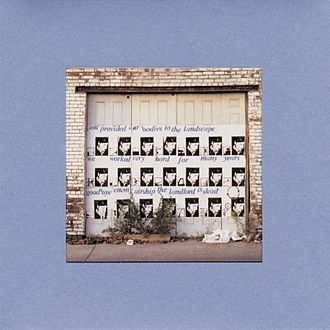
6SOUNDTRACK: DO MAKE SAY THINK-Goodbye Enemy Airship the Landlord Is Dead [CST010] (2000).

330px-DmstgoodbyeenemyAfter their debut album, Do Make Say Think made this second album which sonically fits together perfectly and really explores instrumental post-rock.  Most of the songs were recorded in a barn giving it a very big sound (complete with insects chirping).  While there were horns in the debut, they seem to be punched up a bit more on this record, and they really seem to help the record rock more.

“When Day Chokes the Night” song is 6 minutes long and I love the way the opening is a simple guitar melody slowly picked and strummed for 3 or so minutes. Then at 3:30 there’s a noisy “drum solo” that sets you up for the second half of the song which introduces wailing saxophone and it all really rocks out.

“Minmin” is 8 minutes long.  It opens slower but adds a steadily propulsive bass and drum pattern. Around 5 minutes the drums become martial and a new rhythm and bass pattern enters as the song gets bigger.  The riff is a solid rock riff and there’s some interesting feedback behind it.  It’s some of a classic construct of a slow building song that shifts gears midway through.

“The Landlord is Dead” (at a brief 5 and a half minutes). opens with a similar echoing riff, this one is more catchy than the others. Some horns fill out the background.  The song builds properly to a screaming guitar soloing wild ending.  It’s easily my favorite song on the record.

“The Apartment Song” is slower, with echoing guitars and a more trippy feel.  I love the way the really noisy guitars blast out for 8 notes and then recede again.  It’s the first of two songs under four minutes

“All of This is True” starts out with a noisy drum beat, open chords and a distant horn.   This song slowly builds for about two minutes before pausing entirely and then resuming as something else—more slow horns layering on each other the horns drift away and guitars take over again.  There’s something of a dancey beat on the drums all along.  The song ends with crowd noises and someone shouting “Merry Christmas Everybody” before seguing into “Bruce E Kinesis.”  “Kinesis” opens with a heavy bass line and insistent drum beat before the interesting guitar counterpoint plays over the riff.  For the first time, really, a keyboard riff takes over  It feels slightly sinister.  This song has a kind of claustrophobic feel, but with a kind of funky drum all the way through.  At only 3:40 this song feels compact and efficient, and as something of a lead in to the 12 minute album closer “Goodbye Enemy Airship”

The final takes a while to get where it’s going.  After some introductory drumming there’s plenty of one-note guitar and horns which keep growing louder and more insistent for the first 4 minutes.  It turns into a very bright guitar melody–bouncy and fun.  (This is one of the two songs not recorded in the barn).  It develops a distinctly jazzy feel.   The song gets bigger with some great bass chords alongside the repeating riff on the guitar.  At around 9 minutes the song morphs into the third part of this exploration of similar riffs and textures. This one is a bit trippier. The disc ends with some mildly dissonant keyboard notes as the guitar echoes to halt.

While I do enjoy their debut, this album feel like a giant stride forward in terms of composition and cohesion.

[READ: February 3, 2015] Moomin Volume 6

Moomin Book 6 is composed entirely of strips written and drawn by Lars Jansson.  Lars was 12 years younger than Tove.  He was a writer, translator and gold-miner (!).  He wrote his first novel at fifteen and then proceeded to write 8 more.  Lars translated the earlier strips into English as Tove wrote them in Swedish.  Tove’s contract was to expire in 1959, so he began teaching himself how to draw Moomins (Tove didn’t know).  Tove’s creative fatigue set in and so Lars wrote his first comic in 1956 and by 1960, he was ready to take over.  The newspaper syndicate approved the switch and so these final strips all belong to him.  He created Moomin for fifteen years–twice as long as Tove worked on it.  These stories originally ran in the Evening News, London 1960-1975.

I love that they must have agreed that each strip would open with a big Moomin behind as well.

The chapters are “Moomin’s Lamp” “Moomin and the Railway and “Moominpappa and the Spies” “Moomin and the Circus”

(more…)

Read Full Post »

moomin5  SOUNDTRACK: JAMES VINCENT McMORROW-Tiny Desk Concert #151 (August 25, 2011).

mcmorrowI don’t know McMorrow. He is an Irish singer who plays acoustic guitar.  His singing voice switches between a kind of raspy voice and a keening falsetto.

He plays four songs and his style and voice reminds me a lot of Bon Iver.

I don’t find any of his song especially compelling. They’re all nice–the humming part of “This Old Dark Machine” is pretty memorable.  As the part in the middle where he seems to get pretty intense.

“Sparrow And The Wolf” has some nice chord changes.  I think my favorite song is “Follow You Down To The Red Oak Tree,” which opens a little differently.

I have to say it’s a little awkward watching him up close as he does some pretty unusual things with his face when he sings.

The final song, “Red Dust” really shows off his falsetto.  I found his songs to be entirely pleasant and think they would sound great in a coffeeshop on a Sunday afternoon.

[READ: February 3, 2015] Moomin Volume 5

Moomin Book 5 is composed entirely of strips written by Lars and drawn by Tove.  These are the final strips that she contributed to.  And, as such, there are only three chapters in the book.  As with the others these stories originally ran in the Evening News, London 1953-1959.

The chapters are called “Moomin Winter” “Moomin Under Sail” and “Fuddler’s Courtship”

(more…)

Read Full Post »

moomin3  SOUNDTRACK: THE BLIND BOYS OF ALABAMA-Tiny Desk Concert #139 (July 5, 2011).

bboaI have of course heard of The Blind Boys of Alabama, but they only came on my radar maybe a decade or two ago.  And I never knew these things about them:

  • They formed under a different name in 1939.
  • The band has understandably experienced many lineup changes in the 72 years since.
  • Singer Jimmy Carter is the only participant in this lineup billed as a founding member, and even that term is up for debate.
  • They have released 60-plus albums and received a Grammy Lifetime Achievement Award
  • And that wherein these Blind Boys are young and old, blind and sighted.

There are six players for this Tiny Desk–a guitarist, a bassist and a barely visible drummer as well as three singers.

It makes me laugh that the guy on the far left sings much less than the others and seems to be less happy about being there.

They play four songs and, no surprise, they sound fantastic.  Their harmonies are outstanding and the music is quiet and subtle–a mellow accompaniment for this soulful music.

But their rendition of “Amazing Grace” is indeed amazing–they do it to the tune of “House of the Rising Sun” and it must be heard to be believed.  I happen to really like the original of “Amazing Grace” and I hate when it is done poorly.  But I love this interpretation–it’s original and still moving.

  • “Take The High Road”
  • “I Know A Place”
  • “Jesus Built A Bridge To Heaven”
  • “Amazing Grace”

[READ: January 23, 2015] Moomin Volume 4

Moomin Book 4 changes things pretty dramatically.  Because starting with this book, the stories were written by Tove’s brother Lars!

The colophon explains “[Chapters 14-17 were written by Lars [Jansson] and drawn by Tove.  Chapter 18 was to be run before Chapter 14 and be Tove’s farewell strip but she stayed on to draw 7 more chapters].”

So that means that the first four chapters in this book were written by Tove’s brother but she drew the art.  How fascinating.

This book contains the stories: “Moomin Goes Wild West,” “Snorkmaiden Goes Rococo,” “The Conscientious Moomins,” “Moomin and the Comet,” and “Moomin and the Golden Tail.”  As with the others these stories originally ran in the Evening News, London 1953-1959. (more…)

Read Full Post »

moomin3  SOUNDTRACK: PAUL JACOBS-Tiny Desk Concert #148 (August 12, 2011).

pauljacobsPaul Jacobs is an organist.  In fact he heads the Julliard School’s organ department.  For this Tiny Desk Concert they moved in Jacobs’ massive organ–complete with foot pedals.  I feel like he should have played for an hour for all the work that must have gone into moving this.

I had thought about describing the way the Tiny Desk Concert has changed as I went through the Concerts.  But I have gone out of sequence so often that it’s kind of moot.  Nevertheless, it’s fun to marvel at how in the first few shows, it was one camera, there was little editing and what you got is what you saw.

Well, for this, the 148th Concert, they have three cameras.  And that is perfect because one is on Jacobs’ face.  One is on Jacobs’ hands as he plays these amazing Back pieces.  But the best one is on Jacobs’ feet.  Jacobs play a melody with his hands and a separate melody with his feet.  Watch as he looks like he’s tap dancing all over these massive foot pedals. The mind boggles watching him.

He plays four Bach pieces:

  • J.S. Bach: “Gigue” Fugue
  • J.S. Bach: Arioso
  • Bach/Reger: Invention in F Major
  • J.S. Bach: Fugue in A Minor

The Arioso is recognizable to me as a familiar piece.  It’s low and beautiful with washes of foot pedals.  But even more familiar is the Invention in F minor which most piano students try to play.  This version was arranged by Max Reger who turned the left hand melody into a foot pedal melody–so Jacobs is all over the keyboard on this one.  It’s stunning.

The final piece is somewhat recognizable (well, to me its recognizable as Bach, since his stuff is so elaborate and cool).  This piece is really fun to watch his hands and feet at work.  Especially at the end when he plays an intense “foot solo” before returning to an incredibly fast finger coda.

It’s such a neat instrument and he’s an amazingly talented player.

I prefer to watch on the NPR site, but its easier to embed the YouTube version:

[READ: January 13, 2015] Moomin Volume 3

Moomin Book 3 is slightly different n that it has four stories instead of three.   The stories feel shorter too, although I don’t have the other books handy to compare.

This book contains the stories: “Moomin Falls in Love,” “Moominvalley Turns Jungle,” “Moomin and the Martians,” “Moomin and the Sea,” and “Club Life in Moominvalley.”  As with the others these stories originally ran in the Evening News, London 1953-1959. (more…)

Read Full Post »

milos moo2SOUNDTRACK: MILOŠ-Tiny Desk Concert #138 (June 30, 2011).

Miloš is Miloš Karadaglić, a 28-year-old from Montenegro.  He says he wants to bring classical guitar to a younger audience–to make it cool.

The first piece is a lovely ballad called “Romance” although the author is anonymous.  It is sweetly pretty and everything you might expect from a slow classical guitar piece.  It rings familiar to me, although it’s hard to know if I’ve heard it before or not.

The second piece is where his guitar really comes to life.  Asturias by Isaac Albeniz which Miloš describes as most flamenco and most familiar.  Interestingly, eh says that this was originally written for piano. The introductory riff should indeed be familiar and Miloš plays it passionately.

For the final piece he plays the first movement of a piece by Carlo Domeniconi: “Koyunbaba – moderato.”  This piece has a strange tuning: C sharp minor.  It’s a Turkish song with extraordinary techniques.  He says it reminds him of home–the song is about the sea and the waves by his home.  Whether it’s the tuning or the structure of the song, it is enchanting and exotic and really lovely.

[READ: January 13, 2015] Moomin Volume 2

I enjoyed Moomin volume 1 so much that I was excited to read vol 2.  And it did not disappoint.  This volume was full of the same whimsical, often bizarre stories that were sweet and funny (and a bit cruel, which makes them funny).  It also added some new characters.

This book contains the strips: Moomin’s Winter Follies, Moomin Mamma’s Maid, Moomin Builds a House and Moomin Begins a New Life.  Each one seems to tackle a big idea and pushes it to crazy conclusions.

These stories originally ran in the Evening News, London 1953-1959. (more…)

Read Full Post »

SOUNDTRACK: BALLAKE SISSOKO AND VINCENT SEGAL-Tiny Desk Concert #104 (January 17, 2011).

moomin 1sissokoBack in April 2010, another kora player with the same last name (Yacouba Sissoko) played a Tiny Desk Concert with Regina Carter.  Sissoko plays the kora and he is mesmerizing to watch (and to listen to).  Vincent Segal plays the cello and he does things with that instrument which I’ve never seen anybody do before.  It’s a great duo.

Together, the play some beautiful music.  On the first song, “Chamber Music,” Sissoko provides both the lovely backing music as well as some fast plucking.  And Segal keeps up and often outplays his partner.

For the second song, “Balazando,” Segal plays the cello like an upright bass and even plays a little bass solo (including some harmonics).  Then when Sissoko starts playing Segal, plays such high notes that it sounds almost like a flute and even has a Chinese feel to it.

Before the third song starts watch as Sissoko tunes the kora (by twist ting the ropes that hold the strings in place).  “Niandou” opens with Sissoko playing a fast melody (with an up close camera to really show his fingers).  Then Segal play a lovely riff of high notes on the cello.  The song ends with a very fast section–some quick bass playing on the cello followed by some very fast bowing before returning to the slow opening.

The fourth song features some cool harmonic bowing, the likes of which I’ve never seen on a cello before.  The end of the song sees Segal strumming the bowl like a guitar–he can do it all.

Together, they make some beautiful music.

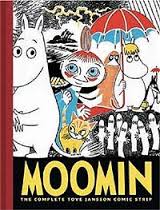
[READ: January 5, 2015] Moomin Volume 1

Inspired by reading the D&Q 25th anniversary book, I decided to check out the books that have been sitting in the children’s section of my library every time I go–Moomin!  They are oversized and lovely books and since I’ve paused on Peanuts I thought I’d read some Moomin–which I have never read before.

It was fascinating to read in the D&Q 25th Anniversary book that Moomin started because Jansson tried to draw the ugliest creature she could think of.  And it eventually morphed into the adorable round creature that we know as Moomin.

This book contains four stories.  I feel like the strips are printed like an every day four panel strip.  Each four panel strip is signed and numbered (but not dated) and most of them (but not all) read like they have a punchline at the end.  So I’m not entirely sure what to make of the publishing run.  Although the front pages state that it originally ran in the Evening News, London 1953-1959.

The four stories are Moomin and the Brigands, Moomin and Family Life, Mooim on the Rivera and Moomin’s Desert Island. (more…)

Read Full Post »

« Newer Posts - Older Posts »