Feeds:
Posts
Comments

Archive for the ‘Futility’ Category

SOUNDTRACK: NADA SURF-Live at KEXP January 30, 2008 (2008).

Nada Surf is criminally underrated and shamefully treated as a one-hit wonder for a song that sounds nothing like the rest of their work.

This four song set at KEXP features four acoustic renditions of songs from their wonderful  album Lucky.  The songs are stripped down, but the harmonies are all there.  The only song that really suffers in this format is “See These Bones,” which is a little less spirited than the recorded version (although the harmonies stand out even better).

They are also funny guys and very personable, as the interview shows.  This set is definitely worth downloading.  You can get it here.

[READ: October 6, 2012] Timequake

Timequake is Kurt Vonnegut’s last novel.  It is very much unlike any of his other novels because it is actually more of a fictional memoir than a novel.

There are two main characters in the book–Vonnegut himself and Kilgore Trout.  Vonnegut talks about his life a lot–and if you know anything about Vonnegut’s life, you know that the details in the novel are accurate.  At the same time, he talks about Trout’s life, specifically the end of his life and how he went from being a destitute bum to a celebrated and oft-quoted author.

And then there’s the matter of the timequake.  In 2001, there was the first timequake.  The world stopped expanding and moving forward and instead flashed back to 1991, where everyone picked up exactly where they were on that date in 1991, and relived every detail of their lives in exactly the same way.  Only this time they knew what was going to happen.  So every person lived on autopilot through every day for the next ten years–all the good and all the band (like the man who spent several years in prison and had to relive those years all over again).  Even the dead were resurrected and relived their days.

It’s an interesting concept and yet in the end it’s really not that interesting of a topic.  In the Prologue, Vonnegut says that he had originally written Timequake (which version he calls Timequake One) with that very premise, and that Vonnegut himself made a cameo. And yet I can see that it wouldn’t really have worked as a very good novel–unless he made up ideas for what happened to everyone and we the readers lived them for the first time– or something.

But so he bailed on that novel, but he certainly left parts of it intact for this one.  And rather than a cameo, Vonnegut features largely in this one. (more…)

Read Full Post »

SOUNDTRACK:  PUBLIC ENEMY-Live at All Tomorrow’s Parties, Convention Hall, October 2, 2011 (2011).

NPR was cool enough to record and provide as a download most of the shows at the All Tomorrow’s Parties festival in Asbury Park, NJ.  (Portishead wouldn’t allow their show to be recorded, sadly).  But Public Enemy was a welcome surprise!
This tour is in celebration of the anniversary of Fear of a Black Planet.  And they play most of Fear and a lot of other things too (with almost nothing from their 2000 era CDs.

I can remember back in the early days of rap that it was hard to imagine what a rap show would be like live since they didn’t play instruments and much of the music was sampled.  Well, PE has musicians on stage and they have DJ Lord filling in for Terminator X behind the turntables (big shoes to fill, but done largely well–especially his fun “solo” in which he samples The White Stripes and Nirvana–although he should have mixed in Portishead, no?).  And mostly they have the personalities of Chuck D and Flavor Flav.

I suspect that this show would be a bit more fun to watch than it is to listen to–Flavor Flav’s antics don’t always translate well without his visuals.    Like when he asks the audience if that can all say “Ho” (which he eventually holds for 33 seconds!), it seems like a delay tactic in audio, but is probably fun to witness.

What’s especially cool about the show is that PE play so many songs, including small snippets of songs as segues to other ones (like the seventy second version of “Anti-Nigger Machine” that intros “Burn Hollywood Burn” which is practically hardcore) or the minute and a half of “He Got Game” that follows “Night of the Living Baseheads.”  I like that they even threw in some skits from the record like “Meet the G That Killed Me” and “Incident at 66.6FM.”

But of course the real joy is the full length songs, “Brothers Gonna Work It Out,” “911 is a Joke,” and of course “Bring the Noise” and “Fight the Power.”

Some of the improv sections don’t work all that well, the guitar solo in “Power to the People” leaves something to be desired (Khari Wynn maybe a legend, but he;s no Vernon Reid),  although the  “Jungle Boogie” riff is cool.   But the improv with guest drummer Denis Davis was pretty bad ass.  Flavor Flav hopped on the drums and was quite good for “Timebomb.”  We also got to meet Flav’s daughter Jasmine.  And Professor Griff was there too.

It’s also interesting that they keep saying they have no time left in the set (Portishead is next) but they play for at least 30 minutes after this.  Including a wonderful “By the Time I Get to Arizona and the set ending “Fight the Power.”

Chuck D has still got it and Flav is just as crazy and fun as ever (even if his screams and yos seems out of tune from time to time).  Of course, Flav has to get the last word in by raging  on for six and a half minutes  at the end (and about six-minutes in the beginning as well where he gave himself props about his reality show.

It’s a really good set–a little distorted from time to time, but really solid.  Here’s a link to the downloadable show.

[READ: October 2, 2012] Hocus Pocus

This book may have put me over the edge in terms of Vonnegut exhaustion.  I bought this book some time in 1992, but I never read it. It’s been in my house for twenty years and it was about time I read it.

But as I’ve been noticing, each Vonnegut book has been getting darker and more misanthropic.  And this one is no exception.  The construction of the book follows Vonnegut’s cut and paste style but it feels even more shuffled and indirect than usual (more on that later).  In many of Vonnegut’s books, the “climax” occurs somewhere in the middle and he fills in the details later.  For this one, the climax came around h.and I wouldn’t have felt like I missed anything.

In this book, the main character, Eugene Debs Hartke  is a Vietnam vet (usually his protagonists are military men, and Vonnegut has criticized Vietnam a lot, but this is the first time he’s had a Vietnam vet as protagonist).  He married his wife and had a wonderful family until he learned that his mother in law had a disease that made her crazy–but it only kicked in later in life, after he married her daughter.  And that his wife has the same disease–so by the middle of the story both of the women in his life are crazy “hags.”  And, like in his other stories, his children hate him. (more…)

Read Full Post »

SOUNDTRACK: JAPANDROIDS-Live on KEXP, June 16, 2009 (2009).

Back in 2009,  one of the guys from Japandroids had surgery and they had to cancel some dates.  That’s only relevant to this because when this set is over, the guitarist is bleeding from his scar.

Japandroids are two guys and they make a lot of noise.  I can recall jamming on guitar with my friend on drums and even when we were totally in synch, we never sounded this good.  It really sounds like there are four or five people playing.  This set has three songs from their debut album and an amazing cover of Big Black’s “Racer X.”

The three  songs are very good and the guys pay hard and fast and, as I said, they sound amazing.  It’s a great set.  You can hear the whole thing here.  There’s also video of the performance.  It’s broken  into two parts.  This is part two, with the blistering cover of “Racer X.”

[READ: September 17, 2012] Bluebeard

I’ve mentioned this book a few times in the last couple of days as something that I’d been struggling with.  And, indeed, I found it to be a little slow going.  I was excited to start reading it because, as the subtitle says, this is an autobiography of Rabo Karabekian, an artist who appeared in Breakfast of Champions–I love that Vonnegut keeps working within his own universe.  But there was something about the early pages of the story that were just not that compelling.

Rabo is having a hard time getting his book going, and while that is a dramatic effect, I had a hard time getting into the book too.  It’s not that complicated of a story.  There are really only about a half dozen characters in the book:

Rabo–he is an American Abstract Expressionist painter (contemporary of Jackson Pollack, Jasper Johns, et al).
Circe Berman–she is an author who writes under the pseudonym Polly Madison (ha).  Madison’s books look at the real life of American young people and are staggeringly popular.
Paul Slazinger–Rabo’s next door neighbor who spends most of his time in Rabo’s house, although he and Rabo mostly ignore each other.  Slazinger is a writer with a decades long writer’s block.
Dan Gregory–a famous artist for whom Rabo apprenticed.  Gregory was such a good detailist that he once created a perfect forgery of a bill (on a dare).  Gregory was also a terrible racist and philanderer and treated Rabo with contempt at best.
Marilee Kemp–Gregory’s mistress and sometime muse.  She inadvertently sends Rabo an encouraging letter on behalf of Gregory and then she and Rabo begin a writing relationship which blossoms when they eventually meet. (more…)

Read Full Post »

SOUNDTRACK: …AND YOU WILL KNOW US BY THE TRAIL OF DEAD-Live on KEXP, March 12, 2009 (2009).

Back in 2009, …And You Will Know Us by the Trail of Dead had been hit by a truck.  Really.  Evidently no one was hurt too bad, but they did have to cancel a show in Salt Lake City. 

Nevertheless, they managed to get to KEXP to play a four song set from their latest album The Century of Self.  The opener “The Giant’s Causeway” is full of bombast and noise  and has a surprisingly catchy melody in the middle.  It merges into “The Far Pavillion” (just like on the album) which sounds like pretty typical Trail of Dead–rocking and yet melodic, with some good screaming parts.

“Luna Park” is something of a surprise to me as it’s a piano-based ballad (which I suppose Trail of Dead plays, but which I don’t associate with them).   “Bells of Creation” also opens with a piano, but it quickly grows very loud.  It’s a cool song with lots of depth.

I had actually stopped listening to Trail of Dead after Worlds Apart (and album I liked, but I guess the band fell off my radar) so it’s nice to hear they’ve still got it.  At least as of three years ago.

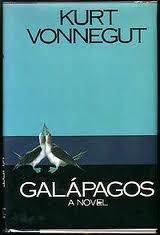
[READ: September 17, 2012] Galápagos

Each of these 1980’s era Vonnegut books gets darker than the last.  In this one the entire human race is wiped out (except for a few people who spawn what eventually becomes of the human race in a million years).  For indeed, this book is set one million years in the future and it is written by a person who was there, one million years in the past when the human race destroyed itself.  It’s not till very late in the book that we learn who the narrator is and, hilariously, what his relationship is to the Vonnegut canon.

In typically Vonnegut fashion, the story is told in that spiral style in which he tells you a bit of something and then circles back to it again later and comes back again later until finally 200 or so pages into the book you get all the details of what is happening.  Interspersed with the respawning f the human race (and flippers) is the story of the Adam and Eve and Eve and Eve and Eve and Eve who created the human race–how they got to be together, what their lives were like before and what contribution they made to humanity, such as it is now.

In another bizarre and fascinating twist, every character who is going to die in the near future gets a star next to his name so that the reader knows that that person is going to die.  We get a lot of things like ★Andrew MacIntosh for many pages until the character finally dies.  And pretty much everybody does die.  Well, obviously if it is set a million years in the future, but aside from that part, only a few of the characters survive.

So here’s how these few people managed to create a new human race in the Galápagos Islands.   (more…)

Read Full Post »

SOUNDTRACK: SIX ORGANS OF ADMITTANCE-“Even If You Knew” (2012).

Lars from NPR’s All Things Considered picked this as his summer music preview song.  I don’t know a thing about Six Organs of Admittance, but their discussion of this song makes it seem like this is atypical for the band (which has a massive output).  Evidently they’re usually more droney sounding. But man, this song is pummeling and wonderful.

It’s seven minutes long and opens with a simple, plodding heavy bass riff.  The vocals are kind of whispered and strained.  But then comes the guitar solo–a raging piece of distortion that complements the bass.  And that’s just the first three minutes.

The second half of the song features a quieter section–the bass is quieter, while the guitar noodles around and the vocals play over the rhythm.  The song slowly builds again, and by the last minute or so there’s another fierce guitar solo. Until the song is exhausted by the final distorted notes.

This is some beautiful noise.  And, no I have no idea what the band’s name means.

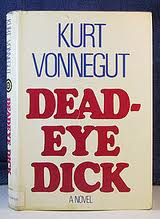
[READ: June 27, 2012] Deadeye Dick

Deadeye Dick is the last Vonnegut book that I was completely unfamiliar with.  I had no idea what it would be about.  So I didn’t realize until very late in the book, and then I looked online and confirmed that this book is set in the same location as Breakfast of Champions, Midland City, Ohio.  Indeed, some of the same characters appear in this book as appeared in that book.  But more about that later.

Vonnegut is not known for his happy books.  Misanthropy is pretty rampant in his pages.  But this book is one of his bleakest books yet.  The story concerns the Waltz family–Rudy (the protagonist) and his brother Felix are the only children of Otto and Emma Waltz.  Pretty early in the story we learn that Rudy is a double murderer.  Yipes!

As with most Vonnegut stories, this one is told in a convoluted and non-linear fashion.  He foreshadows (and really just casually mentions) a lot of crazy things that are going to happen in the book.  Like the fact that Midland City is going to be devastated by a neutron bomb.  In fact, his preface (like with many of his prefaces) tells us a lot about what’s in the book and who the characters are based on and the fact that there is a neutron bomb (but the reality of a neutron bomb is different from what he says).  There is something about knowing this information ahead of time that impacts the way you read the story.  Whether you think maybe he’s not telling the truth about what will happen (can the narrator really be a double murderer?) or maybe somehow the foreshadowing makes it even worse when it actually happens–the revelations are perhaps more deliberate.  But the style–a recursive style in which he says what happens and then he goes back and fills in the details, makes the events that much more powerful.

The funny thing about this story is that a lot happens to the characters in the beginning of the story and then not too much happens to them after that.  But that early stuff is pretty exciting and it has an impact all the way through. (more…)

Read Full Post »

SOUNDTRACK: ADELE-Tiny Desk Concert #112 (February 17, 2011).

Adele is one of the few pop superstars who I not only like but who I like quite a lot.  21 is a really great album.  And what this Tiny Desk Concert proves is that, whatever she is marketed as, she is not just a pop singer.

Adele sings three songs here (and she has a cold or something).  She does the biggie, “Someone Like You” which sounds even more naked and unprotected in this version, because the piano is mixed quite low.  Next is “Chasing Pavements,” a song I knew from when it was first released two years ago.  It’s got a straightforward adult alternative vibe and sounds great here.

The final track is “Rolling in the Deep” which is one of my favorite songs lately, even if I don’t quite understand what the lyrics mean.  But this is where you know that Adele’s voice is amazing.  She belts this song out like she’s in a massive concert hall, not a tiny office.  And she sounds incredible.  It’s a wonderful version of the song.

The funniest thing about this Tiny Desk Concert is hearing Adele talk.  I don’t know a thing about her.  And I had no idea that her speaking voice was so heavily accented. She sounds like some crazy teen from a British sitcom.  Especially when she cackles.  To hear her prattling on about something and then shift in a second to that amazing singing voice is a moment of mystery to behold.

Check it out here.

[READ: January 13, 2012] “A Brief Encounter with the Enemy”

Saïd Sayrafiezadeh has written some very cool stories (and some cool pieces for Five Dials).  But I have to admit I was a little concerned when I saw that this was going to be a military story.

Lately I’ve been reading outside of my comfort zone quite a bit.  And this is another one.  I just don’t like military stories.  I’m not a war guy, I don’t really like guns, and in my limited experience, military stories are about little more than degradation, death and violence, glorious violence.

But as I said, I’ve enjoyed Sayrafiezadeh’s varied stories quite a lot, so I wondered what his take on the issue would be.  And I was pleasantly surprised by the story.  Even though, really, the story (the bulk of it anyway) is kind of a downer.  (more…)

Read Full Post »

SOUNDTRACK: TOM WAITS-Small Change (1976).

Half-naked woman on the cover and all (Wikipedia say that this might be Elvira, before she was “Elvira”), this is what people thing of when they think Tom Waits: That gravelly voice is in full form here, with poetic rants and bluesy, drunken musings.

The opening track, “Tom Traubert’s Blues (Four sheets to the wind in Copenhagen)” (I love that many of these titles have parenthetical additions) features the repeated chorus from “waltzing Matilda” which is kind of cheating, but which certainly makes this song potent and memorable.  “Step Right Up” is a skit and scat sales pitch for a miracle product.  It’s a wonderful piece of snark aimed at hucksters (this actually makes sense given that nearly 40 years later he still hates advertising (according to this interview on NPR)).

“Jitterbug Boy” is a mournful piano ballad.  It makes me think of William Kennedy’s Ironweed (of course, Waits was in the film of Ironweed, so maybe that’s got something to do with it).  “I Wish I was in New Orleans (In the Ninth Ward)” has a very Louis Armstrong feel to it (I never noticed how close this early style is to Armstrong until I started playing “What a Wonderful World” for my kids (no Tom for them yet). And of course, the Ninth Ward was really devastated by Hurricane Katrina, so maybe they should have used this as their anthem.

“The Piano’s Been Drinking” is forever etched in my mind from Mystery Science Theater 3000–Tom Servo does a wonderful Tom Waits impersonation.  Incidentally, Waits himself had been drinking, quite heavily at the time.  The track “Pasties and G String” is a scat-fueled description of the lady on the cover, more or less.  It’s accompanied by simply drums and a cymbal and is not too dissimilar from “Step Right Up.”  “Bad Liver and a Broken Heart” begins and ends with the melody of “As Time Goes By” and ends with a confession to drinking too much.

A song like “The One That Got Away” is Waits rambling around with his poetry in his gravelly, slurry followed by a sultry saxophone.  It sets a mood faster than anything I know.  Of course, if you don’t want that mood, you won’t want this album.

Of his first four albums, this one is my favorite (just ahead of Closing Time).  I’m not a huge fan of his early work, and I don’t listen to it all that often, but it’s a perfect treat when the mood strikes.  Waits also was beginning to get into something of a rut.  Despite his varied styles per album, all of the albums were beginning to blend a little.   There are still some great songs coming, but it would take until Swordfishtrombones before he went really far afield from this comfort zone.

[READ: September 21 2011] “Dog Run Moon”

This is one of those stories that seems so pointless that you can’t stop reading.  The good thing is that it was so well-written and engaging that its pointlessness is part of its charm.

As the story opens, Sid is running stark naked through a desert landscape–his feet are bleeding, he is covered in the red dust from the ground and there is a white Spaniel running alongside him.

Essentially, the entire story is that Sid has stolen this dog from Montana Bob and his friend Charlie Chaplin.  They caught him and he ran away with the dog through the desert.  As I say, it’s kind of pointless because he’s running naked and barefoot and they are chasing him on ATVs–he’s obviously not going to escape.  But what makes the story worth reading is the way the plot is irrelevant (except that it tells you a lot about Sid), because it’s really the impetus for his actions that comprises the story. (more…)

Read Full Post »

SOUNDTRACK: ANGST-“The Weather’s Fine” (1988).

I recently rediscovered the band Angst.  They were part of the second wave of SST bands (the ones who never went anywhere and were summarily dropped with no forwarding address).  I know of Angst from their song on The Blasting Concept Volume II (which I love).  I decided to investigate Angst a little further and my good friends at YouTube came through with a number of Angst tracks that I’d never heard.

Like this one.

Angst is a kind of jangly pop band.  This song in particular would not be out of place on the radio in 1992 or indeed now.  It has an early R.E.M. feel, but I think what makes it stand out somewhat is that the chorus feels kind of short–you kind of expect Peter Buck to sing a second part of the chorus, but that never materializes.

Angst is a band that could have been huge (SST was not much for marketing).  And as far as I can tell all of their discs are utterly out of print.  Pity.  This is some good stuff.

Tap your feet along!

[READ: March 22, 2011] The Meowmorphosis

I received this book as an Advance Reader’s Copy.  I absolutely loved Pride & Prejudice & Zombies.  I didn’t read Quirk Classics’ other mash-ups: Sense & Sensibility & Sea Monsters or Android Karenina (although I love the title of that one).  Nor did I read any of the other mash-ups that Quirk Press did not print.  It became rather passe after one great idea.

But this one seemed different somehow….  In part, Kafka.  But also, it’s not a classic novel plus horror.  It’s more horror plus…cats.  And the opening line is wonderful:

One morning, as Gregor Samsa was waking up from anxious dreams, he discovered that he had been changed into an adorable kitten.

Anyone who has read The Metamorphosis knows that it’s about 85 pages long.  So, how did Coleridge Cook (which is a pseudonym, FYI) get 200 pages out of it?  Well, it’s not simply The Metamorphosis.  It incorporates aspects of  The Trial and the short story “Little Woman” (and quite possible some other things as well).

And in that respect, it’s pretty neat.  He takes these three separate Kafka stories and interweaves them, all keeping with the same basic structure of The Metamorphosis with Gregor as a cat.

And so, as in the original, Gregor is abused by his family.  But unlike the original, he eventually escapes outside where he meets Josef K. and is put on trial.  He is eventually let go and returns home where he imagines the tearful return he will have with his sister.

But here’s the problem.  Unlike P&P&Z which made a whole new plot and added so much excitement to the original story, all that this mash-up does is to change him from a cockroach into a kitten.  So really, the story is exactly the same but instead of scenes with creepy, gross cockroach detail, we get scenes with cute and cuddly kitten details.  And as such, it’s hard to understand exactly why the family is so creeped out by him. (more…)

Read Full Post »

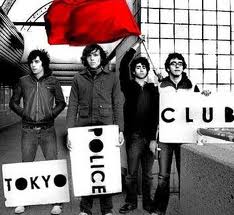
SOUNDTRACK: TOKYO POLICE CLUB-“Bambi” (2010).

I loved the first couple of Tokyo Police Club albums, but I missed this one when it came out.  My friend Al said it was one of his favorite albums of the year and that this song was one of his favorite songs.

I was disconcerted when I started listening to this because TPC is all about short, heavy, punk blasts of music.  And this song starts with…keyboards.

But it’s clear that this is still TPC, just with new bits and pieces added.  The keyboards are strangely out of pitch–they sound off somehow–and they add these bizarre little accents to this super catchy song.  The aggressive punk guitars are gone, but the attitude remains and this is a fantastic tune. One that I’ll listen to a lot more.

[READ: December 8, 2010] “Emptying the Skies”

I didn’t think it would happen, but I reached my Franzen saturation point with this article.  This is his third article about the disappearance of birds.  Originally, these articles came several years apart, so they wouldn’t seem so overwhelming.  But reading them all within a few days of each other, I’ve about had it with the doom and gloom.

These articles are devoid of Franzen’s usually charm and wit.  Obviously, a story about the disappearance of the earth’s birds should not have charm and wit, so he did his job well.  But man, I’m overwhelmed by the devastation of Europe’s migration paths.

The essay looks at three Mediterranean countries and their (reprehensible) attitudes towards birds: Cyprus, Malta and Italy. (more…)

Read Full Post »

SOUNDTRACK:BELLE AND SEBASTIAN-Live in Glasgow, TODAY! December 21 at 4PM eastern: NPR simulcast (2010).

It’s very rare that I have news before it happens, especially on this blog. But I do. Today at 4PM Eastern time, NPR is simulcasting Belle and Sebastian’s live show from Glasgow.

I don’t know if it will be downloadable (I do know that I am at work…boo!).  But I have to assume it will be pretty great.

Get details here.

[READ: December 6, 2010] “The Way of the Puffin”

After a few years away from lengthy New Yorker articles, Franzen returns with this 13 page (!) article about China.  The last article that we saw from Franzen was about his birding passion.  That passion has not subsided at all, and his co-passion of environmentalism is what sends him across the globe to the Yangtze Delta.

Franzen receives a Puffin-shaped golf club head cover, which he finds quite adorable.  But when he sees that it’s made in China, he wonders about the environmental impact of this adorable item.  He calls the company that makes the puffins (Daphne’s Headcovers), and is told that they use environmentally conscientious Chinese labor.  She also tells a (heartwarming) story about karma and how a good deed will get repaid manifold.  She tells Franzen about the workers in China and invites him to go check them out.  This leads to Franzen’s most “reporter”-like piece, and probably his least personal.

At first I wasn’t that interested in the piece.  I feared it was going to be a long slog through environmental degradation and depression.  And while it was that, Franzen also humanizes the story through the efforts of that rarest of birds: the Chinese environmentalist. (more…)

Read Full Post »

« Newer Posts - Older Posts »