Feeds:
Posts
Comments

Archive for the ‘Funny (strange)’ Category

SOUNDTRACK: LOS CAMPESINOS! Live in studio at KEXP, July 31, 2008 (2008).

For this brief in-studio performance Los Campesinos! play four songs from their debut album Hold on Now, Youngster.  The band sounds great in this setting.  I don’t have this album, so I don’t know if they deviate at all from the originals, but the live versions are tight and very effective.

The interviews are informative and rather gushing (I’ve never heard a DJ kiss the ass of a performer in such a nice way before–and the band seems really flattered by it–it’s all very sweet).  There’s also some fun comments about their screaming tendencies.

What I didn’t notice so much on Romance is Boring was how many different lead singers the band has.  With these four songs, there are enough lead vocalists to show a lot of diversity (and a lot of screaming, too–“don’t read Jane Eyre!”).  And, as one might expect from the later disc, their earlier lyrics are smart, funny and wicked, too.

The difference between Romance and Hold On, seems to be that the band were much punkier on the early disc, and that all comes out in these live tracks.  And the songs are all short: 3 minutes and under.  They really pack a lot in here.

[READ: January 6, 2011] The Facts of Winter

This book is, apparently, an elaborate joke.  It is set up as a book written by French author Paul Poissel.  But unlike the other things that Poissel wrote (his most famous and lasting works were written after this book), this is a collection of dreams.  Specifically, it’s a collection of dreams from random unnamed people in France, circa 1841.

The book is laid out with the original French story on the left page and the translation on the facing page.  I don’t know French, but my minimal French comprehension leads me to think that the translations are accurate.

So, each entry (most about a half a page, some stretch to two pages) is a recounted dream. I didn’t count how many dreams there were, but there’s more or less one a day from January to March.  None of them are outlandishly crazy or dirty or anything like that, but they are amusing to read.  There is a preponderance of canoes in the dreams.

After the dreams we get a lengthy Afterword (which all told, may be longer than all of the dreams combined).  The Afterword details La Farge’s work while translating and learning more about Poissel.  It is rather funny and goes into all kinds of personal details about La Farge and his ex-girlfriend as well as the friend he met in the city of Aix who takes him to all kinds of old ruins. (more…)

Read Full Post »

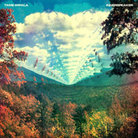
SOUNDTRACK: TAME IMPALA-“Lucidity” (2010).

I heard this song on the NPR’s 5 Artists You Should Have Known in 2010.  The album, Innerspace, is only available in Australia (imported on Amazon for big bucks) but I guess that’s why people download music.

This song is really cool. It feels very My Bloody Valentine to me.  However, inevitable comparisons to The Beatles abound, but that’s mostly in the vocals (which is kind of funny since they are Australian).  But it’s really a very sixties British vocal sound–not unlike early Who).

The big difference comes in the music which is psychedelic and wild in ways that The Beatles never quite managed.  There are great big washes of noise, and the sound quality sounds retro, even though it obviously isn’t.  Comparisons to the great Swedish band Dungen are not misplaced either.

I’ve listened to a few more tracks by them on YouTube, and I think this album could easily be one of the best of 2010 if only more people could hear it!

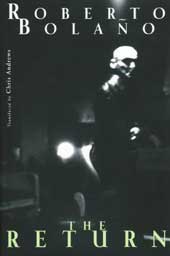
[READ: January 3, 2010] The Return

With the completion of this collection of short stories, I have now caught up with all of the published works of Roberto Bolaño (in English of course).  [The next book, Between Parentheses, a collection of nonfiction, is slated for June].

So The Return contains the 13 short stories that were not published in Last Evenings on Earth.  That collection inexplicably took shorts stories from his two Spanish collections Llamadas telefónicas (1997) and Putas asesinas (2001) and combined them into one collection in English.  It wasn’t quite as evident in Last Evenings, but it seems more obvious here that the stories in Putas asesinas are grouped together for a stylistic reason.  So, to have them split up is a bit of a bummer.  And yet, having them all translated is really the important thing.  And, again, Chris Andrews does an amazing job in the translation

This collection of stories was very strong.  I had read a few pieces in Harper’s and the New Yorker, but the majority were new to me.  Bolaño is an excellent short story writer.  Even if his stories don’t go anywhere (like his novels that never quite reach their destination), it’s his writing that is compelling and absorbing.

This collection also had some different subject matter for Bolaño (it wasn’t all poets on searches). (more…)

Read Full Post »

SOUNDTRACK: BUKE AND GASS-“Page Break” (2010).

NPR has selected the 50 best CDs of 2010.  I knew a few of them but had never heard of a bunch of other ones (about 20% are classical).  This CD with the bizarre cover has a great write up:

The wannabe tech-geek in me was initially attracted to Buke and Gass for the band’s two handmade instruments, which modify a baritone-ukulele and a guitar/bass hybrid run through heavy-duty amps (also handmade, mind you).

The problem (and perhaps its because I’m listening at Xmas time) is that the main melody line of the bridge makes me want to sing “Hark, Hear the Bells” and so this feels like a Christmas song even though it’s not.

Whoops– check that.  That melody is certainly there, but I just learned that I was listening to it in mono.  The other speaker presents all kinds of interesting things that distract from that melody (and project much more coolness).

I like the intensity of the track (and the fact that it’s under 2 minutes long).  It’s pretty heavy and the female vocals are nicely aggressive.  And by the end of the song, the syncopation is downright awesome.

It’s amazing how listening to the ENTIRE song can really change your mind.  This is definitely a cool track and will make me investigate the band more.

[READ: December 22, 2010] “One Night of Love”

I had recently gotten interested in reading Javier Marías when I was looking for information about Roberto Bolaño.  I discovered that New Directions Press, the publisher of all of Bolaño’s smaller books also published translations of all of Marías’ books too.  This story comes from his new collection of short stories While the Women Are Sleeping.  (I had also forgotten that McSweeney’s published his book Voyage on the Horizon a few years ago).

I didn’t know where Marías was from when I first started this (I assumed he was Mexican because of the New Directions connection–he’s actually from Spain).  Anyhow, when I thought he was from Mexico, I wondered if there was some kind of connection between his style and Bolaño’s, but also if he was trying to reintroduce magical realism to Bolaño (who abhorred magical realism).

Well that’s moot, (he may be doing that but not because he is from Mexico).

So this story concerns a man who is dissatisfied with his wife’s sexual appetite and performance.  He has taken to visiting prostitutes (see why the Bolaño thing rang true?), but he is concerned because the prostitutes  have grown “increasingly nervous and increasingly expensive” ([Nervous]?). (more…)

Read Full Post »

SOUNDTRACKPHISH-LivePhish 10.21.95 Lincoln, Nebraska (2007).

This Phish show is pretty unusual, even for a band whose live sets are by definition unusual.  It opens with a reprise (“Tweezer Reprise”) which is basically the end of a song.  There’s also a song that is not itself unusual but it’s one that I’ve never heard before:  an all acoustic guitar song called “Acoustic Army.”

But aside from those minor oddities, it also features the craziness of “Kung” which is more or less just nonsensical screaming.  Then Set One ends with a great cover of “Good Times Bad Times.”

Set Two is where the madness comes full bore.  After some great versions of “David Bowie” and Lifeboy” we get a 24 minute version of “You Enjoy Myself.”  After about twenty minutes the song devolves into a vocal extravaganza, with each of the four guys trying to outdo themselves with weird noises and vocals sound effects for 5 minutes.  And just when you think the nonsense is over, the band covers Prince’s “Purple Rain.”  Fish, the drummer, sings the song (rather poorly, it must be said), but the “highlight” is his vacuum cleaner solo.  Yes, vacuum cleaner solo.

I have included a video from this portion of the show to see just how odd this concert must have been (although I believe that other concerts featured similar nonsense too).  If you get bored by the noise in the beginning of the video, remember that it’s out of context and not really representative of the rest of the  show, but do fast forward to when the guy in the dress pulls out the vacuum cleaner and tell me that that’s not the best damn vacuum cleaner solo you’ve ever heard.

The set ends with Trey noodling the riff from “Beat It,” although they never play the full song.   Then there’s an encore cover of “Highway to Hell” (which rocks).  The disc comes with a bonus track, a twenty some minute soundcheck where you can hear the band experimenting with sounds and ideas for the show.  Not essential but interesting.

Lest you think this whole show is weird, there’s some great renditions of “Chalk Dust Torture” and “Guelah Papyrus.”

[READ: December 15, 2010] “The Yellow”

This story opens with a forty-something year old guy who has moved home with his parents.  To the consternation of his father (“have you turned faggot?”), he paints his attic bedroom yellow.  Who would have guessed that this (four-page) story about a sad middle-aged man would end with casual sex and zombies?

Roy is frustrated with his life (obviously).  He gets out of his parent’s house and goes for a drive.  While scanning the classic rock stations looking for the next great thing, he feels a thump and realizes that he has hit an animal.  He’s fairly certain it’s a dog. (more…)

Read Full Post »

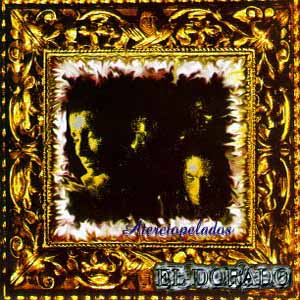
SOUNDTRACKATERCIOPELADOS-El Dorado (1995).

One of the other Rock en Español bands I bought in the 90s was Aterciopelados (the hardest to pronounce).  Aterciopelados come from Colombia and they play a variety of styles of music.  They also feature a female vocalist (Andrea Echeverri) who has a great voice in a variety of styles.

The opening song “Florecita Rockera” is a heavy blast of punk.  “Suenos del 95” is a kind of a lite pop song.  “Candela” is a latin-infused song that sounds not unlike a more psychedelic Santana track.  And “Bolero Falaz” is a winning acoustic ballad.  Meanwhile “Las Estaca” is a sort of county/cowboy song that breaks into a fun rocking chorus.

“No Futuro” starts as a slow balald and builds and builds to a heavy rocker.  I would have liked this song to go a bout a minute longer to get really crazy.  The rest of the disc works within this broad framework: ballads that turn into heavy rockers (“De Tripas Corazón”), hints of punk and latin accents.  And then there’s a song like “Colombia Conexión” which reminds me a bit of The Dead Milkmen: simple sparse verses with heavy punk choruses.  Meanwhile “Pilas!” is straight ahead punk.  The final song “Mujer Gala” has some ska-lite aspects as well (and I have to say that it seems like No Doubt may have been inspired by them).

Although for all of the different styles of music, the disc is really a venue for Echeverri’s voice.  She’s not a rocker or a screamer and she could easily sing pop ballads, but because she chooses to sing over so many styles, she really showcases the multifacted nature of her voice.  She can hold a note for quite a while and although she never really shows off, it’s clear that she’s got a powerful voice.  She even sings beautifully over the punkier tracks, never devolving into a scream, but never losing her edge either.

Aterciopelados is a hard band to pin down (especially with this one disc).  Of the rock en Español bands, Aterciopelados had one of the longer lifespans.  They released several albums with very different styles.

El Dorado suffers from weak production, some more highs and lows would really makes the listening experience better, but it’s a solid disc overall.

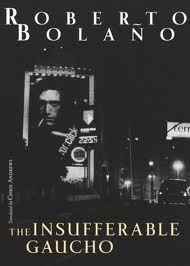
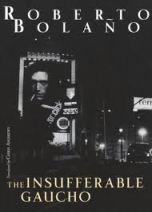
[READ: December 10, 2010] The Insufferable Gaucho

This is a collection of five short stories and two essays.  Two of the short stories appeared elsewhere (which I read previously).  This is the first time I’ve seen the essays translated into English.  The fabulous translation is once again by Chris Andrews, who really brings Bolaño’s shorter books to life.  They are vibrant and (in light of The Savage Detectives, this is funny) visceral.

“Jim” is a four page story which focuses very specifically on a man named Jim.  As the story ends, we see Jim locked in an existential struggle.  For such a short work, it’s very powerful.

“The Insufferable Gaucho” (which I had read in The New Yorker) was even better after a second read.  I find this to be true for much of Bolaño’s work.  He tends to write in a nontraditional, nonlinear fashion so you can’t always anticipate what is going to happen (quite often, nothing happens).  In this story, a man in Buenos Aires, feeling that the city is sinking, heads out to his long neglected ranch in the country.  He spends several years there, slowly morphing from a cosmopolitan man to a weather-beaten gaucho who doesn’t shave and carries a knife.  But there is much more to the story.  The countryside is virtually dead: barren, wasted and overrun by feral rabbits.  The rabbits offer an interesting metaphor for the wilderness as well.  His interactions with the few other people he encounters are wonderfully weird, and the ending is thought-provoking.  It’s a wonderfully realized world he has created.

“Police Rat,” is that strangest of Bolaño stories: a straight ahead narrative that works like a police procedural.  I assumed from the title that it would be something about a metaphorical rat in the police force.  Rather, this is a story about an actual rat who works on the rat police force.  Bolaño spends a lot of time setting up the story (details are abundant) making it seem like perhaps there would be no plot.  But soon enough, a plot unfurls itself.  And although the story is basically a police story, the underlying reality behind it is fantastic and quite profound.  The story is beyond metaphor.

“Álvaro Rousselot’s Journey” was published in The New Yorker.  This story was also better on a second reading.  In many ways this story is a microcosm of Bolaño’s stories: a man goes on a quest for an elusive man.  Unlike the other stories, he actually catches up to the elusive guy.  But, as if Bolaño were commenting on his other stories, actually catching the guy doesn’t really solve the crisis.

This basic premise is that a writer believes that a filmmaker is stealing his ideas for his films (even though he is from a different country).  But more than just the simple plot, when Álvaro Rousselot leaves the comfort of his homeland things change fundamentally within him.

“Two Catholic Tales” is, indeed, two tales.  I had to read this piece twice before I really “got” the whole thing.  There are two separate stories (each story is a solid block of text but there are 30 numbered sections (which don’t seem to correspond to anything so I’m not sure why they are there).  The first tale is of a young boy who desires to be like St. Vincent, with designs for the priesthood.  As the story ends, he is inspired by a monk who he sees walking barefoot in the snow.  The second tale (we don’t realize until later) is about the monk himself.  It rather undermines the piousness that the boy sees.  On the second reading I realized just how dark of a tale this turned out to be.  It’s very good.

“Literature + Illness = Illness”
This is the first non-fiction by Bolaño that I have read.  It is a meditation about his terminal illness.  The essay is broken down into 12 sections about Illness. They range in attitude from the realization that when you are gravely ill you simply want to fuck everything to the fear that grips you when you finally accept your illness.  Despite the concreteness of the subject, the essay retains Bolaño’s metaphorical style.  Each subdivision is “about” an aspect of illness.  “Illness and Freedom,” “Illness and Height,” “Illness and Apollo,” “Illness and French Poetry.”  But it’s when he nears the end and he’s in a tiny elevator with a tiny Japanese doctor (who he wants to fuck right there on the gurney but can’t bring himself to say anything), and she runs him through his tests showing how far advanced his liver failure is, that the reality of his illness really sinks in.

“The Myths of Cthulhu” is the other essay in the book and I have to say it’s the only thing in the book that I’m a little frustrated by.  About midway through, he reveals that this is a speech and I wish that an introductory note would have given context for this speech, or indeed, indicated whether it was really a speech or not.

One of things that struck me about it (and also about “Literature +Illness=Illness” is how frequently he is unspecific about his research (and just never bothered to go back and fix it).  For instance:

For books about theology, there’s no one to match Sánchez Dragó.  For books about popular science, there’s no one to match some guy whose name escapes me for the moment, a specialist in UFOs.

Because I don’t know his non-fiction and I don’t have context (and I’ve no idea who Sánchez Dragó is) I don’t know what to make of that unspecific recommendation.  As for Sánchez Dragó, in the speech he’s noted as a TV presenter (Wikipedia confirms this).  But why the uncertainty in a written piece?  Laziness or deliberate commentary?

This essay has many elements of local information that are completely lost on me.  However, by the end, he brings it back to folklore and literature.  He also makes some biting criticisms of George Bush, Fidel Castro, Penelope Cruz (!) and Mother Teresa. Actually, I’m not sure if he’s mocking Penelope Cruz, although he is definitely mocking Mother Teresa.

The ending is general moaning about the state of Latin American fiction.  Even though I didn’t follow all of what he was talking about, there’s something about his delivery which is so different from his fiction. It’s honest and fast and kind of funny and enjoyable to read.

——

This may be something of a minor work, and yet the stories are really wonderful and are certainly a treat to read.  The essays definitely need more context, but it is interesting to finally have a chance to read the “real” Bolaño.

Read Full Post »

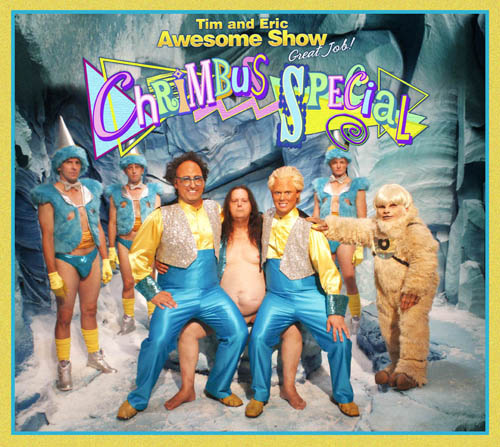
Happy Chrimbus everybody!

I wondered long and hard if I should have a special Christmas post this year.  Last year I posted about my most favorite and least favorite Christmas songs.  And this year I thought about posting about my favorite Christmas special episodes, but we didn’t watch that many this year, so that may have to wait until next year.  Then I wondered if I should write about a Christmas book, or if I should completely ignore the holiday.  Or maybe write a wholly inappropriate book review (no, that I saved for tomorrow).

Well, leave it to Tim and Eric and solve my dilemma for me with their Chrimbus special.

Chrimbus is Dec 5, so technically, this is not the right day to celebrate, but since this is the first year of Chrimbus, I wanted to get the word out on that other holiday that happens in December.

When Tim and Eric introduced Chrimbus on the Jimmy Kimmel show (watch part two of the interview below), they explained it is a “lunch holiday” celebrated during the lunch hour.  The highlight of Chrimbus is when Winterman comes.  Winterman inspects your Chrimbus bush.  If your bush is trim and wet, Winterman will give you a present.  Part One of the interview features their core-strengthening exercise routine.

But watch Part Two below to learn about Chrimbus.

(more…)

Read Full Post »

SOUNDTRACK: SWANS-“I Crawled” (Live in Dublin 22 October, 2010) (2010).

My friend Lar posted this video on his blog (he was lucky enough to see the show in question).  I have yet to fully digest  the new Swans album, although I found it to be slightly less abrasive as their earlier work (but more abrasive than their later period stuff–it’s as if they picked up just before when Jarboe joined the band).

I wondered how intense a Swans show would be these days.  Well, this video goes a pretty long way to showing that it is pretty intense (although I’m sure it was more intense actually being there–Lar’s review of the show is pretty great).

So, “I Crawled” comes from their 1984 EP Young God, back in the day when they were heavy and slow and scary.  The original is slow, ponderous and whispered (I’d love a beats per minute calculation on this one).  As the song continues, the intensity picks up, even if the speed doesn’t.  And after 5 minutes you’re ready to submit.  (And that’s only the first song).

The live version is a bit more lively.  It’s not quite as heavy, and the vocals are a bit clearer, but it is no less menacing.

It’s telling that the cameraperson keeps going back to the two drummers, as they are really the most intense action in the song.  Between the kit drummer keeping the beat (with a maraca on the largest tom drum I have ever seen) and the by now beloved shirtless, long-haired percussionist named Thor who adds dimensions of noise to the proceedings.  He also adds an amusingly tiny melodica which, contrary to expectations, adds a portentous eerieness that is not present in the original version.  Swans are back and they are not mellowed out at all.

Check out the video here.

[READ: November 7, 2010] “To The Measures Fall”

This is a strange little story.  It opens with a girl riding a bike through Cotswold (and begins with the words “First read through”.  She is a young literature student studying abroad in England.  While riding her bike she stops at a used bookstore and buys a copy of To The Measures Fall by Elton Wentworth (the book/author is not real, I checked–although there’s some great blog posts about him already).  The book costs more than what she could pay for 6 LPs, but she decides to buy it anyway.

The rest of the story shows this woman grow up through the sixties and Vietnam, a failed marriage, a new marriage, a failed PhD and a new career.  The story arc finally ends around the present time.  And all through that time she has kept this book with her, whether intentionally or not. (more…)

Read Full Post »

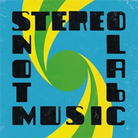
SOUNDTRACK: STEREOLAB: “So is Cardboard Clouds” (2010).

I’ve been listening to Stereolab for something like 15 years now.  They are definitely a “have to been in the mood” kind of band.  Their music is a blend of electronica, especially krautrock, but with an Esquivel/bachelor pad twist.  And, of course half of the songs are sung in French (and are often about politics).

Aside from a few stylistic decisions over the years, the band hasn’t changed very much in style (or substance).  And yet, each new disc is a cause for curiosity.  Will it be long and meandering electronic booping music or short and catchy electronic booping music.

NPR had a preview of their new CD Not Music until basically the day before I clicked on the link (I must subscribe to these new release streams).  But I was able to listen to a couple of songs.  The first I chose was “So is Cardboard Clouds”.

It’s almost four minutes and opens simply and quietly with a repeated motif under Laetitia Sadier’s vocals.  (One of the fun things about Stereolab is never knowing if Laetitia is singing in French or English.  Her enunciation of English words is so peculiar that it’s not always evident that she’s actually speaking/singing English until you read the liner notes.

At about the two-minute mark, the song jumps into a far more rocking style.  It sounds like horn blasts repeated over and over at a fairly fast clip.  And this sets the tone for the speedier second half of the song.  Then the rocking part and the bubbly beats merge until the end which is all instrumental.

Musically, there’s nothing as much fun as a song that catches you off guard, and the tone shift one certainly does.  Even after a couple of listens, that switch to the faster section comes as a surprise.  Each parts of the song highlights the different aspects of  Stereolab’s styles and they’re throwing in enough newness to keep it interesting.

[READ: November 14, 2010] “Rangoon Green”

I’ve never heard of Barry Hannah before; he evidently died in March.  This story will come from his final collection of stories.  And I wanted to like it.  I really did.

The epigram was quite enticing: “Rangoon Green, trophy holder third place in the national storyteller telloff.  Murfreesboro, Tennessee 2011”

The story then begins with Rangoon himself telling how pissed he is that he came in third.  Again.  Obviously, he explains, the first place winner slept with a judge and the second place winner was a local so of course there was cheating there.

I was really getting into this idea of a storyteller telling a story about losing a storytelling contest.  But then it want pear- shaped, with talk of arson and fireworks and all kinds of things and man it went on for a long time. (more…)

Read Full Post »

SOUNDTRACK: PREFAB SPROUT-Let’s Change the World with Music (2009).

This album was unreleased back in 1992 (it was supposed to be the follow-up to the wonderful Jordan: The Comeback).  Record label confusion left it shelved for many years.  It’s been released now because lead Sprout Paddy McAloon has been having health issues and won’t be releasing any new Sprout music anytime soon.  So he has released this album in what is essentially demo form.

Unlike many demos, though, this one is pretty fully realized.  It’s full of keyboards (where there might be strings for instance) and there are no backing vocals (or any other musicians), and yet for all of that, it doesn’t sound like a scratched out demo or a home-recorded cassette (and Paddy sings his heart out).  There are certainly moments (most evident in the drums at the beginning and end of songs) that sound kind of sparse, but the bulk of the disc is fully formed and quite well realized.

The opening is pretty odd, with Paddy (who normally has a soaring tenor voice) speaking a deep almost rap over a funky beat.  In fact, as the song continues, with Paddy’s voice returning to “normal,” that funky beat continues.  Nevertheless, but the time the sweeping dreamy chorus kicks in we’re back to less funky, more smooth sounding Sprout that I know and love.

Like Steely Dan, Prefab Sprout is not really meant to be enjoyed by the young.  It’s borderline treacly, it’s very sweet and earnest, an my high school self would have scoffed at my enjoying them at all.  And yet for all of that, the songwriting is really magical.  There is religious imagery all over the disc, but it’s there to convey the magical power of music.  And it’s entirely authentic.

And when you combine that with Paddy’s voice its adult contemporary music that is still interesting (certainly too interesting to be played on pop radio).  I think the real key to the success of the disc is the unpretentious, unforced and completely unironic joy that Paddy gets from music.  And there’s nothing wrong with that.

[READ: November 14, 2010] “Five Stories from Flaubert”

I really enjoyed Madame Bovary many many years ago when I read it.  Recently, writer Lydia Davis translated Madame Bovary and her translation is supposed to be exceptional, light years above the translation that I read.  One of these days I plan to read her version.  In the meantime, I’ve got these little short short stories.

I had a hard time deciphering what these little stories were, exactly.  The introduction says that they are “adapted from letters Flaubert wrote to his lover.”  So I guess Flaubert gets a co-writing credit?  There’s a couple more stories online at The Paris Review (but you need to buy the issue to get all ten). (more…)

Read Full Post »

SOUNDTRACK: FRANK ZAPPA-Does Humor Belong in Music? (1995).

Frank Zappa made money and found fame by writing dirty, funny songs.  Yet he was really a great guitarist and a serious composer.  But hey, when you need the money to make your studio, you write songs about “Penguins in Bondage.”  When I was in high school my friend Al introduced me to Shiek Yerbouti, and I was hooked.  I’d never heard songs that were so intentionally funny.

So, this live collection is kind of an odd assortment, given the title.  I mean the first song is an instrumental (ie. not funny at all except for the title “Zoot Allures”).  “Tinseltown Rebellion” however is pretty darn funny.  The mockery that goes on (and the call-outs range from The Scorpions to Culture Club and The Tonight Show) is nasty and offensive, but never really wrong.  And this is when you find out how good a Zappa stage show was.  The band was tight, they could play all kinds of crazy things and, as in this song, they were always in sync even when improvising.

This disc is a collection of songs from a 1984 tour.  I rather like this incarnation of the Zappa band (Ike Willis is pretty amazing at any time).  And they play tracks from across Zappa’s output.  Although there’s times when the disc sounds really abrasive (some of the solos–like on “Bondage”–are really piercing and not very smooth, and the drums can be very electronic sounding).

Of course, that’s the kind of music that Zappa wrote (“What’s new in Baltimore” is very electronic sounding–beautiful but mechanical–which is why it’s so amazing to hear it live–even if it doesn’t sound human, exactly).

And just so you know it’s not only Zappa showing off (although he kind of is since he hired all the musicians) in “Let’s Move to Cleveland,” everyone gets a solo…keybaords, drums…everyone.  And the final track “Whipping Post” sees his son Dweezil taking the lead guitar solo (which feels really human and rocks the dickens off the place).

For many of Zappa’s later “live” records, he compiled songs from all over the place (a very common practice for live records).  On some of the collections he even mixed a tour from the 70s with one from the 80s.   Now the thing that I just recently realized (even though it’s spelled out in the liner notes) is that these songs are cribbed together from different songs (!) (on “Cleveland” the piano solo is from St. Petersburg, the drum solo is from Vancouver, and the guitar solo is from Amherst College…weird, eh?  And what about the backing music, where does that come from while the solos are spliced in?)).  So, they’re not really live, except they kind of are.  And, heck that’s kind of funny too.  If you care about things like that it kind of ruins the “authenticity” of the recording.   But if you don’t, they sound pretty darn good anyway.

So this is not his funniest stuff, but it’s still an interesting live collection.

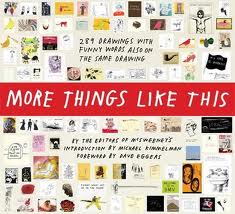
[READ: November 12, 2010] More Things Like This

I don’t know where I learned about this book, but I recently found it used for about $4 and I was pretty psyched to both find it and to pay a pittance for it.

As the subtitle indicates, this book is a collection of drawings that have words on them and are funny (but which are not “cartoons” (although some kind of are)).  The impetus for the book was a show at apexart of exactly this sort of thing.  The book expands on the show and includes many artists who were not in the show (including several very famous artists).

The Foreword by Dave Eggers offer the rationale behind the show & the book: Image + Text (usually referring to the image) + Humor = Good enough for us.  And it also asks pertinent questions: Why is it that so many of these artists can’t spell?  And why is it that when they screw up a word, instead of starting over, they just cross the word out and write it again?  Why is it important to some of the artists that the drawings appear casual, even sloppy?

And more. (more…)

Read Full Post »

« Newer Posts - Older Posts »