Feeds:
Posts
Comments

Archive for the ‘Funny (strange)’ Category

artofmcSOUNDTRACK: SUGAR-“Helpless” single (1992).

helplessI loved that first Sugar album and even bought the single for “Helpless” (back then singles were ways for record labels to get more money out of fans of a band rather than for people to pay for one song).  In addition to “Helpless,” the single contains three songs.  “Needle Hits E” is a poppy song–very Mould, very Sugar.  The song is a bright and vibrant addition and would fit nicely on Copper Blue.

The second track is an acoustic version of “If I Can’t Change Your Mind” which sounds wonderful.  Mould really knows how to record a 12 string guitar to make it sound huge.  “Try Again” is the final track.  It reminds me of The Who, especially the bass line at the end of each verse.  It’s a darker song (especially for his single which is so up).  But I love the way the acoustic guitar seems to make it build and build.  Then, some time around the two and a half minute mark, a feedback squall starts building.  It’s way in the background (and actually sounds a bit like squealing balloons).  It continues until the last thirty seconds just degenerate into full blown feedback noise–just so you know Sugar aren’t all pop sweetness.  All three songs were later released on Sugar’s Besides collection.

[READ: May 10, 2013] The Art of McSweeney’s

Sarah got this book for me for my birthday and I devoured it.  It answers every question I’ve had about McSweeney’s and many more that I didn’t.  It provides behind the scenes information, previously unseen pieces and all kinds of interviews with the authors and creators of the issues as well as The Believer, Wholphin and some of the novels.

The real treasure troves come from the earliest issues, when there was very little information available about the journal.  So there’s some great stories about how those early covers were designed (ostensibly the book is about the artwork, but it talks about a lot more), how the content was acquired and how the books were publicized (book parties where Arthur Bradford smashed his guitar after singing songs!).

The cover of the book has a very elaborate series of very short stories by Eggers (these same stories appeared on the inside cover of McSweeney’s 23).  For reasons I’m unclear about, the rings of stories have been rotated somewhat so it is does not look exactly the same–although the stories are the same.  The inside photo of the book also gives the origin of the phrase “Impossible, you say? Nothing is impossible when you work for the circus.”

The opening pages show the original letters that Dave Eggers sent out to various writers seeking stories and ideas that were rejected by other publications (and interesting idea for a journal). (more…)

Read Full Post »

#20SOUNDTRACK: SUGAR-File Under: Easy Listening (1994).

fuelI  always thought File Under: Easy Listening was a very funny title.  But it’s possible that people took it too literally as it didn’t sell all that well. And in Mould’s autobiography he says he didn’t have much time to write songs for this disc and he thinks it suffered.  Of the three Sugar discs, this is definitely the weakest, although there are some great moments on it.

The disc opens with “Gift” which has some ragged distorted guitars. It’s got some noises and grungy sounding solos showing that FU:EL was a joke.  Although, the overall sound is kind of a cleaner version of the angry songs on Beaster.  “Company Book” is kind of a pounder, until the voice comes in and you realize…it’s not Mould!  It’s got a catchy chorus, but after the kind of underwhelming opener, it’s a strange place for a song that’s also not so dynamic.  Especially when it’s followed by “Your Favorite Thing” another great pop song from Mould—not top tier but a really strong second tier (although that bright, simple guitar solo is a real winner).  “What You Want It To Be” is a another decent song (the addition of that extra guitar playing the melody line really makes the song shine.  “Gee Angel” is also a high point.  A catchy song, but which never quite reaches the heights of the previous albums.

“Panama City Hotel” has the same feel as the opening of Beaster: bright acoustic guitars and a similar riff.  But it never really goes anywhere, and the 4 minutes seem.  The “do do do do’s” that open “Can’t Help You Anymore” are certainly the brightest spot on the album, and a big pop song as well.  “Granny Cool” has a nicely abrasive riff although it seems kind of mean spirited.  It’s funny that he tucked “Believe What You’re Saying” at the end of the album.  It’s a minor song but it sounds so bright on this album after the other songs. It’s really quite pretty.

And the closer, “Explode and Make Up” is one of Mould’s great angry songs.  Unlike Beaster, this one has a happy acoustic field—bnright guitars with that raging distorted guitar underneath.  It’s a great slow burner of a song and at five minutes it ends a somewhat lackluster album in a great way.

[READ: March 31, 2013] McSweeney’s #20

McSweeney’s #20 is an issue that I have read before.  At least I think I have.  My recollection is that it was the last one I read before I started writing about them on this blog.  I was hesitant to read it soon again, which is why I waited until now.  And while I remember the issue itself (with all of the art), I didn’t remember the stories.  So who knows if I actually read it six years ago.

Anyhow, this issue comes jam-packed with art.  Every fourth page has full-color artwork on it–many of them are quite famous.  It makes for a very beautiful book.

In between these artworks are a number of stories–ranging in size from 2 pages to 30-some pages.  There are no letters, and the explanatory and copyright information is on the cover of the book–which would be fine, except that it is covered up by a kind of 3-D artwork.  I wonder if the whole text is available anywhere?

The book also comes with a separate pamphlet–an excerpt from Chris Adrian’s Children’s Hospital.  I intend to read the novel eventually so I didn’t read the excerpt–although maybe if I put off the novel for six years I should just read the excerpt now. (more…)

Read Full Post »

#16SOUNDTRACK: SUGAR-Beaster EP (1993).

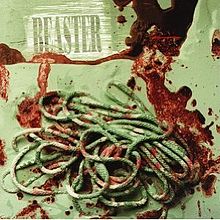
beasterI didn’t know that Beaster, the Sugar EP was recorded at the same time as Copper Blue.  Mould’s biography was very helpful in explaining all the details of the timing and styling behind these two recording.  As well as how the super pop of Copper Blue could be followed right on the heels with the very very dark EP of Beaster.

I have often thought of this disc as being really dark and insular and Mould confirmed as much—he was really airing out some demons with this disc.  But they thought it would be better to put them all in one place rather having them bounce around the poppier full length.  What must fans (like myself) have thought to hear this dark album after the pop of Copper Blue.  I mean just look at the cover!

I hadn’t listened to this in a long time, so I was surprised by how cool “Come Around” sounds—Mould’s acoustic guitar high in the mix with some appropriately grungey guitars in the background.  There are lyrics but for the most part I think of it as just Mould making sounds with his mouth.

It’s followed by the blistering “Tilting.”  It’s got superfast drumming with aggressive guitars, it’s like we’re back to the early Hüsker Dü punk sound (with a little more clarity).  The drumming is great in this track.  The song ends with a preacher being interrupted by dissonance and what sounds like electronic interference. And this song morphs into “Judas Cradle” one of Mould’s darkest songs.  It’s very claustrophobic-feeling with echoed vocals, lots of feedback and lots of compression on the overall sound—quite different from the big open sound of Copper Blue.  And yet for all of that, the chorus, “Have you seen the Judas Cradle, ah”is really quite catchy.

“JC Auto” has some buzzsaw guitars which make it seem like it’s going to be quite an angry song and yet the bridge is quite welcoming (all this talk of holidays) and then the chorus is amazingly fun to sing along to (Mould always finds pop in anger): “Passing judgment on my life you never really got it right/I can’t believe in anything / I don’t believe in / Do you believe in anything / Do you believe me now…  Look like Jesus Christ / act like Jesus Christ I Know I Know I Know Here’s Your Jesus Christ I’m Your Jesus Christ I Know I Know I Know.”  And, as always, I love when Mould repeats his lyrics in the background (the “I Know I Know” surfaces throughout the end of the song).

“Feeling Better” has weird synth blasts that kind of works in the song but sounds out of place on this record.  This song flips between really aggressive guitars and a very bright poppy chorus.   At 6 minutes this song is a little long (because it’s primarily repeating itself by the end), whereas Judas Cradle and JC Autos’ 6 minutes are well justified.

The final song “Walking Away” is a strange one. It is comprised entirely of organs (church organ it sounds like) with Mould delicately singing “I’m walking away back to you”  The end starts to wobble giving a bit of a nauseous feeling but then it’s over.  So even in his most downtrodden and questioning, Mould still has the chops to write some great music.  Down be put off by the cover, Beaster is a great album.

[READ: March 28, 2013] McSweeney’s #16

After the fairly straightforward Issue 15, McSweeney’s was back to fun with Issue #16.  The issue opens up into a kind of quad gatefold which has , in order–a comb, a book, another book and a deck of cards.

The main book contains nine stories, by the typical McSweeney’s roster at the time.  The other booklet contains a lengthy story by Ann Beattie.  The deck of cards is for Robert Coover’s “Heart Suite” and the comb is a comb.  It’s a nice one, although it has never touched my hair.

The MAIN BOOKLET (more…)

Read Full Post »

#15SOUNDTRACK: SUGAR-Copper Blue (1992).

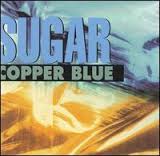
copperblueAfter Bob Mould made some solo albums, he created another band.  Another trio, this one called Sugar.  Sugar seems to take Mould’s poppiest elements and wrap them in a big 90s grunge sound–a sound that Mould pretty much invented in Hüsker Dü.  And in many ways Sugar is not all that different from Hüsker Dü–maybe a bit less experimental and a little more commercial.

One thing I noticed about this album that, once I noticed it I couldn’t avoid it, was that when the drummer plays the cymbal (it might even be a hi hat with a tambourine on it), which he plays a lot, the tinny shimmer of that sound is so pervasive, I find it rather distracting.  Or should I say it adds an almost minute level of static over the proceedings.

The disc opens with “The Act We Act,” where big grungy guitars and a simple chugga chugga riff burst out of the speakers. I love the Pixies feeling of “A Good Idea” both that up front bass and the buggy sounding guitars provide an almost false introduction to the catchy verse and chorus that’s to come.  I also enjoy the unexpected break after the chorus.

It’s followed by the ringing guitars that introduce “Changes” a classic poppy rock song that is unmistakably Mould.  The uneasy almost nauseating sounds at the end of the song are again like a feint in the wrong direction as “Helpless” easily the most pop song Mould has ever written comes out.  Of course, as with Mould, this outrageously poppy song is all about feeling helpless.

Keyboards open the next song, “Hoover Dam” (something of a surprise for this album), which proves to be yet another big Mould single.  The song is so open with multiple acoustic guitars (and that cool synth solo) and a really wild reverse guitar solo.  It’s one of my favorite Mould  songs and yet another example of why this album was such a huge hit.

“The Slim” brings back the darker songs that Mould is also known for.  And just when you think that Mould can’t pull out another huge big single, he gives us “If I Can’t Change Your Mind,” one of his great big bouncy acoustic guitar songs.  It is almost obscene how catchy this song is, right down to the simple scale solo at the end.  Mould has this little technique that I find irresistible where he plays a song normally and then plays two fast chord changes segueing into another section.  It’s so cool.

“Fortune Teller” is a fast rocker with Mould’s trebly guitar taking the lead.  “Slick” is the only song I’m not crazy about. There’s something about it that kind of slows the momentum down, which is odd for a song about a car.  It’s got a real middle-period-Who feel to it, which I do like (and I really like the bridge) it just feels odd in this place in the disc.  The end of the song has some snippets of chatter that could have been edited out but lend an amusing air to the final track, “Man on the Moon” which ends the disc with that same air that the rest of the album has—big guitars and Mould’s slightly distorted vocals.  The solo is weirdly processed and kind of fun.  The end of the track with its repeated half step has a very Beatles feel to it. And the very end of the disc has the sound of tape rewinding, an amusing nod to the digital era.

Copper Blue was Mould’s first huge success and in his book he talks about not realizing quite how huge it was until he was in the middle of it.

[READ: March 20, 2013] McSweeney’s #15

I was a little disappointed with McSweeney’s #14, but #15 was once again fantastic.  This issue is a smallish hardcover (I like when their books are this size).  The bottom half of the cover features a cool 2 color painting by Leif Parsons.  The issue is known as the Icelandic Issue because of a few things.  The first half of the book features stories by the usual suspects.  Each of these stories is accompanied by an illustration of a Scandinavian rune that dates to the Viking era.  The stories in the second half of the book have illustrations that are taken from Icelandic grimoires–magician’s handbooks.  It is these second half stories that are all from Scandinavian authors.  It’s a fascinating peek into a culture few of us probably get to read.

There’s no letters in this book, which removes some of the levity, but that’s okay.  The front page has a brief story that it was being written on November 2, 2004 in New Mexico, hoping to bring some voting power to “the good guys “in this “completely fucking terrifying election.”  (The bad guy eked out a victory 49.8 to 49.1).  They went canvassing door to door with an Iraqi veteran named Joey (who was 21).  He was very pro-Kerry and may have even convinced a young girl to vote (she thought her vote didn’t count because she was poor (!)).  It really evokes the feeling on that dark night in 2004 when the iota of hope was snuffed out. (more…)

Read Full Post »

CV1_TNY_04_22_13Pearson.inddSOUNDTRACK: MIKAL CRONIN-MCII (2013).

mciiMikal Cronin has a very pleasant middle range voice—conventionally good.  Indeed, there’s nothing especially unique about this record.  But it is a great summer pop album.  Lots of great big choruses that are fun to sing along to.  And, Cronin is a talented multi-instumentalist.  I believe he plays everything on the record, although I’m not sure about that.

The album is 37 minutes.  The first song, “Weight” has a simple melody and is incredibly catchy. There’s a nice falsetto before the big loud guitar chorus kicks  in.  “Shout It Out” is another great pop song—big fuzzy guitars and a wonderfully catchy melody.   And I love how it gets mildly chaotic at the end.  “Am I Wrong” is a straightforward rocker, with more big crunchy guitars.  There’s a fun fiddly keyboard solo (with lots of flubs, which is kind of endearing).  This song (and several others) remind me of Sloan.

“See It My Way” has a shambolic feel to it, I can do without the oddball sax solo, but there’s something so oddball about it that I think it works in the end.  “Peace of Mind” has a nice harmony vocal on it that gives this simple song a fuller sound.    There’s an unexpected violin solo in here.  “Change” opens with a real grungy loud guitar which is quickly replaced by a  speedy drum over a simple, catchy verse.  And a speedy chorus.  There’s an interesting middle section with another violin solo (and some unusual squeaky violin noises as well).  “I’m Done Running From You” is a fun fast bit of pop with a rocking guitar solo.  And “Don’t Let Me Go” is a slow ballady type song (as much as one can be on a rocking record like this).  “Turn Away” brings the rock back, although “Piano Mantra” ends the disc with a solo piano intro.  But the song builds and builds into a rollicking violin-fueled conclusion.

I’d never heard of Mikal Cronin before, and when i first started listening to the disc I thought it was an okay pop punk album.  But the more I listened to it, the more I enjoyed it.  It’s still as simple pop punk album but it’s done so very well.  I’m going to have to check out his debut as well.

[READ: May 2, 2013] “Mexican Manifesto”

I love that stories from Roberto Bolaño keep popping up.  I realize that most of these have been published in Spanish somewhere, but it seems like even if we know that his next book is going to be all poetry (Unknown  University coming out in June), somehow there’s at least one short story in it (I assume it comes from here, where else would it have come from?).  So, since it seems like there’s a new Bolaño book out every six months, I assume that barrage will come to an end now.

Unknown University is, as far as I can tell, the last thing that will be translated by Bolaño.  Wikipedia suggests that there are four other titles that could be translated: A Lumpen Novella (which he completed but which has not been translated), Diorama, an unfinished novel, something being called Part 6 of 2666 (who knows what that means) and an early book that he cowrote Advice from a Morrison Disciple to a Joyce Fanatic which I would really like to read–the title is so intriguing–but who knows is it will ever find a translator.

But that’s got nothing to do with this short story.  This short story is about a couple who frequent steam baths. The narrator is the man, and the woman, Laura, I the more adventurous of the two.  She is the one who encourages them to go to the baths in the first place and, while he also thinks it is wonderful, it is she who wants them to explore as many different baths in the city as possible. (more…)

Read Full Post »

peach6SOUNDTRACK: BOB MOULD-Workbook (1989).

workbI actually wrote this while reading Bob Mould’s book, I assumed I attached it to something and then wrote about Mould’s second disc Black Sheets of Rain.  And now I see that I never attached this to anything.

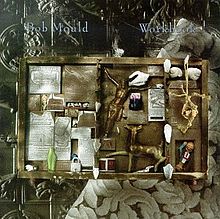
This is Mould’s solo debut, an album that I think of as being a mellow acoustic album.  And it is, kind of, at least if you go by the opening song, “Sunspots” a  beautiful little acoustic guitar instrumental.  And the rest of the instrumentation on the record includes strings, which are prominent on “Wishing Well.”  Although the song rocks a lot harder than I remember–especially the rollicking solo which has some real screaming guitars and angst in it. It sticks out a bit in the album because most of the album is more along the lines of “Heartbreak a Stranger”–opening with a gentle pretty acoustic guitar and Bob’s emotional voice (and really nice harmonies).

And then comes “See a Little Light” Mould’s first solo hit (and a big one at that).  It’s bright and has great harmonies.  There’s strings which really accentuate the song and a few moments which even now all these years later give me chills. “Poison Years” has more of that acoustic vibe but it brings in a big chorus (oh his harmonies!) and a harsh guitar solo (and a chilling final note)–a great song all around.

“Sinners and Their Repentances” is a minor key masterpiece in which Mould’s voice seems like the main instrument.  “Brasilia Crossed with Trenton” is a six and a half-minute song.  (This album is full of long songs actually–which comes as something of a surprise given Mould’s past success with three-minute pop songs–three of these are over 5 minutes and two are over 6!).  “Compositions for the Young and Old” is a great song all around.  “Lonely Afternoon” has some Hüsker Dü elements.   “Dreaming I Am” has a great mid-song riff (which sounds like a mandolin) and there’s something so great about the chorus.

“Whichever Way the Wind Blows’ ends the disc with a loud abrasive guitar sound. And his singing is practically inaudible shouting.   It sounds angry and has a rough riff and loud guitars.  At nearly 7 minutes it’s quite the cathartic ending.  It’s a strange ending to such a gentle disc, but maybe Mould wanted to show that he hadn’t gone entirely soft.  It’s an amazing debut and an auspicious start to his solo career.

[READ: April 21, 2013] “Last Supper”

As I mentioned, this issue of Lucky Peach is about the apocalypse.  So it’s only fitting that one of the two stories be about a Last Supper.  The story is a series of letters from Adrian to Crowley.

Adrian invites Crowley over for a special meal that his mother is making in honor of the Pope and his Last Tweets of the Apocalypse.  Adrian explains that her mother is a huge fan of Crowley’s work and would love it if he could come to this meal.  There is an enclosed (grotesque) picture of a pig which Adrian says they will be serving and, although it looks like pig, it is not made of pig at all.

Crowley demurs this invitation–he is extremely reticent to eat anything that is not what it purports to be (he had a bad experience once).  But he wishes them well. (more…)

Read Full Post »

peach6SOUNDTRACK: THE DICKIES-“Eve of Destruction” (1979).

dickiesI didn’t know the original of this song until I listened to it just now (man it is depressing).  I have known this Dickies cover since the 90s, which speeds up the original almost twice as fast and makes the lyrics pretty much inaudible (which makes it less depressing).

The Dickies have done a lot of great covers, and while this one was never one of my favorites (I’m a “Town without Pity” and “Hair” man, myself), I always enjoyed the “over and over and over again my friend” part (and the squeaky guitars).   And now after listening to the original, I really prefer the cover.

[READ: April 2013] Lucky Peach Issue 6

I haven’t been reviewing Lucky Peach issues in their entirety because they are mostly about food and cooking and recipes and I don’t really have anything to say about that (I enjoy the articles a lot, but I don’t need to comment on them).

But I wanted to bring special attention to this issue, which is all about the Apocalypse.  And there’s a couple reasons for that.  Zombies are huge, that Mayan end of the world business was all fun, and of course everyone seems to think that Obama will cause the end of the world.  But on a more serous level, global warming is unchecked and no one seems to care about the environment at all, and with the weather being as crazy as it is, all bets are off as to what our world will look like even ten years from now.  So why not read a magazine that has recipes for all kinds of things that might still be around in a decade.

The first half of the magazine is all about preparing for the apocalypse.  There’s a degree of tongue in cheekedness in it but it is entirely sincere: there’s plenty of recipes for canning, there’s information about seed savers and a fascinating article about Seafarming, which I seriously hope takes off, as it sounds like it could be a real solution.  There’s some fascinating information about Shelf Life and even a recipe entitled “pollution” which looks like a polluted sea but seems very expensive to make.  I also really enjoyed the brief story about the couple who won a honeymoon in a bomb shelter for two weeks (compete with all of the canned food they could eat–oh, the Fifties). (more…)

Read Full Post »

cousinkSOUNDTRACK: FOALS-“Inhaler” (2013).

foalsinhalerI really really liked Foals debut album.  It was weird and off-kilter and was one of my favorite albums of that year.  I had heard that their follow-up was very different, less weird, more conventional, and I have yet to hear it (narrow-minded, I know).  But then I heard that their new album was really great.  “Inhaler” was the first song I heard.

Man, do I love it. The song opens kind of funky with some noisy echoed guitars.  After a few verses the bridge comes in and the big excitement of the song comes when he gets to the chorus, “I can’t get enough SPACE!”  It’s not so much that he yells “space,” which he does, it’s more the way the whole song explodes with a new exciting riff and it just seems to get bigger and bigger. It blows me away every time.

After the first chorus we drop right back to that falsettoed slow verse delivery.  And the song slowly builds back up again.  The length of the bridge as you anticipate the big chorus is just excruciatingly wonderful.

[READ: April 5, 2013] Cousin K

I found this book when I was cataloging it at my job.  I don’t know what grabbed me about it (there’s nothing special about the cover).  I think it may have been the French Voices label in the corner (and its brevity).  I thought, hey why not read a contemporary French novella for something different.

Well, to my surprise, that is not what I got.  Indeed, nothing in this book is as it seems.

Yasminia Khadra is a pseudonym for Mohammed Moulesshoul.  He chose the name to avoid military censorship (that’s all the book says, I don’t really understand what that means).  Moulesshoul was born in the Algerian Sahara.  He is now retired from the military and is living in France.

But so, instead of this being a story from a French woman, the story is actually from a Male Algerian.  Which doesn’t really matter in the long run, but I assumed that the narrator was a girl (based on the “author = narrator” theory that is an easy shortcut in fiction.  This was really only confusing because the narrator is unnamed for quite a while in the book.

But what a book.  In just 80 some pages, Khadra turns in a  fascinating psychological picture of neglect and psychological abuse.  But it is such an elliptical book that there are almost as many questions as there are answers.  It is this elliptical style which provides some of the confusion, but a lot of the interesting structure of the story. (more…)

Read Full Post »

embryoyoSOUNDTRACK: QUEENS OF THE STONE AGE with EDDIE VEDDER-“Little Sister” (live) (2013).

qotsavedderThis is a live song from Chile (from what I gather it’s a Lollapalooza show–is that even still around?).  I have no idea if Pearl Jam were in Chile at the time, but what a strange thing to bring Eddie Vedder out on stage and then have him only sing backup vocals and play the cowbell.

The song sounds very much like the record, although a little sloppier.  I’m a bit surprised at that as I think of Homme as running a tight ship (but the sloppiness comes from him, so he has no one to blame but himself).  You’d never know Vedder was even there.  It’s one of the strangest guest appearances since Paul McCartney munched carrots and celery for the Super Furry Animals song “Receptacle for the Respectable.”

[READ: April 3, 2013] Embryoyo

Embryoyo is the final book of poetry I’m going to read for a while.  This book came out a few years ago but McSweeney’s had a garage sale version that I found for cheap.  I’ve always been intrigued by the title (so silly and odd) that I decided to give it a ago.  The blurbs on the back (and I know, no one should read blurbs) are telling: “Dean Young’s work will delight only two kinds of people: those who generally read poetry and those who generally don’t”  And, “No one is unsure if they’ve read a poem by Dean Young.”

I probably concur with the first but I definitely do with the second.  Because Young’s poetry is quite unusual.  And Embryoyo proves to be a demonstrative title.  Not that it means anything specifically, but in the way Young creates portmanteau words, which Young uses liberally.  Like the title “Empheroptera.”

I’m going to give some examples of his poetry that I found really enjoyable: (more…)

Read Full Post »

loveindeSOUNDTRACK: KURT VILE-“Wakin on a Pretty Day” (2013).

Kurt Vile_CVR-31981badf76ce6680de293138b7fbf1807fe323f-s1I don’t really know that much about Kurt Vile.  I’ve been hearing about him for a while. I assumed his name was a kind of joke–like he was a comical metal guy, maybe like Alice Cooper.   That appears to be far from the truth.  I also wasn’t sure if he was well-known outside of the Philly area, but I do know that NPR has championed him for a while.

Well, he has a new album out and since NPR was streaming it, what better time to hear what the long- haired dude is all about.

There is much talk bout his voice (NPR says: There’s something about Kurt Vile’s voice that transcends whatever comes out of his mouth.).  But the whole time I listened to this song (which was a while, as it is over 9 minutes long), I kept thinking that he sounds just like the guy from House of Love, an underrated band here in the States. (He sounds even more like him in Kv Crimes”) It’s not necessarily a bad thing to sound like someone else (often times it can’t be helped I suppose), but it is a little distracting to me.

So this song is kind of groovy.  I like it musically more than vocally (there’s so many “Yeah…yeah yeah yeahs” that I lost the point of the song).  But the music is really good, including Vile’s lengthy guitar solos.  Interestingly, I was kind of bored by the song after about 45 seconds, but by 8 minutes I was really grooving it.  Subsequent listens have made me like it more, it has a kind of Neil Young or maybe Meat Puppets vibe.

My head says there’s really nothing special about this guy and yet after more and more listens, there’s something that draws me to him.  Weird.

[READ: April 2, 2013] Love, An Index

The back of Lindenberg’s book explains that the man she loved, poet Craig Arnold, disappeared in a volcano while traveling in Japan.  For such a very specific kind of event, I don’t think I would have gotten anything quite like that from these poems.  Indeed, for a book that is so specifically created about this man, there’s very little sense of the exact nature of the loss.  In some ways that’s good, it could have been a very maudlin, ungraceful collection of poems if she explicitly talked about volcanoes, but at the same time, the feeling of loss that comes across is less about death and more about abandonment (I would have presumed that the guy had left her).

I really enjoyed these poems even though I have a  really hard time accepting the bulk of these, in particular the thirty-four page title poem, as poetry.

“Love, An Index” is thirty-four pages and it is an index.  Literally, she lists words alphabetically and writes a little “definition” for each one.  There are arbitrary line breaks in the definitions but in no way does it feel like a poem.  Even the individual entries are not very poetic.  Like “Compromise, I will get up early with you/so long as you’ve made coffee.”  Okay, so that’s funny/sweet, but it’s not a poem.  But then what it is?  Yes, it is part of a greater whole and removing part of it diminishes that whole.  But again, what is the whole?  Genre defying I suppose.  Which is cool.  And despite my criticism, I really enjoyed this index.  There were personal notes that I would have no idea about, there were commonplace ideas that are familiar to all.  There’s also a ton of quotes from other poets.  And it all works together to create a beautiful portrait of a relationship. (more…)

Read Full Post »

« Newer Posts - Older Posts »