Feeds:
Posts
Comments

Archive for the ‘Funny (ha ha)’ Category

ageSOUNDTRACK: GENEVIEVE-Tiny Desk Concert #446 (June 1, 2015).

genevieveI enjoy that the opening of this Tiny Desk Concert shows Genevieve “creating” her backup singers.  So that when she gets to the chorus and taps that loop pedal her harmonies really shine.

Genevieve is a poppy singer with a sometimes raspy but often really clean singing style.  She has a great voice and vibrant personality (and hair color).  Even though she is from Chicago, I hear some tinges of Bjõrk and maybe even Tori Amos in her voice.

Evidently she normally plays with a full band, but for this concert, she is accompanied only by Chris Faller who “plays all of the instruments.”

The first song “Colors” is played only with keyboards (and feels like it could use a little but more music–although her voice is powerful enough and that chorus is super catchy as is).  “The Enemy” is accompanied by an acoustic guitar and is a suitably mellower–a kind of sad ballad–which shows how powerful her voice is even in this more quiet setting (she has a lovely range).

The final song “Authority” feels like it might be a big raver (she adds hand claps that seem like the kind that might get the crowd going, but the claps are quiet and subtle here).  The chorus is big with lots of long-held notes and is super catchy.

Genevieve would probably be too pop for me in general, but the Tiny Desk Concerts tend to remove a lot of gloss and leave the heart of the musician.

[READ: May 15, 2015] An Age of License

I enjoyed Knisley’s Relish, so when I saw this in the library I decided to check it out.

Unlike Relish, which was about food, this book is about her travels outside of the country.  But like Relish, this book is another memoir/journal/autobiography.

Since I have been having a major Norway kick (thanks to Karl Ove Knausgaard and some great sites on Instagram) I was pretty excited to see that her travels began in Norway.  Her itinerary is short but very busy.  Fly into Iceland than immediately to Norway (for the Raptus Comics Fest in Bergen).  Then it’s off to Sweden (to visit a guy she knows in Stockholm).  Then to Berlin to join her friends on their honeymoon (which is not as tacky as it sounds). Then it’s off to France to visit her friend in Beaune, and then to hang out with her mom and her friends on Royan.  Finally a day in Paris before flying back home.  I’m exhausted just writing it all.

Knisley also has the headache of dealing with a breakup (to the nice guy who has been in her previous books) although he is kind enough  to babysit her cat while she is gone.

Every few pages has colored (watercolor I assume) drawings which add a nice touch to the otherwise black and white story.

Starting Sept 8th, she arrives in Norway.  We see the flight and other people on the flight.  We see a nice meal that she eats (Pinnekjott–someday I hope to get to the Scandinavian countries and eat food that I cannot pronounce).  Norway is fun–she goes to the Fest (where she gets to draw with Ethan Nicolle of “Axe Cop” (presumably his five-year old brother stayed home).  She shows students how to draw (her friend is a teacher), although she declines to eat Lutefisk (which she illustrates as Fish + Lye.  Lye??).  She also mentions that she was not only stalked, but that the boys who stalked her then made and published (and had it available at the following year’s Raptus Fest) a comic about stalking her–creepy! (more…)

Read Full Post »

dotaSOUNDTRACK: ASIA-Asia (1982).

asiaI’ll finish off this run through Yes with one final offshoot project–Asia.  Geoff Downes (who had only been on Drama) and Steve Howe joined forces for this pop outfit with a hint of prog.  Indeed, this is an album that is just chock full of poppiness–despite all of the trappings of prog rock–synths, connections to Yes, a cover by Roger Dean and Carl Palmer from Emerson Lake & Palmer on the drums.

This album was huge in 1982 & 1983.  They had so many hits from it (okay well, only 3 singles, but surely everyone knows this entire album, right?).

“Heat of the Moment” opens with nice big ringing guitars.  And while the drums aren’t fancy, they are quite distinctive.  The synth isn’t too dated sounding, and the middle part with the guitar slide still sounds cool.  And of course, the chorus is practically irresistible.  “Only Time Will Tell” has a totally recognizable keyboard riff.  While the riff itself hasn’t been copied, the sound has and yet at the time, Asia made it seem fresh.  This song is so simple as it starts with just keys and drums and John Wetton’s voice.  There’s great harmonies in the chorus and dramatic keyboard splashes.  And once again, Carl Palmer’s drums are big and loud yet understated.

“Sole Survivor” opens with some darker chords nut some interesting noodling going on, too. (I always thought t was interesting that Blue Oyster Cult released a song called “Sole Survivor” the year before).  Despite the darkness of the lyrics and the music the chorus is also very catchy (I also like how nearly every verse ends with a different keyboard sound or riff).  This song also has an interesting break where things get quiet and feel very wasteland like.

“One Step Closer” has a some interesting riffs and another catchy chorus.  This is probably my least favorite track on the disc even if it’s got a good chorus.  “Time Again” has a cool dramatic opening and then a nice speedy bassline to start off with.  I like the way the chorus leads to some quieter moments of unusual guitar and keyboard sounds.

Side two has some slightly longer, sightly less poppy songs. And yet to me all the songs on this side are really good as well.  “Wildest Dreams” is a song that is a bit over the top (as all prog should be).  I remember loving the dramatic “We fight” section.  It seems a but silly but it was still fun to sing along to.

“Without You” is a slower darker song but with another big chorus.  It also has the most prog rock sounding keyboard solos of the 1980s.  There’s some time changes and even a big bell!  “Cutting It Fine” opens with some mellow guitar and then a really interesting guitar sequence.   It moves along quickly and dramatically and then stops for a quiet piano solo section (with a build up of strings, martial drums and horns–the drama seems like it is leading to something big but it just kind of fades out, which is a bummer.

“Here Comes the Feeling” ends the disc in more dramatic fashion.   I love the way the bridge builds and builds (with the “now i can…” section that leads to the long held sung notes.).   The solo section has some very yes-like moments from Howe and over all ends the disc with some wonderful prog moments.

As with apparently every progressive rock band of the era, this one was full of lineup changes too (don’t even get me started on King Crimson).  The four stayed together for the next album, Alpha, but Steve Howe left after that and then various other incarnations have toured in one form or another to this day (in fact they’ve released about 20 albums over the years.  Who knew?).

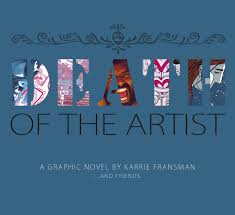
[READ: May 29, 2015] Death of the Artist

I grabbed this book from work because it looked interesting.  And it was.  I was more than a little confused as to how much is true.  And that was clearly the point.  Fransman totally pulled the wool over my eyes and I love her for that.

The premise of this book is that five artists are getting together for a weekend of debauchery.  They were friends in art school in Leeds when they were in their 20s.  Now, ten years later, they are reuniting in hopes of sparking creativity again.  Of the five only one is still doing anything “creative,” and they are all looking to reignite that spark.

And this book is the result of their week.

All five artists draw (or something) a story inspired by that weekend.  And in what turns out to be a pretty cool twist, Fransman has shaped the stories into a narrative. (more…)

Read Full Post »

empireSOUNDTRACK: THE DEAD MILKMEN-“Anderson, Walkman, Buttholes and How!” (1990).

deadmYesterday’s album could only be followed by this song.  The Dead Milkmen, always willing to mock, wrote this song with that hilarious title.  Interestingly, the “buttholes” part is a reference to Gibby Haynes, singer for the Butthole Surfers, on lead vocals.

Despite the title, the song itself sounds nothing like a progressive rock song.  It’s only 3 and a half minutes.  On the other hand it is almost entirely instrumental and changes style about 3/4 of the way through.

But check out the topical lyrics:

We’ve got to get together
And we’ve got to save the snails
Let’s board the purple spaceships
Before they set sail

I want a Yes reunion
And you know I want one now
No more Anderson
Walkman, Butthole Surfers and How!

Listening to the opera
And smoking angels’ dust
You can’t get more fucking
Progressive than us

The guitar riff is pretty interesting and angular.  And it’s sloppy in a wonderful Dead Milkmen way with stupid sound effects at the end of each line.  And of course, it’s just funny.

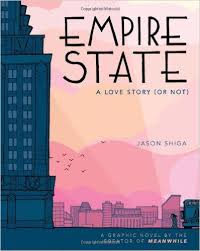
[READ: April 12, 2015] Empire State

I was delighted to see this book at the library.  I have really enjoyed the four other books by Shiga that I’ve read (I was sure I’d read more, but I guess they were all close together).  This one comes before his mind bending Meanwhile.  While it is a pretty straightforward narrative, he does play with time a bit to make the story a little more interesting.

One of the great things about Shiga’s art is how simplistic (I would almost say childish, but that’s not right or fair) his drawings look.  His characters are pretty much round-headed with round eyes and oval mouth.  They could be done on a computer but I hope they’re not.

The story starts in Oakland, CA, where Jimmy is talking to his best friend, Sara.  They talk about her date last night and the creepy Craigslist date she went on recently.  All the guy’s profile said was looking for a nice Jewish girl.  And Jimmy (who is Chinese) says that he may have to use that line next time. (more…)

Read Full Post »

atwq3SOUNDTRACK: YES-Tales from Topographic Oceans (1974).

Tales_from_Topographic_Oceans_(Yes_album)After the huge success of Fragile and Close to the Edge (with its 18 minute suite), what could Yes do next?  Well first they would release a triple live album, which I’ll get to later.  And then?  Why they would release a double album with only 4 songs on it!  That’s right 4 songs each around 20 minutes long!  And it would be ponderous and pretentious and it would be reviled by everyone!

The album shipped gold (because their previous records were so popular) and then sales plummeted.  The album is much maligned and, frankly, deservedly so.  Now, I love me a good prog rock epic.  So, four 20 minutes songs is pretty heavenly for me.  But man, these songs just don’t really have any oomph.

My CD’s recording quality is a little poor, but I don’t know if the original is too.  The whole album feels warm and soft and a little muffled.  You can barely hear Anderson’s vocals (which I believe is a good thing as the lyrics are a bunch of mystical jiggery pokery).  But despite the hatred for the album, it’s not really bad.  It’s just kind of dull.

Overall, there is a Yes vibe…and Yes were good songwriters–it’s not like they suddenly weren’t anymore.  There are plenty of really interesting sections in the various songs.  It just sounds like they have soft gauze between them.  Or more accurately, it sounds like you get to hear some interesting song sections and then the song is overtaken by another song that is mostly just mellow ambient music.

Without suggesting in any way that this album influenced anyone, contemporary artists are no longer afraid to make songs that are super long (see jam bands) or songs that are just swells of keyboards (see ambient musicians).  Yes just happened to put them all in the same song–way before anyone else did.

The album is very warm and soft—rather unlike the last couple of Yes albums which were sharp and harsh.  There are washes of keyboards and guitars and Anderson’s echoing voice. But what you’ll notice is that I haven’t really mentioned Chris Squire.  He’s barely on the album at all, and when he is, it’s usually to provide very simple bass notes–bass notes that anyone could play–it’s such a waste!  And while Alan White is no Bill Bruford (who was off rocking with King Crimson then), he’s also barely there.  In fact, Rick Wakeman himself is barely there–the king of elaborate classical riffs is mostly playing single notes at a time.  According to Wikipedia,

Wakeman took a dislike to the album’s concept and structure from the beginning. He made only minimal musical contributions to the recording, and often spent time drinking at the studio bar and playing darts. [During the recording session] he played the piano and synthesiser on the Black Sabbath track “Sabbra Cadabra”.

Evidently Anderson wanted a pastoral feeling in the studio

According to Squire, Brian Lane, the band’s manager, proceeded to decorate the studio like a farmyard to make Anderson “happy”.  Wakeman described the studio, “There were white picket fences … All the keyboards and amplifiers were placed on stacks of hay.” At the time of recording, heavy metal group Black Sabbath were producing Sabbath Bloody Sabbath in the studio next door.  Ozzy Osbourne recalled that placed in the Yes studio was a model cow with electronic udders and a small barn to give the room an “earthy” feel. Anderson recalled that he expressed a wish to record the album in a forest at night, “When I suggested that, they all said, ‘Jon, get a life!'”

So we have an earthy pastoral album.  But what about the four sides?  Steve Howe describes it:

“Side one was the commercial or easy-listening side of Topographic Oceans, side two was a much lighter, folky side of Yes, side three was electronic mayhem turning into acoustic simplicity, and side four was us trying to drive the whole thing home on a biggie.”

Despite Wakeman’s complaints, he did have some nice thing to say about it.  he said that there are

“very nice musical moments in Topographic Oceans, but because of the […] format of how records used to be we had too much for a single album but not enough for a double […] so we padded it out and the padding is awful […] but there are some beautiful solos like “Nous sommes du soleil” […] one of the most beautiful melodies […] and deserved to be developed even more perhaps.”

And if Rick Wakeman says an album is padded, you can just imagine what the rest of the world thought!

The lyrics (and mood) are based on Jon Anderson’s vision of four classes of Hindu scripture, collectively named the shastras, based on a footnote in Autobiography of a Yogi by Paramahansa Yogananda.  So if I read this correctly–he wrote 80 minutes of music based ona  footnote!

The four songs are

“The Revealing Science of God (Dance of the Dawn)” [which Howe says is the commercial or easy-listening side] builds slowly and eventually adds vocals.  And then come the drums and a decent keyboard riff.  There’s some noodling on the keyboards.  The riff is catchy but not immediate (which might be the subtitle for the album).  At nearly 4 minutes a faster section kicks in and there’s a catchy vocal part, which seems like where Anderson might normally soar but he holds back.  The “must have waited all our lives for this moment moment moment” is catchy, but again I can’t help but feel it would have been much more dramatic sounding on an earlier record.  At 7 minutes there’s a nice jump to something more dramatic—good drums, but the bass is mixed very low (poor Squire).  There’s some good soloing and such but it is short lived and things mellow out again.  It resolves into a new riff at 9 minutes, but resumes that feeling of washes and noodling guitars.  At 11 minutes there’s an elaborate piano section and the song picks up some tempo and drama. Especially when the bass kicks in around 12 minutes.  The most exciting part happens around 17 minutes when the whole band comes to life and adds a full sound, including a good solo from Wakeman.  And while this doesn’t last, it recycles some previous sections which are nice to hear.

Track 2 “The Remembering (High the Memory)” [which Howe described as the much lighter, folky side of Yes] has a slow, pretty guitar opening with more harmony vocals.  The whole first opening section is like this—layers of voices and keys. Then come some keyboard swells and more vocals.  Some bass is added around 6 minutes. And then around 8 minutes the tone shifts and there is a lengthy slow keyboard solo that reminds me of the solo in Rush’ “Jacob’s Ladder” (released 6 years later).  At around 9 minutes there’s a more breezy upbeat section with a cool riff.  At 10:40 a new section comes in with some great bass lines and guitars and an interesting vocal part. It could easily have been the structure for a great Yes song (vocals are singing “relayer” which of course is their next album’s title). But this is all too brief (it thankfully returns again) and then it’s back to the gentle keyboards.  At 12 minutes there’s a new medieval type section with some great guitar work.  When the “relayer” part returns around 13 minutes there’s a whole section that is great fun.  And even though it doesn’t keep up, the song feels rejuvenated. By around 17 minutes there some interesting soloing going on and then the band resumes to bring it to the end (with a reprise of an early section). And the final section is quite lovely.

Track 3 “The Ancient (Giants Under the Sun)” [Howe: electronic mayhem turning into acoustic simplicity] is probably the most interesting.  It opens with some clashing cymbals and then a fairly complex percussion section and mildly dissonant guitar riff.  There’s even some staccato bass line. The vocals come in around 4:30 and the song shifts to a less aggressive sound, but the big bass continues throughout the beginning of the song until a fast riff emerges around 6 minutes. But more unusual Yes-type riffage resume briefly before segueing into the next part with lots of percussion.  While the staccato bass and drums continues, Howe solos away.  Then around 12 :30 the whole things shifts to a pretty, slow acoustic section with a classical guitar and vocals.  This entire end section sounds like it could easily have been its own song and it is quite lovely.  Howe’s acoustic work is great and there’s even a lengthy solo.

Track 4 “Ritual (Nous Sommes du Soleil)” [Howe: us trying to drive the whole thing home on a biggie] is also quite good.  It’s probably the most fully Yes track of the four, with many sections of “full band” material.  There’s a noodly guitar intro switching to an interesting dramatic minor key movement.  There’s a pretty, if simple, riff (done by guitar and voice) that is quite lovely.  Around 4:30 the guitar solo brings in a riff from a previous Yes song. By 7 minutes, the song settles into a fairly conventional sounding Yes song (with actual bass and drums and…sitar!).   Around 11 there’s a bit of Wakeman soloing (he did show up for some of the album after all) and then some wild guitar and bass work.   The crazy percussion resumes and there’s a wild keyboard solo on top of it. The end of the guitar solo even has a bit of “Born Free” in it.

I hadn’t listened to this record in probably 25 years.  And so I listened to it 4 times in the last few days.  And I have to say that I thought it was bloated and awful at first, but it slowly grew on me.  I found some really interesting sections and some very cool riffs.  If these pieces could have been truncated into individual songs they would be quite good.  The biggest problem for me is that so much of it is so slow and mellow–like it’s building up to a big climax which never arrives.  On previous albums, Yes had made quite a show of being insane musicians, and that just isn’t here.

So even though I have come around on these songs, they certainly aren’t my favorites.  But if you’re at all interested in Yes, there’s some gems hidden away in these monstrosities (just don’t think too much about what Anderson is talking about).

Since almost every Yes album had different personnel, I’m going to keep a running tally here.  The band stayed together after Close to the Edge, but this was too much for Wakeman who left after the recording:

Chris Squire-bass
John Anderson-vocals
Alan White (#2)-drums
Rick Wakeman (#2)-keyboards
Steve Howe (#2)-guitar

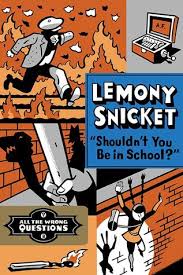
[READ: June 20, 2015] Shouldn’t You Be in School?

I am finding this series to be ever more and more confounding.  And I know that is its intent, but it is still a challenge.  Whenever anyone asks a question someone else replies that it is the wrong question.  But they never say what the right question should be (deliberately confusing!).  There are also so many threads and confusing characters, that if Snicket didn’t make the story funny and strangely compelling, it would be incredibly frustrating.

In this story, Hangfire, having been thwarted in his previous endeavor to capture children (for what end we do not know) is back with a new plan to capture children.  Also, the mysterious (and presumably wicked, but who can be sure) Ellington Feint has returned as well to help or hinder as she sees fit.

The other characters are back too, of course: Moxie is back taking notes, Jake Hix is cooking delicious foods at Hungry’s (in fact there are even some recipes that sound pretty yummy–Snicket himself makes a passable tandoori chicken).  S. Theodora is still his mentor (and the pictures by Seth of her are hilarious).  Late in the book Pip and Squeak show up.  And naturally the policemen and their bratty son Stewie are there too.  And we are still wondering what in the heck is going on with the bombinating beast.

There’s also some new characters, like Kellar Haines, a young boy who when we first meet him is typing up something in the offices of the Department of Education (with posters all over the walls that say Learn! Learning is Fun, etc).  And his mother is also becoming quite chummy with S. Theodora.

The danger in this book is fire.  Building after building is being burnt down.  The Stain’d Secondary School is engulfed.  Even the library is at risk!  And that’s when S. Theodora solves the crime!  She gets the library Dashiell Qwerty arrested for setting the fires.  And even though it is quickly determined that he did not do it (a building was burnt down while he was in custody), that doesn’t stop S. Theodora and her new friend Sharon Haines (in matching yellow nails) from partying.  It also doesn’t stop Qwerty from being taken to prison.

This story is a bit darker than the other ones (which were admittedly pretty dark).  Every kid is being drugged with laudanum which makes you sleepy.  We’re unclear exactly what they are being drugged for, but Snicket has a plan to stop it.  Snicket himself winds up getting beaten up–pretty badly–from Stew and others.

And for the first time, S. Theodora is kind to Snicket (more or less) and apologizes for her behavior (sort of).

By the end of the book a plan is hatched, a bunch of people join the V.F.D. (as seen in A Series of Unfortunate Events) and someone is taken to jail. There’s even a mysterious beast who is living in the fire pond.

As in previous books there is ample definition building–either from people saying they don’t know what a word means so that it can be defined or from Snicket himself simply defining a word.  As in “my brother and I played an inane game” “inane is a word which here means that my brother and I would pretend we couldn’t hear each other very well while we were talking.”  This game actually sounds fun:

What do you think of the weather this morning?
Feather? I’m not wearing a feather this morning.  This is just a hat.
Just a cat? Why would you wear a cat on your head?
A Bat in your bed etc etc.

The artwork by Seth is once again fantastic and noirish.

And the end of the book has a fragmentary plot “a great number of people working together, but they plotted together in such a way that nobody knew exactly what the other people were doing”  And finally we learn what the right question is, but it’s the unsatisfying: “Can we save this town?”  We’ll have to find out in the concluding book 4.

You can also check out the website for some fun.

Read Full Post »

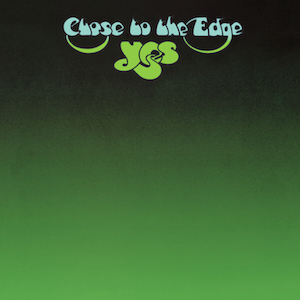
critterSOUNDTRACK: YES-Close to the Edge (1972).

Yes-closeHaving such success with Fragile, the same line up toured that album and then planned a tour for the successful follow-up Close to the Edge.  This album is the first one to feature their now iconic logo and a clearly designed by Roger Dean album cover (even if it’s fairly plain).

This is also their first album to feature a side one suite, the title track “Close to the Edge.”  It also features only two other tracks (10 and 9 minutes each).  And despite (or because of that) it was a huge success.

“Close to the Edge” opens with part I “The Solid Time of Change.”  The opening is soft and then blam, some crazy guitar lines over a fast and complex bass line.  There’s so much going on it’s near cacophony for 3 minutes (I’m not even sure how they did it).  Until a beautiful soaring guitar riff breaks from the noise.  I love that Howe plays the riff a second time with slight variation to it—really keeping it interesting and complex.  And at nearly 5 minutes we get to the “close to the edge” chorus, or at the first part of it (I also love that the chorus gets bigger as the song progresses).  I don’t really know where the “parts” begin, (confusingly they sing the titles of the sections through the song).

Ok, so Wikipedia tells me that part II “Total Mass Retain” begins with the big thudding bass at around 6:04.  And part III “I Get Up, I Get Down” evidently starts right after the keyboard solo around 8:28 which begins with the slow washes of keyboards.  It is the mellow section with the multiple layers of vocals and the gorgeous church organ.  Part IV “Seasons of Man” starts with the reprise of the earlier music (in a weird key change).  There’s a lengthy keyboard solo here and then more vocals reprising all of the section with a slightly different feel. Until it all fades out much like it faded in.  It’s a dynamite track and never feels 18 minutes long.

Side two has two songs.  “And You And I” is only 10 minutes long but it too has 4 parts.

Par I “Cord of Life” opens with what is more or less guitar tuning (although it sounds lovely with his guitar).  And then there’s some very pretty acoustic guitar playing.  I really like when the bass notes come in around 1:15 and then there’s Wakeman’s keyboards.  It gets big and bassy just at the end of part 1.  Part II “Eclipse” starts around 3.48 right after the “call” when the big orchestral instrumental kicks in. This part lasts for 2 and a half minutes.

The opening guitar returns and then part III “The Preacher, the Teacher” begins with a new guitar section (and more keyboards) this is more or less a reprise of the other verses.   Part IV “The Apocalypse” is just 52 seconds long and is the reintroduction of the “and you and I theme” (and is not apocalyptic at all).

“Siberian Khatru” is 9 minutes but only one part. It opens with a fast cool guitar riff and then adds a fast cool keyboard riff.  The bass rumbles through and the guitar floats over the top.  There’s a great guitar riff that comes in around a minute in, which is the main riff of the song.  And then there’s some harmony vocals   After the harmonies, the song sort of resets and we get another verse with more great harmony voices.  The keyboard solo is on a harpsichord and sounds very classical.  Then there’s a trippy guitar solo.  A new section of song starts around 4 and a half minutes.  Around 6 minutes the song switches to the ending coda, a smooth cool riff with a guitar solo floating over the top.  The band jumps in with a sung staccato  “doh dah doh” bit which sounds like it would end the song, but they’re not done, there’ another refrain of that cool keyboards section with a neat noodly guitar solo.

This was a band of soloists that were at the top of their game and not only did great work by themselves but played very well together.

Since almost every Yes album had different personnel, I’m going to keep a running tally here.  Two albums in  row with the same lineup!:

Chris Squire-bass
John Anderson-vocals
Bill Bruford-drums
Rick Wakeman (#2)-keyboards
Steve Howe (#2)-guitar

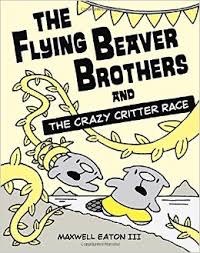
[READ: June 30, 2015] The Flying Beaver Brothers and The Crazy Critter Race

I love the Flying Beaver Brothers.  And even though the last couple haven’t been quite as awesome as the first ones, this one has definitely brought the series back on an upswing.

The book casually mentions the baboons from the previous book and what they did to Beaver Island (don’t ask) and then gets right into the action.  A local businessman is having a race.  Everyone is invited to replant the trees that the baboons destroyed and the winner will win a houseboat.

Turns out the entrepreneur is named Crazy Critter (they assumed that was the name of the race) and he is super gung ho about getting the race started.  In Crazy Eddie tradition, he calls himself crazy a LOT. (more…)

Read Full Post »

babboobSOUNDTRACK: MADISEN WARD AND THE MAMA BEAR-Tiny Desk Concert #444 (May 26, 2015).

wardI love that Mama Bear is actually Madisen Ward’s mother, Ruth.  They play some really wonderful roots music.

Madisen has a powerful soulful voice and Mama Bear’s harmonies are excellent–ranging from deep to high pitched.

And their joint harmonies on second song, “Sorrows and Woes” (especially the final note) are really amazing.

Mama Bear also adds some great licks to some of the songs (Madisen plays leads on “Silent Movies” while mama Bear plays the main riff on “Daisy Jane.”

Between songs, Madisen has some funny banter.  I laughed when he said that he was now going to retire since he has played the Tiny Desk.  And Mama Bear talks about how excited she is that their new record is on yellow vinyl.

The songs are delightful folk songs (with “Daisy Jane” being the boppiest of the lot with some delightful “ooh hoos” at the end).  I’d never heard of them before, but I wish them a lot of success.

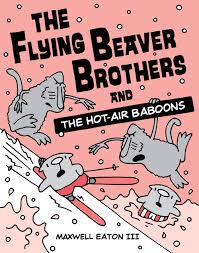
[READ: February 11, 2014] The Flying Beaver Brothers and The Hot-Air Baboons

I saw this book in the library and was delighted to have another Flying Beaver Brothers book to read (I also just saw online that there is a sixth book too!).

Poor Beaver Island is under attack yet again (my kids were surprised to see that there were so many beavers on the island with them, and I admit I didn’t realize there were quite so many either).

The threat this time is a group of baboons who are melting the snow off of the skiing mountain (beaver island really has it all!).  When Ace and Bub finally get caught up to speed with what’s happening, the baboons (Pete, Kyle and Ringo) hilariously get mad about having to repeat the whole story that they told everyone earlier.  There is a helpful chart with Proboscis and Baboon listed as types of monkeys and buffoon as not a type of monkey. (more…)

Read Full Post »

[ATTENDED: June 25, 2015] Rush

2015-06-25 21.28.51I was a huge Rush fan back in the day.  In fact, to last night’s show Sarah wore my Rush shirt that I bought in, oh, 1983 or so.  Despite my huge love of Rush I actually hadn’t seen them many times live. I missed several opportunities in college (stupid work ethic) but finally got to see them on the Presto tour.  Whether it was April 20 or April 25, it was definitely 1990 and most likely at the Brendan Byrne Arena (R.I.P.).

I feel like I may have seen them on one more tour before seeing them again (possibly three times, I have 3 stubs) in 2002.  The problem with seeing them a lot in one tour is that they tend to keep the set list the same in every show (there’s some variation below).  And I remember thinking i didn’t need to see them again after that.

Of course, after seeing them last night and today listening to the Clockwork Angels tour CD I am really kicking myself for not going to that tour because there is some really interesting stuff (and a string section) which would have been pretty cool to see.  But that’s okay because the show last night was so good that it satisfied all my Rush needs–a great send off (presumably) to a great band.

Sarah had never seen Rush before (and in fact once actively disliked them, and may still).  But she was won over by the show.

I haven’t been to a big arena show (except for Kiss) in a long time, so I kind of forgot what we’d be getting.  And wow did we get a lot–flash pots, fire, lasers, explosions, video screen (even a possible marriage proposal in front of us).  And, at any Rush show… lots of air drumming (including from myself).

I had been deliberately avoiding any spoilers from the set list.  I didn’t want to have any expectations.  And I have to say, if I had made an ideal set lit, (which I thought about doing), they would have hit quite a number of them.  (Thanks Rush fans for not spoiling things for me).  And thus, below is a whole bunch of spoilers [consider yourself warned].  But one spoiler you must read–do not leave during the encore, there’s more to the show when the music is done. (more…)

Read Full Post »

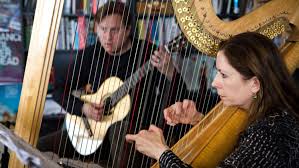
rexSOUNDTRACK: JASON VIEAUX AND YOLANDA KONDONASSIS-Tiny Desk Concert #443 (May 22, 2015).

yolandaTypically, the Tiny Desk doesn’t have performers back after they have played once.  But occasional exceptions are made, like when performers who played solo come back as a duo.  Like this.

Jason Vieuax was one of the first 20 people to play the Tiny Desk and Yolanda Kondonassis played back in 2010.  And here they are touring as a duo, which really helps to accentuate both of their skills.  And their music is beautiful together.

Vieuax is an amazing classical guitarist.  And Kondonassis plays an amazing harp that is more about singular notes than trills and “heavenly” sounds.  And in these songs, they work together doing harmony runs and fills–both instruments are lead instruments.

Apparently there aren’t very many pieces written for the combination of harp and guitar.  Kondonassis explains the origins of the Hovhaness piece (which gives some lovely context).

Vieaux explains the origins of the two movements of the Piejo suite.

The first piece is sweet, while the second one is a little more aggressive (but still lovely).  And the third one features some cool riffs and chords (especially on guitar) and percussion done on the instruments.

The three songs they play are

  • Gary Schocker: “Elysian” (from Hypnotized)
  • Alan Hovhaness: Fuga: Allegro – Andante grazioso, Canon: Allegro (from Sonata for Harp and Guitar, “Spirit of Trees”)
  • Máximo Diego Pujol: Vals, Candombe (from Suite mágica)

The pieces are familiar and yet quite different.  And 456+it is much fun to watch their fingers fly around their instruments.

[READ: January 24, 2015] Tommysaurus Rex

I brought this book home for Clark to read.  I wasnt going to read it myself but then I saw that I had read a book by TenNapel before and liked it.

But I did not care for this one.  Perhaps it was because it was marketed in my library as a kids book but I thought it was just too violent or something–the story turned me off.

Perhaps it was just that the story opens with the main character’s dog getting hit by a car and dying.  I mean, who needs that?  And the cover looks so fun, too. (more…)

Read Full Post »

pizzaSOUNDTRACK: BELLOWS-Tiny Desk Concert #440 (May 11, 2015).

bellows I knew Bellows from NPR playing one of their songs.  They are a new band with one album out.  Their Tiny Desk Concert is really short (under 10 minutes) but they do play 3 songs.

I’m curious if they are stripped down for this or if they typically sound this soft and simple.

The opening song “Sacred Heart” is propelled by a very simple synth riff and bass notes (the lefty bassist plays a right handed bass upside down, which is interesting to see).  Perhaps the most compelling thing about Bellows is the harmony voices (and the drummer’s hair).

Lead singer Oliver Kalb has a voice that I wouldn’t call powerful, but it is rather distinctive (and perhaps a bit unusual).  The songs work best when the unnamed keyboardist (female) and bassist (male, deep voice) all sing together, like in “Hello Morning.”

The final song, “White Sheet” is the one I knew from NPR.  It sounds just as good here.  It is easily the best of the three songs, probably because the keyboardist does more than sing harmony.  (And the ah ah ah ah section, combined with the deep breathing section is very catchy too).

I think it may be the simplicity of the melodies that makes the songs so effective–they do stay with you.  And they definitely leave me wanting to hear more.

[READ: January 5, 2015] Stick Dog Chases a Pizza

I didn’t know there was a third Stick Dog book out.  It is pretty samey compared to the first two (but since I haven’t looked at a Stick Dog book in a while, it was okay).   In the first book, the dogs were after a hamburger.  In the second it was a hot dog. In this book they are after a pizza.

The book opens with the dogs all laughing at Karen (the dachshund) trying to catch her tail.  When that is over (Stick Dog doesn’t like that they are teasing her even if it is funny), he suggests that they go the park and play Frisbee.  There is plenty of funniness as the dogs ignore him but pretend they were paying attention.  And then they all come back with what they think is a Frisbee (the results range from bottle caps to flat tires (the poor bike rider) to cardboard discs.

But the cardboard disc has red stuff and white stuff on it and it tastes delicious. I have to say I am surprise that they never tasted pizza before (all dogs root through garbage and grab pizza boxes at some pint right?). (more…)

Read Full Post »

peanuts1956SOUNDTRACK: ESKMO-Tiny Desk Concert #439 (May 8, 2015).

 eskmoEskmo is a guy from Iceland (Brendan Angelides).  He plays electronic music.

His music is pretty and rather mellow.  What makes this Tiny Desk so enjoyable is the objects he uses to makes sounds with.

He loops a lot of noises (something that I love) as they build to really add textures to the song.  But the things he uses for sounds are awesome.  In the first song (“Blue and Gray” about 4 minutes), he crinkles a water bottle to make a percussion sound.

Before the second song “Can’t Taste” (which is about 8 minutes), he asks the audience to bring up random objects for him to play with.  So he gets a set of keys that he uses as a chime sound.  He opens a can of seltzer for percussion.  He plays a metal water bottle.  And then he also takes things from the shelves behind him, like the shelves themselves and even a Paul McCartney bobble head.

The music itself is almost an afterthought, as the melody is pretty but he doesn’t really do a lot to lot–he just has a ton of fun playing with the items around (he gets a big smile with the bobble head).

This is a show that works much better visually than audibly, so watch it here.

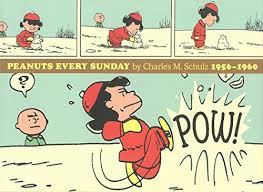
[READ: April 10, 2015] Peanuts Every Sunday 1956-1960

Fantagraphics has been releasing volumes of Peanuts daily comic strips.  They are looking to do 50 years of strips in 25 books! (they are up to 1990).  And now they have begun releasing the Sunday color strips in their own volumes.

This book picks up where the last one left off.  And of course, Snoopy is still the star.  There’s some very funny jokes with snoopy–like the one where he tries to fly—there’s something wonderful about Snoopy being insecure (and clumsy).

Linus can’t let go of his blanket (July 1956).  And in an early baseball one, the blanket actually causes him trouble (instead of later ones where it is a benefit).

Pigpen gets a strip devoted to himself in July 1956  and then there’s a very funny one about sand in his shoe in 1958.

Lucy yells to make the kites fall out of the tree.  And the first full acknowledgment of her pulling football away comes in December of 1956.

I also enjoy how violent the cartoons were.  Like this exchange between Linus and Lucy:

Linus: Give it to me or I’ll slug ya.
Lucy:  Mom, Linus says he’s gonna slug me.
Mom: Linus that’s no way to talk.
Linus: Well, that’s the way they talk on TV if they can talk that what, why can’t I?
Mom: That’s just one of those things I can’t explain.
Lucy: Listen dope. If you slug me I’ll slug you right back.
Linus: Never mind Mom, it’s just been explained to me in language that I understand.

There’s some really great one liners coming in now too.  Lucy: I feel torn between the desire to create and the desire to destroy.

There almost isn’t as much Charlie Brown in this book.  Although he is certainly there.  In June 1957 he realizes that he won’t ever be president.

And the gang all starts to look pretty much as we know them at this point (except Snoopy still).

There’s lots of funny strips (visual mostly) of Snoopy chasing Linus to try to get his blanket (a joke that recurred for years).

And there’s a very meta joke of Lucy wearing one of CB’s shirts

Sally Brown, CB’s sister is born around August 1959 and CB gains a pencil pal.  The following week Aug 16 1959 is a great sibling rivalry with Lucy and Linus.  And there’s a wonderful strip where Sally and Snoopy gang up on Linus Oct 25 1959.

The Snoopy jokes are very funny with him (still) walking on all fours and wishing to be a bird or pretending to be a mountain lion.

The 1960 new years strip in which Lucy gives Linus the resolutions he should work on is hilarious.

Later Linus gets so mad at Lucy that “she hath caused me to rend my garment” is one of the funnier punch lines I’ve seen.

The great pumpkin makes its first mention on October 23 1960.

The Snoopy/Linus rivalry is really wonderful throughout with Snoopy trying to steal Linus’ blanket and then later getting into boxing matches—this is the classic Peanuts.  Some of these jokes have now been around for ages (the boxing glove on the nose). And Snoopy is starting to look a lot more like his familiar self (although not exactly the same yet).

It’s a great collection, once again.  And it looks amazing.


Read Full Post »

« Newer Posts - Older Posts »