Feeds:
Posts
Comments

Archive for the ‘Funny (ha ha)’ Category

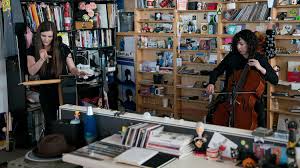
SOUNDTRACK: BLOOD ORANGE-Tiny Desk Concert #820 (January 29, 2019).

One night when I was going to a concert at the small club The Foundry, the main stage Fillmore had sold out for someone called Blood Orange, whom I’d never heard of.

And now he is at a Tiny Desk Concert.  From the name (and the popularity) I assumed it was an intense dance show.  I don’t know what Blood Orange normally sounds like but nothing could be further from loud dance music than this Concert.

Devonté Hynes is the main man behind Blood Orange.  He is “a groundbreaking producer and songwriter” and “a composer who fits as comfortably in the worlds of R&B, gospel and electronics as he does in the classical world of someone like Philip Glass.”

Blood Orange addresses

themes of identity, both sexual and racial, through the eyes of a black East Londoner (now living in New York).

For me the most powerful song was the first one, “By Ourselves.”  I don’t love the saxophone sound, but it’s the words that are so moving.

The opening song at the Tiny Desk, “By Ourselves,” features Dev Hynes on piano, Jason Arce on saxophone, Eva Tolkin and Ian Isiah on vocals along with a powerful spoken word performance by Ashlee Haze. Ashlee’s story is a tale of finding herself and her identity in the words and music of Missy Elliott when she was, in Ashlee’s own words, an eight-year old, “fat black girl from Chicago” who discovered “she could dance until she felt pretty” and “be a woman playing a man’s game.”

Her spoken word is amazing–moving, powerful and inclusive in many ways.  It will resonate, I hope.  And Hynes’ piano playing at the end is just lovely.

Ian sings the opening melody with a gorgeous falsetto.

“Jewelry,” the second song performed, welcomes Mikey Freedom Hart on piano while Dev moves on to electric guitar and vocals reminiscent of a languid Jimi Hendrix, with soul-baring lyrics of pride.

Hynes switches between spoken word (with his great deep, accented voice) and delicate singing.  Then the song shifts gears entirely as he starts playing a gentle echoed guitar.  I don’t hear Jimi Hendrix (maybe in his echoed guitar playing), I hear more of a Prince vibe.

The group then offers a rendition of “Holy Will,” inspired by the Detroit gospel group The Clark Sisters, as singer Ian Isiah takes this song of praise to a whole new level.

Introducing the song he says, “This song, my family Ian Isiah is gonna… tear the fuck up.  Can you swear on this?  You put the thing before hand that says explicit language, right?”  And Isiah does tear it the fuck up.  It’s a quiet song but Isiah’s voice (especially when paired with Eva Tolkin) is almost otherworldly.

For the final song, “Dagenham Dream” everyone but Ian and Eva leave.

Dev Hynes works an organ sound while singing about being beaten and bullied as a school kid in his hometown of Dagenham in east London.

I love the cool organ sounds and the way the seem to rise out of the deep darkness into a bright note of hope.

The power of each of these songs is magnified by the way Blood Orange has woven this performance together. He’s a rich, rare and caring talent we first met 11 years ago in a grassy field in Austin, Texas back when he still used the moniker Lightspeed Champion. Now his thoughts are deeper, his message of finding one’s place in this world more deep-seated, with a clarity few artists ever achieve.

[READ: November 2, 2018] “Friday Black”

I’m not sure how many Esquire issues have a short story in them.  I thought about going back to previous issues and seeing just how many stories there are over the course of 85 years.  But it’s a little hard to read their website when it comes to what’s actually fiction and what just talks about fiction.

So, I’ll be content with stories like this one, which I loved.

The story opens with ravenous humans howling at a gate.  The narrator explains that he is sitting on a cabin roof with an eight-foot metal pole.  He uses it to grab hangers off the highest racks and to smack down Friday heads.  For this is a zombie story about Black Friday.

(more…)

Read Full Post »

SOUNDTRACK: RODRIGO Y GABRIELA-“Echoes” (2019).

Rodrigo y Gabriela are amazing guitarists.  Rod plays amazing solos wile Gab plays an astonishing rhythmic counterpoint (both on acoustic).  Although they do play classical and Spanish styles (and so much more) they often mix heavy metal elements into their songs.  I have seen them twice live and they blew me away each time.

They are back with their first album in five years.  And they have just released a cover of Pink Floyd’s “Echoes” an 18 minute song that I just love.

And their version is utterly fascinating.  How do two guitarists plan to cover Pink Floyd?  Well, the beginning of the song is a great, recognizable riff, so they play that and Rod plays the vocal line when that comes around.

The middle of the original gets really trippy and kind of dark, with all kinds of synth sounds.  So what do Rod y Gab do?  They embrace what they do best–with Gab playing an incredible rhythm, Rod takes an opportunity to shuffle around in a solo (there’s certainly some looping overdubbing here).  The middle quiets down to them just scraping strings and pounding the guitar and splaying single echoing notes.  It’s not as dark as the original, but it’s still a weird and somewhat unsettling passage.

The song comes out of the middle darkness with  a rollicking solo and a huge buildup from both guitars.

It resumes the song and finishes much like the original in about 18 minutes.  It’s spectacular.

Learn more about it and watch the video here.

[READ: January 25, 2019] Cucumber Quest 2

It has been a while since I read Cucumber Quest 1, so details were a little fuzzy, but the humor of the book is still awesome (especially the way it undercuts hero tropes.

Cucumber wakes up on an island and as he is calling for his friends, he steps on a cell phone.  As he goes to use it, someone shouts NOOO!

It is a young female bunny creature arguing with a crab.  The crab (and all of the crabs) are crabby.  They doubt that she is Princess Nautilus even if she claims she is.  Cucumber takes out his magic wand and it actually works!   He saves her.  Woah.

She says he can call her Nautilus.  He suggests “How about Nautie for sh–” and then realizes what he said. (more…)

Read Full Post »

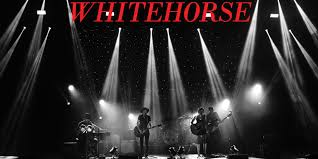
SOUNDTRACK: WHITEHORSE-Live at Massey Hall (December 8, 2017).

I saw Whitehorse open for Barenaked Ladies a few years ago and they blew me away.  I really want to see them again.

When I saw them it was just the two of them and the magic of their interplay was what really impressed me the most.  For this special Massey Hall show, they have a full band.  But as Melissa McClelland explains:

This is the first time playing the Massey stage with a full band.  We wanted to … finally invite some friends on stage with us and play music.

Those friends include John Obereian on drums, Ryan Gavel on bass, guitar and backing vocals and on keys and bongos and guitar, the second best singer in this band Gregory MacDonald.  He replies, “Thanks to the second best guitar player in the band.”  I have seen MacDonald on tour with Sloan a bunch of times and he is awesome.

As to why they are a duo, she says

we knew that Whitehorse was always going to be just the two of us and that everyone would know that we are equal partners in the band.  But we didn’t want it to be a folk duo so we started brainstorming and bought looping pedals and a kick drum and a stomp box and we  found new arrangements and once we got it we were like Yeah!

The show opens with hand clapping from the band and the audience and then Melissa’s slinky bass intro to “Baby Whats Wrong.  Then comes Luke Doucet’s echoing Western guitar. Their voices are wonderful together and I love when Doucet sings in that weird telephone microphone.  He also plays a ripping guitar solo.

Luke introduces “Tame as the Wild Ones” by saying they needed to write a sexy song so “Melissa kicked me out and said she’d do it alone.  I go to the bar to get drunk and when I come home, she plays me this song.  And nine months later our son Jimmy was born.”  I love the way the bridge (or is it a chorus) builds and settles–that melody is just gorgeous.

“Pink Kimono” has a simple rocking riff and the two singers singing at the same time.   Doucet’s soloing is on fire in this song.

“Die Alone” is a showstopper.  A slow moody piece in which Melissa sings over a wash of synths.  The music so much build as just unfold as first Luke sings with her and then the band kicks in.  Wow can Melissa belt out a song.

“Downtown” is a celebration of how you can put hundreds of thousands of people in a city and for the most part everyone gets along.  It s got a great throbbing bass and some cool guitar scratching and riffs from Doucet.  It’s a bummer that they interrupt the awesome middle solo section with an interview, even if it is quite interesting.

After Melissa lays out how they wanted the band to sound, Luke says that when people ask him about what it’s like to do Whitehorse, he says

we were solo artists first but we had been involved with each others albums as singer or producer  or touring musician.

So in order to be successful

you have to hang out together for five or six years and play in each others bands and make eight albums together and then you have to go on tour as freelance/hired gun musicians working for Blue Rodeo or Sarah McLachlan and then you have to live together for five or six years and listen to music together and fight and then you have to get married and once you’ve done all these things and listened to 10,000 hours of music and dissected Tom Waits entire catalog and argued about which is the best Beatles record and had fights on stage about who is speeding up or slowing down and once you’ve done all those things together then start a band.

It certainly worked for them.  The only bad thing about this show is that it’s only 30 minutes.

[READ: January 24, 2019] Hits & Misses

It has been a while since Simon Rich published a collection of his stories.  This one was pretty enjoyable.  Overall, not as much fun as some of his previous collections, but still a lot to laugh at.  Rich tends to write what he knows, which is often a very good sign.  However, sometimes what he knows is limited to writing and filming, which tends to miss the everyman silliness of his earlier pieces.

Having said that there are still some hilarious pieces that anyone can enjoy and some pieces about writers that are very funny.

A few of these pieces appeared in the New Yorker, and I indicate as much, with a link to my longer review.

“The Baby.”  This was a highlight.  A sonogram reveals that their baby is holding a pen–he is going to be a writer!  But when word gets out that the baby is already getting a reputation AND representation, well, that baby’s writer father is pretty damned jealous.  Wonderful absurdity based on reality taken to its extremes. (more…)

Read Full Post »

SOUNDTRACK: RHEOSTATICS–Humanities Theatre Waterloo ON (January 24, 1997).
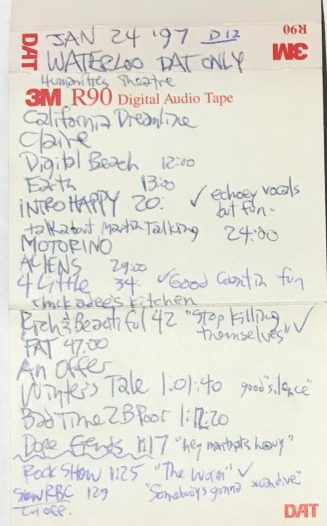
Just as I was finishing up all of the newest live Rheostatics recordings, Daron posted a dozen or so more.

This is a pretty awesome soundboard recorded show just following the Rheos tour with The Tragically Hip and about 4 months after the release of The Blue Hysteria. One of the best versions of A Mid Winter Night’s Dream I’ve ever heard. As you can see on the DAT it used to be called Winter’s Tale. People From Earth opened the show. NB both First Rock Concert and RBC are incomplete recordings.

People from Earth opened.

After listening to all of those new recordings, it’s fun to go back to 1997 before they had broken up, while they were touring The Blue Hysteria.  It’s also a little surreal to not really hear the crowd (because this is a soundboard).

This recording is 90 minutes (which means either they were playing shorter shows back then or a lot of it was cut off (which seem more likely).

Martin sounds great, playing a rather slow and hushed version of “California Dreamline.”  I like the way the washes of guitar noise segue in to the acoustic guitar of “Claire.”  Throughout the show I couldn’t help noticing how young Tim sounds (far more so than the other guys).

After a trippy “Digital Beach,” they segue into “Earth/Monstrous Hummingbirds.”  It’s one of their weirder songs with lots of different parts.  It sounds great–certainly a peak time for this kind of song.

There’s a fun boppy version of “Introducing Happiness”–Tim seems to be having a lot of fun with the song.

Dave Bidini says that last night, Martin talked the longest on stage ever in his life before introducing this next song.  “You probably read about it on the internet or something.”  Martin says, “I enjoyed it so much I can’t do it tonight.”  He says that the recording of “Motorino” features the host of channel 47 show Jump cut for young Italian Canadians.  That’s Felicia.  She spoke (rapidly) in Italian for the record.

It’s interesting that this is the first song they’re playing off of the new album and they don’t mention it as such.

“Four Little Songs” is still new so they don;t get too crazy with it, although Martin has fun singing his part.   Dave would like to dedicate his fourth little song to our backdrop the newest member of the Rheostatics.  It’s the angry chickadee or two fish kissing.  Dave asks Tim, “who would win in a fight?  Angry Chickadee or Monstrous Hummingbird?”  Tim: “How big is monstrous?”  Martin: “Like Mothra.”

After not playing anything from Blue Hysteria, the play six new songs in a row.  Martin introduces “Sweet Rich Beautiful Mine” as a song “about trying to help someone that you’re in love with….stop killing themselves.  Sorry.”  It’s wonderfully intense and the harmonies are outstanding.  The sound of the guitar taking off half way through is tremendous and Martin hitting those falsetto notes gives me goose bumps.

“Fat” “is as song about having a best friend” (Dave says). It opens with a great slinky bass and Martin saying more drama on the lights–get rid of those white ones.   More great backing vocals from Martin.  It’s followed by Tim’s delicate “An Offer.”  Tim;s voice seems to be much higher than in 2017.

The band loves talking about playing in Kitchener (they are still doing it in 2017).  In 1982/1983 they played there at the Kent Hotel which was a strip joint.

“A Midwinter Nights Dream” is an absolutely stunning flawless performance.  The crowd is great, the band is on fire and it sounds amazing.  This has become one of my favorite Rheos songs and I love hearing it live (even if Dave doesn’t know what it’s called).

This song “Bad Time to Be Poor” is getting played on rock n’ roll radio (but it’s not its commercial radio).   We get invited to radio stations named after animals: The Bear, The Lizard, The Fox, The Marmot (that’s in St. John).  Now we’re getting a lot of guys dressed in denim coming to our shows.  So we’re broadening our horizons.   If someone sparks up a joint, don’t blame the song, blame commercial radio.

There is a rocking and fun “Dope Fiends” to end the set.

They come back for the encore and this recording cuts off the opening of “My First Rock Concert.”  But Dave has fun explaining a lyric.  When his friend was “on his back” it was a popular dance of the time called the worm.  Then they talk about people swan diving to them when they get famous.

The recording ends with “Record Body Count.”  It ends early, but has a nice fade at least.

This is, indeed a great show.

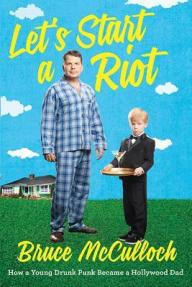
[READ: December 2018] Let’s Start a Riot

I just have to look at Bruce McCulloch on the cover of this book and it makes me laugh.  McCulloch has played some of my favorite characters on Kids in the Hall (although I could never pick a favorite).  But he is especially good at being an asshole.   A very funny asshole.

And what better sums up Bruce than this:

Ever feel like you were once young and cool and then you woke up in the middle of your life, emptying the dishwasher?

What could this book be about (and how did I not even hear of it when it came out?).  Well the answer to the first question is in the subtitle.  There’s no answer for the second one.  But there is an introduction to the book by Paul Feig (which has nothing to do with either of these questions).

Bruce says he always dreamed of writing a book.  “One day.  When I was old.  Luckily, and unluckily, that day had come.”  When he told his family his wife and children Roscoe and Heidi (five and seven, he thinks), they wonder what he’ll write about.  He tells them that he will write about how he was once a young angry punk who crawled out of a crappy family, had this silly show on TV then somehow became a happy man with a pretty good family.  “Why would anyone want to read that?” Heidi asks. (more…)

Read Full Post »

SOUNDTRACK: NATE WOOD – fOUR-Tiny Desk #818 (January 16, 2019).

This Tiny Desk opens with a flurry of keyboard noise followed by a flurry of rums.  When the camera pulls back we see that all of that noise is made by one person–Nate Wood (who also starts playing bass after about a minute),

I have seen a number of one man (and woman) bands over the years and it is always amazing to watch.

Unlike some of them though, Nate Wood doesn’t loop anything   He’s playing live drums and live bass at the same time.  And his drumming is not standard snare-bass, he’s got a lot of (relatively) complex percussion going on.

His bass playing is also really solid–using only one hand while he plays drums.  Again, it’s not simple two chord melodies, he’s doing proper bass lines.  The synth notes do appear to be on a kind of trigger, but he is actually playing most of the notes, in between drum hits.  Watch around the three-minute mark of “Rabbit,” while he plays the bass with his left hand, hits the snare and cymbals with his right hand and taps out melodies on the keys with that same hand.  His feet meanwhile are stomping out the bass drum and hi-hat (and there must be some kind of foot pedal switch involved).  And the amazing thing is how effortless he looks.

“Rabbit” is an instrumental, but he introduces the next song by saying, “This one is called ‘Better if You Try’ and there will now be singing (!)”.

So who is this guy?

Nate Wood says he only wishes he had more limbs, noting only the limitations of his physical body, rather than his ability to multitask. In his latest project, Nate Wood – fOUR, Wood’s brain splits attention between four synthesizers, an electric bass and a drum kit, all while singing about futurism. He’s his own engineer and roadie, too, who drove himself from Brooklyn to our D.C. office and quietly set up his gear, alone.

His setup is made possible through a long road of ergonomic trial-and-error that includes the precise height of the keyboards, the instrument sequencing and a wearable microphone to minimize physical demand and maximize as many possibilities as he can fit within arm’s reach of a drum throne. It’s a feat of ingenuity, especially considering Wood plays all of fOUR’s tunes in one take. No backing tracks. No overdubs.

“Better If You Try” has a cool bass riff and echoing keys.  It must be said that his singing isn’t anything special, and I find myself tuning out while enjoying the music.

I have to disagree with the final paragraph of the blurb:

But while it’s a thrill to see the multi-instrumentalist wizardry here, his music is perhaps best appreciated with eyes closed. Nate Wood pulls us into an industrial, neon dystopia with tunes that stand alone as headphone music without the accompanying visuals, meticulously crafted and with precise execution. This isn’t novelty music. You’re hearing (and seeing) a mastermind songwriter and mad scientist at work. Just look at that lab coat!

I don’t find his music all that compelling by itself.  I do love the excellent echoing electronic sounds from his bass on the final song.  And I do like the more sinister edge “They’re Coming” gets.  Thematically, “They’re Coming” is interesting enough, but the lyrics are sci-fi standard and when I listened without watching I kept thinking–how is he doing that?

[READ: January 18, 2019] New Shoes

It’s funny that I read this book right after Peter & Ernesto because while they are very different, they share an amazing number of similarities.

This book is set in a fictional, animal-dominated version of Guyana.  The epilogue says that Sara and John visited Johns’ family in Guyana where she took hundreds of pictures as inspiration.  You even see the house that inspired her main character Francis’ own house.

Francis is a shoemaker–he always wanted to be one.  And he is hugely successful.  People come from all over for his amazing shoes. (more…)

Read Full Post »

SOUNDTRACK: CAROLINA EYCK AND CLARICE JENSEN-Tiny Desk Concert #816 (January 11, 2019).

There have been a lot of bands I have first heard of on Tiny Desk and whom I hope to see live one day.  Carolina Eyck and Clarice Jensen are two women I would love to see live–together or separately.

The concert opens with a looping voice (Carolina’s) and what appears to be her using a theremin to play looped samples.  And then soon enough, she starts showing off how awesome she is at the futuristic 100-year-old instrument.

Carolina Eyck is the first to bring a theremin to the Tiny Desk. The early electronic instrument with the slithery sound was invented almost 100 years ago by Leon Theremin, a Soviet scientist with a penchant for espionage. It looks like a simple black metal box with a couple of protruding antennae, but to play the theremin like Eyck does, with her lyrical phrasing and precisely “fingered” articulation, takes a special kind of virtuosity.

After playing a remarkably sophisticated melody on the theremin (with suitable trippy effects here and there), for about three minutes, she explains how the instrument works.  She even shows a very precise scale.

The position of the hands influences electromagnetic fields to produce pitch and volume. Recognized as one of today’s preeminent theremin specialists, Eyck writes her own compositions, such as the pulsating “Delphic” which opens the set, and she’s got big shot composers writing theremin concertos for her.

Up next is Clarice Jensen with “her wonderful cello.”

Joining Eyck for this two-musician-in-one Tiny Desk is cellist Clarice Jensen. When she’s not making gorgeous, drone-infused albums like last year’s For This From That Will be Filled, Jensen directs one of today’s leading new music outfits, ACME, the American Contemporary Music Ensemble.

Jensen doesn’t explain what’s going on, but she makes some amazing sounds out of that instrument–she’s clearly got pedals and she modifies and loops the sounds she’s making.

“Three Leos,” composed by Jensen, offers her masterful art of looping the cello into symphonic layers of swirling, submerged choirs with a wistful tune soaring above.

Vak Eyck comes back for the final song, a wonderfully odd duet of cello and theremin.

The two musicians close with “Frequencies,” a piece jointly composed specifically for this Tiny Desk performance. Amid roiling figures in cello and melodies hovering in the theremin, listen closely for a wink at the NPR Morning Edition theme music.

Van Eyck make soaring sounds, while Jensen scratches and squeals the cello.  Within a minute Jensen is playing beautiful cello and Van Eyck is flicking melodies out of thin air.

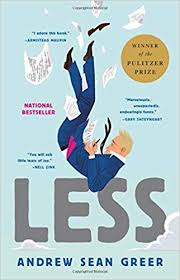
[READ: June 24, 2017] Less

It wasn’t until several chapters into this book that I realized I had read an excerpt from it (and that’s probably why I grabbed it in the first place).  I also had no idea it won the Pulitzer (PULL-It-ser, not PEW-lit-ser) until when I looked for some details about it just now.

It opens with a narrator talking about Arthur Less.  He describes him somewhat unflatteringly but more in a realistic-he’s-turning-fifty way, than a displeased way.

And soon the humor kicks in.

The driver who arrives to take Less to an interview assumes he is a woman because she found his previous novel’s female protagonist so compelling and persuasive that she was sure the book was written by a woman (and there was no author photo).  So she has been calling out for “Miss Arthur,” which he has ignored because he is not a woman.  This makes him late and, strangely, apologetic.

He is in New York to interview a famous author H. H. H. Mandern who has, at the last moment, come down with food poisoning.

It takes only ten pages to get the main plot out of the way:

Less is a failed novelist about to turn fifty. A wedding invitation arrived in the mail: his boyfriend of the past nine years is about to be married to someone else. He can’t say yes–it would be too awkward–and he can’t say no–it would look like defeat. The solution might just be on his desk –a series of invitations to half-baked literary events around the world.  Can he simply get out of town, and go around the world, as a way to avoid looking foolish? (more…)

Read Full Post »

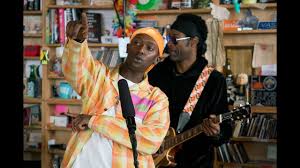
 SOUNDTRACK: BUDDY-Tiny Desk Concert #815 (January 9, 2019).

Buddy is a pretty upbeat rapper from Compton.  He’s dressed in yellow, he laughs a lot.  he plays a groovy kind of gentle raping.

The same soulful hybrid of rapping and singing that compelled Pharrell to sign him as a teenager found Buddy stretching L.A. hip-hop beyond its typical gangsta narrative, while dancing with his dreams and shaking off his demons.

So it’s funny that the blurb is all about the drama of his Tiny Desk.

When Buddy, a preacher’s son from Compton, turns to me with eyebrows raised on the elevator ride inside NPR’s corporate headquarters, it’s hard to tell if the question that comes next is in preparation for his performance or pure provocation.

“Can we smoke in here?!” he asks with a grin that elicits stifled laughter from his bandmates and a few newsroom journalists along for the ride. It’s a blunt request, even from a self-professed “weed connoisseur,” and it kicks off one of the most dramatic Tiny Desks in recent memory.

That drama doesn’t happen until midway through the 11 minute set, and we don’t actually see it.

He starts “Legend,” which is really only an introduction.  He asks everyone to sing “Legend.”  You all got to say this, Legend.  You there in the glasses, you gotta say that shit Legend.

Everyone wants to be a legend, as far as I’m concerned, it’s my turn.

“Trouble On Central” is a song about aspirations and dreams, but being stuck.

Buddy is clearly a natural at this.  He’s also an alumni of actress Wendy Raquel Robinson’s Amazing Grace Conservatory, an L.A. program known for steeping inner-city kids in the performing arts. Between the two, he earned his dramatic chops early.”I’m so used to being in front of an audience of people,” he tells me, “just doing my thing and not really caring about it.” He’s definitely not afraid of the camera. In fact, he’s one of the rare Tiny Desk guests who stares directly into it throughout much of his set, performing for the camera in the most literal sense.

I did think it was odd how often he looked at the camera, and I see that most people don’t

“Hey Up There” is where the controversy arises.

So when Buddy proceeded to fire up a blunt midway through his set, we had to stop the show and ask him to put it out before re-recording his song, “Hey Up There.” (Smoking is not allowed on NPR property.) The performance was still lit,

“Real Life S**t”  has a sweetly sung “la da da da da” backing vocal which he joins in on from time to time.  He raps mostly and throws in some fast rapping at the end of a verse, but mostly this is a groovy song.

While onstage drama kept Buddy a safe distance from the streets, he still experienced the kind of coming-of-age struggles that shaped his personal and political outlook. On “Real Life S**t,” the opening song on his album and the last song in his Tiny Desk set, he conveys that reality with raw sentiment for the sitting President in lyrics straight from the record: “Fuck Donald Trump and that Nigger’s son.”

At first I didn’t think too much of Buddy’s set but after another listen, I enjoyed his whole attitude.  It would have been fun to see him light up and what reaction it caused.

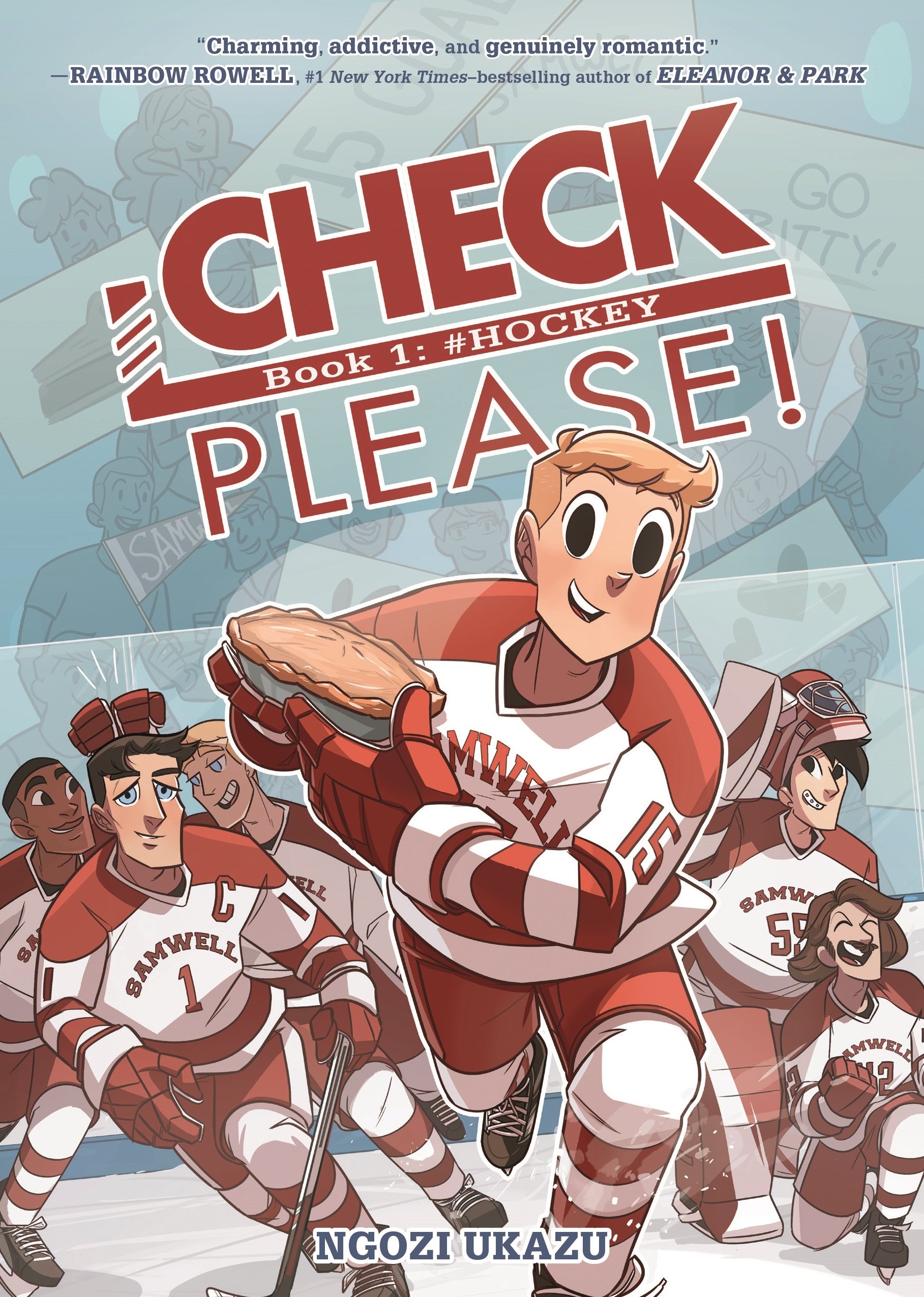
[READ: November 1, 2018] Check Please Book 1

This was a fun, fully enjoyable graphic novel about hockey–with the typical First Second quality, of course.

Like many books lately, this one started as a webcomic and you can read all of this book and more online. (but print is better).

The story follow Eric “Bitty” Bittle as he goes off to college at Samwell University.  Ukazu went to Yale and Samwell is meant to be in the ECAC league just like Yale and Princeton.  Bitty came to hockey through figure skating.  He is quite tiny, especially compared to the other players.  He also bakes a lot of pies.  And, we learn soon enough, Bitty is gay.  Fortunately for our hero, he went to a school that is very tolerant (his coming out story is very funny).

His hockey team also has a star player Jack Zimmerman.  Who?  Jack Zimmerman is the son of the legendary Bob Zimmerman who has won more awards and trophies than you can count.  But Jack was anxious trying to live up to his legendary father and he took anxiety medication for it which ended up with him in rehab and presumably no career.  But he found a home at Samwell. (more…)

Read Full Post »

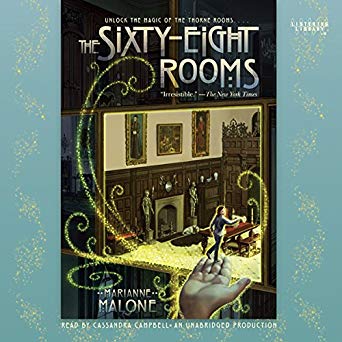
[LISTENED TO: August 2018] The Sixty-Eight Rooms

Read by: Cassandra Campbell

I didn’t know this story, nor did I know anything about the Thorne rooms before our trip to Chicago last summer.

So the Thorne Rooms are, well, I’ll let the Art Institute of Chicago’s website describe them:

The 68 Thorne Miniature Rooms enable one to glimpse elements of European interiors from the late 13th century to the 1930s and American furnishings from the 17th century to the 1930s. Painstakingly constructed on a scale of one inch to one foot, these fascinating models were conceived by Mrs. James Ward Thorne of Chicago and constructed between 1932 and 1940 by master craftsmen according to her specifications.

Read more about them and see pictures here.  That description doesn’t really do justice to the rooms themselves.

They are really magical in the way that they fully represent a room from a specific time and place.  The floor, ceilings, walls and furniture all meet exacting standard of detail.  And what makes them somehow even more special is that each room shows rooms out of the side and back doors.  These are lit (and show a painted facade) that indicates what is just beyond the walls of the room you are looking at.  It really adds a lot of depth and character to a scene.

Seeing them in person was really wonderful.

T. and I had started listening to this book before we left for Chicago, but we decided to wait until our trip to save it for the whole family.  Then we wound up not listening to it until the home, after we had seen the rooms.  And I feel like that made it all the more special. Because I could see exactly what the kids were doing in this fun and bizarre adventure. (more…)

Read Full Post »

SOUNDTRACK: HEATHER LEIGH-“Soft Season” (2018).

At the end of every year publications and sites post year end lists.  I like to look at them to see if I missed any albums of significance.  But my favorite year end list comes from Lars Gottrich at NPR.  For the past ten years, Viking’s Choice has posted a list of obscure and often overlooked bands.  Gottrich also has one of the broadest tastes of anyone I know (myself included–he likes a lot of genres I don’t).  

Since I’m behind on my posts at the beginning of this year, I’m taking this opportunity to highlight the bands that he mentions on this year’s list.  I’m only listening to the one song unless I’m inspired to listen to more.

Opening with a kind os squealing feedback and heavy bass and drums, it is pretty hard to believe that Heather Leigh is playing the pedal steel guitar but Lars assures us that’s what’s happening

Heather Leigh is among a group of artists who are reshaping the sound of the pedal steel guitar. [Her new] solo album stretches her noise/improv background into songwriting territory. With an elastic sense of time and a beguiling voice, Heather Leigh hears a new world drenched in aqueous echo.

After a brief opening Leigh starts singing–a kind of high operatic voice that works well with the feedbacking style of guitar she’s playing–like she’s almost singing along to the guitar melody, but not exactly.  The middle is quieter, more mellow, a “prettier more conventional sound.”  The song cycles through the original noisy sound, and back to the quieter music before ending on that feedback opening.  That powerful music crescendoes and then the song closes out with an a capella couple of lines.

You can her it and a couple other songs on her bandcamp site.

[READ: January 3, 2019] “Come In, Come In”

This story concerns a woman and her contractor, Louie.  He came highly recommended but he is taking forever.  Every time she assumes he will finish a project in her bathroom, he seems to have messed something up and needs to replace it.

The tiles were askew.  Even the tub was askew. He apologized and fixed it of course, but come on.

And if that weren’t bad enough, he had just sent her a text love letter.  “Lady Joanna, the more I see you the more I want to see you.”

She was annoyed at the absurdity “single woman + contractor = absurd.” (more…)

Read Full Post »

 SOUNDTRACKLONELY LEARY-“Flaneur” (2018).

At the end of every year publications and sites post year end lists.  I like to look at them to see if I missed any albums of significance.  But my favorite year end list comes from Lars Gottrich at NPR.  For the past ten years, Viking’s Choice has posted a list of obscure and often overlooked bands.  Gottrich also has one of the broadest tastes of anyone I know (myself included–he likes a lot of genres I don’t).  

Since I’m behind on my posts at the beginning of this year, I’m taking this opportunity to highlight the bands that he mentions on this year’s list.  I’m only listening to the one song unless I’m inspired to listen to more.

One of the things that I love about Lars, and this list is a great example, is how effortlessly multicultural he is.  He doesn’t listen to music because it’s from somewhere, he listens to music wherever it;s from because he likes it.  So this band, with the decidedly English-sounding name Lonely Leary is actually from China.  Lars says that the

The excellent label Maybe Mars documents the current Chinese underground music scene, from the psych-rock of Chui Wan and surfy shoegaze of Dear Eloise to P.K. 14, Beijing’s experimental rock pioneers.

Lonely Leary is a post-punk band which sounds like they would fit right in with Protomartyr or even The Fall, Sonic Youth or Joy Division.  The fact that they are from China and sing in Chinese doesn’t affect the tone and overall feel of the music, it somehow makes it more intense (to my ears).

Lars describes their debut album as one “where noise needles into perversely kitschy surf riffs and hoarsely barked punctuation marks.”  Although I hear less kitschy and more Dead Kennedy’s guitar and feedback noise.

The sounds they achieve throughout the album are great.  “Flaneur” opens the disc with a screaming feedback followed by a rumbling bass.  There’s some great guitar lines from Song Ang (which remind me of Savages) and then Qiu Chi barks his dissatisfaction through to a satisfyingly Dead Kennedys-ish chorus.  There’s even some Savages-esque chanting as the song squeals to and end.

This is great stuff.

[READ: January 4, 2019]  “Father”

Here is a new year and a new essay from Sedaris that perfectly mixes emotional sadness and hilarious light-heartedness.

The night before his fathers 95th birthday, his father turned in the kitchen and fell.  David’s sister and brother-in-law discovered him the next day and brought him to the hospital.  They felt the most disturbing thing was his disorientation, including getting mad at the doctor: “you’re sure asking a lot of questions.”  He was lucid the following day, but he was quite weak.

David was in Princeton on the night his father fell [at a show that I could have been at–we opted not to go this year].   He called his father and said that he needed him to be alive long enough to see trump impeached.

A few months later, his father moved into a retirement home.  David and Hugh visited and at first he seemed out of it, but hr recognized both of them instantly.  The thing was that he was no injured.  He had tried to move his grandfather clock (one of the prized possessions he brought to the home) and it fell on him (for real).  Many family members called the clock Father Time, so David said to Hugh “When you’re 95 and Father Time literally knocks you to the ground, don’t you think he’s maybe trying to tell you something?” (more…)

Read Full Post »

« Newer Posts - Older Posts »