Feeds:
Posts
Comments

Archive for the ‘Flash Fiction’ Category

harper septSOUNDTRACK: THE AVETT BROTHERS-“Open Ended Life” (2013).

AvettBrothers_CVR-560658fd89bf96b9dd1bf2b2be57013e64cb38cd-s1The folks at NPR love The Avett Brothers, and while I can see the appeal of their live show, their studio output just sounds like typical Americana to me.  Not bad by any means, but nothing all that special–honky tonk swing, occasional harmonica and expected harmonies.

The album was produced by Rick Rubin, which would have surprised me a few years ago but after his work with Johnny Cash it makes a lot of sense.

This song is a pretty rollicking good time (and the pretty ooohs are something of a surprise) especially by the end when everybody joins in–I’ll bet this is a hoot live.  The melody is certainly catchy.  I just want to like it more than I do.

[READ: October 1, 2013] “The Two Davises and the Rug”

Even though I recently complained about flash fiction, there is one author who does a very good job with it.  And that author is Lydia Davis.  She can generate an entire story out of a very simple concept . And while some of her flash fiction falls into that “it’s just a sketch, not a story” world, her longer short stories pack a lot in.

Like this one.  The entire premise of this story is that two people are interested in the same rug.  And they are both named Davis (bt are unrelated).

This Davis purchased the rug many years ago and has grown tired of it.  When her apartment complex has a sale for charity she puts in the rug and asks $10 for it.  But the sales people mark it up to $50 (it’s for charity after all).  No one buys the rug but another tenant across the way (also named Davis) is interested in it. But that Davis doesn’t buy the rug.  And when the sales is over this David takes the rug back home while that Davis wishes he had bought it.

The fun part of the story is that both Davises are indecisive.  So, this Davis wonders if she should sell the rug to that Davis and if so, for how much.  But if he really wanted it, maybe she should keep it, maybe it’s better than she realized.  And that Davis is unsure how well it will go in his house and he wonders if may be he could try it for a time first.  But this Davis is reluctant to give it up in case he really likes it or in case she really likes it.  And maybe she should give $50 to charity since she didn’t sell it.

And the story goes on like the, with insecurities running rampant. Fortunately it’s not a very long story (this is one instance where the short version pays off handsomely). And after we have gone through the various permutations, it may be hard for even us to know what those Davises should do.

Read Full Post »

corin SOUNDTRACK: THE DISMEMBERMENT PLAN-“No One’s Saying Nothing” (2013).

IDismembermentPlan_CVR-a71cdf7d3b8dde6270c3a01bb56278949eddb5fa-s1 thought I knew The Dismemberment Plan, but I must have them confused with someone else, because this song doesn’t sound anything like what a band called The Dismemberment Plan ought to sound like (which is noisy and chaotic and probably death metal).  This song has big vocals, organ and piano.  Nevertheless, it is rather raucous and is quite fun (and has what sounds like a drill sound effect in the beginning and middle).

Lyrically, the song is odd–“If you press the space bar enough, cocaine comes out.  I really like this computer.”

But it has a very fun devil-may-care, throw in everything attitude that I really like it.  The entire album was streaming on NPR, and I’m looking forward to hearing more from them–including their back catalog work, to see if they ever sounded like what I thought they sounded like.

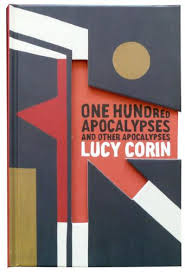
[READ: October 1, 2013] One Hundred Apocalypses and Other Apocalypses

I was excited to get this book because I thought the title was quite intriguing (and the crazy way the cover is cut out was also interesting).

There are four “stories” in the book.  The first three are about twenty pages each while the fourth is over 100 and is comprised of the titular 100 apocalypses (I didn’t count them).

“Eyes of Dogs”
This story contained marginalia (which is sort of like footnotes but not attached to anything specific). In this story a solider meets a witch and she tells him how to get money—climb down a hole and encounter three dogs.  He must wink at the first, blink at the second and hold his eyes closed for the third.  The story seems to be going along sensibly like a fairy tale but then it grows introspective and stops.  I was disappointed in this one.

“Madmen”
This story was utterly bizarre and yet by the middle of the story the bizarreness was explained and by the end I enjoyed it very much.  The premise of this story is that when children grow old they are given a madman to take care of (it is told matter of factly which makes you have to wonder if madman is code for something else.  When boys reach a certain age and when girl;s have their first period (which is an unfair division of genders) they get to go to the asylum and pick which madman (or woman) they want to bring home and care for.  The bulk of the story is at the asylum with the girl “interviewing” the candidates and her mother being mad at her choices.  Ultimately the story turns onto a nice moment between the girl and her dad, who may or may not have married his own madman.  As I said very weird, but satisfying.

“Godzilla versus the Smog Monster”
This was the most “real” of the four stories and it was my favorite.  A fourteen year old boy is watching “Godzilla vs the Smog Monster.”  He found the unlabelled video of it in his father’s sweatshirt drawer and assumed it was porn.  He’s bummed that it turns out to be this Godzilla movie.  In a parallel story, when the boy goes to school his class is watching live footage of California burning—and this burning is uncontainable.  The whole state is slowly engulfed in flames.  This fire, which seems to be some kind of attack obviously changes the minds of everyone in the story, including Sara, a girl who Peter thinks is pretty but who never talks to him.  But when she crashes her car in front of his house, he helps her and they go for a ride to a cave.  Images of the smog monster crop up in interesting ways.  Things get weird and less tangible, but because the beginning was so real it made the ending okay.

“A Hundred Apocalypses”
So this selection disappointed me because it proved to be 100 (I assume) flash fiction pieces.  And I have more or less come down against flash fiction these days.  Especially the kinds of stories that make an interesting “sketch” but aren’t really stories The other problem is that all 100 seemed to be about “apocalypses” which is a useless words when tossed around so much and which loses all meaning when there are 100 that seem to be about actual apocalypses.  Or something.  I also just learned that apocalypse means un-covering or revelation, not really the end of the world, but whatever.

There were probably 6 out of the hundred that I really enjoyed.  Sadly, I didn’t mark them and I don’t remember which ones they were.  The rest were okay or worse.

I am ready for flash fiction to go away.  And I fear that my beloved McSweeney’s is one of the prime generators of the genre, so perhaps they could knock it off for a bit.

Read Full Post »

SOUNDTRACK: BELLE AND SEBASTIAN-Live at KEXP, April 13, 2006 (2006).

This four song set samples a broad swath of Belle & Sebastian’s career.  It takes place after The Life Pursuit‘s release, but they only play one song from it “To Be Myself Completely” (with Stevie on vocals).

It’s amazing how quiet and shy the band seems i the interviews (or is that bored and petulant) especially after being through the mad swings of success.  Indeed, the interviews are almost embarrassing how unresponsive the band is (but not rude unresponsive, just unresponsive).  Like “where did the soul influence on this album come from?”  “Probably black America.”  “Did the new producer have any influence on the soulfulness?”  “Not really.”

But they do let the music speak for them.  And they don’t just do the horn songs or the strings songs.  They play “She’s Losing It” from Tigermilk (with lots of horns–it sounds great), they play “A Century of Fakers” with strings (although the female vocals seem a little too subdued on this track).  They also play a rollicking cover of Badfinger’s “No Matter What.”  It’s a delightfully poppy song which I didn’t know but which Sarah did (and I thought was the Beatles, and the DJ guessed Paul McCartney wrote it–he didn’t).  It’s when discussing this song that the band finally gets animated, perhaps they just don’t want to talk about themselves.

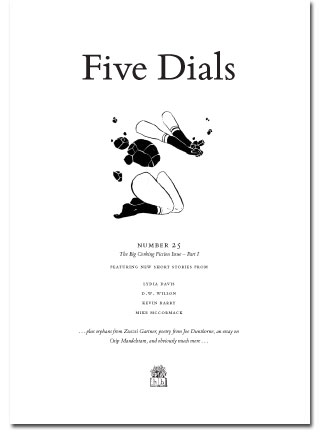
[READ: October 15, 2012] Five Dials #25

The issue is all about the short story.  Five stories from Lydia Davis, a short story contest from Zsuzsi Gardner, and a couple longer stories as well.   But there’s also some poetry and an essay.  And I fear I have to say I didn’t enjoy this issue as much as some of the other ones.  I love short stories, but I didn’t really love these very much.  And, the essay at the end was a lot of fury about very little.  I have to assume Part Two will simply kick ass.

CRAIG TAYLOR-A Letter from the Editors: On Orphans and Cork
Taylor name-checks the Cork International Short-Story Festival and mentions how this issue is a sort of tie in to the festival (and just how many writers wanted to be in this Cork issue).  Taylor says that many readers wanted more short stories in the Five Dials issues, and that Noel O’Regan, short story editor says that the short story is always alive–witness the great success of the Cork Festival.  Writers flock to it (and a hefty prize is given).  This issue is only Part I of the fiction issue because they simply had to break it into two parts. (more…)

Read Full Post »

SOUNDTRACK: PRIMUS Green Naugahyde (2011).
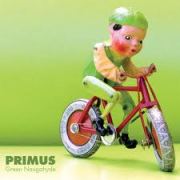
Primus is back with their first full length album since 1999.

As  they have done before, this album opens with a brief instrumental “Prelude to a Crawl” which sort of sets the tone for “Hennepin Crawler.”  As soon as “Hennepin” opens you know that this is classic Primus–bass loaded and crazy rhythms.  But it’s also apparent that Les is bringing some of the weird effects he’s been playing with in his various other bands to Primus–the bass is wonderfully distorted with crazy effects.  I love that he’s also playing harmonics on the bass.  It’s really hard to tell what is the guitar and what is the bass on this song.

The only problem I have with this song, and a few others, is that Les is singing in a low(er) register.  And since the bass is so prominent, it makes it really hard to hear the vocals.  Either that or they are mixed especially low.  Primus lyrics are usually just as weird as the music, and it’s always fun to hear what’s on Les’ mind.  So it’s a shame that they are buried.  It also means that the music has to stand on its own.  It often does this, but they do put extra effort into instrumental sections, so a section that feels like an instrumental because  the lyrics are so quiet means it’s not quite as interesting as it could be,

Having said that, there’s some great musical ideas here.  I love the riff of “Last Salmon Man” (again, the lyrics are hard to decipher) and the way it changes from verse to bridge.  Although at 6 minutes it’s a bit too long.  “Eternal Consumption Engine” is a great title.  It’s the first song where Les’ old vocals come back, and it’s nice to hear him.  Although I admit the “everything’s made in China” refrain does go on a bit long.

“Tragedy’s A’ Comin'” is classic Primus, a funky rubber bass line, and group vocals (although again, that bass lead vocal is hard to hear).  I think what I really like about it is the openness of the music–so that you can really hear the fun things that original drummer Jay Lane  is doing.  (I was bummed that Herb wasn’t here, but Lane is really great).

“Eyes of the Squirrel” is probably my least favorite song which is a real shame because the opening bass riffs are INSANELY wonderful!  I don’t know how anyone can play that fast.  I really like the way the song opens.  But it just seems to drag.  “Jilly’s on Smack” is one of those weird Primus songs that worms its way into you–the song is mostly quiet little noises and whispered vocals.  But there’s a cool instrumental break (and on this song, too, the drums sound great).

It’s the second half of the album that totally kicks ass.  “Lee Van Cleef” is a great stomper about missing Lee.  “Moron TV” is infectiously catchy (especially the dang a dang a dang a dang dang part) and the lyrics are wonderful.  The spoken word/jam section is also really fun.

“Hoinfodaman” is awesome and listening to Les pitch for fake products is hilarious.  It also features what may be a first for Primus: guitars in the lead melody line.  I especially love the crazy (and I think rather funny) guitar line that works as the bridge.

“Extinction Burst” ends the album on a major high note.  The harmonics from the bass jump into the really heavy main riff.  And Ler’s bizarrely fiddly guitar section is great–easily comparable to any of Les’ fiddly nonsense.  I don’t know how these guys make their instruments sound like this.  And the drums are a great complement once again.  The truly amazing part comes at the end.  The outro of the song is very Rush-like, except that Ler’s guitar chords go high when you expect low, which is awesome, and his solo is insane–all the while Les is being Les.

The disc ends with the 58 second reprise called “Salmon Men” which reintroduces the fishy theme.

It’s great to have Primus back.  It’s also great to hear them exploring different styles like funk! (within their own weird style).  Even the songs I don’t like that much are still enjoyable.  This makes for one of Primus’ best releases overall.

[READ: March 21, 2012] “The Life of a Zombie,” “The Forest,” “Snoopy,” “Life with Billy Joel”

I haven’t read Crosbie before, so I don’t know if she typically writes these really short (yup, I’m going to say it) flash fictions.  I’ve mentioned many times that I sort of love and hate flash fiction.  It seems like as the genre develops it revels even more in what is not stated.  Sometimes this works really well, and other times it just seems to ask too much of the reader–especially if you don’t have time to get invested in a character.

“The Life of a Zombie” is strangely titled because it’s actually about the life of a woman dating a zombie.  The story (half a page in total) goes into Lynn’s previous bad dates as well as the men she met through a dating service (including a criminal and a man on hid death bed).  The zombie has more life than either of them.  She just has to keep him from eating her brains, but otherwise they have a nice time and have just moved in together.

It’s hard to critique a story because it doesn’t do what you want it to, but I will anyway.  I had hoped this story would have been more deadpan–not so much that should couldn’t get anyone else but how it really is to be in love with a zombie.  It could have been funny through playing it straight.  And, yes, longer would have been better here as it was it kind of felt like a one note joke. (more…)

Read Full Post »

SOUNDTRACK: MATANA ROBERTS-COIN COIN Chapter One: Gens de couleur libres [CST079] (2011).

This is an abrasive album.  Not only does it has some massively skronking free-jazz, but it is also aggressively political, dealing with slavery and race.   So, if the heart-rendered screams of Roberts don’t make you uncomfortable, the description of a woman on the auction block will do it.

I listened to this album a number of times and kept thinking that it would probably work much better live than on record.  Lo and behold, if I’d read the liner notes more closely I would have known that it was performed live.   (The final song has an introduction and cheers at the end, but none of the rest of the album indicates that it’s live).

I like free improv jazz (when I’m in the mood of course) and I also like noise jazz (John Zorn mostly).  So I’m not averse to a lot of the genre.  But there was something odd about this recording to me.  And this is where that whole “live” recording comes into play.  This music felt like it was being performed for an audience.  I don’t know what the difference is, but it’s one I heard.  I can imagine images going along with the show.   And because of that, I feel like I was missing a crucial element.

The liner notes don’t explain anything about the show itself, nor how this person apparently named Coin Coin relates to her (it seems vaguely autobiographical, but I’d love to know more).

There are moments of rather conventional beauty on this recording.  The song that contains the “Bid ‘Em In” section is a great singalong (of course, when you realize what you’re singing about, you’re horrified).  And there are some other sections where Robert’s voice melds perfectly with her band and with Gitanjali Jain’s backing vocals.

The final song is a very moving song written for her mother.

The only thing I really don’t like about the album is Roberts’ poetry-slam-type singing.  I have complained before about this type of sing-song delivery, which just irks me.  I can see that there are times on the album where it works, but for the most part it feels arbitrary (as it always seems to me).  And when you have crazy improv jazz you need something to hold it down.  The poetry slam lyrics don’t do that.

This is not for everybody, but it is certainly a powerful album.

[READ: January 16, 2012] Vicky Swanky is a Beauty

McSweeney’s has gotten me to like a lot of things that I never thought I would–a cooking magazine, a sports magazine, long out of print unheard of titles.  But they simply cannot get me to like flash fiction.  Okay, that’s not entirely true.  Deb Olin Unfurth is quite a master of the genre.  But man, I just cannot get into Williams’ short short stories.

The majority of these stories are two pages long.  This means 12 lines on the first page and anywhere from a quarter to a full-page on the second.  But there are also some stories that end after one page (12 lines).  So here’s the little drinking game I invited.  Since Williams’ stories end so arbitrarily, try to guess which ones end after those first twelve lines and which ones continue on to the next page (it’s not really a fair game because some stories end in ten lines or so, but you get the idea).

Take “Cockeyed” (more…)

Read Full Post »

SOUNDTRACK: THE TRAGICALLY HIP-Music @Work (2000).

I tend to dismiss this Hip record for two reasons: the cover is pathetic and I don’t like the title.  Of course, the title track is catchy as anything, and, in reality, the whole record stands up quite well.

Music @Work rocks harder than Phantom Power did, although clearly The Hip are in a new mode of music making–no longer lengthy emotive tracks, now the make shorter, poppier tracks that explore what would have to be called their gentler side.  “Stay” is a very simple acoustic guitar track with maybe a bit of keyboards, but Downie’s voice is mixed so high it’s practically like a spoken word track (only catchy).

There’s a lot of songs that, while not brilliant, are catchy and very toe tapping like “The Completists.”  As I described their earlier stuff, this disc is above average rock, and this is a more adult-alternative rock than their earlier raw rock.    But there are a few louder rocking songs too: “Freak Turbulence” is a fast rocker  that comes in at under 3 minutes.  “Train Overnight” is a return to a somewhat rawer sound and “Wild Mountain Honey” has a great opening riff and some unexpected stops and starts.

Despite my negative thoughts about this record, listening to it again made me realize just how good it is.

[READ: February 15, 2011] “Warlords”

This story continues with The Walrus‘ flash fictions.  Again, I don’t see this story as being in the tradition of Flash Fiction so much as just being a very short story.  Of course, as with any good flash fiction, this story packs a ton of information in to a half a page.

The story is all about Warlords.  Duh.  But rather than looking at the warlord himself, Atwood looks at the people who live under a warlord.  Those who can work for him or those (women, bankers, writers) who will never be able to.  She then peels away the layers of the warlord’s minions until we reach the inner circle.

And what happens to the inner circle when a warlord is deposed?  Is that guy sweeping garbage a former member? (more…)

Read Full Post »

SOUNDTRACK: BIG DIRTY BAND-“I Fought the Law” (2006).

I just found out about this “supergroup” which was created for the Trailer Park Boys Movie.    The group consists of Geddy Lee and Alex Lifeson from Rush, drummer Jeff Burrows from The Tea Party and three people I don’t know: the singer from Three Days Grace, the singer/guitarist from Thornley and on lead vocals Care Failure from Die Mannequin.

I have to say that I’m not that excited by this cover.  The song has been covered so many times (some very good: The Clash, some very clever: The Dead Kennedys, and some terrible: many others).  And frankly there’s not much that you can do with this song.  It’s simple in structure with potential for shouting (which everyone likes), but little else.

For Rush fans, you can’t tell that Geddy or Alex are even on it.  So really it’s just a kind of metal-ish version of this old song.

Oh well, they can’t all be zingers.  You can hear it here.

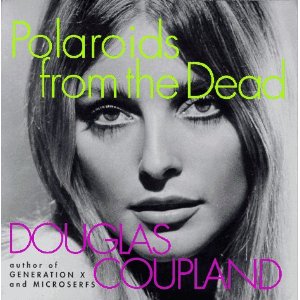
[READ: February 1, 2011] Polaroids from the Dead

After reading Shampoo Planet, I wanted to see if I remembered any of Coupland’s books.  So I read this one.  It’s entirely possible that when I bought this book I was disappointed that it was not a new novel and never read it.  Because I don’t remember a thing about this book.  (This is seriously calling into question my 90’s Coupland-love!).

But I’m glad I read it now.  It’s an interesting time-capsule of the mid-90s.  It’s funny to see how the mid 90s were a time of questioning authority, of trying to unmask fame and corporate mega-ness.  At the time it seemed so rebellious, like everything was changing, that facades were crumbling.  Now, after the 2000s, that attitude seems so quaint.   Reading these essays really makes me long for that time when people were willing to stand up for what they believed in and write books or music about it (sire nothing changed, but the soundtrack was good).

So, this collection is actually not all non-fiction.  Part One is the titular “Postcards from the Dead.”  It comprises ten vignettes about people at a Grateful Dead concert in California in 1991.  As Coupland points out in the intro to the book, this was right around their Shades of Grey album album In the Dark, and huge hit “Touch of Grey”, when they had inexplicable MTV success and it brought in a new generation of future Deadheads.  He also points out that this is before Jerry Garcia died (which is actually helpful at this removed distance).

These stories are what Coupland does best: character studies and brief exposes about people’s lives.  The stories introduce ten very different people, and he is able to create a very complex web of people in the parking lot of the show (we don’t see the concert at all).  As with most Coupland of this era, the characters fret about reality.  But what’s new is that he focuses on older characters more (in the first two novels adults were sort of peripheral, although as we saw in Shampoo, the mother did have millennial crises as well).  But in some of these stories the focus is on older people (Coupland was 30 in 1991, gasp!).  And the older folks fret about aging and status, just like the young kids do. (more…)

Read Full Post »

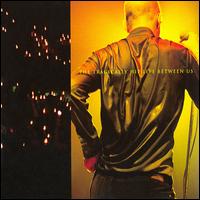
SOUNDTRACK: THE TRAGICALLY HIP-Live Between Us (1996).

This show was recorded live November 23, 1996 in Detroit.  It’s kind of odd that these Canadian favorites would record their live album in the U.S.

In the intro to the album Downie thanks The Rheostatics for opening (you can hear the Rheos’ sets from other days on the tour, but not this night, at their Live site).

This concert is a great, strong set of songs, and an excellent way to experience the Hip live.  Downie is practically a loose cannon with his extemporaneous ramblings…he’s funy, weird and clever and he’s a charismatic front man.  And the band sounds great (no overdubs on the disc, and none are needed).

The set list is a wonderful selection of tracks from all five of their albums (none from the first EP).  Two each from the first two, Three from Fully & Day and the first four tracks from Trouble (which is probably why I like the beginning of Trouble so much more than the end).

True, any fan will complain about the lack of certain songs on here (no “38 Years Old,” no “Little Bones” no “Unplucked Gems” no “Hundred Meridian” or “Fifty Mission Cap” no “Fire in the Hole”–wow, that’s a lot of great songs to leave off, shows just how many great songs the Hip have).  But with only 14 songs to choose from, they made a great set list and you don’t even miss those songs until you realize they’re not there.

The audience is very responsive and the band seems to feed off it.  If you’re new to the Hip, this is a great place to start.  It’s sort of like a greatest hits of the early years, but it will leave you wanting more too.

[READ: January 26, 2011] “Summer Plum (Winter Version)”

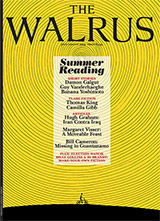
This was the final of seven stories in The Walrus‘ Summer Reading Issue 2004, and it was the final flash fiction.  This story is a bizarre whirlwind from the get go.

It opens with a belief that shredded coconut can make you fly and ends with a paean to a plum.  In between Keds are glued to a driveway and there’s a lot of repetition of “plump plum plump plum.”

I admit I have no idea what this story was supposed to be saying.  It seemed more like a sort of evocative poem, relishing the textures of life.  And yet there’s that whole thing about being glued to the driveway which kind of throws a wrench into that interpretation. (more…)

Read Full Post »


SOUNDTRACK
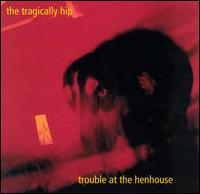
: THE TRAGICALLY HIP-Trouble at the Henhouse (1996).

After the major high of Day for Night, The Hip followed it up with Trouble in the Henhouse.

It opens with “Giftshop” which sounds like it could have come straight from Day for Night.  “Springtime in Vienna” is a marvel.  The opening is quiet with Downie’s almost whispered voice telling a compelling story until it blasts out with a wonderful chorus.  “Ahead by a Century” opens with a catchy acoustic intro.  Again, the harmony vocals add wonders to the verses.

But overall the album feels like the Hip exhausted their angst and anger on Day for Night and have chosen to go with a more mellow sound here.  It almost seems like Day for Lite.  Songs like the final track, “Put It Off” dabble with intensity, but have more atmospherics than powerful guitar and verses.  It’s like the come down after a big party.

The most peculiar song on the disc is “Butts Wigglin” which was used on the Kids in the Hall Brain Candy soundtrack.  It doesn’t really fit on this disc, but it’s such a great song that I understand them not leaving it off.  It’s very silly and musically groovy with  almost no guitars and all keyboards.  It’s a goof, but nice to see the lighter side of the band.

I find Trouble to be really enjoyable in itself, but it kind of pales in comparison to the previous two.  Nevertheless, these three albums are a wonderful trio of discs released by a great Canadian band.

They celebrated this era of the band with a live album the following year.

[READ: January 26, 2011] “An African Sermon”

Of all the stories in this Summer Reading Issue of The Walrus, this one was the most powerful.  (It wasn’t my favorite because it was rather distrubing) but it had a strong impact on me.

The bulk of the stoiry is set on a train in Africa.  Two white men introduce themselves to each other; the older one confides that he hopes no Blacks come into thier car.  Of course a Black does come into thier car and the younger man, who is a preacher, tries to embarass the racist man but immediately shaking the black man’s hand.

The black man is hostile to the young man’s advances, more or less shutting him out entirely.  Indeed, when the young man follows him to the dining car to talk (he is genuinely sympathetic to people, but he’s also very curious about the man and wants to pry a bit) the black man (whose name is Leonard Sagatwa) listens briefly and then, claiming a headche, returns to the cabin  room and goes to sleep.

During the night, the train stops because of a malfunction and it will be some time before it is fixed.  The priest goes out to the landing to find something to occupy himself when Leonard comes down.  He says to the priest that he wants to tell his story.  He wants to tell it once, to a complete stranger so that he can unburden himself and then be done with it.  The priest is tickled to hear the story.

But the story is one of Rwandan genocide:  Hutu vs Tutsi, brothers who turn  against each other; Leonard’s brother turning on him and his family.  Killing family members slowly, cruelly, calling them cockroaches.  It is harrowing and the priest is taken aback by the brutality.

But at the end of the story, the priest is resilient and insists that Leonard can forgive his brother.  Never, says Leonard.

The priest is able to use this story for his very first sermon in Africa.  He pretties up the story somewhat and makes it moral, and it works.  The new congregation accepts him and he feels welcomed to Africa.

When, several months later, the priest sees Leonard again, everything has been turned upside down.  And I’ll just leave it at that.

It is a great story.  Wonderfully powerful.

Read Full Post »

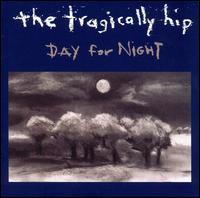
SOUNDTRACK: THE TRAGICALLY HIP-Day for Night (1995).

This is the first Hip album that I bought.  In fact, I first learned about them when I saw a video for “Nautical Disaster” on Much Music when I lived in Boston.  That was my first exposure to The Hip–and to another cool Canadian band, The Tea Party–and I’ve loved Much Music ever since (even if I can’t get it anymore).

For me, Day for Night takes the greatness of Fully Completely and ramps it up a notch further.  In part this is probably because the album is almost 60 minutes long instead of just 40, but I think the intensity that The Hip found on Fully is fully matured all over this disc.

The album opens with a great bass intro on “Grace, Too.”  And with Downie’s intensity in the breakdown it’s an amazing opening to a great disc.  “Yawning or Snarling” has even more intensity, with practically snarled verses and a strangely catchy chorus (and great lyrics).  It’s followed by the blistering rocker “Fire in the Hole” which really captures the anger that seems to be brooding under the surface of this disc.

“Thugs” follows, it’s a catchy, quiet song; I love the chorus: “I do the rolling, you do the detail.”  ANd there’s another great opening , with an unexpected twist for “Inevitability of Death.”  Which is followed by “Scared,” another mellow, minor-chord song which is a great lead in to “An Itch an Hour.”

Normally a disc this long can’t hold the listener’s attention for the whole disc.  But the penultimate song, “Titanic Terrarium,” an atmospheric brooding song with a quirky verse melody draws you in to its claustrophobic subject of life in a biosphere.

The Hip had a minor buzz in America with this album and even played Saturday Night Live, where they shaved a minute off of Nautical Disaster, but keep all five minutes of “Grace Too.” Watch it here:

This is a great album, perennially one of my favorites.  It’s only a shame that it never broke through to U.S. audiences, leaving The Hip as one of Canada’s biggest cult bands (in the U.S.).

[READ: January 26, 2010] “Questions Surrounding My Disappearance”

This was the third flash fiction in this 2004 Summer Reading issue of The Walrus.  And of the four, this was my favorite.  It was weird and kind of silly but underneath it had some real angst.

The story opens with a kind of generic dismissal of the Canadian Film and Television Industry (“who should give a shit who wrote or lit or recorded the sound for a television show or a movie….”).  But nevertheless, he’s not too dismissive of it (“There have been…awards”).

As with the other flash fictions in the issue, the set-up is quite long, but unlike the other stories this sort of casual tone continues throughout the story.  And we learn a bit more and more about the narrator and about his opinions of the CBC.

The title obviously comes into play, as we soon learn that when he was, in fact, missing, very few people seemed to be up in arms about it (including his family).  Perhaps the most surprising aspect being that during the time he was reported missing he was interviewed on the radio (true, it was a program dedicated to the arts, but still). (more…)

Read Full Post »

« Newer Posts - Older Posts »