 SOUNDTRACK: VALENTINA LISITSA-Chasing Pianos: The Piano Music of Michael Nyman (2014).
I don’t listen to a lot of classical music, but I do like it. I also enjoy some modern composers, in particular I have a strong fondness for Michael Nyman. Yes, yes, he’s a soundtrack composer, blah blah, but I find his music to be very pretty and often delightfully eccentric. His music reminds me of Phillip Glass, in its repetitive nature, but he goes beyond the minimalism that Glass was trying to create by implementing inventive melodies and expansive sounds.
Valentina Lisitsa is a 44 year old Ukrainian pianist and she tackles music from throughout Nymans’ soundtrack career. Nyman came to prominence with The Piano, which is a beautiful score. And this is where this album starts out.
I’m not going to talk about each piece. Rather, the album overall has a consistent feel–piano versions of Nyman’s music. Nyman isn’t the most difficult composer, but he has his own style and so the entire album has a nice flow (although it does get a little slow by the end).
She plays songs from eleven of his soundtracks (which I’ve listed at the end). Many of them get only one track, but Wonderland gets two and The Diary of Anne Frank gets 5 cuts. I actually don’t know either of those two scores. The bulk of the disc is, unsurprisingly, from The Piano which has ten cuts here.
I actually know his older soundtracks a lot better, so it was interesting to hear these piano versions of many of these familiar tracks. Like “Time Lapse” from A Zed & Two Naughts and “Chasing Sheep is Best Left to Shepherds” (ne of my favorite pieces by him) from The Draughtman’s Contract.
Stripping down Nyman has an interesting effect because you can really hear how pretty the melodies are. Although the real pleasure I get from his songs is the weird embellishments he puts on them, like the interesting sounds (horn and didgeridoo?) in “Here to There” from the Piano (which are absent here).
Although it has the feeling of a piano concerto the end (with several songs from The Piano in a row) is a bit samey. It was smart to end the disc with a reprise of the opening.
There’s also songs from Drowning By Numbers, Carrington, The End of The, Man with a Movie Camera, The Claim and Gattaca
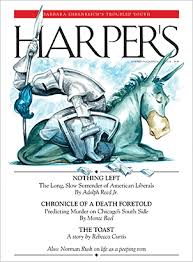
[READ: April 3, 2014] “On Nudity” and “The Trees Step Out of the Forest”
I am linking these two essays because I read them very close to each other and they are almost diametrically opposed in their content. And I thought it would be an interesting contrast.
“On Nudity” is a very simple essay about nudity. When Norman Rush was a kid–9 or 10–his father was really into nudism. He always wanted to go to nude beaches, he was very lax with nudity around the house and he tried to get his wife to join him. She was reluctant. Indeed, she didn’t really seem to like her husband very much and it seems they only got married because she was pregnant (and he may not have thought that was a good enough reason, to be honest). She tried her best to make him unhappy because of this, and that seemed to involve declining his nudity bug.
So there were copies of Sunshine and Health (the premiere nudist magazine) hidden in the house (although Norman knew where they were), and yet, despite this access, he couldn’t get enough. Rather than sating his needs, he was more obsessed than ever. He wanted the real thing, whether it was getting his cousin to play strip poker or trying to spy on women in changing rooms. He talks about the various hings he did just to get a peek of flesh. And as the essay comes to close he apologizes to the two women whose privacy he invaded by spying on them. The guilt about what he did to these women made him stop, although the women likely never knew what had happened to them. (more…)



 I Just Read About That...