Feeds:
Posts
Comments

Archive for the ‘Fears’ Category

2008_03_03-400SOUNDTRACK: FOREIGN EXCHANGE-Tiny Desk Concert #370 (July 5, 2014).

FeIt’s amusing how “religious” lead singer Phonte Coleman comes across in this set given how profane his language is.  He begins the set by telling us what a “church clap” is: a church clap is when you clap for someone when they sing in church but they suck.  It’s a slow clap that says keep trying, baby.

Foreign Exchange is Phonte on vocals, guitarist Nicolay, keyboardist Zo! and percussionist Boogie.  Their music (in this setting anyhow) is a kind of mellow stripped down soul pop.

“On A Day Like Today” is a kind of acoustic r&b with acoustic guitar and gentle keyboards. Phonte is an engaging and fun performer enticing people to clap and singing that he’s gonna wipe the sweat off his face as he does so.

He says he’s “sweating like a preacher here.”  After the first song he hits the gong ans says “when you hear this sound, that means turn the motherfuckin’ page.”   he describes the second song, “Listen to the Rain” as when you need to wind down and things ain’t going right.  It is a delicate ballad full of nice percussion.

Before the final song he says, “You never get a second chance to make a first impression so I hope this is a good motherfuckin impression.”  Then as he is ramping up the song, he tells everyone to turn to your neighbor and say “‘Neighbor, put home in your heart,’ goddamn right.” “Call It Home” is a pretty, smooth rocker.  Phonte has a good solid voice and these songs are all pretty enjoyable.

Phonte is a great front man having fun right up to the end as he jokes about how he “felt it” and was overcome during the final song.

[READ: January 29, 2016] “Leaving for Kenosha”

Richard Ford is a famous writer whom I have never read.  I think of him as writing very large books, so I’m surprised to see this short story here.

I have this image of what Ford writes, but I was rather surprised that this was set in New Orleans soon after the flood.  Interestingly, the main character is not the one leaving for Kenosha.

Walter Hobbes (which is the name of the dad in Elf, by the way) is a lawyer.  He is picking up his daughter from school before taking her to the dentist.  His daughter, Louise, is thirteen and trying to be independent.

I really enjoyed the way the Ford set up the family dysfunction–Louise needs a sleep guard to keep her from grinding her teeth–which she has only started doing since her parents got divorced.  There’s some back story about Walter’s wife leaving him and the fact that she still lives in town.  (more…)

Read Full Post »

CoverStory-KadirNelson-ADayattheBeach3-879x1200-1467305948SOUNDTRACK: LYDIA LOVELESS-Tiny Desk Concert #369 (July 1, 2014).

lovelssI want Lydia Loveless to be a punk singer–Her name is like a combination of Lydia Lunch and a last name that conjures up an asskicking punk.

But not the country singer that Loveless is (even if she is ass-kicking herself). Loveless is a new breed of alt-country which is pretty explicit with noticeably rocking guitar solos.  But her voice is so twangy it’s hard to not call it country (and in fact it’s a bit too much for me to take sometimes).

“Head” features this rather memorable chorus “Don’t stop getting undressed /Don’t stop giving me head.”  It seems especially surprising since Loveless looks like she’s about 12 (she was 23 at the time of this recording).  The buzzy solo is lengthy and more or less runs throughout the song.  Although at some point when Loveless takes her own solo the whole sound seems to fade out and get a little anemic.

Her band is fun with her bassist being very tall and having very long hair playing a very tall upright bass.  And then there’s another guy playing guitar and lap steel.

“Verlaine Shot Rimbaud” has a title that begs for an awesome song.  It’s not an epic masterpiece or anything.  In fact its closer to a pop song, The slide guitar and Loveless’ heavy accent on the chorus place it firmly in the country camp.

“Mile High” has a fun folk riff.  It sounds a lot like The Byrds and the chorus is super catchy.  If I could get her to sing less twangy I would love this song much like I love the punk country of X, or at least the Knitters.

[READ: December 29, 2010] “Who are All These Trump Supporters”

[This essay in the New Yorker also came under the heading “Trump Days.”]

So the title of the essay is a question I myself have been asking as I watch the hatred and vitriol bubble over during the convention.

If there was anyone I wanted to write this piece it would be George Saunders and he is actually the only reason I read it in the first place (I plan to read all of his contributions to the New Yorker eventually, but I’m glad to have read this one when it was timely–I hope it will be utterly irrelevant by the time I get to the rest of his works).  He self identifies as a liberal (although he was a conservative who loved Ayn Rand way back in the Reagan era).  He is a thoughtful and not prone to anger–a perfect foil for the crowd.  And he’s got a great way with words.

So great in fact that I’m just going to be quoting him a lot.  I could have pulled more excellent quotes from the essay, but really you should read the whole thing. (more…)

Read Full Post »

zahraSOUNDTRACK: WEAVES-Tiny Desk Concert #539 (June 10, 2016).

weaves There’s been quite a few mellow bands on Tiny Desk as of late so this rocking quartet from Toronto are a fun change of pace

And boy do they stand out.  Lead singer Jasmyn Burke is wearing a psychedelic dress and has a pretty wild afro.  She sings in a way that seems like maybe she could be doing something else, but always with a wry smirk.  And her voice is unusual–almost talking, but sometimes hitting slightly off-sounding notes (and at times seeming almost childish) but it all works really well within the songs.  And then there’s the music.  A bass, guitar and drum, and Morgan Waters, the guitarist, playing as if he’s doing several different songs at once.

“Coo Coo” features some picked guitar parts, some distorted chord parts, a part that mirrors her vocals (during the delightful chorus of “You’re so coo coo / I’m so coo coo  / I’m so crazy.”  And then there’s the part during the final chorus which features him playing something different after each time she says “I’m so coo coo” –trash metal guitar, simple guitar lines, then squeaky fractured notes.   It’s hard to know who to watch more.  And the bassist is no slouch either, as he keeps up pretty nicely with the wild playing.

As they start the next song, “Shithole,” the drummer starts the wrong one but they correct him and say that they are gong to play “Shithole” in this nice building.  It opens with a delicate guitar riff and a pulsing bass line.  The song is surprisingly mellow until the middle section when a noisy solo kicks in, but this song is primarily bass and vocals with a really abrupt ending

“One More” is a fast punky song which is again mostly bass and drums until the loud distorted guitars check in to accompany the vocals. I get a kick out of the odd way she sings “One more” (accompanied by a suitably squeaky guitar).

Mostly Jasmyn doesn’t seem to be singing all that hard until portions so this song when all four are going a little crazy.

They are fun band that I need to explore some more–I’ll bet they are a lot of fun live.

[READ: March 1, 2016] Zahra’s Paradise

This book is a fierce indictment of the Iranian Islamic revolution and the questionable election that took place in 2009 which brought Mahmoud Ahmadinejad to power.

It was written (by Amir) and drawn (by Khalil) pseudonymously so that they could avoid prosecution (or worse) in their home country of Iran.  In fact, while the story was amazing and really powerful, it was the afterword that I found so important.

But the story first.  And the part that will make no one want to read this book–a bag full of puppies is killed.  Yup, getting that out of the way right from the start.  And in fact, there doesn’t really seem to be a lot of justification for it.  It gets referenced a few times in the story, but nothing else is quite as graphic as the prologue (so you can skip that if you don’t want to see an image that you won’t be able to get out of your head). (more…)

Read Full Post »

silence THEE SILVER MT. ZION MEMORIAL ORCHESTRA & TRA-LA-LA BAND-13 Blues for Thirteen Moons [CST051] (2008).

330px-13_Blues_for_Thirteen_MoonsThis album opens with 12 tracks of a kind of feedbacking noise.  The total time for this is about a minute before track 13 begins.  And this album feels very different from the more acoustic Horses.  Whereas Horses felt acoustic and organic, this album is noisy and raucous and very electric.  After the 12 brief tracks there are four lengthy ones that comprise the album.

“1,000,000 Died to Make This Sound” starts with scratched notes and pizzicato strings.  The choir quietly begins singing the title “one million died to make this sound.”  Their voices grow louder and then at about 3 minutes in there’s a great bowed riff that introduces the more rocking section–a guitar “solo” and drums as that bass riff continues.  About mid way through the song it takes on a real rocking feel–the guitars rock out and the steady beat keeps up.  The song feels sloppy and intense–like they couldn’t wait to get this out.  I would describe the song as fun (except that it’s pretty bleak).  Efrim’s voice sounds a bit like Johnny Rotten or some other British punk) on this song and the punk style suits it well.  I really love the way the violin-swells make the riffs even bigger until about 9 minutes when the song shifts dramatically again and it feels like a Crazy Horse jam–big, sloppy, noisy guitars.  The song reaches a sort of natural stopping point as the music all fades away and the voices resume–I love the choir of voices at the end of the song (although perhaps Efrim’s voice could be a tad quieter?  Efrim’s voice seems to be a polarizing thing for fans of this band.  I’m even polarized about it on different songs–sometimes I think it’s too much, but other times I think it works well.

“13 Blues for Thirteen Moons” is 16 minutes long.  It begins with thumping drums and bass before Efrim’s voice comes chanting in.  The song is noisy and chaotic–lots of drums and cymbals and then the backing vocals start a call and response with the lead vocals.  The song continues in the same vein–with a refrain of “I Just Want Some Action” but then around 5 minutes a big distorted guitar plays a kind of concluding riff before a quieter guitar begins a new section with some quiet picking.  And its in this section that the album title is sung.  This quiet guitar section goes on for quite a while with Efrim shouting various parts–and then second voice joins him.  It’s unusual that the band will play the same riff through so much of a song, but it’s a good riff.  The whole band picks up the riff as it grows louder and more rocking.  The final two minutes are filled with feedback and quiet guitars with Efrim shouting syllable after syllable until it feedbacks to an end.  It’s a pretty intense song.

“Black Waters Blowed/Engine Broke Blues” opens in a much quieter way with slow revered guitars.  The vocals are also slow and accompanied by a lone cello.  But after a minute and a half chaos erupts in the song–feedback squalls and wild guitars accompanied by chaotic drumming make the song sound like it is tripping over itself , but it soon resolves to a quiet part like the intro–this time with two singers.  The song builds again, with the chaotic drums fighting for dominance over the string section.  But they both cede again to the quieter vocals once more.  The band then acts in concert building the song and allowing the vocals to continue.  And after a musical interlude, the vocals begin again over a quiet organ.  And this next section builds as strings accompany the louder vocals and the drum gets a pounding martial beat.  The final section, which appears to be the “Engine Broke Blues” is a repeated refrain of “Building Trainwrecks in the Setting Sun.”

The final song “BlindBlindBlind” also opens quietly, with a simple guitar motif.  As the vocals continue, a ringing guitar and a feedbacking guitar join the song (each in a different ear).  And then a violin adds to the melody.  About 4 minutes in, the melody shifts to an organ heavy section with the lead vocal followed by backing vocals.  A pizzicato section begins next.  What’s interesting is that the vocal melody hasn’t really changed this whole time (in this song Efrim again sounds a bit like a British punk rocker).  At around 7 minutes, the song turns towards the end, with strings and drums.  This end bit is my favorite part on the record, not only for the melody, but for the excellent backing chanting.  The backing vocal melody is very cool in itself–I love when they add the high notes–repeating the refrain “Some hearts are true” over and over.  A guitar solo interrupts the proceedings for a bit and then they resume singing all the way to the end.  It’s a very cathartic conclusion.

For this album, the lineup stayed the same although Eric Craven replaced Scott Levine Gilmore on drums.

Back in 2009, I wrote a post about this album.  It’s pretty brief and mostly talks about the singing.

[READ: March 1, 2016] The Silence of Our Friends

This was the final First Second book that I had in a huge stack that I took out from the library.  I had been putting this book off because I was nervous about reading it.  Nothing pretty is going to happen in a Civil Rights book and I had to prepare myself for it.  Obviously, the era is staggeringly important–even more so today with the kind of political rhetoric being shouted around.  That’s not why i didn’t want to read it.  I was afraid about how ugly this book might get.

But in fact, this book doesn’t go in that direction at all.  It is a factual story and while it looks at racism, it also shines a light of hope on race relations. It’s another excellent graphic novel from First Second [#10yearsof01].

What I did not know is that this story is based on actual events–the author’s father was a journalist in Texas during a serious Civil Rights confrontation.  And his father was able to help offset a travesty of justice.  He risked his career and even his own safety to do the right thing.

Set in Houston in 1968, we see some kids playing army in the yard.  This is also during Vietnam, so that’s probably not a very uncommon sight.  When the kids go inside, their mom is watching the Saigon execution on TV.  She is horrified and begins crying. The talk that night is of the atrocities of war. (more…)

Read Full Post »

[ATTENDED: May 23, 2016] S.T.O.P.

stopIf you have a teen or pre-teen and you are concerned about how they will deal with bullying, sex, body issues or, heaven forbid, heroin, this performance is a must-see both for your child and you.  The performers are all high school students.  They wrote the pieces and they are intended for high school students (and middle school).  If you can’t see them yourself, contact your school or community group to arrange for them to do their show.  It is intense and really effective.

When the fifth grade completed the D.A.R.E. program at school, the ceremony included a piece by this group.  The piece was called “Jack & Jill” and it told the story of how an underage party led to the death of two teens.  There were a couple of moments of humor, but the message was intense and the acting was really good (they “rewound” the story and the actors did a great job of going backwards–including one boy who “fell up” the couch (he fell off it earlier).

After they were done, they said that the troupe would be doing their full hour-long show in May and that was open to anyone in 5th grade and older.  I was amazed that Clark wanted to go as it’s not really his thing.  And so we went.  He was bummed that only a couple of kids he knew showed up.  I was bummed at how few people showed up at all.   And so I wanted to post about the show to get the group some recognition because what they did was really powerful and I think should be seen by just about everyone.

When we arrived, the teacher in charge of the group Miranda DeStefano-Meene told us that the show would be uncensored and pretty intense.  The program says that the words on stage “may embarrass, hurt, offend, scare and anger you.  That is intentional.”  The second paragraph spoke of the heroin epidemic in our society which is bigger than any other drug epidemic in recorded history, which I did not know.

And so we sat back and watched this show.  Now, I happen to think that Clark may not have been exposed to a lot of what was going on in this play (which I’m grateful for).  So this show may have been really intense for him (I know I spent the whole show wondering what he thought).  After the show the only thing he said was that it made hm sad.  And we did talk a little about the messages, but he’s a tight-lipped kid, so I can only hope he’ll come back to me with more questions if they arise.

And what questions he must have.  For this show tackled so many problems facing teens.  (more…)

Read Full Post »

walrusSOUNDTRACK: GODSPEED YOU BLACK EMPEROR!-F♯ A♯ ∞ [CST003] (1997).

faGYBE is more or less the flagship band for the Constellation label.  Their band has spawned many other bands, and nearly every member has played on someone else’s record or released a solo album.  Which is why it’s surprising to realize just how few albums they have released.

This first album caused quite a stir.  It was released on vinyl and then released (with an extra 29 minute song) on CD.  Few bands sounded like this before, and a whole new genre was created around their brand of multi-piece, sorta orchestral post-rock.

There are three songs on this record, but based on some information given in the CD, the songs have been informally broken into parts.

The Dead Flag Blues.  The song opens with “The Dead Flag Blues (Intro).”  It features a rough-voiced man speaking what I have recently learned is a script by Efrim Menuck.  Backed by a string melody, the speaker describes a derelict city, where the government is corrupt and the inhabitants are drunks.  After the strings fade, two guitars play a repeating motif with occasional string fills and then a slow solo violin section which fade to silence

For part 2 “Slow Moving Trains” / “The Cowboy…”  the sound of a train whistle interrupts the quiet.  It’s followed by a series of slow descending notes on a guitar.  After a few minutes a twangy guitar comes in to play a Western-ish motif.  The rest of the band slowly comes in and creates what sounds like the first real Godspeed sound—a full band making beautiful orchestral instrumental music.  It’s all too brief though as it melds into part 3.

Part 3 is known as “The Dead Flag Blues (Outro).  It opens with violin and glockenspiel playing a much more upbeat tune.  It lingers for around 2 minutes and then the songs ends.

“East Hastings” has three parts as well  “…Nothing’s Alrite in Our Life…” / “The Dead Flag Blues (Reprise)” opens with bagpipes and a man ranting.  It’s only 1 minute and a half before “The Sad Mafioso” kicks in.  This part builds slowly with spare guitars and waves of sound.  The guitar reconciles itself to a riff, slow and quiet, with a neat minor note in the middle.  It sounds like the kind of thing that is just building to something bigger, slightly more ominous.  And as the band kicks in again, the riff becomes much more meaty, but before it can totally take over, it gives way to strings and drums–playing a simple melody that continues the feeling of the guitars.  When this ends, far in the distance you can hear a voice singing the melody although it is quickly replaced by two guitars  playing the riffs while the strings keep jumping in.  And then they start working together, growing bigger and louder and faster.  Until it reaches its end with squealing feedback and a man saying “they had a large barge…” which opens up part three, “Drugs in Tokyo” / “Black Helicopter.”   This last part opens with a guitar playing harmonic notes along with washes of noise and feedback.  Some of the noise sounds, yes, like helicopters (and this is where the band makes some use of the coolness of headphones).  It’s a brief section that ends what is technically side one (although I see that the vinyl had about one minute extra at the end of the song).

Track three, “Providence,” is 29-minutes long and has five or six parts, depending on if you include the 3 minutes of silence.  “Divorce & Fever…”  opens with a lengthy spoken piece by “Blaise Bailey Finnegan III”, who will have his own track dedicated to him on the next GYBE release.  The music opens with distorted and backwards sounding guitars.  Organs add to the mix and then this short section morphs into part 2.  “Dead Metheny…” begins with some quiet guitar notes with the violins playing some mournful notes.  But the glockenspiel jumps into play a pretty, fast melody.  And then the drums start pounding away while harmonic chords are played over the top.  There are simultaneous guitar solos in each ear while the drums continue to play loud and fast.

Kicking Horse on Brokenhill” has a staticy/echoey/distorted voice singing lyrics that are really hard to hear to a melody that is similar to “Amazing Grace.”  After that fairly unsettling intro, the band begins a great section with multiple guitars and other instruments playing the same melody (this is the “Godspeed sound” in a nutshell.  By the middle of this, it has built to something enormous–full of guitar lines and drums with the support of what feels like the rest of the band.

“String Loop Manufactured During Downpour…” has a distant voice (I assume from a record based on the static) begins singing “where are you going” in a rather haunted echo).  The rest of the track is primarily washes of notes and stat icy noise until the 3 minutes of silence which precede the final proper track, “J.L.H. Outro” (stands for John Lee Hooker).  It begins with guitars and washes of sound.  The guitars begin exploring the main riff in different ways.  When the song finally builds to a full band, there are different drum beats in each ear, creating a big cacophony of sound while the guitar wails away.

It’s a pretty great album, with many different elements–weird spoken word and fantastic instrumentals sections.

Godspeed You Black Emperor has had a few lineup changes over the years.  They began with some 15 members and ultimately settled on these ten for F♯ A♯ ∞.

  • Aidan Girt – drums
  • Bruce Cawdron – percussion
  • Christophe – violin
  • David Bryant – guitar
  • Efrim Menuck – electric guitar
  • Mauro Pezzente – bass guitar
  • Mike Moya – guitar, banjo
  • Norsola Johnson – cello
  • Thea Pratt – French horn
  • Thierry Amar – bass guitar

[READ: January 26, 2106] “Cowan”

The previous Walrus story that Bertin wrote (back in 2013) was very dark.  And so is this one.  But whereas I found “The Eviction Process” compelling, this one I just didn’t like and couldn’t wait for it to be over.

This strikes me a kind of redemption story–the word guilt is mentioned once or twice.  And it seems like perhaps this was the author’s attempt to make amends for being a shit heel. Except there is no real sense of redemption or apology or anything of the sort.

The end even seems like the narrator is simply lying. (more…)

Read Full Post »

naughty SOUNDTRACK: GEM CLUB-Tiny Desk Concert #181 (December 16, 2011).

gem clubGem Club is a quiet band.  During this set there are three members:  Christopher Barnes on keyboards and lead vocals, cellist Kristen Drymala and vocalist Ieva Berberian (who is eerily silent and still for much of the performance).

The first song, “Animal” features Barnes on keyboards, playing a simple melody and Drymala, playing a low and loud cello to accompany (when her first note comes in, it’s really striking).  She also sings a wonderful harmony vocal.  Barnes’ voice is almost a whisper, but between his voice and the vibrato on the keys, it sounds really big (but still quiet).  I really enjoyed the way the only “melody” she played on cello was at the very end of the song–a brief riff to signal the end.

“Breakers” opens with some rough cello playing and then a gentle echoed keyboard.  Ieva Berberian didn’t do anything in the first song, she just hovered mysteriously in the background. But for the second song she hits occasional tambourine notes (which sound practically like explosions amid the delicate echoing keyboards).  Perhaps the most interesting part of the song is watching Drymala tap on some  colorful bells with her foot to create a lovely melody.

For the final song, “252” Barnes says it is kind of a beast, (although it doesn’t sound any more complex than the previous two to me).  The piano is echoed and Ieva Berberian finally sings backing vocals.  Her voice is a little haunting and it works very nicely with Barnes’ voice.  The melody is beautiful.

Incidentally, the blurb says that this is the first time they’ve amplified a singer’s voice (they ran his voice through a chorus pedal to give it that otherworldly echo).  I have been listening to a lot of loud music lately, and this was a perfect counterpoint.

[READ: December 20, 2015] History’s Naughty Bits

This is the kind of book that promises to be very funny.  And then it turns out to be mostly funny but also rather scholarly.  Which is not bad thing, it’s just not as raucous as one might have imagined.

Dolby begins by dismissing the idea that “naughty” things are a recent invention and then proceeds to go through the history of human culture to show examples of things that would certainly be considered naughty today (some are quite shocking).

She starts with Classical Greece where women were expected to remain chaste, except for hetairai, high-class courtesans, who were well-educated and respected.  That’s some choice.  Adultery was considered less of a sin if was committed with a prostitute. (more…)

Read Full Post »

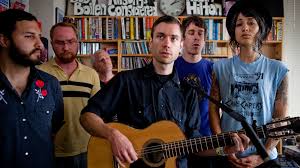
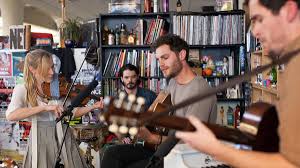
spacedump SOUNDTRACK: YO-YO MA, EDGAR MEYER, CHRIS THILE AND STUART DUNCAN-Tiny Desk Concert #175 (November 17, 2011).

yoyoYo-Yo Ma might be the most well-known cellist in the world.  I suspect that everyone has heard of him.  But it’s likely that people don’t know just how diverse his musical range is.  As the NPR blurb says:

He’s reached out to a broad range of musicians (and Muppets) to play not just Bach and Beethoven, but also Brazilian samba, Argentine tango, jazz, songs from Sesame Street and a smorgasbord of Asian music with his Silk Road Ensemble. American roots music also figures into Ma’s melting pot: He teamed up with double-bass master Edgar Meyer and fiddler Mark O’Connor 15 years ago for the gentle new-grass album Appalachian Waltz.

For this 2011 venture called The Goat Rodeo Sessions, he has created another Americana album, this time with mandolin master (and multiple Tiny Desk Concert player) Chris Thile.  Meyer is back on double bass and they have added Stuart Duncan on fiddle.

I can honestly say I never expected to see Yo-Yo Ma on a song called “Quarter Chicken Dark” but there he is, playing along as Thile begins the song on the mandolin.  The cello, fiddle and bass are all bowed so, despite the mandolin, the song feels a bit more classical (Thile has also made classical music on the mandolin, so the pairing actually makes a lot of sense).  I think Thile comes off as the star of this song with a wild solo in the middle.

For “Attaboy,” the mandolin starts the song again, but pretty quickly the strings dominate.  There’s a beautiful opening by Ma and a great fiddle interplay in which Duncan hints at the big Irish section he’s going to play.  There’s some wonderful fast mini solos from all of the instruments, including the bass, and then the whole song switches to a jig with Duncan playing a very Irish riff while Duncan and Ma keep the low notes coming.   Incidentally, I believe that Thile and Duncan are playing the exact same solo by the end, which sounds great.  But it’s watching Yo-Yo Ma’s fingers and bow move so fast that is really amazing.

For the final song “Here and Heaven” Aoife O’Donovan joins them on vocals.  And for a chance of pace Duncan switches from fiddle to banjo.  (Although mid way through the song he switches back to fiddle).  Donovan and Thile sing the song together.  On the first verse they are a little too quiet.  But once they start belting out they are fine.  This song is catchy and fun and the vocals really do change the feel of their music.

It’s clear that these accomplished musician are having a lot of fun together.  Meyer and Ma actually wave to each other during the second song, and Thile makes lots of little jokes.  And when he introduces Aoife, it’s funny to hear Yo-Yo Ma cheer like a little kid.

While Yo-Yo Ma if probably the most famous musician here, I like them all, and I’ll honestly listen to Thile do anything.

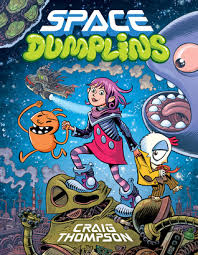
[READ: August 29, 2012] Space Dumplins

Craig Thompson has created a pretty diverse collection of books.  From the serious and beautiful Habibi, to the weird-looking and sad Goodbye Chunky Rice to this trippy sci-fi story.

The story is about Violet Marlocke, a young girl who lives out in a space trailer park.  Her father is a space lumberjack (whatever that means) and her mom is a seamstress.  They are poor but pretty happy, and that’s okay by Violet, since family is everything to her.

But as the book opens we learn that space whales (okay, I’ll stop putting “space” before everything, because he doesn’t) have just eaten her school.  The whales have been rampaging all of the planets in the area. At first Violet is happy to have no school but her parents have to do something with her.  So her mom brings her to work at Shell-tar where they try to see if she can enroll in the state of the art school there.  She can’t because her dad has a criminal record (and he’s opposed to the fancy school anyway).

While Violet is looking around, she meets Elliot Marcel Ophennorth, a small chicken who is incredibly smart (and has visions of the future).  We also meet Zacchaeus, the last Lumpkin in the world. He works at the dump.  Violet quickly befriends them both, although they don’t all get along very well at first.

Two things then happen pretty quickly back home.  Violet and her dad buy an old piece of junk space bike to fix up and Violet’s dad takes on a dangerous job to make some more money. (more…)

Read Full Post »

dec2015SOUNDTRACK: Y LA BAMBA-Tiny Desk Concert #143 (July 21, 2011).

ylabambaWith a name like Y La Bamba, I expected, a band, possibly from Mexico, singing in Spanish.  So imagine my surprise that the band is from Oregon and sings (almost) entirely in English.

The band’s musical make up is really interesting–accordion, percussion, guitar and lot of singers.  Lead singer Luz Elena Mendoza’s (who is Mexican..I was sort of right) voice is cool and unusual, passionate and anguished and perhaps a little intimidating.

For the first song “Crocodile Eyes,” Mendoza’s voice is right up front as she sings and plays guitars.  And her voice is a little surprising.  But it’s even more surprising when the (rather loud) drums come rumbling in after the first few seconds (it’s especially disconcerting because you can’t see the drummer).

But perhaps the most impressive thing about Y La Bamba is the backing singers.  Two bearded men sing wonderful “whoah ho hos” to accompany her as she sings.

For “Fasting In San Francisco” the guitar switches to one of the (unbearded) men.  And instead of percussion there is a wonderfully clear xylophone that adds a beautiful counterpoint to the plucked guitar.  On this song the backing vocals sound amazing.  I especially loved the middle section “I’m a fragile dandelion” where that line is repeated in many different ways (including spoken) and then all the singers break in to a series of fugue-like “doh” notes at different pitches–it is mesmerizing,.

“Hughson Boys” opens with fast acoustic guitar picking.  And the vocals are a duet with the guitarist and Luz Elena.  This song is not quite as anguished, but the harmonies are once again wonderful–and his falsetto vocals at the end are a great touch.

There’s a story about Luz Elena Mendoza on NPR (from a few months earlier) where they have some of their studio songs available to stream).

This was such an unexpected treat–totally not what I anticipated and a band I definitely want to hear more from.

[READ: January 11, 2016] “Too Good to Be True”

I didn’t know Huneven before reading this story.  And I was a little dismayed that the story was going to be about A.A.

However, it was about A.A. in a very unexpected way.

The protagonist is a woman named Harriet. Harriet had bottomed out not too long ago and lost the job that she really liked.  She was recently hired by a woman name Lois.  Harriet and Lois met at an Al-anon meeting and now Harriet is their housekeeper.  Well, Lois and her family are very wealthy and they have a maid and a babysitter.  So, technically, Harriet is more if a personal chef–making far more money than she ever would as a chef somewhere else.

As the story opens Harriet has agreed to take Gayle to A.A.  Gayle is Lois’ daughter.  Gayle is the middle child between a successful older sister in college and an adorable younger brother (he was a happy accident).  Gayle was an A student until she left one day at age 15 and didn’t come back for several months.

As they are driving to the meeting, Gayle tells Harriet the details of all the things she did (and people she did) to score drugs on the streets.  Gayle was dragged home once but left again twelve hours later.  She had been in forced rehab but it never took.  And now, this time, Gayle is getting clean on her own accord.  She saw a vision of her future as a successful international business woman and she intends to see that through.

So, in addition to A.A., she is studying Mandarin and being an exemplary daughter.

But then one night, as has happens so many times before, Gayle doesn’t return.  Gayle’s dad assumes that something bad happened to her–an assailant or the like.  But Lois assumes she hopped in the back of car and is getting high again.

Harriet has been told so many details of Gayle’s past.  She knows that yes Gayle wants to get clean but also, yes, she spoke so fondly of the highs she had. She doesn’t know what to think.  The police, aware of Gayle’s past, assume she has left as well.

Every phone call brings a charge of fear.  And while Lois says that she would rather Gayle were dead than missing–it would be so much better to know-of course, she also obviously hopes she isn’t.

This is an unhappy story and no real ending is going to shine a bright happy light on it.  But the route that Huneven went was unexpected.

I don’t really like stories like this in general, but it was well told and very engaging and the details (like the phrases that Gayle learned in mandarin) were great.

Read Full Post »

sept2015SOUNDTRACK: RIVER WHYLESS-Tiny Desk Concert #502 (January 19, 2016).

whylessRiver Whyless is an interesting band, at least during this Tiny Desk Concert.  They have several singers, different instruments and a whole bunch of interesting percussion on hand–including a typewriter!

The band has one EP out, from which the first song “Life Crisis” comes.  The female singer (none of the players’ names are given) says that this was their tiny desk submission.

On this song the male singer (actually everyone sings) plays typewriter and presents his typed document at the end of the show–although the audience never gets to see it–I imagine it’s gibberish, but it would be amazing if it wasn’t).  The female singer plays a violin solo in the middle of the song (which was unexpected since she doesn’t have it as the song opens).

Under the typewriter is a pump for a harmonium which has an accidental vibrato on it.  Shes says that one day it started doing that and they love it and hope it never fixes itself.

The other two songs are new–not on their EP from last year.  “Sailing Away” starts with violin and harmonium.  There’s also a guitarist who sings leads and a percussionist (who has all manner of gadgets and drums and mallets around him).  The harmonium player/typist also plays a melody on the toy piano.  All of these items may seem like novelties or goofs, but their songs are quite lovely and these little accents just add to the overall feel.

“Baby Brother” opens with a buzzy acoustic guitar and a whole landscape of percussion.  And this time the harmonium player switches to guitar while he sings lead (everyone sings lovely harmonies by the way).

I love everything about this band…except their songs.  All three songs are quite nice, and while I’m listening to them I certainly enjoy them, but they are really not that memorable.  There’s no hooks in them.  Despite the fact that all of their accouterments are not really gimmicks, those are the things I will remember most about River Whyless.

[READ: January 18, 2016] “Learning to Fly Part 4”

This is the final part of the 4 part essay.  A series like this is bound to be anticlimactic because presumably if his solo didn’t go well, he’d be dead.  And if he didn’t do the solo, there likely wouldn’t be a part 4 (unless he talked about chickening out instead).

But Ferris takes an interesting tact for this end section.

He opens the essay by explaining that he was commissioned by Popular Mechanics to write this essay.  This makes sense but is something  hadn’t thought about–they asked him to do it.

He says that he was full of anxiety the entire time–which we knew he would be.  He was terrified to fly–a wobbly commercial airplane takeoff would totally freak him out.  Plus, being a writer, he had an overactive imagination. (more…)

Read Full Post »

« Newer Posts - Older Posts »