Feeds:
Posts
Comments

Archive for the ‘Death’ Category

lp14SOUNDTRACK: YES-Relayer (1974).

Relayer_REMUS_spine_Layout 1After Tales, Rick Wakeman left and the band decided to get back to business.  So they made an album kind of like Close to EdgeRelayer is a dark album which didn’t quite bring the band back from the brink (even if there were only 3 songs and one was 20 minutes long).  It did sell well, though, even if there wasn’t any real radio airplay.

I happened to really like this album in college (my friend Sean introduced me to it).  And there are moments here that I think are great, but I can also see that it is not quite as user friendly as CttE.

I love the way “The Gates of Delirium” opens with guitar harmonics and some loud bashes of noise (good to see Squire and White asserting themselves again).  The lyrics come in around 2 minutes in and it’s a very sweet and interesting opening.  The guitar lines grow more complex as the song progresses.  Anderson says that it is a war song, with a prelude, a charge, a victory tune, and peace at the end, with hope for the future.  The “listen” section is quite catchy and moves along very well.

Around 5 minutes, the song changes into more of an instrumental sound (the charge, perhaps?)  A great riff begins at 8 minutes with a very heavy section (the battle?) beginning as well.  Squire takes over around 10 minutes and then the chaos befalls the song.  Anderson and White stopped by a scrap yard and bought metal car parts which were used as percussion during the song’s battle section. During the battle section, White formed a tower of the parts and pushed it over to make a crashing sound.

Patrick Moraz (who later played with the Moody Blues) took over for Rick Wakeman on this album and the difference is notable.  Moraz adds good keyboard sounds, but it is so clearly not Wakeman–there’s no flourishes or frills  (one imagines he would have added some pretty impressive things to this battle scene).

At around 13 the battle ends and a new riff comes out–uplifting but not overtly so.  Then things mellow out at around 15 minutes, with some washes of sound.  The biggest surprise comes around 16 minutes when the song turns very pretty with a slow echoey section known as the “Soon” section.  This section, which is about 5 minutes, was released as a single.

Track 2 “Sound Chaser” opens with a weird keyboard sound and then some chaotic drumming and bass (it’s loud and cool).  This is their jazz fusion song with drumming that’s all over the place and some cool riffs.  There are vocals (it’s hard to imagine them fitting vocals on to the riffage).  And then around 3 minutes the song turns into a big time guitar section with a lengthy dramatic solo and then Moraz’ keys underneath.   At 5 and a half minutes the songs mellow out an Anderson begins singing a gentle passage.  Then a little after 6 minutes the songs repeats with the chaos of the opening and that cool riff.  But this time, a noisy guitar picks up afterwards and a new riff begins and slows down until the unusual “cha cha cha/cha cha” section begins.  It’s followed by a wild keyboard solo from Moraz.

“To Be Over” opens with some more gentle notes as it slowly builds. Sitar plays over the notes.  This is a mellow track with lovely harmony vocals.  There’s an interesting slide guitar section in the middle of the song.  It shifts to a very typical Steve Howe guitar solo after that (very staccato and interesting).  By 5 and half minutes there’s big harmony vocals and then around 7 and a half minutes the song breaks into a new, catchier section, with a cool keyboard outro.

It’s not as immediate and grabbing as previous Yes albums, but I still think it’s pretty great.

Since almost every Yes album had different personnel, I’m going to keep a running tally here.   Here we have a new keyboardist, although Wakeman would soon be back.

Chris Squire-bass
John Anderson-vocals
Alan White (#2)-drums
Patrick Moraz (#3 replaced Rick Wakeman)-keyboards
Steve Howe (#2)-guitar

[READ: March 24, 2015] “The Route”

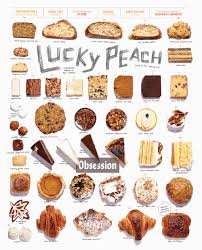
I’m generally puzzled about the fiction in Lucky Peach.  It’s usually food related, which makes sense. But this one wasn’t especially.  And then at the end of the story to see that it was originally published in Escapes in 1990 just makes the whole thing seem odd.  But hey, they can publish what they want, right?

The story is about a married couple–she is a youngster and he is middle-aged.  Their marriage is poor and so they go on a road trip from New York.

Each entry in the story is about a spot and what they did that day–traveling through Connecticut and Spotsylvania, Virginia.  Until they get to North Carolina where he is bitten by a bat.

And this is evidently, fatal.

They continue on South, with this soon to be fatality proving to be an aphrodisiac.  They go through Georgia and into Florida. And they finally get to Mile 0 in Key West.

The whole story was strange and unsettling and I really didn’t get a lot out of it. It seems odd that they would bother to reprint it here.

~~~~~~~~

The rest of the issue was, as usual, excellent.

There were several articles about wheat and other grains and interviews with different chefs.

But my favorite article was the one about Colonial Chocolate (and how Mars got involved).  And my second was about the Monopoly game at McDonalds which I’ve never played and had no idea was over 25 years old.

The theme of the issue is obsession, and there are obsessions about endives (pronounced ondeev) and Pizza (including the guy with the record for most pizza boxes) and so much more.

The story about a Jewish man and his love of pork was interesting, especially the part about pork roll:

She takes a bite and her eyes roll back.  Then she hands it to me.
As I dig into my first Taylor Pork Roll I realize that everything I appreciated in the ham… is more concentrated in this superior sandwich.  It’s saltier porkier and smokier and the flavor lingers on the tongue….  It’s like a ham sandwich squared.

There’s also a fascinating look at Ranch dressing and its belovedness in West Virginia.

I may not always love the stories, but Lucky Peach continues to be a great magazine.

Read Full Post »

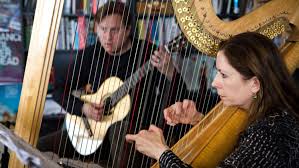
rexSOUNDTRACK: JASON VIEAUX AND YOLANDA KONDONASSIS-Tiny Desk Concert #443 (May 22, 2015).

yolandaTypically, the Tiny Desk doesn’t have performers back after they have played once.  But occasional exceptions are made, like when performers who played solo come back as a duo.  Like this.

Jason Vieuax was one of the first 20 people to play the Tiny Desk and Yolanda Kondonassis played back in 2010.  And here they are touring as a duo, which really helps to accentuate both of their skills.  And their music is beautiful together.

Vieuax is an amazing classical guitarist.  And Kondonassis plays an amazing harp that is more about singular notes than trills and “heavenly” sounds.  And in these songs, they work together doing harmony runs and fills–both instruments are lead instruments.

Apparently there aren’t very many pieces written for the combination of harp and guitar.  Kondonassis explains the origins of the Hovhaness piece (which gives some lovely context).

Vieaux explains the origins of the two movements of the Piejo suite.

The first piece is sweet, while the second one is a little more aggressive (but still lovely).  And the third one features some cool riffs and chords (especially on guitar) and percussion done on the instruments.

The three songs they play are

  • Gary Schocker: “Elysian” (from Hypnotized)
  • Alan Hovhaness: Fuga: Allegro – Andante grazioso, Canon: Allegro (from Sonata for Harp and Guitar, “Spirit of Trees”)
  • Máximo Diego Pujol: Vals, Candombe (from Suite mágica)

The pieces are familiar and yet quite different.  And 456+it is much fun to watch their fingers fly around their instruments.

[READ: January 24, 2015] Tommysaurus Rex

I brought this book home for Clark to read.  I wasnt going to read it myself but then I saw that I had read a book by TenNapel before and liked it.

But I did not care for this one.  Perhaps it was because it was marketed in my library as a kids book but I thought it was just too violent or something–the story turned me off.

Perhaps it was just that the story opens with the main character’s dog getting hit by a car and dying.  I mean, who needs that?  And the cover looks so fun, too. (more…)

Read Full Post »

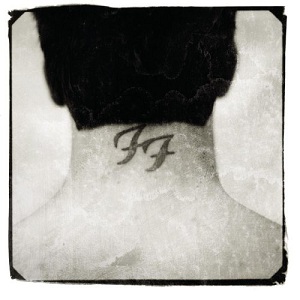
gipiSOUNDTRACK: FOO FIGHTERS-There is Nothing Left to Lose (1999).

Foo_Fighters_-_There_Is_Nothing_Left_to_LoseThis album introduces drummer Taylor Hawkins and is considered the first “band” record from the Foo Fighters. The album was recorded as a trio—Grohl, Hawkins and Nate Mendel on bass (who played on Colour as well).  As with a bunch of these middle Foo Fighters records, I feel that it starts really strong and then kind of fades a bit by the end.

I love the big fuzzy sound that opens this record. It doesn’t sound like anything Grohl has recorded before. “Breakout” is a poppy song with a very summery opening. It’s propulsive and super catchy. “Learn to Fly” is another wonderfully poppy song with a great chorus (and a hilarious video).

The opening riff of “Gimme Stitches” has a total classic rock radio sound, which really shows the diversity they were going for here.  “Generator” opens with a talk box—toally retro man. Even though it a silly thing to add to the song, the song is really catchy.

“Aurora” is a lengthy mellow song. I guess I never really thought to much about it, but on reading about it, it proves to be one of the bands’ (and Dave’s) favorite songs.

I feel like the second half of the album suffers a little bit as the songs don’t really stand out.

“Live-In Skin” is a solid song although there’s nothing too special about it (especially given the other songs on the album). The riff is pretty cool though.  “Next Year” is a mildly catchy mid tempo song. It seems like it could have been Foo Fighters’ version of Green Day’s “Time of Your Life” if they had played their cards right.

“Headwires” has an interesting 80s sound in the guitar and Grohl’s whispered vocals. But the big chorus returns to the Foo Fighters sound.

“Ain’t It the Life” is a mellow ballad. It doesn’t quite reach the heights of the Foo’s other ballads though the slide guitar solo is a nice touch.  “M.I.A.” opens quiet as well.  It has a chorus that is pretty typical of the Foo Fighters, but it seems to either lack some oomph, or it gets stuck at the end of the album.

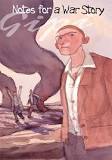
[READ: February 10, 2015] Notes for a War Story

I’m fascinated by how many translated works First Second publishes.  And it seems like a great resource for non-English writers to get published in the United States.

Gipi is an Italian artist and writer (this book was translated by Spectrum) and as with many other European artists, I could tell right away that the style here was not done by an American.  I wonder why that is.

In general, I don’t really care for Gipi’s books.  They are a little too bleak, a little to “ugly” for my tastes.  And yet the stories are quite compelling.  This one revolves around an unspecified war that is happening around the countryside (but not, for some reason, in the city).

The protagonists are young men adrift in a world where they are clearly lost.  Guiliano is a slightly richer kid than the other two and he is the narrator.  The other two are his friends Christian and Little Killer.

They learn about a man named Felix, who is leader of a militia.  When they go see him, he immediately takes a shine to Little Killer.  They talk and bond while Giuliano and Christian feel left out (and are rather naive I feel–I mean its obvious that Felix is a killer). (more…)

Read Full Post »

lifeSOUNDTRACK: FOO FIGHTERS-The Colour and the Shape (1997).

colourAfter the success of the debut album, Dave Grohl gathered a band and recorded the second album, The Colour and the Shape (British/Canadian spelling consistent wherever it was released).  The drums were recorded by a drummer (not the current drummer) but were eventually re-recorded over by Grohl.

“Doll” opens as a quiet 90 second intro.  It segues into the fantastic Hüsker Dü sounding “Monkey Wrench,” with one of the great super-long extended guitar riffs and a super long chanted single-syllable section ending on Grohl’s classic vocal cord shredding (whatever he’s saying) in the middle of the song.  “Hey Johnny Park” has a heavy opening and then some mellow verses.  The chorus is catchy with some cool harmony vocals over the top.

“My Poor Brain” opens with cacophonous noise and the segues into a rather delicate verse section.  Especially compared to the raucous punky guitars of the chorus.  “Wind Up” flips the dynamic with angry loud verses and a catchy chorus.

“Up in Arms” is a short song with a mellow acoustic first section and a fast second half.  Both are quite catchy and fun.  “My Hero” is yet another song in which Grohl finds multiple good parts and puts them in one song.  So while you’re enjoying the verses, don’t forget the catchy chorus coming up net.  Oh and the great bridge too.

“See You” is a jazzy folky number (quite short) which he says no one liked but him.  “Enough Space” opens with a lurching bass line and some really loud guitars.  The chorus is one of Grohl’s screamier moments on the record.  The verses are almost all bass guitar and remind me a lot of the Pixies.

“February Stars” starts with one of the quieter moments on a Foo Fighters record.   It builds over the first 3 minutes to a loud slow chorus.  “Everlong” is one of the bands best songs.  It opens with a cool little riff and big guitars.  The chord progression is wonderful and the gentle vocals at the beginning are fantastic.  Then comes that incredible hook of a riff.  No matter how many times I gear this song, I never get tired of it.

“Walking After You” is Grohl on everything–the whole band recorded it later for the X Files soundtrack.  It’s a lovely, gentle breakup song with a sweet riff and really nice vocals.  After “walking After You,” it’s surprising that there’s another song, (“Walking” seems like such a good album ender.  But “New Way Home” (which clocks in a nearly 6 minutes) starts out a little less than stellar and then turns out to end in a great fashion, with a loud fast repeat chorus of the “I’m Not Scared” section.

Amazingly, five singles were released from this album and it still holds up really well.

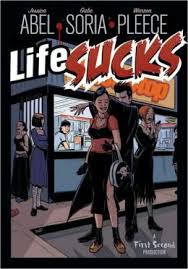
[READ: January 7, 2015] Life Sucks

In the beginning of the year I read a bunch of graphic novels from First Second, but never got around to posting them.  So here they are.

I wasn’t that excited to read this book because of the title–which seemed simply lame.  Interestingly, in the acknowledgments, she says it was originally called Night Shift (an equally poor title) and then someone else suggested Life Sucks.

Of course, once I realized the story was about vampires, the title was a little better and kind of funny.  Of course, I wasn’t all that excited to read a vampire story either (I loved Buffy, but vampires are kind of played out), but I enjoyed the way Abel focuses on some different aspects of the vampire life.  And of course, having a group of goths living nearby was a pretty great idea.

So the protagonist, Dave, is a vampire.   He was turned by the owner of The Last Stop convenience store, Lord Radu Arisztidescu.  But rather than being a brooding charismatic hottie, he’s a dorky kid (forever) who works at the convenience store.  He still gets grief from his boss who demands perfection in his “son” and who also has supernatural power over him to force him to do what he wants.  So, his undead life does indeed suck. (more…)

Read Full Post »

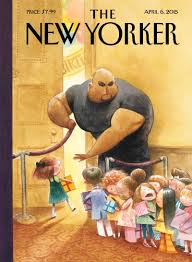
april6SOUNDTRACK: REGINA CARTER-Tiny Desk Concert #54 (April 11, 2010).

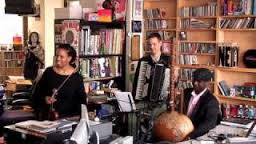
reginaRegina Carter is a (jazz mostly) violinist (although I am unfamiliar with her).  Her then new album, Reverse Thread, was a collection of African melodies played via Carter’s jazz sensibilities.  She had been playing with a larger group on tour, but she decided to strip down the band to just herself on violin, Will Holshouser on accordion and Yacouba Sissoko on kora.

They only play two songs, although since the set is 12 minutes, they are long songs (about 6 minutes each).  And they are beautiful and meandering with many solos.

I have to admit that for the first s9ng, “N’Teri” (written by Habib Koite) I feel like the kora comes across as the main instrument.  I could listen to Sissoko play that all day.  Although by the middle of the song Carter and Holshouser trade off solos, violin to accordion, which is pretty cool.

“Kanou” (written by Boubacar Traoré) is a bit more upbeat and almost dancey.  In this song all three musicians get equal billing and its really cool the way each instrument seems to come to the fore a little.  I also enjoyed that even though this is Regina Catrter’s show, she puts her violin down for a bit while Holshouser takes a long accordion solo.  But mostly they all work together perfectly–a wonderful combination that I’ve never heard before.

[READ: April 14, 2015] “Musa”

This is a simple story of loss and how it can affect everyone around them.

Musa is the narrator’s older brother.  He is a strong figure in the family and the narrator respects him like no one else.   Their father had disappeared long ago and Musa was more or less the man of the family.

And then Musa was murdered.  The narrator was upset of course, but he was also offended by this because he imagined his brother was invincible and even worse, the way he died was so insignificant.

But it hit his mother even harder.  She acted as if she were widowed and she treated the narrator as an insignificant afterthought.  Her whole life was soon dedicated to mourning Musa and to finding his killer. (more…)

Read Full Post »

march9SOUNDTRACK: RHEOSTATICS-Hillside Festival 20th Anniversary, Guelph ON, July 7, 2003 (2003).

hillUntil recently this was the only Rheostatics show listed on the live website for 2003 (a bunch have recently been added).  And there are none for 2002.  I don’t actually know if they didn’t tour much in 2002 or what.

But this is a fun set (and is just barely over an hour) with lot of guests and an interesting selection of songs.

The start with “Self Serve Gas Station,” and then “Song of the Garden” (since Kevin Hearn is with them and later “Monkeybird” too) and “P.I.N.”  Then they play “Marginalized,” the first time I’ve heard them play it live.  Tim says he wrote it the night George W. Bush was elected.

Since Kevin is therer, they play a Group of 7 medley.  I recognize “Wieners and Beans,” “Blue Hysteria” and “Yellow Days Under a Lemon Sun.”  Lewis Melville guests “on the ocean” for “California Dreamline,”  There’s a nice referential moment when the line “all the naked ladies” makes Dave comment “Steve, Ed, Kev, Tyler.”

More guests come out for”Claire” Chris Brown and Kate Fenner offer backing vocals.  And there’s a mellowish version of “Stolen Car” that is pretty cool.

“Horses” is a fun version since every guest gets to take a solo.  And at the end, Dave asks Martin to “ride the wild donkey” so instead of making horse sounds from his guitar he makes donkey sounds. How??

The set ends with a rollicking encore of Jane Siberry’s “One More Colour,” a rare treat.  This is a great show.

[READ: April 10, 2015] “A Death”

I loved this story.  King sets it in the past (the location they are in is soon to become a state: “although we are not one of the United States just yet, we soon will be”), in a place which I assumed was Maine since he writes so much about Maine, but which I see mentions Fort Pierre which is in South Dakota, so which makes more sense.

It is a deceptively simple story.  A girl has been killed.  The sheriff has a suspect.  The townsfolk assume the suspect did it.  So what’s the problem?

As the story opens, Jim Trusdale is working in his yard when the sheriff comes up to his house and  arrests him. Jim says he ain’t never heard of the girl who was killed.  The sheriff asks where his hat is and Jim can’t account for it.  That’s enough for the sheriff.

Turns out it was the girl’s birthday.  She was given a silver dollar.  Later that day she was found dead and Jim’s hat was found on her person. (more…)

Read Full Post »

harp janSOUNDTRACK: PHISH-Live Bait 10 (2014).

bait 10The last time I checked, there hadn’t been a new Live Bait release for quite some time.  I wasn’t even sure if there were going to be any more.  And then, when I was browsing the Phish site I saw that this had come out a few months ago.  It’s so hard to keep up.

This is yet another great selection of live songs.  There’s eleven songs in over three hours with most of them clocking in around 20 minutes.

“What’s the Use” opens this set.  It’s an amazing instrumental and one I haven’t heard them play very often.  It comes from The Siket Disc and is really stellar in this live setting (from 1999).  One of the great things about the Bait discs is they way the songs jump around from different years  So, the “Stash” from 1994 with its wild raging solos butts up nicely to the 30 minute “Tweezer” from 1995.  The band seems to have been really fun back then with the jam section of the song being really wild.  Right after the “Uncle Ebeneezer” line, they go nuts banging on their instruments.  The jam proceeds along until it comes to an almost staggered halt which morphs into The Breeder’s “Last Splash” (sort of).  The jump to 2010’s “The Connection” is only jarring because I haven’t heard too many live shows with this new song on it.  But it sounds great.

Disc Two (if you burn this to disc) starts with a great 24 minute version of “Down with Disease” from 2011, and then jumps back to 1998’s “Bathtub Gin” which is also kind of wild and zany.  I gather that their shows may have mellowed some over the years.  I like the way the jam section of this song returns to the melody of “Gin” since most of the time the jams just kind of fade out.  1992’s “My Sweet One” is a lot of fun.  There’s a really long intro before the lyrics (almost 3 and a half minutes) during which they play the Simpsons theme and Fish shouts “oh fuck” but who knows why.  There’s also thirty seconds of silence as they try to find the “pitch, pitch, pitch” before the final “name.”  “The Mango Song” is 18 minutes long.  The jam section starts around 5 minutes in and the first five minutes still sound like the Mango Song (because of the piano) then the last 8 are really trippy with lots of echoes.

Disc 3 opens with “Fee” which I always love to hear and assume they don’t play much anymore (based on nothing, really).  There’s a 5 minute jam before the start of “The MOMA Dance” which you can kind of tell is “The Moma Dance” but not really.  The song merges into “Runaway Jim.”  And the final song is a great version of “Chalk Dust Torture” from 2012 (as the liner notes state: Fans of recent performances will also find the “Chalk Dust Torture” played during the iconic “Fuck Your Face” set at Denver’s Dick’s Sporting Goods Park.)

Glad to have the Bait back.

[READ: March 21, 2015] “In a Waxworks”

This piece was translated from the Romanian by Michael Henry Heim and comes from Blecher’s Adventures in Immediate Irreality.  I don’t know what the full book is about and I found this excerpt to be more than a little puzzling.  Perhaps most fascinating though is that Blecher was born in 1909 and died in 1938 from tuberculosis of the spine.

It is a series of thoughts about the infinite and how thinking about things in reality would impact his thoughts about the infinite shadow–of birds in flight, the shadow of our planet, or even the vertiginous mountain chasms of caves and grottoes.

As he was a youngish man, thoughts turn to sex, and there’s some connection to a wax model of the inner ear.

But primarily the story concerns the world as a stage–as if life was some kind of artificial performance. He felt that the only person who could possibly understand the world the way he did was the town idiot. (more…)

Read Full Post »

may11SOUNDTRACK: WYE OAK-Tiny Desk Concert #52 (March 29, 2010).

wye oakI don’t know Wye Oak that well, except for some shows from NPR.  So this Tiny Desk Concert is a good closeup look at what they’re all about.

Wye Oak is just two people: Jenn Wasner and Andy Stack.  Wasner plays a wonderfully loud acoustic guitar.  She has great fingerpicking skills and there’s something about the way she uses her open low strings that adds a great percussive quality–she really wails on those chords!  It’s fun to watch her hands fly along the fretboard.

Stack plays a couple of drums with a mallet and bare hands (the percussion is subdued but effective), although evidently they are generally much louder in concert. But Stack also sings, plays keyboards and guitar.

“My Neighbor” comes from their then new EP My Neighbor/My Creator.  It’s a great song that showcases all of Wasner’s skills.  She has a great voice and I love the way she sings along to her playing. 

“Civilian” was, at the time, unreleased.  It is minor key and a bit darker.  Stack plays keyboard and drums simultaneously (something he evidently does in concert to amazing effect).

“Regret” comes from their first album. For this song, Stack takes over guitar (and the seat where the guitar is played) while Wasner sits behind the drums (to play keyboards).  This song is about not having health insurance.  It is a much more somber song and I don’t like it as much, even though it is pretty and Stack a has a nice voice.  I just like Wasner’s stuff better.

For the final song, they switch positions back.  It also comes from My Neighbor/My Creator and is called “I Hope You Die” (which she promises isn’t as dark as the title suggests).

I really enjoyed this show.  You can check it out here.

[READ: May 11, 2015] “My Life is a Joke”

I simply don’t get Sheila Heti.  And I assume that’s my fault.  But everything I read by her seems just so nebulous that I feel like I’m, missing something.

I liked the way this story started out: “When I died, there was no one around to see it.”  So the narrator is dead. Cool.

She says that her high school boyfriend wanted to marry her because he wanted to have a witness to his life (he eventually got married so he wound up okay).  The narrator never married and was hit by a car–she was not witnessed by anyone.  Well, at any rate the driver didn’t get there before she took her last breath, “So I can say I died alone.”

I even liked that the next paragraph started, “Now you can probably tell that I’m lying.”  About what?  Everything?  No, “If I really am O.K. with the fact that no one I loved witnessed my death, why did I come all he way back here from the dead?” (more…)

Read Full Post »

may4SOUNDTRACK: THE ANTLERS- Tiny Desk Concert #51 (March 15, 2010).

antlersThe Antlers is one of those bands that is critically lauded and whom many people really like but whom I just can’t get into.  (I always think I do, but I believe it’s because I’m thinking of other similarly named bands, because when I listen to a Antlers song, I immediately think, oh it’s that band.)

The band, to be blunt, sings really depressing songs.  (Their then new album was called Hospice, for god’s sake).  And that’s just not my thing.  The music is beautiful, it’s just not for me.

The songs (elegies to a dying friend full of grief and longing) are quite lovely and singer Peter Silberman has a pretty amazing falsetto and the songs feel so fragile that they may fall apart at any minute (and they nearly do a few times at the Tiny Desk).

They play three songs: “Bear,” “Atrophy,” and “Sylvia.”  It’s just three of them.  Silberman on super quiet atmospheric guitar and Michael Lerner and Darby Cicci on drums and keys (not sure who is who).   The drums are simply a snare and a shaker.  And the keyboard is one of those hilariously tiny Korg two octave jobs that is basically like a laptop (I love that he can make so many different sounds with that).

This Tiny Desk is very nice.  The songs are really pretty (I like “Bear” especially with the lyric: “All the while I’ll know we’re fucked and not getting unfucked soon”).   “Atrophy” is similarly fragile with keening falsettos and lyrics like “I’d happily take all those bullets inside you and put them inside of myself.”  When Silberman starts actually playing the guitar at the end the sound is nearly broken.  The final song “Sylvia” is also delicate.  Although the drum is played with mallets (and is rather martial) the song is not any louder.  Indeed, with lyrics like, “Sylvia, get your head out of the oven. Go back to screaming, and cursing, remind me again how everyone betrayed you,” it’s not going to get too crazy.

The band doesn’t talk to the audience.  They play their three songs, seemingly wrapped in a cocoon of their own making.  It’s really quite lovely, just something I wouldn’t want to get involved in too often.

In the notes, it says that the band can really rock out live.  These songs are pretty mellow, so I can’t exactly imagine them rocking out, but I’d be curious to hear what they do as a rocking band.  And, I will admit that after listening to the show twice, I did start to like it a lot more. I’m just not sure I need more music that’s going to make me cry.

[READ: May 10, 2015] “The Apologizer”

I’m not sure why I surprised to see Kundera in the New Yorker.  I guess I don’t think of him as writing much anymore (based on utterly nothing, although I see that his last novel was in 1999) or maybe of not writing short stories (he has but one collection).  So it was a surprise for me  to see his name here.

Regardless, I really enjoyed the way this story was set up.  There were many different small sections that seemed unrelated but then united in a rather unusual way.

The first section: “Alain Meditates on the Navel” was wonderful itself.  Alain notices how all the young girls walk around with their navels showing and he wonders about the seductiveness of the navel.  He compares the navel to the thighs as a center of desire (long thighs indicate the long road towards pleasure) or the buttocks (signifying brutality, the shortest road to the goal) or breasts (the center of female seductive power).  But what of the navel?

Then he reflects back on the last time he saw his mother.  He was ten years old, she touched his navel, maybe gave him a kiss and was gone. (more…)

Read Full Post »

houseSOUNDTRACK: LAURA VEIRS-Tiny Desk Concert #49 (March 1, 2010).

lauraI have decided to contradict myself.  I simply cannot keep up with the regular release of Tiny Desk Concerts (sometimes 3 a week), so I’m going to focus on these older recordings for a while and occasionally devote a week or two to new ones.  we’ll see how that works out.

I only know Laura Veirs’ name, but not really anything she’s done.  So I wasn’t really sure what her “solo” work would sound like.  Well, she has a delightful voice and she writes really pretty songs.

She also offers one of the most dramatic screw ups I’ve seen in a live performance. She opens her song “Carol Kaye” with this lovely melody–just her and her guitar.  And then after about a minute, her band comes in with a beautiful harmony–in the wrong key!  The introduction of their voices is so dramatic (to go from her gentle voice to this huge chorus) was really amazing.  So much so that I didn’t quite realize they were in the wrong key at first.  Turns out that Laura put her capo on the wrong fret and it wasn’t until the keyboardist played the right note that they all sounded off.  And his mouth drops opens as he stares at Laura.  She laughs and says “you looked like this terrified Muppet.”

They play the song again, this time perfectly–and the harmonies are truly lovely.  As is the violin that swirls throughout the song.

“When You Give Your Heart” is another lovely song in which Viers’ voice and the violin play the same lilting melody.

“Sun is King” has some more lovely (that’s the word to describe her, clearly) harmonies–she has picked a tremendous backing band.  And they sound great in this small setting.

It’s hard to believe that the whole set (miscue and all) is only ten minutes long.

[READ: May 1, 2015] House of Leaves

I read this book when it came out in 2000.  I had the “2 Color” edition which the t.p,. verso explains has as features: “either house appears in blue or struck passages and the word minotaur appear in red (I had the blue version).  No Braille.  Color or black & white plates.”

The Full Color edition (which is the same price, amazingly) differs in this way:

  • The word house in blue, minotaur and all struck passages in red
  • The only struck line in Chapter XXI appears in purple
  • XXXXXX and color plates

So basically the full color edition isn’t really that big a deal although the three or four full color plates are much nicer.

Why do I have both?  Well, I bought the two color when it came out and then I won a free book at the library and there was this full color edition, so I brought it home.  I was amused to find that the previous owner had deciphered a clue in the back of the book (the first letters of sentences spell out a secret message).  She (it looks like woman’s handwriting) wrote out the secret message, which I appreciated as I didn’t feel like figuring it out.

ANYWAY.

This book had a huge impact on me when I read it.  Although I forgot a lot of the details, the overwhelming effect of the book has stayed with me an I never forgot the central conceit of a house that opened secret passages and expanded or contracted at will.  For, make no mistake about all of the accolades, this is a horror story.  One accolade, from Bret Easton Ellis: “One can imagine Thomas Pynchon, J.G. Ballard. Stephen King and David Foster Wallace bowing at Danielewski’s feet, choking with astonishment, surprise, laughter awe.” [Ellis will not be bowing apparently, and actually I can’t imagine Pynchon bowing before anyone].  It’s a very cool horror story with all kind of textual experimentation and twists and turns, but it’s still a pretty damned scary story.

The experiments are many and varied and they begin right from the start, as the title page lists Mark Z. Danielewski’s House of Leaves by Zampanò with an introduction and notes by Johnny Truant. The forward from the editors notes: “The first edition of House of Leaves was privately distributed and did not contain Chapter 21, Appendix II, Appendix III or the index.

This is all nonsense of course. (more…)

Read Full Post »

« Newer Posts - Older Posts »