Feeds:
Posts
Comments

Archive for the ‘Japan’ Category

slowreadSOUNDTRACK: DIRTY THREE-Tiny Desk Concert #245 (October 15, 2012).
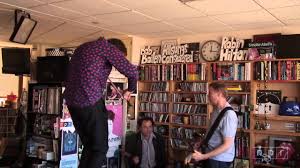
dirty-3For a Murakami collection I should really have picked a jazz Tiny Desk Concert.  But none jumped out at my on my list.  So I decided to do something that might be jazzy in spirit, even if it is nothing like jazz at all.

Dirty Three are a three-piece band which consists of violinist Warren Ellis (who works closely with Nick Cave), drummer Jim White (who I had the pleasure of seeing live with Xylouris White), and guitarist Mick Turner (who has released a string of gorgeous instrumental solo albums and worked a lot with Will Oldham).

I’ve liked Dirty Three for years, although I kind of lost touch with them back around 2000.  So it was fun to see that they are still working.  (They’ve released all of 3 albums since 2000).

Jim White plays an eccentric but very cool style of drum–it always feels improvised and random, and maybe it is, but it’s never “wrong.”  Turner is the only one who is keeping the song, shall we say, “stable.”  He’s got the rhythm and melody both with his strumming.  And Ellis is all over the place with melody lines and bowing.

For this Tiny Desk, they play three songs.  Their music is ostensibly instrumental although Warren Ellis is not above shouting and yelling and keening when appropriate.

The first two songs are from their 2012 album and the last one is from Ocean Songs.

“Rain Song” opens with Ellis strumming the violin while Turner plays slightly different chords.  Then Ellis takes off on a series of spiralling violin rolls.  As always, White is back there waving his arms around with the loosest grip on drumsticks I’ve ever seen.  He plays brushes on this song but the drums are far from quiet.  Meanwhile Ellis is soloing away, yelling where appropriate and doing high kicks when White hits the cymbals.   As the song comes to an end, White is going nuts on the drums and Ellis takes off his jacket (revealing a wonderful purple shirt) .  He starts screaming wildly as he physically gets into his violin playing.

“The Pier” is about realizing that it’s the rest of the world that is driving you crazy.  It’s about “trying to undermine Facebook and realize a new way of communicating with people beyond the internet.”  It’ about… are you ready Mick?  Okay.  “The Pier” is a slower song with some plucked violin.  Ellis climbs up on the desk and dances around as he plays.  This one feels a but more controlled but in no way staid.

For “Last Horse in the Sand,” white switches to mallets and adds a tambourine to his cymbal.  It’s really interesting to watch White play around with things–moving his gear around as he plays.  He switches sticks and seems to be not even paying attention, but without ever really losing momentum or timing.  For this song, Ellis and Turner are the mellow ones while White is just all over the place with his amazing drumming.

I haven’t said anything about Turner because he is really the grounding of the band, while the other two are taking flights of fancy.

This is a wild and untamed set and it’s a lot of fun.  It’s also amusing to watch the audience witnessing this seeming chaos.

[READ: December 16, 2016] Slow Reader Vol. 1

Madras Press had released 16 small books, which I enjoyed reading quite a lot.  I have posted about some and will post about more in the new year.  But word is that they have given up on the small books and have switched their attention to a new magazine/journal called Slow Reader.  The first issue came out this month and it collects stories, essays, poems, illustrations, and other things that center around novelist Haruki Murakami.

Support this small press!  You can order this issue directly (and name your price, although I think the asking price is $6).

From an article elsewhere I’ve learned that future issues will cluster around M.F.K. Fisher, Kazuo Ishiguro, and Patricia Highsmith.

This issue contains essays, fiction and illustrations, some dating back as far as 2000.

CHIP KIDD-cover illustration (wind-up bird)
Chip Kidd is awesome

GRANT SNIDER-Murakami Bingo Board
This bingo is hilariously apt–covering most of the bases of Murakami’s writing: cats, jazz, running, and even a Chip Kidd cover.

JESSE BALL-Sheep Man
A line drawing of a sheep standing upright with the caption “The sheep man’s peculiar tail was never visible to me.”

HARRIET LEE-MERRION-Diner illustration
A nice line drawing of a corner diner

KAREN MURPHY-Sputnik and two moon illustrations
Two simple drawings of Sputnik and two moons.

BEIDI GUO-Hard Boiled Wonderland and the End of the World map
A cool map of the locations of the novel.

DINA AVILA–Murakami Tasting Menu at Nodoguro in Portland, OR
I don’t really get if the menu items are related to the stories but it’s a neat idea that there are foods named after his works. But why are so many called IQ84?

EUGENIA BURCHI–IQ84 menus
A drawing of foods with what I think are character names (I haven’t read the novel yet).

FABIO VALESINI-train illustrations taken from the book trailer for Colorless Tsukuru Tazaki and His Years of Pilgrimage
No idea what the original context is, but it’s a neat, clean drawing of a train station.

JEFFREY BROWN-“In Conversation” What Jeffrey Brown Thinks About
The first piece is an amusing cartoon in which Brown scores a job at an indie bookstore by mentioning Murakami.  The little blurb says that it is an only slightly exaggerated account. There’s also a later picture by Brown of Murakami’s face posted on a bulletin board (with a lost cat flier), that’s really great.

DANIEL HANDLER-“I Love Murakami”
Handler begins his piece by apologizing to dozens of authors before saying that Murakami is our greatest living practitioner of fiction.  He mentions a few books but heaps a ton of praise on Wind Up Bird Chronicles and mentions his excitement at  finally getting Norwegian Wood in English (it had been untranslated for many years).  He wrote this essay in 2000.

YOKO OGAWA-“On Murakami’s “The Last Lawn of the Afternoon” [Translated from the Japanese by Stephen Snyder]
Ogawa writes about a house in her neighborhood which has a lawn that she finds unsettling–it’s perfectly manicured and a pale, cool shade of green.  She is reminded of the Murakami story in which a boy mows a woman’s lawn and she asks him an unexpected question.  Ogawa imagines a woman in that home asking the same kinds of questions.

ETGAR KERET-“What Do We Have in Our Pockets?”
This was inspired by Murakami’s story “On Seeing the 100% Perfect Girl One Beautiful April Morning.”  This story is about a man whose pockets are always bulging with unusual items.  People often say to him, “What the fuck do you have in your pockets?”  And his answer is that he carries things that he imagines the perfect woman needing–a stamp or a toothpick.  It is a wonderfully charming story.

RIVKA GALCHEN-“The Monkey Did It”
Of all of the items in this collection, this is  the only piece I’d read before.  I remembered parts of it (particularly the excerpts from “A Shinagawa Monkey,” and her talking about Colorless Tsukuru Tazaki.  I also recalled her saying that she liked his short stories better than his novels, but that she was perhaps wrong in thinking that.  The one thing I didn’t pick up on last time was that in the beginning of the essay she writes about Toricelli’s Trumpet or Gabriel’s Horn–an item with finite volume but infinite surface area.  She says this perfect describes Murakami’s work.  And I love that she ties it to translator Philip Gabriel who is a gentle and modest translator–perfect for the watery novel.

TESS GALLAGHER-“Murakami and Carver Meet at Sky House”
Before he had written any substantial works, Murakami translated Raymond Carver’s works into Japanese.  Ray was excited and bemused that Haruki and his wife Yoko would travel from Japan to meet with him.  This essay tells us that the following poem came about as Ray tried to imagine how his poems could possibly be appreciated in Japan.  Murakami told him how both the Japanese and American people of the 1980s were experiencing humiliation at being unable to make a decent living.  Gallagher says that if they were to meet today Ray would be awkward about Haruki’s stature.  But he would have loved knowing that Murakami had translated everything he had written.

RAYMOND CARVER-“The Projectile”
This poem is wonderful. It begins with Carver speaking about his meeting with Murakami and then flashing back to when he was 16 and was hit with an ice ball.  It was thrown from someone in the street through a small crack in the window of the car he was riding in–a chance in a million.

RICHARD POWERS-“The Global Distributed Self-Mirroring Subterranean Neurological Soul-Sharing Picture Show”
This is the most abstract and “intellectual” of the essays here.  It speaks of a team of neuroscientists discovering a lucky accident–that neurons in the brain fire when someone else makes a motion that we recognize.  Similarly, in Murakami–representation is the beginning of reality.  He speaks of the parallel narratives in Hard Boiled Wonderland.  He wonders at the universality of dreams and ideas in Murakami.  “But if his own stories are steeped in the endless weirdness hiding just inside everyday life, how then to account for Murakami’s astonishing popularity throughout the world?”

MARY MORRIS-“The Interpreter”
I loved this story.  An American business woman is giving a series of lectures in Japan.  She is assigned a translator who goes with her nearly everywhere.  She is a little annoyed that he is always there, but he is very respectful of her and only speaks when spoken to.  She assumes he is translating her speeches correctly, but during one, the audience laughs where there was nothing funny.  She doesn’t want to disrespect him, but she can’t imagine what he said to them.  In the next one, they are practically doubled over with laughter at what he says.  Finally she has to confront him about it.  He reveals astonishing insights into her personal life.  And the next day he is called away–just as she has begun to feel close to him.

In the author’s note, she says that the she was at an writer’s meeting in Princeton (where she teaches) and Murakami was there eating with them. He was by himself, and she talked to him because she was a fan of his work.  She relates a story of holding up a sign for him when he ran the New York City Marathon.  She says that the part about the translator and his family (which I didn’t mention) is from an actual translator she met in Japan.

AIMEE BENDER-“Spelunking with Murakami”
Bender speaks of trusting Murakami.  She says when the cat started speaking in one of his books, she began to mistrust him.  Nevertheless, she says, she loves a lot of writers but only trusts a few of them.  She’s not trusting Murakami’s honesty or his ability to make her smarter.  Rather, she trusts him like a man with a torch in a cave–someone who is willing to explore–and to be in front leading the way.

SUMANTH PRABHAKER-Editor’s Note
Prabhaker would like to ask the world’s philosophers why some things seem to happen to us in a random fashion.

Read Full Post »

class3 SOUNDTRACK: OUGHT-Sun Coming Down [CST115] (2015).

oughtsunSun Coming Down changes but also enhances the sound that Ought worked with on their debut. This album is faster overall–with fewer slow and mellow sections.  It is jittery and sometimes hostile but very much alive.

And yet as with the debut you can hear inspirations from The Fall and trippier Sonic Youth throughout the album.  And there’s more than a hint of No Wave sprinkled throughout.

Notice that Tim Beeler is now known as Tim Darcy.  But the band is the same and Matt May’s fuzzed-out keys often sound like a second guitar.  And drummer Tim Keen and bassist Ben Stidworthy keep the pace perfectly.


“Men for Miles” has a very Mark E. Smith feel–especially in the chorus–a kind of spoken/shouted style.  But that’s not the only way that Ben “sings.” There are actual sung parts like the “tear to your eye” section.   The music is kind of like Protomarytr–aggressively, slightly angular but mostly fast and propulsive.  I love the guitar riff which is surprising and yet catchy at the same time.  And amid a quieter moment, he asks, “Excuse me, did you say there’s a chance of bringing this whole fucker down?”

“Passionate Turn” is a but less intense, but it has a nicely sung verse and a cool, unusual chanted chorus.  There’s also a nifty guitar riff right after the chorus.  The steady rhythm of the bass really keeps the song moving along.

“The Combo” has aggressive guitars and a lumbering bass and drum line combined with some noisy guitars and more of that Mark E Smith chanting vocal.    The middle section grows almost pummeling with the noisy guitars and jackhammer drums as he chants “it’s a little bit strange” in a voice that sounds like he’s almost mocking punk singers.  It’s a surprise about 2/3 of the way in when the vocals grow almost positive: “Jubilation coming.”  It’s one of two songs on the disc that are just over 3 minutes but which still pack a lot of music in.

“Sun’s Coming Down” opens with a ringing feedbacking guitar and some noisy soloing.  “I am talking out of my ass because my heart is not open.”  About half way through, he starts saying “just like that, it changes” and the music follows suit–it changes to a slower thumping drum with some vocals “oooh oohhoohhoooh.”  The song reaches its end with a guitar that sounds like a police siren before returning to that calming “oooooh.”

I love the way “Beautiful Blue Sky” opens.  The guitar riff sounds very familiar in tone, and when the other guitars and noises come in it has  very Sonic Youth feel, with a pretty guitar riff. And then some spoken words enter over some abrasive scratchy guitar “warplanes, condo” that morph into a series of clichéd phrases: “beautiful weather today, how’s the family, how’s your health been, fancy seeing you here.”  The middle section slows things down with “I am now longer afraid to die because that is all I have left.  Yes.  I am now longer afraid to dance tonight because that is all I have left.”  And the ecstatic way he says “Yes” is surprisingly powerful as it sounds so different–almost ecstatic– from the rest of his delivery

“Celebration” is a much shorter piece with a sort of angrily chanted “Celebration.”  There’s buzzy guitars and a feedback-seeming drone behind the music.  It all leads up to a slow down where he chants, “All right, I’ll take it!” in a rather louche voice.

“On the Line” begins with the vocals sung quietly over a buzzing drone.  Slowly a synth line comes in.  The song sounds like nothing else on the disc until  the drums and guitars come bursting forth and the song blisters along.  And then it settles back to the quieter section with spoken word recitation.   The changes are abrupt and switch between a mellow poetry and garage rock.

“Never Better” opens with an aggressive riff and keening vocals.   It has a quieter chorus but the song never flags in intensity.

Even though it is obviously the same band, their three discs really explore many different facets of their sound.  I’m really looking forward to what the come out with next.

PERSONNEL
Matt May: Keys, Vocals
Ben Stidworthy: Bass
Tim Keen: Drums, Violin
Tim Darcy: Vocals, Guitar

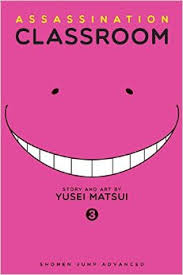
[READ: September 24, 2016] Assassination Classroom 3

I looked up this series online and saw that there are currently 21 volumes in it!  (11 are translated into English so far).  I can’t imagine how he can keep this story going (and at a pretty fast pace until the Earth will be destroyed) for so many more books!

This book begins with the students still on vacation in Kyoto.  Two of the girls have been captured by other students.  It’s a disturbing chapter with the implication that these boys have done things to girls before.  But Koro Sensei’s book about field trips actually covers the event of a kidnapping!  So the rest of the class is on it.  It even suggest where they might find the culprits (how did he know?).  It’s also a really big book and can be used as a weapon.  And our class comes out unharmed.

In the next chapter a new assassin named Red Eye is sent to take out Koro Sensei.  Red Eye is a sniper but he is baffled by Koro Sensei–who is able to stop a bullet with a dumpling.  Koro Sensei proves to be such a good teacher that even the Red Eye can learn something from him.

After a light episode in which the kids try to learn about Koro Sensei (and Irina’s) past girlfriends/boyfriends, a new student is added to the class.  But this student is a computer named Autonomous Intelligence Fixed Artillery.   It is a fast learning computer (with a pretty girl as its avatar).  And it is designed to learn from its mistakes.  It estimates that bu the end of the day it will have a .03% chance of killing Koro Sensei but by the end of the month it will be 90%.  So it begins class by opening fire on Koro Sensei (despite the fact that it breaks the class rules and disrupts class).  And then the kids have to clean up the mess of BBs.  In fact the kids are so annoyed that they tape the machine up so it’s guns can’t come out.  Eventually Koro Sensei teaches it that it needs to respect the fellow students or it will never blend in.  Koro upgrades the machine who actually seems to enjoy learning.  This is pretty fun sequence of chapters.

In the next section, Koro Sensei is affected by humidity–his head swells to a crazy size.  But that proves to be a diversion compared to the real plot that follows–revenge on a cheating girlfriend and her jerky boyfriend.  It’s very funny and quite elaborate.

The final chapter of the book is all about Irina.  She is trying to teach them to speak without an accent but the kids can’t seem to get their Ls and Rs correct.  She says that if they can’t get them straight, she will have to French kiss them (totes inappropes–although the previous chapter revealed that she was 20, which is much better than the mid 30s I assumed she was).  But we soon see that Irina’s “handler,” the guy who sent gave her the assignment, determines that she is no longer the right assassin for the job.  She is pissed but her services are no longer useful.

The book end with Koro Sensei proposing a test between Irina and her handler to see which one is the better assassin!

This manga is written in the traditional style of right to left, which is fun.  It is translated by Tetsuichiro Miyaki with an English adaptation (whatever that means) by Bryant Turnage.

Read Full Post »

assclass2 ought-once-moreSOUNDTRACK: OUGHT-Once More With Feeling… [CST108] (2014).

This EP came hot on the heels of their debut record.  It reworks a couple of older songs and has a largely improvised jam as well. It sounds pretty different from the previous record.

From the Constellation website: Discussion of a tour-only release that would grab a couple of the band’s self-recorded early tunes and commit them to vinyl shifted by the end of spring towards a realization that Ought might update this material to reflect how the songs have evolved on stage and in concert. … This yielded new recordings of two early pieces, “Pill” and “New Calm Pt. 2” (the self-recorded 2012 versions of which remain available on Ought’s Bandcamp) along with the brand new, more experimental and largely instrumental “New Calm Pt. 3.”. The non-album track “Waiting” from the More Than Any Other Day sessions (and the first tune to be given out via Constellation when we announced the Ought signing) rounds out this 24-minute EP….  In light of this new/freshly recorded material, it seemed unfair to restrict the Once More With Feeling… EP to tour-only status.

“Pill” sounds unlike anything else they’ve done.  It is mellow with Beeler Darcy’s (note the name change) singing as opposed to chanting/speaking voice.  I like that it is a fairly conventional sounding song and the way it builds slowly.  There’s a great bass line that enters after a bout 2 minutes.  The song feels meandering but it never wanders much from its mellow path (with some louder chords in between verses).  By around 4 minutes the song begins to build with a noisy solo and smashing drums that bring out the punkiness of the band. (That solo!).  But they never lose the basic momentum of the song—and the bass keeps things constant with that riff at the end of each segment.  This song also appears on their New Calm EP from 2012 which you can hear here).

“New Calm Pt 2” is a super catchy rocking song.   It starts with him saying “Oh I love this one.”  This is basically a song that encourages the audience to participate.  He tells us, “Hear  me now I am dead inside.  That’s the refrain.”  It’s a fun catchy bouncy riff repeated through pretty much the whole song.  The lyrics are pretty strange and seem arbitrary but are a lot of fun.  “Who invited Paul Simon?  I didn’t invite him.”  “I think everybody’s here now.  Everybody put your arms in the air.  That’s the generally accepted sign for not having a care.”  The song “ends” for about two minutes of him encouraging everyone to sing along to the “Da da da dah da da” section.  “It’s the part where we all sing together.”  “I have the microphone but you can sing it as well….”  And about ten times he says, “last time” then sings it again.

Interestingly, the original version of this song (on their bandcamp site) is much slower but has all of the same words

“New Calm Pt 3,” is the exact opposite of Pt2.  The lyrics are spoken slowly (“That is some good clear water an ocean of air rushes over your head”) while he guitar is a wall of noise and chaos.  The drums are loud in the mix with a lot of crashing cymbals and high hats.  The last three minutes are just some noisy guitar sounds.  And the notes say: “New Calm Pt. 3” ‘was recorded during this EP session, taken from an 20 or so minute long (maybe longer, can’t remember lol) improvised piece.’  And it seems like it.

“Waiting” is a faster, more propulsive song—with a cool bass line and alt 90s guitars.  The song grows in intensity with a wild screeching solo.  This EP is not as compelling overall as the album, but it has some fantastic moments, especially “Part 2.”

PERSONNEL
Matt May: Keys
Ben Stidworthy: Bass
Tim Keen: Drums
Tim Beeler Darcy: Vocals, Guitar

[READ: September 22, 2016] Assassination Classroom 2

Book 2 opens with a handy “the story thus far” which nicely sums up some important details from Book 1:

A mysterious creature showed up in our junior high classroom claiming that he had attacked the moon and promising to destroy the earth next March.  And then…he took over as our teacher.  The leaders of the world had no choice but to rely on the students of Class 3-E to do the job.  For a reward of ten million dollars.  Will the students of the so called End class, filled with loser sand rejects be able to kill their target by graduation?

Tabby was interested in this series–the cover of the big smiling Koro Sensei is pretty appealing.  But it is rated for teens and is all about killing your teacher.  I didn’t think I should let her.  Well, book 2 gets a bit more intense. In part, this is because there is a new professional assassin hired.  Irina Jelavich is a sexy lady with intense cleavage (which the junior high boys are well aware of).  She has killed many many people.  And Koro Sensei–despite not being human–seems to be not immune to her charms.  Shiota notes that his 5th weakness is boobs.

Despite her aggressive flirting (or maybe because of it) the kids don’t much like her.  Also because they want to win the $10 million themselves–not for her.  And she’s not very nice.  She tells them not to call her Miss Irina–she’s not a teacher after all (even though she is pretending to be one to blend).  So they call her Ms Hella-bitch (wonder how that worked in Japanese?) which gets her super angry.  But Ms Jelavich has it all figured out.  She plans to lure Koro Sensei to the shed where pleasure and pain awaits him. Of course he’s not so easily fooled. And she is made to appear ridiculous (I won’t speculate on what actually happened to her).

But her failure emboldens the students who are no longer impressed by her.  And soon she is made to actually agree to be a languages teacher–being an assassin she has learned how to say key phrases in multiple languages.

A new wrinkle appears in the book, though.  Koro Sensei has been working very hard helping each student succeed in his or her own way–he has even cloned himself (the students are concerned since he seems exhausted).  And when the school gathers for an assembly–rather than 3-E being put in its place and mocked, the students seem to be feeling pretty good about themselves.

And that’s when the principal steps in.  He lets Koro Sensei know in no uncertain terms that 3-E must fail their tests–that’s how the other students succeed–through fear of being like 3-E.  Koro Sensei has other ideas though.  He tells the class that if the 3-E students don’t score to a certain percentage he will flatten the school.  But he doesn’t know how serious the principal is about the status quo.  As Koro is preparing his students, the principal is trying to modify things.  This is upsetting Koro (and don’t forget that the students are still trying to kill him as well).

The last two chapters of the book see the students of a field trip to Kyoto.  And things change mightily when the students are away from school. For one thing, they aren’t under the protection of the school–against strangers or, worse yet, aggressive fellow students who want them in their place.

And as the book ends a new character is introduced, a psychic, Saiki, and he is here for a sweet bun–the very one that Koro Sensei wants to buy as well. The book end with the two of them having a very strange bonding moment.  I don’t know how this story can be stretched out into a number of volumes but clearly he has a lot of twists and turns planned ahead for us.

This book is rated T for teen.  Despite the cute grinning covers, it’s not for kids..

This manga is written in the traditional style of right to left, which is fun.  It is translated by Tetsuichiro Miyaki with an English adaptation (whatever that means) by Bryant Turnage.

Read Full Post »

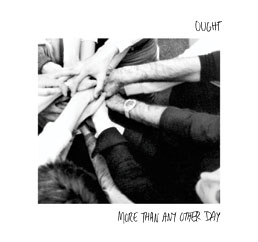
assclassSOUNDTRACK: OUGHT-More Than Any Other Day [CST103] (2014).

oughtmoreOught might just be the most straightforward band every released by Constellation Records. They are a rock/punk band with some spoken word singing that sound at times like Mark E. Smith.  However, the music is a bit catchier than The Fall’s with fast moments and really slow almost ambient stretches.

“Pleasant Heart” opens with a raw echoing guitar riff and chords that sound like nothing else on the album.   The song lurches through some great sounds and Beeler’s unusual chanting style of singing.  There’s also a cool bass line rumbling throughout the song built with lots of drum fills and chaos.

About half way through this six-minute song the bass and drums drop out leaving just a squeaky violin and harmonic guitar (this squeaky violin is possibly the only thing that makes this record sound like a Constellation release).  The bass comes back in slowly.  But it’s not until almost two minutes of this instrumental that the song resumes with a crunch and the lurching melody and verses continue until the end.

“Today More Than Any Other Day” was the first Ought song that really grabbed me.  It starts out slowly with some spare drums and meandering bass.  It doesn’t really feel like its going to resolve into anything.  By a minute and a half it’s finally starting to sound like something–a slow meandering song perhaps.  Around 2 minutes Beeler starts whispering “we’re sinking deeper, and sinking deeper.”  And then the song starts building and turning into something else .  We’re now half way through this 5 minutes song when the guitar starts chiming and he states “The name of this song is ‘Today more than any other day Parts 4-43.  So open up your textbooks … or any kind of reading material.”  And as the guitar plays the verses he recites various things that have happened today more than any other day (making a “decision between 2% and whole milk.”  A cool bass line starts playing as else drops away and he starts chanting a rather laconic “dah dah dah dah dah” following the bass.  It reminds me, strangely enough of the Dead Milkmen as its kind of not exactly out of tune but almost as if  not really caring.  But when the song resumes, it’s all right on again.  It’s a weird and wonderful, strangely catchy song.

“Habit” opens with a nice slow bass riff and chiming guitars.  It brings the intensity of the previous song down some.  And the vocals sound a little different, especially in the chorus, where the whole song take on a kind of Talking Heads vibe (the falsetto singing in particular).  It slows down toward the end with some scraping violins. The song is quite pretty in an alt-sorta way.

I love “The Weather Song” from the opening harmonics and intriguing bass line to the way the song suddenly ramps up for the chorus.  In addition to the catchy spoken opening there’s a great chorus of “I …. just wanna revel in your lies.”

“Forgiveness” is a relatively short 4 and a half minutes and opens with almost an organ sound.  A scraping violin sound joins the drones. After 2 minutes he sings in a very slow drawl “forgiveness is a drug that you take with a shrug.”  It has echoes of the Velvet Underground’s “Heroin” although it never changes tempo or intensity.

“Around Again” has a very 1980s guitar riff and whispered vocals until the whole band kicks in and it grows in intensity.  And then the whispered “go slow” returns the song to the beginning.  After 3 minutes, the song builds and then drops out with a spoken: “It’s coming. Why is it you can’t stand under the sun but you can stick your head into a bucket of water and breathe in deep” and then a whole new sound of dissonant guitar and thudded bass and drums “we have reached the intermission.”  But it’s not an intermission it goes through to the end of the song like this.

“Clarity!” opens with what sound to me like “Love Will Tear Us Apart” but with guitar chunks played over the top.  Slow harmonics and whispered vocals move the song forward.  After 2 minutes it rocks out, with a returning ringing high note and interesting sound effects.  And by the end the song comes to a plunging conclusion

“Gemini” opens with some low rumbling notes and then a sprinkling of keyboards.  There’s some scratchy guitars and a rumbling bass.  After 2 and a half minutes, the song’s punky parts take over with jagged guitars and screamed vocals.  The end of the song is mostly just two-note thumping while he screams “you wanted … wanted … wanted … wanted.”

I really like this album a lot.

I noticed that the lead singer changes his name on each release.  So, to help keep it straight:

PERSONNEL
Matt May: Keys
Ben Stidworthy: Bass
Tim Keen: Drums, Violin
Tim Beeler: Vocals, Guitar

[READ: September 20, 2016] Assassination Classroom 1

Assassination Classroom has a very strange and unsettling premise–the students of this classroom are being taught to assassinate their teacher.  Given the current climate of guns in the US, that’s probably not a comfortable position to take.  However, Matsui alters the premise to make it more palatable, and frankly more fun. The students’ teacher is actually an alien (or maybe not, but it is certainly not human).  He (I guess) is a multi-tentacled creature who can move at Mach 20, is exceptionally perceptive and can’t be harmed by most conventional weapons.  But wait, there’s more.  The students are sent to assassinate this particular creature because he blew a huge chunk out of the moon (it’s now a permanent crescent) and is planning to do the same to the earth in a year’s time.  But wait, there’s more.  One of his conditions for not blowing up the Earth sooner is that he be allowed to teach this particular classroom.  Although no one is sure why yet.

The class is 3-E, the lowest of the low, the worst students in the very prestigious Kunugigaoka Junior High.  The 3-E class are misfits–they were smart enough to get into the school, but they have done something wrong and they are treated very poorly because of it.  In fact, 3-E is used as a kind of cautionary tale for the other students–act up and you could wind up like them.  (Why they don’t just leave the school is not addressed).

The kids call the creature Koro Sensi (which is a pun on the Japanese “Koro senai” which means “can’t kill”), and it turns out he is actually a pretty great teacher.  He really seems to care about the kids.  So why would they want to kill him?  Well, aside from the destruction of the planet, there is also a ten billion yen reward (the amount seems to change some in the book, but it’s roughly 100 million dollars).  Of course, as the name implies, this guy is really hard to kill.  And when they try to kill him in a way he finds beneath them (they are training to be great assassins after all), his own revenge will be swift.  At the same time, he heartily encourages them to try their best to kill him–and he applauds their most creative efforts. (more…)

Read Full Post »

S2008_01_21OUNDTRACK: BASIA BULAT-Tiny Desk Concert #106 (January 24, 2011).

basiaFor some sad reason, this video cuts off about half way through the second song, so you need to watch it on YouTube instead.  Basia Bulat is a Canadian singer of Polish descent.  She’s adorable and plays weird instruments.  What’s not to like?

The first song “The Shore” is done entirely on a pianoette–she may be the only singer to play one.  The pianoette is a zither-like instrument with a strummed section and a hammered section.  Her voice is low and breathy.  And when, during the second verse, her backing band’s harmonies come in, it’s quite breathtaking.

The second song is done on guitar. It’s a Polish folks song–she says it was a big hit in the 60s in communist Poland.  She sings it in Polish and says it was a great way to learn her Polish words and pronunciations.  “W Zielonym Zoo” means “In The Green Zoo.”  It’s cute how happy and smiley she is as she explains this song.  It begins with just her on guitar and it’s quite a delight when Holly Coish on ukulele, Allison Stewart on viola and Ben Whiteley on bass join in.

pianoetteHer brother Bobby Bulat joins her on percussion for “Heart Of My Own.”  This song is louder and more dramatic and a lot of fun. The final song  “In The Night” is one she normally plays on the autoharp (see, unusual instruments) but she didn’t have it so she plays a rollicking guitar version with the full band (there’s some great violin solos in it).  Just before it starts she says that if it sucks, don’t use it.  It doesn’t suck at all.

I really like Bulat’s music a lot and this is a great way to witness it up close.  And here’s a picture of a pianoette.

[READ: January 8, 2015] “Ash Monday”

I wasn’t sure how much I would like this story (same old intro from me) because I didn’t like the main character (or one of the two main characters).  Dill is a delinquent.  He’s 13 and with a car (well, he has the car, he just cant drive it).  And hes loves the smell of gasoline.

When his mother tells him to goes outside to light the grill (as he does most nights–his mom doesn’t cook in the house apparently), he puts gasoline in it to light it up.  On this night he discovers a rat in the grill, so he takes the opportunity to dose the rat with the gasoline and set it on fire.  (If you’re squeamish, there is also the death of hundreds of chinchillas although that is from natural causes).

We don’t learn much about Dill’s mother except that her husband is gone and she is looking to date someone new.

The scene cuts to the next door neighbor, Sanjuro Ishiguro (Dill calls him “Itchy-goro” and once called him a motherfucking gook).  Ishiguro is a respectable businessman.  He works long hours often getting to work before everyone else.  And although he gets along with his workmates, he is definitely not one of them.  They like to ask him about sports when they know he knows nothing about it. (more…)

Read Full Post »

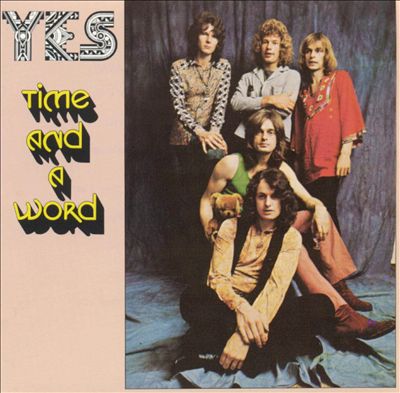
sumoSOUNDTRACK: YES-Time and a Word (1970).

yes timeThe second Yes album feels like a step towards what we know of the prog masters, but it’s more of set sideways as they have added an orchestra to the mix. Chris Squire’s bass sounds a lot more like the Yes we know, but those strings kind of mess with the synergy.

Opening track “No Opportunity Necessary, No Experience Needed” is a cover of a Richie Havens song (it’s hard to imagine such an original band doing so many covers). In this one, Chris Squire shows the kind of bass he’s capable of—big deep bass notes, high fast riffs and far more complex rhythms. It’s just odd that the song opens with a string version of title music from the movie The Big Country. There’s some cool bass sounds and drum fills. It’s a great opening song. The strings are a weird addition but I think they work here (mostly).

“Then” opens with some interesting descending keyboard chords. There’s some wonderfully dramatic moments in the verses and the chorus gets nice and big and catchy.  The middle section has some good rumbling bass (with a strange addition of horns that give this a kind of soundtrack quality) and lot of keyboards. The lyrics are still pretty hippy “Love is the only answer hate is the root of cancer, then.”

“Everydays,” is another cover (Buffalo Springfield) is a kind of jazzy song with 70s keyboards and quiet jazzy drums. But after two minutes it turns into a heavy staccato riff that’s all bass and keyboards (and very cool).  This is followed by a big jam with wild drums, keys and bass. It then jumps back to a mellow section of mostly vocals. It’s a pretty wild song.

“Sweet Dreams” opens with some very distinctive Chris Squire bass.  The keyboards are big again.  “Prophet” opens with some ponderous keyboards and then the string section playing.  Then there’s some great loud bass playing.  The main body of the song is nearly all strings, which is an unusual sound for Yes.  But it’s just waiting for the bass to rumble in (opposite horns again). “Clear Days” is a 2 minute song which is all strings and Anderson’s voice.  It’s an unexpected track on this album for sure.

But the final two songs are once again real highlights.

I love “Astral Traveller” or (as-ter-al trav’lr as it is sung).  The opening chords are sharp and unusual. There’s some great rumbling bass and the chorus has some really interesting dissonance–really the first for the band who is usually pretty sweet up til now. There’s a keyboard section which feels a little displaced from the rest (later albums would make this kind of segmentation a bit more seamless) although Squire’s super high bass riffs are a fun addition. There’s also a great bass riff as the song heads to the final chorus.

And “Time and a Word” ends the album quite nicely.  Although this song is more delicate than others, it has some great elements—guitar harmonics, some cool bass and a very catchy chorus.  This record is pretty well overlooked (and is deservedly in the shadow of its successors, but there is some real quality stuff here).

Yes_-_Time_and_a_Word_-_UK_front_coverI also just leaned that the original album cover was quite different from the one that Americans are familiar with.

Since almost every Yes album had different personnel, I’m going to keep a running tally here.  Interestingly, it was the same lineup for these two records, but Peter Banks left right at the end of recording to be replaced by Steve How on the next album:

Chris Squire-bass
John Anderson-vocals
Bill Bruford-drums
Tony Kaye-keyboards
Peter Banks-guitar

[READ: January 15, 2015] Sumo

I loved this book.  I loved the illustration style (which was so very cool) and I loved the story which was simple but poetic.

The simple story is this: Scott is a football player with potential.  But when things don’t pan out (and his girlfriend dumps him) he decides to try a different route.  What if he becomes a sumo wrestler?

Scott is a blond haired American, but evidently this is not an unheard of transition, and so Scott decides to fly to Japan to try it out.  Scott is blond with a big square head.  Actually Pham’s drawing style is very blocky, which give it  an especially memorable and interesting look

The book si told in 4 sections (and the pages are designated by the color/symbol of that section.  The first is a circle in a square, which is primarily where we see Scott, in Japan, working out with the sumo.

The section (set off by a water tower) shows Scott on his last night at home–getting drunk with his friends.  They are sad to see him go, but wish him well. Until his ex girlfriend comes in and wants to talk to him. (more…)

Read Full Post »

harp marchSOUNDTRACK: RHEOSTATICS-Vertigo, Victoria British Columbia, (January 22, 2000).

vertigoOne of the things that I like about listening to Rheostatics live shows is that when they play a couple nights in a row, they play such different sets both nights.  In the two nights at Vertigo, they played 44 songs and only 5 of them were duplicated (all from the newest album and a song that was on the live album).  That is a fan pleasing band.

It’s hard to even say which night is better.  Night 2 had more deep cuts and yet, they’re not exactly rare tracks for them to play either.

Lucky’s notes for this one say that the band were given cell phone type gadgets and that Martin played with his throughout the show.  You can hear that as the set opens and Martin is goofing off with his.

Overall for these shows I found that the band was playing a lot of songs in a bit more mellow vibe.  It’s not the way I like to hear them, but I wonder what it was like live.  However, “King of the Past” one of my favorite songs was played too slow on this night, as was “Christopher.” And “Northern Wish” sounded quite different–it had an almost meandering quality to it. Even “Stolen Car” has a slow moody quality (which Martin agrees with).

But the band is clearly having fun.  On “Four Little Songs there’s a crazy drum solo.  And as it ends and “The Royal Albert” starts, there’s some odd guitar sounds which Martin describes as change falling in an elevator.

The stage banter is certainly fun tonight, especially the talk about Sean Brodie and ordering a pizza (which was terrible).

The final song is a great version of “Aliens.”   But before that they play a cover of Reverend Ken and the Lost Followers’ “The Midnight Ride of Red Dog Ray ” which is all about a guy who drove to Quebec when there was a beer strike in Toronto.

Here’s the original

Although I love the song choices in this set, I feel like its slowness makes me prefer the previous night’s set a little more.

[READ: March 2, 2015] “Invisible and Insidious”

Vollmann is one of the more prolific writers I know (or at least his one collection of works is over 3,000 pages).  I sort of have designs on reading his output but there’s so many other authors I like and Vollmann has so much out there that I think my best bet is to keep up with his writing when I see it and just let it go at that.

So he occasionally writes non-fiction for Harper’s.  And they are usually pretty dark and unhappy pieces about the state of the world–Vollmann is not afraid to go to dark places.  In this article he talks about living in Japan and he reminds us that not that long ago (March 2011) there was a tsunami and a huge nuclear meltdown in that country.  And how most likely we all assume it must have been fixed, since we don’t hear about it anymore.

I don’t wish to overwhelm with details–that’s Vollmann’s job.  But he does a few interesting things in Japan.  He explores locations that are off-limits (or at least in the evacuation zone) and he talks to people who live and work in these areas.  He also (of course) has a dosimeter (which I assume must be pretty common in a radiated site).

The nuclear utility that monitors the plant, TEPCO (Tokyo Electric Power Company) has issued various information over the years, although none of it seems verifiable.  In August 2013, The Japanese Nuclear Regulation Authority said the leak was re-categorized from level 1(anomaly) to level 3 (a serious accident).  And the Japan Times says a the radioactivity was about 100 times more than what TEPCO had been allowing to enter the sea each year before the crisis. (more…)

Read Full Post »

« Newer Posts