Feeds:
Posts
Comments

Archive for the ‘Canadian Music’ Category

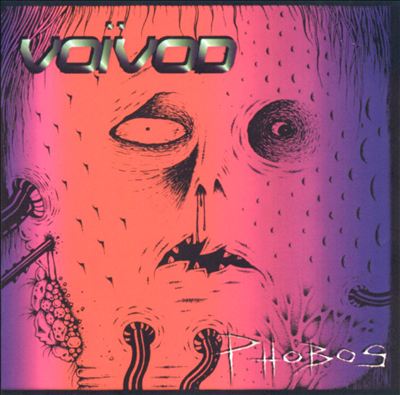
terrySOUNDTRACK: VOIVOD-Phobos (1997).

phobosIt’s tempting to say that Phobos is a carbon copy of Negatron, but that’s not true.  While the line up is the same, and the overall tone is very similar—very heavy, aggressive music—there are subtle differences.  The first is that the album sounds vaguely more electronic, as if they were really flirting with industrial after the experiment with Jim Thirwell on the last album.  E-Force’s vocals, while still abrasive and screamed have a lot of processing on them which makes them far more interesting and actually quite a bit more understandable.  There’s also a lot of weird electronic effects that link the album and make it feel more “spacey.”

And while there are different sections of songs and parts that are actually quiet, this i still a difficult album–the vocals especially are exceedingly harsh and will turn off people who like the instrumental sections.  I hate to sound like the band’s declining popular are all down to E-Force, but he is the weakest link in the band at this point.  Whats weird about thee two E-Force era albums is that although they are very very heavy with several weird parts per song, the basic structure of them is very conventional.  So instead of sounding proggy and weird, they sound more like a bludgeoning metal band.  Which didn’t really work for them.  Indeed, the band intended to if not call it quits at least take a hiatus after this album.

Phobos opens with “Catalepsy I” an introductory song—noises and whatnot.  And indeed, these electronic noises link all of the songs of the record, with different sounds in between the tracks (like the way “Bacteria” opens with spacey effects and electronic drum noises for 35 seconds).  But the first proper song “Rise,” has an opening guitar riff that is quite normal—dark, but normal.  It’s true that the heaviness of the chugging section is heavier than most (like earlier Voivod), but it’s still not that strange. Until the verses come in.  And here’s where E-Force’s vocals are a little different—more processed and robotic sounding.  It actually works a lot better.  And in the middle of the song while the heaviness is ongoing, that opening normal guitar riff comes back.  Rather conventionally.

“Mercury” has a more typical Voivod guitar riff although the pounding heavy chords are still quite heavy.  There’s more of the distorted vocals and weird chords for the bridge.  It also begins a series of increasingly longer songs.  This one is nearly 6 minutes.  While “Phobos” is nearly 7.  It also has an interesting echoing staccato guitar riff with E-Force’s vocals very distorted (like Nine Inch Nails or Skinny Puppy).  The bridge is a crazy noisy monstrosity and yet the middle section is very simple:  loud chords  delivered at a slow pace with interesting effects and fiddly guitar solo noises.  “Bacteria” reaches over 8 minutes long.  But it is unlike any of their earlier prog songs.  It has an interesting echoing guitar opening and a bunch of staggered parts.  But once the song’s major chords start up it sounds probably most like the previous album except for the lengthy instrumental/psychedelic section starting at around 5 minutes.

The album slows down somewhat with the 1:48 “Temps Mort” a short instrumental with what sounds alike an accordion. It’s a weird little time out (which is what the title means), and I like it a lot.

“The Tower” has an underwater kind of feel to it amidst the bludgeoning guitars.  The middle and the end have some very cool heavy trippy/spacey metal which is so radically different from the heavy Voivod chords that make up the proper song.  Indeed the very end is a minute of mellow spacey guitars.  “Quantum” is a pretty straight ahead (for Voivod) metal song with echoed vocals that take some of th edge off (until he screams the chorus).  There’s another cool instrumental section. In fact, the whole album has great instrumental sections, it’s kind of a shame the vocals are so offputting (although at the end of this song they are so distorted and computerized that they sound very cool)

“Neutrino” opens with those big loud slow ringing chords of noise before the simple but creepy solo riff comes in.  It’s 6 minutes long and has another interesting guitar line amid the noise.  It takes 3 minutes (of 7) before the vocals come in and the song gets much darker.  “Forlorn” is the closest thing to a hit on the album.  The chorus is really easy to sing along to.  And the verses are actually pretty straightforward.  It’s very very heavy and isn’t going to make the radio anywhere, but it’s still catchy.  The album proper ends with “Catalepsy II,” more swirling noises that sound like the beginning.

There are two bonus tracks on the CD.  “M-Body” was written by Jason Newsted and is the most industrial mechanized/voiced songs on the album.  It’s certainly out of place, although it does hint at what is to come on their next album.  “21st Century Schizoid Man” is a cover of the King Crimson song.  They’d done Pink Floyd and King Crimson fits pretty nicely.  As with the Floyd covers this one is very heavy.  Piggy gets the guitars right.  But as with the rest of the album, E-Force’s vocals just don’t work. Whereas Snake’s weird pronunciations accented the covers in a cool way, E-Force just seems to be forcing his way through the track (the fact that he puts 3 syllables in “century” is pretty unforgivable.  Overall the song is pretty great, although I’m not so sure about the guitar solo which sounds like Piggy doesn’t really know what to do.

And that’s the end of this Voivod lineup.  Two albums and a lot of lost fans.

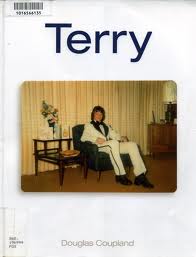
[READ: September 20, 2013] Terry

I have known about this book for a pretty long time.  I was never really that interested in reading it because, while I don’t know all that much about Terry Fox, I felt like I knew enough about him to not bother with a full bio.

For those who don’t know (basically anyone from the U.S.), Terry Fox was a young man who developed cancer at the age of 19 in 1977. and had his leg amputated.  To draw attention to cancer research he decided to run (yes run) across Canada on the Trans Canada Highway.  He had a prosthetic leg, he practiced running every day (he was already a natural athlete) and he decided that in 1980 he would run from the Atlantic Ocean to the Pacific (he even had a bottle of water from the Atlantic that he wanted to pour into the Pacific).  His plan was to run between 26 miles a day.  Yes, run a marathon every day.  He called it the Marathon of Hope.

When he started out, the media coverage was nothing but as he progressed and his friend (who drove the van alongside him) started making media attention, Terry’s cause became more well known.  And by the time he made it to Ontario, he was a huge personality—making TV appearances, talking to anyone and, most importantly, making a ton of money for cancer research. (more…)

Read Full Post »

sailorSOUNDTRACK: VOIVOD-Angel Rat (1991).

angelSo if you’re Voivod and you have just released a prog rock metal masterpiece, what’s your next step?  Hire Terry Brown, famed producer of the early Rush catalog!  And then try to go somewhat more commercial.  And name your new, commercial album… Angel Rat?

Oh but then—never a good sign—after recording the album, original bassist Blacky left the band.  It’s hard to find out exactly why (personal reasons) but he then went on to form The Holy Body Tattoo Dance Society and to create electroacoustic music.

When this album came out I was very disappointed in it—it is so far from the angular prog rock of Nothingface that I assumed the band had utterly sold out.  I mean, there’s ballad moments on it, there’s hardly any dissonant chords, and most of the songs are simply verse bridge chorus.  The band sounds a lot more commercial (sadly for them, the album tanked).  Listening to it now with fresh ears it actually reminds me a lot of Blue Öyster Cult, especially with Snake’s vocals and the chord structures that Piggy presents.  And since they used Terry Brown  there’s a Rush element as well.  Once I divorce the album from what came before I actually like the album quite a bit.  The songs are remarkably simple (I feel like Piggy could have been playing all the parts himself at the same time), but there’s still enough interesting weirdness that the songs don’t sound boring.  And once you get used to the overproduction and the fact that Snake can sing, there’s some really good stuff here.  Conventional but good.

It starts out pretty heavy with a chugging guitar but soon you notice that Snake is actually singing…nicely.  His voice sounds polished and good.  And then you notice that the guitars are fairly conventional—there’s almost no dissonance. True it is still heavy metal and there’s some slightly obscure chords, but for the most part it’s not all that weird.  Even the guitar solo is a fairly conventional speedy solo. And when the chorus comes in it’s actually quite pretty.  Speaking of pretty, the band photo is one of the more glammed up moments in Voivod’s career and, without being unfair, they are not a terribly pretty band, so this is kind of a funny picture.

“Clouds in My House” is also quite a pretty song, although admittedly the verses are a little dark (with that squeaking guitar solo sound that was popular around that time in heavy metal).  But the chorus is downright upbeat.  There’s a cool section in the middle with a noisy (but very simple) bass popping and a guitar solo over the top of it—it reminds me a lot of Rush in sound).  “The Prow” is the catchiest thing that Voivod has ever done—great sing-along verses and a big chorus.  “Best Regards” has more BÖC simiarlies—the chorus in particular has a very BÖC structure.  There’s also a some great bass on it.  Again, not the complicated bass of previous album, but a great rumbling sound that works very well as a riff while Piggy solos.  “Twin Dummy” is another fast song. This one features some of the stranger lyrics on the album.  Away says that he backed off on some of the concepts for this album and let Snake so his own thing.  So this song seems to be about ventriloquist dummies with the strange opening lyric “Dummy says…”  But the music is fast and furious here—some weird chords and really fast bass.  There’s also some keyboards on this track (pipe organ type sounds) that reminds me of Rush from around this period.

Title track “Angel Rat” sees Snake crooning over a very simple guitar ballad intro.  It’s almost unthinkable.  And yet the band keeps it interesting—especially Blacky’s bass.  Again, I don’t know why he left, but his bass is featured nicely on this album anyhow.  Blacky opens “Golem” with a powerful (but again simple) bass.  There’s an occasional funky note, but it’s a very staccato song. The drums have a strangely pop quality (the way he fills in the gaps).  It’s a little unsettling how obvious and catchy it is.  And even more unsettling is the solo—which has a very jazz feel.  I can’t even really tell what’s going on—is that Piggy or a keyboard?  “The Outcast” has probably the most conventional early 90s metal sound (except…is that a harmonica?)  Snake even does a falsetto at the end of a verse!  Probably the biggest surprise is that the final lines are “everything’s gonna work out.”

“Nuage Fractal” at least has a very Voivod title.  And the chorus sounds a lot like recent Voivod (except for the solo section).  The biggest surprise has to be “Freedoom” which opens with a very pretty guitar ballad sequence.  Something that early Voivod would have stomped all over.  Snake is whisper-singing and Piggy is playing gently for two whole minutes.  Interestingly, once the full band kicks in for the last two minutes, it is one of the heaviest sections on the album.  So even when they’re being conventional, they can’t do it for too long.  The bass in particular sounds very Geddy Lee to me on this track.  The final song “None of the Above” Is another political song—this one about global destruction.  The music is surprisingly upbeat for such a topic, but Blacky’s bass is wonderfully deep and rumbling here.

So yes, ever the chameleons, Voivod have made an album that could have sold a lot of copies–except that they’re a little too weird to do so.  But it was a good experiment and resulted in some great songs.

[READ: August 15, 2013] Sailor Twain

Sarah got me this book for Christmas.  I didn’t read it until right now because it’s fun to stretch out Christmas gifts as long as possible.

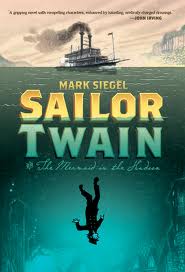
This book is a lengthy graphic novel from our friends at First Second.  It is complicated and a little confusing (the whole story is a flashback that is sort of explained in the very beginning).  It’s also very beautiful.

Except, I might say, for the main character. The background images and the interstitial pages are really beautiful and detailed.  But the main character is very cartoony–very two-dimensional with a triangle nose and big circular cartoon eyes.  I found this very disconcerting for about a third of the book.  Siegel does manage to make him very expressive and uses the big circle eyes to a good drawing benefit through, but the character just looks so–surprised?–all the time that it was hard to not notice him.  Of course later on his big eyes come in handy during the darker sequences, but I still found it an odd choice.  So too were the really cartoony choices of some of the other main characters–very big, comical noses or fat round faces.  It certainly made the characters distinctive, but as I said, I was unsettled by it.

As the story opens, Captain Twain sits in a bar and is approached by Miss Camomille.  She asks to speak to him but he says he wants nothing to do with her or his past.  She holds out a necklace and says he can have it if he tells her the story.  He is shocked to see it and reluctantly agrees. (more…)

Read Full Post »

esqSOUNDTARCK: VOIVOD-Dimesnion Hatröss (1988).

hatrossDimension Hatröss takes the advances from Killing Technology and moves them even further into craftsmanship and prog excellence.  In the Killing Technology band photo and in this one, Blacky had shaved part of his head—which was pretty outrageous for a metal band in the late 80s.  It’s just a small visual showing how the band was different from other metal bands.

It also opens with some interesting sounds—a swirling noise that coalesces into a fantastic solid heavy riff—a confident metal riff that is more sophisticated than most of their output already.  And then a cool noisy chord from Piggy lets you know that this album is going to be…different.  And so it is, a wonderful mix of metal and prog rock chords (and long songs)  all used as the background of a sci-fi story of The Voivod.  The dissonance is amazing on the album—Piggy is playing chords that seem like they shouldn’t come from a guitar.

“Tribal Convictions” is a little less harsh than “Experiment” and you can really hear Snake has been honing his singing skills.  There’s even multiple tracks of vocals (including a deep voice singing along on this track).  And there are so many different sections—and the first that stands out on the album is Piggy’s echoed guitars just before the “who’s the God” section.  Or the repeated chords that open the fantastic “Chaosmongers”—sounding for all the world like electronic malfunction.  And yet for all of the experimentation, the songs are still heavy—the chorus of this song is very fast and full of Away’s noisy splash cymbal.  My favorite parts comes at around 2:15 where Piggy plays these great fast chords and Blacky plays a very cool accompanying bass line.  Indeed, Blacky’s bass sounds great on this record.  And when that riff repeats later in the song, it’s followed by a great concluding section.

“Technocratic Manipulators” is a fast heavy song—a very traditional sounding metal song until the “that’s not for me” comes in with a  huge time change that last… for one measure.  I love how the song ends with a repeated section of “I’d rather be…” until the final line, “I’d rather…think.”

Then comes one of my favorite Voivod songs with the awesome title “Macrosolutions to Megaproblems.”  It opens with some increasingly dissonant chords, but also features some loud chanted singalong sections followed by a ringing guitar solo that sounds like a siren.  All within a few seconds of each other.  It also has the thoughtful bridge, “You better shake up your mind, coz if you’re just staying blind, integrity you won’t find.” And another super cool dissonant chord sequence on the high notes of the guitar—I don’t know how Piggy thought of these sequences.  Just to top it off, the ending sequence is a series of descending chords, each one odder than the last.

“Brain Scan” has a cool riff at the end of each verse that is actually surprisingly major chord bright—amidst the chaos of the rest of the song (more great bass from Blacky and some crazy sounds of a brain scan—Snake’s voice processed?).  “Psychic Vacuum” is one of the songs where I have to wonder how they can switch to different sections so fast.  “Cosmic Drama” opens with a distant echoic riff and then nothing but heaviness.  And yet it keeps up that sci-fi experimental feel.  This is one of the great heavy metal records of the 80s.  technically brilliant playing, odd time signatures and yet still some really catchy music.

The CD has an addition of the Batman theme song.  It’s a very odd addition and has no place on the record, but I’ve always liked it because it is so weird. (It’s also only 1:45).

[READ: August 29, 2013] “Nirvana”

I was apprehensive about reading this story because I tend to dislike Esquire fiction. But Adam Johnson won the Pulitzer Prize for fiction for The Orphan Master’s Son (which I haven’t even heard of), so I figured this must be better than the male bonding stories that usually appear in Esquire.

And so it was.

This also happens to be the second stories about a virtual reality President that I’ve read in a few days.  How about that.

So this story is set in some kind of future.  And in this future the President has been assassinated (and has been dead for three months).  The story seems like it is set in the near future (so I kept imagining Obama as the dead President and I wonder if others do too).  But something is odd, because the protagonist has been whispering to the President (and evidently the President is talking back to him).  However, what’s more significant to the narrator is his wife. (more…)

Read Full Post »

wilderSOUNDTRACK: WHITEHORSE-Live from Mountain Stage (May 16, 2012).

whitehorseWhitehorse is opening for Barenaked Ladies on the current leg of their tour (we’re going to see them in October).  I hadn’t heard of them.  Turns out Whitehorse is the duo of Luke Doucet and Melissa McClelland.  They are from Canada, which may be why they are touring with BNL–because they’re not very funny or very upbeat.

They play four songs in this Mountain Stage show.  I really like “Killing Time” which has a very alt-country feel—McClelland’s harmony vocals are great on the chorus, which has a very low down dirty feel.  I particularly like the lines:

Pimms in the cooler and daughter in the yard Playing California strip croquet

And

Tongue is a sharpened razor Little miss know it some But get her alone she cries I wanna go home Oh, this little piggy plays dumb.

They have some good stories too, like the one about “Emerald Isle” which is about Luke running a marathon in Ireland.  His Irish mother, who had never been to Ireland, flew out to meet him at the finish line and his wife, Melissa, flew in from Australia as well.  There are more great harmonies in this song which, while mournful has a wonderfully uplifting feel.  “Night Owls” is a very slow ballad which, while lyrically interesting, is a little too slow for my tastes.

For the final song, Melissa explains that the two of them had been playing solo and then they got married and still played solo.  And then they decided to join forces. “Broken One” was a song that Luke wrote for his ex-girlfriend (and it is mean); Melissa says that she fixed it for Whitehorse.  It’s a pretty standard country song with a honky tonk feel.  It has a great blow off line: “You gotta have a heart to have a broken one.”

There’s something about Canadian Country music that I like so much more than American country music.  I wonder what that is.

[READ: August 24, 2013] Wilderness

I recently stumbled upon this book at the library.  I was only vaguely aware that Doyle had written a children’s novel, but there it was on the shelf.  This is not a young child’s book, which is kind of a shame.  I know my son would love half of the book, but I didn’t think he was ready for the other half.

The two parts of the story are about different members of the same family.  The father, Frank, is the same.  He married a woman quite young and they had a daughter.  When the daughter was about 4 years old, the father and mother realized they could no longer live together.  After some fights, the mother left for America.  Where she stayed.  Gráinne, the daughter, is now 18 and she is a sullen, angry teenager.  Her dad is still okay, but most of the time she wants to treat him like he’s not.  But he seems okay with that and gives her space.  The crux of her story is that her mother has decided to come back after all these years.  And Gráinne now has to deal with that.

Her story is a little mature, (especially for my 8 year old son), and she has some pretty harsh things to say about her parents, (which I hope he doesn’t have yet).

The other half of the story concerns her half brothers, and I know my son would love this part.  Conveniently, the two stories are easy to demarcate–the ones with the boys are named Chapter 1 etc, the one with Gráinne are named things like The Bedroom, The Bus etc.  So I did consider telling him to read just those parts.  But maybe I’ll just wait.  Anyway, her half brothers, Johnny and Tom, belong to her dad and her stepmom, Sandra.  Sandra loves her boys and her husband and even Gráinne–most of the time.  But lately Gráinne has been a little much.  And Frank has encouraged Sandra to take the boys and go on a trip, just with them.  That will let her focus on the boys and give him some time with Gráinne. (more…)

Read Full Post »

conchitaSOUNDTRACK: VOIVOD: Rrröööaaarrr (1986).

roarI have always loved this album because of its name (preposterous and complete with umlauts).  It also has the classic Voivod song “Fuck Off and Die.”  Interestingly, a band that Voivod liked, Venom, released a song “F.O.A.D.” the previous year.

But man, is this album hard to listen to.  The production seems even worse than on their debut.  And the songs seem faster and a bit harder to understand.  Perhaps it was my mood when I re-listened, but songs like “Ripping Headaches” seemed more portentous than fun.  And “Slaughter in the Grave” is just light years behind the kind of songs they would write as soon as the next album.

I like to think of these first two Voivod albums as part of a pair.  The cover art is kind of similar.  But starting with the next album, the cover art would jump ahead in detail and quality.  All of Voivod’s art (and apparently the entire concept of The Voivod (you’ll have to look that up) was by Away.  He has released a coffee table book (which you can’t get anymore) but a lot of his art is online at his website.

Not many people think too highly of Rrröööaaarrr, and it is safe to say that compared to their next several albums, this one might be best ignored.

[READ: August 29, 2013] Hi, This is Conchita

This is another book that crossed my desk.  I recognized…the translator of all people (Hi, Edith Grossman) but not the author.  I couldn’t remember why I recognized her name and then I realized she had translated Don Quixote, which is supposed to be an excellent version.

I also liked the cover and the packaging of the book (sometimes that’s all it takes) and since I left the book I was reading back at home, I brought this with me to lunch.

Imagine my surprise when the first story opens with a man calling a phone sex line (in graphic detail).  I flipped through the story (which I thought was a bunch of short stories) but is actually a very long story called “Hi, this is Conchita.”  In this story, each “chapter” is a phone call and each chapter title is the phone number and time of the call. (more…)

Read Full Post »

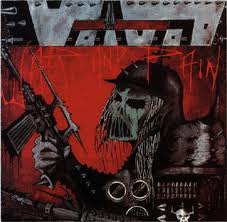
laraSOUNDTRACK: VOIVOD-War and Pain (1984).

warandIt was easy to know that Voivod were going to be an unusual band.  Their name is crazy.  All the members had nicknames like Piggy, Blacky, Snake, and, confusingly, Away.  And they were French Canadian, which meant that their singer’s first language wasn’t English–I love the way he stresses things in his vocals especially on later albums, and he had the guttural French that sounds like a cookie monster vocalist even when he is just speaking.

Later on, their prog and psychedelic leanings would come out more, but on their debut, they were just a noisy, screamy pounding metal band.  And this debut has typically bad mid 80s metal production to top it off.

In 2004 the album was remastered with bonus tracks, a full live concert and a CD ROM with all kinds of goodies.  I originally thought the remaster didn’t sound that good, but there is definitely some clarity that the remaster brings.  It allows you to hear a lot of the subtleties (and there are some) that were lost in the original.

There are hints at the kind of weird sounding noises the band would make on future albums, but this is mostly just fast, pounding music.  I’d have liked them to re-record this stuff before Piggy died, just to see what a proper recording studio could do with these earlier songs.

Of course, now that I have listenedto it again with better equipment, I’m changing my assessment somewhat.  Despite the very heavy nature of the songs there are some very cool sequences in here.  They are nothing compared to the complexities that the band would undertake in just a few short years, but there are some really interesting things underway and the remaster definitely highlights them a little better. It still sounds pretty bad 9especially compared to their later records), but hey, they only spent $2,000 and recorded it in a studio where the engineer had never heard a metal band before.

[READ: August 23, 2013] Lara’s Book

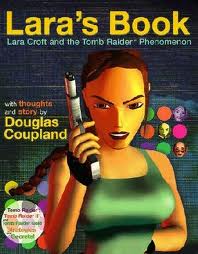
I have known of this book since it came out in 1998.  I was a huge fan of Douglas Coupland and yet I had zero interest in Lara Croft or Tomb Raider. So I simply ignored this book.  But because I’m being all completist with this blog, it was time to bite the bullet and see what this piece of nonsense was all about.

And it is just as weird and creepy as I feared.

There are several sections to the book, most of which are written by Coupland.  I will admit right up front that I did not read the strategies and secrets from Kip Ward–sorry Kip, it seemed like fun but between the crazy fonts and layout and the fact that I will never play the game it just seemed like too much. (more…)

Read Full Post »

CV1_TNY_06_10_13Schossow.inddSOUNDTRACK: NEKO CASE-“Man” (2013).

neko-case-the-worse-things-getIt was Neko Case who got me out of my NPR summer music doldrums. From her new,  wonderfully titled album The Worse Things Get, The Harder I Fight, The Harder I Fight, The More I Love You, comes this fast, rocking track.

It has everything that Neko does great—fast, clever lyrics over a simple but propulsive beat.  There’s a cool, unexpected guitar squiggle at the end of each verse that just makes the song seem that much faster.  But it is just an uptempo stomper from the great Case.

The song slows down in the middle with just a bass and drums and then as Case starts singing about her manliness, a harpsichord plays over the back giving it a nicely pompous air.  Which is quickly deflated by the buzzy guitar solo.  The song is clever and pointed and very well done.

The only thing missing is a great Neko Case wail, but the song (and the lyrics) are too fast for her to hold any notes for too long.  I’m really excited about this new album from her,.

[READ: June 18, 2013] “Scenes of the Crime”

The New Yorker doesn’t often tell you when something is an excerpt, but this time they tell us right up front.  This is an excerpt from an upcoming Ridley Scott film written by McCarthy called The Counselor.

Although I am told that I would love McCarthy, I have never read him with any seriousness.  And from what I have heard of his writing I don’t think I would like him.  This excerpt is more or less a useless attempt to try and get any sense for McCarthy as a writer.

There is no dialogue.  Rather, it is just a series of scenes–shot after shot, establishing the action of the movie.

I have no idea if there is dialogue in the movie or not.  I would be really impressed if there was no dialogue during these scenes and this whole sequence took twenty some minutes–with no dialogue at all.  That would be pretty cool. (more…)

Read Full Post »

gidwitzSOUNDTRACK: “WEIRD AL” YANKOVIC-“Headline News” (1994).

HeadlinenewsThis single was released to coincide with Al’s box set Permanent Record (the only other place the song appeared at the time).  It’s a parody of Crash Test Dummies’ “Mmm Mmm Mmm Mmm.”

The song was very funny in 1994.  Now, twenty (holy cow) years later, it loses some, well, really all of its topicality.  If people even remember the subjects [Singapore caning American delinquent Michael Fay, figure skater Tonya Harding’s then-boyfriend attacking her rival Nancy Kerrigan, and Lorena Bobbitt severing her husband’s penis with a knife] that just goes to show that al was right in joking that he “wanted to write a song about these people because [he didn’t] think they’re getting quite enough media attention.”

The second track is an “Alternate Mix” of “Christmas at Ground Zero,” one of Al’s better Christmas songs.  I’m not sure what is Alternate about it, and I was really hoping that it would include the voice of Ronald Reagan, like it did in the video, but I suspect even Al has limits of access.  Nevertheless, the song sounds a lot better than the original, so there’s nothing wrong with that.

[READ:April 20, 2013] A Tale Dark and Grimm

Sarah gave me this story to read because she loved it.  It’s a re-imagining of Hansel and Gretel.

The narrator tells us that we we don’t really know the original story all, that’s it (and many fairy tales) are much much darker than one expects.  I know that Grimm’s stories are more violent than the versions we tell our kids, but I don’t know exactly how different these stories really are.  As such, I don’t know how much of the this Gidwitz is making up.  In many respects, that doesn’t matter at all because the story is great either way, but it is a point of curiosity wondering whether or not these stories really did say this back then.

Anyhow, this story begins with bold print, bold print in which the narrator talks to the reader directly: “Once upon a time fairy tales were awesome.”  And he prepares to tell us about Faithful Johannes, the precursor to Hansel and Gretel.  We learn how Hansel and Gretel’s parents met (primarily through thievery and greed) and were eventually married (despite the literal curses against them).  It turned out that Faithful Johannes, their servant, stayed with them all along, as all of the curses came true.  But then Johannes died, and then it was revealed that if the king cut off Hansel and Gretel’s heads their blood would restore Johannes to life.  So he did.

Hansel and Gretel came back to life (obviously) but they were so distraught when they overheard what had happened to them (they didn’t remember and of it) they ran away.  And that’s how they met the witch. (more…)

Read Full Post »

PlayerOne_Coupland

SOUNDTRACK: THE TRAGICALLY HIP-Now for Plan A (2012).

hip man

This is the latest Tragically Hip record and it bounces back from the more country feel of We Are the Same and provides eleven solid rocking songs (two of which are actually ballads and not rocking at all but are still good).  “At Transformation” starts with a big bass notes and some feedback, like an alternative indie rocker, but as soon as Gord Downie’s voice comes in it is unmistakably Hip.  This is one of their rockier songs and shows that they are back in fine form.

I recently wrote about “Man Machine” and “Now for Plan A” but I think they both work better in the context of the record.  “Man Machine” contrasts nicely with “At Transformation” and “Plan A” gives the album a chance to relax before the more rocking second half.  “The Lookahead” is the other duet with Sarah Harmer, although I fear she may be a little underutilized here.  It’s a great big chorused song that The Hip do so well.

“We Want To Be It” has a recurring “drip drip” section that I find mesmerizing.  I like the way drip drip turns into click click and then cricket and how it is alternately whispered and screamed.  I’ve never really heard a song where words were used in this way before.

I love the way “About This Map” starts slow but adds a great bridge/chorus that adds a lot of tension.  Take Forever” is a straightforward rocker which along with “The Modern Spirit” and “Streets Ahead” really exemplify the modern sound of the Tragically Hip–simple rockers with big choruses and thoughtful lyrics.  On the other end of the spectrum, “Done and Done” is a simple ballad that works nicely as the song before the closer.  “Goodnight Attawapiskat” (an aboriginal settlement in Northern Ontario) is the kind of amazing minor key, could-be-an epic that Hip fans always love.  It’s scaled down to 4 minutes, but it lets us know that they still have this kind of song in them.

The Hip will never release another record like Fully Completely or Day for Night and while there is something sad about that, it’s nice to see a band evolving and modifying their sound.  This album isn’t going to blow anyone away, but it is a solid collection of great songs.

[READ: May 15, 2013] Player One

I didn’t really understand what a CBC Massey Lecture was.  It was kind of explained, but I was confused how his lecture would have been a full length novel.  And while it is described as a novel in five hours, I doubt his lecture lasted five hours (the story takes place in real time over five hours, but surely no one would have listened to him read for five hours).  Well, thanks to Wikipedia: Each of the book’s five chapters was delivered as a one hour lecture in a different Canadian city: Vancouver on October 12, Regina on October 14, Charlottetown on October 19, Ottawa on October 25 and ending in Toronto on October 29. The lectures were broadcast on CBC Radio One’s Ideas, November 8–12.   Coupland felt that “a narrative seemed like the most efficient and accessible way of putting forth a large number of propositions about life in the year 2010.”

So this turns out to be a story that takes place over five hours, although like many stories with this conceit there are flashbacks (how could there not be).  There are five main characters: Karen, Luke, Rick, Rachel, and Player One.  Although Player One is a confusing character who may or may not really exist.

Karen is a divorced mom and has decided to travel across the country (from Winnipeg to Toronto) to meet a man in an airport bar for a possible fling.  She’s not proud of it but she thinks, why the hell not–she still feels good about herself.  In fact, on the airplane a boy takes some pictures of her with his phone, because she looks pretty hot.  And in the last one she gives him the finger.  (The whole reality of that–that someone may take a picture of you anywhere for any reason is pretty bizarre).  She arrives in the airport bar where she meets Rick, the bartender. (more…)

Read Full Post »

CV1_TNY_04_29_13Drooker.inddSOUNDTRACK: THE TRAGICALLY HIP-“Now for Plan A” (2012).

hip manWhile I was enjoying the Hip’s new album, I recognized a voice in a couple of duets.  That voice is Sarah Harmer’s!  I love Harmer and realized that I haven’t heard much from her lately (her last album was three years ago).  I looked up to see what she’s been up to and it appears she’s been on some human rights trips, which is quite cool.  But it’s nice to hear her voice again.

This is the title track to the album.  It starts slow with a wah wah’d guitar.  The sounds slowly build as more layers are added and after a minute Gord starts singing.  By the second verse Harmer sings along with Downie–their voices complement each other very nicely, although it’s funny that in this song neither one of them is really showing of his or her chops–their vocals are mostly quiet.  Although I like when it seems like Harmer is taking over in the final verse.

I don’t love Hip ballads as a rule, but this is a good one.

[READ: May 9, 2013] “Fragments”

This story is indeed about fragments.

It opens with a conversation. And it’s a pretty interesting one–about flying a helicopter over midtown Manhattan.  But then that conversation ends–the protagonist was just overhearing it.  We see that he is at work.  And then his phone rings.  His wife has butt-dialed him and he is able to hear fragments of her conversation.  Although we hear only snippets, it is enough for him (although not necessarily for me) to think that she is planning on having an affair with whomever she is talking to.

This fear is not helped by the fact that she is working extra late hours on a case.  She is out until very late often until he is asleep.  Although in one instance he only pretends to sleep to see what she will do.  She goes to sleep without waking him, which he takes as a bad sign (although honestly, what is she supposed to do wake him up to say she is going to bed?) (more…)

Read Full Post »

« Newer Posts - Older Posts »