Feeds:
Posts
Comments

Archive for the ‘Canadian Music’ Category

tpk1SOUNDTRACK: PALE KING-“An Airing” (2013).

paleNope, I never heard of the musician Pale King until I searched for a song to put here.

This song begins as a piano instrumental (with some keyboards layered over).  It swells and lifts through some simple chord changes.  A martial beat comes in from time to time to give it some urgency.

This might actually work as a the opening credits to the never-to-be made movie of The Pale King, or perhaps a soundtrack to §1 (which is a short prose poem type of thing).

At about 1:45, some guitars burst through (adding some drama), and the drums grow louder.  It builds slowly until it starts to taper off and ends much like it began

I don’t know much or anything about the artist except that he’s from Toronto and he has a bandcamp site where you can hear this track.

[READ: July 14, 2014] Pale Summer Week 1 (§1-§9)

In other Summer Reading Group posts, I have tried to summarize chapters, make connections between characters that I may have missed in earlier readings of the book and, just tried to be more microscopic about my reading.  I don’t usually philosophize too much about the stories, but I do wax poetic from time to time.  Having said all that, The Pale King presents its own unique challenges because the book is unfinished.  So it’s not always clear if any connections can be made from chapters that are elliptical. DFW in particular likes to write scenes without naming characters, giving the reader something to discover later on, perhaps.  So you may have a scene that has no named people in it, but their speech patterns or details are referenced later, allowing you to piece things together.

There is definitely some of that piecing going on here, but as I said, when a book is unfinished, and this one was largely pieced together by editor Michael Pietsch, it’s not clear if you are missing something or if it simply isn’t there.  So there will be some speculation, and some omissions for sure, but we press on.

A further complication is the collection of Notes and Asides at the end of the book.  Some reveal information about characters that is not necessarily evident in the book, some talk about things that might have happened or even might have been removed if DFW had played around with the text more.  In general I am not going to read these now, so as to avoid spoilers.  But I may insert them later (with spoiler warnings) to make it easier to make sense of the book later.

The primary setting for the book is the IRS Regional Examination Center in Peoria, IL set in 1985.  Editor Michael Pietsch (in his thoughtful and helpful Editor’s note which is mandatory reading if you are going to read the novel) says that DFW described the book as “torandic,” with elements coming in and going out over and over.

The other key question is just how unfinished is this?  We have no idea.  It feels like it could go on for a ton longer, and yet it no doubt would have been edited down to a more manageable size afterwards.  There are sections that seem like they could have more and others that seems like they would have been trimmed a lot.  And then of course, there could be other things that never even saw the light of day.  None of that should keep anyone from reading the book though. (more…)

Read Full Post »

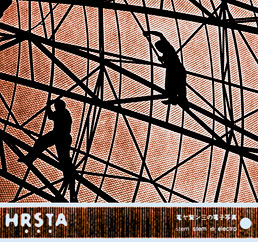
march2014SOUNDTRACK: HRSTA–Stem Stem in Electro [CST036] (2005).

cst036webI really like this album a lot.  It has all of the trappings of post rock (long songs which are rather epic in nature with lots of building and no standard verse chord structure), but it also feels doggedly commercial–super catchy in the way the elements combine and the choruses swell.

“…and we climb” is a simple four chord song that builds over the course of 6 minutes.  It seems like it will be just instrumental, but after almost 3 minutes a gang begins chanting about how “we climb to the light.”  The songs builds in intensity and then fades out to just voices.  “Blood on the Sun” is a guitar-based song with female vocals–echoing and pretty while the guitar plays on.  The song doesn’t vary much, but the combination of the voices and the chord changes is a really good one.  “Une infinite de trous en forme d’homme” is a swirling instrumental with a circular guitar pattern and washes of chords in the background.   “Folkways Orange” starts with strong vibrato guitars and compelling wavery vocals.  There’s some interesting chord changes but mostly the song is just a solid song that stays strong for 5 minutes.

“Swallow’s Tail” is one of my favorite songs on the disc.  It begins with a screechy noise that acts as a rhythm.  Then the great guitar melody follows along.  It’s not complex, but it is intertwining and intriguing.  At around 2 minutes a guitar chord motif begins.  It has a sort or tension in it, like it’s expecting something to come along.  And then the whispering vocals begin. The guitars roar to life for a few bars and then settle down as the vocals count out what is the Swallows Tail.  Then the music rages back in.  This is followed by “Heaven Is Yours,” a series of random noises and spacey sounds, as if resting from the catharsis of track 5.  “Gently Gently” is a short angsty song full of washes of chords.   The final track, “Quelque chose a propos des raquetteurs” opens with more great sounding guitars.  You can feel that it is going to be epic.  The violins come in after a minute to really build the song.  When the vocals come in around 5 minutes, it reminds me of the chords structure and build up at the end of Pink Floyd’s “Atom Heart Mother,” which is quite alright with me.

It’s a fabulous example of post-rock.

[READ: May 11, 2014] “The Academies of Siam”

Joaquim Maria Macahado de Assis was alive from 1839-1908, so this is not a current story by any means.  It comes from a new collection called Stories which was translated from the Portuguese by Rhett McNeil.  I don’t know the first thing about the author.

This story is a strange one.  It sets up the hypothetical question asking if you know about the academies of Siam.  It follows this question with “I am well aware that there have never been any academies in Siam, but suppose that there were…”  Huh.  He asks us to imagine that there were four of them and then gives this tale in four parts.

In the first, there is a question posed as to whether souls have a gender–is a man more feminine because he has a feminine soul?  This is asked because the king is considered quite a feminine man.  He doesn’t like war or any kind of fighting, he has honeyed eyes and a silvery voice.  Indeed, Kalaphangko is “practically a lady.”

The academics form two camps on this issue.  Those who say that souls are gendered and those who do not.  And soon enough violence breaks out over the issue.  (more…)

Read Full Post »

march2014SOUNDTRACK: SANDRO PERRI-Tiny Mirrors [CST047] (2007).

tinyThis album is mellow and jazzy.   At first listen it sounds almost cheesy.  But Perri is just peculiar enough to make this whole experience fun.  As with his amazing Impossible Spaces (which came out after this) Perri pushes the bounds of mellow music with his delicate voice and wah wah’d guitar.

There’s not a ton of diversity on this record, and of you don’t like the opening minutes there’s nothing that will convert you.  But there are some interesting musical moments here.

The guitar lines that wah wah through “Family Tree” are very cool.  “Double Suicide” is the catchiest thing called “Double Suicide” you’ll ever hear.  The guitars are pretty and Perri’s voice is just soothingly beautiful.

Perhaps the most surprising thing on the disc is the cover of “Everybody’s Talking.”  It loses all sense of the original melody.  It really sounds nothing like it.  It’s very strange but beautiful .

I love the flute on “You’re the One.”  Theres something about that flute that really brings out the pretty in Perri.   I also really like the melody and guitar/horn interplay on “Love is Real.”  The final song is an instrumental which really lets you focus on the music.

So while there is definitely the potential for cheese here, Perri manages to ride just above it, making some really pretty songs.

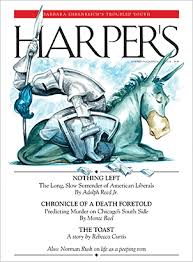
[READ: May 19, 2014] “The Toast”

Curtis is a holistic nutritionist.  She wrote an essay about that in Harper’s a few months ago.  And the main character in this story is a nutritionist.  But the story is also extremely self referential, teasing the reader about believing that a character is the author, so I’m not willing to ascribe any kind of autobiography to it.

This is the first fiction of hers that I’ve read and I have to say I absolutely loved the first half of it.  I enjoyed the end half as well, but I really loved the first half.

The story is a very simple one about a younger sister (Sonya, the narrator) having a difficult relationship with her older sister Leala.  The older sister is successful, overachieving and just about to get married.  Meanwhile Sonya has switched jobs (unsuccessfully), is in debt and is living in an attic loft with a landlord who barges in on her.

As the story opens, the narrator proves to be a snarky character who I found delightfully off putting.  At first I though that perhaps there was some mocking of holistic folks in general (there’s lots of talk of fluoride), but that would not appear to be the case.  However, when a character says this, I’m hooked:

The wedding, my sister said, would not be fancy.  However, there would be a hair-metal band, a five-course local organic vegan dinner, and a life-size fair-trade chocolate baby elephant. I’m afraid that my sister went on explaining details about the wedding and I stopped listening; this is because I caught Lyme disease five years ago and have neurological damage that makes it difficult for me to listen when people talk, especially when that they’re saying isn’t interesting.

It’s a great paragraph–we learn about the older sister and we learn that the younger sister might just use her disease as an excuse to get out of things.  She is also not afraid to say what she thinks, like when she calls her sister’s fiance a “walking pancake.” (more…)

Read Full Post »

wawa SOUNDTRACK: RE:-Alms [CST032] (2004).

cst032webRe: creates soundtracks for a dystopian world.  Where metal and computers are integrated with nature.  So a track like “Golem” which opens this album starts with what sounds like a golem walking–trudging desolate feet. Then there’s big bells that echo throughout. The multi-note music that anchors the song is eerie and enticing.

This album does not use the same “gimmick” as the previous one, where song titles were all words that should have the re prefix.  So song two is called “Orientalism As A Humanism.”  It runs nearly 9 minutes and opens with what sounds like an alarm but may actually be mechanical sounds (a saw perhaps?). But it is softened to make it a very interesting sound that swirls around half of your head.  Meanwhile the other half of the song has a totally different sound.  By the 5 minute mark it is primarily drums and noises. Until that all drops off for a bit of static. Some loud percussive noises fill the song until it turns into a fast paced drums beat which lasts for just a few seconds before the songs ends.

‘On Golden Pond” opens with more footsteps. Then there some squeaks and a splash and a voice saying “splash it.” And later a voice saying “You should see our house” These recordings are so clean, I have to wonder what they are from.   “Radio Free Ramadi” opens with near silence. After about a minute of gradually increasing sounds, the big noisy electronics come in.  It is a big noisy blast of noise like the first album.  “Lasers, Tracers, Radar Drones” opens with gentle chimes and slowly melds different noises and electronics.  “Pawk” opens with an acoustic piano–a nice relief from the electronics. It’s a simple melody, stark and bare, and is interrupted by what sounds like people making seagull sounds. The disc ends with “Home Security” a song with a huge burst of noise and electronic malfunctions.

Once again, this album is not for the timid or those who dislike dissonance, but if you’re open to experimentation, Re: proves to be a very interesting band.

 [READ: May 13, 2014] The Wawa Way

For my birthday, I jokingly told my family that I wanted a Wawa Sizzli for breakfast, a Wawa Shorti for lunch, a Wawa Bowl for dinner and a Wawa chai latte for dessert. We didn’t have any of that (although I did get some Wawa chocolate milk before work), but suffice it to say I love my Wawas (most people have one, but I have two—the one by my house and the one by my work).

I grew up in North jersey where 7-11 was the king of convenience.  I loved the 7-11, it was handy and had all kinds of junk food available. But once I moved to Central Jersey, I discovered the amazingness of Wawa. (In truth I knew about Wawa from trips to South Jersey, but it was more of a novelty then).

What makes Wawa so superior? Most people would say their coffee. I don’t drink coffee, so I can’t address that.  But what I do like is their stuffed pretzels, their hoagies (and their touch screen for ordering), their milk and chocolate milk, their hot (non coffee) drinks and their newish cold drinks—all made to order. I also like their brightness and their cleanliness. And, when I go to the third Wawa (which is out of the way but close), I think their gas prices are fair and the people who work them are always nice. And, more impressively, they were open during Hurricane Sandy when so many other places were closed.

So when the family saw that a book about Wawa was coming out, it seemed an obvious choice for my birthday (purchased, I hope, at a Wawa for ½ off the cover price). (more…)

Read Full Post »

millionSOUNDTRACK: RE:Mnant [CST015] (2001).

cst015webThere is a (tiny) gimmick with this album.  The band is called Re: and all of the songs have titles that work when you add “re” as a prefix.  So song titles include: 1. scue 2. duce 3. solute 4. cipe 5. straint 6. buke 7. pent 8. legate 9. volve 10. ject 11. gulate.  This makes me smile, even as the music can be a bit more challenging.
The first track is simply noise and electronic pulsing for 2 minutes. It melds into track 2 in which the noise ends but the electronic pulsing continues. Then a faster, newer noise comes in and stays there while the beeping gives us a rhythm. Then all the noise drops out and it is replaced by a more delicate wave of almost strings. Then what sounds like detuned strings play some notes while the noise is buzzing in the background and swirling around your head.  The 7 minute track 3 is a bit much. It opens with the sound of a kind of static and mechanical sounds. It has a feel of a horror movie soundtrack, especially as it builds and tension mounts with the “bass” notes that come through. Even though I find it long, by the time it really gets going I could listen to a lot more of it, I think the buildup at the beginning is too long.

The fourth track brings in some interesting percussive sounds, but mostly it seems to be about the background noises that swell and get in your head (those piercing high notes).   Track 5 introduces an acoustic guitar. I feel like this should have gone earlier so it’s not as much of a surprise at this stage. It’s quite a pretty melody (with more of those electronic noises floating around the background and it’s a nice interlude among all of the mechanicals. 6 also has a guitars–this time electric–playing a staccato rhythm. The chords are nice and there’s that persistent electronic noise floating around to keep it somewhat edgy.   7 employs feedback sounds and beats with what sounds like human voices. And interesting piece of soundtrack noise.

Track 8 starts off quietly but introduces some more guitar. There’ an interesting melody with the electronics buzzing around in the background.  9 has big percussion sounds and lasts a reasonable 3 minutes. 10 is an acoustic guitar song that reminds me of something Beck might do, and it’s too short at 2:15. The final track, 11, is mostly low pulsing sounds. It’s kind of meandering end to the disc that features a lot of uptempo noisy music.

[READ: April 25, 2014] A Million Heavens

I’ve enjoyed John Brandon’s other novels, and I had read an excerpt from this one in McSweeney’s #41.  I found it enjoyable and somewhat confusing.  And, actually that’s a bit how I feel about the book as a whole.

Each section of the book (from a paragraph to several pages) has a different character as its title.  What’s confusing is that it starts off with “The Wolf” who is a major character and is (for the most part) sentient and thoughtful.  The wolf roams the periphery (as wolves do) coming close to interacting with characters but seeming more like  a narrator than a character.  The next character we meet is Soren’s Father.

Soren’s Father’s story is a catalyst for much of the book’s action.  Soren was at piano practice.  He was a new student.  When the teacher walked away, he played a piece of beautiful music for about 15 seconds and then passed into a coma.  He has been in the coma for a few months now with no real hope of recovery but with no real indication of not recovering either.  Soren’s Father is a pragmatic man, not interested in the music his son played, nor in the plans and prayers of the people who are holding a vigil outside.  Really he just wants this over so he can go back to his old life.  But he is ever faithful to his son, sitting with him every day, letting his business slowly erode.  Over the course of the story, several people become connected to Soren’s Father.

The Piano Teacher is another character.  She feels responsible for all of this.  She didn’t want any kind of prodigy, if that’s what Soren is, she just wanted kids to play the piano badly so she could teach them to do better. (more…)

Read Full Post »

8 SOUNDTRACK: BLACK OX ORKESTAR-Nisht Azoy [CST038] (2006).

cst038webOn the second (and so far final) Black Ox Orkestar album, the songs are longer and the whole disc has a more polished feel.

It feels less like friends gathered on a night for music (which is what the first one seemed like) and more like a band playing the music in the studio.  There’s more precision in the instrumentation and more instrumentation overall.  The voices,  like on “Bukharian” are layered, bringing in bass voices that didn’t appear before.  The album also feels a bit more like a GYBE type of project–more building, more epicness.  “Tsvey Taybelakh” [Two Doves] is over 7 minutes long.  And even though a song like “Az Vey dem Tatn” [Sad Is the Father] is clearly Yiddish (the vocals are the big giveaway) they sound like more than folk songs, they sound bigger, more “important.”

“Violin Duet” has a slow mournful piece and then a sprightly fun dance piece.  “Ratsekr Grec” is a big instrumental dance piece that  sounds familiar but is not the song I’m thinking of (which is from a movie, I believe).  The 7 minute song actually has elements that feel a bit like Led Zeppelin’s “Kashmir” (with clarinet).  And the final song “Golem” begins like an epic with slow guitars and strings in a very traditional melody.  It has a number of false endings at around 3:30 and again at 5 minutes.  And since album has some translation of the lyrics, (which are still sung in Yiddish) we can see the lyrics move beyond traditional Yiddish yet are firmly grounded in them:

“We made a new golem/ We created our guard/ Without soul and without mercy/ He watches the gate/ Like the cameras on the fence/ Like the barbs on the wire/ Like the concrete barricades/ He becomes landscape/ But no. It can’t go on/ No. It can’t go on/ Not like this…,”

Again, if you don’t like traditional Yiddish music (or vocals sung in Yiddish) you won’t like this, although the adventurous may want to give it a chance.

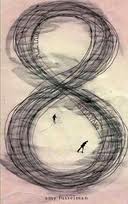
[READ: May 6, 2014] 8

The cover above is actually not the cover of the version I read.  The McSweeney’s Two Books in One does not seem to have this cover for 8 anywhere (which is a shame because I like the way the covers of each book parallel each other (and make the infinity loop as well)).   Interestingly, the original version of the book featured the subtitle: “All True, Unbelievable.”  And that might be useful to include here too.

Amy Fusselman’s 8 is a sequel of sorts to The Pharmacist’s Mate.  In that book, she wanted to get pregnant.  In 8, she not only successfully gave birth to the boy from that first book, she has also had a second child.   And like many new parents, she understands that no matter how much you wanted children, sometimes for your own sanity you need to hide from them to have a few minutes to yourself.  It’s refreshing to read a normal person write about her children.  Especially when she and her husband try (and fail) to do sleep training.

But fortunately, that is not all Fusselman talks about.  She also talks about when she was raped as a shockingly young girl.  This tragic story is dealt with in a variety of ways and, surprisingly, never in a particularly dark or somber manner.  She calls her assailant “My pedophile” and spends a lot of the book working with alternative healers to come to grips with what happened to her.  And while this story is obviously hugely important in her life, it doesn’t seem to cloud everything she does.  (more…)

Read Full Post »

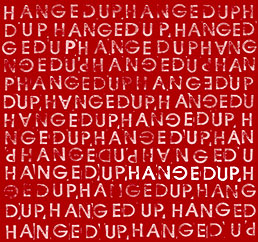
dec20133SOUNDTRACK: HANGEDUP-Clatter for Control [CST034] (2005).

clatterClatter for Control is Hangedup’s third and (so far) last album.  As Kicker was an evolution from their debut, Clatter feels like an evolution as well.  It feels like a more experimental work with fewer “proper’ songs proper and more soundscapes and ideas.

“Klang Klang” is a fast, yes, klanging song.  The viola is slightly discordant and the riffs are abrupt and staccato and it builds into a frenzy.  “Alarm” is more spooky sounding with tape manipulation. “A Different Kind Of Function” starts with some staccato notes and then builds into merging lines of viola and feels almost like a remix song.  “Kick-Back-Hub” is 90 seconds of squeaking bowing and metal clanking along with some very fast drums. It melds into “Eksplozije” which is 2:25 and is more feedback and big noisy drums.

“Go Let’s Go” feels like an actual song with riffs and chords, while “Derailleur” is another short piece, just under 2 minutes of noise and rattling and wildly untuned viola sounds.  “Fuck This Place” has a bass guitar although you wouldn’t necessarily know it (there is more bottom end), it feels like the viola is actually vocal samplings which is neat. “How We Keep Time” is a slower song with languorous viola sounds and sparse drumming.  “Junk The Clatter” feels like the most song like of the bunch. After a minute intro a fully realized riff comes out.  There’s some beautiful melodies and when the song ends it has a cool rocking section.

I prefer Kicker in Tow, but there’s record is a lot of fun too, full of unusual and discordant sounds–if you like that sort of thing.

 [READ: May 5, 2014] “I Can Say Many Nice Things”

I wound up reading about 3/4 of this story in one sitting and I loved it.  But when I came back to finish the end, I didn’t really like it as much.  I though the first part was engaging and complex without being convoluted.  I was interested in the direction the story was going and I was disappointed that it went where it did.  The ending ultimately makes sense within the context of the story, but I enjoyed so much of what happened before that I guess I didn’t want it to end.

So what was so great?

Fleming is an writing teacher.  A disgruntled and unpopular writing teacher.  He has been given a chance to teach a writing class… on a cruise!  A five day cruise with all expenses paid and ten well-paying students signed up for a morning and afternoon class.  Everyone he knew thought he was so lucky (colleagues pretended to be jealous)–it would certainly be an easy way to rack up positive evaluations from happy cruisers?  But Fleming is a pretty miserable guy.  He’s even more miserable because he intended to get in shape for the cruise, but in fact he got fatter, and he feels lousy about himself.

Even though at heart this is a story about teaching and writing (typically not great story topics), the set up is unusual–especially as we slowly come to realize that he is trapped on this ship. And when you add in some of the other details, I thought this was a really interesting setup.

Here’s some details that i found compelling. (more…)

Read Full Post »

dec20133SOUNDTRACK: HANGEDUP-HangedUp [CST016] (2001).

hanged1Hangedup is a noisy band made up of two people: Genevieve Heistek on viola (often looped) and Eric Craven on drums and percussion.  The whole enterprise has a kind of DIY sound—like (very good) first takes done in fit of creative outpouring.

 “Winternational” opens the disc with slow and somber viola.  But after 1:41 the drums come in and the tempo changes into complex song–the way that simple patterns morphs around is really cool. It turns into a great instrumental song, with a low, almost detuned bass sound and lots of percussion. “Propane Tank” has more great weird percussion (sounding like he’s possibly hitting everything in the room). The sounds are manipulated and twisted but make a very interesting beat.  It’s pretty cool “Powered By Steam” builds then slows with some great strings and percussive sounds following in and out of a strong melody.  “New Blue Monday” is more of the same but with a new an interesting beat arrangement and texture. It also has a great ‘riff” and melody .

“Tapping” is mostly drums (tapping). The beginning is a little monotonous although the effects in the background are interesting to try to imagine what they are.  It builds slowly so by around 5 minutes the song has some momentum.  I imagine its interesting to see live and it works for a slow building monster song but its dull compared to the rest of the disc.  “Czech Disco Pt.II” makes up for it with frenetic drums and viola. “Wilt” plays with interesting bell-like percussion.  “Bring Yr Scuba Gear” has building viola; however, this song has bass guitars (guest bassist Ian Ilavsky who is also on “Powered by Steam”) and overdubs by Efrim Menuck which make this the most traditional sounding rock song of the bunch. Which is no bad thing.

Hangedup are certainly experimental but they are very cool and different sounding, too.

[READ: May 5, 2014] “Interview 8 (Mother)”

This is an excerpt from Ball’s novel Silence Once Begun.  As such, it’s a little hard to talk about it fairly.

It begins with an interviewer’s note that he was awoken by Mrs Oda who felt she needed to clear something up.   The rest of the except takes the form of an interview.

Mrs Oda tells a story about Jiro, (presumably her son) about why he cannot be trusted.  Her story concerns Jiro when he was young.  He would pretend that he was a lord and he would preside in judgment over his toys.  All the toys (even things like blocks or spoons) would plead to him for something.  First they would all shout at once and he would declare that they would all be executed if they could not speak in turn.

Then each toy would make its case (perhaps it didn’t like where it was placed last night).  Regardless of what the toy asked for, his response was the same to each one: “Don’t open your mouth again or I’ll have you killed.” (more…)

Read Full Post »

walrus maySOUNDTRACK: POLMO POLPO-Like Hearts Swelling [CST026] (2003).

polmo“Swelling” is the operative word for this disc from Sandro Perri (who is the only person in the band).  Perri layers waves of music.
The album is comprised of drones and loops and is largely ambient in nature.   There’s five songs in 46 minutes. Opening track “Romeo Heart” builds from silence to super loud punk noise.   The 11 minute “Requiem For A Fox” introduces a kind of  underwater heartbeat pulse and detuned sounds.  By around 7 minutes the drums kick in bringing the song to a faster beat until it concludes with an acoustic guitar section and a wild slide solo at song’s end.  “Farewell” builds slowly over 5 minutes with interesting drums sounds.

At 13 minutes, “Sky Histoire” adds a tambourine, which brings in an interesting (albeit minor) percussive element that the other songs didn’t have. By the end, the song is totally intense.  It even has bells and chimes.  The final track, “Like Hearts Swelling” feels like real instruments rather than samples and keyboards.  It features Genevieve Heistek from Hangedup looping and weaving her viola.

Regardless of how great this album is (which it is), if you don;t like ambient music this is not for you.  But if you can get absorbed in the sound, it is a great collection of songs.

[READ: May 1, 2014] “Juno Pluvia”

As this story opens, the narrator, whose name is Hero, is protesting about her cousin Nile.  She tells us to forget about him because a dead body has recently washed up on the beach and that is what we should be worried about.  The man (clad in speedos and nothing else) has been dead for five years–the cold water of Lake Michigan preserved him.  And it was Nile who found him.

When she questions Nile about what he was doing when he found him, Nile says he was fishin’, which she doesn’t believe for a second.  And then she allows us to consider Nile after all: “grease incarnate…did he ever wash?”  And all the while, her mother warned her about him…to never ever get into his van.

Hero relates sadly that she was never invited.  He was never to be her first, she was never to be one of his girlfriends, who were all cross-eyed and bucktoothed anyway.

And thus, the remainder of the story focuses on what she told us to ignore–her cousin Nile. (more…)

Read Full Post »

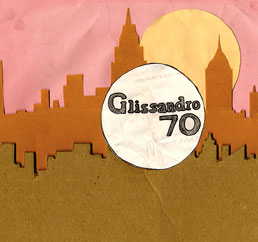
harpoctSOUNDTRACK: GLISSANDRO 70-Glissandro 70 [CST037] (2006)

glissThis peculiarly named band comes from the two members of it.  Craig Dunsmuir is in a band called Kanada 70 and Sandro Perri has stuck his name on the end of the word “glissando” which is a musical term for gliding from one pitch to another.

Interestingly the music doesn’t glide so much.  “Something” opens with a simple, pretty repetitive guitar pattern that keeps getting bigger and bigger. And then bird sounds flow over and around.  It’ a very beautiful introduction.  When it starts getting faster and more complex, it’s actually quite a musical feat.   “Analogue Shantytown” follows with an unusual opening.  Someone singing the word “shantytown” into a harmonica. It’s a weird and interesting sound.   When the guitar begins it sounds very 80s King Crimson-like with wild staccato guitar  Then the chords come in, with a simple repetitive rhythm. And then more and more voices start singing different phrases over the top. Like a rocking fugue.

“Bolan Muppets” has another simple, pretty rhythm and simple but lovely guitar line. More layers of voices (who knows what they are saying) propel this song along.  By around 5 minutes (of the 7 minute song) the songs settles down into a simple guitar progression with very nice vocals (in English).  “Portugal Rua Rua” opens with some more nonsense words (unless he’s singing in Portuguese). Then a single guitar plays along with the rhythm. Then some vocals come in English and the song fleshes out a bit more. By the end they start chanting lyrics from Model 500’s “No UFOs”) which gets a little crazy but is quite fun.

The final song is 13 minutes long. It opens with a baritone guitar playing a fast riff. The song starts to add layers of music—drums, percussion, guitar squalls. By 4 minutes it kind of settles into a repeated guitar rhythm with chanting in the background. That stays in a kind of holding pattern for a bit until around 8 minutes when they start messing with the sounds.  It ends with more chanting in a decidedly Talking Heads feel (and indeed they start using a chant from the Talking Heads at the end).

So this proves to be a wild and raucous record.  It has a decidedly dancey sensibility, but is not a dance record.

[READ: April 25, 2014] “Sic Transit”

I really enjoyed this T.C. Boyle story quite a lot.  So much in fact that not only have I been thinking about it all day, but I could easily see him fleshing out the story into a novel.

It’s a simple enough story on the surface.  In a pleasant suburban town, there’s a house that is overgrown and–out of place.  So it’s no surprise to find out that the owner is dead.  But it is disturbing to think that he was dead for eight days before anyone noticed and that they only noticed because of the smell.

That’s when the narrator learns that the mysterious neighbor, the one whose house you couldn’t even see from the street because of the overgrowth of bushes was a singer for a band from the late 70s and early 80s called Metalavoxx.  (I have to say that I feel this band is not quite right for the time they are depicted as having played–I feel like they are about five years ahead of their time with their name and their look).  At any rate, Carey Fortunoff, the singer, is dead.  And the narrator feels strangely compelled to learn more about a man he doesn’t actually care about and never heard of.

Mostly this is because the narrator has just turned fifty and is thinking about mortality.  What must your life be like to die and not be found for eight days? What kind of strange life did this guy live?  So, on a Sunday morning he decides to at least peek in the man’s house.  And when he finds a door unlocked, he decides to go in. (more…)

Read Full Post »

« Newer Posts - Older Posts »