Feeds:
Posts
Comments

Archive for the ‘Books about writers’ Category

SOUNDTRACK: TARKIO-three song demo (from Omnibus) 1997.

These three songs are part of a demo released in 1997.  I actually assumed that Omnibus would have collected all of Tarkio’s releases (how many more can there be?), but I learned that “omnibus” means “a book containing reprints of a number of works.”  So there ya go.

Nearly every review of Omnibus complains about the size of the release.  Some complain that the songs are too long (which is something else entirely), but many seem to suggest that 27 songs is too many for this collection.  I don’t quite understand this attitude, because if it were the collected works, there would be no reason to complain.  As such, I suspect I am the only person who wishes there was a little bit more–like why not the other two songs from this demo?

And demo is a rather unfair name for this, because it sounds wonderful.  (I suspect a demo from 1997 could be recorded with much better equipment than a demo from say 1984).  And these three songs are really something.  I suppose also, listening to these songs in this manner–not as a two disc set but as an original demo of three songs, makes them seem like maybe there isn’t too much of a good thing.

“This Rollercoaster Ride” opens with an interesting pseudo Middle Eastern violin.  But it quickly settles down into a very catchy rock/folk song.  It sounds very Decemberists, and it’s extremely catchy.  “Following Camden Down” is a beautiful song (the reminds me of The Replacements’ “Skyway”).  Meloy’s voice sounds subdued and not as immediately notable as he normally does.  It’s a wonderful little song.  “Slow Down” is a bouncy folk number (with dominant violin).  It’s got a rocky alt feel, although it still reads as traditional folk.

True, none of these songs reach the delirious heights of the best Decemberists songs, but they’re a nice step towards the kind of music Meloy and friends would put out next.

[READ: June 5, 2012] “Take Me Home”

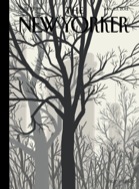
This issue of the New Yorker is devoted to Science Fiction (see the cover).   In addition to five stories (which I assume are science-fiction-y) we also get five (more or less) one-page pieces from masters of the genre (genre being a dirty word, we’ll find).  When I first saw the names of these writers, I thought they were each creating a cool one-page story.  So I was a little disappointed to realize that these are “personal histories” with sci-fi.  But I shouldn’t have been disappointed, because even though these are short, they are really impactful–and come on, they’re classic writers.

I’m surprised by the fact that I haven’t read more Ray Bradbury.  I know I’ve read Fahrenheit 451 and I’m sure I’ve read some of his stories, but I haven’t even scratched the surface–he has written so much!  Indeed, I was surprised to hear that he was still alive (in fairness, he is 92).

This piece begins with Bradbury’s recollections of his introduction to sci-fi with Buck Rogers (1928) and John Carter of Mars (not Disney’s creation, but a series of stories by Edgar Rice Burroughs). (more…)

Read Full Post »

SOUNDTRACK: THE FLAMING LIPS AND HEADY FWENDS Walkthrough (2012).

This is not a review of the album, because I haven’t listened to it all yet.  This is a link to a hyper video in which Oklahoma’s Wayne Coyne rambles on and on about the new Flaming Lips Record Store Day 2012 album.

For a lead singer and frontman, he seems strangely uncomfortable here–barely looking at the camera (unless, as the comments say, he’s stoned).   He explains all of the details of the album and who they’ve collaborated with.  He also explains about the super rare and crazy expensive ($2500.00) vinyl that will contain the collaborator’s blood mixed into the vinyl.  Ew.

There’s not much in the way of samples of the music, but with just a few clicks around you can find a bunch of the songs.

And no, I didn’t buy the $2500.00 version.  Although since I see that they are already selling for $75 on ebay, I wish I had purchased an extra copy of the regular version.

[READ: May 1, 2012] “The Future of Paper”

This Land is an Oklahoma-based publication with a lot of content online. It is inspired by Oklahoman progressive thinkers (the name comes from Woody Guthrie).  It’s a pretty neat online resource, with all kinds of good articles (and a TV show apparently).  Rivka Galchen is on the Editorial Board.

This is the final article by Rivka Galchen that I have uncovered.  I don’t really know what this is—although the fact that it was also collected in The Last American Novel: Writers on the Future of Books, helps to discern more of its intention.  When I say I don’t know what it is, I don’t mean I’m completely ignorant, what I mean is, it’s a strange little meditation to get published.

I enjoyed the opening in which the avian flu is eventually transmitted to paper cranes and then ultimately all books.  For this is how the books died. (more…)

Read Full Post »

SOUNDTRACK: SANDRO PERRI-Impossible Spaces [CST085] (2011).

This album has become one of my favorite releases of the year.  I simply can’t stop listening to it.  And the funny thing is that on first listen I thought it was too treacly, too “sweet,” especially for Constellation Records (home to the over-the-top Godspeed You Black Emperor amongst other wonderful bands).  But after a listen or two, I heard all of the genius that is present in this record–so many different layers of music, and so many interesting instrumental choices. Indeed, it does come off as sweet, but there’s really nothing wrong with that.

This album gives me a happy pick me up without being cloying in any way.  That’s a great accomplishment.

“Changes” opens kind of all over the place, with some noisey guitars and really high bass notes.  But once the shk shk of the shakers comes in, the sing settles into a great groove (and there’s a cool bassline that really holds the song together).  After about 3 minutes, it turns into a cool light funk jam, with retro keyboards, buzzed out guitar solos and some funky drums.  It’s unlike anything you’ll hear anywhere else.  “Love & Light” is one of the shorter pieces at just under 4 minutes.  It’s different from the other tracks, in that Perri’s vocals seem to be the dominant motif, rather than the cool music.  I like the song, but it’s probably my least favorite here.  “How Will I?” uses a similar multi-tracked vocal style but it has some wonderful flute moments (yes flute) that make the song bubbly and happy.  The song kind of drifts around the ether in a kind of jazzy world until about 5 minutes in, when the bassier notes anchor the song with great contrasting notes.  And the electronic ending is as cool as it is disconcerting.

“Futureactive Kid (Part 1)” is a shuffling minor key number that’s just over 3 minutes, it features a cool bass clarinet and backwards guitars to propel the song.  The backwards guitar solo segues into the uplifting (literally, the keyboards just go higher and higher into space. “Futureactive Kid (Part 2)” features fretless bass, a flute solo and My Bloody Valentine-esque sound effects (although radically simplified from MBV’s standards).  It fades out only to introduce my favorite song in forever–“Wolfman.”  I can’t get enough of this song.  It’s a simple structure, but at ten minutes long, it deviates in amazingly complex ways.  It has so many cool aspects that I love–I love the chord changes at the end of each verse.  I totally love the guitar solo that goes up and down the scale for an impossibly long run–well over 100 notes by my count.  I also love that the end of each section features a different guitar style playing the simple chord progression–from acoustic to loud solo to full band playing those same notes–so by the end of the ten minutes you ‘re not sure what to expect.   By the time the flute solo comes in at nearly 7 minutes, I’m totally committed to the song and wherever it’s going to take me.  So when it gets a bit of an electronic ending, I’m ready to go there with it.  Oh and lyrically the song is just as curious as the music.

The final song “Impossible Spaces” is a beautiful, quiet guitar song which is actually easy to sing along to.  It quiet a departure from the rest of the record, but it ties things together very nicely.  I have listened to this record so much lately, I just can’t get enough of it.

You can stream the whole thing here.

[READ: May 10, 2012] Conversations with David Foster Wallace

This is a book that collects interviews with David Foster Wallace.  Although DFW was reticent about d0ing interviews (as the introduction states), he did do quite a lot of them–often at the same haunts.  This book contains 22 interviews that span from 1987-2008.

The conversations are in chronological order, which is really a treat because you get to see DFW’s opinion (and his addiction to nicotine) evolve over the years.  You also get to see the topics that he was really focused on at one time and whether or not they stayed with him until the final interview.  DFW was outspoken about certain things, especially entertainment, which is unsurprising.  But he was also a big advocate of truth, honesty, realness.  It’s amazing seeing him when he lets his guard down. Although his honesty is there for all to see in his work, he is better known for his difficulty with language or his humor.  So seeing him without the multiple revision is quite enlightening.

The first pieces, “David Foster Wallace: A Profile” published after his first novel The Broom of the System launched Viking’s paperback imprint actually looks into his classroom a little bit and shows him interacting with a student (I wonder if she knows she is in this book?).  It seems sweet and almost naive compared to what is to come next.  And, for anyone who is familiar with him from later in, it’s a wonderful look behind the scenes.  There’s also a number of pieces from The Wall Street Journal.  Like the second piece in the book, the worryingly named, “A Whiz Kid and His Wacky First Novel.”  It’s not a bad piece at all, but man, headlines can be delicate matters. (more…)

Read Full Post »

SOUNDTRACK: LAMBCHOP- “2B2” (2012).

I don’t have much exposure to Lambchop.  I know of  them mostly as a slow, country-type band.  And that’s why I haven’t listened to them much.  So I picked one song from their latest album, Mr. M, to talk about (because they are associated with Five Dials, see below).

And, indeed, they are slow.  I wouldn’t say country so much as roots, maybe, traditional folk or something.  It’s certainly slow.  This song reminds me in someways of Tindersticks, although a very stripped down Tindertsicks.  Of course, what I like about Tindertsicks is that they are not stripped down.  So this song kind of leaves me a little flat.  I like it, but I’ve already got music that’s like this ti listen to.

I’ll bet though, that it would make great background music to an engaging story (see below).  I wonder what song they chose to remix.  It’s be crazy if I picked it.

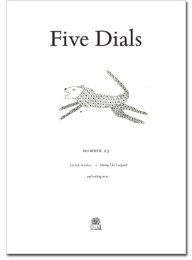
[READ: May 3, 2012] Five Dials 23

Five Dials 23 was recently released with quite little fanfare.  That may be because it is like an appetizer for the soon to be released Issue 24 which promises to be very large.

Five Dials 23 contains only one piece (and an Letter from the Editor).  The piece is by Javier Marías, whom I’ve read and enjoyed and have put on my list of authors to explore more.

CRAIG TAYLOR-“On That Fiction Feeling and Lambchop”

Craig Taylor’s introduction wonderfully encapsulates why I prefer to read fiction to non-fiction.  I have friends who say they only like to read non-fiction because at least they’re learning something (or some variant of that).  And while it’s compelling to argue that you learn stuff from fiction too, it’s not always easy to prove.  So Taylor’s Letter from the Editor is where I can point people in the future:

I remember it happened when I read part of Runaway by Alice Munro, specifically the three linked short stories ‘Chance’, ‘Soon’ and ‘Silence’. I remember the names of the North London streets I was compelled to walk – from Messina Avenue to Woodchurch Road to Greencroft Gardens – just to free myself from the sensation that had blossomed within me after I set down the book. During that walk, the neighbourhood seemed raw and responsive. I was unsettled, but in the best possible way; I was in the midst of experiencing the kind of sadness that can only be induced by fiction, which is more potent sadness than most. Also in this jumble of sensation brought on by Munro was a vow to live better, to somehow dodge the mistakes of her characters. There was a bit of a ‘what the hell am I doing with my life?’; a bit of a ‘pay attention to the details’; a bit of an ‘appreciate life more’. In short, the great inner churning that comes at the end of a few extraordinary pieces of fiction.

The details aren’t relevant, it’s the overall mood and idea that he conjures that is.  Although he mentioned Munro, he begins to talk about The Leopard by Tomasi di Lampedusa.  How this debut (and only) novel has left a strong impact not only on him and many more who have read it but also on Marías.  And that that it was Marías’ essay is about: The Leopard.

The second half of his introduction talks about the next issue and that a 10″ vinyl album will be released with it.  It will feature a double A side with author Hollis Hampton-Jones reading from her novel Comes the Night, while backed by Lambchop.  The other side features a remix of a song by Lambchop from their Mr. M album.  The end of the Letter from the Editot is given over to Hampton-Jones and her remembrance of the recording session.  (It’s very cool).

EMILY ROBERTSON and TUCKER NICHOLS drew the cool pictures of leopards.

JAVIER MARÍAS-“Hating The Leopard

This essay, translated by Margaret Jull Costa,talks about the novel The Leopard and how as a novelist, Marías hates it, even though as a reader, he loves it.

I love the surprising way he opens this: There is no such thing as the indispensable author or novel.”  Because even if the best novelist in the world never wrote, the world woul dnot be different.  I also love this insight, which I actually used recently when talking about Ulysses to someone (yes, I’m that guy) that books which “aspired to being ‘modern’ or ‘original’… leads inevitably to an early senescence or, as others might say, they become ‘dated.’  …. They can sometimes seem slightly old-fashioned or, if you prefer, dated, precisely because they were so innovative, bold, confident, original and ambitious.”  But he quickly points out that The Leopard does not fall into this dated category.

Before explaining why The Leopard has stayed with him, he gives some basic background about its publication and near lack of publication.  Indeed, Tomasi di Lampedusa (how do you say that last name?) died before it was published (but not before receiving several rejection letters).  What’s especially surprising is why he wrote the novel in the first place: “the relative late success of his cousin, the poet Lucio Piccolo…led Lampedusa to make the following comment in a letter: ‘Being absolutely certain that I was no more of a fool than he, I sat down at my desk and wrote a novel.'”  Nothing inspires like jealousy!  He also wrote because he was a solitary person.  He was married, but he seems to spend a lot of time alone.  He wanted the book published but not at the expense of his heirs (that’s nice).

Marías talks a bit about why he finds the book so extraordinary (although he says that so much has been written about the novel that he is reluctant to add more).  But one thing that impressed upon him was how the book is about preparing for death, but how, “Death stalks the book not in any insistent way, but tenuously, respectfully, modestly, almost as part of life and not necessarily the most important part either.”  As far as hating the book, Marías feels that perhaps some novelists have earned the right to hate it.

I always enjoy Five Dials.  I can only hope that my posting about it here can get more people to check it out.  Now to see why my library doesn’t have a  copy of The Leopard.

For ease of searching I include: Javier Marias.

Read Full Post »

SOUNDTRACK: WILD FLAG-Wild Flag (2011).

For reasons unclear to me now, I wasn’t psyched when I heard about this band.  Despite the fact that it was 2/3 of Sleater-Kinney and the force behind Helium joining together, I didn’t jump for joy.  But now that I have listened to the album a million times, I can say that it is one of the best albums not only of that year, but of many years.  Man is it good.

Sleater-Kinney was a great band, they were melodic and tuneful but also abrasive and occasionally off-putting.  Who knew that the majority of the adhesiveness came from Corinne Tucker (well, she was the screamer, admittedly).  It’s pretty clear that Carrie Brownstein is bringing a ton of melody (and a wee bit of amativeness) to the mix.  Mary Timony always included trippy imagery and a weird kind of whispered/loud singing voice.  The tunes are so catchy so strong, so singalongable.

There’s little moments in each song that are amazing.  The backing vocals (and the pitch shift in the chorus) in “Romance”.  The way “Something Came Over Me” sounds so different from “Romance” (and is clearly a Timony-sung song).  I absolutely love the guitar “solo” that begins each verse and how it stands out but fits in so nicely as a baritone guitar sound (I assume from Carrie?)  “Boom” is just a full-on rocker with some great guitar pyrotechnics and Carrie’s more extreme vocals.  And man is it catchy.

“Glass Tambourine” is a cool trippy psychedelic workout  that’s still catchy and interesting.  “Endless Talk” has a strange British retro vibe.  (Carrie seems to be singing with a kind of punk British voice).  And there’s lot of keyboards.  It’s great that the album has so many different sounds, but still sounds cohesive.  “Short Version” has some great guitar soloing in the front and back.  “Electric Band” is like a perfect pop song–great backing vocals, great poppy solos and a cool video to boot.  “Future Crimes” is another amazing tune, with a keyboard solo!

“Racehorse” is probably my least favorite song on the disc.  It’s got some cool parts and some interesting swagger (and I like the live versions where they really jam) but the album version feels a little dragged out (although the chorus is really hot).  The disc ends with the wonderful “Black Tiles” which could easily be a Helium song, but which still sounds very Wild Flag.

And, I can’t say it enough, Janet Weiss is amazing on drums.  I feel badly because I tend to leave out the keyboardist–because I don’t know who she is or the band that she came from.  But her keyboards play an essential role in the music.  They fill out the spaces that the two guitars don;t always fill.  They even introduce the opening of the album.

If you go back through previous posts you’ll see I’ve mentioned them 3 times already because they have special bond with NPR and three of their concerts are available there.  I can’t wait for more from them.

[READ: May 8, 2012] Grantland 2

I was surprised at how much I enjoyed Grantland #1.  So I was pretty excited to get Grantland #2.  #2 has all of the elements that I loved about #1–non-sports articles about entertainment (video games, music, TV), and sports articles that are short and digestible for a non-sports fan.  This issue also features a number of really long articles about basketball.  I like basketball fine, but I can’t say I paid any attention to the lockout.  Thus, much of this was lost on me. It probably doesn’t help that I don’t know any sports people either.

I may have said this last time, but I will reiterate for Issue #3–for those of us who don’t follow sports, or those of us who may not remember back to September when most of these articles were written, or heck, for people who are going to read this in ten years’ time:  For certain articles, can you give us an epilogue about what happened after the article was written.  If you speculate about  the lockout. Have an epilogue to say about how the lockout turned out.  If you talk about a game 5 of a series and the series didn’t end, have an epilogue that tells us how the series ended.  It doesn’t have to even fit the style of the article, just a few words: so and so ended like this. It can show how prescient the writers were.  And it can help us complete the stories.

So, despite a few articles that I thought were too long, (although probably aren’t if you love basketball) I really enjoyed this issue of Grantland, too. (more…)

Read Full Post »

SOUNDTRACK: FOREVER THE SICKEST KIDS-“What Do You Want from Me?” (2010).

I wanted to a pick a song from this soundtrack to add here.  Evidently there isn’t really a soundtrack so much as a score (who is buying the score from this film?).  Well, I’ll bet it was fun to write a piece called “Zoo Wee Mama.”

Anyhow, this song is apparently in the movie (over the end credits).  According to Amazon, you can order the MP3 that is somehow affiliated with the soundtrack.

So this is a poppy emo song.  It’s got loud guitars and a chanting chorus and it’s pretty darn catchy.  It sounds like so many other bands that I’d never have guessed it wasn’t by any of  dozen bands that are kinda punk but not really with high-pitched singers who are kind of bratty.  This is not to say that I didn’t enjoy it–in small doses I like emo a lot.  I dislike that this had a lot of “Hey Ho” chanting which is just way too easy to make it catchy.  But aside from that, I would leave this song on at a party.

The actual Amazon MP3 is a “Diary of a Wimpy Kid Mix”.  I have no idea what they have changed about it, though as I only listened to the original.

[READ: April 25, 2012] The Wimpy Kid Movie Diary

I have enjoyed every one of the Wimpy Kid books (and now my son is enjoying them too, although he’s still too young to “get” them).  But I never bothered checking out this book because it seemed, well, unfunny.  Then I saw the book at Five Below for a couple bucks so I grabbed it.

This is a movie tie-in book.  But what’s nice about this book as opposed to many other tie-ins is that Jeff Kinney actually wrote it (I think–his name’s on it, after all).  There are also new drawings that tie in to what he’s writing about and lots and lots of pictures from the movie.

If you’re a fan of the books, this book won’t do a lot for you.  Although there are a few insights into how Kinney got started making his series–including some original drawings.  But if you’re a fan of the movie, you’ll learn a lot.  Kinney talks about how they chose the actors they hired (which was quiet interesting), where the movie was filmed (Vancouver) and what kind of homework he made the two leads do (they had to write an essay from the point of view of who they were playing to make sure they understood the character). (more…)

Read Full Post »

SOUNDTRACK: FIGURINES “The Air We Breathe” from Viva Piñata! (2008).

Figurines are from Denmark.  This song has a very distinctive Mercury Rev feel (late-period  Mercury Rev) with high pitched vocals and delicate intertwining melodies.

The verses are done on simple piano and the bridge has some nice harmonies.  This is a cool alt rock song that stands up to repeated listens.

[READ: March 28, 2012] “Into the Unforeseen”

The timing of this article is quite amazing.  Having really enjoyed Galchen’s short story, I decided to see what else she had written.  It’s not a lot, but she has written three things published in Harper’s–two essays and one short story.  This first essay is all about César Aira.  I didn’t even know who Aira was when it came out in 2011, but now, I get to read it again having just finished another of his novels.  (The essay concludes with information about Varamo, a novel that was just recently translated into English which I picked up at the library, yesterday).

This essay is about the week that Galchen spent with Aira in and around Aira’s home (but not his birth town of Coronel Pringles which he kind of jokingly forbids her from seeing.  Galchen loves Aira’s writing (and has a kind of crush on him, although they’d never met before).  She doesn’t say in this article but she was a Spanish language major, so she has clearly been reading his books in Spanish.

She lets us know that the day before she met Aira, her ten-year relationship ended (she hints at the reason but is quite discrete).  She brings this up because of an emotional moment later in the article.  And that’s what I loved about this article–it was personal and really invited the reader in to experience this meeting with her.   (more…)

Read Full Post »

SOUNDTRACK: THE FEELIES-Crazy Rhythms (1980).

Not too many albums start out with clicking blocks and quiet guitars that build for a minute before the actual song kicks in.  Not too many albums sound like early Cure sung by Lou Reed and not too many albums are called Crazy Rhythms when the thing that’s crazy about them is their vocals and guitars.  But that’s what you get with The Feelies debut.

In addition to the blocks, the opening song also features some sh sh sh sounds as a rhythm (techniques used by The Cure on Seventeen Seconds, also 1980).  There’s two guitar solos, each one vying for top spot in different speakers and, yes, the rhythms are a little crazy.

The album feels like it is experimenting with tension–there’s two vocalists often singing at the same time, but not in harmony.  There are oftentimes two guitars solos at the same time, also not in harmony.  The snare drum is very sharp and there’s all manner of weird percussion (all four members are credited with playing percussion).

That early-Cure sound reigns on “Loveless Love” as well, a slow builder with that trebly guitar.  There’s a lot of tension, especially with the interesting percussion that plays in the background.  And there’s that whole Lou Reed vibe in some of the vocals.

But not every song sounds like that, “Fa Cé-La” is a punky upbeat song with two singers trying to out sing the other.  “Original Love” is another short song, it’s fast and frenetic and fairly simple. It’s as if they couldn’t decide if they were going to be The Velvet Underground or New Wave punks.

The next surprise comes from their choice of covers: “Everybody’s Got Something to Hide (Except for Me and My Monkey”).  It goes at breakneck speed with some surprising pace changes after the chorus.  And a wonderful ringing percussion that makes the song sound even more tense than it is.  “Moscow Nights” is a more traditional song (although the backing vocals seem very spartan.

“Raised Eyebrows” is almost an instrumental, until the last-minute when the seemingly random vocals kick in.  And the final track, “Crazy Rhythms” seems to combine the speed of the faster tracks with the insanity of the other tracks.  It’s a pretty amazing debut, really heralding an age of music.

  It’s a shame it took them 6 years to make another (very different sounding) record.

[READ: February 8, 2012] “To Reach Japan”

I love Alice Munro’s stories, but I found this one a bit confusing.  Now, I admit that i read this under poor circumstances (while I was supposed to be attending a company-wide presentation), so that may have led to my confusion. But it felt like there was some questionable juxtapositions of the timeline in this story.

It opens simply enough with Greta and her daughter Katy waving goodbye to Peter (the husband and father) as they pull away from the train station.

The story immediately jumps back to Peter’s mother and how she fled on foot from Soviet Czechoslovakia into Western Europe with baby Peter in tow.  Peter’s mother eventually landed in British Columbia,where she got a job teaching.

The second time jump comes a few paragraphs later.  It seems like we’re back in the present, but the section opens, “It’s hard to explain it to anybody now–the life of women at that time.”  This describes how it was easier for a woman if she was a “poetess” rather than a “poet.”  But I’m not exactly sure when that was.  Presumably when Greta (who is the poet) was younger, but how long ago was that?  In Toronto, even?

The story jumps back to the present to say why Greta and Katy are on the train and Peter isn’t.  They are going to housesit for a month in Toronto while Peter goes to Lund for a summer job.

Then it jumps back to when Greta was a poetess and actually had poems published.  The journal was based in Toronto, but there was a party in Vancouver for the editor.  So she went.  And she had a lousy  time among the local literati.  She gets drunk and sits in a room by herself, but soon enough a man approaches her and offers to take her home. There is the potential for something more to come of it but it never materializes.  But she never forgot the man’s name: Harris Bennett, journalist. (more…)

Read Full Post »

SOUNDTRACK: GOGOL BORDELLO-Live from Axis Mundi (2009).

This is a strangely-named disc collection.  The CD is actually live shows from the BBC as well as a few demos and other sessions.  The DVD that comes with it is actually a 2007 show live from Axis Mundi (Irving Plaza NYC).  For this review I’m only talking about the CD.

The BBC Sessions, as always, sound great.  The band is wild and spirited although a little less than in a typical concert setting.  They plays “Ultimate,” “Wanderlust King,” “Mishto”, “Alcohol,” “American Wedding,” and “You Gave Up (Roumania)” (all of which come from Super Taranta except “Mishto!” (from Gypsy Punks Underdog World Strike) and “You Gave Up (Roumania)” which I believe is exclusive to this disc.

The band is clearly having a lot of fun with the songs (the nine minute “You Gave Up” is a great jam) and they are perfectly in sync with each other.  At the end they even do a couple of promos shout outs for Radio One.

“Stivali E Colbacco” comes from something called the “Super Taranta Sessions” and was recorded by Steve Albini (his presence isn’t really evident, except maybe when the aggro guitar kicks in, but the song sounds great).

“Troubled Friends” comes from the “Gypsy Punk Sessions” and was recorded by Victor Van Vugt (who did the Super Taranta album).  It’s the first thing that slows the album down and feels like a B-side or a tack-on.  Mostly because the music is too minimal and meandering (and at 6 minutes is too long).

“60 Revolutions” makes up for the previous song with some solid songcraft.  At 6 minutes this is also a bit too long.  But it’s good exploration of Gogol Bordello’s flirtation with Spanish lyrics.

The last two tracks are a demo of “Immigrant Punk” which sounds different but not radically so (the lyrics seem clearer) and probably the least essential track of all, an instrumental version of “Immigrant Punk.”

The BBC stuff certainly makes this worth tracking down.  The rest is filler; but it’s pretty good filler.

[READ: December 31, 2011] “Blog This”

This is the final blog post from Max Barry’s website that I’ll be talking about (yaaay)–there’s two short stories left after this.

Like all good blog posts, this one is about the creator of the blog.  Barry was searching the web when he found a post called “Writers Who Blog.”  Barry posted a link to the article but the link is now dead and a very cursory websearch came up empty, so alas, there will be no confirmation of sources here.

So Barry says that this article about Writers who Blog totally trashes him.  He was going to let it go until he saw that a) the author was the same guy who wrote the worst review ever of his book Jennifer Government (this link is also down…I guess Barry really got to him!) and b) the critic was going by a lame pseudonym for the review but now he has revealed himself.

This post revealed to me that Barry created something called NationStates, a nation simulation game (which I would love to explore but don’t have time, which appears to be thriving).

Anyhow, the critic, Todd Bunker criticizes Barry’s blog posts, claims barry lies about his number of visitors and calls his readers sycophants.  Harsh cries indeed.  I think some of the many comments for this post include deliberately sycophantic comments.

Bunker also looked at Neal Pollack and Wil Wheaton’s blogs.  I happen to like Pollack, although I’ve never seen his blog.  But I have to say I have been following Wil Wheaton on G+ for a while now and he is a delight. I’ve never seen his blog, but I am never not amused by him (little shout out to the guy who inspired Wesley Crusher.die.die.die).  (more…)

Read Full Post »

SOUNDTRACK: LE BUTCHERETTES-Sin Sin Sin (2011).

I learned about Le Butcherettes from their Tiny Desk Concert.  So I thought I’d check out their album.  I’ve listened to it a few times now and it’s really quite good.

While the Tiny Desk Concert showed a subtle side of Teri Gender Bender, this album rocks really hard.  All three songs from the Tiny Desk Concert rock much harder here, and are actually better in this full band context (especially “Henry Don’t Got Love”).

It has a punk feel and reminds me of a more commercial sounding Bikini Kill or other Kill Rock Stars punk.  “Dress Off” is all Teri’s voice shouting over drums: “You take my dress off. Yeah, you take my dress off.
Yeah, You take my pretty dress off.”

In the Tiny Desk concert, Teri Gender Bender channeled PJ Harvey completely.  On the album, she has a bunch of different vocal styles that all work well for the songs.  Although “New York” is totally PJ, “The Actress That Ate Rousseau” reminds me of punkier No Doubt and”Tainted in Sin” has a simple stark keyboard melody with Teri singing a more aggressive guttural style.

Unsurprisingly for someone named Teri Gender Bender, there are some political songs as well.  “Bang!” has the lyric, “George Bush and McCain taking over Mexico.  Next thing you’ll see is their army banning seranata

Although there’s a lot of short songs (7 are 2 and a half minutes or under), there’s a few long ones too.  “The Leibniz Language is over 5 minutes and “I’m Getting Sick of You” and “Empty Dimes” are both over 4.  There’s also an instrumental, “Rikos’ Smooth Talking Mothers” which is a simple song spurred on mostly by scratchy guitars.

The final song, “Mr. Tolstoi” is the anomaly on the album.  Teri “sings” with a fake Russian accent  over a very Soviet-style keyboard march.  The chorus:

I want Raskolnikov To be inside of me.  I want Sonya’s eyes.  I want Sonya’s eyes.

Weird.  But not outrageously crazy for this record.  It’s good noisy fun.

[READ: January 23, 2012] “Labyrinth”

It’s no secret that I love Roberto Bolaño.  And I’ve said before that one thing I love about him is the astonishing variety of subjects and styles that he comes up with.

So this short story is forthcoming from his newly translated collection of unpublished short stories called The Secret of Evil.  What I love and find so unique about this story is that the entire story is based upon a photograph.  The New Yorker includes the photograph (I wonder if the The Secret of Evil will include it also).  In the photograph, eight writers/thinkers sit around a table.  Thy are: J. Henric, J.-J. Goux, Ph. Sollers, J. Kristeva, M-Th Réveillé, P. Guyotat, C. Devade, and M. Devade.  The only person I know of this list is J. Kristeva, whose work on semiotics I have read.  [I just looked her up on Wikipedia and learned that she has also written novels, including: Murder in Byzantium, which deals with themes from orthodox Christianity and politics and has been described by Kristeva as “a kind of anti-Da Vinci Code.”  Gotta put that on my list].  But the others are (evidently) prominent in their fields as well (editor of Tel Quel, author of several novels and non-fiction, etc).

The beginning of the short story is an extensive detailing of the photograph.  Bolaño looks at each man and woman in the photo and describes them with exquisite accuracy.  Beyond that he imparts a bit of speculation about what they are wearing, where they are looking, their attractiveness and even, about the length (or lack) of necks. (more…)

Read Full Post »

« Newer Posts - Older Posts »